

In this answer
Short answer
ECO4 is the current phase of the Energy Company Obligation, the obligation that makes larger energy suppliers fund energy efficiency work in homes. It pays for insulation, boilers and central heating, and solar and renewable energy technologies, and it runs until 31 December 20261. There is no single ECO4 boiler grant with a published cash value: eligibility is decided first, then the measures a home can receive are worked out from its energy performance and the cost of the work.
Eligibility runs through several routes. The Help to Heat Group, Social Housing, local authority Flex, In-Fill and Supplier Flex are the recognised paths into the scheme3. The Help to Heat Group route turns on receipt of a listed benefit by the householder or another occupant of the property4. Flex lets a participating local authority refer owner-occupiers and private tenants it considers to be living in fuel poverty, on a low income, or vulnerable to the effects of living in a cold home5.
The practical answer for most households is that a low EPC rating helps. ECO4 is targeted at households with low Energy Performance Certificate ratings, and grants are awarded based on how big the difference is between the energy performance ratings6. Homes with an EPC of D or below may receive heavily discounted or free insulation, green heating systems or an upgraded boiler7.
What ECO4 is and what it funds
ECO4 is the fourth phase of the Energy Company Obligation, delivered by obligated energy suppliers and their installers rather than by a single national application. Ofgem's guidance for supplier administration describes the scheme as covering the installation of insulation and heating qualifying actions, and confirms it will run until 31 December 20262. Council pages describe the same scope in plainer terms: ECO funding pays for energy efficiency measures such as heating improvements and insulation to be installed9.
The measures table is broader than the phrase "boiler grant" suggests. It lists boiler upgrades to non-renewable and renewable heating systems, repair of a broken heating system, replacement of a broken efficient heating system, first time central heating, electric storage heater upgrades and repairs or replacement, connection to a district heating system, heating controls, solar PV, wall, roof, floor and loft insulation, draught proofing, window glazing and higher performance external doors10. Ofgem notes that for heating measures in particular, including heating controls and solar PV, the delivery guidance contains additional eligibility rules not covered by the measures table10.
Flex routes can fund a similar spread. Examples given by a Welsh local authority include solid wall insulation, cavity wall insulation, room in roof insulation, loft insulation, flat roof insulation, electric storage heater upgrade, first time central heating to air source heat pump, boiler upgrade from oil, LPG and solid fuel to air source heat pump, and solar photovoltaic panels11.
One funding rule matters for anyone stacking schemes. Funding for measures delivered under ECO4 must not be blended with funding from other government schemes or grants, including but not limited to the Warm Home Discount, the Boiler Upgrade Scheme, the Social Housing Decarbonisation Fund and the Home Upgrade Grant12. Funding from the Boiler Upgrade Scheme and ECO cannot be blended for the same measure or be included within an ECO4 project13. The two schemes are alternatives for a given measure, not partners.
Who qualifies: benefits, income and property criteria

The benefit route is the best documented. The householder, or one of the occupants residing at the property, must be in receipt of one of the listed benefits: income-based Jobseeker's Allowance, income-related Employment and Support Allowance, Income Support, Pension Credit Guarantee Credit, Working Tax Credit, Child Tax Credit, Universal Credit, Housing Benefit, Pension Credit Savings Credit and Child Benefit4. Housing Benefit appears on that list, so a household receiving it can qualify through the Affordable Warmth route8.
Benefits are not the only door. ECO4 Flex allows local authorities to identify and refer consumers living in private tenure properties who are considered low income, fuel poor, or vulnerable to the effects of living in a cold home14. Councils have published Flex routes that allow households without benefits to qualify for help if they meet income, EPC rating or health vulnerability criteria15. Independent guidance makes the same point from the household side: the scheme can also apply to people on higher incomes but with health issues, those claiming certain government benefits, or those meeting other criteria16.
Property criteria sit alongside the personal ones. ECO4 is available for private owner occupiers and private rented properties which meet the necessary eligibility criteria17. A council operating a Flex scheme states that applicants must be living in its area and be a homeowner, private tenant or landlord18. A local authority can refer owner-occupiers and private tenants it considers to be in fuel poverty or on a low income and vulnerable to the effects of living in a cold home5.
"a participating Local Authority can refer owner-occupiers and private tenants that it considers to be living in fuel poverty or on a low income and vulnerable to the effects of living in a cold home"
The boiler grant cap: £5,000 per household
The figure most often quoted for ECO4 boilers is not a payment. In ECO4, the number of available boiler grants has been capped at 5,0007. That is a ceiling on how many boiler grants the scheme will support in total, not a sum a household receives, and it is the reason boiler measures under ECO4 are described as limited rather than open-ended.
The £5,000 figure that circulates in searches belongs to a different scheme. The Boiler Upgrade Scheme sets a grant of £5,000 for biomass boilers in limited circumstances, and £5,000 towards a biomass boiler appears in the approved grant categories and values19. Independent guidance states that households may be able to access a grant of up to £2,500 for air-to-air heat pumps under that scheme21. These are Boiler Upgrade Scheme values, and they cannot be blended with ECO4 funding for the same measure13.
For ECO4 itself, no published per-household boiler amount exists in the scheme rules. What a home receives depends on the improvement in its energy performance rating and the cost of the measures installed, which is why two neighbouring properties can receive different packages. The cap of 5,000 boiler grants is the only headline number the scheme attaches to boilers7.
Homeowners and private renters: who can apply
Owner-occupiers are the straightforward case. ECO4 is available for private owner occupiers and private rented properties which meet the necessary eligibility criteria17, and Flex routes are built around owner-occupiers and private tenants5.
Private renters can be included, with conditions. A privately rented house must have an energy efficiency rating of E, F or G to be eligible, and the owner's permission is required8. Flex route one for the private rented sector covers EPC bands E to G11, and a second Flex route covers EPC bands E to G for both owner-occupied and private rented sector households that meet at least two of the published proxies11. Private rented sector properties occupied by a member of the Help to Heat Group, or a person declared eligible by the local authority, are covered at SAP ratings E, F and G10.
Landlords face a narrower path for heating. Private landlords can only access ECO to replace an old heating system with a renewable heating system if the existing EPC is E, F or G22. A like-for-like fossil fuel boiler swap is not the route open to a private landlord under ECO.
Social housing is a separate route within the scheme rather than part of the private tenure rules3. Households in social housing should look at the scheme's social housing path and at the Warm Homes: Social Housing Fund rather than at the private tenure criteria above.

How eligibility is assessed: financial situation and energy efficiency
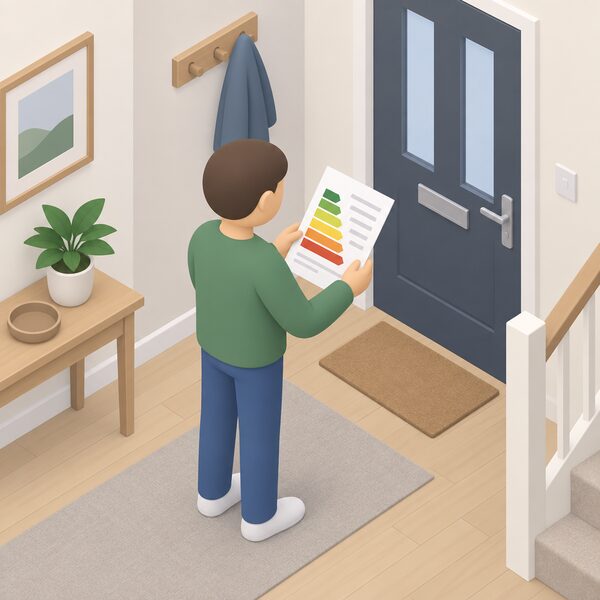
Assessment has two halves. The first is the household: benefit receipt through the Help to Heat Group4, or a local authority decision under Flex that the household is low income, fuel poor, or vulnerable to the effects of living in a cold home14. ECO4 allows local authorities to identify the most vulnerable households who could benefit from energy efficiency improvements8, and the Flex component lets them identify and refer consumers in private tenure properties14.
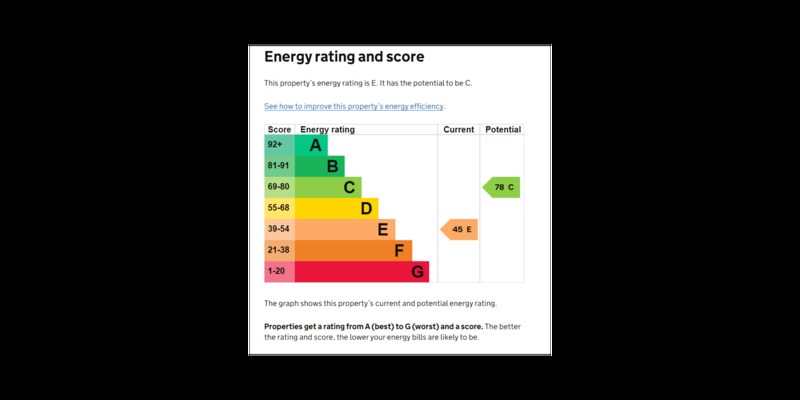
The second half is the property. ECO4 is targeted at households with low Energy Performance Certificate ratings6, and grants are awarded based on how big the difference is between the energy performance ratings7. A home with a very poor rating has more room for improvement, which is what the scheme is paying for. Homes with an EPC of D or below may receive heavily discounted or free insulation, green heating systems or an upgraded boiler7.
In practice a household can expect the following sequence:
- Check whether anyone in the home receives a listed benefit4.
- If not, check whether the local authority operates a Flex route and meets its published criteria15.
- Establish the property's EPC rating, since private rented homes normally need E, F or G8.
- Approach a participating supplier, or wait for a local authority referral through Flex14.
Installation standards apply to the work itself. Where the installer is working on gas boilers, they must be Gas Safe registered23.
What happens if my home has a poor energy rating?
A poor rating is the condition the scheme is designed around, not a barrier. ECO4 is targeted at households with low Energy Performance Certificate ratings6, and the size of the grant is tied to the size of the improvement in the rating7. A home at EPC D or below is the group most likely to receive heavily discounted or free insulation, green heating systems or an upgraded boiler7.
The rating also decides which measures are possible. Private rented sector properties at SAP ratings E, F and G are covered where the occupant is in the Help to Heat Group or has been declared eligible by the local authority10. Private landlords replacing an old heating system with a renewable one need an existing EPC of E, F or G22. Where a home already sits at a higher band, the improvement available is smaller and the case for a boiler measure weakens.
For a household, the energy independence question is straightforward. ECO4 work is funded by supplier obligation rather than by the household, so it reduces reliance on purchased gas or electricity for the same comfort level, and it does so without a loan or a repayment attached to the property. What remains is the grid connection and the supplier relationship: the home still buys its energy, and the measures reduce how much of it is needed rather than removing the need altogether.
Applying, and where ECO4 sits among the grants
ECO4 has no single national application form. Households can apply through specific energy suppliers, and can do so even if they are not a customer of that supplier19. The alternative is a local authority referral through Flex, where the council identifies and refers households in private tenure that meet its criteria14. Councils publish their own Flex pages and criteria, so the route differs by area.
Because ECO4 ends on 31 December 20262, timing matters for anyone weighing it against other support. The scheme cannot be combined with the Boiler Upgrade Scheme for the same measure13, and ECO4 funding must not be blended with other government schemes or grants including the Warm Home Discount, the Boiler Upgrade Scheme, the Social Housing Decarbonisation Fund and the Home Upgrade Grant12. A household choosing between a supplier-funded boiler measure and a heat pump grant is choosing between two separate funding routes, not stacking them.
For the wider picture of what is open and what has closed, the Home Energy Grants and Schemes in the UK: The Full Guide sets out the current landscape. Households weighing a supplier-funded boiler against a heat pump grant can compare them directly in Boiler Upgrade Scheme vs ECO4, and those whose local authority runs a Flex route can read more in ECO4 Flex: Local Authority Flexible Eligibility. The benefit list in full is set out in What benefits qualify for ECO4 funding?, and the narrower question of a fully funded replacement is covered in Can I get a free boiler grant under ECO4?.
Sources23 cited
- Energy Company Obligation (ECO): homeowners and tenants, Ofgem
- ECO4 delivery guidance version 4.0, Ofgem, 2026
- ECO4 GBIS eligibility and pre-installation declaration, Ofgem, 2026
- Energy Company Obligation (ECO) guidance 2022 to 2026, Department for Energy Security and Net Zero, 2022
- Energy Company Obligation (ECO) scheme, Tameside Council
- ECO4, MCS Certified
- ECO4, Elmhurst Energy
- ECO 4 and ECO Flexible Eligibility, Breckland Council
- Home energy efficiency, Bridgend County Borough Council
- ECO4 Measures Table v4.0, Ofgem, 2025
- ECO flexibility funding, Ceredigion County Council
- ECO4 delivery guidance version 3.2, Ofgem, 2025
- ECO4 supplier administration guidance, Ofgem, 2025
- ECO4 LA Flex audit report, Ofgem, 2025
- Is there really such a thing as free solar panels?, Low Carbon Hub, 2025
- Energy saving at home, Centre for Alternative Technology, 2025
- ECO4 scheme, West Lindsey District Council, 2025
- Energy Company Obligation ECO4, Essex County Council
- Notice of approved grant categories and values for the Boiler Upgrade Scheme, Department for Energy Security and Net Zero, 2026
- Energy efficiency, Pembrokeshire County Council
- Installer grants and incentives: Boiler Upgrade Scheme, MCS Certified, 2026
- ECO4, Derbyshire County Council
- ECO4 Flex open, South Cambridgeshire District Council
 Grants and Energy IndependenceCan you get a grant for solar panels or a battery?
 Landlord Energy PermissionHow a tenant raises a request for insulation, heating, glazing or ventilation work in a rented home, what the EPC and the minimum band E rule mean, which grant schemes need landlord consent, and what happens when a landlord refuses.
 Insulation in Rented HousingWho pays for insulation when you rent, and who has to agree to it?
 The Full Your Type of Home GuideLiving in a flat, an old listed house or somewhere off the gas grid changes what energy help you can get and what you are allowed to install.
 The Full Grants and Schemes GuideWhich grants can you actually get right now, and how do you apply for them?
 Check Which Energy Grants ApplyWhich energy grants can you actually get right now, and which have closed?