

In this answer
Short answer
ECO4 is the Energy Company Obligation scheme that funds energy efficiency measures for low income and vulnerable households, and it runs until 31 December 20261. Eligibility turns on benefits: a household receiving at least one of a published list of means-tested benefits can be assessed for funded insulation, heating or renewable measures2. The list is Income-based Jobseeker's Allowance, Income-related Employment and Support Allowance, Income Support, Pension Credit Guarantee Credit, Working Tax Credit, Child Tax Credit, Universal Credit, Housing Benefit, Pension Credit Savings Credit, and Child Benefit subject to income caps and composition3.
Child Benefit is the exception that catches people out. If it is the only benefit received, an income test must also be met, and no income requirement applies to the other listed benefits4. A self-declaration of Child Benefit is not sufficient on its own; further evidence of household income is required5.
Where no benefit is claimed, the ECO4 Flex route lets local authorities identify low income or vulnerable households who would otherwise miss out, including households with a combined income below £31,000 or someone with a qualifying medical condition3. ECO4 was launched in 2022 and its stated objective is to reduce fuel poverty by improving the least energy efficient housing stock occupied by low income, vulnerable and fuel poor households7.
What ECO4 is and who it is meant to help
ECO4 is a UK Government scheme that places an obligation on energy suppliers to fund energy efficiency improvements in homes occupied by low income and vulnerable households7. Its aim is to help those living in fuel poverty and vulnerable to the risk of living in a cold home, whose house is energy inefficient3. The scheme is designed to tackle fuel poverty while also reducing carbon emissions through whole house energy efficiency improvements9.
The target group is narrow by design. The scheme focuses on supporting low income and vulnerable households and improving the least energy efficient homes, to help meet the government's fuel poverty and net zero commitments10. Independent guidance describes it as focused exclusively on households with low incomes or living in fuel poverty12.
For a household, the practical meaning is that ECO4 is not a general improvement grant. It is a route to a warmer, cheaper-to-run home for people who already qualify through the benefit system or through a council's Flex statement. The measures reduce how much energy a home needs and, in some cases, change how it is heated, which lowers exposure to gas and electricity prices. What it does not do is remove dependence on a supplier: the work is funded by obligated suppliers, delivered by approved installers, and the household remains connected to the grid and to a billing relationship.
The scheme has attracted criticism. The Energy Systems Catapult reported that ECO4 was failing health vulnerable households, and recommended broadening the criteria for fully funded jobs and reforming funding rules so more homes qualify without requiring resident contributions13. That recommendation is a finding about the scheme's reach, not a change to the rules.
The qualifying benefits, in full
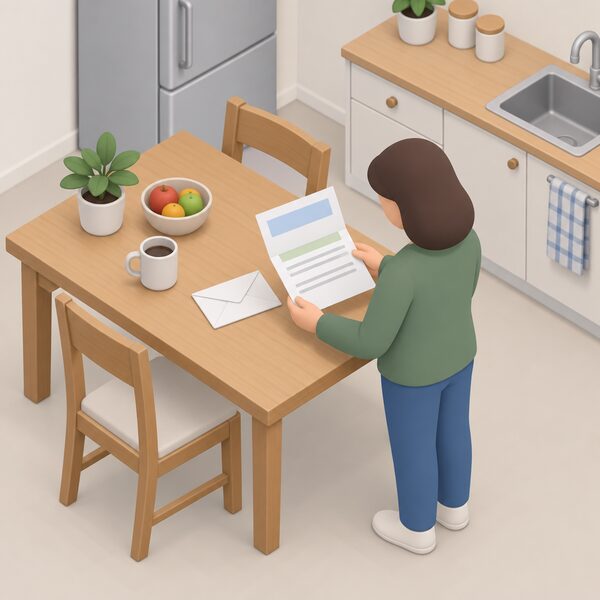
The published lists agree closely. Ofgem's homeowner guidance states that a household could be eligible for ECO if it receives at least one of a set of benefits, naming Child Benefit, Pension Guarantee Credit, Income-related Employment and Support Allowance, Income-based Jobseeker's Allowance, Income Support, Universal Credit, Housing Benefit and Pension Credit Savings Credit2. MCS Certified gives the same core list and adds Child Tax Credits and Working Tax Credits14. The Energy Saving Trust lists Pension Credit Savings Credit among the qualifying benefits15.
Councils publish the same set for their residents. Bridgend lists Income-based Jobseekers Allowance, Income related Employment and Support Allowance, Income Support, Pension Credit Guarantee Credit, Working Tax Credit, Child Tax Credit, Universal Credit, Housing Benefit, Pension Credit Savings Credit, and Child Benefit subject to income caps and composition3. Ofgem's delivery guidance for the Help to Heat Group sets out the same ten16.
| Benefit | Income test attached | Notes |
|---|---|---|
| Income-based Jobseeker's Allowance | No | Means-tested3 |
| Income-related Employment and Support Allowance | No | Means-tested3 |
| Income Support | No | Means-tested3 |
| Pension Credit Guarantee Credit | No | Means-tested3 |
| Pension Credit Savings Credit | No | Newly available under ECO48 |
| Working Tax Credit | No | Means-tested3 |
| Child Tax Credit | No | Means-tested3 |
| Universal Credit | No | Means-tested3 |
| Housing Benefit | No | Newly available under ECO48 |
| Child Benefit | Yes | Income caps and composition apply3 |
Housing Benefit, Income Support and Pension Credit Savings Credit were newly available under ECO4 compared with the previous ECO3 scheme8. That change matters most for pensioners and for working households whose only award is Housing Benefit.
Income thresholds: when a benefit alone is not enough
For nine of the ten benefits, receipt is the test. Child Benefit is different. If Child Benefit is the only benefit received, an income test must also be met, and there are no income requirements for the other listed benefits4. Ofgem restricted customer self-declarations for Child Benefit without further evidence supporting the household income threshold6, and its eligibility declaration states that the use of occupier self-declarations to prove receipt of Child Benefit is not sufficient by itself5.
Where no benefit is claimed at all, the Flex route provides an income-based path. A household may still receive funded measures through the flexible eligibility process, for example if the household has a combined income below £31,000 or someone in the home has a qualifying medical condition3. Independent guidance for pensioners not on benefits gives the same £31,000 combined gross annual household income figure as the commonly cited Flex threshold17. Elsewhere, independent guidance describes ECO4 funding as generally for households with a gross annual income less than about £30,000 who own or privately rent a house with an EPC rating of D or worse18. The two figures differ by £1,000 and come from different documents; the £31,000 figure is the one attached to the Flex route.
Flex is administered locally, not nationally. Local authorities and devolved administrations can identify low income or vulnerable households who are not in receipt of the means-tested benefits that would make them eligible for ECO, but who may benefit from energy efficiency improvements2. There are four separate qualifying routes to identify low income and vulnerable households, and suppliers may only provide evidence for routes 2 and 416. Households without benefits can qualify if they meet income, EPC rating or health-vulnerability criteria, as published in Oxfordshire councils' Flexible Eligibility routes19.
What the scheme funds for eligible households
ECO funding pays for energy efficiency measures such as heating improvements and insulation to be installed3. Council guidance describes the funded measures as insulation, boilers and central heating, and solar and renewable energy technologies21. Independent guidance says the scheme can fund insulation, heating and even solar panels18, and that homes with an EPC of D or below could receive heavily discounted or free home insulation, green heating systems or an upgraded boiler8.
MCS Certified describes ECO4 as a UK Government scheme offering free renewable energy installations, such as heat pumps and solar PV, to low-income and poorly-insulated homes14. The measures are delivered as a package rather than as individual items, which is why the scheme is described as supporting whole house energy efficiency improvements9.
Two conditions shape what a household can actually receive. The first is the property. For owner-occupiers, the home must have an EPC rating of D, E, F or G to be eligible8. Independent guidance puts the same requirement as living in a home with an EPC rating of D or lower22. The second is tenure. Under ECO4 Flex, a household must own its own home or have the permission of its landlord23. Houses in multiple occupation can be treated as part of ECO4 if at least one household occupying the HMO is eligible to receive ECO support24.
For energy independence, the funded measures cut the amount of energy a home must buy and can shift heating away from gas. They do not make a home self-sufficient. The household still draws from the grid, still buys from a supplier, and where a heat pump or solar array is installed, still depends on the manufacturer for warranty service and, in some cases, on an app or cloud service for monitoring and control.

How to check eligibility and claim
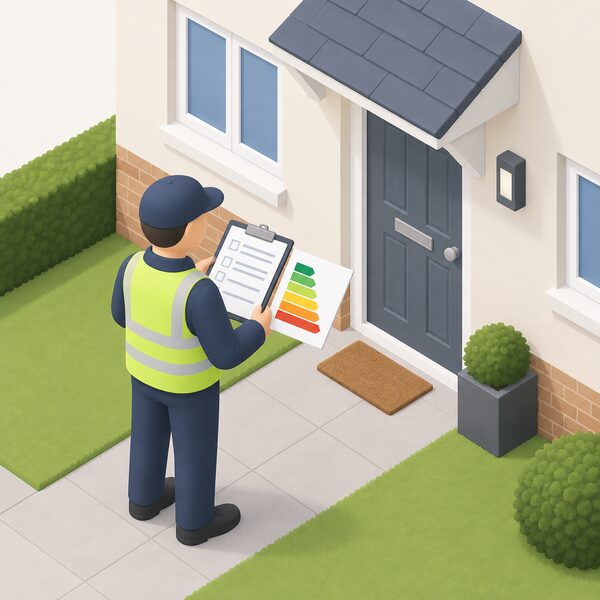
There is no single national application form. Independent scheme guidance sets out the first step as reaching out to an approved ECO4 supplier to express interest14. Council guidance suggests speaking to an organisation that can offer free and impartial energy and bill saving support and assess whether a household might be eligible for funding3. Independent guidance offers two routes: contact the local council to find out if it is taking part, or contact an energy supplier directly8. Another independent guide describes applying through the energy supplier, many of which have dedicated webpages with steps to follow22.
Maker guidance for boiler grants describes a three-stage process: check eligibility through the government's online checker or by contacting one of the main energy suppliers, who can direct households to their list of approved installers; then a home survey by an approved installer; then installation if approved25.
Where the Flex route is used, the evidence trail is formal. The approved provider or agent is required to collect and submit evidence of income and other relevant details to the council for eligibility assessment23. Ofgem publishes an eligibility requirements form used to confirm the eligibility of properties receiving measures under the ECO4 Scheme26, and the scheme's eligibility routes are listed as the Help to Heat Group, Social Housing, LA Flex, Supplier Flex and In-fill27.
- Check whether any household member receives a qualifying benefit, or whether the household might meet a Flex income or health route.
- Contact an obligated energy supplier, or the local council, to establish which route applies.
- An approved installer surveys the property and confirms the EPC rating and the measures proposed.
- Evidence of benefit receipt or income is collected and submitted for assessment.
- Installation proceeds if the project is approved.
Where ECO4 sits among other support schemes
ECO4 is one of several routes to home energy funding, and the qualifying benefits overlap with other schemes without being identical. The Warm Home Discount has its own eligibility rules and names Housing Benefit among its qualifying benefits29, but it is a bill rebate rather than an installation scheme, and it is set to expire in 2026, with the government to decide what replaces it. ECO4, by contrast, funds physical measures: obligated energy suppliers are required to reduce heating costs for low income and vulnerable households by funding energy efficiency, insulation and heating measures23.
The scheme is also a staging post. Citizens Advice Wales considers the design of future support schemes following on from ECO430, and the legislation underpinning the obligation continues to be amended, with low-income qualifying actions required to have a combined score equal to or exceeding 90% of the participant's low-income minimum requirement for each phase13. For households, the practical comparison is between ECO4 and the schemes that fund similar work: the Energy Company Obligation as the parent scheme, ECO4 Flex for households outside the benefit list, the Great British Insulation Scheme for single insulation measures, and the Boiler Upgrade Scheme for heat pumps, which has its own eligibility rules and does not depend on benefits.
The wider context is that ECO4 has been assessed as failing some of the households it was meant to reach13, and that its funding rules have been criticised for requiring resident contributions that low income households cannot meet. The scheme's own end date, 31 December 2026, means the window for a claim is finite1. Households weighing up which route fits should start from the full guide to home energy grants and the list of benefits that qualify for energy grants.
Sources30 cited
- ECO4 supplier administration guidance, Ofgem, 2025
- Energy Company Obligation: homeowners and tenants, Ofgem, 2026
- Home energy efficiency, Bridgend County Borough Council, 2026
- ECO4 vs ECO3: what installers need to know, Wolseley, 2026
- ECO4 and GBIS eligibility and pre-installation declaration v1.1, Ofgem, 2026
- ECO4 summary updates document, Ofgem, 2022
- ECO4 Flex and GBIS Flex information document, Ceredigion County Council, 2025
- ECO4, Elmhurst Energy, 2026
- What boiler grants are available to homeowners, Ideal Heating, 2026
- Statement of intent, Leeds City Council, 2024
- Birmingham City Council's ECO4 Flex statement of intent, Birmingham City Council, 2024
- Retrofit your home, TrustMark, 2026
- ECO4 scheme failing health vulnerable households, Energy Systems Catapult, 2025
- ECO4 consumer grants and incentives, MCS Certified, 2026
- Financial support for home energy, Energy Saving Trust, 2026
- ECO4 Delivery Guidance v1.1, Ofgem, 2023
- Energy saving at home, Centre for Alternative Technology, 2025
- Beyond cost: making energy efficiency measures accessible to low income households, Citizens Advice Wales, 2025
- Is there really such a thing as free solar panels?, Low Carbon Hub, 2025
- End of ECO announcement, Birmingham City Council, 2026
- ECO4 scheme, West Lindsey District Council, 2025
- How to make a Victorian house more energy efficient, Uswitch, 2025
- ECO flexibility funding, Ceredigion County Council, 2026
- ECO4 delivery guidance version 4.0, Ofgem, 2026
- Energy Company Obligation ECO scheme, Leeds City Council, 2026
- ECO4 eligibility requirements form v1.0, Ofgem, 2022
- The Electricity and Gas (Energy Company Obligation) Order 2025, legislation.gov.uk, 2025
- Energy Company Obligation ECO4 guidance delivery v1, Ofgem, 2022
- The Warm Home Discount Scheme: if you live in England and Wales, GOV.UK, 2026
- ECO4 eligibility requirements, Ofgem, 2023
 Grants and Energy IndependenceCan you get a grant for solar panels or a battery?
 Smart Charging RewardsCovers the schemes that pay or reward households for shifting car charging, including the Demand Flexibility Service, app-based reward programmes and supplier incentives.
 V2G Earnings and TariffsExplains how households are paid under vehicle-to-grid arrangements, whether through export payments, a flat monthly credit or a time-of-use tariff.
 Home Energy AssessmentsWhich home energy check do you actually need?
 The Full Grants and Schemes GuideWhich grants can you actually get right now, and how do you apply for them?
 Check Which Energy Grants ApplyWhich energy grants can you actually get right now, and which have closed?