

In this answer
Short answer
Yes, a free boiler grant can exist under ECO4, but it is narrower than the phrase suggests. ECO4 funding pays for energy efficiency measures such as heating improvements and insulation to be installed, and homes with an EPC of D or below could receive heavily discounted or free home insulation, green heating systems or an upgraded boiler1. The scheme runs until 31 December 2026, following a nine-month extension, and no new applications can be funded once it closes3.
The important qualification is that a boiler on its own is rarely the deal. ECO4 will not provide for loft or cavity wall insulation on their own, and the scheme is built around packages of measures rather than single appliances5. Where an existing heating system is intact and under its lifespan, the scheme encourages homeowners to repair rather than replace it2. Eligibility also does not guarantee that funding is available, because it is the energy provider's decision which retrofit projects it chooses to fund6.
What ECO4 funds: a replacement boiler, usually alongside insulation
ECO4 is the current phase of the Energy Company Obligation, and its measure list is broad. It covers boiler upgrades to non-renewable and renewable heating systems, repair of a broken heating system, replacement of a broken efficient heating system, first time central heating, electric storage heater upgrades and repairs or replacement, connection to a district heating system, heating controls, solar PV, wall, roof, floor and loft insulation, draught proofing, window glazing and higher performance external doors3.
In practice, the boiler element is the part most households ask about, and it comes with conditions. Council guidance sets out the kinds of support available: installing central heating where there is no boiler or radiators, replacing storage heaters or coal fires with gas central heating, replacing a non-condensing combi boiler with a modern combi boiler, and replacing a heat only boiler with a modern combi boiler5. Those are specific swaps, not a general entitlement to a new boiler.
The scheme also leans towards greener replacements. ECO4 encourages homeowners to replace their existing boilers with greener alternatives, such as heat pumps2. That sits alongside the insulation measures, which are the backbone of the scheme: ECO funding pays for energy efficiency measures such as heating improvements and insulation to be installed1.
For a household, the independence question is straightforward. A funded boiler and insulation package reduces how much gas or electricity the home needs to stay warm, which lowers exposure to price movements and to the grid. It does not remove dependence: the home still runs on mains gas or electricity, still buys that energy from a supplier, and the work is chosen and paid for by that supplier's obligation rather than by the household. The grant buys efficiency, not autonomy.

Eligibility: who qualifies for a grant
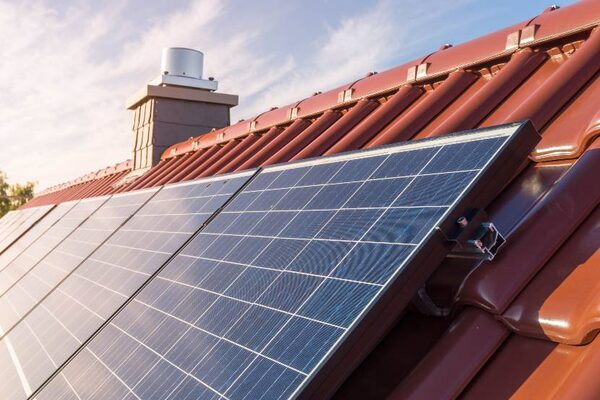
The main ECO4 route runs through means-tested benefits, but it is not the only one. Local authorities publish Flexible Eligibility routes under ECO4 that allow households without benefits to qualify for help if they meet income, EPC rating or health-vulnerability criteria8. Because those routes are set locally, the criteria differ between council areas, and a household that fails in one district may pass in the next.
Tenure matters less than people assume. Council guidance for ECO4 and the Great British Insulation Scheme Flex schemes lists homeowners, private tenants and landlords as eligible applicants9. ECO4 Flex measures can include solid wall insulation, cavity wall insulation, room in roof insulation, loft insulation, flat roof insulation, electric storage heater upgrades, first time central heating to air source heat pump, boiler upgrades from oil, LPG and solid fuel to air source heat pump, and solar photovoltaic panels10.
Property condition is the other gate. Homes with an EPC of D or below are the target group for heavily discounted or free insulation, green heating systems or an upgraded boiler2. For off-gas homes, the separate Home Upgrade Grant has been available to households living in homes with no gas boiler and with an energy efficiency rating of D or worse, with a household income of £36,000 or less depending on where you live11.
Two limits are worth stating plainly. Eligibility for ECO4 does not guarantee that funding is available10. And the number of available boiler grants under ECO4 has been capped at 5,000, which makes the boiler element a small part of a scheme that is mostly about the building fabric2.
How the grant process works
There is no central application form for a household to complete. Council guidance states that households that think they may qualify for ECO funding can speak to an organisation offering free and impartial energy and bill saving support, which can assess whether they might be eligible for funding1. From there, the supplier or its installer decides whether the project proceeds.
That structure explains why the process feels opaque. ECO4 is not a grant scheme as it is your energy provider's decision which retrofit projects that they choose to fund6. The measures themselves are delivered by installers, and council guidance advises checking that the installer is Gas Safe registered to work on gas boilers12.
For comparison, the Boiler Upgrade Scheme works the opposite way round. Its application is installer-led, with the installer applying for the grant on the property owner's behalf, and the grant is applied upfront as a discount to the cost of the installation rather than paid to the household13. The installer submits a voucher application, Ofgem issues a voucher, the installer submits a redemption application, and Ofgem pays the installer15. That is a two-stage process with a paper trail a household can follow, which ECO4 does not offer in the same form.
The practical consequence for a household is that timing and persistence matter more than paperwork. A supplier decides its own programme of work, so a household that qualifies may still wait. The Energy Company Obligation page sets out how supplier funding works more broadly, and ECO4 covers the scheme's own rules.
Where ECO4 falls short: what it will not cover

The exclusions are as important as the entitlements. ECO4 will not provide for loft or cavity wall insulation on their own5. In general, the replacement, upgrade or repair of a boiler, central heating system or electric storage heater is not eligible under the private rented sector route3. And where an existing heating system is intact and under its lifespan, the scheme encourages homeowners to repair rather than replace it2.
Funding cannot be stacked either. Funding for measures delivered under ECO4 must not be blended with funding from other government schemes or grants, including but not limited to the Warm Home Discount, Boiler Upgrade Scheme, Social Housing Decarbonisation Fund and Home Upgrade Grant7. Funding from the Boiler Upgrade Scheme and ECO cannot be blended for the same measure or be included within an ECO4 project17.
"Funding for measures delivered under ECO4 must not be blended with funding from other government schemes or grants, including but not limited to Warm Home Discount (WHD), Boiler Upgrade Scheme (BUS), Social Housing Decarbonisation Fund (SHDF) and Home Upgrade Grant (HUG)"
That rule shapes what a household can realistically plan. A home that wants a heat pump through the Boiler Upgrade Scheme cannot use ECO4 money for the same measure, and a home that takes ECO4 insulation cannot top it up with a Home Upgrade Grant. The schemes are alternatives at the level of the individual measure, not layers.
The independence picture is mixed here too. ECO4 work is funded by an obligation on suppliers, delivered by their chosen installers, and capped in volume. A household gains a warmer, cheaper-to-run home, but no control over what is installed, when, or by whom, and no ongoing asset beyond the physical measures themselves.
ECO4's closing dates and what to do instead
ECO4 will run until 31 December 2026, following a nine-month extension3. The scheme was originally due to end on 31 March 2026, with no subsequent ECO5 replacement10. Once it closes to new applications, no new applications can be funded4.
The deadlines are hard at both ends. Installation extensions cannot allow installation dates beyond 31 December 20264. Some council pages already list the scheme as closed, reflecting local allocation rather than the national end date: one district states plainly that the grant is currently closed18. The ending of funding for the Energy Company Obligation (ECO4) scheme is also reflected in government guidance on domestic energy tariff reductions19.
Citizens Advice had argued for the scheme to be extended beyond March 2026, which is where the nine-month extension came from20. There is no ECO5 to follow it.
What replaces it depends on where the household lives and what it needs. The Warm Homes: Local Grant provides free or subsidised home improvements for eligible households, including insulation upgrades, heat pump installations, solar panels, ventilation and damp-prevention measures21. It is open to homes using any fuel type: gas, electric, oil, LPG, coal and solid fuel22. Households must either receive specific means-tested benefits or qualify under Route 2 of ECO4 Flex criteria, and homes qualifying under ECO4 Flex (Route 2) are also eligible23.
For households in Scotland, Wales and Northern Ireland, the delivery bodies and scheme names differ, and the home energy grants pillar sets out the national picture. The Warm Homes: Local Grant page covers the successor scheme in detail.
ECO4 or the Warm Homes Local Grant: which fits which household

The two schemes overlap deliberately, and the overlap is the useful part. Homes qualifying under ECO4 Flex (Route 2) are also eligible for the Warm Homes Local Grant, and the household must either receive specific means-tested benefits or qualify under Route 2 of ECO4 Flex criteria23. A household that has already been assessed under ECO4 Flex therefore has a route into the successor scheme.
The differences are in scope and fuel. The Warm Homes Local Grant is open to homes using any fuel type: gas, electric, oil, LPG, coal and solid fuel22. Its funded measures include insulation upgrades, heat-pump installations, solar panels, ventilation and damp-prevention measures, and it also covers biomass boilers21. ECO4, by contrast, is built around a measure table that runs from boiler upgrades and first time central heating to insulation, glazing and doors3.
| Question | ECO4 | Warm Homes: Local Grant |
|---|---|---|
| Who funds it | Energy suppliers under an obligation6 | Government-funded local delivery21 |
| Fuel types | Gas, electric, oil, LPG, solid fuel measures in the table3 | Any fuel type: gas, electric, oil, LPG, coal, solid fuel22 |
| Boiler element | Capped at 5,000 boiler grants2 | Insulation upgrades, heat pumps, solar, ventilation, damp prevention21 |
| Eligibility route | Benefits or local Flex criteria8 | Benefits or ECO4 Flex Route 223 |
| End date | 31 December 20263 | Runs to March 2028 in at least one area25 |
For a household weighing the two, the deciding facts are the closing date and the measure. ECO4 ends on 31 December 2026 and its boiler grants are capped at 5,0002. The Warm Homes Local Grant has a longer horizon, though allocation is finite: in Somerset, all available funding has been allocated until the scheme ends in March 2028, with new applicants placed on a waiting list25. The Warm Homes: Local Grant page and the ECO4 page carry the detail for each.
Neither scheme delivers energy independence on its own. Both reduce demand for bought energy and improve the building, but the home remains connected to a supplier and, in most cases, to the gas grid. What they change is how much energy the household has to buy, and how exposed it is when prices move.
Sources25 cited
- ECO4 scheme overview, Ofgem
- ECO4, Elmhurst Energy
- ECO4 delivery guidance version 4.0, Ofgem
- ECO4 supplier administration guidance, Ofgem
- Energy Company Obligation ECO4 scheme, Derbyshire County Council
- ECO4 scheme, West Lindsey District Council
- Homeowners and tenants, Ofgem
- Is there really such a thing as free solar panels?, Low Carbon Hub
- Energy Company Obligation ECO4, Essex County Council
- ECO Flexibility Funding, Ceredigion County Council
- How to get help with energy bills, Confused.com
- ECO4 Flex open, South Cambridgeshire District Council
- Boiler Upgrade Scheme, GOV.UK
- Boiler Upgrade Scheme guidance for property owners, Ofgem
- Boiler Upgrade Scheme guidance for property owners, Ofgem
- Boiler Upgrade Scheme guidance for installers, Ofgem
- ECO4 delivery guidance version 3.2, Ofgem
- ECO4 and ECO Flexible Eligibility, Breckland Council
- Domestic energy tariff reductions 2026: guidance for energy suppliers, GOV.UK
- Citizens Advice response to consultation on extending ECO4, Citizens Advice
- Warmer Homes, Greater London Authority
- Warm Homes Local Grant 2025 to 2028, Birmingham City Council
- Apply for a Warm Homes Local Grant, Liverpool City Council
- Home heating, Belfast City Council
- End of ECO announcement, Birmingham City Council
 Grants and Energy IndependenceCan you get a grant for solar panels or a battery?
 Financing an InstallationPaying monthly for a boiler, solar panels, battery or heat pump sounds simple, but who actually lends you the money and what happens if the work goes wrong?
 The Full Boilers and Heating GuideWhich boiler suits your home, and when is it worth swapping the old one?
 Energy ConsultationsWhen new rules on boilers, heat pumps or energy certificates are proposed, you can have your say before they become final.
 Hydrogen Heating PolicyWill hydrogen ever heat your home, and when will the government decide?
 Will Gas Boilers Be Banned?What has actually been legislated, proposed or dropped on gas and oil boiler phase-out across the four UK nations, and the difference between new build rules and replacement in existing homes.