In this guide
Insulation grants in England now run through two main routes: the Warm Homes: Local Grant, delivered by councils, and the remaining supplier obligation work under ECO4. The Warm Homes: Local Grant funds 100 per cent of the cost up to £15,000 for an owner occupier or a private landlord's first property, and 50 per cent of the cost up to £7,500 for a landlord's second and subsequent properties1. It runs from April 2025 to March 2028 and has been allocated £500 million over three years2.
The Great British Insulation Scheme, formerly known as ECO+, has closed. Its application service shut, installations had to be complete by 31 March 2026, and the government confirmed there would be no extension, no increase in targets and no carry-over arrangements4. It installed 126,000 measures up to the end of December 2025 against an aim of helping around 300,000 households7.
What remains for a household in England is a patchwork: a council-run grant with a queue in each area, ECO4 Flexible Eligibility for those who do not receive a means-tested benefit, and a small number of local top-ups. The sections below set out who qualifies, what is funded, what it costs the household, and how to check that an approach is genuine.
The grant landscape in England: which schemes exist and who runs them
Three funding streams matter for fabric measures in England, and they are run by different bodies with different rules.
The Warm Homes: Local Grant is administered by local authorities and provides grants to low-income households living in privately owned properties1. It is the successor to the local authority delivery model, and 74 projects involving 271 local authorities, over 97 per cent of eligible councils in England, have been allocated funding2. Its companion, the Warm Homes: Social Housing Fund, provides funding to local authorities, combined authorities, registered providers of social housing, and registered charities that own social housing in England9.
The supplier obligation schemes sit alongside. ECO4 is funded by energy suppliers and delivered through a set of eligibility routes: the Help to Heat Group, Social Housing, LA Flex, In-Fill and Supplier Flex11. The Great British Insulation Scheme was the smaller sibling, a government energy-efficiency scheme administered by Ofgem, designed to deliver improvements to the least energy-efficient homes in Great Britain to help tackle fuel poverty and reduce carbon emissions12. It applied to England, Scotland and Wales, and its funding was determined by the energy companies themselves, depending on the measure type and other factors13.
The distinction matters for a household. Council-run funding is allocated by area and queued; supplier obligation funding is delivered by obligated suppliers and their installers, with eligibility set nationally and widened locally through flex routes. A household in England may be eligible under more than one, but only one route will fund a given measure.
Warm Homes: Local Grant: what it funds and how much
The headline figures are set by tenure. An owner occupier or a private landlord's first property in England receives 100 per cent of the cost up to £15,000 of energy performance improvements. A private landlord's second and subsequent properties receive 50 per cent of the cost up to £7,5001. Up to £30,000 of measures is available per property under the scheme as described by participating councils3.
One set of scheme rules gives 100 per cent of the cost up to £15,000, while another gives 100 per cent of the cost up to £30,0001. Both figures are in circulation for the same tenure, and the difference is not resolved in the published material.
Social housing landlords must contribute at least 50 per cent of the total cost of upgrades4. The scheme aims to bring homes treated under it to EPC EER Band C wherever possible within the cost caps4.
The measures funded are fabric and generation, not combustion. Eligible energy performance measures include cavity wall insulation, other insulation types, heating controls, hot water cylinder measures, low energy lighting, solar PV, solar thermal, digital and smart controls, draughtproofing, double and triple glazing, energy efficiency doors and domestic batteries4. Gas and oil boilers are not eligible improvements under the scheme1.
| Household or property | Funding | Cap |
|---|---|---|
| Owner occupier, or landlord's first property | 100% of cost | up to £15,0001 |
| Landlord's second and subsequent properties | 50% of cost | up to £7,5001 |
| Social housing landlord | Landlord contributes at least 50% | scheme cost caps4 |
The scheme's budget is £500 million over three years as part of the Autumn Budget 2024 settlement7. That figure sets the scale: it is a grant programme measured in hundreds of millions, spread across 271 councils and three years, not an entitlement open to every household that applies.
Warm Homes: Local Grant eligibility: income, EPC band and home type
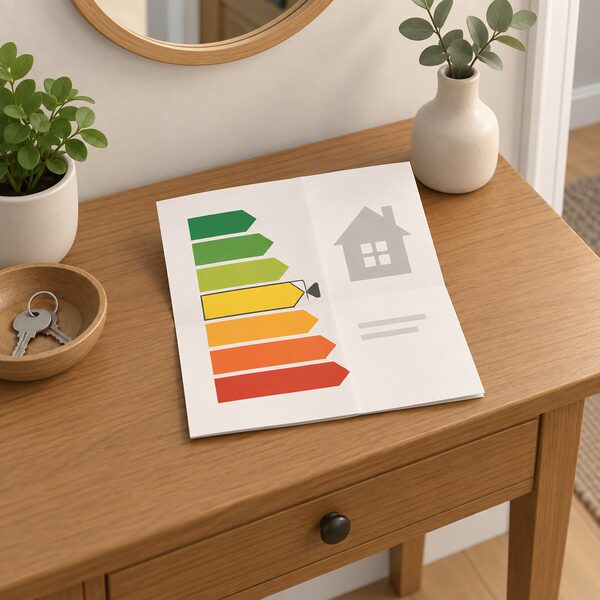
Eligibility turns on three things: who lives in the home, what the property's energy rating is, and who owns it.
The income test is usually a household income of £36,000 a year or less4. One council describes the scheme as supporting households with a combined income of less than £36,0003. The published rules also refer to a home in England, privately owned, EPC D to G, household savings less than £25,000, and household income usually £36,000 a year or less, with postcode or benefits exceptions4. The two formulations of the income threshold are not reconciled in the published material.
The EPC test differs by tenure. Owner occupied properties qualify with an EPC rating of Band D, E, F or G. Privately rented properties qualify with an EPC rating of Band D or E1. The scheme's target is to raise treated homes to Band C wherever possible within the cost caps4.
For landlords, the tenant or tenants must meet the household eligibility rules and provide evidence of income. Properties must be at least EPC Band E unless they are Band F or G with a registered exemption, and the landlord must not have exceeded £315,000 in minimum financial assistance under government rules7.
Homes qualifying under ECO4 Flex Route 2 are also eligible for the Warm Homes: Local Grant under route D7. That cross-reference matters: a household that has already been assessed under the supplier obligation flex route may be able to move across to the council scheme without a fresh eligibility argument.
Great British Insulation Scheme: eligibility routes and what is funded
The Great British Insulation Scheme ran from April 2023 to March 2026, when funding ended as with ECO47. It delivered the rapid installation of value-for-money insulation measures and, in some cases, heating controls, and it delivered one insulation measure per home13.
Its eligibility routes were General Eligibility, Low-income and Social Housing, In-fill and LA Flex11. The measures funded included cavity wall insulation, including party wall13. Certain heating controls, such as room thermostats, were allowed as a secondary measure for eligible insulation measures installed in owner-occupied premises in the low-income group13.
The scheme extended eligibility to households in lower council tax band properties, bands A to D in England and A to E in Scotland and Wales, so long as their energy efficiency rating was band D or lower7. There was no minimum requirement under the scheme for a property's Standard Assessment Procedure rating to be increased through the measure13.
Higher-cost measures, such as solid wall insulation, were more likely to require a contribution from the household13. The customer contribution was not known until after the assessment: the applicant found out after the assessment if they needed to pay anything towards the installation of the insulation15.
All measures available under the scheme had to be delivered according to PAS2030/2035 standards, and all installers had to be a TrustMark-registered business13. Only obligated suppliers could apply under the innovation routes, and a new or innovative product or system had to be supported through work with an obligated supplier, which liaised with Ofgem and submitted the application13.
The Great British Insulation Scheme has closed: what it delivered and what remains
The scheme has closed. The service to check eligibility for free or cheaper home insulation has closed, and installations had to be complete by 31 March 2026, when the scheme ended15. The government confirmed there would be no extension to the Great British Insulation Scheme, no increase in targets and no carry-over arrangements6. The ending of funding for the Energy Company Obligation (ECO4) Scheme and the Great British Insulation Scheme was set out in guidance for energy suppliers16.
It delivered 126,000 measures up to the end of December 2025, against an aim of helping around 300,000 households7. The gap between the two figures is the clearest measure of what the scheme did not achieve.
Some energy suppliers were still accepting applications after the closure, and the advice is to check with your supplier15. If you have questions about an existing application, contact the energy supplier you applied to15. Ofgem publishes contact details of obligated suppliers, and general enquiries can go to GBIS.enquiry@ofgem.gov.uk17.
Two technical points survive the closure. Measures approved under the ECO4 DLM route were not eligible for delivery under the scheme, while ECO4 approved IMs could be delivered where measure type and eligibility requirements for the Great British Insulation Scheme were met18. The 5 per cent applicant uplift did not apply, and award of the innovation uplift was capped at 10 per cent of a supplier's low-income group obligation18.
ECO4 Flexible Eligibility: the three routes for households not on benefits
ECO4 Flexible Eligibility is a household referral mechanism within the wider ECO4 Scheme for households not in receipt of a means-tested benefit19. Both the property and the household must adhere to at least one of the three available routes19.
Route 2 covers EPC bands E to G owner-occupied households and private rented sector households that meet at least two of a set of proxy criteria19. Route 3 covers EPC bands D to G owner-occupied households and E to G private rented sector households identified and referred by a GP, a Health Board or an NHS trust19.
A separate income route used by councils covers households with a gross household income of under £31,00020. Essex County Council describes its vulnerable household route as being identified by the council as a vulnerable household which is not eligible under any other scheme21.
The measures available under ECO4 Flex include solid wall insulation, cavity wall insulation, room in roof insulation, loft insulation, flat roof insulation, electric storage heater upgrade, first time central heating to air source heat pump, boiler upgrade from oil, LPG and solid fuel to air source heat pump, and solar photovoltaic panels19.
Local authorities and devolved administrations can widen the eligibility criteria through flex routes, and councils can sign up to participate in the Great British Insulation Scheme local authority and supplier flex22. Suppliers and local authorities need to collect sufficient evidence from all local authority and Supplier Flex measures installed to ensure they meet the eligibility and compliance requirements23.
For a household that does not meet the ECO4 and GBIS Flex criteria, a council may still have a local scheme. Essex, for example, directs those who do not meet the criteria to its own Warm Homes Essex offer21.
How to apply and what the process costs
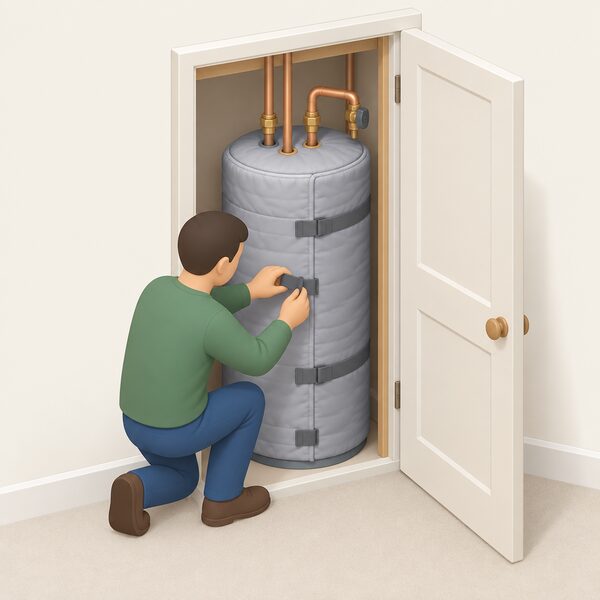
For the Warm Homes: Local Grant, the route in is the online form on GOV.UK to check eligibility. The form may ask about benefits received, household income in one year, tax and deduction costs in one year, council tax costs in one year, and mortgage or rent costs in one year4.
Once a council's queue is full, any further applications from that area are placed on a waiting list, and if space becomes available, applications are invited from the waiting list in the order they were received4.
The cost to the household depends on tenure and measure. Tenants should not pay for upgrade costs24. For the Great British Insulation Scheme, the applicant found out after the assessment if they needed to pay anything towards the installation of the insulation15. Higher-cost measures such as solid wall insulation were more likely to require a contribution from the household13.
Where a grant does not cover the full cost, the household pays the difference to the installer. The Boiler Upgrade Scheme, which funds heating rather than fabric, illustrates how grant money is handled: the grant is not received directly by the property owner, it is paid to the installer and reflected in the quote and invoice25. The Boiler Upgrade Scheme pays £5,000 for biomass boilers in limited circumstances26.
Outside England, the shape of support differs. Northern Ireland's Affordable Warmth Scheme pays grant aid up to £10,000 where a home is of solid wall construction and needs insulation, and requires the installer employed to be able to provide a minimum 25-year guarantee for cavity wall or solid wall insulation work27. The Help to Insulate and Keep Warm Discount schemes in Northern Ireland offer a grant of 40 per cent towards the cost of cavity wall insulation and loft insulation, up to £650 maximum grant per insulation measure and up to £1,000 maximum grant for cavity wall insulation by extraction and refill, with a hot water tank jacket fully funded as an additional measure28.
What installers, standards and guarantees apply
All installers under the Great British Insulation Scheme had to be TrustMark-accredited and will have a registration number, and all installers had to be a TrustMark-registered business12. All measures available under the scheme had to be delivered according to PAS2030/203513.
The guarantee position is split. Ofgem does not administer appropriate guarantees or financial protection for measures installed under the Great British Insulation Scheme, and the current list of appropriate guarantees can be found on the TrustMark website13. In Northern Ireland, the Affordable Warmth Scheme requires the installer employed to be able to provide a minimum 25-year guarantee for cavity wall or solid wall insulation work27.
The Great British Insulation Scheme and ECO4 forms are used to collect and provide evidence of measure eligibility13. That paperwork trail is what a household should expect to see: an eligibility declaration before work, and a guarantee document after it.
Scams and how to check an approach is genuine
The strongest check is who makes contact and who arranges the survey. Under the Great British Insulation Scheme, if an applicant was eligible for support, their energy supplier arranged an assessment of the property15. A cold call offering a free survey, with no supplier behind it, does not match that process.
Suspected fraud can be reported via Ofgem's counter fraud section, which also covers Ofgem's role in preventing fraud17. Complaints about an installation are handled under the complaints process on a linked page, and to complain about insulation installed under the scheme, the Ofgem energy company obligation complaints guidance is the route17. For the Boiler Upgrade Scheme, suspected fraud can be reported to Ofgem by emailing counterfraud@ofgem.gov.uk25.
Checking a business is straightforward. Installers under the supplier obligation schemes must be TrustMark-registered, and the registration number can be verified. The appropriate guarantee for a measure should appear on the TrustMark website's list13.
What comes next under the Warm Homes Plan
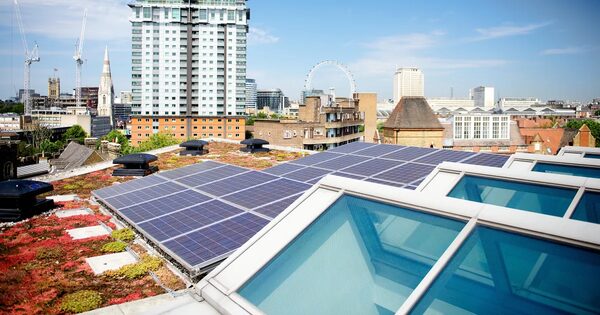
The Warm Homes Plan is the framework that follows. It will invest £15 billion over this Parliament to cut energy bills29. The plan is intended to upgrade up to 5 million homes, lift up to a million families out of fuel poverty and triple the number of homes with rooftop solar panels by 2030, and it sets an objective of 180,000 additional jobs in energy efficiency and clean heating by 203030.
Further Warm Homes funding has been announced for 2028 to 2030, which will allow new priority areas to be identified7. The Warm Homes: Local Grant delivery window is scheduled to close on 31 March 20284.
The Warm Homes: Local Grant is the current national programme for England, and its funding is already committed in some areas. All available funding for the scheme in Somerset has been allocated until the scheme ends in March 2028, with new applicants placed on a waiting list31. That pattern is likely to repeat as councils reach their queue caps.
For a household, the practical position is that fabric funding in England is now a queued, council-administered grant with a fixed delivery window, plus whatever ECO4 flex route a council operates. The dependence that remains is on the grid, on a supplier to deliver obligation-funded work, and on a council to hold a place in its queue. Insulation reduces the amount of energy a home needs, but it does not remove the connection to a supplier or the need for a heating system. Households weighing fabric work against heating replacement can read more on what insulation a heat pump needs and on planning a whole-house retrofit.
Sources31 cited
- Warm Homes: Local Grant statistics, August 2026, GOV.UK, 2026
- Warm Homes: Local Grant statistics, May 2026, GOV.UK, 2026
- Warm Homes: Local Grant and Warm Homes: Social Housing Fund statistics methodology and background note, GOV.UK, 2026
- Warm Homes: Local Grant policy guidance, July 2026, GOV.UK, 2026
- Summary of updates to ECO4 delivery guidance and measures table, Ofgem, 2026
- Extending the ECO4 end date, GOV.UK, 2026
- Great British Insulation Scheme release, September 2025, GOV.UK, 2025
- Great British Insulation Scheme, Ofgem, 2026
- Warm Homes: Social Housing Fund statistics, August 2026, GOV.UK, 2026
- Heat pump deployment tables, Q2 2026, GOV.UK, 2026
- ECO4 and GBIS eligibility and pre-installation declaration, Ofgem, 2025
- Great British Insulation Scheme: homeowners and tenants, Ofgem, 2026
- Great British Insulation Scheme: supply chain, Ofgem, 2026
- Great British Insulation Scheme: energy suppliers, Ofgem, 2026
- Apply for the Great British Insulation Scheme, GOV.UK, 2026
- Domestic energy tariff reductions 2026: guidance for energy suppliers, GOV.UK, 2026
- Great British Insulation Scheme: contacts, guidance and resources, Ofgem, 2026
- ECO4 new measures and products guidance v3.0, Ofgem, 2026
- ECO4 flexibility funding, Ceredigion County Council, 2026
- ECO4 scheme, West Lindsey District Council, 2025
- Energy Company Obligation ECO4, Essex County Council, 2026
- Great British Insulation Scheme: local authorities, Ofgem, 2026
- GB insulation scheme: government response, GOV.UK, 2023
- Warmer Homes, Greater London Authority, 2026
- Boiler Upgrade Scheme guidance for property owners, Ofgem, 2026
- Boiler Upgrade Scheme guidance for installers v5.1, Ofgem, 2026
- Affordable Warmth Scheme, Northern Ireland Housing Executive, 2026
- NISEP list of schemes 2026-27, Utility Regulator Northern Ireland, 2026
- Warm Homes: Social Housing Fund wave 3 scheme guidance, May 2026 addendum, GOV.UK, 2026
- Warm Homes Local Grant 2025 to 2028, Birmingham City Council, 2026
- Warm Homes: Local Grant, Greater Manchester Combined Authority, 2026
 Insulation and Glazing CostsTypical installed costs for cavity wall, solid wall, loft and roof insulation, draught-proofing and replacement glazing, by measure and home size, with the savings, VAT position and funding schemes that shape the final bill.
 The Full Grants and Schemes GuideWhich grants can you actually get right now, and how do you apply for them?
 Grants and Energy IndependenceCan you get a grant for solar panels or a battery?
 Check Which Energy Grants ApplyWhich energy grants can you actually get right now, and which have closed?
 Welsh Building Regs InsulationDo insulation or glazing rules in Wales differ from England?
 Building Regs Part L InsulationAdding insulation or replacing windows?