In this guide
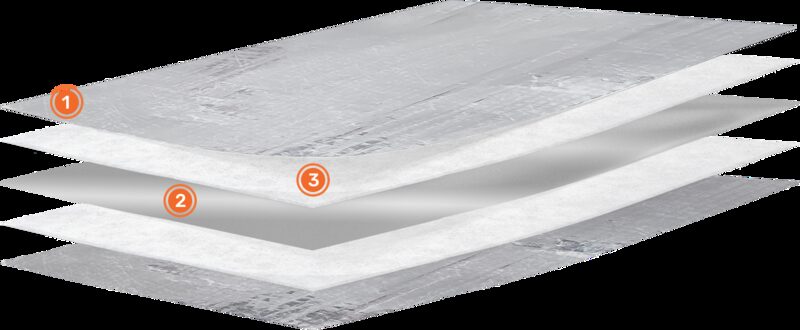
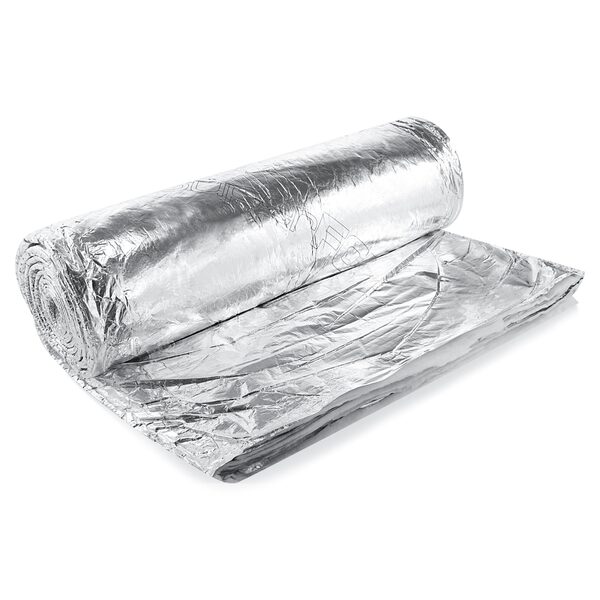
Multifoil insulation is a thin blanket made from several layers of foil combined with layers of wadding1. SuperFOIL, a UK maker, sells it as a "3-in-1" product: one layer is meant to act as insulation, a vapour control layer and a radiant barrier2. The foil reflects radiant heat. The wadding and the trapped layers slow down heat moving by conduction and convection.
The figures most often quoted for multifoil are an R-value of up to 3.47 in roofs, 3.91 in walls and 5.22 beneath floors3. These are the manufacturer's best-case numbers. They only apply when the product is fitted with still, unventilated air gaps beside its shiny faces. The minimum gap is 13mm in a roof, 20mm in a wall and 50mm in a floor4. Without those gaps, the multifoil still does something, but it cannot reach its rated performance.
On cost, SuperFOIL places multifoil between the cheapest and the dearer options: more expensive than glass wool, but cheaper than most board or sheet insulation5. It claims multifoil lasts more than 50 years5. The government's own analysis gives basic, correctly installed roof insulation a typical life of 15 to 30 years6. Almost every performance claim for multifoil comes from manufacturers, and that should be kept in mind when reading them.
A 3-in-1 layer of foil and wadding
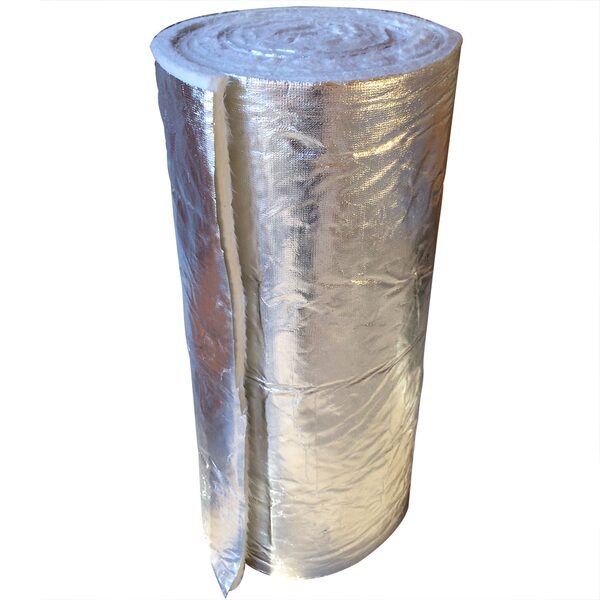
SuperFOIL describes multifoil as a combination of fibre wadding and layers of aluminium foil, and calls it a "certified 3 in 1 product"5. Each of the three roles covers a different job that would normally need a separate material:
- Insulation: the wadding and the layers slow the flow of heat through the blanket.
- Radiant barrier: the low-emissivity foil faces reflect heat radiating across an air gap.
- Vapour control layer or breather membrane: the foil stops water vapour passing through. Some products are made breathable instead, to act as a breather membrane8.
Which of the last two a product provides depends on the product chosen9. SuperFOIL's standard wall multifoil includes a vapour control layer, while its breathable multifoil includes a breather membrane in its place10. The difference matters. A vapour control layer usually sits on the warm, room side of a build-up. A breather membrane usually sits on the cold, outer side, where moisture must be able to escape. Putting the wrong type in the wrong position can trap moisture, which is covered in detail on the page on condensation, damp and mould.
The company also says its multifoil is fully recyclable11 and made from up to 40% recycled material12. Both are its own statements.
For a household, the attraction is that one thin roll replaces two or three separate materials, which saves space and time. The catch is that the "insulation" part on its own is modest. Most of the rated figure comes from the still air on either side, which the builder has to create with battens. The following sections explain why.
How it works: reflecting heat and slowing it down
Heat moves in three ways. Conduction is heat passing through a solid. Convection is heat carried by moving air. Radiation is heat travelling as infrared energy across a space. Most bulk insulation, such as mineral wool, mainly slows conduction and convection by trapping air in fibres. Multifoil aims to deal with all three13. SuperFOIL says it combines highly reflective foils with wadding that does not conduct heat well, to prevent heat loss by conduction, convection and radiation12. Soprema, another manufacturer, describes it in the same way14.
The reflective part is what makes multifoil different. SuperFOIL states that with unventilated air gaps next to the shiny outer surfaces, multifoil can reflect up to 97% of radiant energy back to its source4. The company adds that this works in both directions. In winter it deals with heat escaping from the house. In summer it deals with heat getting in from a sun-warmed roof15.
The same principle is used in simpler household products. The Energy Saving Trust describes radiator reflector panels, which reflect heat from the back of a radiator into the room instead of letting it escape through the outside wall16. PIR insulation boards also come with a foil backing that acts as a moisture barrier and reflects heat17. So the foil face is not unique to multifoil. What is different is that multifoil depends much more heavily on reflection and much less on the thickness of the material.
This dependence has a practical consequence. A reflective surface only reflects heat when there is still air in front of it. If the foil is pressed directly against plasterboard, timber or another insulant, heat simply conducts through the contact point and most of the reflective benefit is lost. That is why the installation instructions put so much weight on battens and air gaps.
Performance: up to 3.47 in roofs, 3.91 in walls and 5.22 in floors
R-value measures how strongly a material resists heat flow: the higher the figure, the better. The headline multifoil figures of up to 3.47 in roofs, 3.91 in walls and 5.22 beneath floors come from a SuperFOIL news article published in 20223. The company's current product pages give figures that vary widely by product. Each is labelled as "core value + 2 air spaces" under EN 16012, the European test standard for reflective insulation. In other words, the figure includes the still air on both sides of the product, not just the product itself.
| SuperFOIL product | Roof R-value | Floor R-value | Wall R-value |
|---|---|---|---|
| SF60 | 4.6218 | not given | not given |
| SF19+ | 2.6019 | not given | not given |
| SF6 | 1.9020 | 3.6520 | not given |
| SFNC+ (fire-rated) | 1.6121 | not given | not given |
| SFBA 2/2 (bubble foil) | 1.0522 | 1.6722 | not given |
| Multipurpose Wrap | 1.0323 | 1.6523 | 1.4523 |
Two things stand out in the table. First, the same product scores higher under a floor than in a roof. SF6, for example, is rated 1.90 in a roof and 3.65 under a floor20. This is because heat trying to move downwards across still air is not helped by convection, so the air gap itself adds more resistance. Second, the air gaps make up a real part of every figure. SuperFOIL's own comparison tables give the best R-value of the air gap alone as 0.476 for a 13mm roof gap and 1.533 for a 50mm floor gap24.
Energy assessors do not simply take the maker's number. Under the RdSAP conventions used for EPCs, the thickness of multi-foil insulation "is entered as twice its actual thickness"25. So on an EPC, multifoil is treated like an ordinary insulant of double its real thickness. The declared R-value is not used directly. More on how EPCs work is on the page on Energy Performance Certificates.
To compare this with the rules: the consultation version of the Welsh Approved Document L Volume 1 lists 0.35 in column B for pitched roofs with insulation between the rafters26. That figure is a U-value, not an R-value. U-values measure heat loss through the whole roof, so a lower number is better. The page on U-values and R-values explains how the two measures relate.
The 13mm, 20mm and 50mm air gap rule
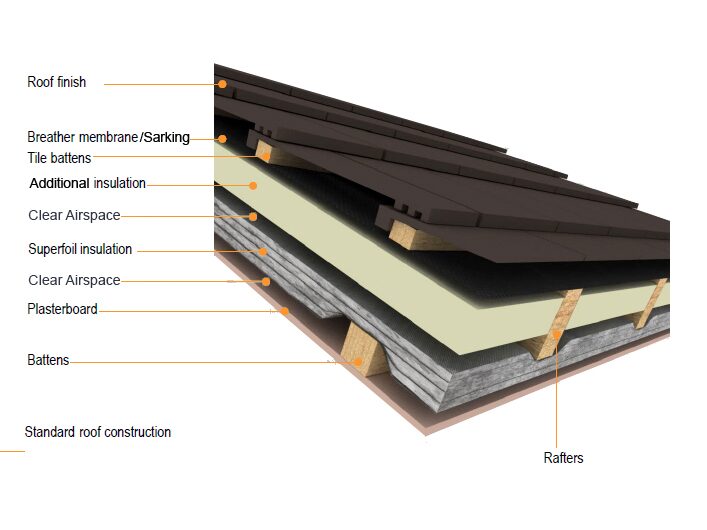
The rated performance depends on the air gaps. SuperFOIL's guidance sets minimum depths according to the direction in which the air would move4:
| Location | Direction of airflow | Minimum gap |
|---|---|---|
| Roof | Vertical | 13mm |
| Wall | Horizontal | 20mm |
| Floor | Downward | 50mm |
The same minimums apply to every SuperFOIL product, whether the project is a new build, a retrofit, a refurbishment or an extension4. The guidance is to have a gap on both sides of the multifoil, not just one27. The company says all of its multifoils except SFUF must be fitted with an air space to guarantee their best performance:
"Air spaces enable the full benefits of our products' radiant barrier properties"
The air must be still
A gap is only useful if the air in it stays still. SuperFOIL states that the air space must be unventilated to give its best thermal value. If the gap is slightly ventilated, a lower value applies. If it is well ventilated, the gap adds no thermal resistance at all4. This matters in roofs, where the timber often needs airflow to prevent condensation. A gap that is left open to that airflow cannot also count as the still air that multifoil relies on. The page on cold roof ventilation sets out when a roof needs to be ventilated.
Without a gap
SuperFOIL does not say that multifoil fails completely without a gap. It says that reflective insulation can still be effective, but that "you can't achieve the highest possible performance the multifoils are designed to provide"4. In practice, a multifoil stapled directly onto rafters and covered with plasterboard will perform well below its rated figure. The rated figure is only reached when the battens, gaps and taped joints are all in place.
Where it fits: roofs, walls, floors, sheds and conservatories
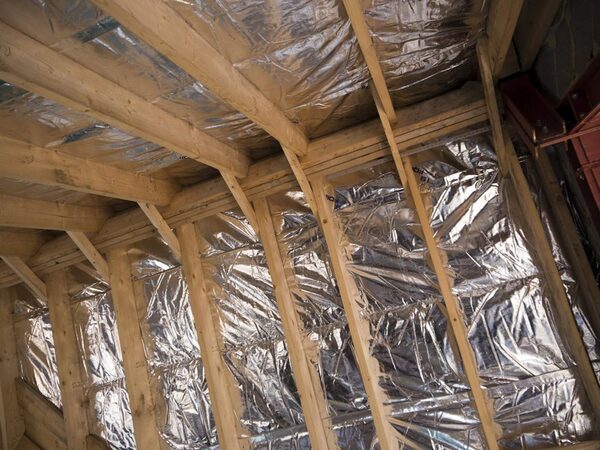
SuperFOIL markets its multifoils for roofs, walls and floors. SF6 is also sold for garden rooms, garages, sheds and conservatories, for both domestic and commercial projects20. SF60 is aimed at new build, retrofit, timber-frame and DIY projects18. The Multipurpose Wrap is sold for caravans, greenhouses, garage doors and garden buildings23. The company also mentions campervans and boats9.
Roofs
For pitched roofs, SuperFOIL offers products for use under the rafters (from inside) and over the rafters (from outside)29. Products for use under the rafters are described as highly vapour resistant, working as a vapour control layer on the room side. Products for use over the rafters carry what the maker calls a W1 watertight rating, which means they are designed to sit under the tiles as an underlay. The company claims both can greatly reduce the total thickness of the roof build-up29. On flat roofs, where every millimetre of height counts, the maker notes that multifoil takes up little space30. Related guidance is on the pages on roof insulation and loft conversions and room-in-roof insulation.
Walls and floors
In timber-frame walls, SuperFOIL describes its multifoils as a certified watertight membrane and claims a vapour resistance of 1200MNs/g31. For solid masonry walls lined from the inside, multifoil is one option among several covered on the page on solid wall insulation. Under suspended timber floors, the 50mm still gap below is what drives the high floor figures. The page on floor insulation explains how different floor types are insulated.
VAT treatment
UK VAT law lists "insulation for walls, floors, ceilings, roofs or lofts or for water tanks, pipes or other plumbing fittings" among energy-saving materials32. HMRC guidance repeats the same list of locations33. The VAT rate that applies to a particular job depends on the conditions in that legislation and guidance.
Multifoil, glass wool or board: cost, space and installation
Independent and official guidance generally presents mineral wool as the low-cost baseline. Local Energy Scotland says some measures, "like adding mineral wool to a loft, are cheap, effective and relatively easy"34. Citizens Advice notes that mineral wool may be cheaper and better at insulating than spray foam35. The Centre for Sustainable Energy says spray foam is much more expensive to install than mineral wool laid on the loft floor36. For timber-frame walls, the mineral wool trade body MIMA calls mineral wool "more cost effective than any other material available"37. That is a trade body's claim about its own material. By contrast, cellulose is described as costing up to twice as much as mineral wool or rigid foam38.
SuperFOIL's own comparison is as follows39:
| Point | Multifoil (maker's position) | Glass wool | Board or sheet (e.g. PIR) |
|---|---|---|---|
| Relative cost | Between the two | Lower than multifoil | Mostly higher than multifoil |
| Loft space | "as little as half of the space" of glass wool, for the same or better insulation | Thicker | Not compared |
| Extra functions | Vapour control layer or breather membrane and radiant barrier included | Needs a separate membrane | Foil facing reflects heat and resists moisture17 |
Space is where multifoil makes its strongest claim. A thin layer suits flat roofs, room-in-roof conversions and internal wall linings, where every millimetre of insulation takes away living space. SuperFOIL describes two ways of combining its product with others. In DUET, multifoil is used both inside and outside the structure. In COMBI, it is paired with mineral wool or foam board2. Floor insulation more generally uses boards, mineral wool or sprayable foam40.
No UK price is quoted here: multifoil is sold through distributors and prices are quoted by the supplier or installer. The page on insulation and glazing costs covers what is published. For a direct loft comparison, see multifoil vs mineral wool for loft insulation, and for the wider range of materials, insulation materials compared.
Installing it yourself: overlaps, fixings, sealing and finishing
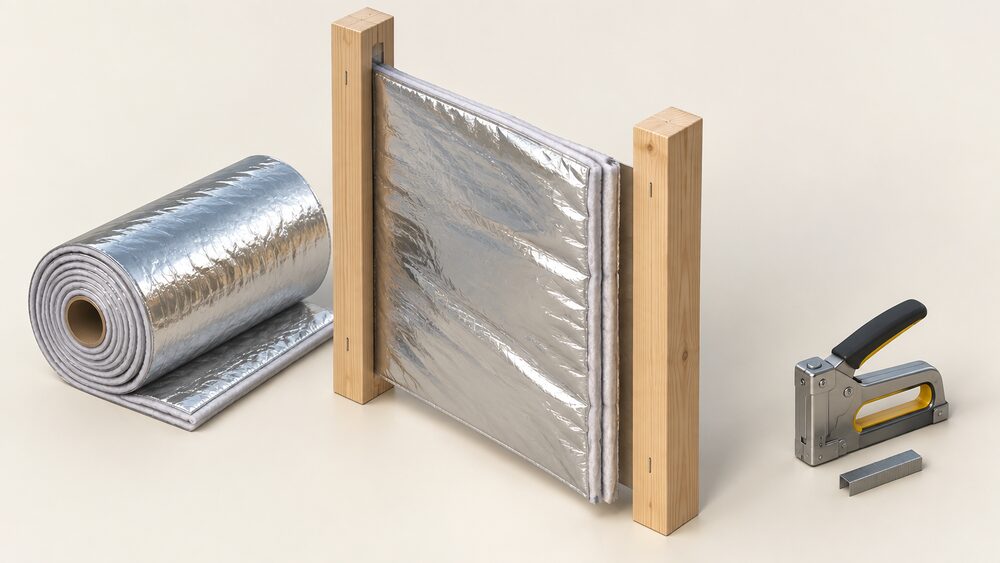
SuperFOIL states that, unlike spray foam, multifoil does not need a contractor to install30. It also says no specialist tools are needed8. Its shed and attic guides describe the process in this order27:
- Fix a frame of timber battens so that the space between them is never more than 600mm.
- Cover the surface with multifoil, keeping a small air gap on both sides.
- Overlap each new run over the previous one by about 50mm.
- Staple to the battens, with no more than 300mm between fixing points.
- Tape over the staple lines and all joints, gaps and tears with foil tape so that the layer is airtight9.
- Fold and secure the edges, then add a second set of battens to form the inner air gap.
- Finish with plasterboard on roofs and walls, or plywood (or similar) on floors27.
The taping step is what makes the multifoil work as a vapour control layer, as well as keeping the air gaps still. A torn or untaped joint lets moist indoor air reach cold timber behind it. The page on airtightness and air leakage explains why continuous layers matter.
For comparison, independent bodies also regard ordinary loft rolls as suitable for DIY. Which? lists "Can DIY install" as an advantage of blanket insulation42. Plymouth Energy Community says mineral wool can be installed by a householder with reasonable DIY skills43. Other jobs are different. Which? says warm loft insulation is harder and suggests using a professional, although it can be done as DIY by someone with the skills44. The Energy Saving Trust says cavity wall insulation "is not a job you can do yourself" and needs a registered installer45.
SuperFOIL describes multifoil as light, thin and easy to install46. It says its products suit new builds, retrofits and extensions, fitted over or under joists47. Further DIY options are on the page on low-cost and DIY insulation measures.
Lifespan, savings and what remains dependent
SuperFOIL's lifespan claims vary by document. Its guidance gives "over 50 years"5 and 50 plus years48. A 2025 statistics article gives "over 25 years up to the lifetime of a building", on the condition that the product is correctly installed with the required air gaps7. The official figure for basic, correctly installed roof insulation is a typical life of 15 to 30 years, with some types such as rockwool lasting up to 60 years6. There is no independent lifespan figure specifically for multifoil.
On savings, the Planning Portal says a home without loft insulation "could be losing as much as a third of your heating costs through your roof"49. SuperFOIL claims multifoil has cut heat loss through roofs and walls by up to 50% in some retrofit projects7. In a 2022 example, it claimed that multifoil insulation of a 200sqm roof "should have paid for itself after 5 years"3. These are the maker's own results, not independent measurements. For comparison, the Centre for Alternative Technology says a thinner layer of wood fibre board on a solid wall could cut heat loss through that wall by about 75%, and about 10cm could cut it by about 85%50. The page on how much insulation saves sets out the independent evidence.
Independence and dependence
Once fitted, multifoil has no running costs, needs no power supply, app or subscription, and the maker says it needs little maintenance41. Every unit of heat it keeps in reduces a household's dependence on gas, electricity and the tariffs that come with them. What it cannot do is remove that dependence. The home still needs a heat source and a supplier.
The product also creates one dependence of its own. Its rated performance relies on still air gaps staying intact for decades. A gap later crushed by stored boxes, pierced by new cabling or opened to ventilation loses its value without any visible sign. Any warranty is a claim against the manufacturer as a company. The broader picture is on the page on insulation, glazing and energy independence.
Safety and handling
SuperFOIL states that multifoil is made from non-hazardous materials, and that its wadding and metallised polymers carry no significant risk of being breathed in51. It says no specialist health and safety measures are needed for installers or occupants, and no personal protective equipment is required12. This is a contrast with mineral wool loft insulation, where Which? says a face mask, goggles and gloves are normally needed as a minimum42. It is also a contrast with spray foam, which the same SuperFOIL guide describes as potentially harmful to handle, especially during installation and if not cured properly51.
Other safety rules come from TLX, which makes a comparable reflective product:
De-rating means reducing the current a cable carries. A cable covered by insulation cannot shed heat as well, so it may need to carry less current to stay safe. Fire classification and handling across insulation types are covered on the page on insulation safety and fire.
Certification, Building Regulations and TLX Reflect+
SuperFOIL describes several of its products, including SF19+19 and SFNC+21, as "a certified 3-in-1 product". The product pages give each rated figure against EN 16012.
TLX Insulation makes TLX Reflect+, which it describes as a high performance reflective vapour control layer made in the UK52. Its maker's claims, all from TLX53, are as follows:
- It is compliant with Building Regulations.
- It uses a low-emissivity surface to improve thermal performance and should face into a still air gap to perform at its best.
- It gives an airtight system when installed with aluminised tape, and has excellent air and vapour resistance.
- It suits walls, ceilings and floors, in masonry, timber or steel construction.
- It helps reduce condensation risk in line with BS 5250, the British Standard on managing moisture in buildings.
- It suits rooms of normal humidity (40 to 70%) and is not recommended where room humidity is expected to exceed 70%.
- It should not come into contact with organic solvents, and no protective clothing is needed to handle it.
The linked UKCA certificate for TLX Reflect+ is dated May 202652. In a case study, TLX describes its TLX Silver layer fitted on the warm side of the build-up, providing airtightness and vapour-tightness and reflecting heat back into the room54.
A maker's statement that a product is "compliant" is not the same as the whole construction being approved. Building control judges the full build-up, including its U-value and condensation risk. The rules are set separately for each nation: see Building Regulations Part L, Scottish Building Standards and Welsh Building Regulations. Certification schemes in general are explained on the page on insulation standards and certification.
Buying, samples and technical support
SuperFOIL is based in Lincoln11. It sells its multifoils in various sizes and thicknesses29 and offers free sample kits11, with postage paid by the company5. Its support service offers a discovery session, condensation analysis, product specification advice, U-value calculations and installation recommendations. It can also pass on quote requests to the nearest distributor and put people in touch with trained installers55. The technical team can be reached on 01636 63990056.
On a common concern, SuperFOIL states that "multifoils do not stop mobile phones"57. The maker's own profile is on the page on SuperFOIL multifoil insulation. Checking an installer is covered on the page on finding an insulation installer. The wider guide to insulation and glazing is at home insulation and glazing.
Sources57 cited
- Is foil insulation any good?, SuperFOIL, 2025-08-23
- Cut the cost to insulate a house with multifoil, SuperFOIL, 2024-01-30
- Rising energy prices and insulation upgrades, SuperFOIL, 2022-03-31
- Will air gaps make reflective insulation more effective?, SuperFOIL, 2024-03-13
- What is multifoil insulation?, SuperFOIL, 2022-08-26
- Electricity networks and heat and buildings analysis, UK Government, 2025-06
- EPC across English homes, SuperFOIL, 2025-10
- Multifoil: the eco-friendly future for house insulation, SuperFOIL, 2023-12-05
- What you need to understand about foil insulation, SuperFOIL, 2016-01-25
- How to SuperFOIL wall insulation, SuperFOIL, 2022-03-06
- Introducing multifoil, SuperFOIL, 2023-03-27
- 10 reasons multifoil is the future of thermal insulation, SuperFOIL, 2024-02-19
- Which insulation is best for the attic?, SuperFOIL, 2021-07-02
- 5 things to know before insulating your home, Soprema, 2025-03-11
- How foil insulation reflects heat, SuperFOIL, 2023-02-28
- Radiator reflector panels, Energy Saving Trust, 2025-10-31
- How to buy insulation boards, Which?, 2026-05-26
- SF60 product page, SuperFOIL, 2026-09-20
- SF19+ product page, SuperFOIL, 2026-09-20
- SF6 product page, SuperFOIL, 2026-09-20
- SFNC+ product page, SuperFOIL, 2026-09-20
- SFBA 2/2 product page, SuperFOIL, 2026-09-20
- Multipurpose Wrap product page, SuperFOIL, 2026-09-20
- Modern vs traditional insulation comparison, SuperFOIL, 2024-11-29
- RdSAP conventions v12, BRE, 2025-05-15
- Approved Document L Volume 1 consultation version, Welsh Government, 2025-08
- How to insulate your shed in 3 easy steps, SuperFOIL, 2025-09-16
- SuperFOIL FAQ, SuperFOIL, 2026-09-20
- Pitched roof applications, SuperFOIL, 2026-09-20
- Flat roof insulation options, SuperFOIL, 2023-05-31
- Timber frame wall applications, SuperFOIL, 2026-09-20
- Value Added Tax Act 1994, Schedule 8 Group 23, legislation.gov.uk
- VAT energy-saving materials: VENSAV3040, HMRC
- Heat pump guide: defining the project, Local Energy Scotland
- Make sure your home is energy efficient, Citizens Advice
- Spray foam insulation, Centre for Sustainable Energy, 2025-11
- Timber frame wall insulation, MIMA
- Cellulose vs hemp vs cork, Uswitch, 2025-11-21
- What is multifoil insulation?, SuperFOIL, 2022-08-26
- Everything you need to know about floor insulation, Plymouth Energy Community
- Why multifoil is popular among self-builders, SuperFOIL, 2016-09-05
- Installing blanket insulation, Which?, 2026-05-26
- Everything you need to know about loft insulation, Plymouth Energy Community
- Roof insulation, Which?, 2026-05-05
- Cavity wall insulation, Energy Saving Trust, 2026-05-08
- How roof insulation works, SuperFOIL, 2023-04-30
- Flat roof applications, SuperFOIL, 2026-09-20
- Busting the price myths of insulating your home, SuperFOIL, 2022-05-02
- Loft insulation, Planning Portal, 2026
- Understanding insulation, Centre for Alternative Technology, 2023-12-10
- Is insulation dangerous?, SuperFOIL, 2025-05-01
- TLX Reflect+ product page, TLX Insulation, 2026-09-20
- TLX Reflect+, TLX Insulation, 2026-09-20
- Multifoil insulation giving you a warm reception, TLX Insulation, 2026-09-20
- Roof insulation: warm, cold and hybrid roof systems, SuperFOIL, 2024-07-18
- 5 signs you need new floor insulation, SuperFOIL, 2024-07-23
- 3 myths about multifoil insulation, SuperFOIL, 2016-08-12
 Floor InsulationHow much warmth escapes through the floor, and is it worth insulating?
 Solid Wall InsulationSolid walls lose far more heat than cavity walls, so what can actually be done about it?
 Fabric First ApproachWhy insulate before replacing the boiler or fitting a heat pump?
 Retrofitting Pre-1919 BuildingsOlder homes with solid walls need different insulation from modern houses, and getting it wrong can trap damp inside.
 Insulation Savings and PaybackHow much can you really save by adding insulation, and does it depend on your home, your heating and how you use it?
 Insulation Materials ComparedMineral wool, PIR boards, polystyrene and natural fibres all keep heat in, but they suit different jobs and budgets.