
In this answer
Short answer
Mineral wool insulation is non-combustible and carries a Euroclass reaction-to-fire classification of A1 or A2-s1, d0, the top of the European scale1. That applies across the material family: mineral wool used in floors, roofs and timber frame walls is described as non-combustible and A1/A2 Euroclass fire rated2. The classification is a property of the material itself, not of a particular brand or product format.
The Euroclass system runs from A1, the highest ranking available, down to F. Stone wool, glass wool, concrete and bricks are all given as examples of A1 materials4. A2 covers products that meet nearly the same threshold. The suffixes s1 and d0 describe limited smoke production and no flaming droplets, which matter as much as the headline letter in a fire.
For a household, the practical point is that mineral wool does not add fuel to a fire and can be used where a material of limited combustibility is required. It also brings acoustic and environmental figures alongside the fire rating, including a noise reduction coefficient of 0.90 to 0.95 for average mineral wool 3.5 inches thick5, and a BRE Green Guide rating of A+ to B1.
What the Euroclass A1 and A2 ratings mean
The Euroclass scale is the European reaction-to-fire classification, and mineral wool sits at its top. Mineral wool achieves a Euroclass Reaction to Fire classification of either A1 or A2-s1, d07. ROCKWOOL states that its stone wool products are either Euroclass A1 or A24, and that its stone wool insulation is classified as A1, the highest ranking available4.
A1 is the stricter of the two. It covers materials that will not contribute to a fire at all in the test conditions, and the examples given are stone wool, glass wool, concrete and bricks4. A2 covers products that meet nearly the same threshold but may contain a small proportion of combustible content. Both classes are far above the E and F bands occupied by many plastic insulation foams.
The suffixes carry real information. The s1 element indicates limited smoke production, and d0 indicates no flaming droplets or particles. In a fire, smoke and falling burning material are often the greater hazard to occupants, so a material rated A2-s1, d0 is behaving well on all three measures, not just on ignitability.
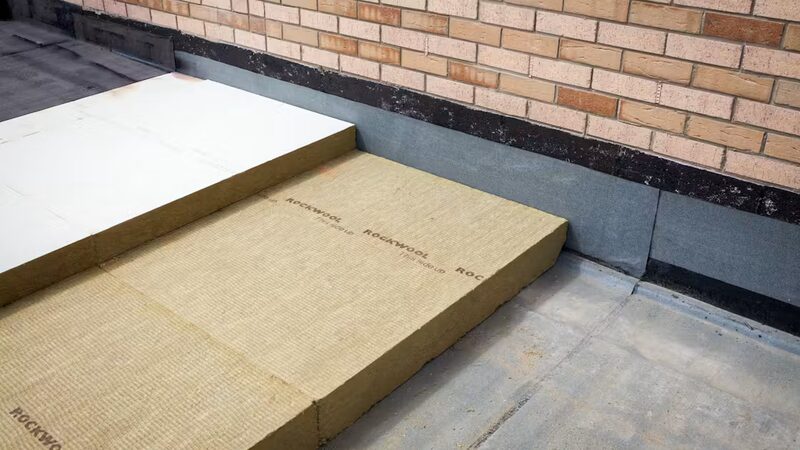
Manufacturers apply the classification to specific products. Unilin Insulation's Stonewool range has a Euroclass classification of A1 for its SW/RS and SW/ST products8. ROCKWOOL's Sound Insulation Slab is listed as Euroclass A1 under BS EN 13501-19. ROCKWOOL stone wool floor insulation is described as A1 classified, achieving the highest Reaction to Fire classification10.
Not every fibrous insulation reaches this level. Thermafleece states that both CosyWool and UltraWool have a Euroclass E fire rating and pass BS5803 Pt4 for flammability and smoulder resistance11. That is a natural fibre product, not mineral wool, and it illustrates that the A1 and A2 ratings are a genuine differentiator rather than a formality.
Stone wool vs glass wool: does the type change the rating?
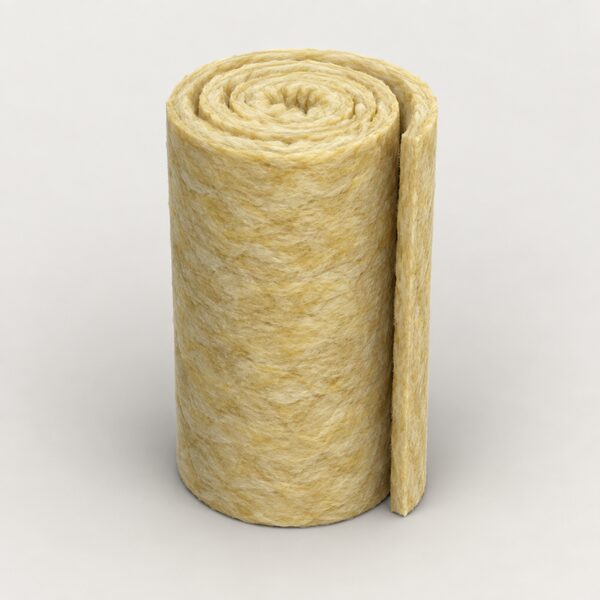
Mineral wool is a family name, not a single product. It is described as a cotton wool like material produced from either rock wool or glass wool, and is used in the majority of installations12. Stone wool is also known as mineral wool13. Both branches of the family share the same fire behaviour: glass and stone wools have a natural fire resistance, and are considered non-combustible when tested in accordance with international standards14.
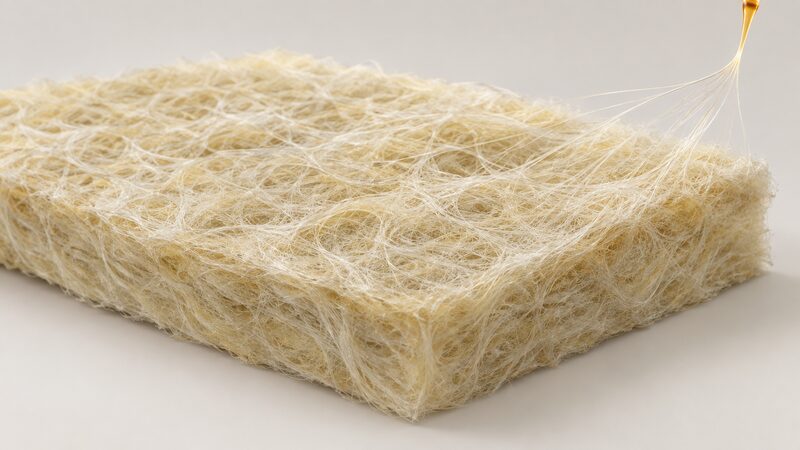
The manufacturing route is the same in principle for both. The raw material is heated to a high temperature until molten, then the molten glass or stone is spun and formed into a flexible, fibrous mat for further processing into finished products15. What differs is the feedstock, and with it some performance characteristics and the environmental profile of the finished product.
Stone wool is the branch most often quoted on heat resistance. Stone wool improves the fire resilience of a property by resisting temperatures of up to 1000°C6. ROCKWOOL describes its stone wool insulation as non-combustible and capable of withstanding temperatures of up to 1000°C16. Those are maker figures for that maker's products, and they describe resistance to heat rather than a reaction-to-fire class.
Glass mineral wool has its own environmental argument. One maker describes glass mineral wool as a lower-carbon alternative for applications that previously used low-density rock mineral wool17. That is a carbon claim, not a fire claim, and it does not change the Euroclass position: both glass and stone wool are considered non-combustible under test14.
For a household choosing between them, the fire rating is not the deciding variable. Both are non-combustible and both sit at A1 or A2. The choice turns on the application, the density required for a given build-up, the acoustic performance wanted, and the environmental credentials of the specific product.
Where fire rating matters in the Building Regulations
Fire performance enters UK Building Regulations at specific points rather than as a single blanket rule. All UK manufactured mineral wool insulation used for construction complies with relevant BS or BBA requirements18. That compliance statement is the foundation: the material is manufactured and certified to recognised standards, which is what a building control body will look for.
The clearest example of fire performance triggering an approval requirement is work to an existing roof. Approval is needed where the new covering's performance in a fire is significantly different from the existing covering19. Replacing a roof covering with one that behaves differently in a fire is therefore a controlled change, and the insulation specified as part of that build-up is part of the assessment.
Mineral wool's role in fire resistance is well established in construction guidance. Mineral wool slabs are used for thermal and acoustic insulation in walls and floors, offering excellent fire resistance20. Mineral wool is non-combustible, so provides in-built fire protection and effectively contributes to the fire safety of buildings21. Those are the properties that make it the default choice where a non-combustible material is required.
There is also a health and safety dimension that sits alongside fire. The requirement regarding the diameter and length of fibres is generally not relevant to mineral wool, because the manufactured fibre diameter and fibre length are greater than 3 microns and 200 microns respectively18. Mineral wool is not carcinogenic7.
Party wall construction adds a density requirement. Mineral wool insulation used within each location within a timber frame party wall construction must be of the correct density as detailed in the relevant MIMA Design Guide23. Density affects both acoustic separation and fire performance in that build-up, so the specification is not interchangeable between products.
Other performance figures: acoustic NRC of 0.90 to 0.95 and Green Guide A+ to B
Fire rating is one of several measured properties, and the others are worth knowing because they often drive the specification as much as fire does. On acoustics, average mineral wool insulation measuring 3.5 inches thick has a noise reduction coefficient between 0.90 and 0.95 on a scale of 0 to 15. That is a high absorption figure, and it explains why mineral wool appears in party walls and separating floors as often for sound as for heat.
The acoustic benefit shows up across applications. Mineral wool insulation in timber frame walls provides excellent sound absorption and enhances the acoustic performance of walls3. In flat roofs, the use of mineral wool insulation results in significant improvements to the acoustic performance of timber or metal decks24. Mineral wool is not only a very good thermal insulant, but also has well documented acoustic benefits25.
On environmental performance, mineral wool insulation uses recycled material, has zero ozone depletion potential and zero global warming potential, and carries a BRE Green Guide rating of A+ to B1. Many mineral wool products achieve the top A+ rating21. The recycled content figure is up to 80% depending on the product7.
| Property | Figure | Source type |
|---|---|---|
| Reaction to fire | Euroclass A1 or A2-s1, d0 | Independent guidance1 |
| Noise reduction coefficient | 0.90 to 0.95 (3.5 inch average) | Maker guidance5 |
| Recycled content | Up to 80% depending on product | Independent guidance7 |
| Ozone depletion potential | Zero | Independent guidance1 |
| Global warming potential | Zero | Independent guidance1 |
| BRE Green Guide rating | A+ to B | Independent guidance1 |
The Green Guide rating is a life cycle assessment of environmental impact, and the A+ to B band reflects variation between products and applications rather than a single fixed score. A product specified for a floor may carry a different rating from one specified for a cavity wall, even within the same material family.
ROCKWOOL: the leading stone wool maker and its sustainability position
ROCKWOOL Group describes itself as a world leader in stone wool products6. It is one manufacturer within the mineral wool family, and its published classifications illustrate how the material's fire rating is presented to specifiers. ROCKWOOL stone wool insulation is A1 classified26, and ROCKWOOL stone wool products are either Euroclass A1 or A24. The company tests to EN13501 for fire performance in Europe26.
The company's sustainability position rests on recycled content and product longevity. ROCKWOOL states that its stone wool range uses 26 percent more recycled content than the industry average10. That is a maker claim about its own range, and it sits alongside the wider mineral wool figure of up to 80% recycled content depending on the product7.
ROCKWOOL's product range covers the main applications in a home. It includes floor insulation, pitched roof and loft insulation, and basement renovation products27. Its floor insulation range is described as A1 classified, achieving the highest Reaction to Fire classification10. The company also publishes case studies covering residential and commercial projects, including a semi-detached home upgrade using NyRock Cavity Slab 0326.
For a household, the practical significance is that the fire rating is a property of the material, not a premium feature of one brand. A stone wool product from any manufacturer in the family will be non-combustible and rated at or near the top of the Euroclass scale. What varies between makers is density, thermal conductivity, acoustic performance, recycled content and the specific certifications held for each product.
Sources28 cited
- Mineral wool floor insulation applications, MIMA, 2026
- Mineral wool roof insulation applications, MIMA, 2026
- Timber frame wall insulation, MIMA, 2026
- Euroclasses for fire regulations, ROCKWOOL, 2026
- Does insulation reduce sound pollution?, SuperFOIL, 2021
- Why stone wool, ROCKWOOL, 2026
- Mineral wool FAQs, MIMA, 2026
- How does stonewool insulation work?, Unilin Insulation, 2026
- ROCKWOOL Sound Insulation Slab, Quiet Mark, 2026
- ROCKWOOL floor insulation, ROCKWOOL, 2026
- Safety and technical FAQs, Thermafleece, 2026
- CWI systems, CIGA, 2026
- What is stonewool insulation?, Unilin Insulation, 2026
- Jargon buster, MIMA, 2026
- About mineral wool, MIMA, 2026
- Basement renovation, ROCKWOOL, 2026
- Knauf insulation products, Quiet Mark, 2026
- Mineral wool health and safety, MIMA, 2026
- Building regulations: work to an existing roof, Planning Portal, 2026
- Insulation board guide, Fuse Energy, 2026
- The 4 benefits of mineral wool, MIMA, 2026
- Thermafleece shop, Thermafleece, 2026
- Party wall bypass guide, MIMA, 2018
- Flat roof insulation, MIMA, 2026
- Party wall bypass and Part E, MIMA, 2026
- Loft insulation, ROCKWOOL, 2026
- Floating floor insulation, ROCKWOOL, 2026
- Making your home energy efficient, ROCKWOOL, 2026
 Insulation Materials ComparedMineral wool, PIR boards, polystyrene and natural fibres all keep heat in, but they suit different jobs and budgets.
 Multifoil InsulationDoes thin foil insulation really keep a home warm, and how does it compare with thick rolls of wool or rigid boards?
 Insulation Safety and FireWill insulation catch fire, and is it safe to have in your walls?
 Window Energy RatingsA window energy rating tells you how well a whole window keeps heat in, lets sunshine through and stops draughts, all in one letter from A++ down to E.
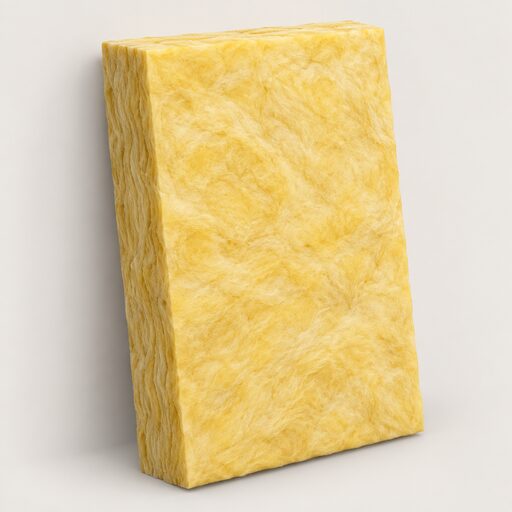 Fabric First ApproachWhy insulate before replacing the boiler or fitting a heat pump?
 U-Values and R-ValuesWhat does a U-value on a window, wall or door actually tell you, and is a lower number really better?