
In this guide
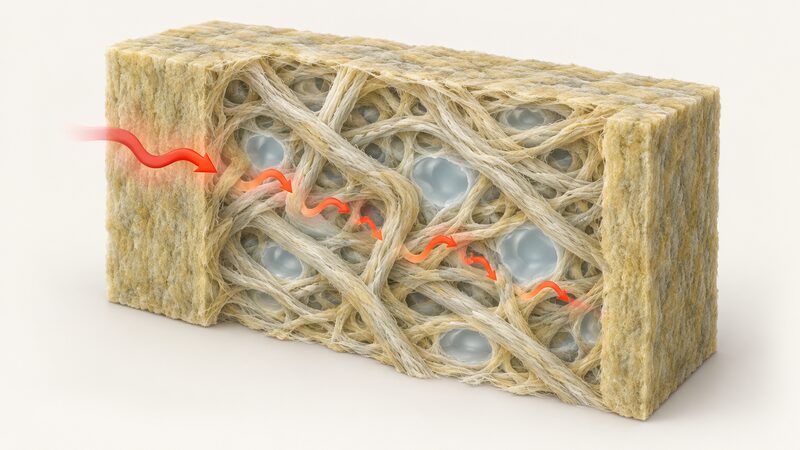
ROCKWOOL insulation is stone wool: volcanic rock melted and spun into fibres, formed into rolls, slabs, boards and granulate for lofts, walls, floors, roofs and basements. Its insulating performance comes from the tiny pockets of air trapped among the fibres, which prevent heat transfer1. The same material is non-combustible, rated A1 or A2-s1, d0, and able to withstand temperatures over 1000°C, while repelling water and resisting moisture1.
The durability claim is the one that matters most for a household weighing a one-off purchase. ROCKWOOL states its stone wool insulation can last at least 50 years with no need for maintenance, and probably longer, with no degradation in performance2. Cavity wall studies are said to show stable performance after more than 55 years3. That is a maker's claim, not an independent test result, but it is the basis on which the material is sold.
What it does for independence is straightforward and limited. Insulation reduces the heat a home needs to buy, which lowers exposure to whatever fuel it runs on. It does not change the fuel, the grid connection or the supplier. ROCKWOOL is a manufacturer, and its products carry no manufacturer guarantee: guarantees are the responsibility of the builder or contractor4.
What ROCKWOOL stone wool insulation is and how it works
Stone wool is a mineral fibre. ROCKWOOL describes it as made from volcanic rock, one of the earth's most abundant natural resources, and says the rock is naturally produced and continually replenished by the planet6. The manufacturing process melts the rock and spins it into fibres; the insulation value comes from the air trapped between them rather than from the fibre itself1.
That structure explains most of the material's behaviour. Air pockets stop heat moving through the wool, so the same product resists conductive heat loss and absorbs sound. ROCKWOOL states its stone wool products improve acoustics inside rooms and help block sound from travelling through walls1. Because the fibres are mineral, they do not burn: the material is rated A1 or A2-s1, d0 and described as non-combustible1. And because the fibres repel water rather than soaking it up, the wool is described as non-hygroscopic and moisture repellent, letting vapour pass through while keeping liquid water out8.
The practical consequence is a single material doing four jobs at once. ROCKWOOL lists its insulation products as acoustic absorbing, heat retaining, fire resistant, water repellent, cost-effective, robust, reusable and recyclable9. For a household, that means one purchase can address heat loss, noise transfer between rooms or neighbours, and fire performance in a wall or ceiling, rather than three separate products.
The limits are worth stating. Stone wool is not a vapour barrier and is not waterproof; it manages moisture rather than blocking it. Its thermal performance per millimetre is lower than rigid PIR boards, so achieving a given U-value takes more thickness. And the fire and acoustic benefits only apply where the material is installed continuously, without gaps. For the wider comparison across materials, see insulation materials compared.
What it's made from: volcanic rock spun into stone wool
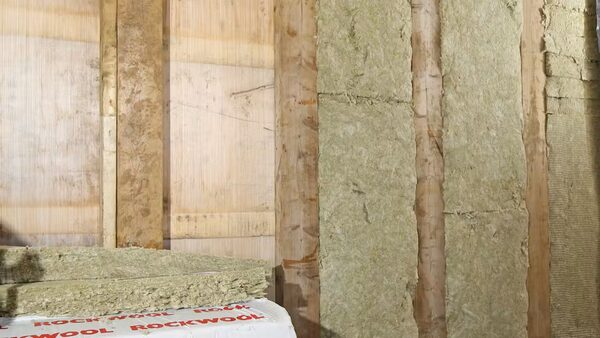
Every ROCKWOOL insulation product in the UK range starts from the same raw material. The company states that all its stone wool insulation is made from volcanic rock, and describes that rock as a natural and plentiful source, vital in the construction industry6. Rolls are described as made primarily from volcanic stone, one of the world's most abundant raw materials10. Floor insulation is described as made from premium stone wool, and the raw material as stone, one of the most abundant natural materials in the world11.
The claim that the rock is continually replenished by the planet is the maker's framing of abundance rather than a statement about extraction rates7. What it supports is a simple point: the feedstock is not a petrochemical derivative, unlike PIR and phenolic boards, and it is not a by-product of another industry in the way some glass mineral wools are.
The end-of-life position follows from the material. ROCKWOOL states its insulation products are fully recyclable and that slabs can be reused11. It says products can be recycled repeatedly without losing any insulation quality, and that stone wool can be recycled over and over with no loss in performance5. The company puts a figure on the benefit: recycling reduces its production carbon footprint by 10 percent12.
"ROCKWOOL insulation products are fully recyclable."
In practice, reuse is the simpler route for a household. Clean, dry slabs lifted from one application can be relaid elsewhere, and the maker states they will not dip or sag over time when laid over and in between floor joists and beams13. Recycling depends on whether a local waste stream accepts stone wool, which varies by area.
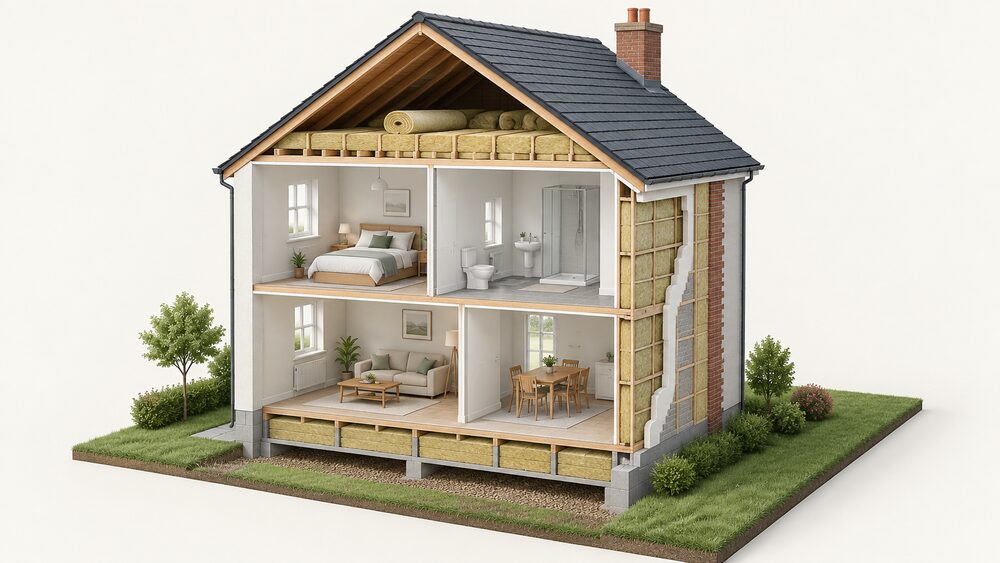
Where it fits: lofts, walls, floors, roofs and basements
The range covers most of a house. ROCKWOOL insulation slabs can be installed inside walls, outside walls, under floors, above ceilings and in roof spaces5. Rolls are flexible products for attic, roof, floor and wall spaces, including partition walls and separating walls10. Granulate is used in cavity walls, loft insulation and timber frame12.
Lofts and roofs take the widest choice. Pitched roof solutions are available below, between and over rafters, and at loft level, with above, in between and below rafter installation methods14. Loft floor insulation can be slabs, rolls or granulate15. Flat roofs are covered too, including warm roof construction where the waterproofing membrane is placed directly on top of the insulation, with a vapour check layer often installed below it towards the deck16. Cold flat roofs need ventilation above the insulation and below the roof deck to prevent condensation17.
Floors are served across the main build-ups: suspended ground floors, floor to ground, intermediate separating floors and floating floors18. Ground floor insulation can be installed above or under concrete slabs, and is available in a variety of thicknesses19. Intermediate floor insulation can be applied in both new buildings and renovations20.
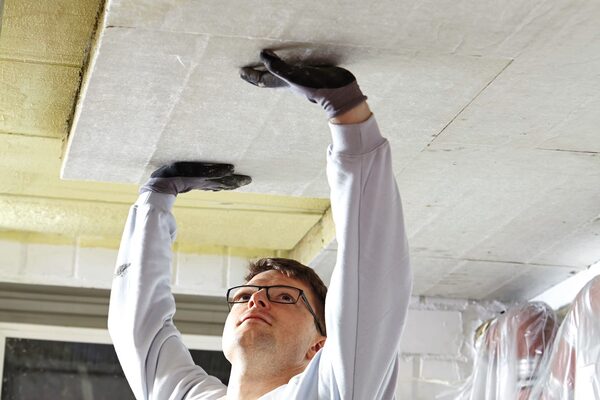
Basements and ceilings complete the picture. Basement insulation products can insulate the floor, walls and ceiling, and range from slabs to rolls21. Basement ceiling insulation can be fixed with mortar glue, mechanical fixings, or a lost casing method encased in a concrete floor22. Suspended ceiling insulation fits wooden or metal frames and can be added and removed without additional fixings23.
| Application | Forms available | Notes |
|---|---|---|
| Loft floor | Slabs, rolls, granulate15 | Lag pipes before laying; cables on top13 |
| Pitched roof | Below, between, over rafters; loft level14 | Above, in between and below rafter methods14 |
| Flat roof | Boards, slabs, rolls, granulate24 | Warm roof: membrane directly on insulation16 |
| Ground floor | Slabs, various thicknesses19 | Above or under concrete slabs19 |
| Intermediate floor | Slabs20 | New build and renovation20 |
| Cavity wall | Granulate, slabs12 | Registered installer checks suitability25 |
| Internal wall | Boards, stud or frame fill26 | Dry lining, party wall, stud wall methods26 |
| Basement | Slabs to rolls21 | Vapour control layer required21 |
Thermal, acoustic, fire and moisture performance in one material
The case for stone wool rests on combining properties that are usually bought separately. ROCKWOOL lists its insulation products as acoustic absorbing, heat retaining, fire resistant, water repellent, cost-effective, robust, reusable and recyclable9. Internal wall applications are described as fire resilient, water repellent, acoustic absorbing, thermal maintaining, robust and durable, reusable and recyclable26.
Acoustically, the material is well established. ROCKWOOL states its stone wool products improve acoustics inside rooms and help block sound from travelling through walls1. Independent guidance on mineral wool describes excellent sound absorption27, and ROCKWOOL's Sound Insulation Slab holds Quiet Mark certification28. Intermediate floor insulation is credited with improved fire safety, enhanced acoustic absorption and reduced heating and cooling costs20.
On fire, the ratings are consistent across the range. Stone wool insulation is non-combustible, rated A1 or A2-s1, d01. Granulate carries an A1 Euroclass rating12. Slabs are non-combustible and withstand temperatures over 1000°C in a fire5. Party wall insulation is described as non-combustible and able to withstand temperatures exceeding 1000°C, boosting party wall fire performance, and retaining lifetime fire performance29. The fire performance standard cited for Europe is EN1350115.
On moisture, the mechanism is repellence plus permeability. Stone wool is water repellent while allowing water vapour to pass through, which the maker says also makes it resistant to rot and mould5. ROCKWOOL states that using moisture repellent stone wool helps prevent mould, mildew and rot due to moisture, protecting structural integrity and the indoor environment8. Shed insulation is described as water repellent, keeping out rain and moisture30.
Non-combustible to European A1 and resistant beyond 1000°C
Fire performance is the property most often cited for stone wool, and the figures are consistent. ROCKWOOL states its insulation achieves a European Reaction to Fire Classification of A1, non-combustible4. Stone wool insulation is described as non-combustible, rated A1 or A2-s1, d01. Basement and cellar ceiling products are non-combustible and withstand temperatures over 1000°C22. Warm roof insulation is fire resilient, can withstand temperatures in excess of 1000°C, and is non-combustible16.
The temperature figures vary slightly in wording across pages, from "up to 1000°C" to "in excess of 1000°C" and "over 1000°C"31. These are the maker's descriptions of the same class of performance rather than a measured ceiling, and the classification that matters for building compliance is the Euroclass rating, not the temperature.
What this means in a house is limited but real. A non-combustible insulation does not add fuel to a fire and does not contribute to flame spread inside a cavity, a roof or a party wall. That is why the material appears in high-rise cladding and rainscreen applications, and why party wall insulation is specified for fire as well as sound29. It does not make a wall, a roof or a building fireproof: the structure, the cladding and the other components determine that.
For a household, the practical points are these. Where insulation is being added to a party wall, a roof void or a cavity, a non-combustible material removes one variable from the fire performance of the assembly. Where the existing insulation is a combustible foam, replacing or covering it changes the risk profile. The wider regulatory picture, including cladding rules, is set out in insulation safety and fire.
Durability: performance for the lifetime of the building
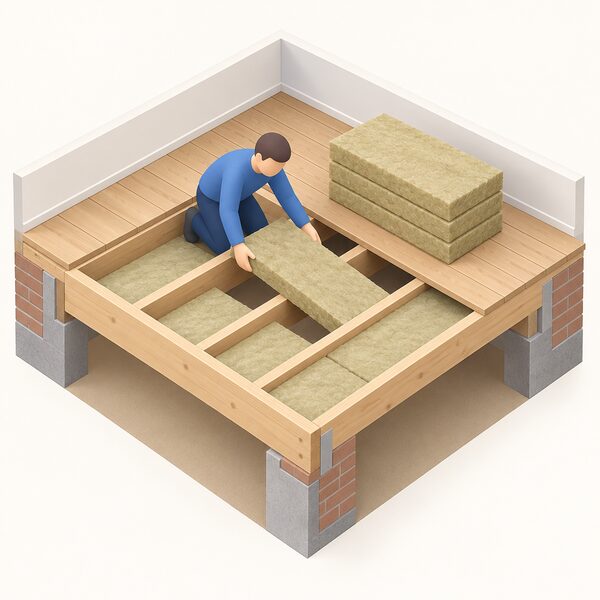
The durability claim is the strongest commercial argument for stone wool, because insulation is normally installed once and left. ROCKWOOL states its insulation can maintain its performance for the lifetime of a building25. Roof insulation is described as durable and effective for the lifetime of the building24. Pitched roof insulation is designed to last for the lifetime of the building14. Basement and cellar ceiling solutions are designed to last the entire lifetime of a building22.
The specific numbers are more useful than the general claim. Stone wool insulation can last at least 50 years with no need for maintenance, and probably longer, with no degradation in performance2. Cavity wall insulation is described as having a proven lifetime of over 50 years, with studies showing stable performance even after more than 55 years3. Flat roof solutions are described as durable and proven by more than 40 years of use17.
The mechanism behind the claim is that the material does not compact, rot or lose its structure. ROCKWOOL states its stone wool insulation keeps its shape and does not degrade over time, and that thermal, fire resilience, acoustic performance and other properties remain the same throughout the building's lifetime25. It cites testing of products found in old buildings, most recently during a renovation of an airport hangar in Copenhagen2.
"ROCKWOOL insulation can maintain its performance for the lifetime of a building."
Two caveats sit alongside this. First, the durability claims are the manufacturer's, based on its own testing and case studies rather than independent long-term trials. Second, durability assumes the insulation stays dry and undisturbed. Insulation that has been soaked, compressed or contaminated loses performance regardless of material, and ROCKWOOL advises removing old insulation that is mouldy, damp, rotting or ineffective before installing new material, but only if it is safe to do so12.
The product range: rolls, slabs, boards, granulate and loose wool
ROCKWOOL's range is broad, and the form matters more than the brand for a given job. The company describes its products as including rolls, slabs, boards, dual density systems, mats, pipes, fabricated and loose wools in a range of densities and thicknesses4. Roof products include boards, slabs, rolls and granulate24. Basement products range from slabs to rolls21.
Rolls are the flexible option. They come in a variety of thicknesses, widths and lengths, and suit attic, roof, floor and wall spaces including partition and separating walls10. Slabs are rigid: the range includes cavity wall insulation slabs, loft insulation slabs and flooring solutions, with external façade and roof applications also a key part of the offering5. Slabs are described as rigid, easy to transport and not usually requiring specialist equipment to lay5.
Granulate is the loose-fill option, used in cavity walls, loft insulation and timber frame12. It is preferably installed using a blowing machine operated by a professional tradesperson, with manual placement material available in some markets and often restricted to small areas12. Ceiling products include acoustic suspended ceiling systems, ceiling insulation slabs and rolls, and soffit solutions7.
| Form | Typical applications | Installation route |
|---|---|---|
| Rolls | Attic, roof, floor, partition and separating walls10 | DIY or trade14 |
| Slabs | Cavity wall, loft, flooring, façade, roof5 | DIY or trade5 |
| Boards | Roof, wall, ceiling, shed24 | DIY or trade30 |
| Granulate | Cavity wall, loft, timber frame12 | Blowing machine, professional12 |
| Suspended ceiling | Ceiling void, wooden or metal frame23 | Added and removed without fixings23 |
Availability varies. ROCKWOOL states it offers a wide range of products in different regions, with ceiling, roof, wall and floor ranges adaptable for garage applications, and advises consulting local pages for details32. For a household, that means checking what a merchant actually stocks before planning a specification around a particular form or thickness.
Certifications, BBA approval and sustainable building credits
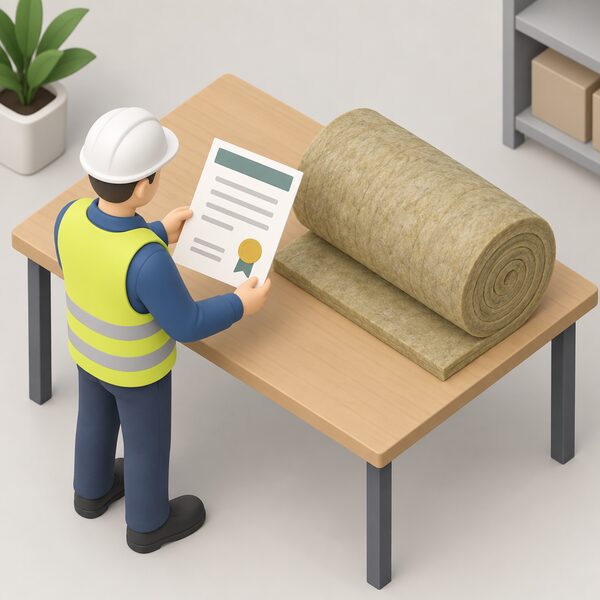
Certification is where a maker's claims become checkable. ROCKWOOL states that a number of its products have been certified by the British Board of Agrément4. Cavity wall products are assessed and certified via Environmental Product Declarations25, and EPDs are available for all stone wool insulation products manufactured in the UK21. The company holds ISO 14001 certification for product manufacture4.
For specifiers and for households working with a designer, ROCKWOOL insulation can contribute to credits for sustainable building rating schemes including BREEAM and many more local ones25. The Sound Insulation Slab's BIM objects are verified to the NBS BIM Object Standard, and the product's country of manufacture is listed as the United Kingdom28.
The company's own rule on specification is worth repeating, because it is the one that prevents most mistakes: specification of ROCKWOOL insulation products should be carried out by their application area, with the product tested and certified for its purpose4. A slab certified for a floor is not automatically certified for a cavity, even where the material is identical.
On financial support, ROCKWOOL points households elsewhere rather than naming schemes. It notes that financial support may be available for insulating a basement, directing readers to the Energy Saving Trust website for grants information21. For internal wall insulation it states that grants, sustainability schemes and refunds may be available through tax reductions or incentive schemes for properties meeting specific criteria, and advises contacting local offices26. Suspended ceiling guidance likewise points to the Energy Saving Trust for additional financial support schemes23. The current grant position by nation is covered in insulation grants in England, Scotland, Wales and Northern Ireland.
Installing it yourself: cutting, layering, PPE and cables
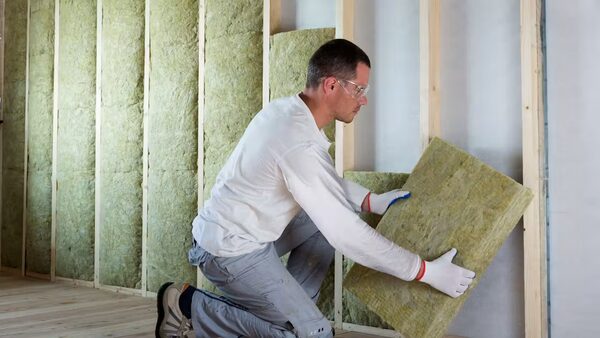
Stone wool is one of the more forgiving materials to handle. ROCKWOOL states its insulation can easily be cut with a long bladed knife or insulation saw available from DIY and builders merchant outlets4. Slabs cut simply with a sharp, long-bladed knife or insulation saw5. Rolls are cut the same way for an accurate edge10. Boards can be cut to shape with a knife or cutting saw and preserve their stability30.
Layering is permitted. ROCKWOOL states its products can be double layered, and recommends staggering the joints in accordance with good building practice to minimise thermal bridging4. Rolls laid over and in between floor joists and beams will not dip or sag over time13.
Protective equipment is advised. For fitting insulation in a loft, ROCKWOOL recommends wearing long sleeves, gloves and a mask to ensure comfort4. The material is a mineral fibre, and cutting generates dust, so covering skin and avoiding inhalation are the two concerns.
The order of work in a loft matters. ROCKWOOL advises lagging any water pipes before laying, because it will be difficult afterwards, and laying cables on top of the insulation rather than beneath it13. Where old insulation is mouldy, damp, rotting or ineffective, it is best removed first, but only if that is safe to do so12.
Who can install varies by application. Pitched roof insulation can be installed by local contractors or installers and in some cases by homeowners themselves14. Floor insulation can be installed by a professional tradesperson or self-installed following the product installation guidelines18. Granulate is preferably installed with a blowing machine operated by a professional12, and cavity wall insulation should use a registered installer who will check the property for suitability25. Internal wall insulation has several methods: rigid boards fitted with dry lining, insulation between solid blocks for a party wall, or a metal or wooden stud wall filled with insulation26. For a wider view of what is realistic without a trade, see low-cost and DIY insulation measures.
What ROCKWOOL the company is, and what owning its insulation means for independence
ROCKWOOL Group describes itself as a world leader in stone wool products, covering building insulation, industrial and technical insulation for the process industry, marine and offshore, customised industrial products, wall and facade systems, acoustic ceilings and walls, prefab buildings, horticultural growing media, engineered fibre products, and noise and vibration control1. Building insulation is one division of a much larger industrial group.
The UK-facing side of that is a manufacturer selling through distribution rather than direct. ROCKWOOL states plainly that it does not issue guarantees for individual products available for sale through distribution, and that guarantees are the responsibility of the builder or contractor, with products covered by the Sale of Goods Act and ROCKWOOL's standard terms and conditions4. That is the single most important commercial fact on this page: the material's durability claims are the maker's, but the guarantee a household can enforce comes from whoever installs it.
For energy independence, the position is honest and modest. Insulation reduces the heat a home loses, so it reduces the energy that has to be bought, whatever the fuel. It does not change the fuel, disconnect the grid, or remove the need for a supplier. A well-insulated home is cheaper to run and easier to keep warm, and it is a prerequisite for some low-carbon heating systems, but the dependence on an energy supplier remains.
What stone wool adds beyond thermal performance is a set of properties that do not degrade and do not need maintaining: non-combustibility, moisture repellence and acoustic absorption in the same product, with a stated life of at least 50 years2. That is a fabric measure with a long service life and no moving parts, no app and no cloud connection. The dependence it creates is on the installer's workmanship and on the material staying dry, not on a manufacturer's servers or a subscription. For how insulation fits into a wider independence plan, see insulation and energy independence.
Sources32 cited
- Why stone wool, ROCKWOOL, 2026-09-20
- Durability, ROCKWOOL, 2026-09-20
- Cavity wall insulation, ROCKWOOL, 2026-09-20
- FAQs, ROCKWOOL, 2026-09-20
- Insulation slabs, ROCKWOOL, 2026-09-20
- Internal wall insulation, ROCKWOOL, 2026-09-20
- Ceiling insulation, ROCKWOOL, 2026-09-20
- Moisture repellence, ROCKWOOL, 2026-09-20
- Ceiling insulation products, ROCKWOOL, 2026-09-20
- Insulation rolls, ROCKWOOL, 2026-09-20
- Ground to floor insulation, ROCKWOOL, 2026-09-20
- Insulation granulate, ROCKWOOL, 2026-09-20
- Insulation rolls guidance, ROCKWOOL, 2026-09-20
- Pitched roof insulation, ROCKWOOL, 2026-09-20
- Loft insulation, ROCKWOOL, 2026-09-20
- Warm roof insulation, ROCKWOOL, 2026-09-20
- Flat roof insulation, ROCKWOOL, 2026-09-20
- Floor insulation, ROCKWOOL, 2026-09-20
- Ground to floor insulation products, ROCKWOOL, 2026-09-20
- Intermediate floor insulation, ROCKWOOL, 2026-09-20
- Basement insulation, ROCKWOOL, 2026-09-20
- Basement and cellar ceiling insulation, ROCKWOOL, 2026-09-20
- Suspended ceiling insulation, ROCKWOOL, 2026-09-20
- Roof insulation, ROCKWOOL, 2026-09-20
- External wall insulation, ROCKWOOL, 2026-09-20
- Internal wall insulation products, ROCKWOOL, 2026-09-20
- Masonry solid wall insulation, MIMA, 2026-09-20
- ROCKWOOL Sound Insulation Slab, Quiet Mark, 2026-09-17
- Separating party wall insulation, ROCKWOOL, 2026-09-20
- Shed insulation, ROCKWOOL, 2026-09-20
- Basement renovation, ROCKWOOL, 2026-09-20
- Garage insulation, ROCKWOOL, 2026-09-20