
In this answer
Short answer
Mineral wool absorbs sound, and it does so by the same mechanism that makes it a thermal insulant. The mat of fibres traps air and prevents it moving, and sound energy passing through the material is dissipated rather than transmitted1. Published guidance describes the result as excellent sound absorption, improving the acoustic performance of walls, floors and roofs and restricting noise transfer within and between buildings and to and from the external environment2.
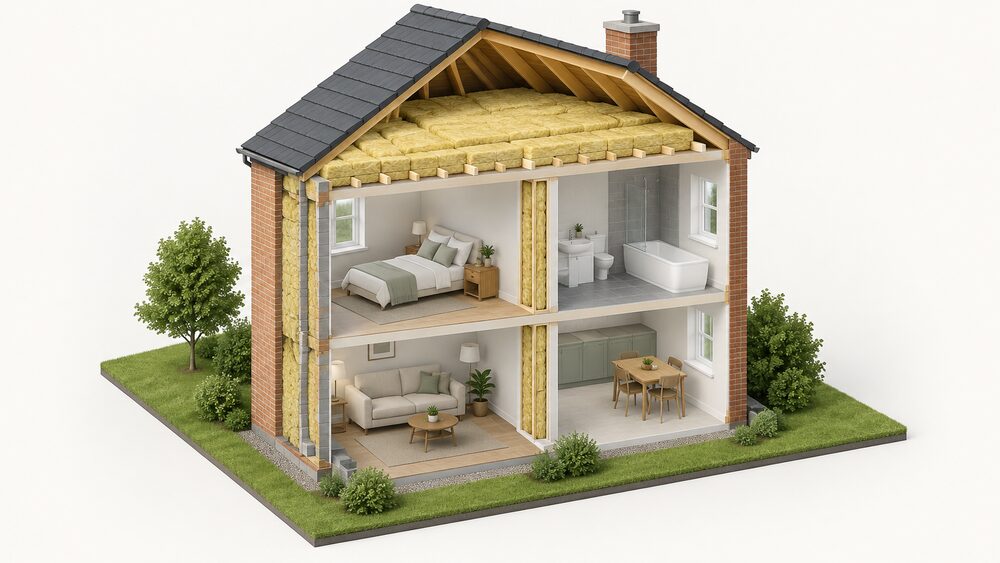
That matters for a household because sound insulation and heat insulation are usually bought in the same purchase. A mineral wool product fitted for its thermal performance in a loft, a cavity or a separating wall is also doing acoustic work, and the acoustic benefits of the material are described as well documented3. For a home trying to reduce what it draws from the grid, the acoustic case rarely justifies the work on its own, but it frequently comes free with work that does.
The limits are worth stating as plainly as the benefits. Mineral wool absorbs sound; it does not block it by mass alone, and its performance depends on the complete build-up, on whether a cavity is fully filled, and on whether flanking paths around a separating wall have been closed. The figures below are the ones the published guidance supports.
Does mineral wool absorb sound? Yes, and how it works
The acoustic behaviour of mineral wool comes from its structure rather than its chemistry. The exceptional thermal, fire and acoustic properties derive from the mat of fibres that prevents the movement of air, and from the material's inert chemical composition1. Sound is a pressure wave moving through air; when that wave meets a dense, tangled mat of fibres, the air movement it depends on is broken up and its energy is converted to a small amount of heat.
The practical consequence is that mineral wool is specified for acoustic performance in almost every element of a building. Guidance for masonry solid walls lists excellent sound absorption as a property of the material2. Guidance for timber frame walls lists excellent sound absorption and states that the material enhances the acoustic performance of walls11. In flat roofs, mineral wool insulation results in significant improvements to the acoustic performance of timber or metal decks12. The same material is doing thermal work in each case: it restricts heat transfer through the building envelope and reduces demand for space heating and cooling energy2.
Two distinctions matter when reading product claims. The first is between absorption and isolation. A material that absorbs sound well inside a cavity reduces the energy bouncing around within the construction, but a separating wall still needs mass, discontinuity and correctly detailed junctions to stop noise travelling from one dwelling to the next. The second is between airborne and impact sound. Airborne noise, such as speech or a television, is dealt with by absorption in the void; impact noise, such as footsteps, needs a resilient layer as well.
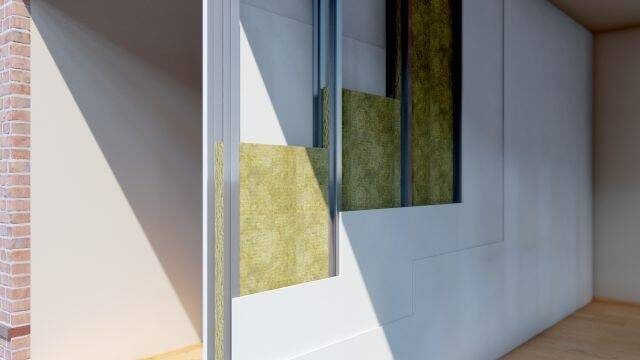
"The ability of mineral wool to absorb sound energy means that it is able to improve the acoustic performance of walls, floors and roofs, restricting noise transfer within and between buildings and to and from the external environment."
Sound absorption rating: what the published figures show
The research behind this page does not include a Noise Reduction Coefficient for mineral wool, so no NRC figure is quoted. What the published guidance does give is a set of performance figures that sit alongside the acoustic claim, and these are the ones a householder can actually check against a specification.
| Property | Figure | Source |
|---|---|---|
| Acoustic performance | Excellent sound absorption | 2 |
| Thermal resistivity | 2.5 to 3.0 m²K/W per 100mm | 10 |
| Fire rating | Non-combustible, A1/A2 Euroclass | 7 |
| Recycled content | Up to 80%, depending on the product | 5 |
| Environmental rating | BRE Green Guide A+ to B | 6 |
| Packed volume | One ninth of original volume, without affecting installed thickness | 13 |
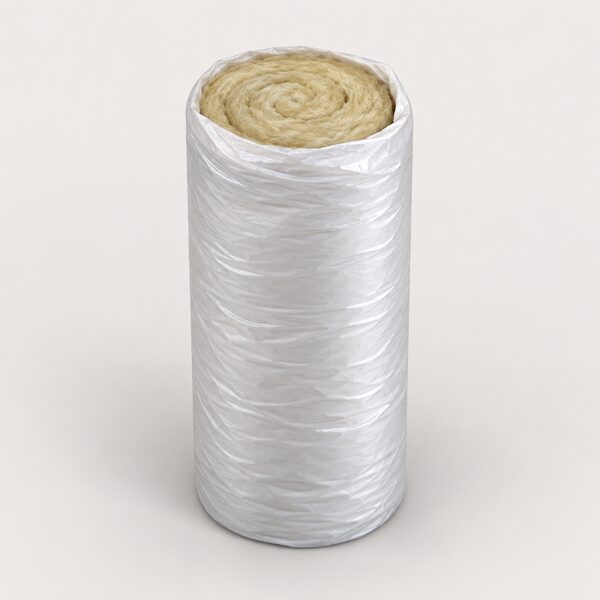
The R-value figure is the one most often confused with acoustic performance. A higher R-value means better thermal resistance, not better sound absorption, and the two do not track each other neatly across products. Denser mineral wool generally performs better acoustically, while thermal performance is largely a function of thickness and fibre structure. That is why a separating wall specification names a density and a system, not simply a thickness of wool.
For comparison, cork insulation is stated to absorb up to 70% of sound14. That is a different material with a different role, and it is given here only to show that absorption figures exist for other products in the same market. Where a manufacturer publishes measured absorption data for a specific mineral wool product, that data is the figure to use for that product.
Where it works: walls, floors, roofs and separating walls
Mineral wool is used acoustically across the whole building envelope, and the applications differ enough to be worth separating.
In separating walls, mineral wool insulation is well suited to steel frame separating walls, absorbing sound and improving acoustic performance while providing a high level of thermal separation between adjoining properties6. In timber frame separating floors, mineral wool installed in the void between the beams absorbs sound, improves acoustic performance and delivers thermal performance benefits15. In concrete separating floors, acoustic and thermal performance is enhanced with mineral wool installed either above or below the floor15.
In roofs, the material is used at joist level and in flat roof build-ups. Installing mineral wool between and on top of the joists is described as one of the cheapest ways to insulate a loft11. In flat roofs, the acoustic improvement to timber or metal decks is described as significant12.
In internal walls and partitions, mineral wool is one of the materials that can be installed as boards, alongside glass mineral wool and soundproof insulation mats16. Guidance for partition walls also lists recycled material, zero ozone depletion potential and zero global warming potential, and a BRE Green Guide rating of A+ to B6.
For a household, the acoustic benefit is a secondary gain on work done mainly for heat. The independence argument is the same one that applies to any fabric measure: less heat lost through the envelope means less energy bought from a supplier, and a separating wall or floor that also cuts noise is a measure the household gets more use out of. The dependence that remains is unchanged by acoustics: the home is still connected to the grid and still buying gas or electricity for whatever heating remains.
Cavity walls: full fill and reduced flanking noise
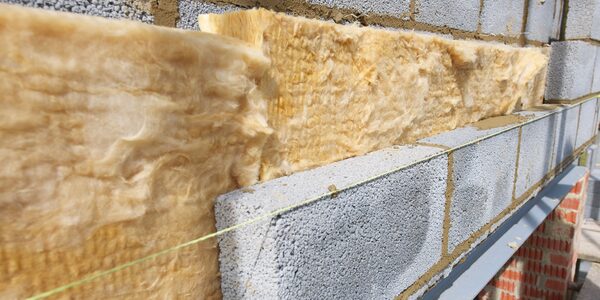
Cavity wall insulation is one of the clearest cases where the acoustic and thermal cases run together. Guidance states that mineral wool gives excellent sound absorption and reduced flanking noise through the cavity, and adds the condition that this applies to full fill only4. A partial fill leaves a residual air path around the insulation, and that path is exactly what flanking noise travels through.
The material choice in cavities is not limited to mineral wool. The main materials used in cavity wall insulation are mineral wool, in glass or rock form, EPS bead and PU foam17. Of these, mineral wool is the one the guidance credits with the acoustic benefit, and the full fill condition is what unlocks it.
Flanking transmission is the acoustic problem that catches households out. Sound does not only travel through the separating wall itself; it travels around it, through the external wall cavity at the junction between one dwelling and the next. Mineral wool insulation is widely used for closing the external wall cavity at that junction, to minimise flanking sound transmission and fire spread6. This is a small, cheap detail with a disproportionate effect, and it is one of the reasons a party wall can perform well on paper and poorly in practice.
The thermal case for full fill is also documented. In a Bradford test on Robust Detail E-WM-2 construction, the effective U-value of a masonry party wall fully filled with mineral wool plus mineral wool filled cavity barriers could potentially be reduced to zero18. That is a modelled outcome for a specific construction, not a general promise, and it depends on the cavity being completely filled.
Cavity wall insulation has been delivered at scale under government schemes. Under ECO3, cavity wall injection of mineral wool insulation accounted for 1,633 innovation measures19. For a household considering the measure, the acoustic gain is real but conditional: it depends on full fill, on correctly closed cavity barriers at separating wall junctions, and on the cavity being suitable in the first place.
Mineral wool, glass wool or soundproof mats: which to choose
The names in this market overlap, and the overlap causes more confusion than the performance differences do. Stone wool insulation is also known as mineral wool20. Mineral floor insulation materials include glass wool, rock wool, perlite, vermiculite and expanded clay21. Interior wall insulation options are grouped as mineral, meaning glass wool or rock wool, natural, meaning cork, animal wool, wood or cotton, synthetic, meaning polystyrene or polyurethane foam, and innovative, meaning heat-reflective, aerogel or insulating paint products22.
So glass wool and rock wool are both mineral wool. The distinction is the raw material: glass wool is made from glass, rock wool from stone. Both appear in sound-focused product ranges. ROCKWOOL Sound Insulation Slab is made from mineral wool insulation and holds Quiet Mark Certification, with a published vapour resistivity of 5.9 MNs/gm23. Knauf's OmniFit Thermal and Sound Slab is a glass mineral wool slab24.
| Product | Material | Acoustic credential |
|---|---|---|
| ROCKWOOL Sound Insulation Slab | Mineral wool | Quiet Mark Certification23 |
| Knauf OmniFit Thermal and Sound Slab | Glass mineral wool slab | Sound-focused product range24 |
Soundproof insulation mats are a third category, listed alongside mineral wool and glass mineral wool as materials that can be installed in walls as boards16. They are typically denser and thinner than a mineral wool roll, and they are used where space is tight or where a specific mass is needed.
For a household, the choice between these is a specification decision for the designer of the wall or floor build-up, not a brand preference. The relevant questions are the density the system calls for, whether the cavity is fully filled, and whether the junction details are closed. A denser product in a badly detailed wall will underperform a standard product in a well-detailed one.
Installation: fitting in joist voids without losing floor depth
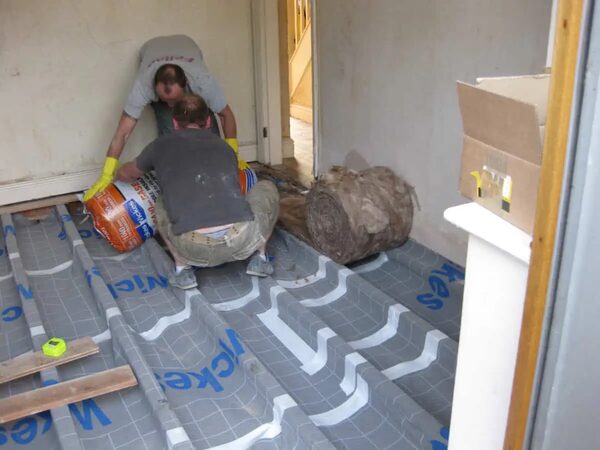
The installation question that matters most for existing homes is whether acoustic and thermal improvement can be had without raising the floor or losing headroom. In timber floors, installing mineral wool insulation in the void between the beams provides improved acoustic performance and thermal performance without increasing floor depth8. The wool goes into the space that already exists.
The method depends on the floor construction. In suspended timber floors, mineral wool quilt is draped between the joists and held up on netting, fitted by an installer working inside the void25. Mineral wool is normally used for insulating joist voids because of its flexibility26. In concrete beam and block internal floors, mineral wool is installed either above the concrete or within a ceiling void between the floor and a suspended ceiling below8.
Where a floor is being rebuilt rather than just insulated, mineral wool can take a second acoustic role. In timber frame separating floors, it can be installed as a resilient layer between the structural deck and the floor surface itself, substantially reducing impact sound15. That is the layer that deals with footsteps, and it is separate from the void fill that deals with airborne noise.
For lofts, the depth figures are thermal rather than acoustic. The recommended depth for mineral wool insulation is 270mm, about one foot28, and a depth of 270mm is recommended for most situations29. Just 300mm is stated to meet current Building Regulations11. A whole house renovation in Formby, Merseyside, used 300mm mineral wool in the loft30.
Sustainability, fire and what the material does for independence
Mineral wool's environmental credentials are documented in the same guidance that covers its acoustics. It uses recycled material, with up to 80% recycled content depending on the product5. It has zero ozone depletion potential and zero global warming potential, and a BRE Green Guide rating of A+ to B6. It can be packed at one ninth of its original volume without negatively affecting the installed thickness, which reduces the transport burden of getting it to site13.
Fire performance is part of the same picture. Mineral wool is non-combustible and A1/A2 Euroclass fire rated7. That rating is why it can be used in the external walls of all buildings across the UK nations5, and it is a material property rather than a coating or additive.
On cost, the position is comparative rather than absolute. Mineral wool insulation may be cheaper and better at insulating than spray foam31. Prices for a specific installation are installer-quoted, and the acoustic performance of a finished wall or floor depends on the whole system rather than the wool alone.
For energy independence, the honest summary is that mineral wool is a fabric measure, not a generating one. It reduces the heat a home loses through walls, floors and roofs, and therefore reduces the energy it must buy. It does not remove the connection to the grid, the reliance on a supplier, or the gas or electricity that remains. What it does do is make every unit of heat the household pays for go further, and it does so while also cutting noise between rooms, between dwellings and from outside. A household weighing up a separating wall or floor project can treat the acoustic gain as a documented secondary benefit of a measure it may already be considering for thermal reasons.
Sources31 cited
- The 4 benefits of mineral wool, MIMA, 2026
- What is mineral wool, MIMA, 2026
- Party wall bypass and Part E, MIMA, 2026
- Masonry cavity wall insulation, MIMA, 2026
- Mineral wool FAQs, MIMA, 2026
- Separating wall insulation, MIMA, 2026
- Roofs, MIMA, 2026
- Internal floor insulation, MIMA, 2026
- Floors, MIMA, 2026
- Insulation guide, Uswitch, 2026
- Timber frame wall insulation, MIMA, 2026
- Loft insulation at joist level, MIMA, 2026
- Sustainability, MIMA, 2026
- Cellulose vs hemp vs cork, Uswitch, 2025
- Separating floor insulation, MIMA, 2026
- How to buy insulation boards, Which?, 2026
- ECO4 new measures and products guidance, Ofgem, 2026
- Party wall bypass guide, MIMA, 2010
- ECO3 final determination report, Ofgem, 2023
- What is stonewool insulation, Unilin Insulation, 2026
- Floor insulation, Netatmo, 2026
- Interior wall insulation, Netatmo, 2026
- ROCKWOOL Sound Insulation Slab, Quiet Mark, 2026
- Knauf, Quiet Mark, 2026
- Compare underfloor insulation methods, Q-Bot, 2026
- UFH insulation options, Ambiente UFH, 2025
- Loft insulation costs and savings, Which?, 2026
- Loft insulation advice, Centre for Sustainable Energy, 2025
- House insulation: the ultimate guide, Federation of Master Builders, 2026
- Whole house renovation with extension, Formby, Merseyside, AECB, 2026
- Make sure your home is energy efficient, Citizens Advice, 2026
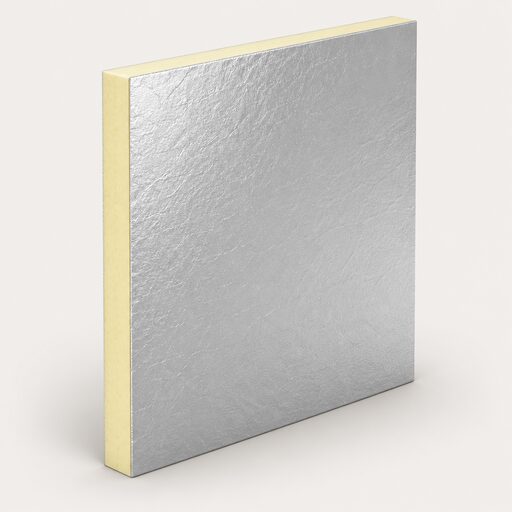 Insulation Materials ComparedMineral wool, PIR boards, polystyrene and natural fibres all keep heat in, but they suit different jobs and budgets.
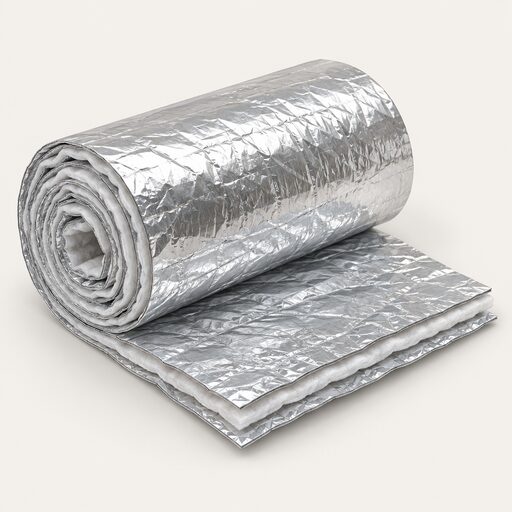 Multifoil InsulationDoes thin foil insulation really keep a home warm, and how does it compare with thick rolls of wool or rigid boards?
 Insulation Safety and FireWill insulation catch fire, and is it safe to have in your walls?
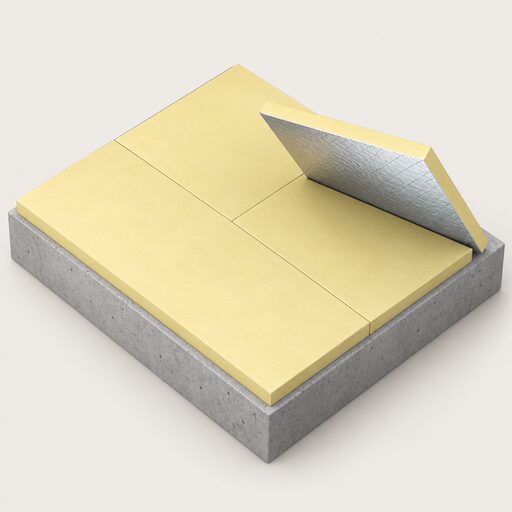 Floor InsulationHow much warmth escapes through the floor, and is it worth insulating?
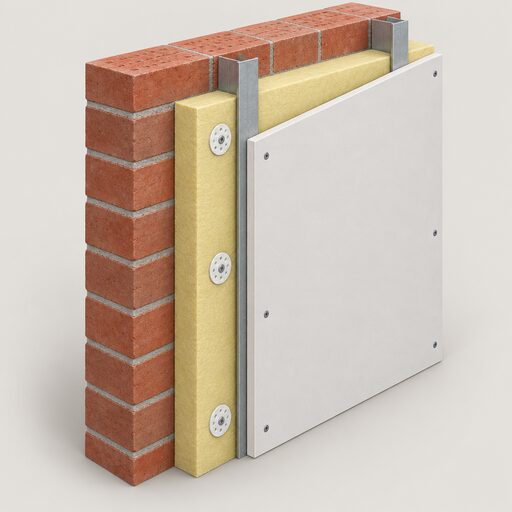 Solid Wall InsulationSolid walls lose far more heat than cavity walls, so what can actually be done about it?
 Insulation Savings and PaybackHow much can you really save by adding insulation, and does it depend on your home, your heating and how you use it?