
In this answer
Short answer
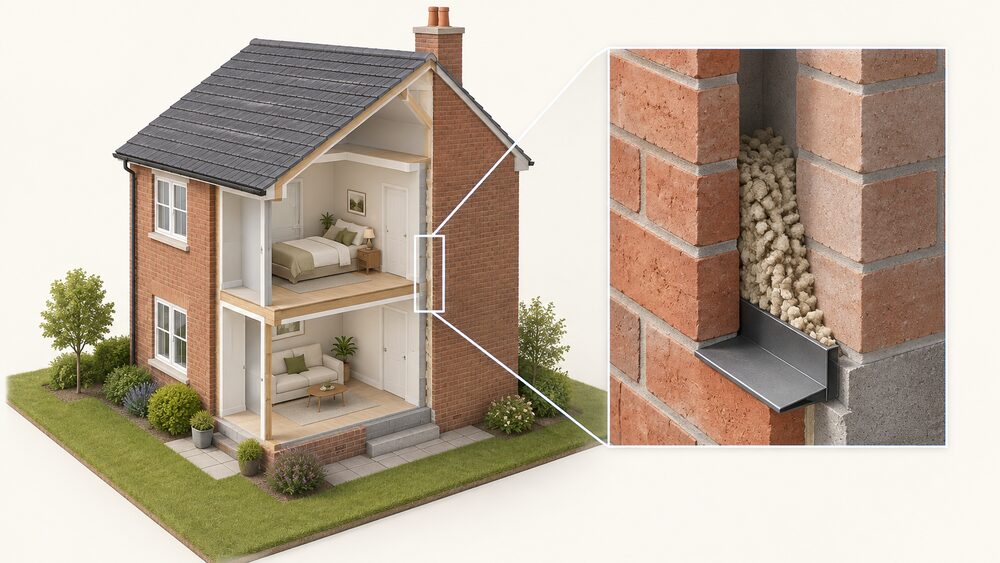
Floodwater reaching a cavity wall changes the question from "is this insulation working?" to "is this insulation still insulation?". Mineral wool is the material most commonly blown into UK cavities, and it is manufactured as a loose granular product specifically for that job1. Once silt, salts and debris have been carried into the cavity, the fill cannot be cleaned in place. Where the cavity stayed dry, the insulation is unaffected and there is no published reason to remove it.
The decision turns on evidence, not on appearance. Official guidance is that the wall should be assessed before cavity wall insulation is installed, to establish its condition and construction type2, and that a qualified retrofit assessor should be consulted before going further3. The same assessment logic applies after a flood: a survey establishes whether the cavity was breached, and that finding drives the insurance claim, the guarantee position and any replacement work.
For a household, the energy independence stake is straightforward. A flooded and failed cavity fill removes the wall's contribution to keeping heat in, and the home leans harder on the boiler or heat pump, on the grid and on a supplier. Restoring the fill restores a fabric measure that works without fuel, without an app and without a subscription. What remains dependent is the guarantee chain: the installer, the guarantee body and the insurer.
What flooding does to mineral wool in a cavity
Mineral wool is a manufactured fibre product supplied in several forms: loose granular material for blown cavity fill, slabs for walls, rolls for lofts, and pre-formed sections for pipes1. In a cavity it sits as a loose fill, which is why it can be blown in through small holes in around two hours6. That same loose structure is what makes it vulnerable to water movement. Floodwater entering the cavity can carry silt and salts into the fill and redistribute it, leaving voids at the top of the wall and compaction at the bottom.
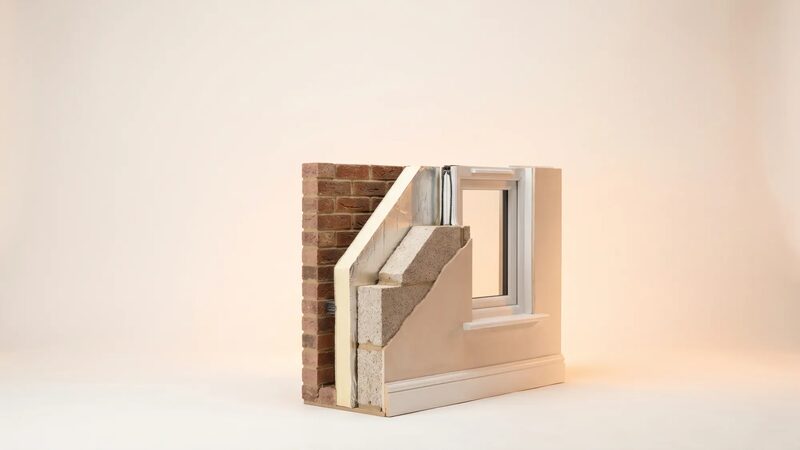
The cavity itself is not designed as a wet zone. Official guidance states that the bottom of the cavity should be filled with lean mixed concrete with a slant towards the external skin, or have a cavity tray installed that also slants towards the outer skin8. That detail exists to move water back out through the outer leaf. Where the base detail is missing or blocked, water that enters has nowhere to go.
Cavity wall insulation is also unsuitable in the first place where there are poor maintenance or structural issues such as cracks, evidence of rising or penetrating damp, dirty cavities, wall ties or builder's rubble, exposed locations with extreme weather and driving rain, or overflowing or blocked guttering, where no remedial action is appropriate6. A flooded property will often present several of these at once, which is why the post-flood assessment has to look at the wall as a system rather than at the insulation alone.
"The bottom of the cavity should be filled with lean mixed concrete with a slant towards the external skin or have a cavity tray installed that also slants towards the outer skin"
How the insulation dries out, and how long that takes
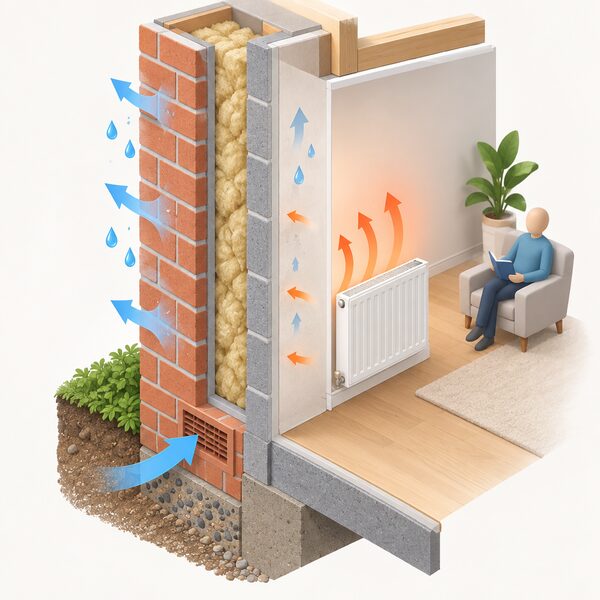
There is no published drying schedule for a saturated cavity fill, and no method in the guidance for drying one in place. The material is loose and the cavity is closed, so air movement through it is limited. What dries is the building fabric around it, and that process is governed by ventilation, heating and the wall's own construction rather than by anything specific to the insulation.
What the guidance does address is the condition the wall must be in before insulation goes in. Cavity wall insulation should not be installed where there is evidence of rising or penetrating damp, where no remedial action is appropriate6. The walls must not be exposed to driving rain or extreme weather7. Those conditions are about preventing water from reaching the fill in the first place, and they are equally the conditions under which a replacement fill would be considered.
The practical sequence after a flood is therefore structural drying first, assessment second, and any decision about the cavity third. A survey carried out while the wall is still wet cannot separate residual flood moisture from a pre-existing damp problem, and the two call for different remedies. The retrofit assessment gap identified in Scottish Government policy work is relevant here: assessments fail to account for key building conditions such as existing moisture risks or the state of cavity wall insulation, often assuming these features are in good condition rather than verifying them9. A post-flood survey should not repeat that assumption.
For context on how quickly the cavity itself can be dealt with once a decision is made, installation is a short job: about two hours for professional installers6, or a couple of hours for a typical three-bedroom house10. The long part of the timeline is drying and assessment, not the work.
When the insulation needs to be removed or replaced
Removal is indicated where the fill has been saturated and contaminated, where the cavity has been left with voids or compaction, or where the wall itself fails the suitability conditions. The suitability list is explicit: poor maintenance or structural issues such as cracks, evidence of rising or penetrating damp, dirty cavities, wall ties or builder's rubble, exposed locations with extreme weather and driving rain, or overflowing or blocked guttering, where no remedial action is appropriate6.
Where a cavity fill is unsuitable, external wall insulation becomes an alternative route. Houses with cavity walls may need that approach if a cavity fill is unsuitable or for a high-level retrofit11. That is a different measure with different rules: a wall may be suitable to receive external wall insulation if it is of solid construction or has fully filled and insulated cavities2. Where external wall insulation is proposed on a solid wall or a fully filled cavity, the wall must first be checked for adequacy in terms of weight and structural stability, weather resistance including damp-proofing, and thermal resistance and changes to thermal elements12.
Two regulatory points bear on replacement work. For all buildings which are not exempted from the Regulations, it is necessary to submit a building notice to a building control body stating that cavity wall insulation work will be carried out13. And the Building Regulations require that the insulation material used is suitable for the wall construction concerned14. Where the installer is registered with the Cavity Insulation Guarantee Agency, the installer will in most cases submit the building notice14.
Checking the condition: surveys and what they look for
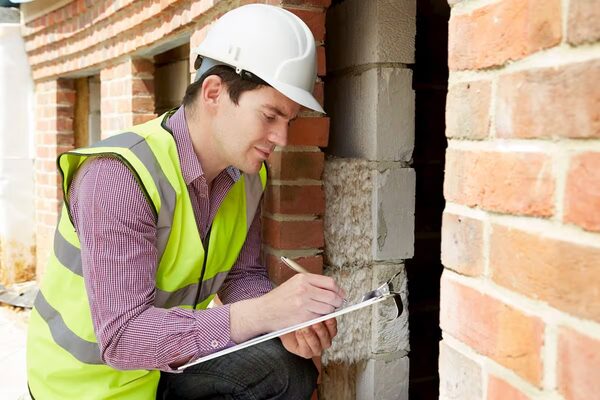
The cavity is hidden, so condition has to be established by survey rather than by inspection. The evidence standard used in official scheme rules is specific: a report from a chartered surveyor is required to validate failed cavity wall material, and evidence must be provided that no existing guarantee is in place16. That combination matters, because a live guarantee changes who is responsible for putting the work right.
A retrofit survey looks at the wall as a whole. The adequacy checks set out for existing walls cover weight and structural stability, weather resistance including damp-proofing, and thermal resistance and changes to thermal elements12. For cavity fill specifically, the pre-installation conditions are the checklist in reverse: no cracks, no evidence of rising or penetrating damp, a clean cavity free of rubble and protruding wall ties, no exposure to driving rain or extreme weather, and clear guttering6.
Good practice on the installer side includes independent inspection. One installer describes properties being assessed by retrofit surveyors and independently inspected by the Installation Assurance Authority to ensure no pre-existing damp or mould issues need to be addressed before installation17. The same body publishes consumer information and advice about looking after a property after cavity wall insulation has been installed, and a route for reporting a concern18.
For a householder, the practical output of a survey is a written finding on three questions: was the cavity breached, is the fill still in its intended position, and does the wall meet the suitability conditions for a replacement fill. Anything short of that leaves the insurance and guarantee routes without the evidence they require.
Making a flood-resilient claim: insurers, installers and guarantees
The guarantee is the household's main protection, and its terms are worth knowing before a flood rather than after one. Reputable cavity wall insulation should come with a 25-year guarantee, either backed by the Cavity Insulation Guarantee Agency or an equivalent independent insurance-backed scheme5. The CIGA guarantee is for 25 years and covers problems caused by faulty or inappropriate installation of cavity wall insulation, and CIGA will have the property registered if the cavity walls have been insulated by an installer covered by the guarantee6. The scheme's own duration term is 25 years or longer20.
The critical clause for flood cases is the failure of the original installer. If the problem is one that CIGA is responsible for resolving, for example because the company who installed the cavity wall insulation is no longer in business, the guarantee route remains open19. That is the difference between a guarantee that survives a company and one that does not.
Installer credentials are the other half of the picture. TrustMark registered installers, membership of a trade assurance body such as the Installation Assurance Authority, the Cavity Insulation Guarantee Agency or the Solid Wall Insulation Guarantee Agency, public liability insurance, employer's liability and an insurance-backed guarantee are the markers of a properly constituted job21. The advice is consistent across sources: find a registered and insured insulation expert and ask for a 25-year guarantee5.
Where grant funding is involved, the guarantee is a condition rather than a nicety. If grant aid is awarded for cavity wall or solid wall insulation, the installer employed must be able to provide a minimum 25-year guarantee for the work22. Government-backed grants are available to help pay for insulation if a home has cavity walls23, and the Energy Company Obligation covers loft or cavity wall insulation alongside boiler repair and heating changes24.
How insulation choices fit with upcoming efficiency rules
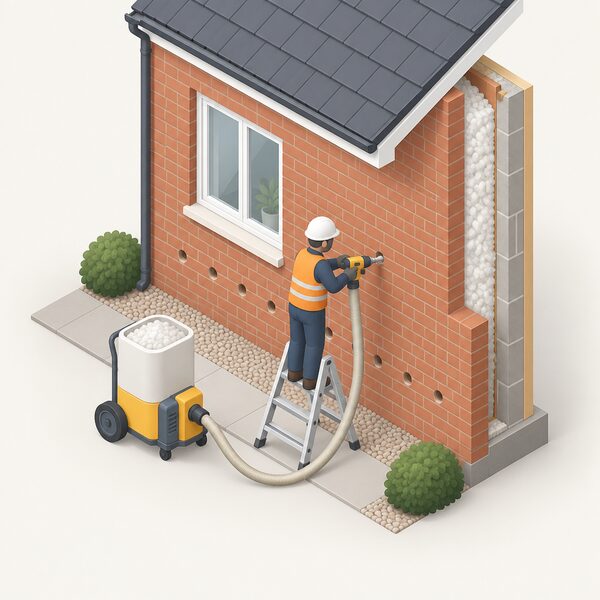
Cavity wall insulation sits inside a regulatory framework that is tightening. The Building Regulations require that the insulation material used is suitable for the wall construction concerned14, and where insulation is inserted into a cavity wall the appropriate requirements will be applied to ensure the material is suitable12. In Wales, the cavity can be fully filled with insulation or partially filled, with the manufacturer consulted before proceeding25.
The direction of travel is towards higher fabric standards and higher EPC ratings. The UK Government is consulting on requiring private rented properties in England and Wales to achieve an EPC rating of C or above by 203026. In Northern Ireland, the current Decent Homes Standard expects a dwelling with gas or oil programmable heating to have cavity wall insulation where there are cavity walls that can be insulated effectively, or loft insulation meeting current NI Building Regulations standards where there is loft space27. A dwelling with electric storage heaters, LPG or programmable solid fuel central heating faces a higher specification: cavity wall insulation where the cavity can be insulated effectively and loft insulation meeting the standards27.
There is also an exemption route that recognises when a measure is not appropriate. A recommended energy efficiency measure is not considered a relevant measure where written expert advice indicates it is not appropriate due to its potential negative impact on the fabric or structure of the property, and cavity wall insulation, external wall insulation and internal wall insulation are all named28. That matters for flood-damaged walls: where a survey finds the wall unsuitable, the exemption framework exists precisely for that finding.
The wider context is that the UK has under-insulated its housing stock for years. An extra 7.9 million lofts and 5.1 million cavity walls would have been insulated by 2024 if the 2012 rate had continued29. For a household, the independence argument is simple: a cavity fill that works is a permanent, fuel-free reduction in heat loss, and one that has been flooded out is a permanent increase in demand on whatever heats the home.
Sources29 cited
- About mineral wool, Mineral Wool Insulation Manufacturers Association, 2026-09-20
- Approved Document L Volume 1 consultation version, Welsh Government, 2025-08
- Five top tips to cut your energy bills, Climate Action Wales, 2026-03-18
- House insulation: the ultimate guide, Federation of Master Builders, 2026-09-20
- Wall insulation types, Uswitch, 2026-09-04
- Cavity wall insulation advice, Centre for Sustainable Energy, 2025-12
- Cavity wall insulation, Energy Saving Trust, 2026-05-08
- Building regulations: external walls, Planning Portal, 2026
- Review of retrofit assessment in Scotland, Scottish Government, 2025-06-06
- Cavity wall insulation, nidirect, 2026-09-02
- External wall insulation, Centre for Alternative Technology, 2025-06-20
- Building regulations: external walls, Welsh Government, 2026-09-17
- Building regulations: cavity wall, Welsh Government, 2026-09-17
- Building regulations: cavity wall insulation, Planning Portal, 2026
- Thermal resistance: external walls, Planning Portal, 2026
- ECO4 and GBIS eligibility and pre-installation declaration, Ofgem, 2026-09-17
- Wall insulation, AgilityEco, 2026-09-20
- Information and guidance, Installation Assurance Authority, 2026-09-20
- Reporting a concern about cavity wall insulation, Installation Assurance Authority, 2026-09-20
- Cavity wall insulation guarantee scheme information, Scottish Government, 2024-08
- DIY vs professional home insulation, Uswitch, 2025-11-07
- Affordable Warmth Scheme, Northern Ireland Housing Executive, 2026-09-17
- Guidance on PRS exemptions and exemptions register evidence requirements, UK Government, 2026-05-05
- Free energy saving tips, Uswitch, 2025-10-14
- Building regulations: external walls, thermal resistance, Welsh Government, 2026-09-17
- Energy bills help, Scope, 2026-07-24
- Heating technologies to suit your home, nidirect, 2026-09-17
- Current Decent Homes Standard summary table, Northern Ireland Department for Communities, 2025-08-05
- Analysis: cutting the green crap has added £22bn to UK energy bills since 2015, Carbon Brief, 2024
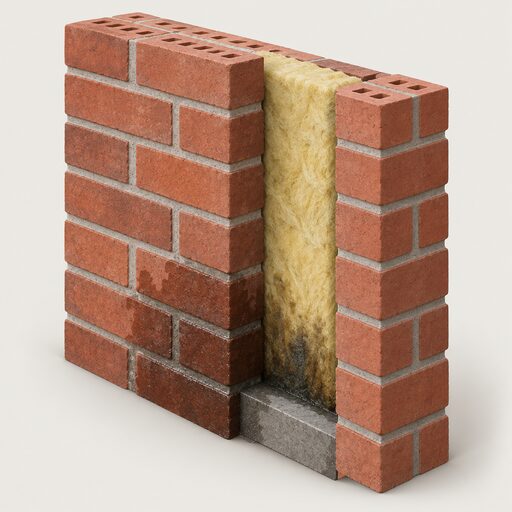 Cavity Wall Insulation ProblemsDamp patches after cavity wall insulation, and whether the guarantee actually pays out, are the two things people most want answered.
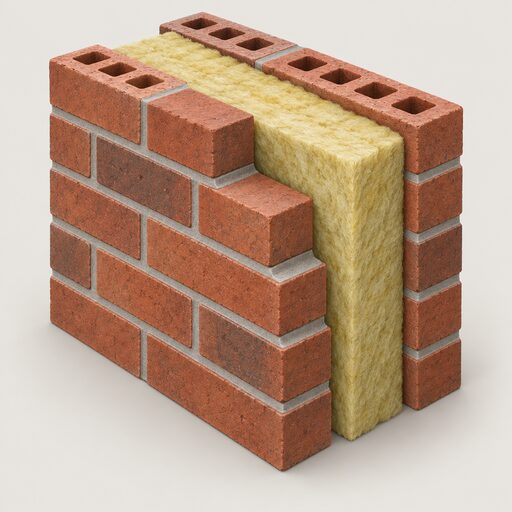 Cavity Wall InsulationCavity wall insulation could cut your heating bill, but is your home suitable?
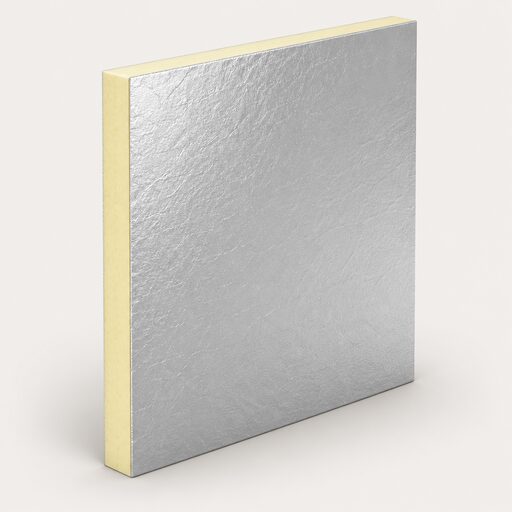 Insulation Materials ComparedMineral wool, PIR boards, polystyrene and natural fibres all keep heat in, but they suit different jobs and budgets.
 Insulation Safety and FireWill insulation catch fire, and is it safe to have in your walls?
 Solid Wall InsulationSolid walls lose far more heat than cavity walls, so what can actually be done about it?
 Prepare Energy for StormsWhat to do before and during a storm or flood warning to protect meters, the consumer unit, heating equipment and fuel tanks.