

In this guide
The Installation Assurance Authority (IAA) is an industry body that runs a quality assurance framework for insulation work, covering consumer protection, technical guidance, certification, installer surveillance and a Competent Persons Scheme under one compliance platform1. Its stated purpose is to give homeowners, funders and other stakeholders confidence that insulation work is carried out to a high standard and is subject to rigour and surveillance so it is done "Right First Time"1.
The part that matters most to a household is the guarantee attached to the work. Where repairs fall within the terms of an original, still-valid IAA guarantee, the IAA covers the cost up to £25,000, including where the original installer has gone bust2. That figure was raised from £20,000 in June 20263. The IAA also replaced the Cavity Insulation Guarantee Agency (CIGA) on the government's list of competent person schemes, so for cavity wall work the guarantee that used to carry the CIGA name now sits with the IAA4.
What follows is how the framework works, what the guarantee actually covers, how a complaint is made and how long each stage takes. The short version: the IAA is not a regulator and it does not install anything. It is the body that stands behind a member's work when the member cannot or will not put it right.
What the Installation Assurance Authority is and what it does
The IAA describes itself as an industry body providing a quality assurance framework, and the framework has several distinct parts: consumer protection, technical guidance, certification, a Competent Persons Scheme, installer surveillance and monitoring, training and carding for installers, and member company support, all run on a single compliance platform1. That breadth is the point. A household dealing with an IAA member is dealing with a business that has been assessed, is inspected while it works, and sits inside a complaints process with defined timescales.
The IAA's own consumer-facing material frames the purpose in terms of confidence: homeowners, key stakeholders and funders should be able to trust that insulation work is carried out to a high standard and subject to rigour and surveillance to ensure it is done "Right First Time"1.
It is worth being clear about what the IAA is not. It is not a government regulator, and it does not carry out installations. It is a membership and certification body, and its leverage over a member comes from the terms and conditions of membership, which include specific provisions on handling complaints and on complaints under the IAA Guarantee2. Where a member will not resolve a problem, the guarantee is the mechanism that pays for the work instead.
The IAA's role also sits alongside, rather than instead of, the building control system. For cavity wall insulation, an installer registered with the guarantee agency will in most cases submit the building notice itself, which is the notification to the local authority that the work is being done7. That is a separate function from the guarantee, and both matter: the notice deals with compliance with the building regulations, the guarantee deals with what happens if the work fails later.
For a household, the practical value is a named body with a published complaints route and a funded repair cap, rather than a warranty that depends entirely on a small firm staying in business. That is the difference between a promise and a guarantee.
What the IAA covers: insulation types and the framework
The IAA provides an end to end service and guarantees for underfloor insulation, room in roof insulation and more9. Its listed services are loft insulation, new build, cavity wall insulation, room in roof insulation and underfloor insulation, with hybrid, internal wall insulation (IWI) and park homes marked as coming soon9.
That list matters because the guarantee is measure-specific. A household with cavity wall insulation, loft insulation or underfloor insulation from an IAA member is inside the framework; a household with a measure the IAA does not yet cover is not, whatever the installer's own paperwork says.
The quality assurance framework is not just a badge. For retrofit cavity wall insulation, the IAA states that work is subject to a full assessment by a qualified pre-installation assessor, with 100 percent of those assessments independently verified by an independent assessment organisation6. For new build work, the evidence requirement is GPS and date stamped images of each elevation, uploaded to the IAA's Independent Surveillance of Assessment platform after installation6. Installers must meet the Minimum Technical Competency, be approved and trained by the System Designers whose product they install, and be subject to 5 percent surveillance by an IAA Inspector within the overall guarantee cost6.
"Subject to a level of surveillance (5 percent of all ongoing installation work) by an IAA Inspector within the overall guarantee cost"
That 5 percent figure is the honest limit of the model. Surveillance is sampling, not inspection of every job. The pre-installation assessment and the photographic evidence are what cover the gap, and they are the reason the framework can claim independent verification rather than self-declaration.
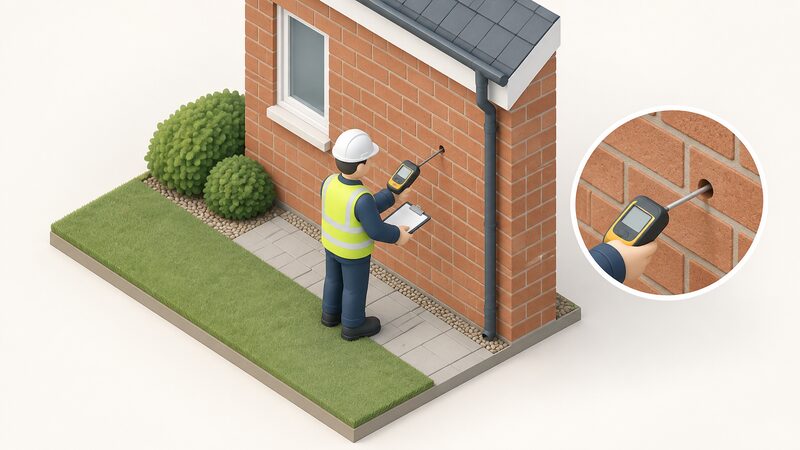
Guarantee protection: repairs up to £25,000 even if the installer has gone bust

The headline protection is the repair cap. The IAA will cover the cost of repairs up to £25,000 where those repairs are within the terms of the original, still-valid IAA guarantee2. The government's announcement of the change confirms the same figure and the same condition, and records that it was raised from £20,0003.
The scope of that cover is specific: it applies to solid wall insulation installed under ECO4 and GBIS, within the terms of the original still-valid guarantee, including where the original installer has gone bust3. Earlier official guidance on the same schemes put the expected guarantee cover at costs of up to £20,000 where the installer had ceased to trade or failed to remediate11. The two figures are not in conflict: £20,000 was the position before June 2026, and £25,000 is the position after it.
Two conditions do the heavy lifting. First, the guarantee has to still be valid. Second, the repairs have to fall within its terms. A repair that is outside the guarantee, or an installation with no valid guarantee behind it, is not covered by the £25,000 arrangement, and the household would be looking at the installer, or at another route entirely.
Where the installer is still trading, the first move is always to that installer. Government guidance on faulty ECO4 and GBIS installations is explicit that affected families should first contact the installer who carried out the work, and where the installer is no longer trading or unable to remedy the damage, they can contact their guarantee provider to initiate a claim10. The IAA's own complaints procedure follows the same order, directing the complaint initially to the registered business involved to give it the opportunity to rectify the situation, and where the member is no longer trading, to the supplying System Designer2.
For cavity wall insulation specifically, the CWISC route carries an independent 25 year guarantee provided for all CWISC installations, and complaints involving workmanship or materials are covered by that guarantee12. The trigger for the guarantee body to take responsibility is the installer no longer being in business12.
How installers qualify: certification, surveillance and the Competent Persons Scheme
Membership of the IAA is not the only registration an installer may hold, and the different schemes do different jobs. A Competent Persons Scheme is the route by which an installer can self-certify that work complies with the building standards, avoiding the need for a separate building regulations application13. Installers who are members of a relevant scheme can self-certify certain types of building work, including solar PV installation15. An installer who is not in an approved scheme cannot self-certify that their work is compliant17.
The IAA runs a Competent Persons Scheme as one part of its framework1. That means an IAA member may be able to self-certify the work rather than have it signed off separately, which is a real convenience for the householder and a real responsibility for the installer.
The qualification process behind a scheme is more than paperwork. Work is assessed to check the installer meets the level of competence required before approval, and there are ongoing inspections afterwards, yearly for the first 2 years4. Membership of the IAA itself is quicker: the IAA states a business can become a member in 12 working days6. Those two timescales measure different things. Joining the scheme is an administrative step; becoming competent to install a given measure is a technical one, and the Public Accounts Committee noted it could take up to four years for an installer of some energy efficiency measures to become fully qualified18.
For a household, the check that matters is whether the installer is a member of a scheme covering the specific work being done15. That is a narrower question than whether the firm is registered somewhere, and it is the one to ask before signing.
Making a complaint: what to send and what happens next
The IAA's complaints route starts with the installer. The IAA will initially direct the complaint to the registered business involved to give it the opportunity to rectify the situation, and where the member is no longer trading, to the supplying System Designer2. That ordering is consistent with the wider pattern in home energy work: Ofgem's guidance on the Domestic Renewable Heat Incentive tells householders to inform the installer as soon as possible and give them at least 10 working days to resolve it before contacting the consumer code20. For MCS certified installations, a complaint must be made no more than two years after the date the system was commissioned20.
What to send is set out precisely. Complaints should clearly specify the nature of the complaint and include photographs, copies of any existing correspondence, full contact details, and the name and registration number of the IAA registered business involved2. Proof of ownership is required as well: a copy of a Land Registry extract or a mortgage statement, and a copy of a utility or council tax bill, or a tenancy agreement if the property is tenanted2. Both parts are needed, so a mortgage statement alone will not do.
Anyone can act for a householder. If help is needed in making a complaint, the householder may instruct anyone they choose to act on their behalf, provided a signed letter of authority is received2.
Confidentiality is qualified in a way worth reading carefully. All complaints are treated in confidence, although details may be passed to the installer, manufacturer or System Designer for further investigation2. In practice, the company complained about will see the substance of the complaint.
Where the installer cannot resolve matters, a Technical Inspector may investigate, report findings and offer a conclusion together with advice to the customer12. Where remedial works are recommended, they are arranged by the installer, the System Supplier or the IAA as appropriate, with regular updates provided12. If a dispute remains, the guarantee provides that any dispute between the householder and the IAA or an IAA registered installer can be referred to an independent arbitrator, whose decision is final and legally binding on both parties2.
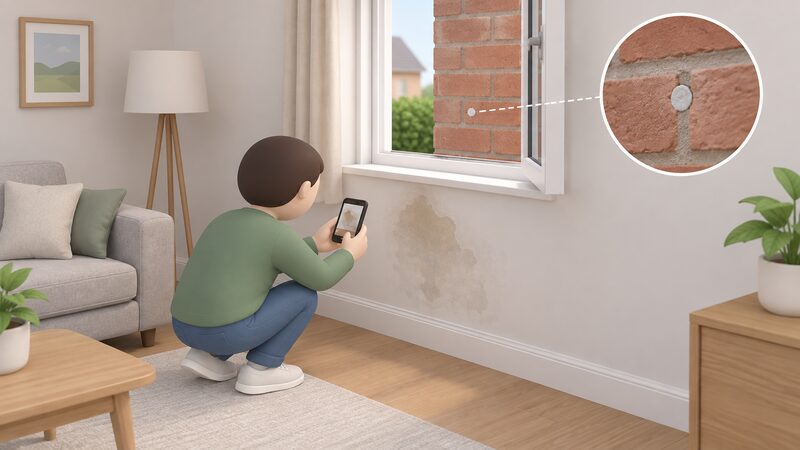
Complaint timescales: acknowledgement in 2 working days, report in 30

The published timescales are short at the front end and longer in the middle. All complaints are logged on receipt and an acknowledgement is sent within 2 working days2. The inspecting body then investigates and reports its findings within 30 working days, detailing findings from the inspection, digital images where necessary, a conclusion and recommendations2.
The CWISC route runs to a slightly different clock. The installer has 41 working days to resolve the problem to the householder's satisfaction before the householder can contact the IAA5. The IAA confirms it has referred the matter and checks back after 2 months to see whether a satisfactory outcome has been reached5. Where the IAA's own procedure applies, the installer or System Designer investigates and reports findings to the IAA within one month12.
| Stage | Timescale | Source |
|---|---|---|
| Complaint acknowledged | Within 2 working days | 2 |
| Installer resolution window (CWISC) | 41 working days | 5 |
| Investigation and report | Within 30 working days | 2 |
| Installer or System Designer report to IAA | Within one month | 12 |
| IAA check-back with householder | After 2 months | 5 |
The pattern is consistent with other redress routes. Ofgem's dispute resolution guidance states that a complaint will be acknowledged within 2 working days21. The CWISC process also commits to obtaining quotes for any rectification works within 2 working days of receiving acceptance or agreement from the customer5.
Oversight of how well this works is internal. The IAA's Customer Service Committee is regularly provided with details of performance in resolving complaints and timelines2. That is a governance arrangement rather than a published performance statistic, so a householder cannot easily check how often the timescales are met.
Where a complaint is about something other than the insulation itself, a separate route may apply. Government guidance on poor quality wall insulation directs householders with a separate complaint about their installation to the steps set out in the TrustMark complaints process22. More on that route is at complaining about an installer.
Contacting the IAA
Complaints go to concerns@theiaa.co.uk, by telephone on 03333 239045, or by post to Unit 3, Ouzel Industrial Estate, Grovebury Road, Leighton Buzzard, LU7 4ER2. General enquiries use enquiries@theiaa.co.uk9.
The postal address is the one to use where documents need to be sent, since the proof of ownership requirement means paper or scanned copies will be involved. The telephone line is the quickest way to establish which route applies before sending anything.
How the IAA fits into a home's route to energy independence
Insulation is the least glamorous part of cutting a home's dependence on bought energy, and it is the part that most directly reduces it. A well-insulated home needs less gas, oil or electricity to stay warm, which reduces both the bill and the exposure to whatever the grid and a supplier charge. That is the independence argument for the work.
The dependence the IAA framework addresses is different, and it is a commercial one. Insulation is installed by small and medium firms, and a guarantee from a firm that may not exist in ten years is worth very little. The IAA model replaces that with a body that carries a funded repair cap, a published complaints process and a surveillance regime, so the household's protection does not rest solely on the installer's survival1.
The limits are real. The £25,000 cap applies only where the original guarantee is still valid and the repair is within its terms2. Surveillance covers 5 percent of ongoing installation work, not all of it6. Complaints are confidential but details go to the installer or manufacturer2. And the framework covers the measures on its list, with hybrid, IWI and park homes still to come9.
For a household, the practical position is that an IAA-backed installation carries a named guarantee with a defined ceiling and a defined process, which is more than an unregistered installer's own warranty offers. It does not remove the need to check that the installer is a member of a scheme covering the specific work, to keep the guarantee documents, and to raise problems early enough for the timescales to work. The wider route through certification, contracts and redress is set out in Home Energy Installers and Retailers, and the guarantee landscape more broadly at insurance-backed guarantees.
Sources22 cited
- Consumer advice, The Installation Assurance Authority, 2026-09-20
- Complaints procedure, The Installation Assurance Authority, 2026-09-20
- Greater protections to restore families' trust in home upgrades, GOV.UK, 2026-06-17
- Competent Person Scheme: current schemes and how schemes are authorised, GOV.UK, 2013-04-04
- Complaints procedure (CWISC), The Installation Assurance Authority, 2026-09-20
- New build FAQ, The Installation Assurance Authority, 2026-09-20
- Building regulations: cavity wall insulation, Welsh Government, 2026
- Building regulations: cavity wall, Planning Portal, 2026
- Underfloor insulation best practice guide, The Installation Assurance Authority, 2026-09-20
- Energy Market Consumer Protection, Hansard, 2026-06-17
- Research briefing CBP-9585, House of Commons Library, 2026-01
- Reporting a concern (CWISC), The Installation Assurance Authority, 2026-09-20
- Building regulations: competent person schemes, GOV.UK, 2026-09-17
- Use a competent person scheme, GOV.UK, 2026-09-17
- Solar photovoltaics and planning in conservation areas, West Suffolk Council, 2026-09-17
- Installing solar panels at your home, Brighton and Hove City Council, 2026-09-17
- Building regulations: boilers and heating, Welsh Government, 2026-09-17
- Energy Efficiency Association report, UK Parliament, 2026-09-20
- Building regulations: general information, Planning Portal, 2026-09-17
- Domestic Renewable Heat Incentive: who to contact, Ofgem, 2026-09-17
- Feed-in Tariffs: dispute resolution, Ofgem, 2026-09-17
- What to do if you have poor quality wall insulation, GOV.UK, 2025-01-23