

In this comparison
The choice between a national installer and a local firm is not a choice between good and bad. It is a choice between two different structures of accountability, and the structure matters more than the badge on the van. A national firm brings a call centre, a standard specification and a brand to complain to. A local firm brings a named person, a shorter chain between the quote and the work, and a reputation that lives in the same town as the customer.
What decides the outcome is certification, not size. Electrical work in a home should be done by someone registered with a competent person scheme who can self-certify compliance with the building regulations1. Gas work needs a registered installer with the relevant competencies, who can self-certify without close involvement of building control3. Grant-funded work under the Warm Homes: Local Grant requires TrustMark registration and certification under the latest version of PAS 2030 or by MCS4. A heat pump grant application needs an MCS installer, who applies through Ofgem on the householder's behalf5.
Cost is the question buyers ask first and the one the evidence answers least well. There is no published UK comparison of national against local pricing, and the guidance that exists says installation costs are high for some technologies6 and that a consumer unit price cannot be estimated accurately because the unit type, property size, electrical system complexity and the electrician's charge all move it7. The practical answer is that quotes, not firm size, set the price.
National installer or local firm: the short answer
The short answer is that both routes can deliver a compliant installation, and the deciding factors are the same in each case: who holds the certification, who signs the certificate, who carries the guarantee, and who is still trading when something goes wrong. Size does not appear anywhere in the registration rules.
What the rules do say is that a registered installer will be approved to carry out the work to comply with building regulations without involving local authority building control, and a certificate is issued on completion12. That is the mechanism that makes either route work. The alternative exists too: installers who do not join a scheme, or do not use one for a particular job, can still use local council or private inspectors1.
For households in rural and remote areas, the Scottish Government's retrofit assessment analysis notes the importance of engaging with reputable locally-based installers, particularly in rural and remote areas, who are invariably time and resource-poor13. That is a statement about capacity, not quality: the local firms best placed to serve those areas are also the ones with least spare time to bid for the work.
The independence question sits underneath all of this. A national installer ties the household to a company's continued existence and to its call centre; a local firm ties it to one or two named people and their continued trading. Neither removes the dependence. What reduces it is certification that survives the firm, and guarantees that can be claimed against a third party.

What a national installer typically offers
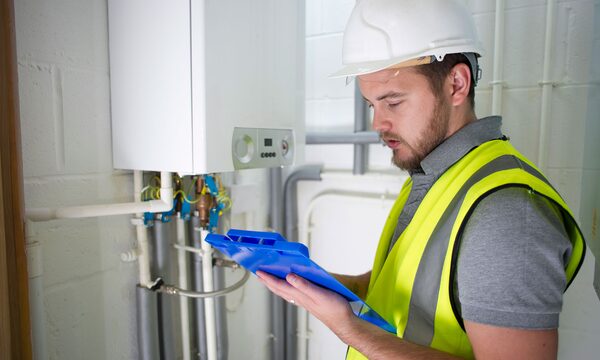
A national installer's proposition is standardisation. The same survey process, the same specification, the same paperwork and the same complaints line, repeated across the country. For a household that wants a predictable process and a single point of contact, that has real value, and it is the reason national firms dominate the volume end of boiler replacement and increasingly of heat pumps and solar.
The protections that come with a national firm are usually scheme protections rather than size protections. Flexi-Orb certified installers, for example, are required to provide their domestic customers with an insurance-backed guarantee that meets the minimum criteria in the scheme's IBG Provider Policy14. That requirement applies to the certification, not to the firm's turnover, so a local firm holding the same certification carries the same obligation.
National firms also tend to hold multiple certifications at once, because they install several technologies. That matters for a household doing more than one measure: a single firm certified for electrical work, heating and renewables can self-certify across the whole job rather than coordinating separate registered installers. The competent person scheme route allows exactly that self-certification2.
The trade-off is distance. A national firm's surveyor, installer and aftercare team may be three different people in three different regions, and the person who signed the certificate may never return to the property. That is not a defect in the work, but it changes what aftercare feels like.
Cost: how the two usually compare
There is no reliable published figure for the national-versus-local price gap, and any page that offers one is guessing. What the guidance does establish is which costs are genuinely variable and which are not.
For electrical work, the cost of installing a consumer unit is difficult to estimate accurately because the type of consumer unit, the property size, the electrical system complexity and the electrician's charge all affect the price7. Those four variables apply equally to a national firm and a local one. For electric vehicle chargers, installation costs range between £450 for a basic model, increasing to around £1,200 as the power and capabilities increase15. That range reflects the equipment and the electrical work, not the size of the installing business.
| Cost driver | What moves it | Applies to |
|---|---|---|
| Consumer unit replacement | Unit type, property size, system complexity, electrician's charge7 | Both routes |
| EV charger installation | £450 basic model to around £1,200 as power and capabilities increase15 | Both routes |
| Electric heating | Installation costs are high6 | Both routes |
| Grant-funded measures | Scheme installer conditions, not firm size4 | Both routes |
The structural difference is in overheads and in how work is priced. A national firm carries marketing, call centre and regional management costs that a two-van local firm does not, and it may price a standard package rather than a surveyed one. A local firm may price the same job lower, or may price it higher because it has less buying power on materials. Neither pattern is guaranteed, and the guidance does not settle it.
What a household can control is the comparison. Getting at least three quotes and checking that they are quoted like for like is the standard advice8, and it is the only method that reveals whether a national firm's package is cheaper or dearer than a local firm's surveyed price for the same specification.
Certification and standards: what to check either way
Certification is where the two routes converge, because the same registers and schemes apply to both. The check is the same whether the firm has forty vans or one.
For electrical work, it is recommended to hire an installer registered with a competent person scheme, a registered competent person, who can self-certify that the work meets the required standards16. The alternative is to tell local authority building control about the installation work before it starts, or to employ an electrician registered with a Government-approved Part P scheme17. Completion should produce an Electrical Installation Certificate signed by a competent person18.
For gas work, employing a registered installer with the relevant competencies means they should be able to self-certify without the need for close involvement of building control3. Where the installer is not in an approved competent person scheme, the firm or the householder will need to give notice to the local authority of the intention to carry out the boiler work in advance19.
For grant-funded work, the Warm Homes: Local Grant requires installers to be TrustMark registered and certified under the latest version of PAS 2030 or by MCS4. The Boiler Upgrade Scheme requires an MCS installer, who applies for the grant on the householder's behalf through Ofgem5. For home battery storage, the installer should be signed up to the Renewable Energy Consumer Code, which now covers storage, and certified by MCS or alternatively by Flexi-Orb20.
In Scotland, electrical work carried out under a building warrant must be approved by a registered installer acting as an approved certifier, or checked by the local authority22. In Wales, boiler and heating work follows the Welsh building regulations route19, and heat pump installations have their own Welsh building regulations guidance23. The registers are UK-wide; the notification route differs.

Where each option falls short
The failure modes differ, and both are documented.
A national firm's weakness is the gap between the sales process and the work. The surveyor who priced the job, the crew who installed it and the aftercare team who handle problems may be different people with different incentives. When a national firm's installation is faulty, the household's first contact is a call centre, and the escalation route runs through a consumer code rather than through a person who knows the property.
A local firm's weakness is capacity and continuity. The Scottish Government's analysis notes that locally-based installers in rural and remote areas are invariably time and resource-poor13, which means slower response, less slack for remedial work, and a greater chance that the business is a single point of failure. If the installer stops trading, the household's claim moves to the guarantee provider, and where the guarantee is missing, fraudulent or cancelled, the position is worse still24.
Both routes share a common failure: work done without the right certification. Where an installer is not in an approved competent person scheme, the notification burden falls on the firm or the householder19, and a job that skips that step leaves the household without the certificate that a future buyer or a grant scheme will ask for.
The consultation evidence on retrofit standards suggests households are not asking for perfection. Asked about an equivalent standard for properties where measures are not relevant, 21% selected that installers should only be required to install some measures where feasible and cost-effective, 18% that they should be allowed additional time, and 11% that all measures should be required where feasible23. The spread shows how little consensus exists about how far standards should stretch.
How to compare quotes on a like-for-like basis
The comparison method is the same for both routes, and it is the part households most often skip. Getting at least three quotes and checking that they are quoted like for like is the baseline advice8, and checking the installer's references by talking to their previous customers is the second step8.
A like-for-like comparison means the same specification, the same certification, the same guarantee and the same aftercare terms in each quote. A national firm quoting a standard package and a local firm quoting a surveyed job are not comparable until the specification is written down in both.
- Get at least three quotes, from a mix of national and local firms where possible8.
- Check each firm's registration against the relevant scheme for the work: competent person scheme for electrical, registered installer for gas, TrustMark and PAS 2030 or MCS for grant-funded measures, MCS for heat pump grants1.
- Ask which business will certify the work and issue the certificate12.
- Ask what guarantee applies, who provides it, and whether it is insurance-backed14.
- Check references by talking to previous customers8.
- Confirm the complaint route in writing: installer first, then the consumer code or MCS11.
TrustMark is the government-endorsed competent person register for finding an installer that will assess your circumstances and property to identify suitable measures25. Searching a register rather than a review site is the fastest way to establish whether a firm, national or local, is actually certified for the work being quoted.

Which fits which household
The fit depends on the property, the measure and the household's appetite for managing the process, not on a general rule that one route is better.
A household doing a single, standard measure in an area well served by national firms may find the national route simpler: one survey, one specification, one complaints line, and scheme protections that apply regardless of the firm's size14. A household doing a complex or unusual job, or one in a rural or remote area, may find that only local firms will bid at all, and the Scottish Government's analysis of installer capacity in those areas is the reason13.
For grant-funded work, the installer conditions narrow the field before the household chooses. Warm Homes: Local Grant work requires TrustMark registration and PAS 2030 or MCS certification4, and Boiler Upgrade Scheme work requires an MCS installer who applies through Ofgem5. Under the Green Homes Grant Local Authority Delivery scheme, local authorities were not required to use TrustMark registered installers, but those that chose not to had to clearly outline how they would guarantee high quality work and take appropriate steps to ensure customer protection26. That is the pattern to look for in any scheme: if the certification is absent, something else must stand in its place.
The Bristol City Council retrofit research found respondents preferred delivery by a partnership of independent organisations and the local authority, with or without an energy supplier involved, or by local specialist tradespeople27. That is a preference, not evidence of better outcomes, and it is worth weighing as a preference rather than a finding.
On independence, the honest position is that neither route removes dependence. A national firm leaves the household dependent on a company's continued trading and its call centre; a local firm leaves it dependent on one or two people. What reduces that dependence is certification that can be checked against a register25, a certificate that names the registered business12, and a guarantee that survives the installer14. Those three things are available through either route, and they are what a household should be buying.
Sources27 cited
- Building regulations competent person schemes, GOV.UK, 2026-09-17
- Building regulations general information, Planning Portal, 2026
- Boilers and heating, Planning Portal, 2026
- Warm Homes: Local Grant policy guidance, Department for Energy Security and Net Zero, 2026-07
- Heat pump grants, GOV.UK, 2026-09-10
- Hydropower for the home, Uswitch, 2026-01-06
- Consumer units and fuse boxes, NICEIC, 2025-09
- What to check before appointing an installer, FENSA
- Electric heating, Energy Saving Trust, 2026-07-01
- Electric vehicle charging, Planning Portal, 2026
- Boiler Upgrade Scheme guidance for property owners, Ofgem, 2026-03-25
- Doors and windows: building regulations, Planning Portal, 2026
- Review of retrofit assessment in Scotland, Scottish Government, 2025-06-06
- The growing problem of botched heat pump installations, Flexi-Orb, 2025-04-02
- Electric vehicle chargers, Planning Portal, 2026
- Do I need building regulations approval for electrical alterations, Planning Portal, 2026
- Building regulations, Electrical Safety First, 2026-09-17
- Electrical safety, Cumberland Council, 2026-09-17
- Building regulations: boilers and heating, Welsh Government, 2026-09-17
- Solar panel battery storage, Which?, 2026-05-14
- Flexi-Orb consumer guide, Flexi-Orb, 2025-02-17
- Building regulations: heat pumps, Welsh Government, 2026-09-17
- Delivering net zero for Scotland's buildings, Scottish Government, 2026-01-29
- Energy market consumer protection, Hansard, 2026-06-17
- ECO scheme home energy efficiency, Leeds City Council, 2026-09-20
- Green Homes Grant scheme, Solar Energy UK, 2026-09-17
- Able to pay retrofit research executive summary, Bristol City Council, 2022-07
 National Home Energy InstallersWho actually turns up to fit your boiler or solar panels when you book with a big national company?
 Manufacturer Approved NetworksDoes an approved installer badge mean better work, or just a longer warranty on the boiler or heat pump?
 Checking an InstallerBefore you sign anything, how do you know your installer is genuine?
 Energy IndependenceHow the choice of installer or retailer shapes a household's long-term control over its energy system, from certification and consumer codes to spare parts, servicing access and what happens when a firm stops trading.
 Energy Independence and MakersWhich brands let you keep control of your heating, solar or car charging, and which tie you to their app and their cloud?
 The Full Installers GuideHow do you find an installer you can trust, and what should you check before signing anything?