
In this comparison
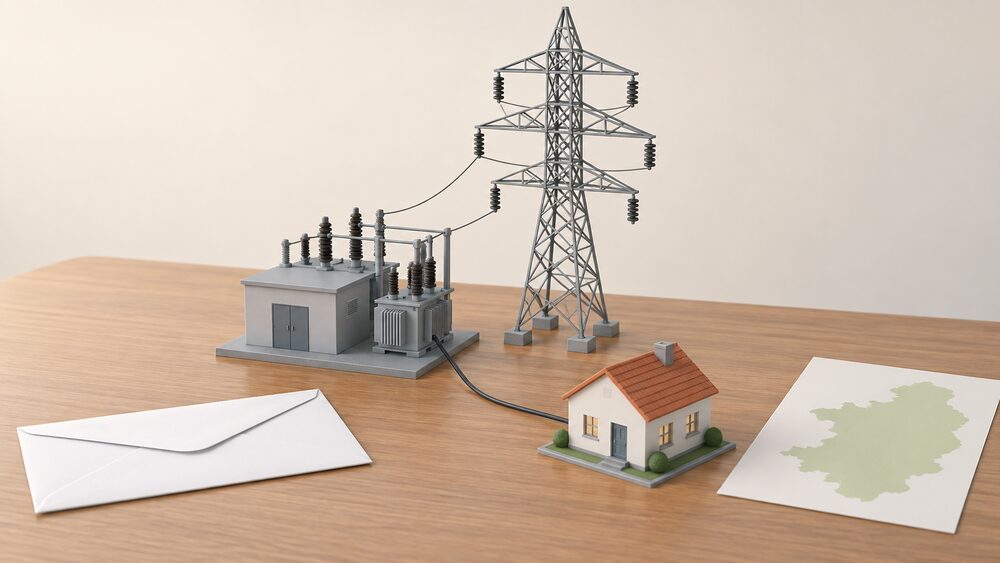
UK Power Networks and National Grid are two different kinds of company, and the confusion between them is one of the most common in British energy. UK Power Networks is a distribution network operator: it owns the wires, cables, substations and the household fuse that bring electricity from the national transmission network to homes and businesses in London, the East and the South East of England1. National Grid is both a transmission owner and, through National Grid Electricity Distribution, a distribution network operator for the Midlands, South West England and South Wales3.
The practical test is your address. If you live in London, the South East or Eastern England, UK Power Networks is your distribution network operator5. If you live in the Midlands, South West England or South Wales, National Grid is your distributor3. Neither company sells you electricity or sends your bill: that is your supplier, a separate business entirely.
Both companies are contactable on 105, the free national number for power cuts and electricity emergencies, which routes you to the network operator for your area7. UK Power Networks also publishes 0800 31 63 105, free from a landline or mobile and answered 24 hours a day1.
Two companies, two jobs: who owns the wires and who runs the system
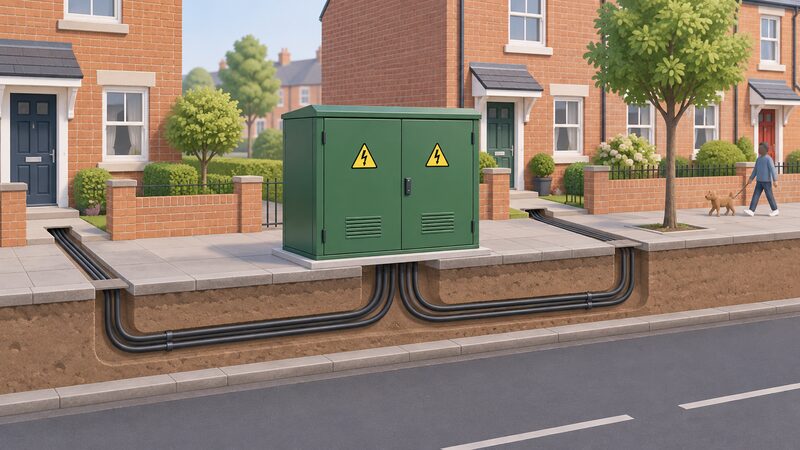
The distinction that matters to a household is between the network and the supply. The network is the physical infrastructure: the cables, the substations, the fuse at the point where electricity enters your home. UK Power Networks states that it owns the electrical fuse and the cables that bring electricity into your home and is responsible for maintaining them1. That ownership is what makes the network operator, not the supplier, the company you call when the power fails.
Distribution network operators own and operate the distribution network of towers and cables that bring electricity from the national transmission network to homes and businesses10. They also own and operate the infrastructure that delivers power to your property11. The Energy Networks Association represents the companies which operate the UK and Ireland's electricity and gas networks, the "wires and pipes"12.
Above the distribution networks sits transmission. In England and Wales the system operator is National Grid, and in England and Wales the transmission network is owned and operated by National Grid13. National Grid plc is one of the world's largest utilities firms and is listed on the London stock exchange14. The National Energy System Operator is responsible for "planning and delivering the energy of today and the future" UK energy system, a separate function from owning the wires15.
Energy infrastructure and regulation is the responsibility of the UK Government, which sets the framework within which all of these companies operate16. For a household, the practical consequence is that no single company controls the whole chain from generation to socket. Independence at the meter is limited by design: the wires are a monopoly, the supplier is a market, and the system operator balances the whole.
Which network covers your address: UK Power Networks vs National Grid areas
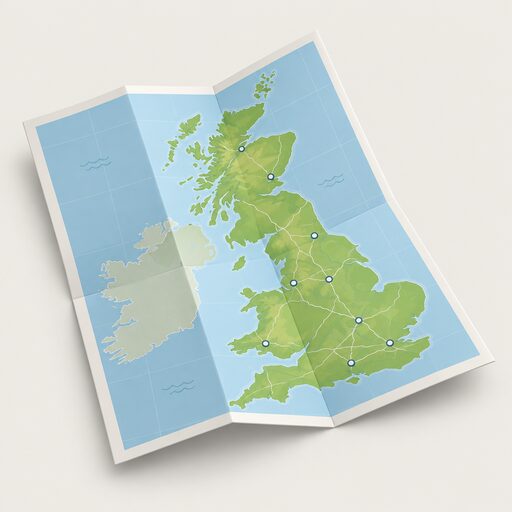
Great Britain is divided into regional electricity network areas, each served by one distribution network operator. These companies operate the electricity network in different regions across Great Britain7. The map is not the same as the map of suppliers, and it is not the same as the map of gas networks.
UK Power Networks covers London, the East and the South East of England5. Other listings describe the same territory as London, South East and Eastern England, and as London, south-east and eastern England6. National Grid covers the Midlands, South West England and South Wales, and is the distributor for customers in the Midlands, Southwest England or South Wales3. National Grid Electricity Distribution operates networks across the Midlands, South West and South Wales5.
Elsewhere the picture differs. Northern Powergrid covers the North East, Yorkshire and northern Lincolnshire5, and its two licensed entities serve North East England and Yorkshire8. Northern Gas Networks notes that if you live in Yorkshire or the North East, your electricity distribution network is likely to be Northern Powergrid18. Scotland and Northern Ireland have their own arrangements, and the network operator there is a different company again.
| Network operator | Area served |
|---|---|
| UK Power Networks | London, the East and the South East of England5 |
| National Grid Electricity Distribution | Midlands, South West England and South Wales3 |
| Northern Powergrid | North East, Yorkshire and northern Lincolnshire5 |
For a household, the area determines who answers when the lights go out, who investigates repeated faults, and who arranges a connection or an upgrade. It does not determine who bills you, and it does not change when you switch supplier.
What a distribution network operator does for your home
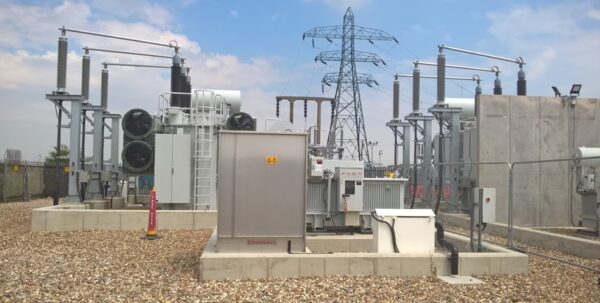
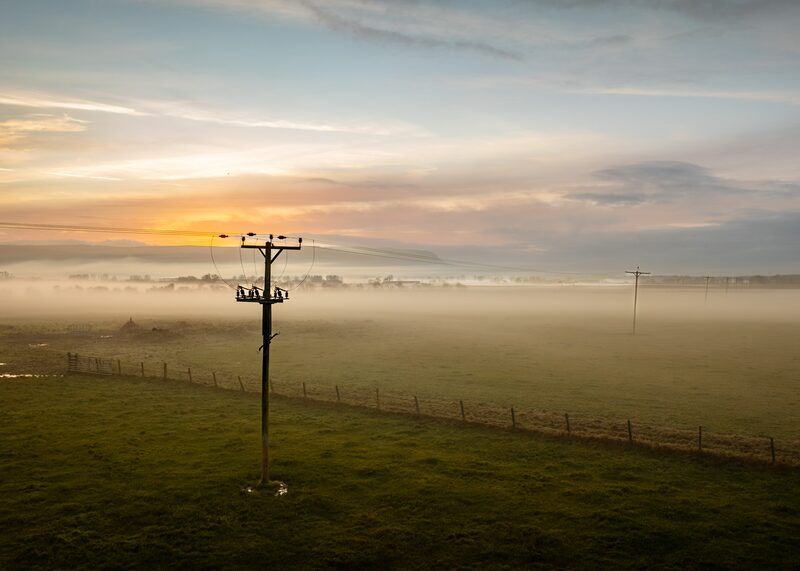
The distribution network operator's job is to keep the local network working. That covers the fuse and incoming cables, the substations that step voltage down, the overhead lines on poles, and the underground cables in the street. UK Power Networks has thousands of electricity substations around London, the South East and East of England2. It describes its local electricity networks in London, the East and the South East as 99% reliable, while noting that power cuts can occasionally happen for a range of reasons9.
When a fault occurs, the operator restores supply. Where a repair needs a generator, the company connects generators as close as possible to the local electricity substation, which may mean very close to a customer's home19. During generator use, the advice is to use less power than usual by switching off things you do not need19. UK Power Networks states that it cannot provide individual generators in the event of a national power emergency9.
The operator also holds rights over equipment on private land. To supply electricity to all homes and businesses within its area, it is sometimes necessary to place equipment, both overhead and underground, on private land20. Where a substation is located on your property or within your building, the company will generally hold a lease or freehold interest in the land with associated access and cable rights20. Access to a substation must be maintained and kept unrestricted at all times so that supplies can be restored quickly if a fault occurs20. There is a common set of rates for claims if you have low voltage electricity equipment on your land20.
Under the Electricity Supply Emergency Code, distribution network operators such as UK Power Networks, which delivers power from the national grid to homes and businesses, would be instructed to disconnect power supplies9. That is the limit of household independence on the network side: the connection is shared, and in a national emergency it can be curtailed.
National Grid's role: transmission and the system operator in England and Wales
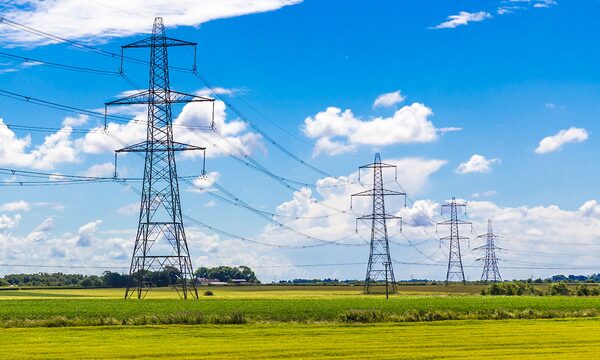
National Grid's role splits in two, and the split is the source of most of the confusion. First, it owns and operates the electricity transmission network in England and Wales3. Second, through National Grid Electricity Distribution, it is the distribution network operator for the Midlands, South West England and South Wales3. A household in Birmingham therefore deals with National Grid as its local network operator, while a household in London deals with UK Power Networks and with National Grid only indirectly, through the transmission network that feeds the distribution network.
The transmission network is the high-voltage backbone. National Gas Transmission, a separate company, owns and operates the National Transmission System, a system formed of high pressure gas pipelines that transport gas from terminals and ports21. The electricity equivalent in England and Wales is National Grid's transmission business.
National Grid has also proposed changes to the way network capacity is added. It suggested that the installation of a third wire on current lines consisting of two wires on wooden poles would significantly increase the capacity of the existing network to meet requests for solar, wind and EV charge points and heat pump connection22. Its proposals included amendments to remove the 25% volume limit for increase in size of electricity installations, while retaining the height limitation, and removing the requirement for prior approval for certain works, including portable relay rooms and substation assets22.
For a household, transmission matters because it sets the ceiling on how much power can reach the distribution network in the first place. It is also the layer where the system operator balances supply and demand nationally, a function now carried out by the National Energy System Operator15.
Power cuts: who to call and what compensation applies
For an unplanned power cut, the number is 105. Ofgem advises households to call 105 for free, which will put you through to your electricity network operator23. Network companies advise contacting your network company online or calling 10511. UK Power Networks publishes 0800 31 63 105 or 105, free to call from a landline or mobile and answered 24 hours a day1. National Grid publishes 0800 6783 105 or 105 for power cuts and emergencies24.
Compensation is set by guaranteed standards. A power cut lasting longer than 12 continuous hours can trigger a payment4. Where fewer than 5,000 homes were affected, the initial payment is £100 if your power is off for more than 12 hours, with a further £45 for every 12 hours after that8. UK Power Networks states that once power is restored it will proactively contact all eligible customers, so there is no need for you to contact it4. It also publishes guidance on eligibility for compensation for multiple power cuts25.
If you feel you have had too many power cuts recently, UK Power Networks asks you to contact it and says it will investigate25. The Energy Ombudsman can help with unresolved complaints about network operators26.
Connections, upgrades and meter moves: how each company handles them
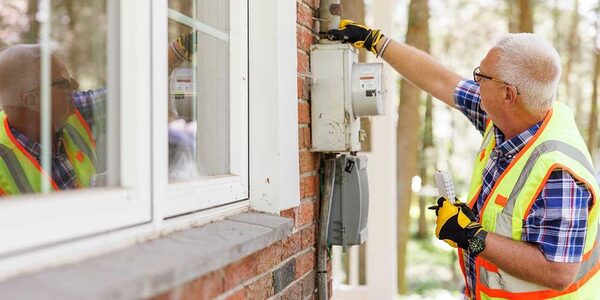
New connections and capacity upgrades sit with the network operator, because they involve the wires rather than the supply. UK Power Networks sets out what is involved in connecting one to four properties for domestic and small business use27, and publishes cost and time information for adding more power28. Its phone lines for these enquiries are open Monday to Friday, 8.30am to 5.00pm, and the team aims to respond to emails within 48 hours28.
Meter moves are different. If you only need to relocate the meter, this can be arranged through your electricity supplier, the company you pay, which contacts the meter operator, and no work by UK Power Networks is required29. When a new connection is made, the customer's electricity supplier is responsible for installing the electricity meter into the meter box30. The network operator brings the supply to the property; the supplier fits the meter.
The National Energy System Operator publishes help and support for domestic customers and homeowners on connections30. Where a connection involves work near existing equipment, the network operator's safety processes apply.
Safety, substations and working near power lines
Substations are the most visible piece of network equipment in a residential area, and they are not for public access. UK Power Networks has thousands of them across London, the South East and East of England2. Where one sits on private land, the company generally holds a lease or freehold interest with access and cable rights, and access must be kept unrestricted at all times20.
For anyone planning work, the network operator's safety advice is to request plans before digging31. UK Power Networks also publishes safety advice and resources covering equipment and cables31. The free emergency 24 hour number, 0800 31 63 105 or simply 105, is the route for reporting damage or danger31.
Priority services and extra support from each network
Network companies offer free priority support services to help people with additional needs11. The Priority Services Register is a free service provided in case of power cuts10. Registration is not automatic: to sign up you will need to contact all your utility suppliers directly32.
UK Power Networks runs its own register and reports that in the past year users of the Priority Services Register gave its service a 94% customer satisfaction rating33. It has partnered with experts including Scope and AgilityEco to expand the range of tailored support services available33. Uptake varies sharply by area: Tunbridge Wells recorded 59.4%33. The company has warned that residents risk missing out on free emergency support33, and it maintains over 250 referral networks across its areas34. It can be contacted about the register by email at psr@ukpowernetworks.co.uk, with lines open 24 hours34.
The Met Office advises households to sign up for the Priority Services Register in case of power cuts, describing it as a free service10. In Wales, Carmarthenshire Council directs residents to contact all utility suppliers directly to join32.
For a household, the register is one of the few forms of support that is genuinely free and does not depend on switching supplier or owning equipment. It does not reduce dependence on the network, but it does change what happens when the network fails.
Sources34 cited
- Replace your fuse, UK Power Networks, 2026-09-17
- What is an electrical substation, UK Power Networks, 2026-09-17
- What role does National Grid play in your energy bill, National Grid, 2026-09-17
- Compensation for a power cut lasting more than 12 hours, UK Power Networks, 2026-09-17
- For homes, FlexAssure, 2026-09-19
- Who supplies my electricity and gas, Uswitch, 2026-06-29
- Power cut 105, Power Cut 105, 2026-09-17
- How to find out if there's a power cut, Which?, 2026-06-04
- Make a plan to be winter ready, UK Power Networks, 2026-09-17
- What to do in a power cut, Met Office, 2026-04-04
- Get winter ready, Energy Networks Association, 2026-09-17
- Energy companies and Citizens Advice remind the public to be safe on the doorstep, Energy Networks Association, 2020-04-17
- Energy Committee report, UK Parliament, 2026-09-20
- Hikes in gas network costs see vampire funds profit from energy crisis, End Fuel Poverty Coalition, 2024-03
- Research briefing CBP-9888, UK Parliament, 2026-07-10
- Protection for energy customers ahead of RTS switch off, Scottish Government, 2025-03-15
- Who is my gas and electricity supplier, Confused.com, 2026-07-03
- Priority customers, Northern Gas Networks, 2025-10-22
- Why do you use generators, UK Power Networks, 2026-09-17
- Electricity equipment on your land, UK Power Networks, 2026-09-17
- Call for input on disconnections, Ofgem, 2025-01-13
- Changes to permitted development rights: summary of responses, Welsh Government, 2025-12
- Check if you can get payment for a power cut, Ofgem, 2026
- Cutout inspections by a Coole, National Grid, 2026-09-17
- Multiple or repeat power cuts, UK Power Networks, 2026-09-17
- Network operators, Energy Ombudsman, 2026-09-20
- New electricity connection: what's involved, UK Power Networks, 2026-09-17
- Adding more power: cost and time, UK Power Networks, 2026-09-17
- Move, UK Power Networks, 2026-09-17
- Domestic and homeowners, NESO, 2026-09-17
- Safety advice and resources, UK Power Networks, 2026-09-17
- Heating your home, Carmarthenshire Council, 2026-04-04
- Residents risk missing out on free emergency support, UK Power Networks, 2026-09-17
- Promote the Priority Services Register, UK Power Networks, 2026-09-17
 Who Owns Which Energy SupplierWho is actually behind the company that sends your energy bill?
 Network Operators and 105When the lights go out, who do you actually ring?
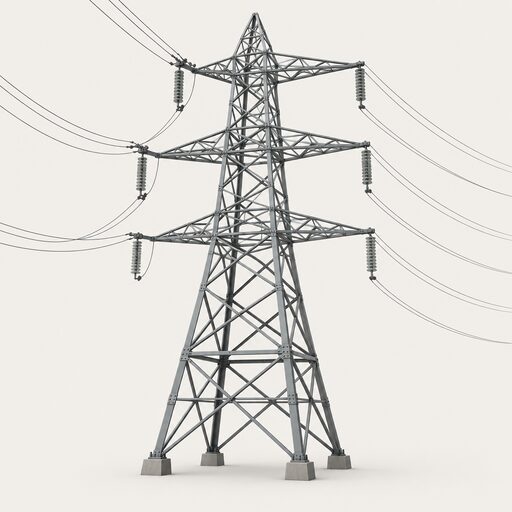 The Transmission NetworkWondering who owns the pylons near your house, or why the grid needs upgrading before you can run a heat pump or an electric car?
 The Full Energy Suppliers GuideWho the UK's domestic gas and electricity suppliers are, how the market is structured across Great Britain and Northern Ireland, what a supplier is licensed and obliged to do, how the price cap limits bills, what happens when a supplier fails, and who regulates it all.
 National Home Energy InstallersWho actually turns up to fit your boiler or solar panels when you book with a big national company?
 Gas Distribution NetworksWho actually owns the pipes under your street, and who do you call when gas smells or the supply fails?