
In this answer
Short answer
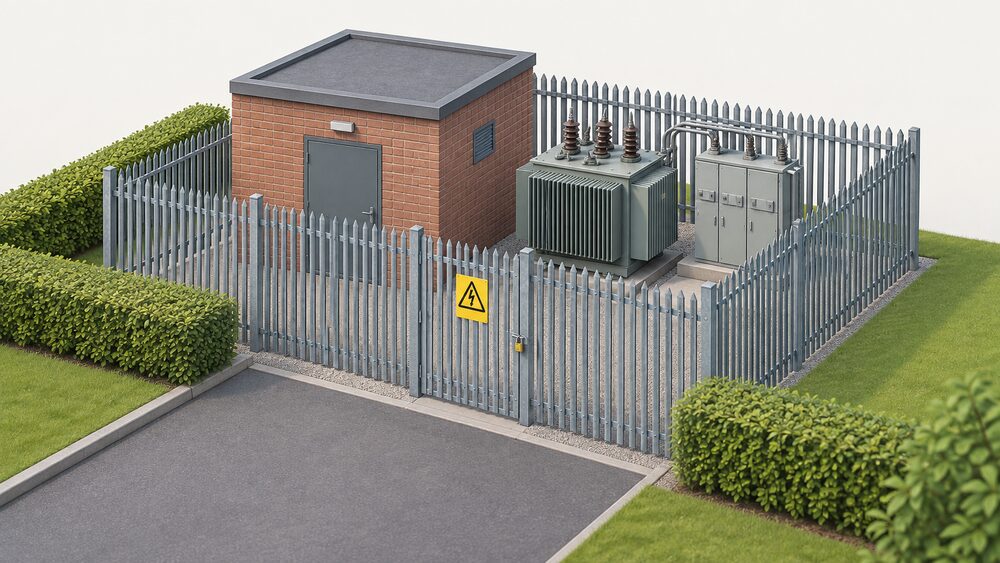
Entering an electricity substation is dangerous, and it is against the law. UK Power Networks states it plainly: "Do not enter a substation for any reason because you could be electrocuted and it's against the law"1. Substations should only be entered by trained staff, and the entrances carry yellow and black 'danger of death' signs1.
The danger is not only to the person who opens the door. A substation reduces electricity voltage so that it is easier and safer to deliver electricity to homes and businesses, which means live conductors at distribution voltage sit inside a fenced compound or a small building that often looks unremarkable from the street1. Some are on customers' land, so a householder may find one at the end of a garden or beside a driveway1.
For a household, the practical position is simple. A substation is part of the local distribution network, not part of the home's own supply, and nothing inside it is user-serviceable. The independence a home can build, through its own generation, storage and controls, stops at the substation fence. What follows is what is inside, what to do in an emergency, and the rules that apply where a substation sits on private land.
Yes: entering a substation is dangerous, and here's why
The case against entry rests on three things: the voltage, the enclosure and the law. A substation exists to step voltage down for delivery to homes and businesses, and the equipment inside remains live at all times unless trained staff have isolated it1. There is no safe way for an untrained person to tell whether a particular item is live, and no household task that requires going in.
The law matters as much as the electricity. UK Power Networks states that entering a substation is against the law as well as potentially fatal1. Network operators also secure and alarm their substations. Electricity North West says it secures and alarms all its substations to reduce cable theft risk, which means an unauthorised entry is likely to be detected as well as dangerous6.
The signage is designed to remove any doubt. Yellow and black 'danger of death' signs sit on the entrances1. For comparison, the gas industry uses a warning label reading 'Danger Do Not Use' where an appliance or installation is found to be either 'at risk' or 'immediately dangerous', so both categories carry the same message to the occupier7. The electricity warning is more absolute still: the hazard is present whether or not anything appears to be wrong.
What is inside a substation and the voltages involved
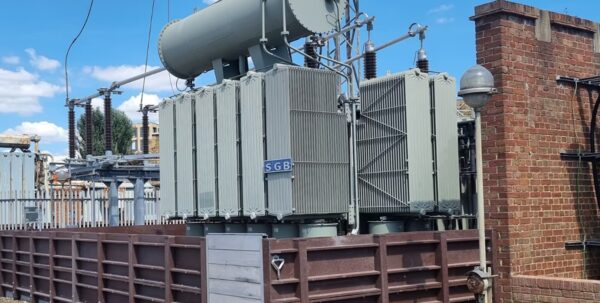
A substation reduces electricity voltage so that it is easier and safer to deliver electricity to homes and businesses1. That single function explains the contents: incoming cables at a higher distribution voltage, a transformer, switchgear, fuses and outgoing cables at the voltage the street uses. All of it is designed to be operated by trained staff, and none of it is designed to be touched.
The voltages involved are not trivial. In three-phase theory, the principal danger is the higher voltage that exists between lines, around 400 V, with a higher probability of lethal shock, and socket outlets from different phases should not be in the same room7. That figure describes three-phase circuits generally rather than a specific substation, but it shows the order of magnitude a person would be exposed to inside one.
Substations also fail, which is part of why they are kept closed. Issues such as damaged cables, faulty transformers and substations, or other equipment failures can disrupt the normal voltage levels on the network8. When a transient fault is reported, the operator connects monitoring equipment at the local substation to investigate it9. Fault-finding is skilled work carried out by the network operator, not by the householder.
One reassurance is worth stating, because it is a common worry for people who live near equipment. At one or two metres from the substation, the magnetic field will usually be lower than the field found inside your home10. The hazard is entry and contact, not proximity to a sealed unit.
What to do if a child, ball or pet gets inside a substation
The first rule is not to follow them in. Nothing retrieved from inside a substation is worth an entry, and the equipment cannot be made safe by a member of the public. Network operators publish dedicated safety material for children, and SSEN's safety pages for kids are part of that effort11.
If a child, a ball or a pet has gone into a substation compound, treat it as an emergency and call for help rather than attempting a rescue. Call 105, the free power cut emergency number, and report it2. If there is an immediate risk to life or someone is in danger, dial 9992. When reporting damage to power lines or substations, stay at least 10 metres away from the equipment4.
Pets deserve a specific mention because the signs of trouble are easy to miss. In the context of carbon monoxide, official guidance notes that your pets also become ill, which is a reminder that animals can be affected before people notice anything wrong12. The same principle applies here: an animal that has been inside a substation may show no obvious injury at first, and the network operator should be told what has happened.
Who to call: emergency and 24-hour contact numbers
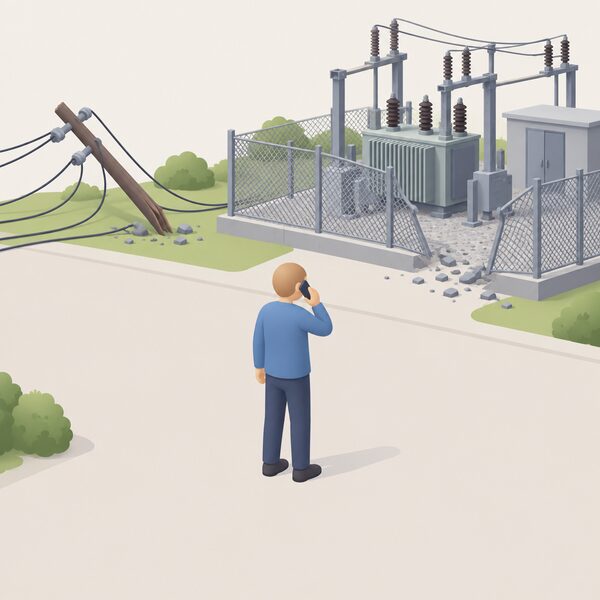
The number to remember is 105. It is the free power cut emergency number, and it is free to call from a mobile or landline phone, linking you to your local operator's emergency number2. It is also the number to use if you spot damage to electricity power lines and substations that could put you, or someone else, in danger11. Smart Energy GB likewise advises calling 105 for free to report a power cut or get updates13.
For a serious immediate risk, or if someone requires medical help, call 999, which is available 24 hours a day8. UK Power Networks gives its own emergency line as 0800 31 63 105 or 105, answered 24 hours a day, and asks the public to stay at least 10 metres away from equipment when calling4. The same operator's emergency disconnection line is 0800 31 63 105 or 105, again 24 hours a day14. If equipment is causing significant risk to the public, the instruction is to call 99912.
Routine customer service is a different matter. UK Power Networks publishes its customer service lines as open Monday to Friday, with one figure of 8.30am to 5.00pm and another of 9:00am to 5:00pm16. Email response times are given as within 48 hours in one place and within 5 working days in another16. For anything urgent, the phone route is the dependable one.
| Situation | Number | Hours |
|---|---|---|
| Power cut, damage to lines or substations | 105 (free) | 24 hours2 |
| Immediate risk to life | 999 | 24 hours2 |
| UK Power Networks emergency line | 0800 31 63 105 or 105 | 24 hours4 |
| UK Power Networks customer service | Published lines | Monday to Friday, hours disputed16 |
Substations on private land: access, leases and keeping entrances clear
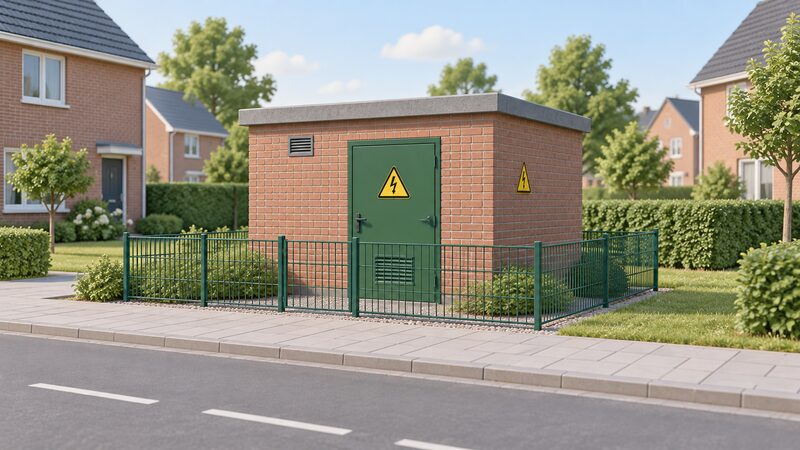
Some substations are on customers' land1. Where an electricity substation is located on your property or within your building, the network operator will generally hold a lease or freehold interest in the land with associated access and cable rights5. That legal interest is why the equipment cannot simply be treated as an obstruction to be fenced off or locked away.
Access must be maintained and kept unrestricted at all times, so that power supplies can be restored quickly if a fault occurs5. A substation will usually be protected by fences or located within a building, and it should only be entered by trained staff1. Keeping the entrance clear is therefore part of the arrangement, not a courtesy.
The same duty of access appears in other utility contexts. Where there is a live gas supply to rented premises, a safety check will need to be carried out irrespective of whether a tenant uses gas, and access should be allowed17. Tenants are expected to allow a landlord access to carry out maintenance or safety checks on gas appliances or flues provided for their use18. The pattern is consistent: safety checks on utility equipment require access, and blocking it has consequences.
Free safety advice, network plans and resources before you dig or work nearby
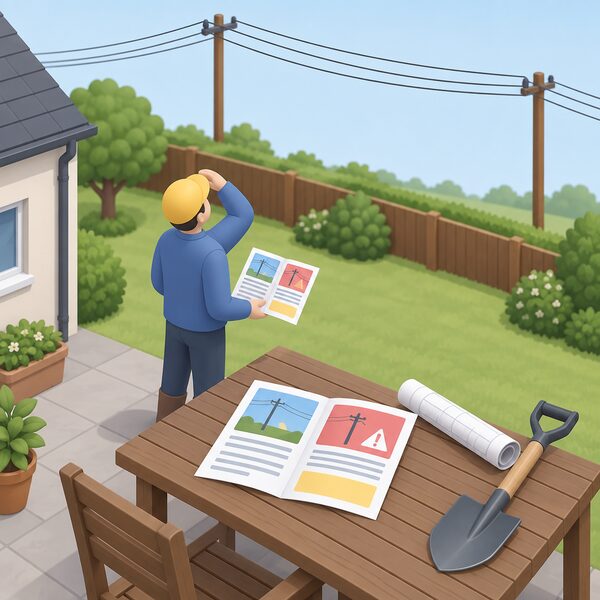
Work near network equipment is where most household contact with the electricity network actually happens, and the operators provide free help before a spade goes in. UK Power Networks offers free safety advice and a visit from an expert when you need to work near an overhead power line17. It also encourages anyone carrying out work that involves digging to request plans beforehand to avoid underground electricity cables17.
National Grid publishes a set of public safety leaflets covering Avoidance of Danger from Electricity Overhead Lines and Underground Cables, Look out - look up, Avoidance of Danger from Electricity Overhead Lines during Leisure Activities, Stay away - stay safe, Think safe, stay safe - Safety information for landowners, and Angling Safety18. It also provides safety videos, including Think Before You Dig!, Look Out Look Up and Dig Safe18.
Linesearch Before U Dig exists to check ground utility assets before any digging or excavation work, helping prevent damage to electricity, gas, water and telecommunications networks, and it is available to anyone planning to dig, including homeowners, contractors and utility companies19. The legal backdrop is set out by Dial Before You DIG: failing to check before excavating near the gas network can breach the Health and Safety at Work Act 1974 and the Pipeline Safety Regulations 1996, and employers also have obligations under the CDM Regulations 201520. SGN states that landowners, contractors, third party utilities or residents planning any work near its pipelines must follow safe digging practice21.
Flooding is the other event worth planning for. UK Power Networks advises switching off the electricity at the mains if it is safe to do so, and not touching any electrical equipment, switches or sockets when standing in water, or if the equipment is wet, damp or has been flooded and the electricity is on17. For a household, the substation itself remains the operator's responsibility; the home's own supply is the part within reach.
Sources21 cited
- What is an electrical substation?, UK Power Networks, 2026-09-17
- Power cut, Energy Networks Association, 2026-09-17
- How to find out if there's a power cut, Which?, 2026-06-04
- Cut trees and bushes, UK Power Networks, 2026-09-17
- Electricity equipment on your land, UK Power Networks, 2026-09-17
- Reasons for repeat or multiple power cuts, Electricity North West, 2026-09-19
- Three-phase power theory, OpenEnergyMonitor, 2026-09-17
- Managing voltage changes in your property, Electricity North West, 2026-09-19
- Restoration following a power cut, Electricity North West, 2026-09-19
- Living next to electrical equipment, UK Power Networks, 2026-09-17
- Safety for kids, SSEN, 2026-09-19
- Cover my overhead power lines (shrouding), UK Power Networks, 2026-09-17
- Power cuts: what to do if your power goes out, Smart Energy GB, 2026-08-19
- Disconnect your electricity supply, UK Power Networks, 2026-09-17
- Disconnect and add a temporary electricity supply, UK Power Networks, 2026-09-17
- Installing protective multiple earthing (PME), UK Power Networks, 2026-09-17
- Safety advice and resources, UK Power Networks, 2026-09-17
- Public safety advice, National Grid, 2026-09-17
- Connections FAQs, Electricity North West, 2026-09-20
- Dial Before You Dig, Wales & West Utilities, 2026-09-20
- Ensuring a safe hydrogen gas network, SGN, 2026
 Home Battery Fire SafetyHow likely is a home battery to catch fire, and what keeps it safe if it does?
 Energy Theft and TamperingExplains what counts as energy theft, how to report a suspected tampered or bypassed meter, and what a supplier may do on investigation.
 Backup Power Safety RulesWho signs off a battery or backup circuit, and can you legally plug in a power station or a plug-in solar panel in the UK?
 Electrical RequirementsWill your home need a bigger electricity supply before a charge point can go in?
 Electrical Safety for HeatingWill your fuse box cope with electric heating, and does it need its own circuit?
 DIY Home Battery BuildsBuilding your own home battery?