

In this guide
- What the Regulations Are
- Part P Building Requirement
- Approved Document P
- BS 7671 Wiring Rules
- Amendment 4 Batteries
- Notifiable and Non-Notifiable
- Competent Person Schemes
- NICEIC Certification
- Residual Current Devices
- Electrical Safety First
- Rented Homes Obligations
- Recalls and Product Safety
- Household Independence
Electrical work in a UK home sits inside two legal layers. The Building Regulations set standards for electrical installation work in dwellings, meaning houses and flats, and in England and Wales they apply to work in the home and garden1. Behind them sits BS 7671, the wiring regulations, which all electrical work should follow3. The Building Regulations only set standards for electrical installation work in relation to dwellings, so commercial premises fall outside this particular regime1.
The practical consequence is a split between work that must be notified to a building control body and work that does not. Most repairs, replacements and maintenance jobs, and alterations or additions to existing circuits outside special locations, do not need to be reported1. Installing a new consumer unit or fuse box does, and in England and Wales that is notifiable work under Part P1. Where an installer is registered with a competent person scheme, the work is self-certified and no separate notification is needed5.
The rules exist for a reason that shows up in the statistics. Homes generate one sixth of carbon emissions in the UK, and household electricity prices in the UK were higher than in all but three EU states in the second half of 2025, 18% above the EU average6. A household that adds solar, a battery or a chargepoint is adding fixed electrical work to a system that is already regulated, and the certification trail is what makes that work traceable.
What the electrical regulations for UK homes actually are
The framework is not a single statute. It is a building regulation duty, a British Standard, and a set of approval and certification routes that determine who may sign work off.
The Building Regulations set standards for electrical installation work in dwellings, including houses and flats1. In England and Wales, electrical installation work in the home or garden must follow the building regulations9. The Building Regulations only set standards for electrical installation work in relation to dwellings, so the regime is domestic in scope1.
BS 7671 is the technical document underneath. All electrical work should follow the safety standards in BS 7671, described in official guidance as the wiring regulations3. The standards that should be met are set out in British Standard 76718.
Approved documents sit between the two. They set out what, in ordinary circumstances, may be accepted as one way to comply with the Building Regulations10. They are not the law itself but statutory guidance, and a household or installer departing from them must show compliance by other means.
The enforcement and approval landscape is devolved. England and Wales share the Part P approach to dwellings. Scotland and Northern Ireland run their own building standards systems, covered in Scottish building standards and Northern Ireland's technical booklets. Wales also diverges on energy documents: the 2026 edition of Approved Document L Volume 1 gives guidance for compliance with the Building Regulations for building work carried out in Wales, and takes effect on 4 March 2027 with transitional arrangements for notices submitted before that date and work started before 4 March 202811.
For a household, the framework means that any fixed electrical work has a paper trail requirement attached, whether through a registered installer's self-certification or through a building control application. That trail is what a future buyer, a landlord's inspector or an insurer will look for.
Part P: the Building Regulation requirement for fixed electrical work in England
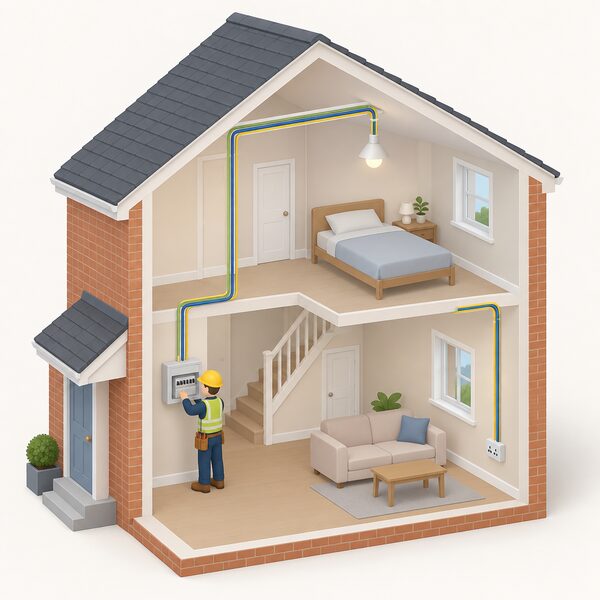
Part P is the part of the Building Regulations dealing with electrical safety in dwellings. All new electrical work in a dwelling must be designed and installed to account for it, and it applies to dwellings including a house, flat or small commercial premises linked to domestic accommodation12.
The requirement is not that every job needs a certificate from a council. It is that the work must comply, and that compliance must be demonstrated through one of the recognised routes. In England and Wales, electrical installation work in the home or garden must follow the building regulations9. Where the electrician is not registered as a competent person, or where the householder does the work, a Building Regulations application should be made to Building Control3.
Approved Document P is the statutory guidance that sits under the requirement. It contains guidance on electrical safety in dwellings, including detailed information about what procedures need to be in place and who may carry these out, such as when a professional electrician must be hired13. It is published as statutory guidance14.
The purpose stated for the rules is direct: they were introduced to help reduce the number of deaths, injuries and fires caused by faulty installations1.
Approved Document P: what the statutory guidance covers and who may do the work
Approved Document P provides further practical guidance for undertaking electrical work covered by the Building Regulations, and covers electrical safety in dwellings3. It is statutory guidance, and the 2013 edition remains the published version14.
Its function is procedural as much as technical. It sets out what procedures need to be in place and who may carry these out, including when a professional electrician must be hired13. That is the part householders most often need: not what cable size to use, but who is allowed to sign the job off.
There are three routes to compliance for notifiable work in England and Wales:
- An installer registered with a competent person scheme, who self-certifies the work5.
- A building control body, meaning the local authority or a private registered building control approver1.
- In England only, an electrician registered with a third-party certification scheme, a registered third-party certifier9.
The third route is the one that catches people out, because it does not exist across the whole of England and Wales. It is an England-only option9.
Approved documents generally are not exhaustive. They set out what, in ordinary circumstances, may be accepted as one way to comply with the Building Regulations10. A specification that departs from the approved document is not automatically unlawful, but the burden of showing compliance shifts.
For a household planning solar, a battery or a chargepoint, the practical point is that the certification route should be settled before work starts, not after. The building control body or registered third-party certifier must be notified before work starts1.
BS 7671: the wiring rules behind the regulations
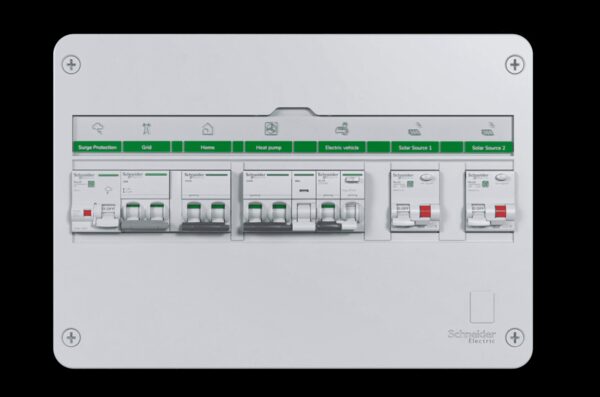
BS 7671 is the technical standard that the building regulations point to. All electrical work should follow the safety standards in BS 7671, the wiring regulations3. The standards that should be met are set out in British Standard 76718.
The relationship matters. The Building Regulations create the legal duty; BS 7671 supplies the technical content that satisfies it. An installer working to BS 7671 is working to the standard the regulations expect, which is why the standard is cited in official guidance rather than reproduced in it.
BS 7671 is not static. It is amended periodically, and the amendments change what compliance looks like for new work. The current amendment cycle is covered in more detail on what changed in Amendment 4 to BS 7671, including the new chapter on stationary secondary batteries that matters for households adding storage.
The standard also reaches into equipment that is not a traditional circuit. Interim product specification work on plug-in solar devices sets limits including a maximum smooth DC residual current to the mains of 5 mA under normal operating operation and relevant fault conditions, and a maximum residual DC current of 5 mA or less at maximum rated apparent power7. It also sets a limitation of mains current in the case of reduced mains voltage of 3.5 A or less at reduced voltage, approximately 0.85 of nominal, as a type test limit7. These are product-level requirements, but they show how far the wiring standard's concerns now extend.
For a household, BS 7671 is the reason a certificate is worth reading rather than filing. It records which edition and amendment the installation was designed to, and that determines what a later inspector will expect to find.
Amendment 4 and the new chapter on stationary secondary batteries
Amendment 4 to BS 7671 introduced a chapter covering stationary secondary batteries, the fixed storage units increasingly installed alongside solar. The detail of that change is set out on what changed in Amendment 4 to BS 7671.
The reason it matters here is that battery storage moves a household's electrical installation into territory the original wiring rules did not address in the same way. A battery is a source as well as a load, and protection arrangements have to account for current flowing in both directions.
The surrounding policy environment is moving at the same time. The UK Government amended domestic air source heat pump permitted development rights in England so that up to two ASHPs can be installed on detached dwellinghouses, allowing cooling and heating but not solely cooling, and removed the one metre boundary restriction15. Those changes sit alongside electrical work rather than replacing it, but they increase the amount of fixed electrical equipment a home may carry.
Battery installations also interact with VAT treatment. A temporary zero rate applies to ancillary batteries in qualifying installations up to 31 March 2027, with reduced rating thereafter for electrical batteries installed as part of a qualifying energy-saving material installation16. From 1 April 2027 a reduced VAT rate applies to an expanded energy-saving-materials scope, including certain electrical batteries and certain smart diverters16.
For a household, the sequence is: the battery is fixed electrical work, it falls under BS 7671 as amended, and the certification route is the same one that applies to any other notifiable work.
Notifiable and non-notifiable work: what needs sign-off
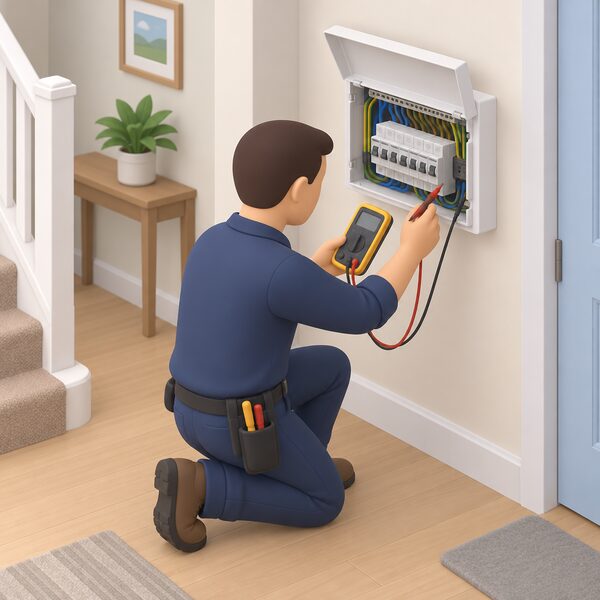
The Building Regulations allow certain works, known as non-notifiable or minor work, to be carried out without having to notify building control or use a registered electrician3. That is the permission, and it comes with a condition.
Non-notifiable work is not unregulated work. Like notifiable work, it should be designed and installed, and inspected, tested and certificated in accordance with BS 76712. The difference is who signs it off, not whether a standard applies.
The categories are set out in official guidance:
| Work | Status |
|---|---|
| Most repairs, replacements and maintenance jobs | Non-notifiable1 |
| Alterations or additions to existing circuits outside special locations | Non-notifiable1 |
| Adding lighting points, including light fittings and switches, to an existing circuit | Non-notifiable where not in a kitchen or special location and not involving a special installation12 |
| Installation of a new consumer unit or fuse box | Notifiable1 |
| Electrical work in new dwellings and extensions to existing dwellings | Notifiable unless the installer is a member of a Competent Persons Self Certification Scheme5 |
Two further points sit outside the general list. Domestic electric vehicle charger work must be notified to the relevant building control authority if it is not done by a person registered with the competent person scheme17. And notifiable work must be reported to the local building control body unless completed by someone registered on the competent person scheme18.
There are statutory exceptions. Notification is not required where work is carried out under a self-certification scheme listed in Schedule 3, and where work is listed in Schedule 4 to the Building Regulations as being not notifiable19. A building control body also does not need to be notified for certain services or fittings if the owner employs an installer registered with a relevant competent person scheme designated in the regulations, covering certain types of services or fittings including fuel-burning appliances or replacement windows10.
Competent person schemes and registered electricians
A competent person scheme is the route that removes the need for a separate building control application. Work carried out under a Competent Person Scheme does not need notification to Building Control5. Electricians become registered with an approved self certification organisation5.
For a household, the check is straightforward. The Competent Persons Register exists to check whether an electrician is registered20. It is recommended to hire an installer who is registered with a competent person scheme, a registered competent person, who can self-certify that the work meets the required standards9.
Registration is not the same as a licence to do anything. It covers the types of work the scheme is designated for. A registered installer can self-certify notifiable work within that scope; work outside it still needs a building control route.
The wider installer certification landscape is covered on competent person schemes and self-certification and on installer schemes and consumer codes. For electrical work specifically, the relevant comparison is between the electrical competent person schemes, set out on NICEIC vs NAPIT.
The independence point is worth stating plainly. A registered installer self-certifying their own work is the system working as designed, not a loophole. The scheme body audits the installer, and the certificate is the record. What a household loses without registration is not safety oversight but the simpler paperwork route.
NICEIC: the UK's largest certification body for electrical businesses
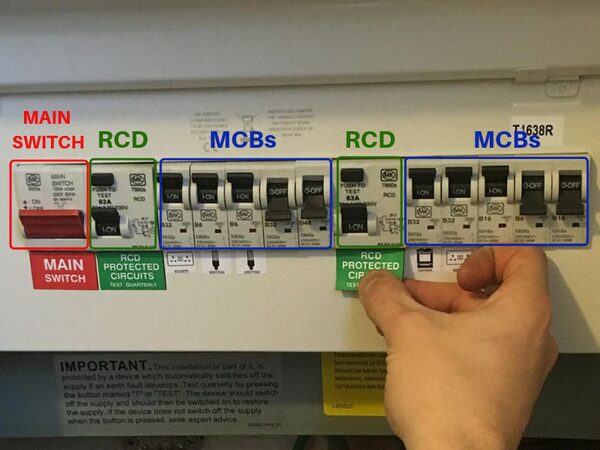
NICEIC is a certification body for electrical businesses and publishes householder guidance on consumer units and fuse boxes. Its guidance states that installing or replacing a consumer unit is considered notifiable work under Part P of the Building Regulations in England and Wales4.
That is a useful cross-check because it comes from the certification side rather than the regulator. It confirms the same boundary that official guidance sets: a consumer unit change is not a job that can be done and left unnotified.
NICEIC's householder material also describes consumer unit configurations. One type comes with an RCD main switch that can safely isolate the entire electrical supply of the home, with the RCD providing protection and individual circuit breakers protecting each connected circuit4.
The comparison between the main electrical competent person schemes is set out on NICEIC vs NAPIT. Both operate as approved self certification organisations under the competent person framework5.
For a household, the certification body's role is to be the body that registers the business and issues the certificate. It is not the building control authority and it does not replace one. Where an installer is not registered, the route runs through a building control body instead1.
Residual current devices: the 30 mA protection requirement
Residual current devices are the protective devices that disconnect a circuit when they detect a fault. Their requirements sit in BS 7671, which all electrical work should follow3.
At consumer unit level, the configuration matters. A unit with an RCD main switch can safely isolate the entire electrical supply of the home, with individual circuit breakers protecting each connected circuit4. That arrangement gives both a whole-installation isolation point and per-circuit protection.
The 30 mA threshold commonly associated with RCD protection is a BS 7671 requirement rather than a building regulation one, and the specific requirement depends on the circuit and the installation. What the regulations require is that the work follows BS 76713.
Protection requirements also extend to newer equipment. For plug-in solar devices, interim product specification work sets a maximum smooth DC residual current to the mains of 5 mA under normal operating operation and relevant fault conditions, and a maximum residual DC current of 5 mA or less at maximum rated apparent power7. Direct current detection matters because a device that generates DC can affect how an RCD responds.
For electric vehicle chargepoints, the protection question is whether the charger has integral DC detection or whether a separate device is needed. That is covered on whether a Type B RCD is needed if a charger has integral DC detection.
For a household, the practical point is that RCD protection is not a single product decision. It is a design decision recorded in the installation certificate, and it is one of the things a periodic inspection tests.
Electrical Safety First: the charity behind the safety campaigns

Electrical Safety First is the consumer safety charity behind much of the public-facing material on domestic electrical risk. Its role in the framework is to translate the technical and legal requirements into guidance a household can act on.
The stated purpose of the building regulations rules on electrics is to help reduce the number of deaths, injuries and fires caused by faulty installations1. That is the outcome the charity's campaigns and the regulations both target.
The charity's practical value to a household is in the areas where the law is permissive rather than prescriptive. The regulations allow non-notifiable work to be done without notification, but they still require it to be designed and installed, and inspected, tested and certificated in accordance with BS 76712. Safety guidance is what fills the gap between what is permitted and what is safe.
The wider consumer protection landscape is covered on installer schemes and consumer codes and on product markings and standards. For electrical safety specifically, the charity's material sits alongside the approved documents rather than replacing them.
For a household, the useful habit is to treat safety guidance as the explanation of why the certificate matters, not as a substitute for it. The certificate is the legal record; the guidance is the reason to want one.
Rented homes: checks, fines and landlord obligations
Rented housing carries a stricter, more frequent regime than owner-occupied housing. In England, landlords have the electrics in their rented properties checked at least every 5 years by a properly qualified person8. The guidance applies to England and is for landlords, tenants and local councils8.
The statutory duty is broader than the five-year interval. A landlord must ensure every electrical installation in the residential premises is inspected and tested at regular intervals by a qualified person21. A private landlord must ensure that the electrical safety standards are met during any period when the residential premises are occupied under a specified tenancy22. A landlord must also ensure every electrical installation in the residential premises is inspected and tested by a qualified person before the specified tenancy commences21.
Read together, those provisions set three obligations: a pre-tenancy inspection and test, periodic inspection and testing at regular intervals, and ongoing compliance while the tenancy runs.
The frequency question is answered directly in official guidance at least every 5 years, by a properly qualified person8. The legislation itself uses the phrase regular intervals rather than naming a number, so the guidance figure is the practical benchmark.
The detail of the rented sector regime is covered on how often a privately rented property must have an electrical inspection and on housing quality standards for social and rented homes.
For a tenant, the practical point is that the inspection record is a document the landlord must be able to produce. For a landlord, the interval is a compliance deadline rather than a recommendation, and the qualification of the person doing the inspection is part of the requirement.
Recalls, online purchases and product safety
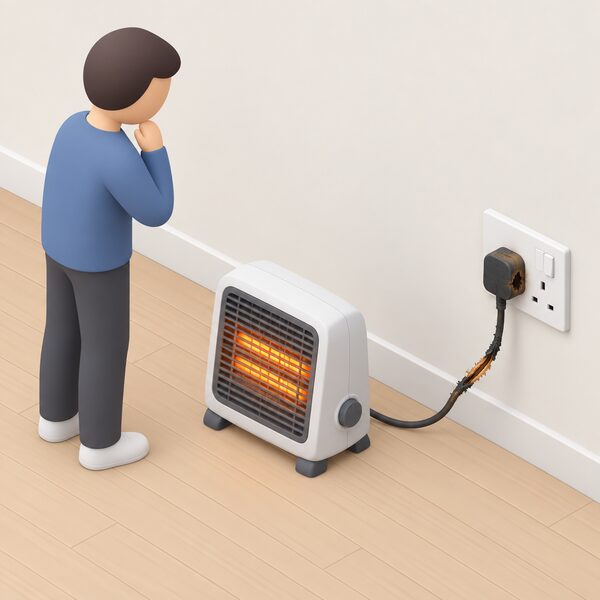
Product safety sits alongside installation safety, and the two meet when a faulty appliance is connected to a compliant circuit.
Recall is a corrective measure available under the electrical equipment safety rules for England, Wales and Scotland23. Where a product is recalled, the remedy is the recall itself rather than a repair arranged privately.
Online marketplaces are the area where the framework has been tightening. The UK product safety framework states that only safe products will be able to be sold online to UK buyers, whether the seller is based in the UK or overseas24. It also extends protection to businesses and other organisations who purchase products for their own use, such as products for use in the workplace24.
Consumer signposting exists in adjacent regulated markets. Heat network suppliers must tell consumers how to contact the relevant consumer advice organisation, Citizens Advice or Consumer Scotland25. That is a heat network duty rather than an electrical one, but it shows the pattern of routing consumers to an advice body rather than to the regulator.
For a household that has bought a heater or appliance from an online marketplace, the sequence is: stop using it if it appears unsafe, check whether it has been recalled, and use the consumer advice route. The product safety framework's direction of travel is that the seller's location does not determine whether UK safety requirements apply24.
Where the regulations leave a household's independence
The electrical regulations do not restrict what a household can generate or store. They determine who may certify the fixed wiring that connects it.
That is the independence position in practice. A home with solar, a battery and a chargepoint has more of its own supply on site, and it also has more fixed electrical equipment that must be designed, installed, inspected, tested and certificated in accordance with BS 76712. The certification trail is what makes the installation insurable, saleable and safe to work on later.
The dependence that remains is on the certification system itself. A household cannot self-certify notifiable work; it needs a registered installer or a building control body1. It cannot avoid the wiring standard by doing the work itself, because non-notifiable work still has to meet BS 76712. And it cannot rely on a product being safe because it was bought from a large marketplace, which is precisely the gap the product safety framework addresses24.
The devolution position matters for anyone moving or working across borders. England and Wales share the Part P approach to dwellings, with the England-only third-party certifier route as a difference9. Scotland and Northern Ireland run separate building standards systems, covered on Scottish building standards and Northern Ireland's technical booklets. Wales also diverges on energy documents, with the 2026 edition of Approved Document L Volume 1 for dwellings taking effect on 4 March 202711.
The wider regulatory picture, including how these rules interact with energy policy, is set out on UK home energy regulation and policy and on regulation and energy independence.
Sources25 cited
- Building regulations: general information, Planning Portal
- Building regulations: minor works, Planning Portal
- Building regulations: electrics, Welsh Government
- Consumer units and fuse boxes, NICEIC, September 2025
- Electrical safety, Cumberland Council
- Heat pumps: expert guide for homeowners, Development Bank of Wales, 7 November 2024
- UK household electricity prices, House of Commons Library, 2026
- Electrical safety standards in the private and social rented sectors: guidance, GOV.UK, 1 November 2025
- Do I need Building Regulations approval for alterations to or installation of electrics, Planning Portal
- Approved Document L Volume 1: Dwellings (2021 edition incorporating 2023 amendments), GOV.UK
- Building Regulations Approved Document L Volume 1 (2026 edition), Welsh Government, April 2026
- Building regulations and electrical works, London Borough of Richmond upon Thames, 2 June 2026
- Approved Document P: Electrical safety, Planning Portal, January 2013
- Electrical safety: Approved Document P, GOV.UK, 1 January 2013
- Permitted development rights to support the provision of new homes: consultation, Scottish Government, 3 September 2025
- The Boiler Upgrade Scheme (England and Wales) (Amendment) Regulations 2024, legislation.gov.uk
- Electric vehicle chargers, Planning Portal
- Electric vehicle charging: building regulations, Planning Portal
- Building regulations guidance: Part J heat producing appliances (archived), Welsh Government, January 2025
- Building control application guidance notes, London Borough of Bromley
- The Electrical Safety Standards in the Private Rented Sector (England) Regulations 2020, regulation 3, legislation.gov.uk
- The Electrical Safety Standards in the Private Rented Sector (England) Regulations 2020, regulation 3 (made), legislation.gov.uk
- Plug-in solar: interim product specification, GOV.UK, July 2026
- The UK's new product safety framework, GOV.UK, 31 March 2026
- Heat networks consumer protections draft guidance, Ofgem, 5 September 2025
 Electrical Safety for HeatingWill your fuse box cope with electric heating, and does it need its own circuit?
 Backup Power Safety RulesWho signs off a battery or backup circuit, and can you legally plug in a power station or a plug-in solar panel in the UK?
 Installation StandardsWhich rules must an installer follow when fitting a home battery?
 DIY Home Battery BuildsBuilding your own home battery?
 Building Regulations EnglandAdding a heat pump, solar panels or an extension usually needs building regulations approval, and it is separate from planning permission.
 Gas Safety RulesAnyone working on gas in your home has to be on the Gas Safe Register, whether they are installing, fixing or servicing an appliance.