

In this guide
The Decent Homes Standard is the minimum housing quality standard that applies to all registered providers of social housing in England, and the government has proposed extending it to private rented sector dwellings as well1. It is not a single test but a set of criteria, and a home that fails any one of them is recorded as non-decent. In 2024, 4.0 million dwellings in England, 15% of the stock, failed to meet the current standard, a figure similar to 20222.
The energy efficiency element is where the standard bites hardest on a household's independence. A home rated EPC C or above is generally regarded as having an adequate level of energy efficiency3, and the direction of travel across the UK is towards that band. The estimated average cost to improve a dwelling to at least band C was £7,480 across all tenures in 20242.
What follows sets out what the standard requires, how it differs across England, Scotland, Wales and Northern Ireland, what landlords must do on repairs and safety, and where the reform still stands undecided.
What the Decent Homes Standard is and who it covers
The standard currently sets a minimum housing quality standard for all registered providers of social housing in England1. That means councils and housing associations, not owner occupiers and, at present, not private landlords. The government has proposed extending the standard to cover private rented sector dwellings, which would bring a single quality benchmark across both rented tenures1.
The Northern Ireland Executive has consulted on a Decent Homes Standard applicable to Northern Ireland, and the current standard there is set out in a summary table published alongside that consultation7. This matters because housing is devolved: the standard that applies to a tenant in Belfast is not the same instrument as the one that applies in Birmingham, even where the criteria overlap.
The reformed standard is stated to apply in both the social and private rented sectors from 2035, with regulation and enforcement beginning then5. That gives housing providers under a decade to audit and upgrade their stock. The government response to the consultation confirmed that the new standard will include a strengthened Criterion D on thermal comfort, alignment with the minimum energy efficiency standards, whole-home heat distribution and retained programmable-heating requirements5.
For a household, the practical effect is that the quality of the home is a regulated matter rather than a private negotiation. Where the standard applies, a landlord cannot let a property that fails it and expect no consequence. Where it does not yet apply, the tenant's route is the repairing obligations in the tenancy and the local authority's housing enforcement powers.
The criteria: what a home must meet to count as decent
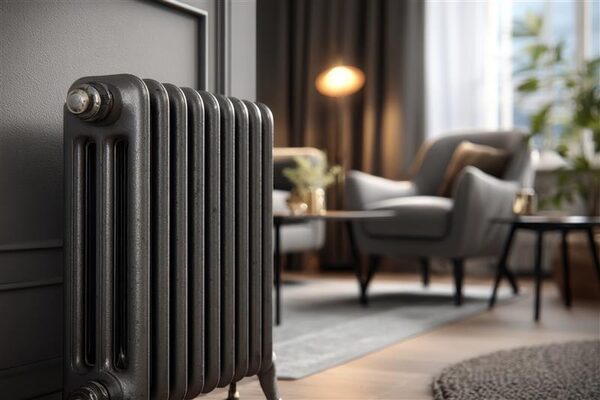
The current standard asks four things of a dwelling: that it meets the current statutory minimum fitness standard for housing, is in a reasonable state of repair, has reasonably modern facilities and services, and provides a reasonable degree of thermal comfort7. The reformed standard adds a damp and mould assessment as Criterion E, alongside the strengthened thermal comfort Criterion D5.
The structure matters because the criteria are cumulative in effect but not in scoring. A property does not need to fail several tests to be non-decent; failing one is enough. A home with modern facilities and sound fabric but no effective heating fails on thermal comfort. A home that is warm and well heated but has a leaking roof fails on repair.
"Providing a reasonable degree of thermal comfort requires efficient heating and effective insulation"
The repair criterion is the broadest. It covers the fabric of the building and the services within it, and it is the criterion most often triggered by damp, water ingress and failing components. The facilities criterion covers kitchens, bathrooms and the services a household needs to live in the home. The fitness standard is the oldest of the tests and the floor beneath the others.
Energy efficiency: the EPC C requirement and the fabric criterion
The energy efficiency requirement is expressed through the EPC band and through the fabric of the building. A home rated EPC C or above is generally regarded as having an adequate level of energy efficiency3. The government's stated aim is for as many homes as possible to achieve EPC band C by 2035 where cost-effective, practical and affordable8.
The private rented minimum standard in England and Wales is currently a rating of E or above4, so the move to C is a two-band step for the worst-performing stock. The fabric side is governed by building regulations rather than by the Decent Homes Standard itself. In England, Approved Document L Volume 1 sets mandatory minimum energy efficiency standards for building fabric in Section 4, table 4.19. For existing dwellings, replacement windows must achieve a maximum U-value of 1.4 W/(m2·K) or Window Energy Rating Band B minimum, and glazed doors with more than 60% of the internal face glazed must achieve 1.4 W/(m2·K) or Doorset Energy Rating Band C minimum9. The Welsh Approved Document L sets the same figures: 1.4 or minimum WER Band B for windows and roof windows, and 1.4 or minimum DER Band C for glazed doors10.
| Element | Maximum U-value | Alternative rating | Source |
|---|---|---|---|
| Window | 1.4 W/(m2·K) | Window Energy Rating Band B | 9 |
| Glazed door (over 60% glazed) | 1.4 W/(m2·K) | Doorset Energy Rating Band C | 9 |
| Window or roof window (Wales) | 1.4 W/(m2·K) | WER Band B | 10 |
| Glazed door (Wales) | 1.4 W/(m2·K) | DER Band C | 10 |
The EPC itself is being reformed. The Scottish Government has set out a new EPC rating system for domestic buildings that will give clearer information on the fabric energy efficiency of a property, the emissions, efficiency and running costs of its heating system, and the cost of energy to run the home to standardised conditions11. The Climate Change Committee has recommended that domestic EPCs should include four primary metrics using real-world units and clear simple names: energy use intensity in kWh/m2/yr, space heating demand intensity in kWh/m2/yr, heating system type ranked from 1 to 6, and energy cost intensity in £/m2/yr12. The same advice notes that the current EPC rating metrics do not accurately incentivise the energy efficiency and heating solutions required to deliver net zero homes12.
For a household, the fabric criterion is the one that determines how much of the heating bill is spent warming the street. Properly installed insulation, energy efficient windows and doors and reducing draughts can significantly reduce energy use and reduce energy bills13.
Thermal comfort: reliable heating in all habitable rooms
Thermal comfort is Criterion D, and the reformed standard strengthens it. The government response confirmed that the new standard will include a strengthened Criterion D, alignment with the minimum energy efficiency standards, whole-home heat distribution and retained programmable-heating requirements5. Whole-home heat distribution is the significant addition: it addresses homes where one room is heated and the rest are not.
The current test is that providing a reasonable degree of thermal comfort requires efficient heating and effective insulation7. Both halves are needed. Insulation without a working heating system leaves a home cold; a modern boiler in an uninsulated home leaves the heat outside.
The link to the minimum energy efficiency standards is deliberate. A home that meets the EPC C threshold on the fabric metric and either the heating system or smart readiness metric is meeting the energy efficiency test, and the thermal comfort criterion is aligned to the same benchmark14. The private rented sector requirement from 1 October 2030 is that landlords ensure their properties meet a minimum score of EPC C against the fabric performance metric and either the heating system or smart readiness metric14.
For a household, thermal comfort is the criterion that most directly determines whether the home is usable in winter without supplementary heating. A home that passes on paper but has a single radiator in a cold hallway is not providing whole-home heat distribution, and that is now an explicit part of the test.
Damp, mould and ventilation requirements
Damp and mould is the newest criterion. The reformed standard adds Criterion E, a damp and mould assessment, alongside the strengthened Criterion D5. This follows the pattern set by Awaab's Law, which imposes timescales on social landlords for investigating and fixing hazards, and it moves damp from a repair complaint into a standing quality test.
Ventilation is the other half of the damp question. The government has consulted on raising the minimum condensation efficiency standards for household tumble dryers to 80%, which it states will protect consumers from products which have a risk of causing damp and mould15. The same consultation proposes raising the Minimum Energy Performance Standards of household tumble dryers sold on the GB market, phasing out less efficient air-vented, gas-fired and condenser dryers and enabling only the most efficient heat pump dryers15. That is a product standard rather than a housing standard, but it bears directly on the damp performance of a home.
For a landlord, the practical implication is that a damp assessment is now a standing obligation rather than a response to a complaint. For a tenant, it means the condition is assessed against a criterion rather than argued as a matter of degree.
Repairs and safety: heating systems, electrics and window safety
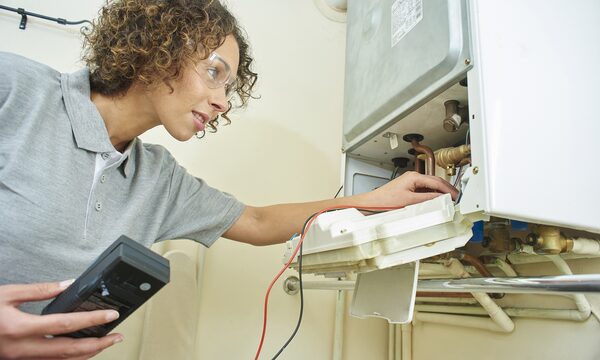
The safety conditions attached to energy efficiency work are explicit. Any measures taken to meet energy efficiency requirements, such as heating system upgrades or insulation, must comply with relevant building and fire safety regulations and preserve essential safety features5. That prevents a landlord from meeting an energy target by compromising a fire compartment or a means of escape.
Gas safety is annual. A landlord must have a Gas Safe registered engineer carry out a safety check at least once every 12 months on LPG appliances they own and provide, and an annual gas safety check must be carried out within 12 months of the installation of an appliance and then every 12 months16.
Window safety is tied to fall risk. The reformed standard proposes child-resistant window restrictors that can be overridden by an adult on all windows which present a fall risk for children5. The wording is specific: the requirement attaches to windows that present a fall risk, not to every window in the dwelling.
The same government response confirmed that a mandatory floor-covering requirement will not be introduced, though best-practice guidance and a social-housing pilot will be explored5. For a household, the safety duties are the part of the standard that is least negotiable: they are enforced through the gas and electrical safety regimes as well as through the housing quality standard.
What the standard means for private rented homes
The private rented sector is where the standard is changing most. The current minimum standard of energy efficiency of certain domestic rented property in England and Wales is a rating of E or above4. A property rated F or G must be improved to at least an E before it can be rented out4, and no property which has not at least got an EPC rating of E or above can be rented out unless a valid exemption applies4.
The direction of travel is to C. In Scotland, the proposals are for legislation to require a minimum energy efficiency standard to be met before the end of 2028 for the private rented sector, and before the end of 2033 for privately-owned homes17. The Scottish consultation on a Heat in Buildings Bill ran between 6 June and 29 August 202518.
| Nation | Current private rented minimum | Proposed or committed level | Date |
|---|---|---|---|
| England and Wales | EPC E or above4 | EPC C or equivalent14 | 2030 |
| Scotland | Not stated in the same terms | Minimum standard for private rented sector17 | End of 2028 |
| Scotland (owner occupied) | Not applicable | Minimum standard for privately-owned homes17 | End of 2033 |
Tenants have a specific protection on improvement requests. Landlords must not unreasonably refuse such requests where the improvements can be funded at no cost to the landlord, for example through grants or third-party funding4. That gives a tenant a route to ask for a measure that costs the landlord nothing.
For a household in the private rented sector, the practical position is that the floor is rising and the cost cap protects the landlord from unlimited spend. The tenant's independence is limited by the fact that the fabric of the home is not theirs to change, and the standard is the main lever available.
Enforcement, penalties and the cost of non-compliance

Enforcement of the domestic minimum standard sits with local authorities, which have the ability to impose a civil fine of up to £5,0006. For the non-domestic minimum standard, a Local Weights and Measures Authority enforces the regulations, with the level of civil penalty to be defined in secondary legislation6.
The cost cap is the other half of the enforcement picture. A landlord will never be made to spend more than £3,500 on the improvements required to bring a domestic private rented property rated F or G up to standard4. A recommended measure is only a relevant energy efficiency improvement where third-party funding covers the full cost, or the cost is £3,500 or less inclusive of VAT, or a combination of landlord self-funding and third-party funding totals £3,500 or less inclusive of VAT19.
The reformed Decent Homes Standard is expected to be enforced from 20355. That is the point at which the quality standard and the energy efficiency standard converge for both social and private rented homes, and it is the deadline against which landlords are auditing their stock now.
Remediation costs: what failing landlords are facing
The headline cost figure is the estimated average cost to improve dwellings to at least an energy efficiency band C, which was £7,480 across all tenures in 20242. That is an average across the whole stock, so it understates the cost for the worst-performing homes and overstates it for homes already close to the threshold.
The £3,500 cap and the £7,480 average are not in conflict: the cap limits what a landlord can be compelled to spend on the required improvements, while the average describes what the work costs across the stock. Where the cost of a measure exceeds the cap, the funding rules determine whether it counts as a relevant improvement at all19.
For social landlords, the cost is a stock-management question rather than a per-property one. Under the Optimised Retrofit Programme, social landlords are required to use existing asset information and focused survey data to develop a Whole Stock Assessment for all their homes, and to install environmental and energy sensors to homes20. That is the mechanism by which a landlord knows which properties fail and what the remediation will cost.
For a household, the cost figures matter because they determine how quickly a landlord can act. A landlord facing a £7,480 average improvement cost across a large stock will sequence the work, and the homes in the worst condition are not always the ones addressed first.
Where the reform stands and what is still undecided
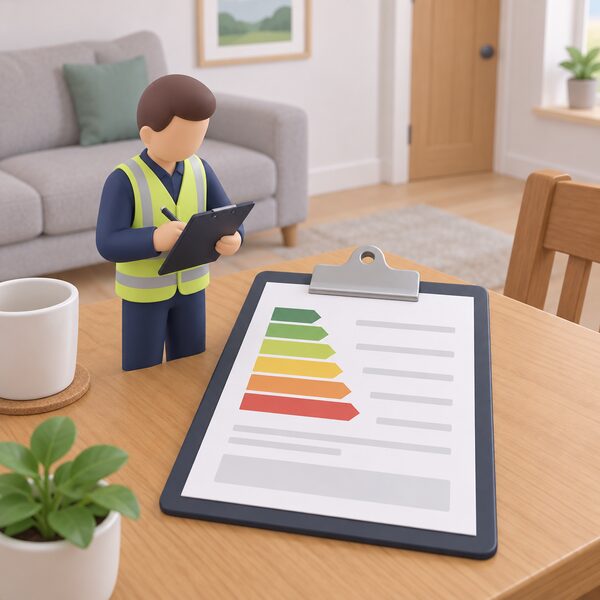
The reformed Decent Homes Standard is settled in outline and open in detail. The government response confirmed the strengthened Criterion D, the new Criterion E on damp and mould, alignment with the minimum energy efficiency standards, whole-home heat distribution and retained programmable-heating requirements5. It also confirmed two decisions not to act: no further home security requirements, and no mandatory floor-covering requirement, though best-practice guidance and a social-housing pilot will be explored5.
The energy efficiency timetable is set out in stages. In Scotland, the proposals are for a minimum standard for the private rented sector before the end of 2028 and for privately-owned homes before the end of 203317. The Scottish consultation on the Heat in Buildings Bill ran from 6 June to 29 August 202518.
The EPC metric itself is still being reformed, which is the largest open question for how the standard will be measured. The Climate Change Committee has recommended four primary metrics for domestic EPCs, using real-world units and clear simple names12, and has stated that the current metrics do not accurately incentivise the energy efficiency and heating solutions required to deliver net zero homes12. The Scottish Government has set out a new EPC rating system for domestic buildings covering fabric energy efficiency, the emissions, efficiency and running costs of the heating system, and the cost of energy to run the home to standardised conditions11.
For a household, the practical position is that the direction is clear and the measurement is not yet final. A home that meets the current standard may not meet the reformed one, and the EPC band that determines compliance is itself being redefined.
Sources20 cited
- English Housing Survey briefing: modelling a revised Decent Homes Standard, GOV.UK, 2025-07-02
- English Housing Survey 2024 to 2025: introduction and key findings, GOV.UK, 2024
- Bristol Warm Homes Plan, Bristol City Council, 2025-04
- Minimum Energy Efficiency Standards, Planning Portal, 2026
- Consultation on a reformed Decent Homes Standard: government response, GOV.UK, 2026-09
- Energy and Climate Change Committee evidence, UK Parliament, 2011-12
- Current Decent Homes Standard summary table, Northern Ireland Executive, 2025-08-05
- Heat and Buildings Strategy, GOV.UK, 2035
- Approved Document L Volume 1: Dwellings, GOV.UK, 2026
- Building Regulations Approved Document L Volume 1, Welsh Government, 2022-11
- Reforming energy performance certificates, Scottish Government, 2025-01-21
- Letter: reform of domestic EPC rating metrics, Climate Change Committee, 2026-09-19
- Energy efficiency advice and assessment, London Borough of Bromley, 2026-09-17
- Clean Flexibility Roadmap, July 2026 update, GOV.UK, 2030-10-01
- Raising product standards for household tumble dryers, GOV.UK, 2025-07-17
- Gas safety in the home: frequently asked questions, Health and Safety Executive, 2026
- Energy efficiency in homes, Scottish Government, 2028
- Proposals for a Heat in Buildings Bill, Scottish Government, 2025-08-29
- Trading standards guidance: other consumer problems, Isle of Anglesey County Council, 2026-05
- Optimised Retrofit Programme 3 Year 4 guidance 2025 to 2026, Welsh Government, 2025-05-08
 Insulation in Rented HousingWho pays for insulation when you rent, and who has to agree to it?
 Renting and Home EnergyThe position of a tenant in a privately rented home: which measures need no permission, which are fixtures the landlord controls, and what the law says about heating, insulation, certificates and bills across the four UK nations.
 Energy in Social HousingWhat must your landlord do if your home is cold, damp or mouldy?
 UK Private Rented SectorHow many homes in the UK are rented privately, and how do they compare with homes people own or rent from a council or housing association?
 Welsh Housing Quality StandardWhat does the Welsh Housing Quality Standard mean for your home if you rent from a council or housing association in Wales?
 Where to Start If You RentRenting means you can switch supplier or get a smart meter yourself, but insulation, glazing and heating need your landlord's agreement.