

In this answer
Short answer
Awaab's Law came into force on 27 October 2025 and requires social landlords in England to investigate reports of damp or mould within 10 working days, provide the tenant with a written summary of the findings within 3 working days, and make the property safe within 5 working days1. Registered social landlords must also address emergency hazards within 24 hours2. The law is named after two-year-old Awaab Ishak, who died from mould exposure2.
The legal basis is the Hazards in Social Housing (Prescribed Requirements) (England) Regulations 20253. The timescales are implied terms in every social housing tenancy agreement, which means a failure to meet them is a breach of contract that can lead straight to the courts4. The law applies to social housing landlords in England; private rented sector properties are covered by the Minimum Energy Efficiency Standards via EPC ratings instead5.
For a household, the practical effect is a set of enforceable deadlines rather than discretionary promises. The landlord must investigate, report in writing, and remedy within fixed windows. Where properties cannot be made safe within the prescribed timescales, landlords may be required to provide suitable alternative accommodation at their own cost3. The dependence that remains is on the landlord's own compliance and on the local authority's enforcement capacity, not on the tenant's ability to compel action directly.
What Awaab's Law requires social landlords to do
The core duty is to investigate and remedy damp and mould hazards in residents' homes within strict timelines6. The Social Housing (Regulation) Act 2023 provides the wider regulatory backdrop, and real-time monitoring is used to help prove compliance with it7. The Homes (Fitness for Human Habitation) Act 2018 and the new Social Housing Regulations (2024) sit alongside Awaab's Law in the same framework8.
The timescales are not guidance; they are implied terms in every social housing tenancy agreement3. That distinction matters because it converts a regulatory expectation into a contractual obligation. A tenant whose landlord misses a deadline is not limited to a complaint to the regulator; the failure is a breach of contract that can lead straight to the courts4.
The law sits within a broader set of landlord duties. The Landlords and Tenant Act 1985 requires landlords of properties with short leases to keep the electrical wiring in repair and in proper working order9. Building Regulations Document J applies to all landlords, both social and private, covering fuel burning appliances11. These are separate from Awaab's Law but form part of the same compliance picture for social landlords.
In Wales, a parallel standard operates. The Welsh Housing Quality Standard 2023 is a demanding standard which all social landlords in Wales will be legally obliged to meet12. All registered social landlords must comply with WHQS 2023, rules and guidance13. Awaab's Law itself applies to England; the Welsh framework is a distinct regime with its own legal basis.
Damp and mould: investigation and repair within set time periods

The deadlines run from the point a damp or mould issue is reported. Registered social landlords must investigate reports within 10 working days2. They must provide the tenant with a written summary of the findings within 3 working days4. Properties must be made safe within 5 working days3.
The sequence matters. Investigation comes first, then the written summary, then the remedy. A landlord cannot skip the written summary and move straight to repair, nor can it treat the investigation as the remedy. Each stage has its own clock.
| Stage | Deadline | Source |
|---|---|---|
| Investigate report | 10 working days | 2 |
| Written summary to tenant | 3 working days | 4 |
| Make property safe | 5 working days | 3 |
| Emergency hazards | 24 hours | 2 |
Where properties cannot be made safe within the prescribed timescales, landlords may be required to provide suitable alternative accommodation at their own cost3. That provision recognises that some damp and mould problems cannot be fixed within five working days, particularly where structural work or specialist contractors are needed.
The requirements are described as setting strict timelines and requirements for social landlords to investigate and remedy damp and mould hazards in residents' homes6. The language is deliberately firm: the law compels action within set time periods rather than leaving the pace of response to the landlord's discretion14.
For a household, the practical expectation is that a report triggers a defined process with dates attached. The tenant should receive a written summary of what was found, and the property should be made safe within the statutory window. Where that is not possible, the alternative accommodation provision is the backstop.
Emergency repairs and the legal duty to fix reported hazards
Emergency hazards carry a 24-hour deadline for registered social landlords2. That is separate from the damp and mould timescales and reflects the greater urgency of an immediate risk to health or safety.
The duty to fix reported damp, mould and emergency repairs applies by law15. A social landlord has a duty to fix reported damp, mould and emergency repairs by law15. The law requires social landlords to investigate and fix dangerous damp and mould within set time periods16.
For building work associated with remedies, the Building Regulations framework applies. Emergency repairs may be carried out straightaway but must comply with the requirements, and retrospective approval and a completion certificate must be applied for after the event17. In Wales, building regulations apply to providing services and fittings such as washing and sanitary facilities, hot water cylinders, foul water and rainwater drainage, replacement windows, and fuel burning appliances of any type18. Installing a bathroom that involves plumbing is a covered alteration requiring approval19.
Where remedial work is necessary under the electrical safety regime, landlords must complete it within 28 days or any shorter period if specified as necessary in the report20. They must obtain written confirmation from a qualified person that the further investigative or remedial work has been carried out, and whether the electrical safety standards are met or further investigative or remedial work is required21. Written confirmation must be supplied to the local housing authority within 28 days of completion of the work21.
Which landlords are covered: social housing in England and the private rented sector
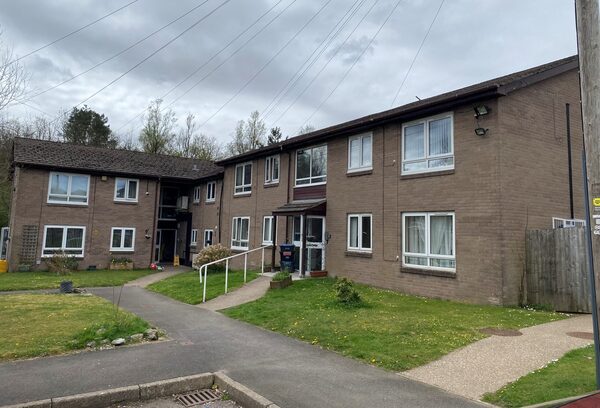
Awaab's Law currently applies to social housing landlords, while private rented sector properties are covered by MEES via EPC ratings5. The distinction is sectoral, not geographic within England: the law covers social housing in England.
The Electrical Safety Standards in the Private Rented Sector (England) (Amendment) (Extension to the Social Rented Sector) Regulations 2025 extended electrical safety duties to the social rented sector from 1 November 202520. The original 2020 regulations were updated in 2025 to include the social rented sector20. The regulations apply to social housing tenancies granted after 1 December 202520. The guidance applies to England23 and is for landlords, tenants and local councils23.
Private rented sector energy standards exemptions apply to England and Wales24. The Energy Efficiency (Private Rented Property) (England and Wales) Regulations 2015 cover private, local authority and other public body landlords, and tenants who sub-let a property within scope25. That is a different regime from Awaab's Law, which is specific to social housing in England.
In Wales, the Welsh Housing Quality Standard 2023 applies to social landlords. All registered social landlords must comply with WHQS 2023, rules and guidance13. WHQS 2023 is a demanding standard which all social landlords in Wales will be legally obliged to meet12. The Welsh framework is separate from Awaab's Law but addresses similar concerns about housing quality.
For private tenants in Wales, the Affordable Warmth Scheme requires the landlord's consent for work to take place in their property26. Landlord loans in Swansea are available to landlords of substandard properties and owners of properties vacant for a minimum of 6 months who intend renting or selling on completion; individuals and companies can apply; properties must be at least 10 years old; loan to value ratio will not exceed 80%27. These are distinct from Awaab's Law and operate in the private sector.
How the law has been used to challenge social landlords
Awaab's Law has helped residents effectively challenge social landlords2. The mechanism is the contractual status of the timescales: because they are implied terms in every social housing tenancy agreement, a failure to meet the statutory windows is a breach of contract that can lead straight to the courts4.
The law has been discussed at sector level. World Ventil8 Day Exchange included an update on the impact of Awaab's Law on addressing a growing health crisis in social housing28. That reflects the wider public health context in which the law operates.
Real-time monitoring is used to help prove compliance with the Social Housing (Regulation) Act 20237. The UK Government published draft, non-statutory guidance for social landlords29. That guidance is not statutory, but it indicates the direction of regulatory expectation.
The regulations are expected to expand to cover other hazards, and the pressure on small teams will only grow4. Phase 2 is expected later in 2026 and is expected to extend statutory timescales to excess cold and excess heat hazards5. Government policy signals Phase 2 will extend similar statutory timescales to additional hazards, including excess cold and excess heat3.
For a household, the challenge route is through the courts on the basis of breach of contract, not through a separate statutory appeal. The law gives the tenant a contractual lever. The dependence that remains is on the tenant's willingness and ability to enforce, and on the landlord's compliance in the first place.
Phase 2: which sector and which hazards
Phase 2 is expected later in 2026 and is expected to extend statutory timescales to excess cold and excess heat hazards5. Government policy signals Phase 2 will extend similar statutory timescales to additional hazards, including excess cold and excess heat3. The regulations are expected to expand to cover other hazards4.
The current Phase 1 scope covers social housing landlords in England. Phase 2 would extend the same statutory timescale model to additional hazards within that sector. The expansion is described as expected, not confirmed, so the timing and final scope remain subject to the Government's announcement.
For a household, the significance is that the law's coverage may widen beyond damp and mould to include cold and heat hazards. That would bring more of the conditions that affect health and energy independence within the same enforceable deadline structure. The dependence that remains is on the landlord's compliance and on the regulatory capacity to enforce.
Sources29 cited
- Condensation, damp and mould, Centre for Sustainable Energy, 2025
- The Cold Truth, Cadent Gas, 2026
- Damp, mould and overheating: how monitoring protects tenants and budgets, Chameleon Technology, 2026-03-30
- Awaab's Law deadlines: beyond the paperwork, Chameleon Technology, 2026-05-29
- EPC C deadline for landlords 2028: complete compliance guide, Chameleon Technology, 2026-03-02
- Beanbag Thermostat, Secure Meters, 2026-09-09
- Awaab's Law: proactive housing management with real-time data, Chameleon Technology, 2026-08-04
- Beanbag Receiver, Secure Meters, 2026-09-09
- Dehumidifiers, Electrical Safety First, 2026-09-19
- Patio heaters, Electrical Safety First, 2026-09-19
- Carbon monoxide, WW Utilities, 2026-09-20
- Welsh Housing Quality Standard 2023, Welsh Government, 2022-05-11
- Welsh Housing Quality Standard 2023 integrated impact assessment, Welsh Government, 2024-08-02
- EINAS 2025: heat and buildings, Department for Energy Security and Net Zero, 2025-10
- CIBSE government affairs October 2025 update, CIBSE, 2025-10
- World Ventilation Day takes on overheating, BESA, 2026
- Boilers and heating: building regulations, Planning Portal, 2026
- When you need approval, Planning Portal, 2026
- Building regulations approval, GOV.UK, 2026-09-17
- Electrical safety standards in the private and social rented sectors: guidance, GOV.UK, 2025-11-01
- The Electrical Safety Standards in the Private Rented Sector (England) Regulations 2020, regulation 3, legislation.gov.uk, 2026-09-17
- The Electrical Safety Standards in the Private Rented Sector (England) Regulations 2020, regulation 3 (made), legislation.gov.uk, 2026-09-17
- Electrical safety standards in the private and social rented sectors: guidance, GOV.UK, 2025-11-01
- View private rented sector energy standards exemptions, GOV.UK, 2026-05-05
- Trading standards guidance: other consumer problems, Isle of Anglesey County Council, 2026-05
- Affordable Warmth Scheme, Northern Ireland Housing Executive, 2026-09-17
- Private sector housing renewal and adaptations, Swansea Council, 2026-09-20
- Ventilation saved my kids, BESA, 2025-11-10
- ECO4 delivery guidance v3.2, Ofgem, 2025-12
 Damp and Mould in Rented HomesDamp or mould in your rented home is your landlord's problem to fix.
 Landlord Energy and SafetyWhat a landlord must provide and maintain across the four nations: working heating and hot water, an EPC before letting, alarms, gas and electrical safety, and fitness for habitation, with the points where Scottish, Welsh and Northern Irish duties differ from England.
 Insulation in Rented HousingWho pays for insulation when you rent, and who has to agree to it?
 Energy in Social HousingWhat must your landlord do if your home is cold, damp or mouldy?
 Social and Rented Home StandardsWhat condition is your landlord legally required to keep your home in?
 Building Regulations EnglandAdding a heat pump, solar panels or an extension usually needs building regulations approval, and it is separate from planning permission.