
In this answer
Short answer
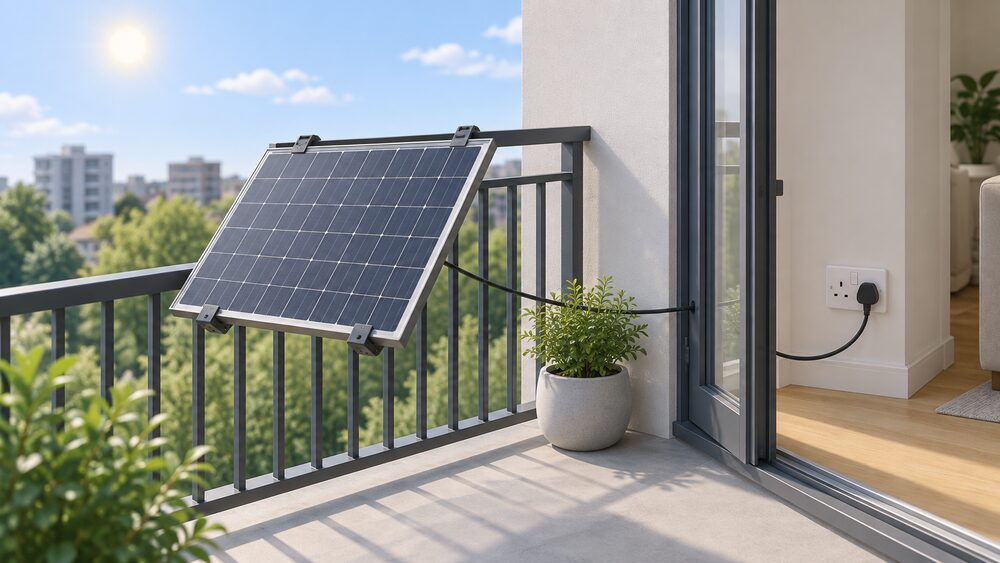
Plug-in solar is a solar photovoltaic system intended for connection to a home's electricity installation by means of a standard plug and socket, and it is designed for installation and operation by ordinary persons rather than by an installer1. That design choice is what makes it relevant to a rented flat: there is no scaffolding, no roof work and no MCS paperwork, and the equipment can be mounted on a balcony or wall and plugged into an approved indoor or outdoor socket3.
The legal position changed on 27 August 2026, when plug-in solar became available to buy and plug in across Great Britain following independent safety testing of the key electrical elements4. Official figures put the saving at up to £100 a year, and the government has said explicitly that this benefit should be felt by renters and flat dwellers4. Independent guidance gives a range of around £70 to £100 a year5.
Tenure, not technology, is the constraint. Renters and flat owners need permission from their landlord or freeholder before installing, and leaseholders usually need to check the lease and obtain consent from a freeholder or managing agent as well5. Planning rules add a second layer for listed buildings, conservation areas and blocks of flats. The sections below set out what applies, what a compliant installation looks like, and what remains outside a tenant's control.
Plug-in solar is aimed at renters and flat dwellers
The case for plug-in solar rests on who it was designed for. The interim product specification describes a device intended for installation and operation by ordinary persons, in a single-phase domestic environment2. It is not a scaled-down version of a professionally installed array with the installer removed; it is a separate product category with its own rules.
Industry bodies have been explicit about the target market. Plug-in solar would provide an alternative to rooftop solar for people living in flats and is an important way to address fuel poverty, according to Solar Energy UK8. Which? has taken the same view, describing plug-in solar as having the potential to help consumers reduce their energy bills, with lower cost and portability making it a good option for households where a larger rooftop system is not an option9.
Citizens Advice frames the practical audience: plug-in panels can work well for renters and those living in flats with outdoor spaces10. That qualifier matters. The product needs somewhere to sit that receives sunlight, and independent guidance states that all that is needed is south-facing outdoor space, such as a balcony, to get the most out of the panels3.
For a household's energy independence, the gain is partial and worth stating plainly. A plug-in system generates electricity behind the meter, so a share of consumption is met without buying units from a supplier. It does not disconnect the flat from the grid, does not remove the need for a supplier, and does not provide power during a network outage in the way an off-grid system would. The dependence that remains is on the grid, on the supplier, and on the landlord's consent continuing.
Why plug-in panels suit a rented flat
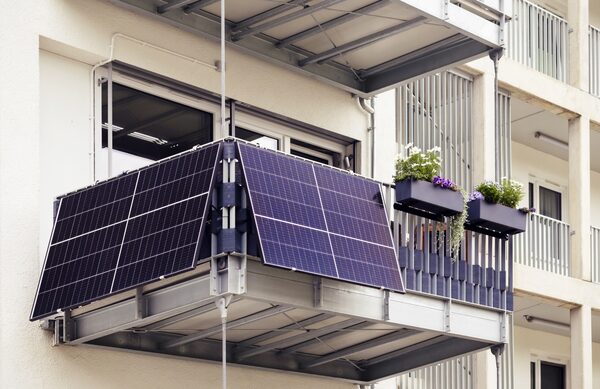
Three features make plug-in solar a better fit for a tenancy than a roof array: it is portable, it is cheaper, and it does not require the building's roof to be touched.
Portability is the decisive one for anyone who might move. Which? notes that lower cost and portability make plug-in solar a good option where a larger rooftop system is not possible9. Independent guidance recommends plug-in solar specifically for renters, people in smaller homes such as flats, and those unable to afford full roof system installation costs3. A tenant who moves can, in principle, take the equipment with them, subject to whatever the tenancy and the mounting arrangement allow.
Cost is the second factor. Official figures put the saving at up to £100 a year4, and independent guidance gives around £70 to £100 a year5. The two figures are close but not identical: the official figure is a headline maximum, the independent figure a range. Both are annual bill savings, not income, and neither is a payback period.
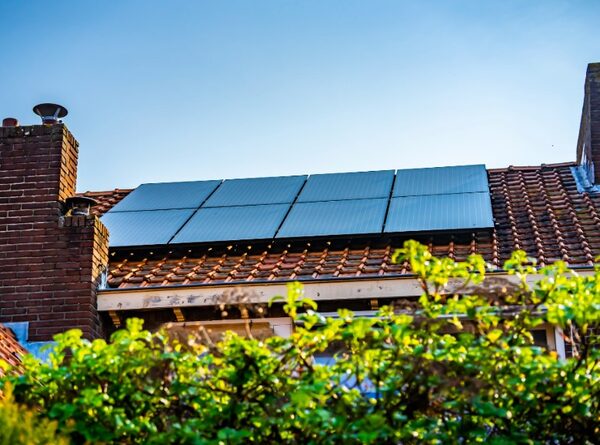
The third factor is that the roof is untouched. Solar panels can be installed on a flat or sloping roof, but that is a building-level intervention requiring access, fixing and usually the freeholder's consent11. Plug-in solar avoids the roof entirely by using a balcony, wall or ground-level position, which is why it sits within reach of a tenant in a way a roof array does not.
"they can work well for renters and those living in flats with outdoor spaces"
Asking your landlord: permission and the Renters' Rights Act
Permission is required, and the framework around it has shifted. Independent guidance states that renters and flat owners need permission from their landlord or freeholder before installing plug-in solar panels5. The same guidance reports that under the Renters' Rights Act 2025 a landlord cannot unreasonably refuse12. Those two statements sit together: the tenant asks, and the landlord's ability to say no is constrained.
The Renewable Energy Association's guidance adds a third party to the conversation, noting that permission may be needed from a landlord, freeholder or managing agent, particularly where the installation affects the building13. Council guidance for leaseholders repeats the point, stating that a leaseholder may need permission from the landlord, freeholder or management company14. In a block of flats, the managing agent is often the practical gatekeeper even where the freeholder is the legal one.
What the tenancy agreement says matters more than the general rule. Independent guidance notes that a lease may have clauses about external alterations, and that these should be checked before buying12. The same applies to a tenancy: clauses on fixtures, alterations and the fabric of the building determine whether a bracket, a cable route or an outdoor socket is permitted.
There is a safety dimension to the building itself. Before installing a plug-in solar system, independent guidance advises having the home's electrical installation checked, particularly in an older property13. Landlords already carry a statutory duty here: they must ensure every electrical installation in the residential premises is inspected and tested by a qualified person before a specified tenancy commences15. A tenant can reasonably ask when that test was last carried out.
Flats, listed buildings and conservation areas: where extra consent applies
Planning consent is a separate question from the tenancy, and it bites hardest on flats and historic buildings.
Permitted development rights for roof and wall-mounted solar panels apply to houses; flat residents should contact their local planning authority for guidance16. That is the general position in Wales, and the same distinction between houses and flats runs through the planning guidance. Where solar equipment is to be installed on a flat roof on Article 2(3) land, the developer must apply to the local planning authority for prior approval17.
For listed buildings the requirements are firmer. Council guidance states that solar panels on listed buildings will need planning permission and listed building consent18. Other councils repeat it: listed building consent must also be applied for, and must be obtained before work commences19. Consent extends beyond the listed structure itself. Listed building consent is required to place solar panels on a listed building, including buildings within the curtilage of the listed building which pre-date July 194822. A flat within a listed building, or a balcony on a curtilage building, therefore sits inside the consent regime.
Conservation areas and areas of outstanding natural beauty narrow permitted development further. Council guidance for conservation areas sets out that stand-alone solar will not be installed within the curtilage of a listed building, and applies additional conditions to dwellings in an area of outstanding natural beauty or a conservation area23. Adding renewable energy solutions such as solar panels might be acceptable in a historic context, but will require listed and or planning consent21.
The practical consequence for a renter is that the planning question may be answered by the building, not by the tenancy. A tenant in a modern block faces a landlord conversation; a tenant in a listed building faces a landlord conversation and a planning application that the landlord or freeholder would normally have to make.
Safe mounting and a compliant connection
The technical rules for plug-in solar are set out in the interim product specification, and they are specific.
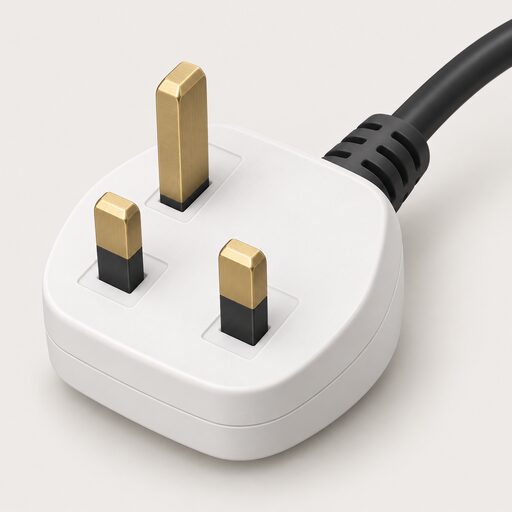
A compliant unit comprises at least one PV module, a grid-following microinverter, a connection lead fitted with a plug complying with BS 1363, and a mounting system7. The specification covers electrical design, British plug requirements, mounting systems and fire protection24. On the electrical side, plug-in solar must comply with the technical requirements for connection and parallel operation with low-voltage distribution networks in Great Britain, which means Engineering Recommendation G982.
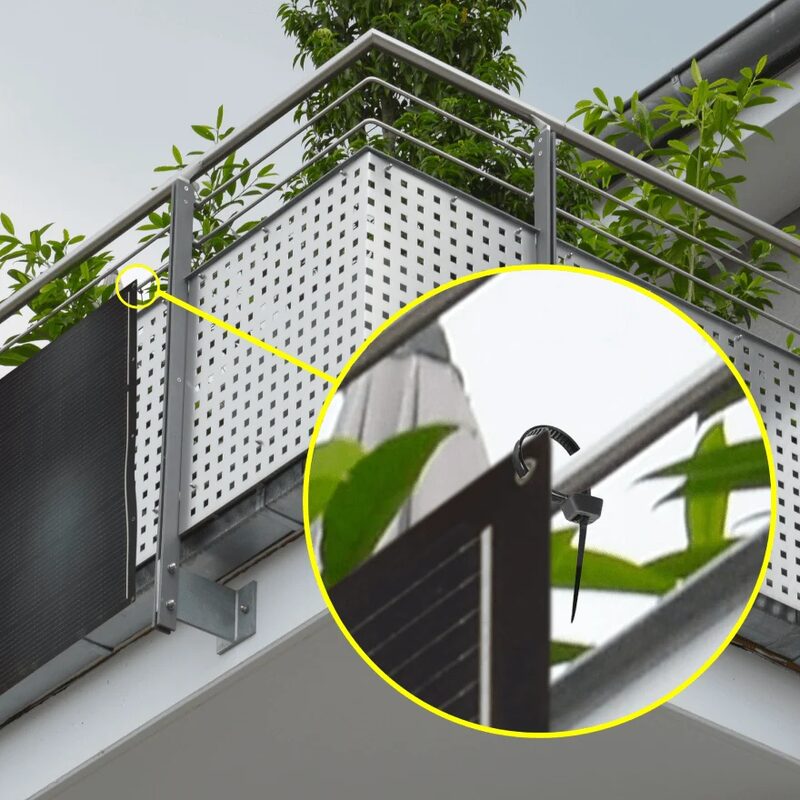
Mounting is not left to improvisation. Unsecured mounting arrangements shall not be permitted7. Independent guidance suggests panels perform best when tilted at an angle of around 25 to 35 degrees rather than positioned completely flat against a surface13. For blocks of flats there is an additional restriction: in the case of plug-in solar, no part of the equipment should be installed on a wooden wall, balcony or enclosure, or any exterior clad in timber25.
| Requirement | What it means in practice |
|---|---|
| Connection standard | Engineering Recommendation G98, parallel operation with the low-voltage network2 |
| Plug | BS 1363, the standard British three-pin plug7 |
| Core components | PV module, grid-following microinverter, connection lead, mounting system7 |
| Mounting | Unsecured arrangements not permitted7 |
| Tilt | Around 25 to 35 degrees for best performance13 |
| Timber surfaces | No part on a wooden wall, balcony or enclosure on a block of flats25 |
The safety testing behind the 27 August 2026 change covered all key electrical elements and showed that compliant panels are safe and compatible with UK wiring4. Solar Energy UK has stated that the technology is compatible with UK domestic electrical systems26. The qualification in both statements is compliance: the safety case rests on the product meeting the specification, not on plug-in solar as a category.
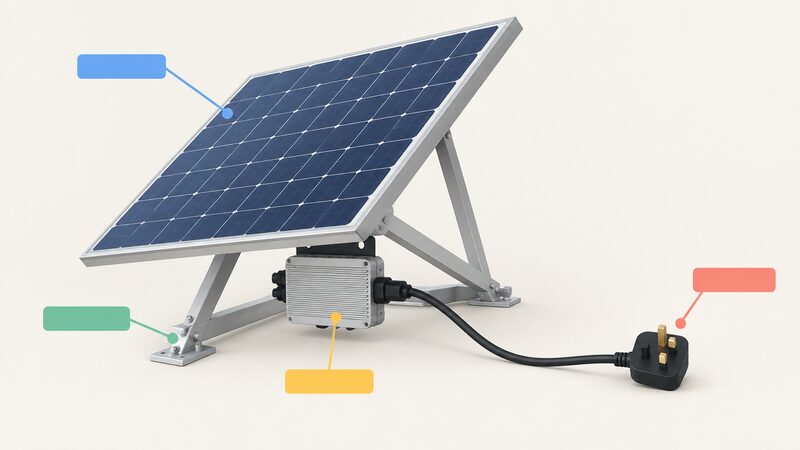
What a renter needs before plugging in
The sequence is short, but each step can stop the project.
- Read the tenancy agreement or lease for clauses on external alterations, fixtures and the building's fabric12.
- Ask the landlord, freeholder or managing agent for written permission, noting that outdoor sockets or drilling require it6.
- Check whether the building is listed, in a conservation area or in an area of outstanding natural beauty, and whether planning consent or listed building consent is needed18.
- Confirm the home's electrical installation has been inspected and tested, particularly in an older property13.
- Check the product meets the interim specification: G98 compliance, a BS 1363 plug, a microinverter and a proper mounting system2.
- Confirm the mounting position is secure, tilted appropriately, and not on a timber surface if the building is a block of flats7.
Two further points bear on the decision. The first is that the savings are modest: up to £100 a year on the official figure, around £70 to £100 a year on the independent one4. For a tenant who expects to move within a year or two, the portability of the equipment is what protects the outlay, not the annual return.
The second is that the equipment is not the whole system. A plug-in unit depends on the grid for voltage reference and for the supply when the panels are not generating, and it depends on the landlord's consent remaining in place. Where a tenancy ends, the permission ends with it. Households weighing this against a fixed installation can compare the two approaches in plug-in solar vs professionally installed solar, and the wider context sits in the Solar PV for UK Homes guide.
Sources26 cited
- The Town and Country Planning (General Permitted Development) (England) Order 2015, Schedule 2, Part 14, legislation.gov.uk, 2026-09-17
- Plug-in solar interim product specification, Department for Energy Security and Net Zero, 2026-07
- Plug-in solar panels guide, Uswitch, 2026-09-04
- Households can save as plug-in solar panels come to market, GOV.UK, 2026-08-26
- Plug-in solar panels, Energy Saving Trust, 2026-09-17
- Plug-in solar advice, Centre for Sustainable Energy, 2026-09
- Plug-in solar interim product specification (withdrawn version), Department for Energy Security and Net Zero, 2026-06
- Industry welcomes plug-in solar progress, Solar Energy UK, 2025-12-08
- DESNZ plug-in solar regulatory amendment and interim product specification: Which? response, Which?, 2026-07-02
- Six things to know before plug-in solar panels hit the shelves, Citizens Advice, 2026-08-21
- Residential solar PV, Renewables First, 2026-03-30
- Plug-in solar explained, Low Carbon Hub, 2026-07-09
- Plug-in solar panels: five top tips to save money and stay safe, Association for Renewable Energy and Clean Technology, 2026-08-04
- Solar panels guidance, Islington Council, 2026-09-17
- The Electrical Safety Standards in the Private Rented Sector (England) Regulations 2020, regulation 3, legislation.gov.uk, 2026-09-17
- Planning permission: solar panels, Welsh Government, 2026-09-17
- Planning permission: solar equipment mounted on a house or a block of flats, Planning Portal, 2026-09-17
- Solar panels and planning permission, Cornwall Council, 2026-09-17
- Solar panels, Wirral Council, 2026-09-17
- Making alterations to a listed building, Bristol City Council, 2026-09-17
- Solar panels guidance, City of York Council, 2026-09-17
- Solar photovoltaics and planning in conservation areas, West Suffolk Council, 2026-09-17
- Permitted development, Cotswold District Council, 2026-09-17
- Plug-in solar consultation document, Department for Energy Security and Net Zero, 2026-06-16
- The Town and Country Planning (General Permitted Development etc.) (England) (Amendment) Regulations 2026, legislation.gov.uk, 2026-08-27
- Solar energy, Solar Energy UK, 2026-06-16
 Planning Permission EnglandMost homes in England can have solar panels fitted without planning permission, but does yours count as one of the exceptions?
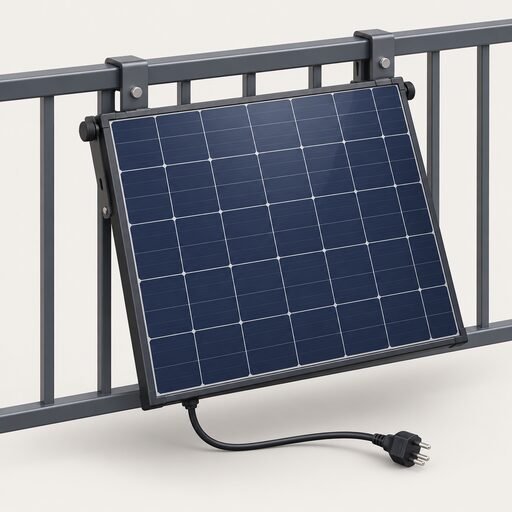 Balcony Solar SystemsCan you really plug solar panels into a normal socket, and what will it save you?
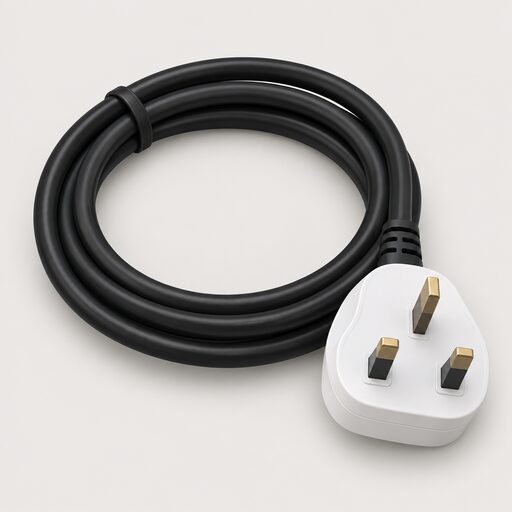 Plug-In Solar KitsCan you really plug solar panels into a normal wall socket in the UK, and is it legal now?
 Panels by Home TypeCan your house have solar panels, and how many will fit?
 Planning Permission ScotlandMost solar panels on Scottish homes go ahead without planning permission, but flats, conservation areas and listed buildings change that.
 Plug-In Battery StoragePlug-in batteries are not legal in a grid-connected British home, even though plug-in solar panels are.