
In this answer
Short answer
The short answer is that it depends entirely on what kind of solar you mean. A plug-in solar panel, the sort that feeds a standard socket, is designed to be self-installed, and since 27 August 2026 it has been legal to buy and use one across Great Britain provided it meets certain standards1. A roof-mounted array wired into your consumer unit is a different proposition: the Energy Saving Trust does not recommend trying to install solar panels yourself, and advises getting a qualified electrician to connect the panels to your electrical system3.
So the honest position is that there are two DIY routes, not one. The first is genuinely do-it-yourself and now lawful. The second is partial: a householder may take on some of the work, but the electrical connection and the building regulations position still pull a competent person into the job. Which applies to you turns on the technology, not on confidence or competence.
What installing solar panels yourself can and cannot mean
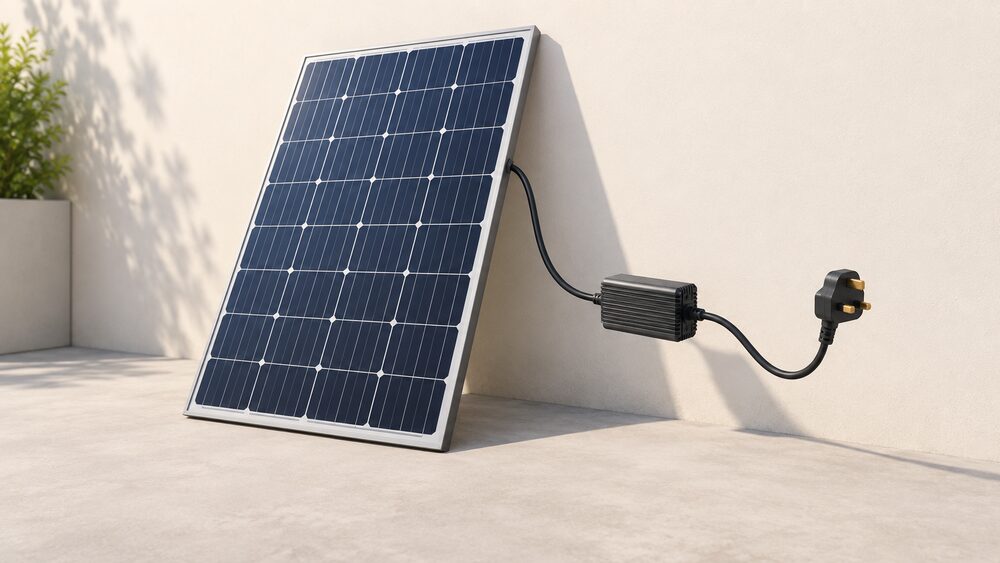
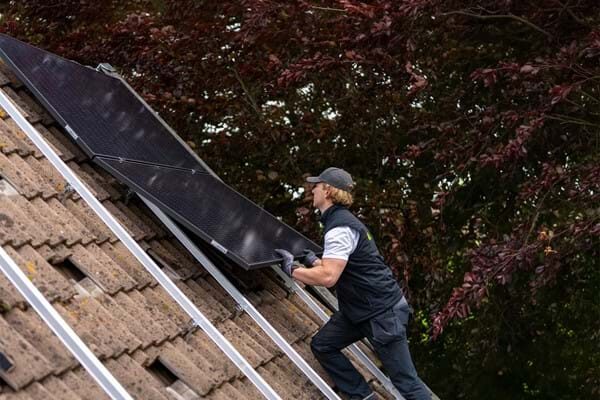
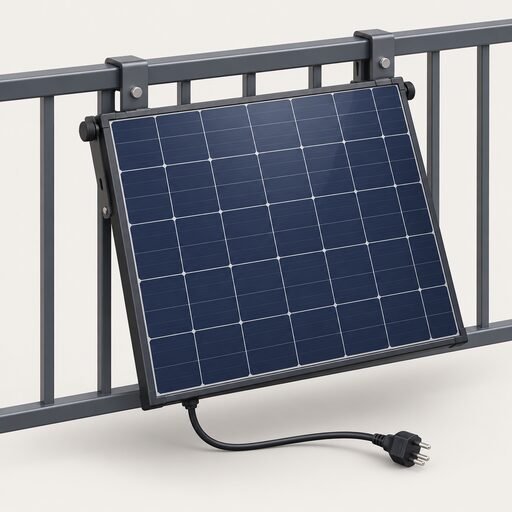
The phrase covers three quite different jobs. The first is a plug-in system: a panel or pair of panels, a small inverter, and a lead that ends in a standard plug. These are designed to be self-install, provided you follow the manufacturer's instructions, and Which? reports that anyone can install them without the need for a professional installer or electrician1. The second is a roof array where the householder does the mounting but a qualified electrician makes the final connection. The third is a full self-build, roof to consumer unit, which is where the guidance turns firmly against the idea.
What a householder cannot do is sidestep the regulatory layer. Regardless of whether or not planning permission is required for the installation of your solar panels, the installation itself is still subject to standard building regulations4. Installing solar panels may require approval under the Building Regulations, and the usual route to avoiding a separate application is to use an installer who belongs to a competent person scheme8. Those installers can self-certify certain types of building work, including the installation of solar PV, which removes the need to seek separate building regulations approval8.
There is also a practical point about the equipment itself. Panels should not be drilled when fitting bird or pest protection, a mistake that voids protection and can damage the module11. And a plug-in system should be registered with the manufacturer to activate any warranty and to be contacted about a problem or safety recall12.
Plug-in solar is now legal across Great Britain
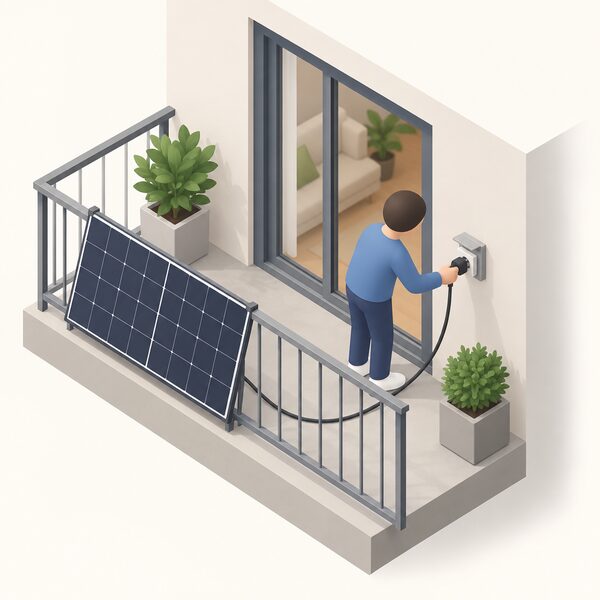
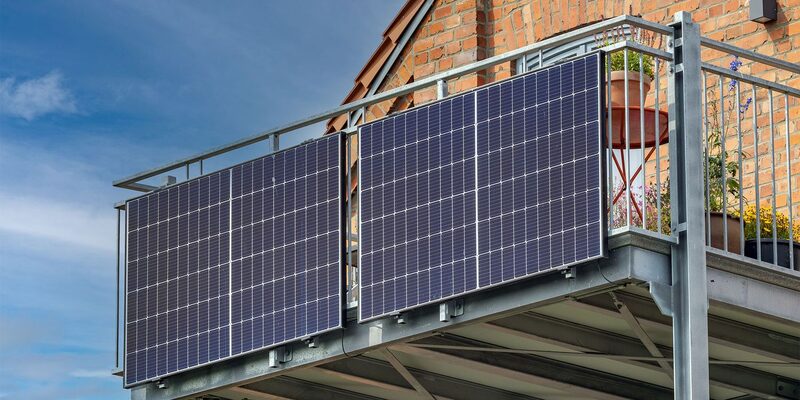
Before 27 August 2026, UK standards only permitted solar power generation that was permanently connected, which ruled out the plug-in approach7. From that date the rules were revised, and the government announced that the easy-to-install panels could be plugged into homes across the country2. The Energy Saving Trust dates the change to 27 August 2026 and notes that plug-in solar panels meeting certain standards are legal to use in Great Britain1.
The practical effect is that a householder can now buy a kit and connect it without an installer, scaffolding or MCS paperwork. The Electrical Safety First consumer guide describes plug-in photovoltaic panels, also known as balcony solar, as now available to buy and self-install in the UK, and stresses registering the system with the manufacturer12. Home Energy Scotland has promoted plug-in solar as available to buy and use across Great Britain, helping households generate some of their own electricity13.
Two limits matter. First, this is a Great Britain change: the legal position described applies to England, Scotland and Wales, and the sources do not extend it to Northern Ireland. Second, the output is modest by design. A plug-in system offsets a slice of household demand rather than powering a home, and it does not carry the export payments that a certified installation can. For the wider picture of what these kits include, see plug-in solar kits and balcony solar.
Where permitted development rules leave you
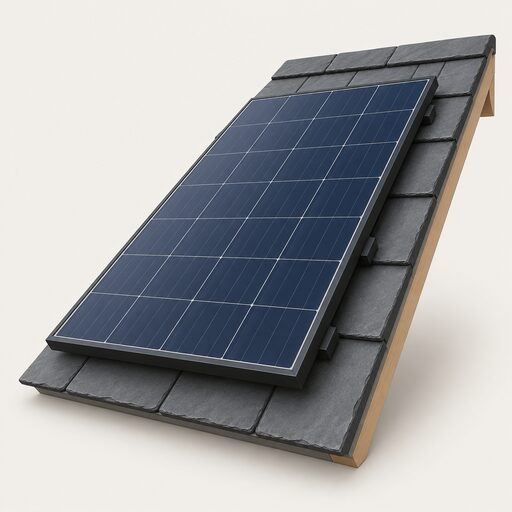
For roof-mounted panels, planning is usually the least of the obstacles. Placing solar panels on the roof of your house or flat, or on a building within the grounds, is considered in most cases permitted development under the Town and Country Planning (General Permitted Development) (England) Order 2015, Schedule 2, Part 14, Class J8. Cornwall Council states that solar panels and equipment installed on domestic buildings and land are usually considered permitted development, meaning planning permission is not required, but there are a few exceptions14. Rother District Council confirms that permitted development rights allow the installation of solar panels, subject to conditions13.
Stand-alone equipment in the grounds is where the rules bite. Full planning permission for flats, or householder planning permission for houses, is needed when any trigger applies8. Under the rules following 27 August 2026, if solar equipment is to be installed on article 2(3) land within 5 metres of the boundary of the curtilage, the developer must apply to the local planning authority for prior approval15. Under the rules prior to that date, only the first stand-alone solar installation was permitted development, and further installations required planning permission15.
Conservation areas and listed buildings change the picture again. Islington Council advises checking with the planning department first via the Duty Planning Officer Service to find out whether solar panels can be installed within a conservation area16. For the detailed positions, see solar panels in a conservation area and listed building consent, and for the nation-by-nation rules, planning permission in England, Scotland, Wales and Northern Ireland.
MCS certification: what it covers and why it matters
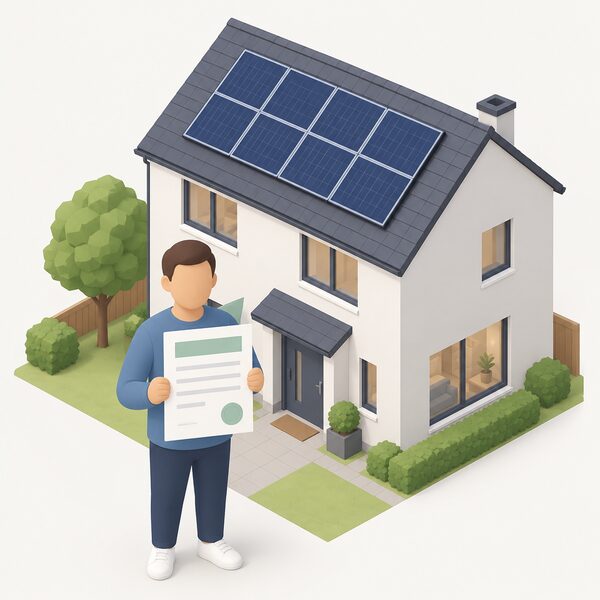
MCS, the Microgeneration Certification Scheme, certifies solar PV installers17. It is a certification scheme for installers of domestic renewable technologies including heat pumps, solar panels and batteries18. Solar panels should be installed by MCS-certified professionals, which ensures compliance with UK standards and eligibility for schemes such as the Smart Export Guarantee; an installer who is not MCS-certified cannot offer access to those financial benefits5.
The scheme works through published standards. Solar photovoltaic systems should only be installed and certified by MCS certified contractors working to the latest published MIS3002 standards19. Modules themselves are certified separately: solar photovoltaic modules fall under MCS 00520. For installations of 50 kilowatts or less generating from combined heat and power, solar photovoltaic or wind, the installation must be certified under MCS or an equivalent scheme and installed by an MCS or equivalent installer21.
That is the crux for a DIY householder. Self-installing a roof array does not make the system unsafe or unlawful in itself, but it does mean no MCS certificate is issued, and without one the export payments and scheme access that depend on certification are closed off. The certificate is also the document a future buyer or surveyor looks for. For the full picture of what certification involves, see MCS certification for solar and solar panel standards and testing.
| What MCS covers | What it does not cover |
|---|---|
| The installer's competence and scheme membership17 | The actual yield of your roof |
| Work to the published MIS3002 standard19 | A guarantee of savings or payback |
| Module certification under MCS 00520 | The manufacturer's product warranty |
| Eligibility for the Smart Export Guarantee5 | Planning or building regulations approval |
Consumer protection if something goes wrong
Solar Energy UK publishes consumer protection guidance that covers the potential benefits of installing a battery with solar panels, financing options, and how to pick a reliable installer to ensure the work is carried out to a high standard. It also highlights red flags and things to avoid, what to do if something goes wrong, and how to maintain a solar panel system22. That is the framework a householder is working within, whether the installation was certified or not.
Where the installation was MCS certified, there is a route beyond the installer. Ofgem's guidance states that contact should be made with MCS where there are issues with the installation process, the installer, or the MCS certificate or product23. If the complaint is not resolved, the MCS Administrator can be approached, and will advise how to make a complaint about the MCS installer24. MCS also runs a be scam aware page for consumers, and states plainly that it will never cold call you6.
For a self-installed system, that protection largely does not exist. There is no installer to complain about and no certificate to fall back on, so the householder's recourse is the manufacturer's warranty on the equipment, which is why registration matters12. The Energy Saving Trust advises getting the system checked by a certified installer, which is a sensible step for any second-hand or self-installed array25.
"MCS will never cold call you"
Finding a certified installer
The Energy Saving Trust advises making sure the installers you look at are MCS-certified, which ensures the work meets the scheme's standards26. Bedford Borough Council puts it more directly: the best way to avoid any problems with building regulations is to use an MCS certified installer for the fitting, with a full list on the MCS website4. Bromley Council recommends using an installer certified by the Microgeneration Certification Scheme3. East Hertfordshire District Council would recommend you always use a qualified installer9.
The Centre for Sustainable Energy publishes a detailed guide with information about the cost of solar panel installation and how to find an MCS accredited installer, which Oxfordshire County Council points householders towards27. Smart Energy GB likewise advises getting in contact with MCS-certified installers16.
The certification route also carries a paper trail. Scheme rules require the installation to be registered on the MCS Installation Database no later than 10 working days after commissioning, with an MCS Certificate generated, and MCS Commissioning certification issued to the employer within 14 days of commissioning19. That record is what a householder needs for export payments and for any future sale of the property.
What this means for household energy independence
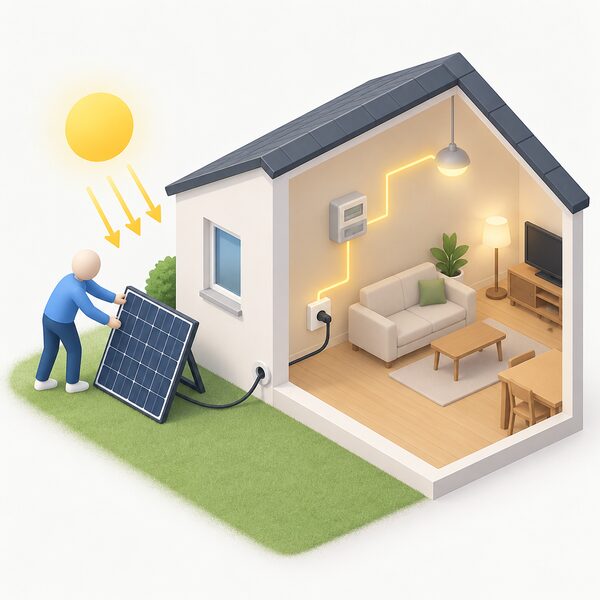
A plug-in system gives a household a genuine, if modest, slice of independence: it generates behind the meter, needs no installer, and can be moved when you move. What remains is the grid, the supplier, and the fact that the output is small relative to a home's demand. A certified roof array gives more generation and access to export payments, but it ties the household to an installer, a certificate and a manufacturer's warranty, and it stays connected to the grid for everything it cannot cover.
The DIY route, in short, buys autonomy at the small end and paperwork at the large end. For how these choices sit alongside storage and off-grid options, see solar panels and household energy independence, plug-in solar vs installed solar and off-grid solar.
Sources27 cited
- Plug-in solar panels, Energy Saving Trust, 2026-09-17
- Households can save as plug-in solar panels come to market, GOV.UK, 2026-08-27
- Solar photovoltaic (PV) panels, London Borough of Bromley, 2026-09-17
- Building regulations renewables guidance, Bedford Borough Council, 2026-09-17
- Can solar panels charge electric cars?, The CPA, 2026-04-15
- How do solar panels work, Smart Energy GB, 2026-03-16
- Plug-in solar panels, Which?, 2026-08-27
- Solar panels, Wirral Council, 2026-09-17
- Solar panels guidance, City of York Council, 2026-09-17
- Most common solar panel problems, Which?, 2018-08
- Moving house energy checklist, Energy Saving Trust, 2026-05-01
- Plug-in solar consumer guide, Electrical Safety First, 2026-08
- Renewable energy: solar panels and heat pumps, Rother District Council, 2026-09-17
- Do I need planning permission, Cornwall Council, 2026-09-09
- Planning permission: stand-alone solar equipment, Planning Portal, 2026-09-17
- Solar panels guidance, Islington Council, 2026-09-17
- MCS Microgeneration Certification, BSI, 2026-09-17
- Consumer protection guidance, Solar Energy UK, 2026-09-17
- Barcud Solar Panel Installation Scheme Specification, Sell2Wales, 2026-06-15
- Financing low carbon home heating, Which?, 2025-09
- Draft licence conditions, GOV.UK, 2026-09-17
- Who to contact, Ofgem, 2026-09-17
- Dispute resolution, Ofgem, 2026-09-17
- Be scam aware, MCS, 2026-06-09
- Solar panels, Energy Saving Trust, 2026-08-27
- Solar panel installation, Energy Saving Trust, 2026-09-07
- How do I retrofit my home: solar panels, Oxfordshire County Council, 2026-09-17
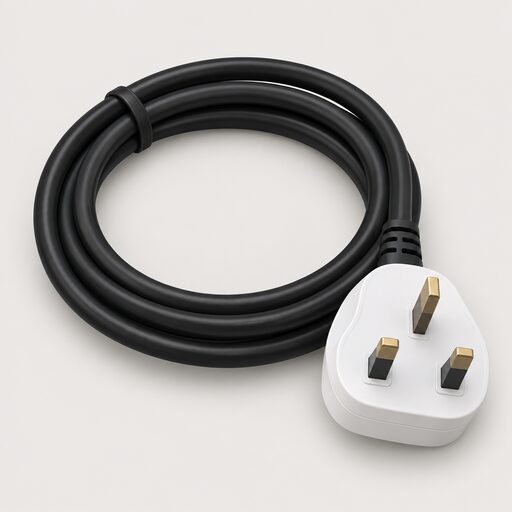 Plug-In Solar KitsCan you really plug solar panels into a normal wall socket in the UK, and is it legal now?
 Planning Permission EnglandMost homes in England can have solar panels fitted without planning permission, but does yours count as one of the exceptions?
 Balcony Solar SystemsCan you really plug solar panels into a normal socket, and what will it save you?
 Panels by Home TypeCan your house have solar panels, and how many will fit?
 Backup Power Safety RulesWho signs off a battery or backup circuit, and can you legally plug in a power station or a plug-in solar panel in the UK?
 Planning Permission WalesDo you need planning permission for solar panels on your house in Wales?