
In this answer
Short answer
Yes. A plug-in solar panel connects to a standard UK household socket, and since 27 August 2026 that connection has been legal across Great Britain for products that meet the required standards1. The kit is small: typically one or two panels, a microinverter and a lead fitted with a standard three-pin plug, plus mounting brackets and a monitoring app3. The plug goes into a permanent wall socket, not an extension lead, and the household does not need an electrician to do it3.
The rule change matters because of what came before. Until 27 August 2026, UK standards only permitted solar generation that was permanently connected, which ruled out a plug-in arrangement entirely3. The revised position is set out in legislation and in an interim product specification that defines what a compliant device looks like5. Devices must be registered before use, which is a legal requirement rather than a formality2.
What follows is what the standards permit, what they prohibit, and where the limits sit. The short version: the socket is the connection point, the manufacturer's plug is the only permitted plug, and everything between the panel and that socket is constrained by rules written to keep the arrangement safe on an existing circuit.
Plug-in solar: the short answer is yes, via a standard socket
The definition is narrow and worth reading closely. Legislation describes plug-in solar as solar photovoltaics intended for connection to a domestic electricity installation by means of a standard plug and socket5. The interim product specification puts it in similar terms: a device intended for connection to an existing low-voltage electrical installation using a standard UK mains plug and socket, without requiring a separate electrical circuit for export6. That last clause is the point of the whole category. A conventional rooftop array is wired into the consumer unit on its own circuit; a plug-in system uses a circuit that already exists.
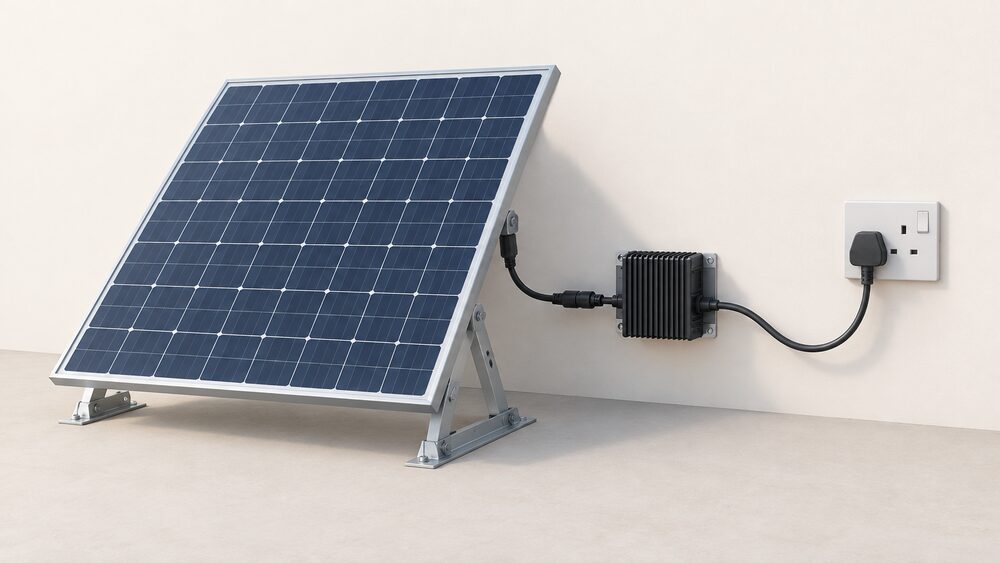
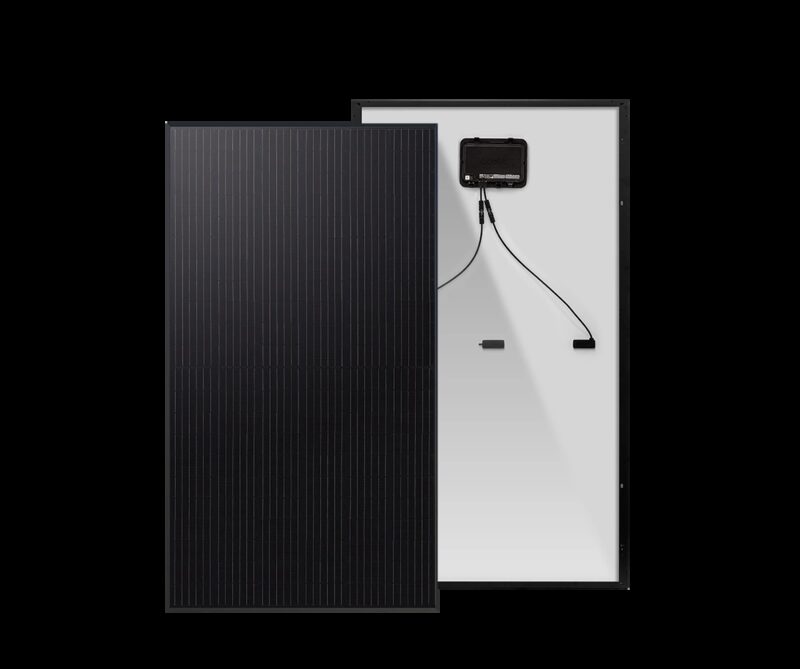
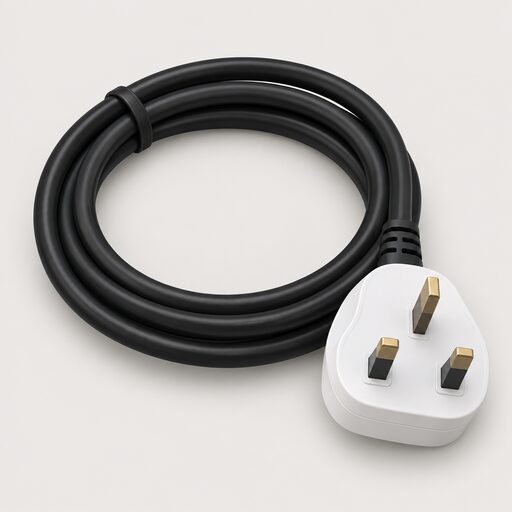
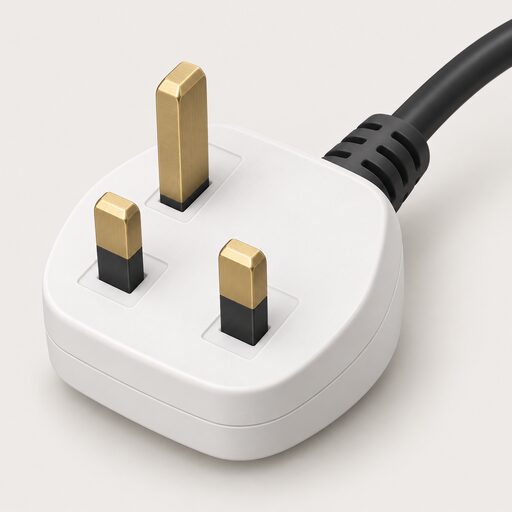
A compliant device comprises at least one PV module, a grid-following inverter, a connection lead fitted with a plug complying with BS 1363, and a mounting system for the panel6. The specification requires plugs designed to BS 1363-1 for connection to UK sockets, and states that the device is designed to be connected to a UK mains socket solely by the manufacturer-supplied plug5. Substituting a different plug, or adding an adaptor, takes the arrangement outside what the standards describe.
The specification also classifies devices into three types: compact, two-component and multi-component5. The distinction is about how the parts are packaged and mounted rather than about what the system does. In all three cases the electrical interface with the house is the same: one plug, one socket.
For a household, the practical consequence is that the connection point is fixed and visible. There is no hidden wiring, no new circuit and no isolation switch to install. The system is also portable, so it can move house with the occupant8. That portability is unusual among home energy assets and is one of the reasons the category exists at all.
Self-installation: no electrician needed

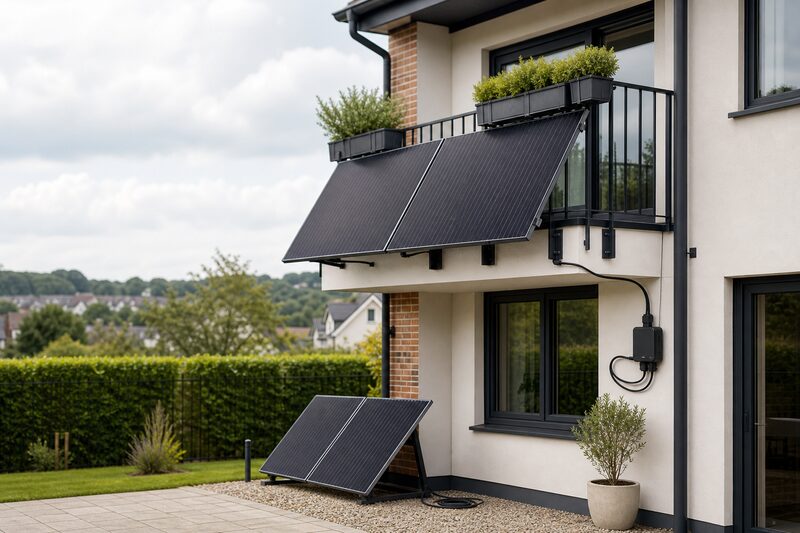
Independent guidance is direct on this point: plug-in solar panels are designed to be self-install, and anyone can install them without the need for a professional installer or electrician3. The government's own announcement describes the panels as easy to install and notes that the arrangement comes with no installation cost and without taking any electricity from the grid7. That combination, no installer and no grid import to run the equipment, is what separates the category from a conventional installation.
The contrast with a full rooftop system is sharp. Guidance on conventional solar is explicit that self-installation is not recommended and that a qualified electrician certified with MCS should connect the panels to the electrical system9. That advice is not in tension with the plug-in position; it reflects the fact that a hard-wired array involves DC cabling, isolation and a connection to the consumer unit, none of which applies to a device that terminates in a three-pin plug.
What self-installation does not remove is the paperwork. Registration of plug-in solar devices before use is a legal requirement2. The maker of one UK kit states that setting up the system requires no experience and that no dedicated installation team, MCS certification or Smart Export Guarantee forms are needed10. Those are the maker's own claims about its own product, and they describe the commercial process rather than the registration duty, which sits with the household.
The practical sequence is short: mount the panel using the supplied brackets, connect the microinverter as the instructions direct, plug the lead into a suitable socket, register the device, then monitor generation through the app. Nothing in that list requires a trade.
Why extension cables are not permitted
This is the single most important safety rule in the category, and it is stated in every layer of the guidance. Extension leads and multi-socket adaptors are prohibited3. The consumer guide lists what must never be used: extension leads, cable reels, multiway adapters, travel adapters, RCD adapters, lighting circuits, and circuits supplying fixed equipment such as ovens and hobs1. The safety body's own advice repeats the list and adds plug-in RCD adaptors4.
The product specification goes further and builds the prohibition into the device requirements. It requires a clear statement that extension cables, multi-way adaptors, RCD adaptors and travel adaptors are not permitted, and a warning that plug-in solar devices must not be connected to an extension cable or multi-way adaptor5. AC interconnection or connection of multiple inverter units to the same circuit by means of extension cables, plug couplers or in-line connector systems is not permitted5. On the DC side, Y-connectors must not be used5.
The reason is that an extension lead is not part of the fixed installation. It can be coiled, overloaded, damaged or moved, and it introduces joints and contact surfaces that the standards for a permanent circuit do not assume. A socket circuit is designed and protected as fixed wiring; a lead trailing from it is not. The same logic excludes lighting circuits and circuits feeding fixed equipment, because those are not intended to accept generation.
"Plug-in solar systems should not be connected via extension leads, cable reels, multiway adaptors, travel adaptors or plug-in RCD adaptors."
Mounting is covered by the same instinct. Arrangements relying solely on cable ties, rope, string, adhesive tape, bungee cords or straps are not permitted6. A panel that can move is a panel whose lead can be stressed, and the rules treat the mechanical fixing and the electrical connection as one problem.
What changed to make plug-in solar legal in Great Britain
The change is dated and specific. Plug-in solar panels that meet certain standards have been legal to use in Great Britain since 27 August 20268. The government announced that from that date the panels could be plugged into homes across the country7, and the legislation defining plug-in solar for permitted development purposes took effect on the same day5. Before that date, standards only permitted permanently connected generation, which is why the category did not exist in practice3.
The route to the change ran through consultation and product specification. The stated aim was to allow consumers to connect plug-in solar systems without batteries directly to a standard mains socket, provided products meet defined safety requirements11. An interim product specification set out what those requirements are6, and permitted development rules were amended to clarify the potential to install plug-in solar that connects to a dwelling's wiring via a standard plug socket12. Products are covered by the General Product Safety Regulations 2005 in Great Britain13.
| Item | Position |
|---|---|
| Legal from | 27 August 2026, Great Britain8 |
| Products covered by | General Product Safety Regulations 200513 |
| Defined in law as | Solar PV connected by a standard plug and socket5 |
| Registration | Required before use2 |
| Availability | Online and on the high street since end of August 20263 |
Two qualifications sit alongside the headline. The first is that the change applies to Great Britain; Northern Ireland is not covered by it, so the position there is different and households there should check separately. The second is that legality is conditional on the product meeting the standards, not on the date alone. A device that does not comply is not made legal by the calendar.
The consumer body Which? has welcomed the potential of the category while noting that its lower cost and portability make it a reasonable option where a larger rooftop system is not available14. The safety body has separately called for more clarity to address potential safety concerns15. Both positions are consistent with a rule change that is real but bounded.
What kind of socket does a plug-in solar panel need?
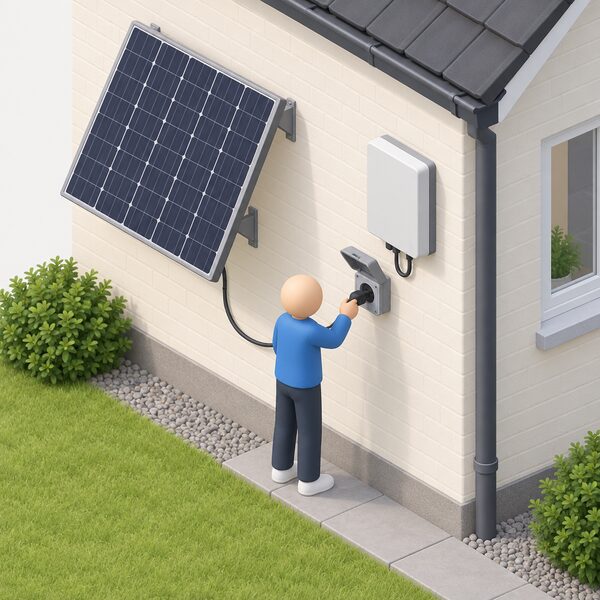
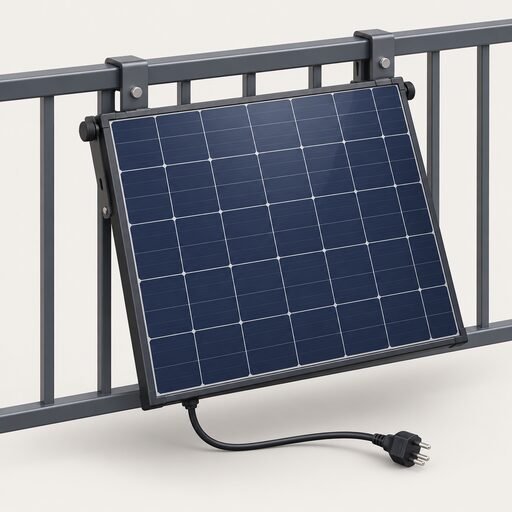
The socket must be on a permanent wall-socket circuit, and the system must be plugged directly into it3. Guidance from a renewable energy trade body puts it as an instruction: always connect the system directly to a suitable outdoor wall socket, and never plug a solar panel into an extension lead16. The outdoor reference reflects where panels are usually mounted, but the requirement is about the circuit, not the location.
The specification narrows the permitted circuit further. A plug-in solar device must only be connected to socket circuits, and not to circuits supplying lighting or other fixed equipment5. That excludes the lighting circuit and the dedicated circuits that feed ovens and hobs. The device is designed to be connected to a UK mains socket solely by the manufacturer-supplied plug5.
In practice a household is looking for a wall socket on a general power circuit, ideally one that is not already heavily loaded and, where the panel sits outside, one rated for outdoor use. The kit itself supplies the plug, the lead and the inverter, so the only decision is which socket to use. The system can be extended later by plugging in another panel, according to the maker of one UK kit10, though each additional device remains subject to the same connection rules.
How the electricity reaches your appliances
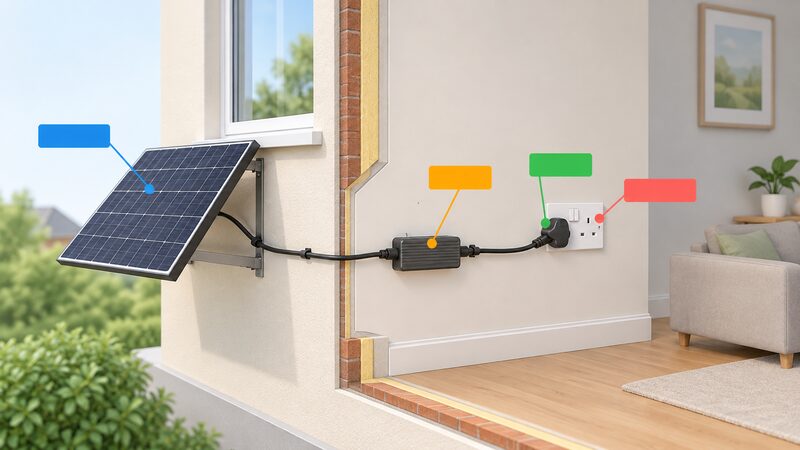
The mechanism is straightforward. Solar panels generate electricity from sunlight, and that electricity is converted from DC to AC by a microinverter10. Independent guidance describes the same chain: the electricity is converted into AC, the current homes use, via a microinverter usually attached to the back of the panel3. The cells convert sunlight into electricity that can run household appliances17.
Once converted, the AC passes through the manufacturer-supplied plug into the socket circuit and is available to whatever is drawing power in the home at that moment. The system does not take electricity from the grid to operate7. Generation is used locally rather than exported, which is why the category does not involve the Smart Export Guarantee or export metering in the way a registered rooftop array does.
That local use is also the limitation. Output rises and falls with sunlight, and the household's demand has to be present at the same time for the generation to displace imported electricity. A plug-in system is a supply-side addition to an existing circuit, not a source of stored energy, and it does not keep the lights on in a power cut.
What owning plug-in panels means for household energy independence
The independence a plug-in system delivers is real but partial, and it is worth being precise about which parts. On the positive side, the household generates its own electricity from a resource it owns, uses that generation directly in the home, and can take the equipment with it when it moves8. There is no installer, no scaffolding and no MCS paperwork in the process7, and no installation cost7. For a household that cannot have a rooftop array, whether because of tenure, shading or building constraints, the category opens a route that did not exist before August 202614.
The dependence that remains is substantial. The system still relies on the grid as its reference and its backup: it is a grid-following arrangement, and the socket circuit it uses is part of the fixed installation supplied by the network. It relies on a manufacturer for the panel, the microinverter and the app that reports generation, and on that company's continued support for the monitoring. It relies on a supplier for everything the panels do not cover, which on a one or two panel kit is most of the household's demand. And it relies on the household completing registration, which is a legal duty rather than a technical one2.
There is also a design question the safety body has raised. It has argued for these devices to be hard wired into a property via their own dedicated circuit, to avoid the electricity generated being fed through a plug and socket arrangement15. That is a recommendation about how the category should develop, not a description of the current rules, and it sits alongside the standards that now permit the plug-in route. Households weighing the category should read it as a signal that the arrangement is permitted and regulated rather than risk-free.
Set against a professionally installed system, the trade is clear: far lower cost and no installer, in exchange for much smaller output, no export payment, no battery, and a connection that depends on a socket circuit rather than a dedicated one. For a household whose goal is to reduce imported electricity at the margin and to own a portable generating asset, that trade is the whole proposition.
Sources17 cited
- Plug-in solar consumer guide, Electrical Safety First, 2026
- Plug-in solar, Electricity North West, 2026
- Plug-in solar panels, Which?, 2026
- Plug-in solar panels safety advice, Electrical Safety First, 2026
- Plug-in solar interim product specification, Department for Energy Security and Net Zero, 2026
- Plug-in solar final interim product specification, Department for Energy Security and Net Zero, 2026
- Households can save as plug-in solar panels come to market, GOV.UK, 2026
- Plug-in solar panels now available, Energy Saving Trust, 2026
- Solar panel installation, Energy Saving Trust, 2026
- Plug In Solar DIY grid-tied solar power kit, Plug In Solar, 2026
- Plug-in solar consultation, Department for Energy Security and Net Zero, 2026
- Changes to permitted development rules for domestic solar installations, Planning Portal, 2026
- Plug-in solar consultation document, Department for Energy Security and Net Zero, 2026
- DESNZ plug-in solar regulatory amendment and interim product specification: Which? response, Which?, 2026
- More clarity needed to address potential plug-in solar panel safety concerns, Electrical Safety First, 2026
- Plug-in solar panels: five top tips to save money and stay safe, Association for Renewable Energy and Clean Technology, 2026
- Solar panels, House of Commons Library, 2026
 Plug-In Solar KitsCan you really plug solar panels into a normal wall socket in the UK, and is it legal now?
 Balcony Solar SystemsCan you really plug solar panels into a normal socket, and what will it save you?
 Plug-In Battery StoragePlug-in batteries are not legal in a grid-connected British home, even though plug-in solar panels are.
 Backup Power Safety RulesWho signs off a battery or backup circuit, and can you legally plug in a power station or a plug-in solar panel in the UK?
 Planning Permission EnglandMost homes in England can have solar panels fitted without planning permission, but does yours count as one of the exceptions?
 Panels by Home TypeCan your house have solar panels, and how many will fit?