

In this answer
Short answer
Damp in a rented home is a health problem before it is a repairs problem. Damp homes are linked to a 30 to 50% increase in respiratory problems, and the mould and damp that follow fuel poverty can lead to respiratory issues, skin irritation and poor mental health1. For a family already managing asthma, a chest condition or a young child's health, that is the reason to act rather than tolerate.
The practical answer is a sequence. Report the damp to your landlord in writing, because a landlord is usually only responsible for repairing the problem once they become aware of it3. Ask for the current Gas Safety Record, which the landlord must provide4. If the damp persists or the home is unsafe, the next step is the council's Environmental Health office, which can assess the property against the fitness standard5.
What follows sets out the landlord's legal duty, the evidence to gather, the low-cost steps that do not depend on the landlord, the funding that exists for upgrades, and the law that is changing in England and Scotland.
Why damp in a rented home is a health problem, not just a nuisance
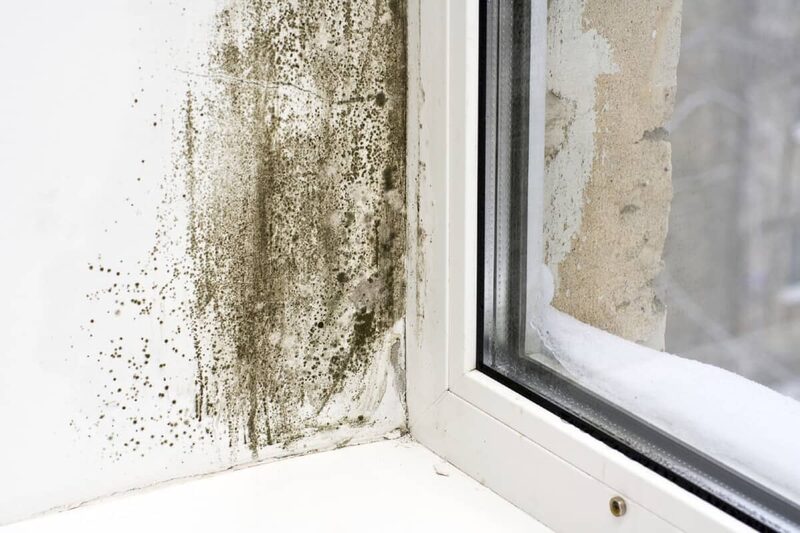
The health evidence is the strongest part of a tenant's case, and it is worth stating plainly when reporting the problem. Damp homes are linked to a 30 to 50% increase in respiratory problems1. The mould and damp that accompany fuel poverty are associated with respiratory issues, skin irritation and poor mental health2. These are population-level findings, not a diagnosis of any individual household, but they explain why a housing officer, a council environmental health team or a landlord's complaints process treats damp as urgent rather than cosmetic.
The causes matter because they determine who fixes what. Condensation damp is listed as arising from not having proper ventilation, such as a basement room or a room where the windows do not open; from not having good enough extraction fans in kitchens and bathrooms; from broken heating systems such as a boiler not working properly; from not having insulation on external walls or ceilings; and from no suitable way to dry clothes3. Only some of those are within a tenant's control. Ventilation habits and drying arrangements are; a failed extractor fan, a broken boiler and missing wall insulation are not.
Attitudes research adds a second signal. Preventing damp and mould appeared as particularly important for certain segments of the British population, linked with renter housing situations and reliance on landlords9. In other words, the households least able to fix the building fabric themselves are the ones most concerned about it. That is the structural point behind the health figures: damp in a rented home is often a symptom of a building the occupant cannot alter.
Your landlord's duty: the home must be fit for habitation
If you are renting your home, it has to be fit for habitation and it is your landlord's responsibility to ensure this6. That is the principle that sits behind everything else on this page. In Northern Ireland, the fitness standard is set out in official guidance: if a privately rented house fails in one or more of the criteria, it does not meet the fitness standard and is not suitable for people to live in5. Equivalent standards apply in England, Scotland and Wales, and the wording differs between them.
What the duty covers depends on the type of damp and the tenure. For penetrating damp, the landlord is in many cases responsible, because a term implied into the tenancy agreement says the landlord must keep in repair the exterior and structure of the home as well as installations like basins, sinks, baths, toilets and their pipework3. For condensation damp, the position is more nuanced. If you rent from the council or a housing association, the landlord is responsible for the damp if it means the home is not safe to live in, or if it is an ongoing serious problem affecting physical or mental health3. If you rent privately, the landlord might be responsible if the damp means the home is not safe to live in, for example if it has made you or your family ill3.
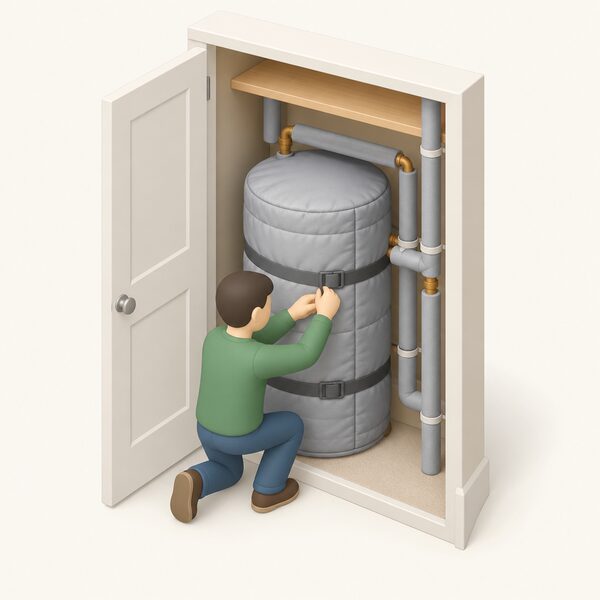
Landlords also carry specific insulation and draught duties. In a property rented to tenants, the landlord should make sure roof spaces are insulated; replace draughty, ill fitting windows and doors; draught proof external doors and windows, but not in rooms containing an open-flue gas appliance; insulate exposed water pipes; and fit the hot water tank with a good quality insulation jacket5. In England, private rented landlords must make sure plumbing and heating work properly10.
"If you rent privately, your landlord might be responsible for the damp if it means your home isn't safe for you to live in"
What to do first: report it, document it, ask for the Gas Safety Record
The order of steps matters, because a landlord's repair obligation generally begins when they know about the problem. Your landlord is usually only responsible for repairing the problem when they become aware of it, so report it straight away3. Put the report in writing, describe the rooms affected, the duration and any health effects in the household, and keep a copy.
Alongside the damp report, ask for the gas paperwork. Tenants should ensure their landlord provides a current Gas Safety Record11, and asking for a copy of the annual gas safety record is the standard request12. In rented accommodation the landlord is responsible for servicing boilers and appliances annually and must provide an up-to-date gas safety record, which is a legal requirement4. If you rent your home and need a safety check on all gas appliances and flues by a Gas Safe registered engineer, the arrangement runs through the landlord13. Where a record is missing, a tenant can report it to the Health and Safety Executive using form LGSR114.
If the damp continues after the landlord has been told, the escalation route is the council. If you think your rented home does not meet the fitness standard, tell the council's Environmental Health office5. Environmental health officers can inspect and, where the home fails, require the landlord to act. Social tenants have the additional route of the landlord's formal complaints process and the Housing Ombudsman.
- Report the damp to the landlord in writing and keep a dated copy.
- Ask for the current Gas Safety Record and the annual service record.
- Photograph the damp, note the rooms and dates, and record any health effects.
- If nothing changes, contact the council's Environmental Health office.
- For social tenants, use the landlord's complaints process and the Ombudsman.

Heating and moisture: small steps that do not push bills up
Some of the moisture in a rented home comes from how it is used, and those are the changes a tenant can make without waiting for the landlord. Portable gas or paraffin heaters put a lot of moisture into the air, as does drying wet clothes on radiators without opening a window, and using a tumble dryer with no outside vent unless it is a self-condensing type3. Removing those sources reduces the water vapour the building has to cope with.
Temperature is the other lever. Condensation-prevention guidance is to try to keep the home heated to at least 15°C, particularly during colder months7. That is a floor, not a target, and it is the point at which the guidance says condensation risk is managed. For tenants, there are likely to be some limitations on what changes can be made to the home, but there are lots of ways to save energy, reduce bills and stay warm15. Practical steps include talking to the landlord about grants or efficiency upgrades, and using simple measures such as draught-proofing or a portable dehumidifier16.
A dehumidifier draws moisture out of the air and can be particularly useful if you often dry clothes inside the house17. It treats the symptom, not a failed extractor fan or uninsulated wall, and it adds to electricity use. Where damp and condensation persist after these steps, the guidance is to contact the landlord18.
Grants and upgrades: what you can ask your landlord for
Landlord funding exists, and tenants can raise it, but the application sits with the landlord. The Warm Homes: Local Grant will fully fund upgrades for one property per landlord, and landlords can apply for multiple eligible homes but get full funding for only one, paying half of the upgrade costs for any eligible homes upgraded after the first8. Landlords must obtain tenants' permission to carry out the work, and the property must have an EPC rating of D or below21. Upgrades are free for eligible residents, though landlords must contribute towards costs22, and tenants should not pay for upgrade costs20. Rent should not be increased as a result of upgrades funded by government through the scheme23.
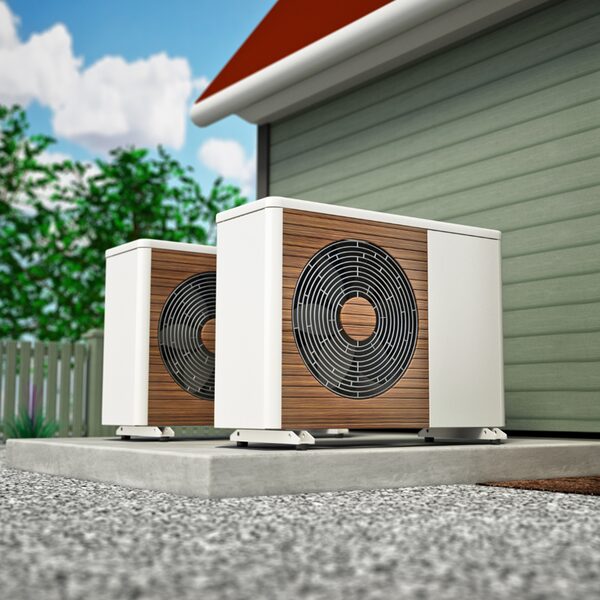
Beyond insulation and heating, other measures may be recommended, including energy-efficient lighting, underfloor insulation, high-temperature heat pumps, solar thermal, or direct electric heaters22. In Scotland, the Private Rented Sector Landlord Loan route for heat pump replacement requires a letter from an installer detailing why a replacement is the most suitable option for the home, including the existing system's faults24.
For a household where someone is unwell, the Priority Services Register is worth asking about directly. Residents with a disability, a health condition, pensioners, and households with a child under 5 or a pregnant person can get help through it25. It is free, it sits with the energy supplier, and it does not depend on the landlord's consent.
| Route | Who applies | Key condition |
|---|---|---|
| Warm Homes: Local Grant | Landlord | Full funding for one property; half the cost for further properties8 |
| Warm Homes: Local Grant | Landlord | Tenant permission required; EPC D or below21 |
| Private Rented Sector Landlord Loan (Scotland) | Landlord | Installer letter explaining why replacement is most suitable24 |
| Priority Services Register | Tenant or household | Disability, health condition, pensioner, child under 5 or pregnancy25 |
Awaab's Law and the Renters' Rights Act: what changes for tenants
The legal framework is moving, and the direction is toward faster action on hazardous damp. Awaab's Law introduces new requirements that compel social landlords to investigate and fix dangerous damp and mould within set time periods26. Its effect is already visible in how tenants challenge landlords: Awaab's Law has helped effectively challenge social landlords27. Government plans to extend Awaab's Law to the private rented sector through the Renters' Rights Bill, with implementation expected later in 202626.
The Renters' Rights Bill carries a wider set of obligations for English landlords, including an end to Section 21 evictions, registration with a Private Rented Sector Database, a Decent Home Standard, a timeframe on urgent repairs to hazardous homes, and measures bolstering tenants' rights against discrimination and unfair practices28. The Renters' Rights Bill and changes to EPC and MEES regulations will change the status quo on regulatory incentives for heat pump uptake in the private rented sector29.
For a household dealing with damp now, the practical reading is this: the direction of travel strengthens the tenant's position, but the timescales and the extension to private renting are still in progress. The routes that work today remain the written report to the landlord, the Gas Safety Record request, and the council's Environmental Health office where the home fails the fitness standard.
Where the household's independence ends
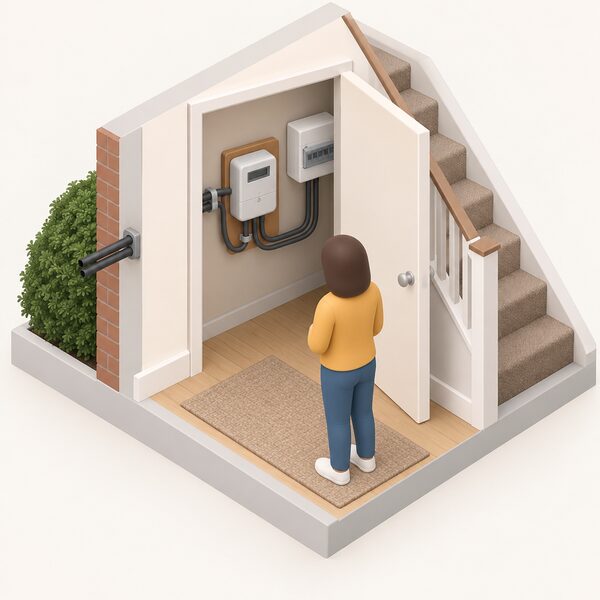
A tenant's energy independence is limited by design. The building fabric, the heating system and often the meter belong to someone else. Where the tenant pays the bills, they can choose to switch supplier or tariff at any time30. Where the building sits on a landlord's business contract, residents may not have the right to choose their own energy supplier or switch suppliers themselves31. Smart meters follow the same split: private renters can choose a smart meter if the energy bills are in their name or they prepay for energy, after checking the tenancy agreement and letting the landlord know32, but where the landlord pays the bills directly to the supplier, it is their decision33. Prepayment meters can be changed to credit meters once any debt on the account is settled, at the supplier's discretion34.
What a household can control is the evidence trail, the moisture sources inside the home, the indoor temperature floor, and the escalation routes. That is a real form of leverage even where the building itself is not the tenant's to change.
Sources34 cited
- Warm Homes, Healthy Futures, National Energy Action, 2026
- What is fuel poverty, Cadent Foundation, 2026
- Repairs: damp, Citizens Advice, 2026
- Gas safety and carbon monoxide, nidirect, 2025
- Checking your home is fit to live in, nidirect, 2026
- Draught-proofing, Which?, 2026
- Make your home warmer, Home Energy Scotland, 2026
- Warm Homes: Local Grant policy guidance, Department for Energy Security and Net Zero, 2026
- How the British population views heat pumps, Nesta, 2026
- Make sure your home is energy efficient, Citizens Advice, 2026
- Know your rights and responsibilities in rented properties, HHIC, 2025
- Carbon monoxide, SGN, 2026
- Trace and Repair, Cadent Gas, 2026
- Gas safety FAQs, Health and Safety Executive, 2026
- Reduce my bills, Home Energy Scotland, 2026
- Your home retrofit guide, Low Carbon Hub, 2025
- How to stop condensation, Which?, 2026
- Dealing with condensation and mould, National Energy Action, 2026
- Dealing with condensation and mould (Northern Ireland), National Energy Action, 2026
- Warmer Homes, Greater London Authority, 2026
- Warm Homes Local Grant scheme, Uswitch, 2026
- Warm Homes Local Grant 2025 to 2028, Birmingham City Council, 2026
- Warm Homes Local Grant, Surrey County Council, 2026
- Landlord loan, Home Energy Scotland, 2026
- Help with household costs, Isle of Anglesey County Council, 2026
- Government affairs October 2025 update, CIBSE, 2025
- Breaking the cycle: fuel poverty and ill health, Cadent Foundation, 2026
- Decarbonisation: landlords' rights and obligations, Nesta, 2025
- Conclusion and next steps, Nesta, 2025
- Switch your home energy supplier, Ofgem, 2026
- If you live on a home or business energy contract, Ofgem, 2026
- Smart meters, Energy Ombudsman, 2026
- What is a smart meter, Which?, 2026
- Energy tariffs explained, Uswitch, 2026
 Damp and Mould in Rented HomesDamp or mould in your rented home is your landlord's problem to fix.
 Energy in Social HousingWhat must your landlord do if your home is cold, damp or mouldy?
 Rented Homes and Landlord MetersWho is responsible for the energy in your rented home?
 UK Private Rented SectorHow many homes in the UK are rented privately, and how do they compare with homes people own or rent from a council or housing association?
 Gas Safety in the HomeYour landlord has to arrange a yearly gas safety check by a Gas Safe registered engineer and give you the record if you rent.
 Renting and Home EnergyThe position of a tenant in a privately rented home: which measures need no permission, which are fixtures the landlord controls, and what the law says about heating, insulation, certificates and bills across the four UK nations.