
In this answer
Short answer
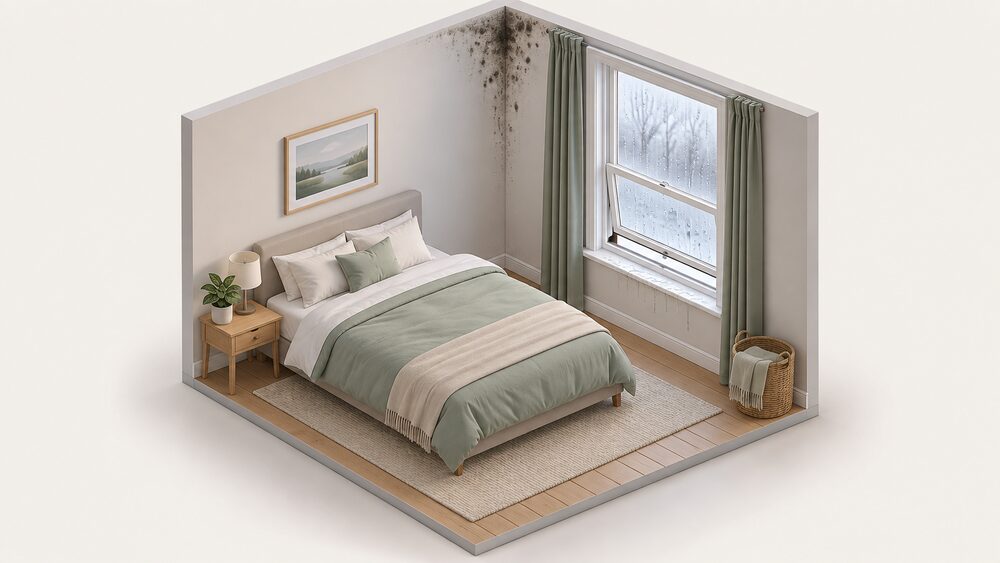
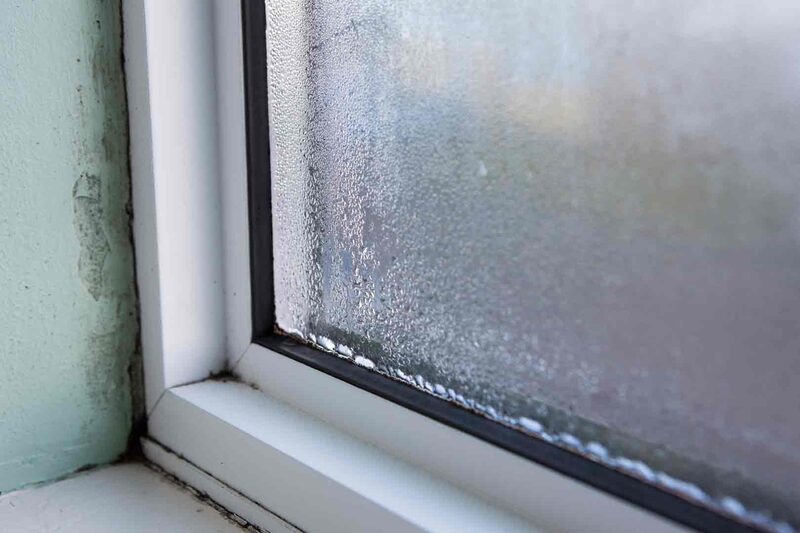
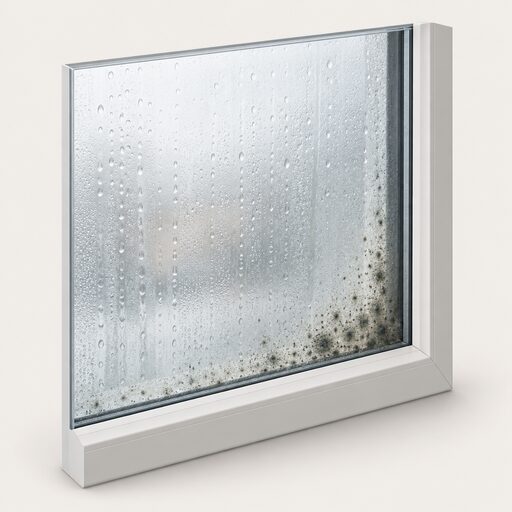
Condensation is the most common cause of damp and mould in UK homes, and it is the cause a renter is most likely to be dealing with1. It happens when warm, moist air hits a cold surface such as a window or an outside wall and condenses, running down the surface as water droplets2. The majority of mould growth in homes is caused by condensation1.
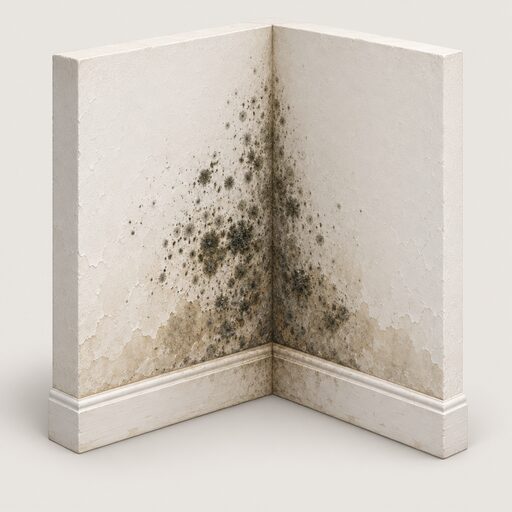
That single mechanism explains most of what a tenant sees: streaming bedroom windows, black spotting in the corners of a cold external wall, a musty smell in a bathroom with no working fan. It also explains why the problem is so often a rented one. Renters living in homes with an EPC D to G are 73% more likely to experience damp than those in EPC A to C homes3. Damp homes are linked to a 30 to 50% increase in respiratory problems4.
The practical consequence is that condensation damp is usually a ventilation, heating and insulation problem rather than a structural one, and the split between what a tenant can change and what only a landlord can change is where most disputes begin.
Condensation damp: the most common cause of damp and mould
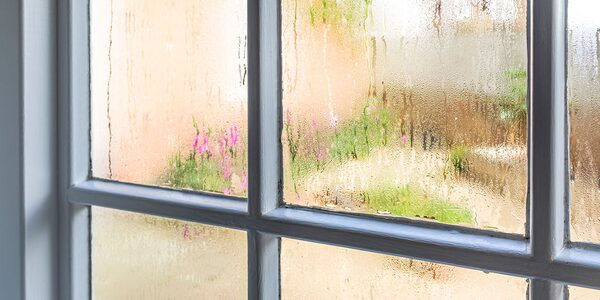
Condensation is the most common cause of damp, and the majority of mould growth in homes is caused by it1. The mechanism is simple and worth stating precisely, because it determines what will and will not fix the problem. Warm, moist air holds water vapour. When that air meets a surface cold enough to drop below its dew point, the vapour condenses out as liquid water on the surface2.
Moisture in the air is increased by cooking, bathing and showering, and even by respiration7. Bedroom windows are particularly susceptible, since moisture from breath and body heat can accumulate in the room overnight7. Using less hot water produces less steam, which could reduce condensation and dampness8. Research on hot water system design found that moisture generation is principally due to the heating of water, both in the domestic hot water system and in appliances such as dishwashers9.
The health consequences are not trivial. The mould and damp that follow can lead to respiratory issues, skin irritation and poor mental health10. That is why the distinction between condensation and the other two damp types matters: it decides whether the remedy is behavioural and mechanical, or a building repair.
"Condensation, This is the most common cause of damp and mould and is caused by moisture inside your home"
Telling condensation apart from rising and penetrating damp
The three damp types have different signatures, and a tenant can usually narrow it down before contacting anyone.
| Damp type | What it is | Where it shows | Who usually repairs it |
|---|---|---|---|
| Condensation | Warm, moist air hitting a cold surface and condensing2 | Windows, cold external walls, corners, bedrooms and bathrooms7 | Often shared: ventilation and heating behaviour, plus landlord repairs to heating or ventilation11 |
| Rising damp | Moisture travelling up from the ground through masonry to about one metre11 | Lower walls, more common in older properties11 | In many cases the landlord, under an implied term to keep the structure in repair11 |
| Penetrating damp | Water entering the fabric from outside to inside, for example a leaking downpipe11 | Roof, walls, around windows and doors11 | In many cases the landlord, under the implied repairing term11 |
Rising damp is most commonly caused by a defective damp-proof course1. Penetrating damp has a list of typical causes: a leaking roof, cracked wall, leaking guttering or external pipes, leaking drainage pipe, or rotten windows or doors11. Properties with an exposed south-west facing wall are most at risk from penetrating damp because of the prevailing wind12.
If the damp is on an upper floor, on a cold external wall, worse in winter and worse after showers or drying laundry indoors, condensation is the likely explanation. If it is at the base of a ground-floor wall and the plaster is crumbling, rising damp is the candidate. If it appears after heavy rain and tracks from a roof or window, penetrating damp is the candidate.
What causes it: ventilation, extraction and heating
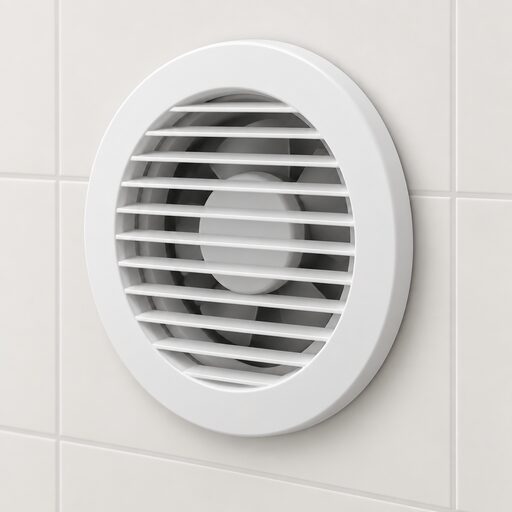
The causes of condensation damp group into five: not having proper ventilation, not having good enough extraction fans in kitchens and bathrooms, broken heating systems such as a boiler not working properly, not having insulation on external walls or ceilings, and no suitable way to dry clothes11.
Ventilation is the root of it. Condensation primarily stems from ventilation issues, with insufficient air circulation the root cause and controlled ventilation the most effective remedy13. That is why a sealed, draught-proofed home with no background ventilation can be damper than a leaky one, and why the answer is controlled air movement rather than simply blocking every gap.
Heating matters because a cold surface is what triggers condensation. A heating system that is not working properly is listed among the causes11, and an unbalanced heating system, where some radiators never get hot, is a bigger issue that needs a plumber or heating engineer14. Insulation matters because it keeps surfaces warmer: without insulation on external walls or ceilings, those surfaces stay cold and collect water11.
Drying clothes indoors with no suitable method is the fifth cause11. It is also one of the largest single moisture sources a household controls.
Why rented homes are prone to it

Three things converge in the rented sector. The first is stock quality. Renters living in homes with an EPC D to G are 73% more likely to experience damp and 89% more likely to experience excessive cold than those in EPC A to C homes, according to a consultation response on draft Scottish private rented sector regulations3. Older, less insulated homes have colder surfaces, and colder surfaces condense more.
The second is the split between the person who lives with the problem and the person who owns the building. Preventing damp and mould appeared as particularly important for renter segments in research on how the British population views heat pumps, linked with renter housing situations and reliance on landlords17. A tenant can open a window; a tenant cannot install a mechanical ventilation system or insulate a wall.
The third is that remedial work depends on the landlord acting. Independent guidance is direct: if you live in a rented property and you have tried the standard steps but the damp and condensation is not going away, contact your landlord2.
The dependence that remains is structural. A renter's energy independence is limited by the building they do not own: the heating system, the insulation, the ventilation and the glazing are all the landlord's property decisions. What a tenant controls is moisture generation, air movement and reporting. That is the honest limit, and it is why the damp and mould in rented homes duties matter more than any appliance a tenant can buy.
What you can do yourself: ventilation, extraction and a dehumidifier
There are five things that help prevent condensation in a home: clear existing condensation, limit the moisture produced, improve ventilation, upgrade insulation, and make sure heating is set up sufficiently7. Of those five, a tenant can act directly on three.
Limiting moisture is the first. Using less hot water produces less steam, which could reduce condensation and dampness8. Lids on pans, shorter showers and drying clothes outdoors or in a ventilated space all reduce the load.
Improving ventilation is the second. Controlled ventilation is the most effective remedy for the ventilation problem that sits at the root of condensation13. Where windows have condensation inside the cavity, the remedy is to ensure the seals are as airtight as possible and drill breather holes through the primary frame to connect the cavity air to the drier exterior air13. That is work on the window itself, so it is a landlord conversation rather than a tenant task.
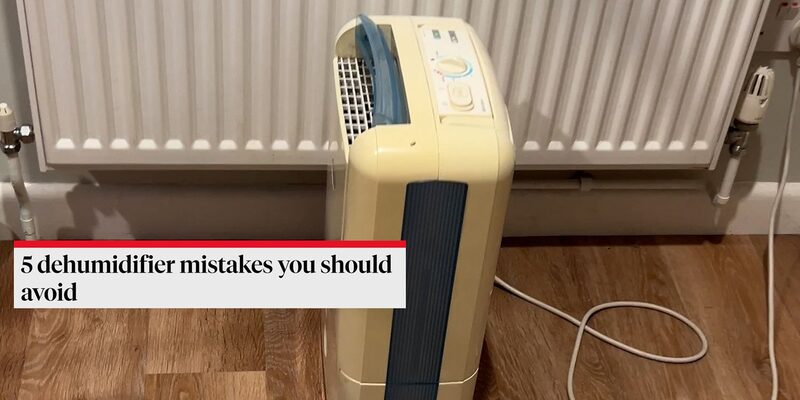
A dehumidifier is the third, with a clear limit. It does not fix the underlying causes of damp, such as condensation, rising damp, or structural leaks18. It removes water from the air in a room; it does not warm a cold wall, extract steam at source or repair a leaking gutter.
When it's your landlord's responsibility
The landlord will probably be responsible for dealing with condensation damp if the tenancy agreement says so or says they will keep the home fit to live in, if the damp was caused by the landlord not making certain repairs such as heating or ventilation, or if the damp has caused damage the landlord has to repair, such as rotting window frames or damaged plasterwork11.
For rising damp, the landlord is in many cases responsible, because a term implied into the tenancy agreement says it is their responsibility to keep the exterior and structure of the home in repair11. The same implied term covers penetrating damp, and extends to installations like basins, sinks, baths, toilets and their pipework11. If there is a problem with an existing damp-proof course causing the damp, the landlord is likely to be responsible for repairing it11.
There is a limit worth knowing. If a design problem does not affect the structure or exterior of the home or cause damage to the building, the landlord may not have a responsibility under the tenancy agreement to prevent the damp; but the landlord is responsible for repairs if a design problem causes damage to the building, for example to wall or ceiling plaster11.
For council and housing association tenants the position is different again: the landlord is responsible for the damp if it means the home is not safe to live in, or if it is an ongoing serious problem affecting physical or mental health11. Awaab's Law has introduced requirements compelling social landlords to investigate and fix dangerous damp and mould within set time periods19. The social housing energy rules and the landlord duties on energy, heating and home safety set out the wider framework.
Asking your landlord for repairs, servicing and upgrades

Official guidance lists keeping the supply of water, gas, electricity and heating in good repair and proper working order among landlord responsibilities20. Tenants are not responsible for repairs to the central heating system; this is one of the landlord's obligations6. If building works are taking place and there are questions about gas pipes or the meter, the guidance is to speak to the landlord or building owner21.
On servicing, the position is clear. In rented accommodation the landlord is responsible for servicing boilers and appliances annually and must provide an up-to-date gas safety record, which is a legal requirement5. Independent guidance states that a landlord is legally required to service a boiler on an annual basis in all of their properties22. Gas Safe registered businesses must keep records of all gas work23. A tenant can ask for the current record; the free annual gas safety check page covers what that check involves.
Where a boiler has stopped because a condensate pipe has frozen, the remedy is to thaw the pipe safely, and if the boiler still does not fire up, to contact the gas supplier where there is home or boiler care cover, or a Gas Safe registered engineer24.
On upgrades, the limits are firmer. Research with landlords found they frequently expressed anxieties about potential disruption to their rental property during and after heat pump installation, and were concerned about tenants having poor experiences as a result of the technology25. There is no general duty on a private landlord to install a heat pump.
Where a landlord does carry out efficiency work, scheme rules can require a contribution. One scheme requires a private landlord to pay 50% of the total cost of the energy efficiency measures26. Under the domestic private rented property minimum standard, a recommended measure only counts as a relevant energy efficiency improvement where third-party funding covers the full cost, or the cost is £3,500 or less inclusive of VAT, or a combination of landlord self-funding and third-party funding totals £3,500 or less inclusive of VAT27.
If the damp persists after the standard steps, the route is to contact the landlord2. The asking a landlord for energy improvements page covers how that request is framed, and energy independence when you rent or live in a flat sets out what a renter can realistically control.
Sources27 cited
- Retrofit guidance, Act on Energy, 2026
- Dealing with condensation and mould, National Energy Action, 2026
- Consultation on draft Energy Efficiency (Domestic Private Rented Property) (Scotland) Regulations, National Insulation Association, 2025
- Warm Homes, Healthy Futures, National Energy Action, 2026
- Gas safety and carbon monoxide, nidirect, 2025
- Tenants' guide to switching, Uswitch, 2026
- How to stop condensation, Which?, 2026
- Top tips to save energy and money in the bathroom, Energy Saving Trust, 2026
- The importance of hot water system design in the Passivhaus, AECB, 2009
- What is fuel poverty, Cadent Gas, 2026
- Repairs: damp, Citizens Advice, 2026
- Home energy efficiency, Centre for Sustainable Energy, 2025
- Condensation advice, FENSA, 2026
- How to bleed your radiators, Which?, 2025
- How to buy loft insulation, Which?, 2026
- Five areas to add insulation in your home, Energy Saving Trust, 2025
- How the British population views heat pumps, Nesta, 2026
- Dehumidifiers, Electrical Safety First, 2026
- Government affairs October 2025 update, CIBSE, 2026
- Landlord and tenant rights and responsibilities in the private rented sector, GOV.UK, 2019
- Building regulations, Cadent Gas, 2026
- Boiler servicing, Confused.com, 2025
- Registration to carry out gas work, GOV.UK, 2026
- Be winter ready, SGN, 2026
- Landlords' perspectives on low-carbon heating systems, Nesta, 2025
- Affordable Warmth Scheme, Northern Ireland Housing Executive, 2026
- Trading standards guidance on consumer problems, Isle of Anglesey County Council, 2026
 Condensation, Damp and MouldWhy does mould appear after insulation or new windows go in?
 Damp and Mould in Rented HomesDamp or mould in your rented home is your landlord's problem to fix.
 Ventilation in FlatsGetting enough fresh air into a flat is harder than a house, because you often have only one outside wall and neighbours on every other side.
 Energy in Social HousingWhat must your landlord do if your home is cold, damp or mouldy?
 Rented Homes and Landlord MetersWho is responsible for the energy in your rented home?
 Renting and Home EnergyThe position of a tenant in a privately rented home: which measures need no permission, which are fixtures the landlord controls, and what the law says about heating, insulation, certificates and bills across the four UK nations.