
In this answer
Short answer
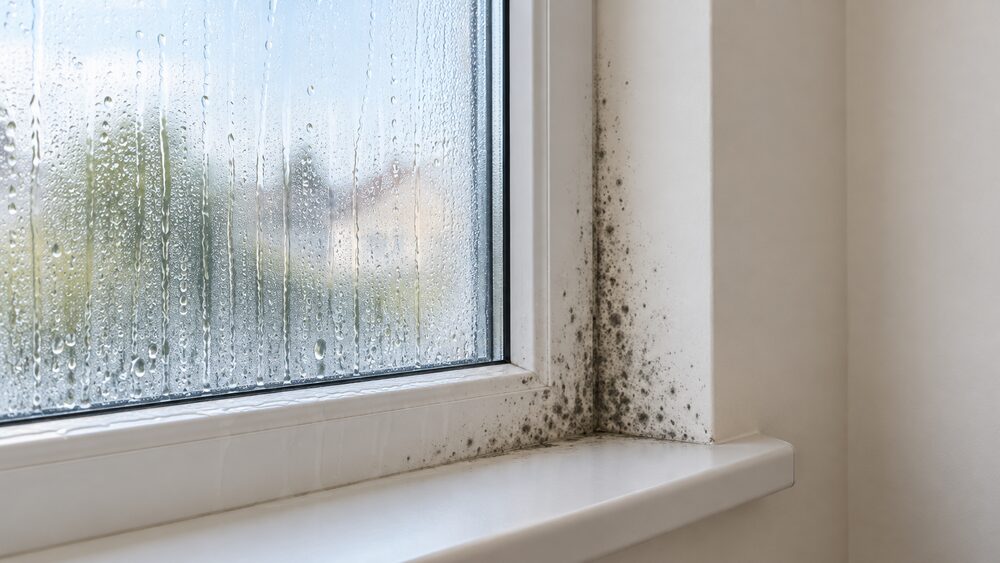
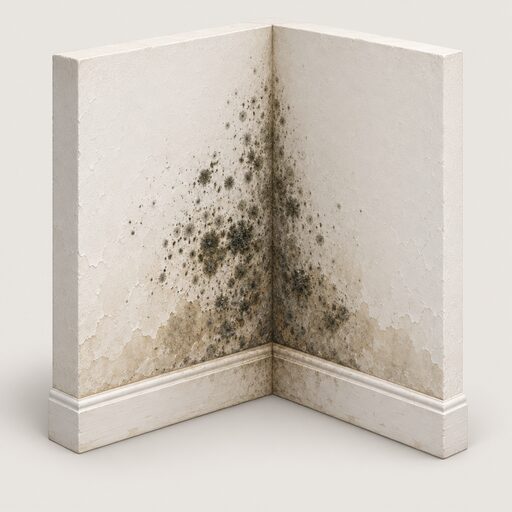
Damp in a UK home almost always starts as condensation. Condensation is the most common cause of damp and mould, and it is caused by moisture inside the home rather than water arriving from outside1. It is easily recognised by the black mould it causes, small black dots that appear near cold surfaces like window frames2. The other two causes are penetrating damp, the second most likely, and rising damp, whose most common cause is a defective damp-proof course2.
The health case for reading the signs early is well documented. Damp and mould are associated with a 30 to 50 per cent increase in respiratory problems3. People with damp and mould in their homes are more likely to have respiratory problems, respiratory infections, allergies or asthma4. Official guidance for landlords in Wales treats increased humidity, especially beyond 70 per cent, as the condition under which damp and mould growth takes hold5.
Some signs are not about damp at all. Yellow or brown staining, soot and heavy condensation around a gas appliance are recognised indicators of incomplete combustion and carbon monoxide, and they need a different response from a mould wash6. This page sets out what each sign usually means, how to inspect a home yourself, and when the matter passes to a landlord or a professional.
The common indicators of damp and condensation
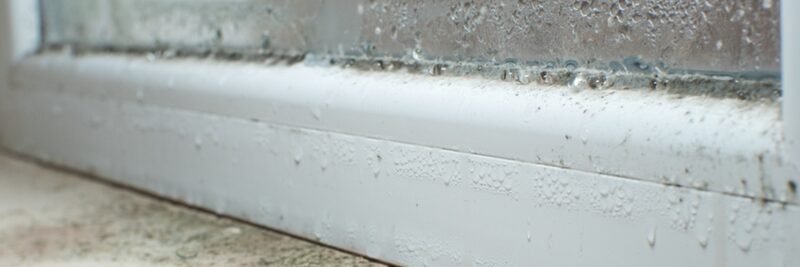
Condensation in a household setting is when airborne water vapour condenses into a liquid and is deposited on interior or exterior surfaces, occurring when a surface falls below the dew point temperature for the surrounding air's relative humidity8. In plain terms, warm moist air meets a cold surface such as a window or outside wall and condenses, running down the surface as water droplets9. That is why the first signs cluster on the coldest surfaces in the coldest rooms: glass, external wall corners, ceiling junctions and the backs of fitted furniture.
Condensation damp generally happens when a property cannot deal with normal levels of water vapour because of a lack of insulation, ventilation or heating, or a combination of all of these things10. The causes listed by Citizens Advice include not having proper ventilation, for example in a basement room or a room where the windows do not open, not having good enough extraction fans in kitchens and bathrooms, broken heating systems such as a boiler not working properly, not having insulation on external walls or ceilings, and no suitable way to dry clothes10. Each of those is a household-level condition, which is why the signs tend to appear in the same homes winter after winter.
The distinction that matters for energy independence is that condensation is a symptom of how a home is run and how well its fabric performs, not of a supplier or a tariff. A household that reduces the moisture it produces and moves air through the building is addressing the cause. Using less hot water produces less steam, which could reduce condensation and dampness11. Insulation and ventilation work together: sealing a home without providing air movement concentrates the same water vapour on fewer, colder surfaces.
Discolouration and staining on walls and ceilings
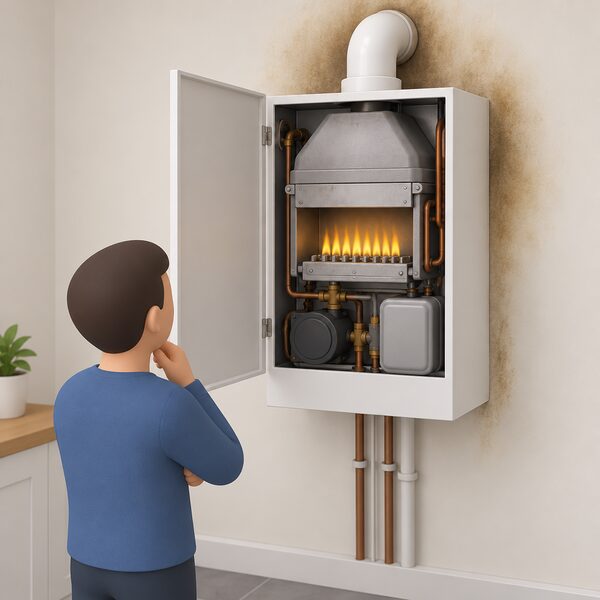
Staining is the sign most often misread, because water is not the only thing that leaves a mark. Yellow or brown staining around an appliance, soot deposits, a lazy yellow or orange flame and a pilot light that frequently blows out are all listed by the Health and Safety Executive among the signs of incomplete combustion6. Cadent repeats the same set: flames that look lazy and are yellow or orange rather than blue, soot or yellow-brown staining around an appliance, increased condensation on windows, and a pilot light that frequently blows out12. A boiler burning a yellow flame instead of a crisp blue flame is on the same list13.
Where a gas fire is involved, excessive condensation on the windows of the room when the fire is on may indicate a fault with the fireplace, and soot or yellow-brown stains on the back of the fireplace could be a sign the fireplace is not working properly14. A first-hand account of carbon monoxide poisoning describes the same cluster: a lazy yellow or orange flame where it should be crisp and blue, soot or dark staining, pilot lights frequently blowing out, and increased condensation inside windows15.
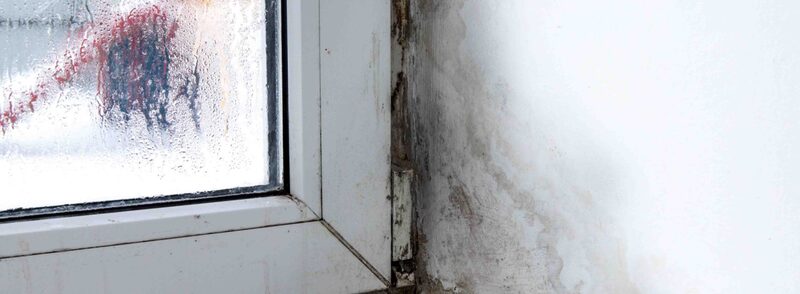
Water staining behaves differently. It usually leaves a tide mark at its outer edge and is accompanied by a musty smell and lifting finishes. On a ceiling, a brown ring that grows after rain points to the roof or a gutter; a patch that appears after a bath points to the room above. Penetrating damp arrives through a leaking roof, cracked wall, leaking guttering or external pipes, leaking drainage pipe, or rotten windows or doors10.
A musty odour: what it suggests and where to check
A musty smell is the sign that most often sends householders looking, and it is not always damp in the building fabric. A stale or damp odour from a wood burning stove often occurs due to a build-up of moisture in the chimney, most commonly from burning wet wood17. A bad smell when no fire is lit is one of the recognised signs that a chimney needs sweeping, alongside smoke coming back into the room, signs of tar around the damper or flue entrance, soot falling back into the stove, a fire not burning as well as usual, and birds around the top of the chimney or scratching sounds suggesting a nest18.
In the room itself, a persistent musty odour usually travels with mould, and the health evidence behind that smell is the strongest reason to act on it. Damp and mould are associated with a 30 to 50 per cent increase in respiratory problems3, and the same figure is cited in fuel poverty guidance19. People with damp and mould in their homes are more likely to have respiratory problems, respiratory infections, allergies or asthma4.
Where to check depends on where the smell is strongest. A musty smell in a bedroom usually points to the external wall, the window reveal or the floor junction. A smell in a hallway or under stairs points to a cold bridge or a cupboard against an external wall. A smell in a loft points to roof ventilation or a leak, and damp issues in a loft should be sorted by a professional before any insulation is added20. A smell near a boiler, fire or cooker should be treated as a combustion question first, not a damp one.
Black or grey mould: where it appears and what it means
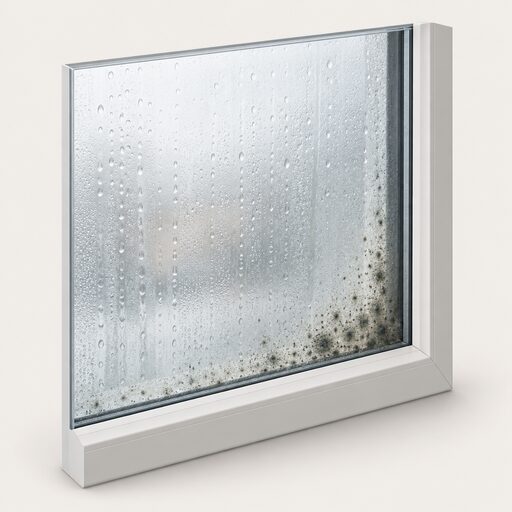
Black or grey mould is the clearest visual confirmation of condensation. It is easily recognised by the black mould it causes, small black dots that appear near cold surfaces like window frames2. It spreads outward from the coldest point: window reveals, external wall corners, the junction of wall and ceiling, behind wardrobes and beds pushed against external walls, and in bathrooms and kitchens where moisture is generated fastest.
Official guidance for landlords in Wales ties mould growth to increased humidity, especially beyond 70 per cent5. That threshold explains why mould appears in some homes and not others at the same temperature: it is the moisture load in the air, not the weather alone, that decides whether the surface stays wet long enough for growth.
Mould on an external wall can also follow insulation work. If solid wall insulation is faulty, problems like damp or mould can appear21. The scale of that risk is documented: the National Audit Office claims that 98 per cent of homes that had external wall insulation installed under the ECO4 and Great British Insulation schemes have problems22. Where mould appears on a wall that has been insulated, the insulation itself is part of the diagnosis.
Left alone, condensation has a longer-term cost. If condensation is allowed to sit on walls for long periods of time, it can penetrate the outer layers of walls, seep into furniture and cause mould to grow8. Condensation damp can occur anywhere on a wall, may form at the base of a wall or from top to bottom, and can result in mould growth, damage to furniture and belongings and in some cases mite infestation10.
Peeling or bubbling paint and damaged finishes
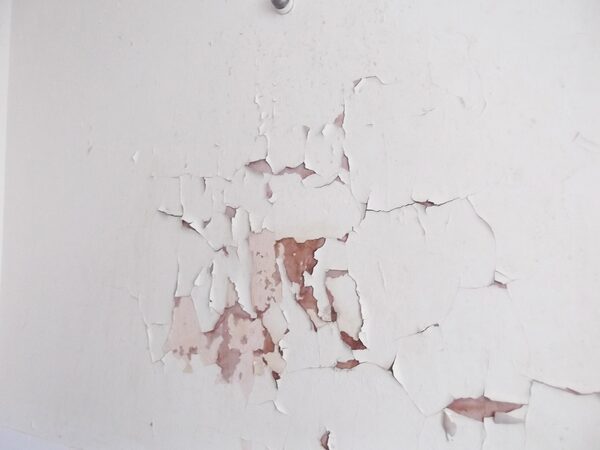
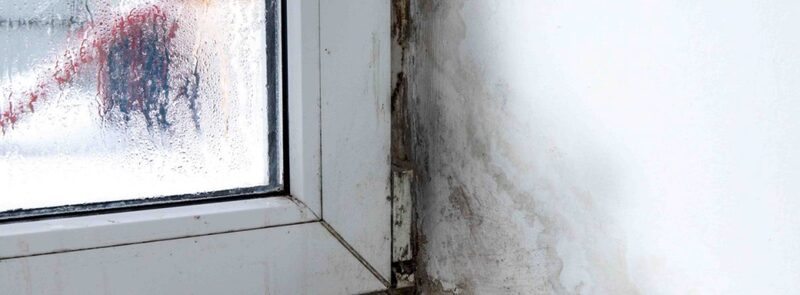
Peeling, bubbling and blistering finishes are the signs that a household notices last and understands least, because the paint is the victim rather than the cause. Moisture trapped behind a coating pushes it away from the substrate, and the same appearance can follow a burst pipe, a slow leak, a cold bridge or a failed seal. Window seals are worth checking, as if these are old or damaged, moisture can get in and create condensation between the glass panes8. That is a glazing fault rather than a damp one, and it shows as misting inside the unit rather than on it.
Penetrating damp, the second most likely cause of damp, arrives through the building envelope and damages finishes from behind2. Its causes are a leaking roof, cracked wall, leaking guttering or external pipes, leaking drainage pipe, or rotten windows or doors10. Each of those produces localised staining and paint failure rather than the widespread cold-surface pattern of condensation.
Finishes on heating equipment fail differently and matter more. Warning signs of wear on a domestic oil tank include rust, corrosion or fading, splits or cracks, dents, gouges or scrapes, bulging, subsidence on the base, gauges not working, an unusual oil smell, and signs of leaking or oil stains23. A second list gives rust, splits or cracks, bulging, subsidence on the base, gauges not working and an unusual oil smell24. In Northern Ireland, tanks, pipes and other equipment should be inspected for leaks, damage and interference once a month, and any problems should be fixed25.
How to carry out a simple damp inspection yourself
A systematic walk-through takes under an hour and separates the three causes. Start with the coldest surfaces and work outward, then check the wet rooms and the pipework.
- Check window frames, reveals and external wall corners for black spotting, water droplets and misting inside the glass.
- Check ceilings under roofs and bathrooms for tide marks, and note whether a patch grows after rain or after a bath.
- Check all visible pipes, taps, hoses and under-sink areas for signs of leaks or corrosion after cold weather, as pipes can contract and crack26.
- Check the loft for damp before adding insulation, and have any damp issue sorted by a professional first20.
- Check any fuel-burning appliance for damage, poor maintenance, black marks, staining, unusual smells or condensation, and watch for lazy yellow or orange flames where a blue flame is expected27.
- Check the oil tank monthly if the home uses one25.
Ventilation and drying habits are part of the inspection, because they set the moisture load. Opening windows for at least 10 minutes every day is the baseline7, and drying clothes indoors can add up to 10 to 15 litres of water into a home every week7. Clearing windows regularly with a towel, tissues, a squeegee or window vac removes the water before it reaches the wall8. A soapy solution applied to a suspected leak area, where small bubbles appear, is a simple way to confirm a gas leak rather than guess at one28.
Condensation or something else: telling the three apart
The three causes leave different fingerprints, and the difference decides who fixes them.
| Sign | Condensation | Penetrating damp | Rising damp |
|---|---|---|---|
| Where it appears | Cold surfaces: glass, external wall corners, ceiling junctions8 | Localised, often high or around openings10 | Base of walls, ground floor2 |
| Pattern over time | Worst in cold weather and after cooking, bathing or drying clothes10 | Grows after rain or in wet spells10 | Persistent, often with a tide mark |
| Mould | Black dots near cold surfaces2 | Localised | Localised |
| Usual cause | Lack of insulation, ventilation or heating, or all three10 | Leaking roof, cracked wall, guttering, external pipes, drainage, rotten windows or doors10 | A defective damp-proof course2 |
Condensation is the most common cause of damp and mould1, and it is the one a household can influence directly through ventilation, heating and drying habits. Penetrating damp is a repair question, and rising damp is a damp-proof course question. Where a home has been insulated and glazed and the damp has got worse rather than better, the fabric and the ventilation are interacting, and the sequence of works matters as much as the individual measures.
When the matter passes to a landlord or a professional
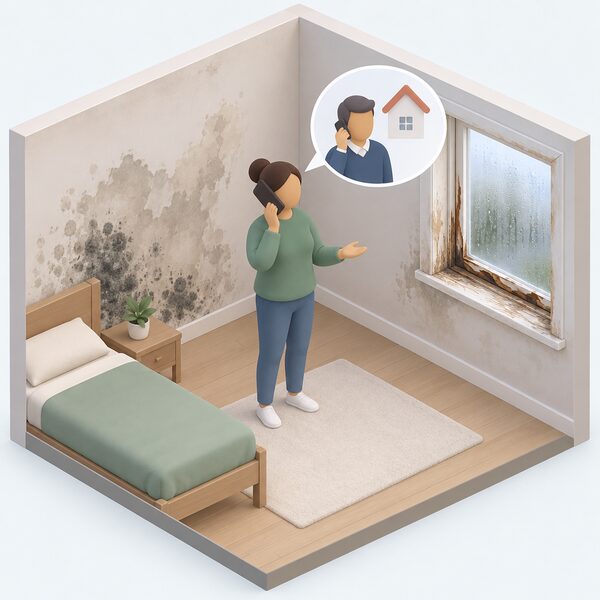
In a rented property, if the damp and condensation is not going away after ventilation, heating and drying changes, the next step is to contact the landlord7. The same advice applies in Northern Ireland9. A landlord will probably be responsible for dealing with condensation damp if the tenancy agreement says so or says they will keep the home fit to live in, if the damp was caused by the landlord not making certain repairs such as heating or ventilation, or if the damp has caused damage the landlord has to repair such as rotting window frames or damaged plasterwork10.
For owner-occupiers, the professional question is which trade the sign points to. A gas appliance showing a yellow flame, soot or heavy condensation needs a Gas Safe registered engineer, not a damp specialist. A roof or gutter leak needs a roofer. A wall that has been insulated and is now mouldy needs the insulation checked, and where solid wall insulation is faulty the symptoms are damp or mould21. A loft with damp needs the damp resolved before insulation is added20.
The energy independence point is straightforward. Condensation is driven by moisture produced inside the home and by how cold the surfaces are, so it responds to fabric and ventilation measures a household controls. Penetrating and rising damp are water entering the building, and they respond to repair and to a damp-proof course. Neither is solved by changing supplier or tariff, and neither is a reason to delay ventilation: a home that is sealed and unventilated concentrates the same water vapour on fewer cold surfaces, which is why damp and mould so often follow insulation and glazing work rather than preceding it.
Sources28 cited
- Retrofit advice, Act on Energy, 2026
- Condensation, damp and mould, Centre for Sustainable Energy, December 2025
- About fuel poverty, End Fuel Poverty Coalition, 20 April 2026
- Call for the abolition of the January price cap change, End Fuel Poverty Coalition, 17 September 2026
- Fitness for human habitation guidance for landlords, Welsh Government, 13 January 2022
- Carbon monoxide, Health and Safety Executive, 2026
- Dealing with condensation and mould, National Energy Action, 13 July 2026
- How to stop condensation, Which?, 26 May 2026
- Dealing with condensation and mould in Northern Ireland, National Energy Action, 7 September 2026
- Repairs: damp, Citizens Advice, 20 September 2026
- Top tips to save energy and money in the bathroom, Energy Saving Trust, 27 April 2026
- Carbon monoxide advice, Cadent Gas, 20 September 2026
- How to keep your boiler working in cold weather, Which?, 11 December 2025
- Winter fire safety, Cadent Gas, 20 September 2026
- I thought I had early dementia but for three years I was poisoned by carbon monoxide, CO-Gas Safety, 22 June 2015
- Power cuts, SGN, 2026
- Why does my wood burner smell?, HETAS, 2026
- How to sweep a chimney, HETAS, 2026
- Fuel poverty, CIPHE, 17 September 2026
- Insulation and energy saving: what is insulation, Smart Energy GB, 16 March 2026
- Get help with faulty solid wall insulation, Citizens Advice, 17 September 2026
- Solid wall insulation costs and savings, Which?, 5 May 2026
- Tank care and security, UKIFDA, 18 February 2026
- Oil tank care, UKIFDA, 23 February 2025
- Check your oil tank, nidirect, 17 September 2026
- Spring into home care, APHC, 7 May 2025
- Holiday carbon monoxide safety tips, Northern Gas Networks, 24 July 2026
- What to do if you smell gas, Confused.com, 8 September 2025
 Condensation, Damp and MouldWhy does mould appear after insulation or new windows go in?
 Damp and Mould in Rented HomesDamp or mould in your rented home is your landlord's problem to fix.
 Airtightness and Air LeakageDraughty rooms, cold spots and higher bills often come down to air leaking through gaps in the walls, floors and roof.
 Carbon Monoxide SafetyHow carbon monoxide arises from gas, oil, LPG and solid fuel appliances, where alarms must be sited and what the requirements are in each UK nation.
 Air Conditioning SafetyA safety guide to home cooling appliances: plug and circuit loading, flammable refrigerants in portable units, condensate and water damage, venting, window sealing and product recalls, with the markings to look for.
 Test Smoke and Heat AlarmsHow often alarms should be tested, what the different beeps mean and when a unit has reached the end of its life.