
In this answer
Short answer
Carbon monoxide poisoning is a pattern illness: no single symptom proves it, and no single symptom rules it out. The most common symptom of mild poisoning is a tension-type headache, and official guidance groups headaches, dizziness, breathlessness, nausea, collapse and loss of consciousness as the six main symptoms to watch for1. Early symptoms mimic food poisoning, viral infections, flu and simple tiredness, which is why exposure is so often attributed to something else2.
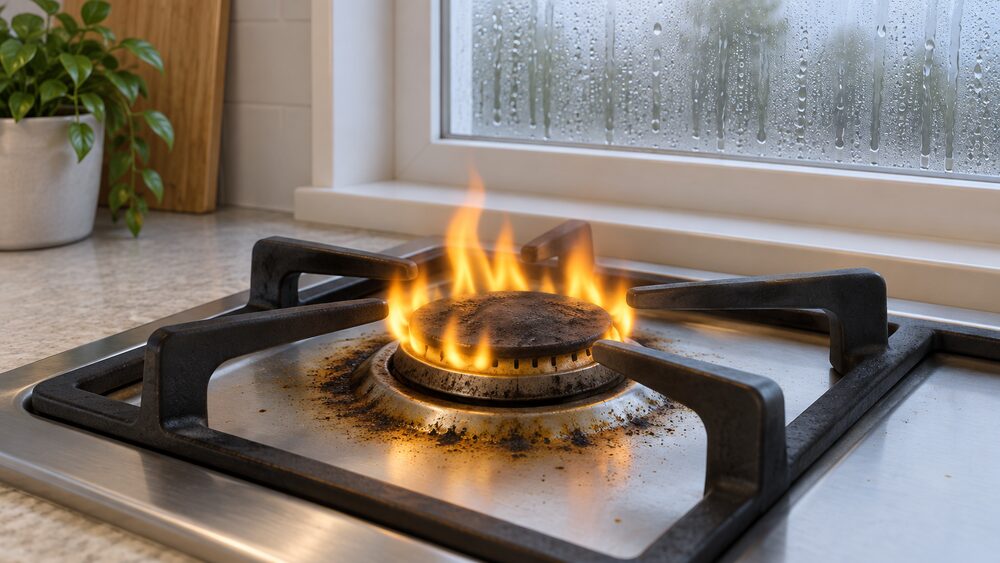
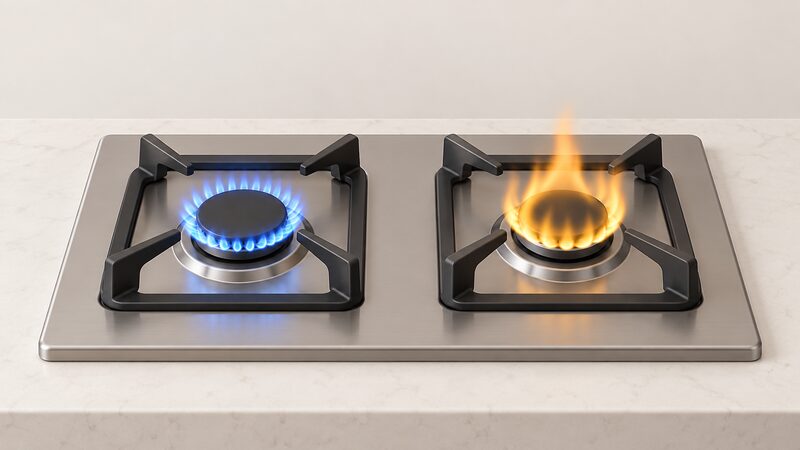
The appliance side gives a second set of clues. A healthy gas flame should be crisp and blue; a lazy, floppy yellow or orange flame points to incomplete combustion, as do soot or yellow-brown staining around the appliance, a pilot light that frequently blows out and increased condensation on windows2. The exception is fuel-effect fires and flueless appliances, which display that colour by design2.
Severity escalates with concentration and time. At 400 ppm, a healthy adult can expect headache worsening to severe headache, dizziness, nausea, fatigue and chest tightness after one to two hours. At 800 ppm, convulsions can occur within 45 minutes and unconsciousness within two hours. At 1600 ppm, death can occur within an hour after 20 minutes of exposure4.
Danger signs on the appliance itself
The appliance tells you what the symptoms cannot. A gas appliance burning a yellow flame instead of a crisp blue one, dark soot stains on and around the appliance, a pilot light that frequently blows out and increased condensation inside windows are the classic warning signs6. Utility guidance adds black marks and stains around the appliance and lazy orange or yellow flames to the same list7. Health and Safety Executive guidance frames it as incomplete combustion: yellow or orange rather than blue flames, soot or yellow-brown staining around or on appliances, pilot lights that frequently blow out, and increased condensation inside windows2.
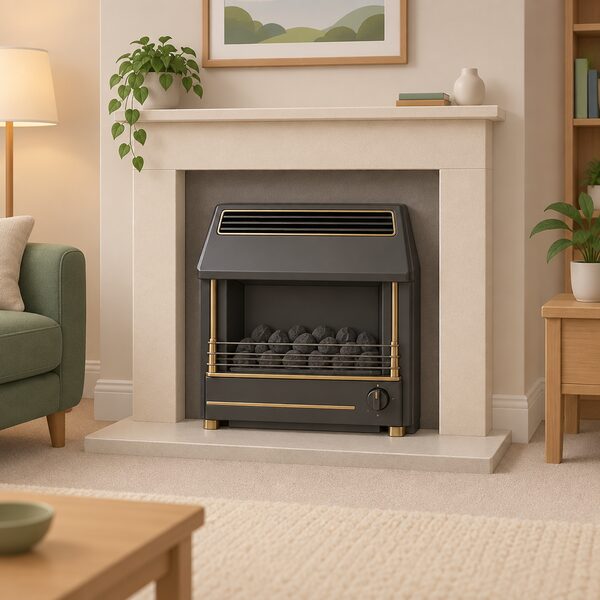
The colour rule has one exception worth knowing. Fuel-effect fires and flueless appliances display a yellow or orange flame by design, so the flame colour alone does not indicate a fault in those appliances2.
All fossil fuel burning appliances produce carbon monoxide, including gas and liquid fuel-fired boilers, open fires and wood burning stoves, and occupants are at risk if appliances are incorrectly installed or maintained8. Incorrectly installed, poorly maintained or poorly ventilated appliances such as cookers, heaters and central heating boilers are the most common causes of accidental exposure1. Poorly installed or badly maintained appliances put households at risk of carbon monoxide poisoning9, and faulty or badly serviced gas and other fossil fuel burning appliances and systems such as coal, oil or wood are the underlying cause10. Unregistered gas work carries risks of gas leaks, fire, explosions and carbon monoxide poisoning11.
For a household, this is the first layer of independence: the appliance is the source, and the signs are visible before any alarm sounds. What remains dependent is the inspection itself, which needs a competent technician rather than the occupant.
From mild headache to collapse: how severity escalates
Severity tracks concentration and exposure time, and the published figures give a rough timetable. At 400 ppm, a healthy adult can expect headache worsening to a severe headache with prolonged exposure, dizziness, nausea, fatigue, tightness across the chest, memory loss and lack of concentration after one to two hours4. At 800 ppm, headache, dizziness, nausea and convulsions can occur within 45 minutes, with unconsciousness within two hours and death possible within two to three hours4. At 1600 ppm, headache, dizziness, nausea, convulsions and unconsciousness can occur, with death possible within one hour after 20 minutes of exposure4.
Independent guidance sets out the same escalation in three bands. Mild covers slight headache, nausea, vomiting and fatigue. Medium covers severe headache, confusion or forgetfulness, and drowsiness. Extreme covers unconsciousness, convulsions, cardio respiratory failure and death3.
| Exposure level | Onset and effects in a healthy adult |
|---|---|
| 400 ppm | Headache worsening to severe, dizziness, nausea, fatigue, chest tightness, memory loss, poor concentration after 1 to 2 hours4 |
| 800 ppm | Headache, dizziness, nausea, convulsions within 45 minutes; unconscious within 2 hours; death possible within 2 to 3 hours4 |
| 1600 ppm | Headache, dizziness, nausea, convulsions, unconsciousness; death possible within 1 hour after 20 minutes4 |
Official guidance describes the severe end as impaired mental state and personality changes, vertigo, ataxia, breathlessness and tachycardia, chest pain, seizures and loss of consciousness1. Long-term exposure to low levels can lead to neurological symptoms, including difficulty thinking or concentrating, or frequent emotional changes12.
What carbon monoxide poisoning feels like
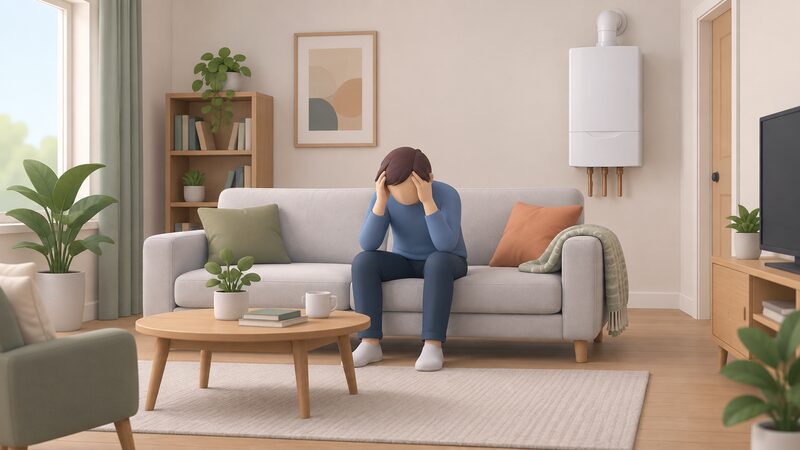
The symptom list is broad and deliberately overlaps with ordinary illness. Official guidance names headaches or dizziness, breathlessness, nausea, loss of consciousness, tiredness, pains in the chest or stomach, erratic behaviour and visual problems2. Other symptoms include dizziness, nausea and vomiting, tiredness and confusion, stomach pain, and shortness of breath and difficulty breathing1. Independent guidance lists headaches, dizziness, nausea, breathlessness, collapsing and losing consciousness as the most common13, and a utility lists headaches, dizziness, breathlessness, nausea, collapse and loss of consciousness as the six main symptoms5.
Maker guidance adds nausea and vomiting, tiredness and lethargy, dizziness and light-headedness, stomach pain, and shortness of breath and difficulty breathing15. Early symptoms can mimic many common ailments and may easily be confused with food poisoning, viral infections, flu or simple tiredness2. Symptoms are often mistaken for other illnesses such as food poisoning or flu7, and can be mistaken for flu, fatigue or even a hangover16.
"Early symptoms of carbon monoxide (CO) poisoning can mimic many common ailments and may easily be confused with food poisoning, viral infections, flu or simple tiredness"
The practical consequence is that a household cannot diagnose exposure from symptoms alone. What the symptoms do is justify switching appliances off and getting the property checked.
Why symptoms that ease outdoors matter
Symptoms that improve in fresh air and return at home are one of the strongest clues available to a householder. Guidance describes symptoms that occur at home but disappear when away from home as a reason to go straight to hospital and get checked for possible carbon monoxide poisoning5. Maker guidance makes the same point: if symptoms disappear when leaving the house, the boiler should be checked17. Symptoms often improve when moving into fresh air16.
The same logic applies to other people and to animals. Other people in the house, flat or workplace falling ill with similar symptoms is listed as a warning sign1. Infants, elderly individuals and pets may be affected more quickly12, and pets may show symptoms before humans because of their size12. Children, elderly people and pregnant women succumb quicker to the effects of carbon monoxide poisoning; people with heart or respiratory conditions and smokers are at higher risk; and exposure can harm an unborn child and lead to miscarriage4.
| Group | Why the risk is higher |
|---|---|
| Infants and children | Affected more quickly; children succumb quicker12 |
| Elderly people | Affected more quickly; succumb quicker12 |
| Pregnant women | Succumb quicker; exposure can harm an unborn child and lead to miscarriage4 |
| Pets | May show symptoms before humans because of their size12 |
| People with heart or respiratory conditions, and smokers | At higher risk4 |
For a household, this is where independence is limited: the pattern is observable, but confirming it needs a medical check and an appliance inspection.
What to do if you suspect carbon monoxide
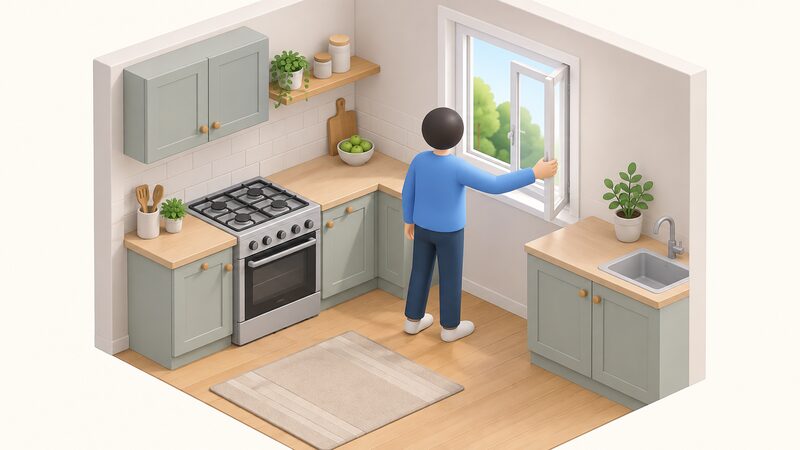
The immediate steps are consistent across official and independent guidance. Turn appliances off, open windows and get out of the house to breathe in fresh air10. Open all doors and windows, move everyone into the fresh air, and call the Gas Emergency Service on 0800 111 9995. Open doors and windows immediately to ventilate the area, switch off all fuel burning appliances, leave the building straight away, do not re-enter until it is safe to do so, and do not use the appliance again until it has been checked and confirmed safe by a competent technician12.
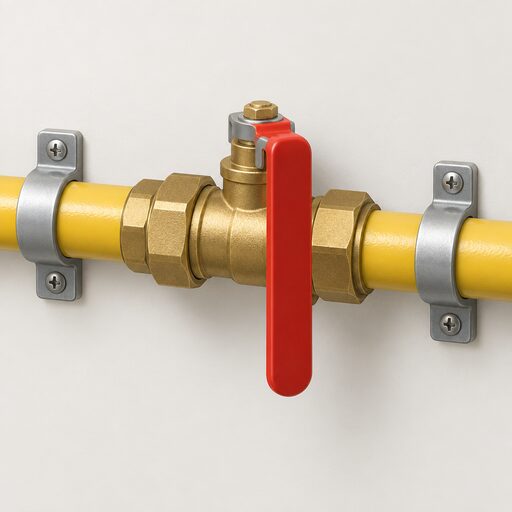
Health and Safety Executive guidance adds shutting off the gas supply at the meter control valve, and visiting a GP to report a belief of possible exposure2. Utility guidance says to get everyone into fresh air, stop using any appliance that may produce carbon monoxide, seek medical advice, and not go back inside until a Gas Safe professional has fully checked the area18.
On the medical side, go immediately to a local emergency department if you think you or someone with you has been exposed to carbon monoxide with symptoms suggesting high levels1. If symptoms are present, contact a GP or go to a local accident and emergency department12. Seek medical advice from a GP if you think you have been exposed to low levels1. If you or your family experience symptoms and believe you may have been exposed, seek urgent medical advice from either a GP or an A&E department2.
A symptom picture with no smell of gas can still indicate a carbon monoxide leak20. The Gas Safe Register exists to check that engineers working on gas appliances are registered, and unregistered work carries the risks set out above11.
Where the evidence stops
Two limits are worth stating plainly. First, symptoms alone cannot confirm exposure: the published lists overlap with flu, food poisoning, viral infections, tiredness and hangovers, and the guidance itself says early symptoms are easily confused with common ailments2. Second, the concentration figures are given for a healthy adult, and the sources do not offer equivalent timetables for children, elderly people, pregnant women or people with heart and respiratory conditions, only that these groups are affected more quickly or succumb quicker4.
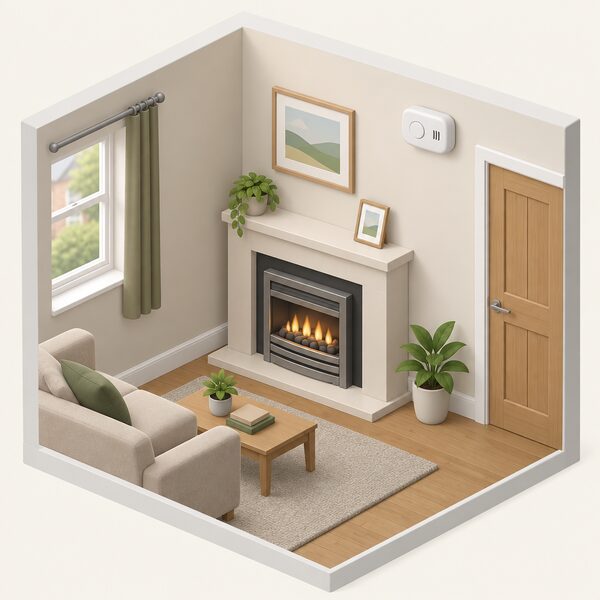
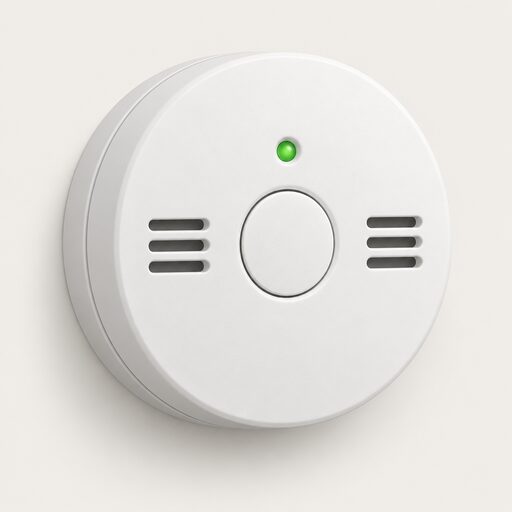
What a household can control is the appliance side: servicing, ventilation and the visible warning signs. What it cannot control is the gas supply itself, the appliance's internal combustion, or the need for a registered technician to confirm safety. Carbon monoxide is odourless and colourless, difficult to detect without a functioning alarm, and regular checks of carbon monoxide and smoke alarms are described as vital for safety21. A carbon monoxide alarm meeting European Standards EN 5029 should be fitted in any room that contains a gas fuel appliance22.
For households in different parts of the UK, the underlying safety advice is consistent, and Northern Ireland guidance on gas safety and carbon monoxide follows the same symptom and response pattern10. Tenants in rented homes have separate duties owed by landlords, covered in alarm rules in rented homes and landlord duties on energy, heating and home safety. Households off the gas grid face the same risks from oil, LPG and solid fuel appliances, covered in living off the gas grid.
Sources22 cited
- Carbon monoxide poisoning, nidirect, 2026-09-17
- Carbon monoxide, Health and Safety Executive, 2026
- Carbon monoxide advice, Cadent Gas, 2026-09-20
- Carbon monoxide, CIPHE, 2026-09-17
- Carbon monoxide, SGN, 2026
- Five signs you need a new boiler, Which?, 2025-09-16
- Summer CO awareness, Cadent Gas, 2026-09-20
- Your home guide to solid fuel appliances, OFTEC, 2026-09-17
- Domestic oil installation and boiler servicing, nidirect, 2024-08-27
- Gas safety and carbon monoxide, nidirect, 2025-11-24
- Gas Safe Register, nidirect, 2025-10-29
- Guide to carbon monoxide safety, OFTEC, 2026-09-17
- Half of households at greater risk of carbon monoxide poisoning, Which?, 2022-09-15
- Every check counts, Northern Gas Networks, 2024-09-09
- Carbon monoxide awareness, Alpha Innovation, 2018-05-09
- Cooking safely, Cadent Gas, 2025-11-12
- What is carbon monoxide poisoning, Alpha Innovation, 2025-07-16
- Holiday carbon monoxide safety tips, Northern Gas Networks, 2026-07-24
- Carbon monoxide, WW Utilities, 2026-09-20
- Springtime stove maintenance, HETAS, 2026
- Your guide to gas safety checks, So Energy, 2025-08
- Keeping your home warm in winter, Met Office, 2026-09-20
 Carbon Monoxide SafetyHow carbon monoxide arises from gas, oil, LPG and solid fuel appliances, where alarms must be sited and what the requirements are in each UK nation.
 Smell Gas or Suspect COThe emergency steps for a suspected gas escape or carbon monoxide alarm, including ventilation, ignition sources and turning the supply off at the emergency control valve.
 Generator SafetyCovers the main hazards of running a generator at a home: exhaust fumes and carbon monoxide, hot surfaces and refuelling fires, electric shock and earthing.
 Alarm Rules in Rented HomesHow many smoke and carbon monoxide alarms a rented home must have, where they must be sited, and how the rules differ across England, Scotland, Wales and Northern Ireland, including the standards alarms must meet and who tests them.
 Test Smoke and Heat AlarmsHow often alarms should be tested, what the different beeps mean and when a unit has reached the end of its life.
 Air Conditioning SafetyA safety guide to home cooling appliances: plug and circuit loading, flammable refrigerants in portable units, condensate and water damage, venting, window sealing and product recalls, with the markings to look for.