
In this answer
Short answer
If you smell gas, the number to ring is 0800 111 999. That is the National Gas Emergency Service, a free 24-hour helpline run on behalf of the gas industry, and it is the same number across England, Wales and Scotland1. Northern Ireland uses a different number, 0800 002 0011, as reported in coverage of gas hob safety3.
The call is not a customer service query. It triggers an emergency gas engineer from your local gas distribution network, who attends to make the situation safe4. Your energy supplier handles billing, meter readings and account problems; it does not dispatch engineers for a gas escape.
What you do in the first few minutes matters as much as the call. Guidance from network operators is consistent: open doors and windows, turn off the gas at the meter if it is safe to do so, do not smoke or use naked flames, do not touch electrical switches, and leave the property, calling from outside5. If anyone has symptoms that suggest carbon monoxide exposure, official guidance is to go immediately to a local emergency department7.
What to do first: ventilate, turn off the supply, avoid flames
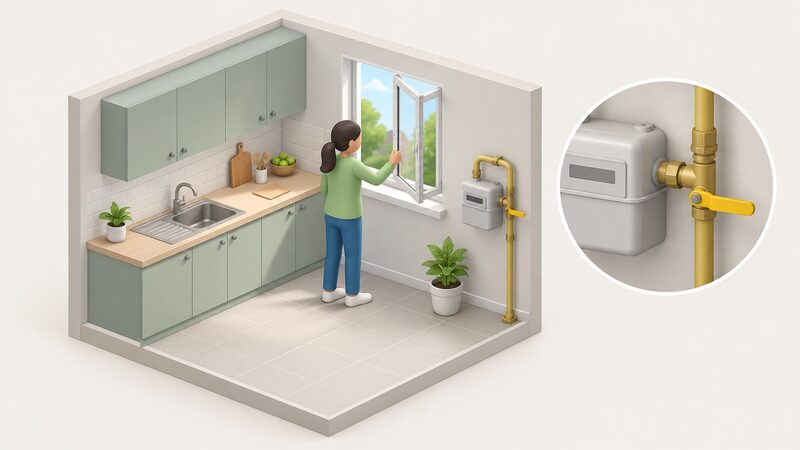
The sequence below is drawn from network operator guidance and applies to a smell of gas in the home. It is written as a list of actions, not as advice on whether to act: if you are unsure whether it is safe to reach the meter, leave and call from outside.
- Open windows and doors to ventilate the gas8.
- Turn off the gas supply at the meter, and turn off any gas appliances8.
- Do not smoke or use any naked flames8.
- Do not touch electrical switches, including light switches, on or off5.
- Do not enter a cellar, even if the gas meter is located there8.
- Leave the property and call 0800 111 999 from outside6.
Cadent's guidance adds the same conditions in slightly different words: open doors and windows, turn off gas at the meter unless the meter is in a cellar, do not use electric switches, and extinguish naked flames5. Northern Gas Networks frames it as opening doors and windows to let fresh air in, turning off the gas at the meter if it is safe to do so, not smoking or using a naked flame, not turning electrical switches on or off, and leaving the property to call from outside6.
The cellar exception is worth noting because it is the one place the standard instruction reverses. If the meter sits in a cellar, the guidance is not to go down to it, because gas can accumulate in a confined space below ground level8.
For homes on liquefied petroleum gas rather than mains gas, the steps differ. Liquid Gas UK advises closing the manual outlet valve on the cylinder or tank, turning off all appliances and the property's emergency valve, opening doors and windows, not switching lights or electrical equipment on or off, calling your supplier, dialling 999 for the fire brigade and leaving the premises11. LPG is not covered by the mains gas emergency line in the same way, so the supplier call comes first.
Suspected carbon monoxide: get into fresh air, then call

Carbon monoxide is a separate hazard from a gas escape, and the response differs in one important respect: fresh air comes before the phone call. Network guidance is to open all doors and windows, move everyone outside into fresh air, and then call the Gas Emergency Service on 0800 111 99912. Wales & West Utilities puts it as moving outside into fresh air, leaving doors and windows open as you go, and calling the National Gas Emergency Service, with 999 for a medical emergency14.
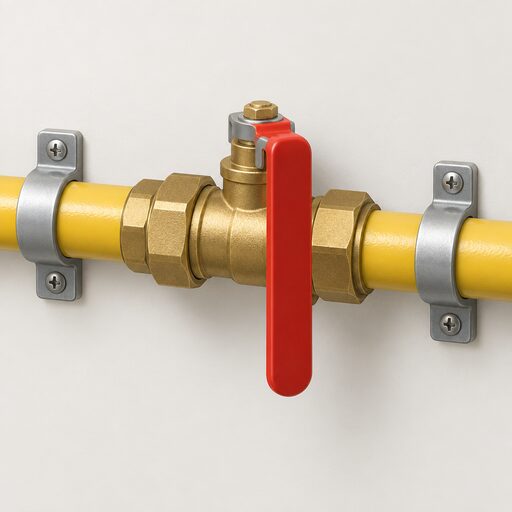
The Health and Safety Executive's advice for householders adds two steps before you leave: switch off the appliance and shut off the gas supply at the meter control valve, and open all doors and windows to ventilate the room15. It also sets out the medical route: if you or your family experience symptoms and believe you may have been exposed to carbon monoxide, seek urgent medical advice from either your GP or an A&E department15.
Northern Ireland's official guidance is blunter about severity: go immediately to your local emergency department if you think you or someone with you has been exposed to carbon monoxide at levels suggesting a high dose, and stay outside in the fresh air7.
"Switch off the appliance and shut off the gas supply at the meter control valve"
Symptoms are easy to miss because carbon monoxide has no smell and no colour. The practical point for a household is that a carbon monoxide alarm is the detection layer, and the emergency line is the response layer. Testing and maintaining alarms is covered in testing smoke and heat alarms, and the wider emergency sequence for utilities sits in turning off gas, water and electricity.
Who answers: the National Gas Emergency Service and your network operator
The number connects to the National Gas Emergency Service, which Cadent manages on behalf of the gas industry16. Cadent is one of the UK's gas distribution networks; the others cover different regions, and the service dispatches an engineer from whichever network owns the pipes where you live4.
That structure matters for what happens next. The person who answers is not your supplier and cannot discuss your account. Their job is to take the location and the nature of the problem and to send an emergency gas engineer from the local distribution network, who will ensure steps are taken to make the situation safe4. In practice that can mean isolating the supply, testing, and either repairing or making safe before any follow-up work.
The service is funded by the gas industry rather than charged to the caller. It is described as a free 24-hour helpline, and the line is free and available 24 hours a day1. Calls to the National Gas Emergency Service and National Enquiry lines may be recorded and monitored10.
For deaf or hearing impaired users, the free Relay UK app can be used to contact the National Gas Emergency Service, with the prefix 18001 0800 111 9998. Northern Gas Networks confirms the same number for a smell of gas, low gas pressure or suspected carbon monoxide17.
If an engineer attends your door, identity checks are expected and welcomed. Cadent states that its engineers will not be offended if you close the door and call to check they are who they claim to be, and that they will wait on the doorstep18. The Gas Safe Register freephone helpline is 0800 408 5500, and the register's website can be used to check an engineer's credentials9. More on that process sits in checking an engineer is Gas Safe registered.
When else to use the line: no gas, poor pressure or after a flood
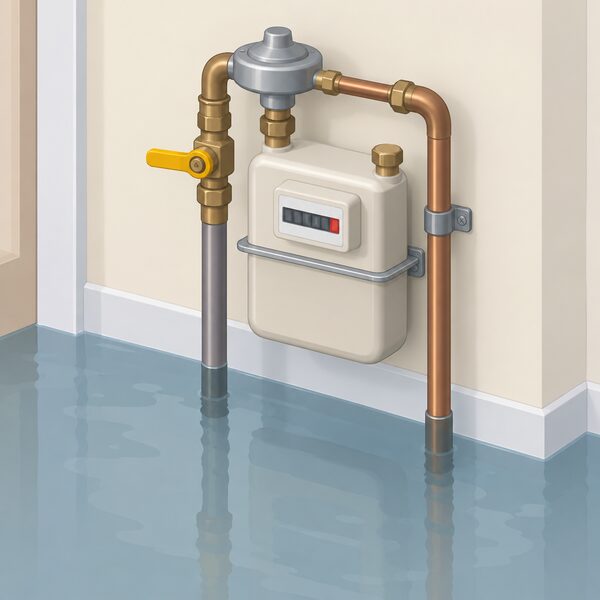
A smell of gas is the headline reason to call, but it is not the only one. Northern Gas Networks advises contacting the gas emergency line if you can smell gas, experience poor pressure or have no gas after flood waters have left the home20. That last case is specific: flood water can affect gas meters, pipework and appliances, and the supply should not simply be switched back on once the water recedes.
Cadent's flood guidance points in the same direction, and its general advice is not to assume a gas problem is unrelated to network work: if you smell gas or suspect carbon monoxide, always call the National Gas Emergency Service21. Where a planned mains replacement or an unplanned loss of supply is under way, the network issues letters or cards with an enquiry line for updates, and Cadent advises calling that enquiry line if you still have no gas by 7:30pm21.
| Situation | Who to call |
|---|---|
| Smell of gas, low pressure, suspected carbon monoxide | National Gas Emergency Service, 0800 111 9991 |
| Same, in Northern Ireland | 0800 002 00113 |
| No gas after a flood | Gas emergency line, 0800 111 99920 |
| No gas during planned network work, after 7:30pm | The enquiry line on the letter or card about the work21 |
| Billing, meter readings, account queries | Your energy supplier |
| Checking an engineer's registration | Gas Safe Register, 0800 408 55009 |
The distinction between the emergency line and the supplier line is the one households most often get wrong. A supplier's customer service team cannot dispatch a gas emergency engineer, and the emergency service cannot change a tariff or correct a bill. For everything that is not a safety matter, the routes are set out in who to call for an energy problem, and the fuller emergency procedure is in what to do if you smell gas or suspect carbon monoxide.
What this means for a household's energy independence
A mains gas connection is the one part of a home's energy supply that a household cannot make independent. The gas arrives through pipes owned and operated by a distribution network, and the safety response to a leak is run by that industry rather than by the household or its supplier. There is no domestic equivalent of a battery that lets a home ride out a gas emergency: the supply is either isolated and made safe, or it is not.
What a household can control is preparation and knowledge. Knowing the number, knowing where the meter and the emergency control valve are, and knowing the difference between a gas escape and a carbon monoxide concern are the practical levers. Cadent publishes guidance on locating your meter and turning off the gas, and on detecting a leak, which cover the physical steps23. The Energy Networks Association's winter guidance sets out who to call for gas and electricity issues more broadly25.
The dependence that remains is structural: the network, the emergency service and the engineer who attends are all outside the household's control. The independence a household can build is in the response, not the supply. That includes keeping a carbon monoxide alarm in working order, knowing the isolation point, and having the number to hand rather than searching for it in the moment. National Energy Action's home energy checklist is one starting point for that kind of preparation26.
Sources26 cited
- Gas connections FAQs and guidance, Northern Gas Networks, 2025-10-30
- Get winter ready, Energy Networks Association, 2026-09-17
- Government intervenes with gas hob manufacturers due to safety risks, Which?, 2023-09-12
- Smell gas, Cadent Gas, 2026-09-20
- Make the right call, Cadent Gas, 2026-09-20
- Take no chances with gas safety, Northern Gas Networks, 2026-09-14
- Carbon monoxide poisoning, nidirect, 2026-09-17
- Smell gas, SGN, 2026
- Gas and carbon monoxide safety, Electricity North West, 2026-09-19
- How to detect a gas leak, Cadent Gas, 2026-09-20
- Safety advice, Liquid Gas UK, 2026-09-20
- Carbon monoxide, SGN, 2026
- Carbon monoxide advice, Cadent Gas, 2026-09-20
- An important message from Wales West Utilities, Wales & West Utilities, 2025-12-18
- Carbon monoxide and gas safety in the home, Health and Safety Executive, 2026
- Ageing Essex gas main set for upgrade, Cadent Gas, 2025-10-13
- Support for customers who need additional help, Northern Gas Networks, 2026-01-14
- Keeping you safe on your doorstep, Cadent Gas, 2026-09-20
- Boiler not working, Cadent Gas, 2026-09-20
- Flood advice, Northern Gas Networks, 2025-10-22
- Under your feet, Cadent Gas, 2026-09-20
- Loss of gas, Bridlington YO16 4 area, Northern Gas Networks, 2024-07-11
- Locating your meter and turning off the gas, Cadent Gas, 2026-09-20
- Flood advice, Cadent Gas, 2026-09-20
- Who to call should you have gas or electricity issues, Energy Networks Association, 2018-03-02
- Your home energy checklist, National Energy Action, 2026-09-10
 Smell Gas or Suspect COThe emergency steps for a suspected gas escape or carbon monoxide alarm, including ventilation, ignition sources and turning the supply off at the emergency control valve.
 Who to Call for Energy HelpA single reference to the right contact for each situation: gas escapes, power cuts, water leaks, meter faults, billing disputes, scams and free advice.
 Gas Safety in the HomeYour landlord has to arrange a yearly gas safety check by a Gas Safe registered engineer and give you the record if you rent.
 Carbon Monoxide SafetyHow carbon monoxide arises from gas, oil, LPG and solid fuel appliances, where alarms must be sited and what the requirements are in each UK nation.
 Gas Distribution NetworksWho actually owns the pipes under your street, and who do you call when gas smells or the supply fails?
 Test Smoke and Heat AlarmsHow often alarms should be tested, what the different beeps mean and when a unit has reached the end of its life.