
In this answer
Short answer
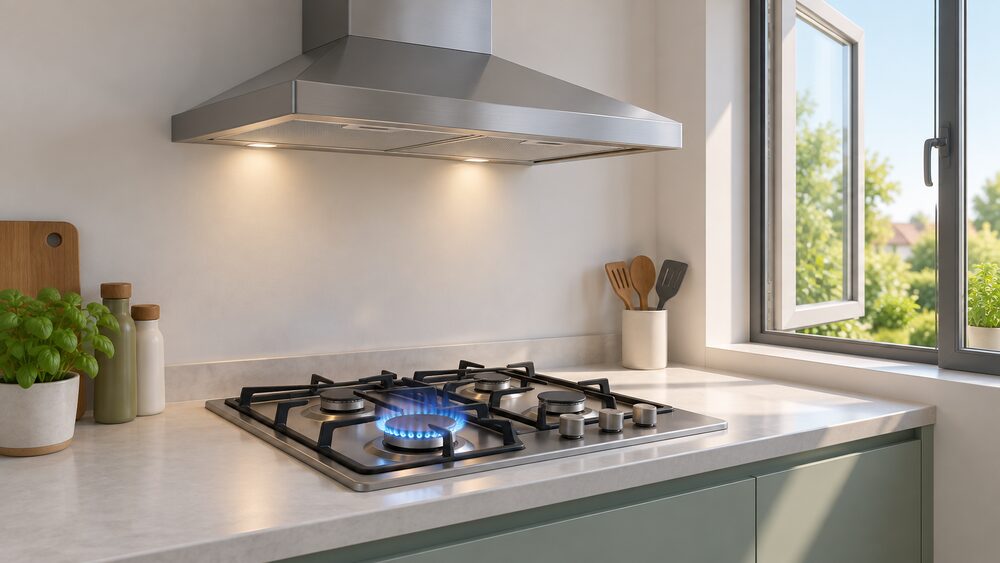
Cooking on a gas hob is a combustion activity inside the home, and that is the whole of the health question. A gas flame produces nitrogen oxides, including nitrogen dioxide, and carbon monoxide is a product of burning gas. The most common faults causing appliances to produce carbon monoxide are a lack of servicing and flue or terminal faults, followed by a lack of ventilation1. Incorrectly installed, poorly maintained or poorly ventilated appliances, including cookers, are the most common causes of accidental carbon monoxide exposure2.
The evidence base is real but narrower than headlines suggest. Estimates of health effects from gas cooking have been described as conservative because they considered only nitrogen dioxide and not other gases such as carbon monoxide and benzene3. That is a limit on the numbers, not a reason to dismiss the mechanism: the pollutants are produced, and ventilation and maintenance are what determine how much of them a household breathes.
For a household's energy independence, a gas hob is a dependence, not an asset. It ties cooking to a piped or bottled fuel supply, to a network, and to an appliance that must be serviced and ventilated to stay safe. An electric or induction hob moves that dependence to electricity, which can be generated at home, but it does not remove dependence on a supplier or the grid. The sections below set out what the evidence supports, who is most affected, and what actually reduces exposure.
What the evidence says about gas hob health risks
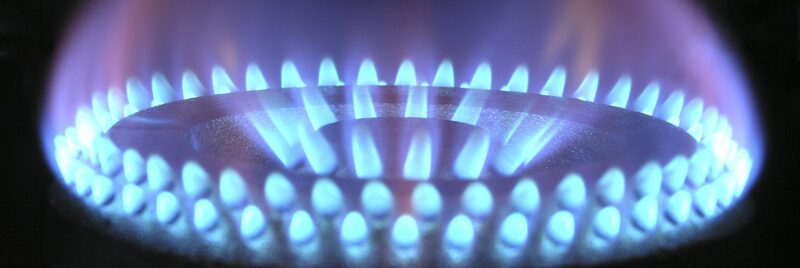
The case against unventilated gas cooking rests on two things: what the flame emits, and what the room does with it. Burning gas produces nitrogen oxides, a group that includes nitrogen dioxide3. Carbon monoxide is the other combustion product that matters, and the fault pattern behind it is well documented: a lack of servicing and flue or terminal faults are the most common causes, with a lack of ventilation next1. Incorrectly installed, poorly maintained or poorly ventilated appliances, cookers among them, are the most common causes of accidental exposure2.
The strength of the evidence varies. The estimate that has driven much of the recent coverage is explicitly conservative, because it considered only the health effects of nitrogen dioxide and not other gases such as carbon monoxide and benzene3. Separately, medical doctors have highlighted that long-term exposure to low levels of carbon monoxide can increase the chances of dementia and, possibly, Parkinsonism3. That is a finding reported in evidence to a parliamentary committee rather than a regulatory determination, and it should be read as such.
What the evidence does not support is a single figure for how many illnesses a gas hob causes. No source here gives one. What it supports is a clear mechanism, a clear set of vulnerable groups, and a clear control: combustion products accumulate indoors unless air is moved, and appliances that are not serviced are more likely to produce carbon monoxide.
"They say their estimates are conservative because they only considered the health effects of nitrogen dioxide (NO 2 ), and not other gases such as carbon monoxide and benzene"
Nitrogen dioxide: the main pollutant from a gas flame
Nitrogen dioxide is the pollutant most associated with gas cooking, and it is not unique to gas hobs. Burning hydrogen still produces some of the other pollutants that are a by-product of burning natural gas, such as nitrogen oxides, the group that includes nitrogen dioxide7. Burning biomass releases harmful pollutants including nitrogen oxides and particulate matter, especially if used incorrectly8. In other words, any flame indoors produces nitrogen oxides; the question is concentration and duration.
That matters for how the risk is framed. A hob flame is small and short-lived compared with a stove burning through an evening, but it is also unflued: there is no chimney taking combustion products out of the kitchen. The controls are therefore extraction and air movement rather than a flue. Where a kitchen has no extraction and the window stays shut, the products of combustion have nowhere to go.
The wider policy direction reflects the same concern. Scotland's New Build Heat Standard prohibits polluting heating systems, like gas and oil boilers, in new buildings9. That standard addresses heating rather than cooking, and no source here extends it to hobs, but it shows the direction of travel for direct gas combustion in homes.
Who is most affected: children, asthma and respiratory health
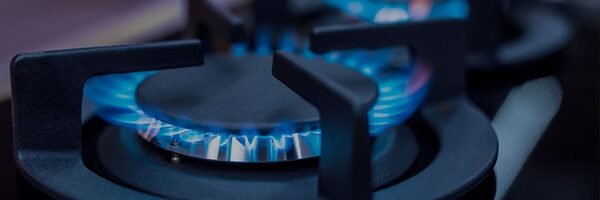
Vulnerability to combustion products is not evenly distributed. Children, students, the elderly, pregnant women and anyone with heart or breathing problems are more vulnerable to the effects of carbon monoxide4. Children, the elderly and pregnant women succumb quicker; people with heart or respiratory conditions and smokers are at higher risk; pets display symptoms faster; and exposure can harm an unborn child and lead to miscarriage1.
Symptoms from a gas leak tend to affect older people, children, pets and anyone suffering from respiratory diseases such as asthma first10. That ordering is consistent across the sources: the people with the least reserve are affected earliest and most.
There is a second, indirect route by which home energy affects respiratory health. Cold homes can cause or worsen a range of serious health conditions including heart attacks, strokes, bronchitis and asthma11. The same finding is stated by the fuel poverty sector: cold homes can cause or worsen heart attacks, strokes, bronchitis and asthma12. A household that avoids using a gas hob for fear of indoor air, or that cannot afford to heat and ventilate a home properly, can end up worse off on the cold side of the same ledger.
For households with a respiratory condition, the practical implication is that ventilation and servicing are not optional extras. They are the difference between a flame that is adequately controlled and one that is not.
Ventilation and extraction: how much difference a hood makes
Extraction hoods, which send air outside through ducting, are generally most effective at removing steam and moisture13. That finding is about moisture, but the same ducted route removes combustion products, and it is the only extraction type that takes air out of the building rather than recirculating it through a filter.
The wider ventilation case is well established. Guidance on condensation and mould sets out the serious health impacts of a build-up of condensation and mould in the home and gives three key ventilation solutions: extractor fans, trickle vents and whole home ventilation systems14. Incomplete combustion also leads to health risks through increased levels of particulate matter and carbon monoxide emissions15. Portable bottled gas heaters need an open window nearby for ventilation because of the fumes released, which also makes them less energy-efficient16.
The rule for gas cooking is stated plainly: never use gas cookers, stoves or barbecues for heating, and ensure they are well ventilated when being used6. A hood that ducts outside, a window, or both, is the control. A recirculating hood filters grease and odours but does not remove combustion gases from the room in the way ducted extraction does.
Gas, electric or induction: how the risk compares
The comparison that matters for indoor air is simple: gas burns, electric and induction do not. An electric hob produces no combustion products at the hob itself, so the nitrogen dioxide and carbon monoxide question does not arise in the kitchen. That is a genuine difference in kind, not degree.
Efficiency figures reinforce the point. Gas and electric hobs are much less energy-efficient, at around 40% and 75% efficiency respectively, while induction hobs are 74% efficient in converting energy to heat, using 57% less energy than gas hobs5. A separate figure puts induction at an energy rating of 85% compared with 40% to 75% for gas and electricity18. The two sources disagree on the induction figure, 74% against 85%, and the documents do not resolve it; both agree that induction uses markedly less energy than gas.
| Hob type | Efficiency | Combustion products at the hob |
|---|---|---|
| Gas | around 40%5 | Nitrogen oxides including nitrogen dioxide; carbon monoxide if faulty3 |
| Electric | around 75%5 | None |
| Induction | 74%5, or 85%18 | None |
Lower energy use is not the same as lower health risk, and the sources do not claim it is. But a household weighing a switch is weighing two separate things: the indoor air question, which favours electric and induction, and the energy and running cost question, where induction leads on the figures above.

Where a gas hob falls short, and what to do about it
The limits are worth stating as firmly as the benefits of any alternative. A gas hob cannot be made flueless-safe by good intentions: it needs air movement and a serviced appliance. Poorly maintained, badly installed or faulty gas appliances can cause gas leaks, fire, explosions and carbon monoxide19. That is the regulatory framing, and it applies to hobs as much as to boilers.
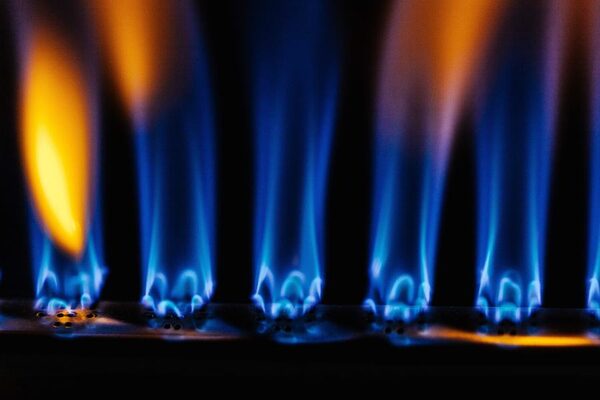
Warning signs are specific and worth knowing. Black marks and stains around the appliance, lazy orange or yellow flames instead of crisp blue ones, and high levels of condensation in the room are the recognised indicators6. A tired-looking orange or yellow flame on a gas stove can also indicate a leak10. A weaker hob flame, hissing sounds from pipes or appliances, unexpectedly higher gas usage, dying plants and feeling unwell are further signs of a leak20.
If carbon monoxide is suspected, the response is not gradual. Stop using all cooking and heating appliances, open the windows, see a doctor at once, and call a qualified engineer to check all cooking and heating appliances19. Open doors and windows immediately to ventilate, switch off all fuel-burning appliances, leave the building straight away, do not re-enter until it is safe, and do not use the appliance again until it has been checked and confirmed safe by a competent technician21. For a suspected carbon monoxide incident involving a gas-fired barbecue, evacuate everyone from the area into fresh air and switch the barbecue off22.
Practical steps to reduce exposure while cooking
The measures that reduce exposure are the ordinary ones, applied consistently.
- Ventilate while cooking. Use ducted extraction where it exists, and open a window where it does not. Gas cookers, stoves and barbecues should be well ventilated whenever they are used6.
- Never use the hob for heating. The same guidance is explicit: never use gas cookers, stoves or barbecues for heating6.
- Service the appliance. A lack of servicing is the most common fault behind carbon monoxide production, ahead of ventilation problems1. Poorly maintained or faulty gas appliances can cause gas leaks, fire, explosions and carbon monoxide19.
- Watch the flame. Lazy orange or yellow flames instead of crisp blue ones, black marks and stains, and high condensation are the warning signs to act on6.
- Act on a suspected leak. A weaker flame, hissing pipes, higher gas usage, dying plants and feeling unwell are the signs to treat as urgent20.
- Know the CO response. Stop using cooking and heating appliances, open windows, see a doctor, and call a qualified engineer19.
For households in rented homes, some of these steps sit with the landlord rather than the tenant. Gas safety duties, alarm rules and the limits on what a tenant can change are set out in Landlord Duties on Energy, Heating and Home Safety and Renting and Home Energy: What Tenants Can and Cannot Change. Anyone arranging a gas check should use an engineer on the Gas Safe Register23.
The independence question is worth closing on honestly. A gas hob keeps a household tied to a fuel supply and to an appliance that must be maintained to stay safe. Moving cooking to electricity shifts that dependence to the grid and a supplier, and does not by itself deliver independence unless the electricity is generated at home. What a household can control, whichever fuel it cooks on, is ventilation, servicing and knowing the warning signs.
Sources23 cited
- Gas cookers, CO-Gas Safety, 2026
- Gas safety and carbon monoxide, nidirect, 2025
- Written evidence on gas cooking and health, UK Parliament committees, 2026
- Carbon monoxide poisoning, nidirect, 2025
- Energy efficient cooking, Uswitch, 2025
- Summer CO awareness, Cadent Gas, 2026
- Hydrogen boilers: what you need to know, Which?, 2026
- Biomass, Energy Saving Trust, 2026
- Heat in buildings progress report 2025, Scottish Government, 2025
- Gas leaks safety, Uswitch, 2026
- Fuel poverty, National Energy Action, 2026
- Join the conversation on fuel poverty, IGEM, 2025
- How to stop condensation, Which?, 2026
- Mould and condensation infographic, BEAMA, 2026
- Top tips for keeping your stove glass clean, HETAS, 2026
- Energy efficient heaters, Uswitch, 2026
- British Gas HomeCare, Uswitch, 2026
- Energy saving tips for Christmas dinner, ivie, 2024
- Domestic gas installation and health and safety, nidirect, 2025
- What to do if you smell gas, Confused.com, 2025
- Carbon monoxide safety, OFTEC, 2026
- Essential guide to BBQ safety, Northern Gas Networks, 2026
- Gas Safe Register, nidirect, 2025
 Carbon Monoxide SafetyHow carbon monoxide arises from gas, oil, LPG and solid fuel appliances, where alarms must be sited and what the requirements are in each UK nation.
 Generator SafetyCovers the main hazards of running a generator at a home: exhaust fumes and carbon monoxide, hot surfaces and refuelling fires, electric shock and earthing.
 Gas Boilers GuideMains gas boilers heat around 23 million UK homes.
 Hydrogen in the Gas GridHydrogen might be mixed into the gas you already use, but what would that actually mean for your bills, your boiler and your safety?
 Smell Gas or Suspect COThe emergency steps for a suspected gas escape or carbon monoxide alarm, including ventilation, ignition sources and turning the supply off at the emergency control valve.
 Will Gas Boilers Be Banned?What has actually been legislated, proposed or dropped on gas and oil boiler phase-out across the four UK nations, and the difference between new build rules and replacement in existing homes.