

In this guide
Cold is not simply uncomfortable. It is a physiological stressor, and the evidence linking cold housing to illness and death is consistent across official and independent sources. National Energy Action states that around 10,000 people die each year as a result of living in a cold home1, and its Warm Homes Healthy Futures programme repeats the figure, putting the average at 10,000 deaths a year from living in a cold home2. The same body of work links cold and damp housing to a 30 to 50 per cent increase in respiratory problems2.
The temperature at which this begins is lower than many households assume. Official guidance is to heat the home to at least 18°C, and for people aged 65 and over or those with pre-existing health conditions, bedroom temperatures of at least 18°C overnight3. Below that, the risks concentrate in the cardiovascular and respiratory systems, and in the groups least able to respond: older people, those with long-term conditions, and households already in fuel poverty.
The cost falls partly on the NHS. Energy Systems Catapult estimates that the NHS spends up to £856m every year treating illnesses made worse by cold homes4. That figure sits alongside a wider problem of scale: estimates of households in fuel poverty run at over six million5, and the long-standing definition used across much of the UK turns on spending more than 10 per cent of income on fuel7.
Why cold homes damage health: the conditions and the scale
The mechanism is not mysterious. Cold air narrows blood vessels, raises blood pressure and puts additional strain on the heart, while cold and damp air irritates airways already compromised by asthma or chronic obstructive pulmonary disease. National Energy Action lists the conditions cold homes can cause or worsen as heart attacks, strokes, bronchitis and asthma1. Damp homes, which frequently accompany cold ones, are linked to a 30 to 50 per cent increase in respiratory problems2.
The mental health dimension is less often discussed but is measured. A quarter of young people living in cold homes have multiple mental health risks, compared with 1 in 20 in warm homes2. That is a fivefold difference in the same age group, and it points to cold housing as a household stressor rather than a purely physical one.
Public Health England has warned of a damaging overlap between the health impacts of living in a cold home and Covid-191, a reminder that cold housing compounds whatever else is circulating. The scale is not marginal: with over six million households estimated to be in fuel poverty6, the population exposed to these risks is large enough to register in national health statistics.
For a household's energy independence, the health evidence cuts in a particular direction. A cold home is not a neutral choice about comfort; it is a measurable health exposure. The dependence that remains is on the grid and on a supplier for the energy needed to keep rooms at 18°C, and for households that cannot afford that energy, the health cost is borne partly by the NHS rather than by the household alone.
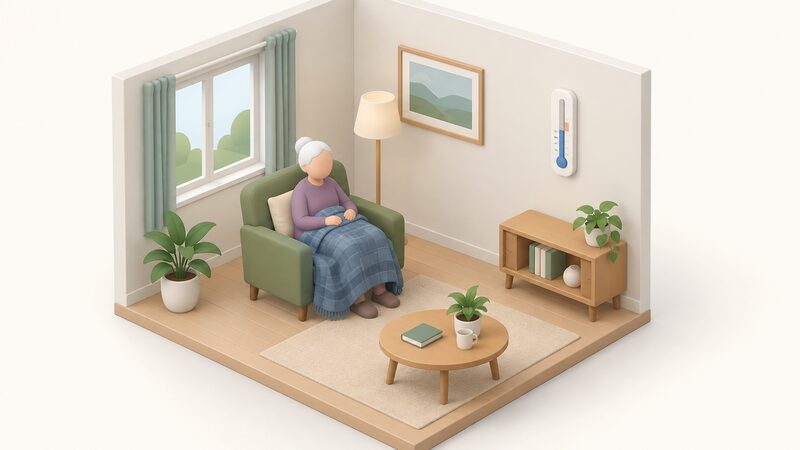
The temperatures that matter: 18°C, and when warmth becomes overheating
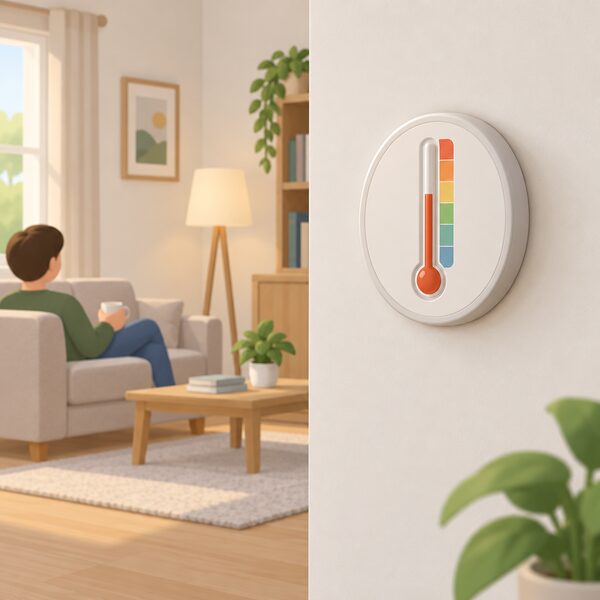
The published threshold is straightforward. The Met Office advises heating the home to a temperature of at least 18°C3. For people who are 65 and over or who have pre-existing health conditions, it adds that bedroom temperatures of at least 18°C overnight may be needed3. That overnight figure matters because much of the excess risk in cold weather occurs during sleep, when occupants are least likely to notice a falling temperature.
The 18°C figure is a floor, not a target for every room at every hour. It applies to occupied rooms, and the practical implication is that heating a single room to 18°C is materially different from heating a whole house to that level. Households managing cost often concentrate warmth in one room, which reduces bills but leaves bedrooms and bathrooms below the threshold overnight.
At the other end of the scale, warmth becomes a health issue in its own right. Overheating in UK homes is a recognised problem, and the same households that underheat in winter may overheat in summer, particularly in flats with limited ventilation. The relevant point for this page is that the healthy band is a band: too cold carries cardiovascular and respiratory risk, and too hot carries its own.
Where a household cannot reach 18°C, the evidence points to the underlying cause rather than to behaviour. Fuel poverty, poor insulation and inefficient heating systems are the drivers, and they are addressed through the schemes set out below rather than through advice to sit in a colder room.
Which health conditions are worsened by living cold
The conditions most consistently associated with cold housing fall into four groups, and the same groups appear in both health guidance and scheme eligibility rules.
- Cardiovascular conditions. Heart attacks and strokes are listed by National Energy Action among the conditions cold homes can cause or worsen1. Cold raises blood pressure and cardiac workload.
- Respiratory disease. Bronchitis and asthma appear in the same list1, and damp homes are linked to a 30 to 50 per cent increase in respiratory problems2. Chronic obstructive pulmonary disease and childhood asthma are specifically named in Warm Home Prescription material4.
- Immunosuppression and illnesses affecting the immune system. These appear both in health guidance4 and in the eligibility rules for ECO4 Flex and the Great British Insulation Scheme Flex8.
- Limited mobility and physical disability. Reduced mobility makes it harder to keep warm and to respond to cold, and it appears as a qualifying condition in the same scheme rules9.
Mental health is affected too. The finding that a quarter of young people in cold homes have multiple mental health risks, against 1 in 20 in warm homes2, places cold housing among the social determinants of adolescent mental health rather than a separate issue.
The practical consequence is that cold housing does not produce one illness. It aggravates several long-term conditions at once, which is why the health service cost is spread across primary care, hospital admissions and emergency care rather than concentrated in a single budget line.
The scale of the problem: over six million households and around 10,000 deaths a year

Estimates of the number of UK households in fuel poverty vary by source and by definition, and the variation is worth stating plainly rather than smoothing over.
| Measure | Figure | Source |
|---|---|---|
| Households in fuel poverty (National Energy Action estimate) | over six million | 6 |
| Homes in or approaching fuel poverty | more than six million | 5 |
| UK households that cannot afford to keep the home adequately heated | 2.3 million | 10 |
| Households in fuel poverty covered by Warm Home Discount, winter 2025/26 | 1.8 million | 11 |
| Deaths linked to cold homes each year | around 10,000 | 1 |
The 2.3 million figure10 and the six million figure6 measure different things: the first counts households that cannot afford adequate heating, the second counts households in or approaching fuel poverty on a broader definition. The 1.8 million figure11 is the number of fuel-poor households the Warm Home Discount is expected to reach in winter 2025/26, which is a scheme coverage number rather than a prevalence estimate.
The death figure is the one that carries the most weight in policy discussion. National Energy Action states that around 10,000 people die each year as a result of living in a cold home1, and repeats the average of 10,000 deaths a year in its Warm Homes Healthy Futures material2. These are estimates of deaths associated with cold housing, not a single official count, and they should be read as such.
For a household, the relevance is that cold housing is a population-level problem with individual consequences. The same conditions that produce the national figures, cardiovascular and respiratory illness in older and vulnerable people, are the ones a household can act on by keeping occupied rooms at 18°C where it can afford to.
Fuel poverty: the 10 per cent definition and who it catches
The long-standing definition of fuel poverty, used in Scotland, Wales and Northern Ireland, is that a household would have to spend more than 10 per cent of its income to keep the home at a reasonable temperature7. Ofgem states the same threshold in terms of households needing to spend more than 10 per cent of annual income on fuel to maintain an adequately heated home12, and the Northern Ireland definition is that a household needs to spend more than 10 per cent of its income on energy costs13.
The definition has been refined over time, and the refinements matter for who is caught.
- Including housing benefit. One version counts more than 10 per cent of income including Housing Benefit or Income Support for Mortgage Interest on all household fuel use10.
- Excluding housing benefit. An alternative version excludes those payments from the income calculation10. The two produce different household counts.
- Scotland's statutory definition. Under the Fuel Poverty (Targets, Definition and Strategy) (Scotland) Act 2019, a household is in fuel poverty if more than 10 per cent of net income is required to pay for reasonable fuel needs after housing costs, and the remaining income is not enough to maintain an acceptable standard of living. Extreme fuel poverty is set at 20 per cent14.
- Wales. The Welsh definition is households needing to pay more than 10 per cent of full household income to maintain a satisfactory heating regime15.
- Scotland's earlier framing. The 2019 Act is also described as applying where a household has to spend more than 10 per cent of income on fuel costs to maintain a satisfactory heating regime16.
The definition catches households whose income is low relative to their heating need, which in practice means older people on fixed incomes, families with young children, and occupants of poorly insulated homes. The Scottish House Condition Survey 2024 found that 10 per cent of non-fuel-poor households cited affordability as a reason their home was difficult to keep warm, compared with a higher share among fuel-poor households17. That comparison shows the definition is not capturing a problem unique to fuel-poor households, but it is concentrated there.
The dependence this creates is direct: a fuel-poor household depends on a supplier and a grid for energy it cannot fully afford, and the health consequences fall on the occupants first and the NHS second.
Older people and cold homes: what the figures show
Older people are the group most consistently identified as at risk. The Met Office singles out people aged 65 and over, alongside those with pre-existing health conditions, as needing bedroom temperatures of at least 18°C overnight3. That is a specific, actionable threshold aimed at the group with the highest cold-related mortality.
The health warning extends beyond temperature. Public Health England has warned of a damaging overlap between the health impacts of living in a cold home and Covid-191, which is relevant to older people both because of their higher risk from respiratory infection and because cold housing reduces the body's ability to resist it.
Age UK's services reflect the same targeting. Cornwall and Isles of Scilly Winter Wellbeing guidance lists eligibility as living with a long-term health condition, being at risk of poor health, caring for a vulnerable person, having a child aged 19 or under, or worrying about the home being cold or damp18. Older people appear in that list through the long-term health condition and vulnerability routes rather than through age alone.
For older households, the practical picture is that cold housing risk is compounded by fixed incomes, lower mobility and, in some cases, a reluctance to heat rooms adequately for cost reasons. The health evidence supports keeping occupied rooms at 18°C, and the support routes below exist precisely because many older households cannot reach that level without help.
Warm Home Prescription: heating support prescribed through the NHS
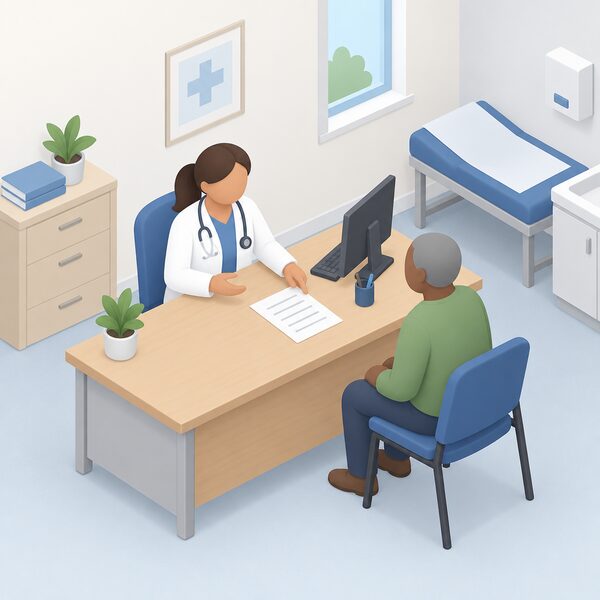
The Warm Home Prescription is a service run by Energy Systems Catapult that adds credit directly to patients' energy accounts and installs energy efficiency measures in their homes for longer-term impact4. It has been trialled and refined since 2021, and the Catapult has delivered it in several UK NHS regions while supporting others to design their own versions4.
The service is aimed at people whose health is adversely affected by living in a cold home. The conditions it addresses include cardiovascular conditions, respiratory conditions such as chronic obstructive pulmonary disease and childhood asthma, illnesses affecting the immune system, and physical disabilities that limit mobility4. It also makes a significant difference to people undergoing treatments such as cancer chemotherapy and renal dialysis, and to people who have just been discharged from hospital4.
The trial results, drawn from an independent third-party evaluation of trials between 2021 and 2023, are notable:
- Most households taking part put their heating up by 2 degrees or more4.
- Most people said they felt warmer, and as a result, better4.
- People receiving a Warm Home Prescription used NHS primary care services less than before4.
- Most clinicians said they could see benefits for their patients4.
- For every £1 spent, there is a £5 return to society4.
The £5 return per £1 spent is a modelled social return rather than a cash saving to the NHS, and it should be read as such. The reduction in primary care use is a more direct measure, though it is reported rather than quantified in the material.
The Warm Home Prescription is not applied for directly by households. It is delivered through NHS regions and referrals come through clinicians, which means the route in is a health professional rather than a form. Households in areas where it operates can ask their clinician whether it is available locally.
Where to get free help: National Energy Action and Age UK advice services
Free advice is available across the UK, though the organisations and phone numbers differ by nation.
| Service | Coverage | Contact or route |
|---|---|---|
| National Energy Action | England, Wales and Northern Ireland | 0800 304 715919 |
| Energy Saving Advice Service | Great Britain | 0300 123 12343 |
| NI Energy Advice | Northern Ireland | Free independent and impartial advice, plus referrals to grants20 |
| Home Energy Scotland | Scotland | Free advice on improving home energy efficiency21 |
| Home Energy Team at CSE | Bristol | Impartial advice and ECO Flex eligibility checks22 |
National Energy Action provides free advice about energy bills and keeping warm and safe at home, and can also help with benefits advice and income maximisation23. It offers advice and support to help people across England, Wales and Northern Ireland stay warm and manage energy costs19, and a British Sign Language interpreter can be requested23.
In Northern Ireland, NI Energy Advice offers free comprehensive advice on saving energy in the home, energy efficiency grants and other help that may be available24. It is independent and impartial, aimed at domestic householders, and includes referrals to energy grants and other sources of help25. Belfast City Council also lists free advice on saving energy, energy efficiency grants and oil buying clubs26.
In Scotland, Home Energy Scotland offers free advice on improving the energy efficiency of your home21. In England, local authority services vary: Birmingham City Council directs households to energy bill help23, and Bristol's Home Energy Team provides impartial advice to residents and will check ECO Flex eligibility22.
The Energy Ombudsman advises consumers worried about energy bills19, and Edinburgh City Council offers financial help and energy efficiency support21. The practical starting point is the national service for the relevant nation, with local authority teams handling scheme eligibility checks.
Insulation as the lasting fix: the preferred solution
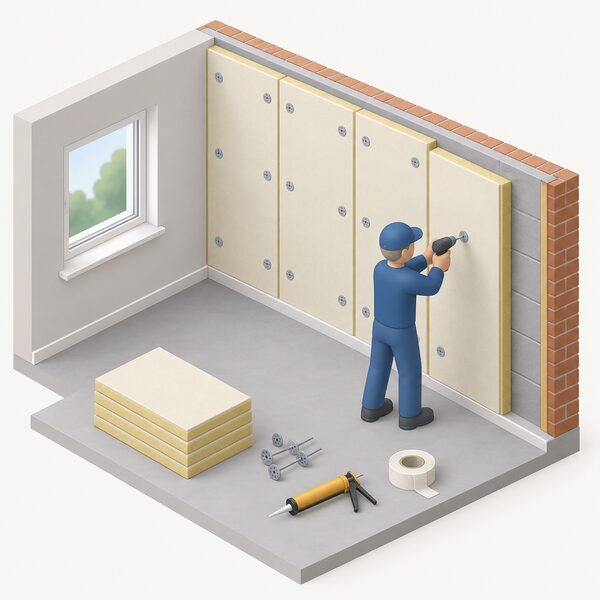
Advice and crisis payments address the symptom. Insulation addresses the cause, and it is the intervention the sector consistently favours. The Department for Communities in Northern Ireland states its long-term ambition as improving the energy efficiency of Northern Ireland's housing stock, thereby reducing carbon emissions and helping to keep homes comfortably warm at an affordable cost27.
The scheme landscape reflects that priority. The Great British Insulation Scheme and ECO4 both include local authority and supplier flex routes for households living in fuel poverty, or those on a low income and vulnerable to the effects of living in a cold home8. The Great British Insulation Scheme Flex allows participating local authorities or devolved administrations to refer households they consider to be in fuel poverty or on a low income and vulnerable to cold, who may not qualify through standard criteria28.
Health is written into the eligibility rules. A household can qualify where a person has a severe or long-term health condition that is adversely affected by living in a cold home29, and the qualifying conditions include cardiovascular conditions, respiratory disease, immunosuppression and limited mobility9. ECO Flex Route 3 allows a medical professional to identify an occupant whose health conditions may be adversely affected by living in a cold home30, and the same route is described in Ceredigion's ECO4 Flexible Eligibility guidance9.
For households, the significance is that insulation is the one intervention that reduces both the health exposure and the ongoing cost. It also reduces dependence: a well-insulated home needs less energy from the grid to reach 18°C, which lowers the household's exposure to price movements and to the supplier relationship. The remaining dependence is on the installer and on the scheme rules, which is why the eligibility routes above matter as much as the measures themselves.
Sources30 cited
- What is fuel poverty?, National Energy Action, 2026
- Warm Homes Healthy Futures, National Energy Action, 2026
- Keeping your home warm in winter, Met Office, 2026
- Warm Home Prescription, Energy Systems Catapult, 2025
- Smarter, greener, fairer, Smart DCC, 2024
- Helping to tackle fuel poverty through smart data, Smart DCC, 2025
- Fuel poverty definitions, House of Commons Library, 2026
- Great British Insulation Scheme: local authorities, Ofgem, 2026
- ECO flexibility funding, Ceredigion County Council, 2026
- Fuel poverty, House of Commons Library, 2026
- Millions more families to get £150 off energy bills, Department for Energy Security and Net Zero, 2025
- Energy terms explained, Ofgem, 2026
- Fuel poverty, Department for Communities, 2026
- Home energy efficiency, Argyll and Bute Council, 2026
- Tackling fuel poverty 2021 to 2035, Welsh Government, 2021
- Winter Heating Assistance equality impact assessment, Scottish Government, 2021
- Scottish House Condition Survey 2024 key findings, Scottish Government, 2026
- Winter wellbeing, Cornwall Council, 2026
- Worried about your energy bills, Energy Ombudsman, 2026
- Energy efficiency tips, nidirect, 2026
- Financial help and energy efficiency, City of Edinburgh Council, 2026
- Energy Companies Obligation, Bristol City Council, 2026
- Getting help with your energy bills, Birmingham City Council, 2026
- Advice if you're struggling to pay your energy bills, nidirect, 2026
- Biomass, nidirect, 2026
- Cost of living and winter support, Belfast City Council, 2026
- Warm Healthy Homes Fund screening, Department for Communities, 2026
- GBIS and ECO4 local authority administration guidance, Ofgem, 2025
- Great British Insulation Scheme: homeowners and tenants, Ofgem, 2026
- Energy Company Obligation ECO4 scheme, Derbyshire County Council, 2026
 Heatwaves and HealthWhich homes get dangerously hot in a heatwave, and which rooms?
 Older People and Home EnergyOlder people often pay more to keep warm and can miss out on help they are entitled to.
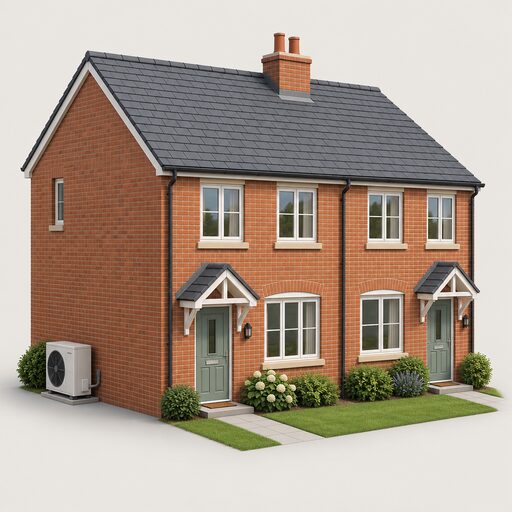 Which Homes Suit a Heat PumpMost UK homes can have a heat pump fitted, so the real question is whether yours makes it easy or expensive.
 The Full Heat Pumps GuideWill a heat pump keep my house warm in winter, and what does one cost to buy and run?
 Overheating and Hot WeatherIs your home getting uncomfortably hot in summer, and is there anything you can do about it?
 Vulnerable Households EnergyIf someone in your home relies on powered medical equipment, or needs extra warmth because of a health condition, what help is available?