
In this answer
Short answer
Overheating at home is not a discomfort issue for older people: it is the single clearest health risk in the UK housing stock. Official consultation evidence put before the London Assembly records that older adults account for over 90 per cent of excess mortality during heat events, and that people over the age of 65 account for 95 per cent of all deaths in the mortality data examined1. Independent guidance is blunt about the same point: the most susceptible age group is people aged 65 years or over2.
The scale of the exposure is large. Independent guidance states that overheating affects 80% of UK homes, with rates rising dramatically over the past decade3. The Climate Change Committee's 2026 progress report to Parliament projects that hotter heatwaves could see 92% of existing homes overheat, creating dangerous conditions for vulnerable people4. For a household supporting an older relative, that combination, a highly susceptible person and a dwelling that is likely to overheat, is the whole problem in one sentence.
What follows sets out who is most at risk and why, what overheating does to health, which homes and rooms run hottest, the warning signs, the practical measures that reduce indoor heat, and the point at which the situation becomes a medical emergency.
Why older people are more at risk in hot weather
The evidence on who dies in hot weather is unusually consistent. Official consultation evidence records that older adults account for over 90 per cent of excess mortality during heat events, and separately that people aged 65 and over likely account for four in five of heat-related deaths1. Independent guidance names the same group first among those most at risk, alongside babies and young children aged 5 years and under and people with underlying health conditions5.
Two features of the risk matter for a household. The first is that the danger is not confined to extreme events. Official consultation evidence notes that most heat-related mortality occurs during yellow alert periods, not only during the most severe warnings1. The Heat-Health Watch system triggers on temperatures for each region that could have a significant effect on health if reached on at least two consecutive days and the intervening night, which in England and Wales means a warm night as well as a hot day2. A dwelling that stays warm overnight therefore matters as much as one that gets hot at noon.
The second is that the threshold is lower than most people assume. Independent guidance states that where temperatures exceed 25°C, there is an increase in mortality and the incidence of strokes2. That is a temperature many UK living rooms reach on an ordinary summer afternoon.
There is also a compounding factor inside the home. Independent guidance notes that some households rely on medical equipment such as oxygen machines, which can generate additional heat indoors6. For a household where an older person is already the most susceptible member, equipment that adds heat to the room they occupy is a direct aggravating factor.
"the most susceptible age group is people aged 65 years or over"
Health effects of overheating at home
Independent guidance describes the direct health effects of a hot home as dehydration and heat stroke, especially for the elderly and very young, and people with pre-existing health conditions7. Those are the acute outcomes. The wider picture from official consultation evidence is that overheating produces a broad range of negative impacts rather than a single condition: younger adults aged 18 to 34 were disproportionately likely to report at least one negative impact from overheating in the home, which indicates how widely the effects are felt even in a group with far lower mortality risk than the over-65s1.
The official assessment of the risk is not limited to dwellings. The Climate Change Committee's work on overheating recommends that inspections of schools, prisons and hospitals include an assessment of overheating, which places domestic overheating in the same category of institutional risk8. The same body has set out the scope of the problem in existing homes as the current and future risks posed by summertime overheating to the UK housing stock at scale, the factors influencing risk, and adaptation and upgrade options and costs8.
For a household, the practical implication is that the health effects are cumulative and partly invisible. A hot bedroom that prevents sleep, a living room that stays above 25°C into the evening, and a person who is not drinking enough all combine. Independent guidance on cold homes makes the mirror point that circulatory problems, diabetes, arthritis and mental health issues can be made worse by living in a cold home9; the same underlying conditions are the ones that make a hot home dangerous, which is why the group at risk from cold and the group at risk from heat overlap so heavily.
Which homes and rooms overheat most

Official consultation evidence collected for the London Assembly reports overheating across dwelling types at strikingly similar rates: flats 88 per cent, detached houses 88 per cent, semi-detached 88 per cent, terraces 87 per cent and bungalows 85 per cent1. The near-uniformity is the finding: this is not a problem of one building type.
Independent guidance is more specific about which homes are structurally vulnerable, naming modern flats and new builds, homes with large south, west or east facing windows, homes with lots of glazing without adequate ventilation, and top floor flats with less shade10. The pattern is about solar gain and the ability to purge it, not about age or tenure.
| Dwelling type | Reported overheating |
|---|---|
| Flats | 88 per cent1 |
| Detached houses | 88 per cent1 |
| Semi-detached houses | 88 per cent1 |
| Terraces | 87 per cent1 |
| Bungalows | 85 per cent1 |
Two further findings sharpen the picture. Independent statistics for England record that about 395,000 homes experienced both getting uncomfortably hot and an inability to keep warm in the winter, in 202411. A home that is hard to heat and hard to cool is the same home: poorly controlled internal temperature in both directions. And the Climate Change Committee's projection that 92% of existing homes could overheat in more extreme heat events has been reported by anti-fuel-poverty organisations as a warning about worsening climate extremes12.
There is a regional dimension in the technical evidence. A sample simulation of a dwelling established that the Glasgow weather file resulted in a higher overheating risk, according to a Scottish Government consultation on proposed changes to energy standards13. Official Welsh guidance notes that where the airtightness of a building is elevated without adequate ventilation, overheating is likely to occur, as well as condensation and the potential for damp and mould growth14. In London, all developments are required to undertake a detailed analysis of the risk of overheating as part of the planning application15. The rules and the assessed risk therefore differ across England, Scotland, Wales and Northern Ireland, even where the health outcome does not.
Signs of heat-related illness to watch for
The guidance on when to act is unambiguous. Independent guidance states that the advice is always to dial 999 if there are signs of heatstroke5. Heatstroke is the emergency; the earlier stages are the window in which a household can intervene.
Because most heat-related mortality occurs during yellow alert periods rather than only in the most severe warnings, the alert level is not a reliable guide to whether a person is in danger1. The Heat-Health Watch system exists precisely because temperatures that could have a significant effect on health are reached on at least two consecutive days and the intervening night, and the intervening night is the part that catches households out2.
A separate emergency rule applies where combustion appliances are involved. Official guidance is to go immediately to your local emergency department if you think you or someone with you has been exposed to carbon monoxide with symptoms suggesting high levels16. In a heatwave, a household may run a stove, boiler or generator differently, and the symptoms of carbon monoxide exposure can be mistaken for heat exhaustion.
For the home itself, independent guidance on wood burners lists warning signs during operation as blackened stove glass, unusually high temperatures in the room, red-hot sections of the stove or flue pipe, and whooshing or blowing sounds17. These are not health signs, but they are signs that a heat source in the home is running beyond its intended range, which is directly relevant to an indoor temperature problem.
Keeping an older person's home cooler
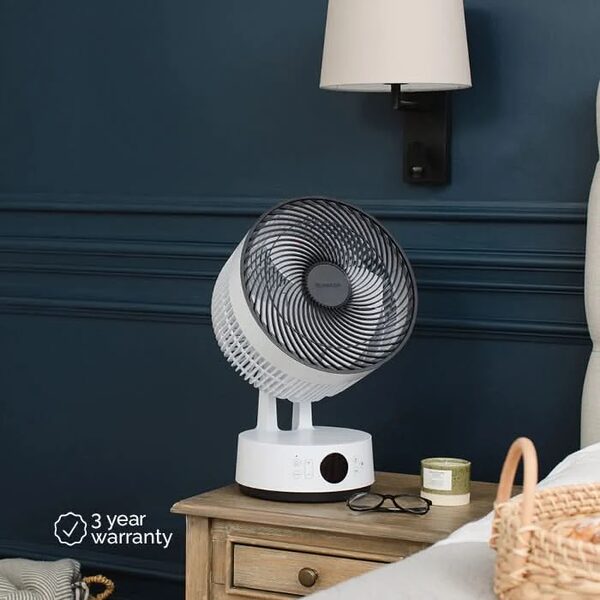
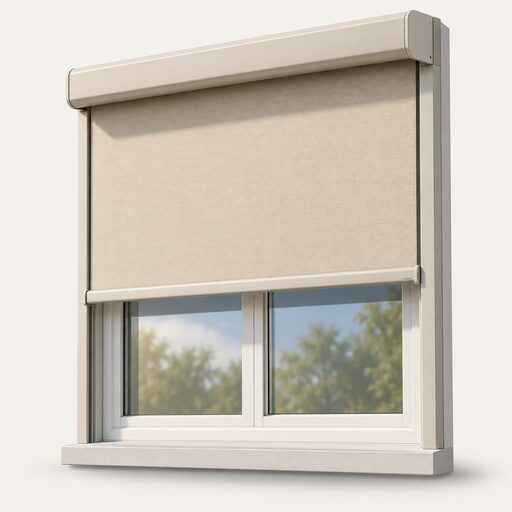
The measures that reduce indoor heat are well documented and mostly free. Independent guidance advises turning off lights and electrical equipment that are not in use, turning all heating off, and closing blinds and curtains on windows during the day before opening them when the air feels cooler outside than inside at night5. Independent guidance adds that a well insulated home is usually easier to keep cool, with ventilation by opening windows at night and using extractor fans and vents18.
Fans have a specific and limited role. Independent guidance states that fans move air around to create a cooling sensation on your skin and do not lower the temperature of a room3. The same guidance gives the limit: if the room temperature is above 35 degrees, a fan will likely heat you up rather than cool you down19. Below that threshold a fan is useful; above it, it works against the occupant.
For the person rather than the building, independent guidance advises ensuring that those with underlying health conditions have medication, planning activities for times of the day when it is cooler such as the morning or evening, and keeping those you care for out of the sun at the hottest time of the day5.
That caution cuts both ways. Independent guidance on boiler flow temperature states that if the house gets too cold it could be dangerous for older residents, people with health conditions and anyone living in a home that is already underheated21. Independent guidance on heating one room notes that if there are elderly or disabled people or young children in the home, heating one room is not advised22. And independent guidance on radiator valves repeats the same warning about vulnerable household members20. Cooling measures and heating measures both have to be judged against the same person.
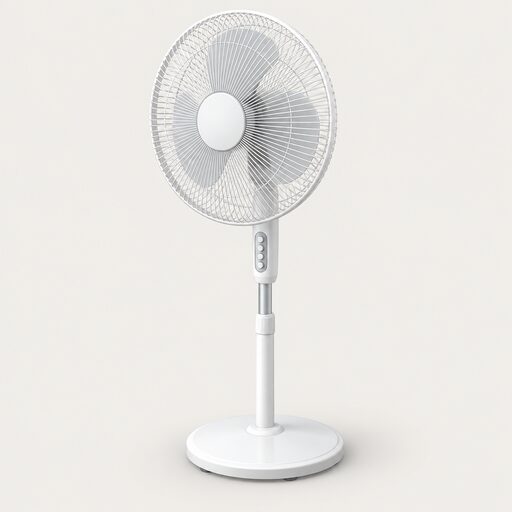
Where a household is considering mechanical cooling, the options and their limits are set out in electric fans for cooling a home, portable air conditioners and passive cooling. For the wider picture of who is at risk and how indoor temperatures are assessed, see heatwaves and health at home.
When overheating becomes a medical emergency
The line between discomfort and emergency is drawn by symptoms, not by a thermometer reading. Independent guidance is that the advice is always to dial 999 if there are signs of heatstroke5. Official guidance for carbon monoxide exposure with symptoms suggesting high levels is to go immediately to your local emergency department16.
Two structural points sit behind that advice. The first is that the risk is not confined to declared emergencies: most heat-related mortality occurs during yellow alert periods1. The second is that the assessment of overheating risk in a dwelling is a formal process, not a judgement call. Independent guidance notes that an accompanying assessment protocol is available to determine the seriousness of a potential threat to health from exposure to high temperatures within a dwelling2.
The official view of how long this problem lasts is long. Independent guidance states that measures to prevent overheating are required in most cases between now and 205023. The Climate Change Committee has recommended further research to understand when overheating occurs in existing homes, including ongoing monitoring of temperatures in the housing stock and the number of homes currently adapted8. In other words, the evidence base for exactly which homes endanger which occupants is still being built.
For a household, the practical position is this. An older person in a UK home is in the group that accounts for the overwhelming majority of heat-related deaths1. The home is more likely than not to overheat at some point3. The measures that reduce the risk are known, cheap and mostly about timing: heat off, lights and equipment off, blinds closed by day, windows open at night, fans used within their limits, and a person kept out of the sun at the hottest part of the day5. The emergency rule is a phone call, not a judgement5.
Sources23 cited
- Are London's homes ready for a heatwave? Call for Evidence, London Assembly, 2026
- Overheating Guidance, BRE, 2026
- Summer energy tips, National Energy Action, 2026
- Progress in reducing emissions: 2026 report to Parliament, Climate Change Committee, 2026
- Beat the heat: how to stay cool in a heatwave, Cadent Gas Foundation, 2026
- Fuel poverty in summer, National Energy Action, 2026
- 7 tips to keep your home cool during a heatwave, Elmhurst Energy, 2025
- Risks to health, wellbeing and productivity from overheating in buildings, Climate Change Committee, 2026
- Cold homes and health, Centre for Sustainable Energy, 2026
- Make your home more comfortable in warmer weather, Plymouth Energy Community, 2026
- How well do homes in England cope with extreme weather, Nesta, 2026
- COBRA meeting called as heatwaves continue to cause deaths, End Fuel Poverty Coalition, 2026
- Scottish Building Regulations: proposed changes to energy standards, Scottish Government, 2021
- Considering summertime overheating in highly insulated homes, Welsh Government, 2024
- Energy assessment guidance, Greater London Authority, 2022
- Carbon monoxide poisoning, nidirect, 2026
- How to avoid overfiring your wood burner, HETAS, 2026
- Make sure your home is energy efficient, Citizens Advice, 2026
- How to keep your home cool in hot weather, Centre for Sustainable Energy, 2026
- Radiator valves, Smart Energy GB, 2026
- Should I turn my boiler's flow temperature down?, Energy Saving Trust, 2026
- Heat the whole house or one room?, Uswitch, 2026
- Mitigating overheating risk in future climates, Passivhaus Trust, 2015
 Overheating and Hot WeatherIs your home getting uncomfortably hot in summer, and is there anything you can do about it?
 Heatwaves and HealthWhich homes get dangerously hot in a heatwave, and which rooms?
 Older People and Home EnergyOlder people often pay more to keep warm and can miss out on help they are entitled to.
 Cold Homes and HealthCold homes cause real harm, especially to older people and anyone with a heart or lung condition.
 How a Home Loses HeatWhere does most heat actually escape from a UK home, and does it change with the age or type of house?
 Overheating and Solar GainWhy do well-insulated homes get too hot in summer, and which windows cause the worst solar gain?