
In this answer
Short answer
The figure that answers this question most directly is 18 °C. The Met Office advises heating your home to at least 18 °C, and says this matters particularly if you have reduced mobility, are 65 or over, or have a health condition such as heart or lung disease1. The Centre for Sustainable Energy gives the same floor, describing 18 °C as the recommended minimum temperature for a home2.
Above that floor sits a range. The rooms used most should be between 18 and 21 °C, according to the same health guidance, which links that band to keeping warm and avoiding damp building up2. The Energy Saving Trust puts the thermostat at the lowest comfortable temperature, which for most people is between 18 °C and 21 °C3. So 18 °C is the point below which health advice says a home should not sit, and 21 °C is the top of the band most people find comfortable.
The reason the floor exists is that cold is a health exposure, not just an inconvenience. Cold homes can cause or worsen a range of serious conditions including heart attacks, strokes, bronchitis and asthma4. The National Energy Action position is echoed by the Institution of Gas Engineers and Managers, which uses the same wording5.
The minimum: 18 °C is the floor for health
The 18 °C figure is repeated across official and independent sources with unusual consistency. The UK Health Security Agency and similar public health bodies advise maintaining at least 18 °C in the main living areas of the home to prevent poor health effects8. The World Health Organization recommends a room temperature of 18 °C for healthy individuals7, and consumer guidance notes that according to the WHO the figure can be reduced to as little as 18 °C for healthy adults9.
For households with someone more vulnerable to cold, the advice tightens rather than loosens. The Met Office says people who are 65 and over or who have pre-existing health conditions may find bedroom temperatures of at least 18 °C helpful overnight1. The NHS recommends heating your home to at least 18 °C, and not below 16 °C for older people or those with impaired mobility6. That 16 °C figure is a floor beneath the floor: it is the point below which the advice says a vulnerable person's home should not fall at all.
What drives the difference between 18 °C and 16 °C is who is in the house. A healthy adult generates and regulates heat differently from someone who is frail, immobile or living with a circulatory or respiratory condition. The guidance is written so that the general figure protects most people and the higher figure protects those for whom cold carries more risk.
For a household's energy independence, this is the awkward part of the picture. A minimum temperature is a minimum spend, and it is not discretionary in the way that, say, running a tumble dryer is. A home that is cold because the heating has been switched off to save money is trading a bill against a health risk, and the advice is explicit that the trade is a bad one for vulnerable occupants. That is why so much of the support system, from cold weather payments to warm home schemes, is framed around temperature rather than around comfort.
Recommended range: 18 to 21 °C in the rooms you use
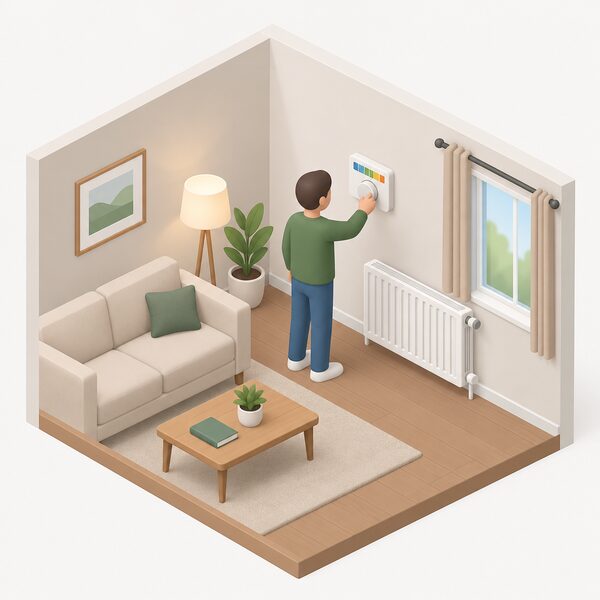
The band from 18 to 21 °C appears in guidance from bodies with quite different remits, which is a sign it is a settled figure rather than one organisation's preference. The Centre for Sustainable Energy describes 18 to 21 °C for the rooms you spend most of your time in2. Which? gives 18 to 21 °C as the ideal temperature range10. Scope, the disability charity, gives the same band as the ideal temperature for your home11. The Centre for Sustainable Energy's own testing guidance describes a healthy and comfortable room temperature as between 18 and 21 °C12, and Northern Gas Networks advises keeping the room you spend most time in between 18 °C and 21 °C to avoid potential health problems13.
The range exists because comfort varies between people and between rooms. A living room where someone sits still for hours feels colder than a hallway at the same temperature. A bedroom used for sleeping has its own figures, covered below. The 18 to 21 °C band is best read as the target for the rooms where time is actually spent, not as a single number for the whole house.
There is a practical consequence for how a home is run. Heating every room to the top of the band costs more than heating the occupied rooms to the middle of it, and the guidance supports the second approach: the rooms used most get the attention, and the rest are kept above the level at which pipes freeze and damp takes hold. Radiator valves allow individual rooms to be set differently, which is how that approach is put into practice14.
Where the four nations differ is mainly in the support available rather than the temperature advice itself. The health guidance is UK-wide. The schemes that help pay for warmth are not: Scotland runs pension age winter heating, child and disability payments through Social Security Scotland15, and the Pension Age Winter Heating Payment is administered there, with a small number of people needing to apply16. In England, the Warm Homes: Local Grant and Warm Homes: Social Housing Fund have published statistics and a methodology note covering how those figures are produced17. Households looking for help should start with the scheme for their nation rather than assuming the English one applies.
Who needs the higher end: over 65s, limited mobility and health conditions
The groups for whom 18 °C is a floor rather than a target are named consistently. The Met Office singles out reduced mobility, being 65 or over, or having a health condition such as heart or lung disease1. The Centre for Sustainable Energy lists people with existing health conditions, people with certain disabilities, children and the elderly as higher risk categories18. The Committee on Climate Change's research on buildings and energy found that a substantial number of UK homes experience temperatures judged too low, below 18 °C, for the health of vulnerable people, a group it defines as under five, over 60 and those in ill health19.
The health conditions that cold worsens are broader than respiratory illness alone. Circulatory problems, diabetes, arthritis and mental health issues can all be made worse by living in a cold home2. That list matters because it means the risk is not confined to people who already think of themselves as unwell. Someone managing a long-term condition that seems unrelated to temperature may still be affected by a cold house.
"Cold homes can cause or worsen a range of serious health conditions including heart attacks, strokes, bronchitis, and asthma."
For households in these groups, the practical question is often about overnight temperatures rather than daytime ones. The Met Office advises at least 18 °C in the bedroom overnight for people aged 65 and over or with pre-existing health conditions1. That is higher than the general bedroom guidance for healthy adults, and it reflects the fact that body temperature falls during sleep and that older people may not feel cold as readily as younger ones.
Support is structured around these groups. ECO Flex identifies households as low income and vulnerable, with an occupant whose health conditions may be impacted further by living in a cold home, and includes an NHS referral route20. In Scotland, payments cover pension age winter heating, child and disability categories15. The pattern across the UK is that eligibility for help with heating is tied to health and age, which mirrors the temperature advice itself.
Where the figures come from: NHS, WHO and other sources
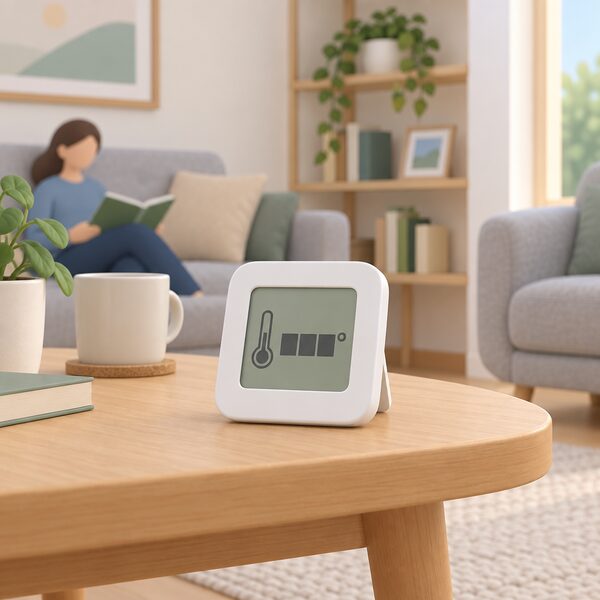
The 18 °C figure traces back to two main bodies. The World Health Organization recommends a room temperature of 18 °C for healthy individuals7, and its general advice is often given as 18 to 21 °C21. The NHS advises keeping your home at least 18 °C during colder weather, especially if someone in the household is older or more vulnerable to the cold22. The UK Health Security Agency's Cold Weather Plan sets at least 18 °C for homes in England21.
The 18 to 21 °C band comes from a wider set of organisations. The Energy Saving Trust advises setting the thermostat to the lowest comfortable temperature, which for most people is between 18 °C and 21 °C3. British Gas Energy Trust gives the same range as suitable for most people to be comfortable23. The Energy Saving Trust's Christmas guidance repeats it24, and Oftec's heating tips give 18 to 21 °C as the ideal range25. Plymouth Energy Community's health guidance gives at least 18 °C as the recommended minimum26.
"The World Health Organization and NHS recommend keeping your home at 18°C or warmer to protect your health."
The convergence is worth noting because these bodies are not coordinating. A consumer body, a fuel poverty charity, a heating trade association and a public health agency arriving at the same band suggests the figure is well established rather than contested. Where sources differ, it is in emphasis: health bodies stress the floor, energy bodies stress the range and the cost of exceeding it.
One point of uncertainty is worth flagging. Guidance on thermostat settings includes a recommendation to start at 21 °C and reduce by one degree at a time, alongside the 18 to 21 °C range, and the two are not reconciled. Similarly, advice on a minimum set-back temperature gives 16 °C in one place and a figure two or three degrees below your comfortable temperature in another. Both figures stand.
Comfort versus the thermostat: why 21 °C is often the setpoint
A thermostat set to 21 °C is not a claim that 21 °C is required for health. It is the top of the comfortable band, and it is a common setpoint because it gives a margin: a room that reaches 21 °C at the thermostat will be warm enough throughout, whereas one set to 18 °C may leave the far corner of a room cooler than the figure suggests. Guidance notes that thermostats are usually set to between 18 °C and 21 °C28, and that for healthy adults a setting between 18 °C and 21 °C is often cited as the ideal comfort and efficiency zone8.
The setpoint also interacts with how a home is run. Programmable controls allow a lower set-back temperature, described as a minimum you do not want your home to drop below, for example not below 16 °C overnight or when out3. That is different from switching the heating off: the set-back holds a floor while the main schedule handles the occupied hours.
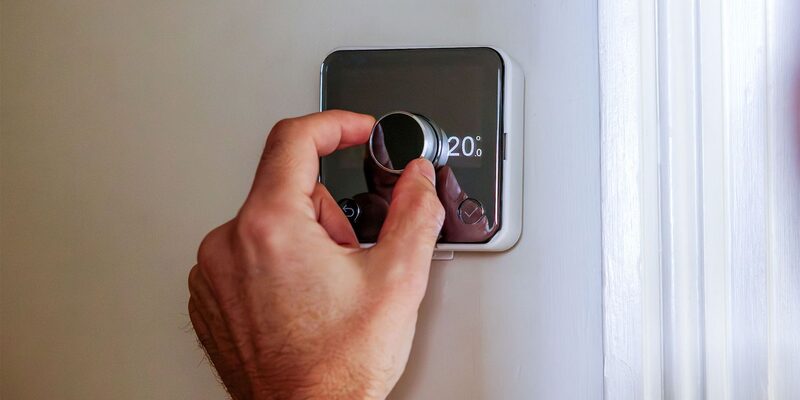
For households thinking about independence, the thermostat is the point where comfort, cost and health meet. A home that can hold 18 °C in the rooms used most, without relying on a single fuel or a single supplier, is in a stronger position than one that can only reach that figure by running the heating longer. Insulation, draught-proofing and heating controls all change how much energy is needed to hold a given temperature, which is why the temperature advice and the energy efficiency advice point in the same direction.
Bedrooms at night: 16 to 18 °C, and higher for some
For most people, 15 °C is too cold for a bedroom at night. Guidance for UK bedrooms puts the range for sleeping at 16 °C to 18 °C, noting it may be slightly higher for older adults22. The Centre for Sustainable Energy gives 18 °C as the recommended night time bedroom temperature, while acknowledging some people may be more comfortable slightly cooler2. The Met Office advises at least 18 °C overnight for people aged 65 and over or with pre-existing health conditions1.
So 15 °C sits below every figure given for a bedroom at night. The gap between the general range and the advice for older or unwell occupants is the important part: a bedroom at 16 °C may be fine for a healthy adult and too cold for someone in a higher risk group.
Away settings and unoccupied rooms
Away settings are about protecting the building rather than keeping anyone comfortable. Separate advice for unoccupied rooms puts the figure at least 5 °C to avoid pipes freezing, or damp and mould developing7. The two figures serve different purposes: 5 °C is the absolute floor for the fabric of the building, while 12 to 15 °C is a more comfortable return temperature that still avoids freezing.
Programmable thermostats can hold a set-back temperature instead of switching off entirely, described as a minimum you do not want your home to drop below, for example not below 16 °C overnight or when out3.
Room by room: living room 21 °C, other rooms 18 °C
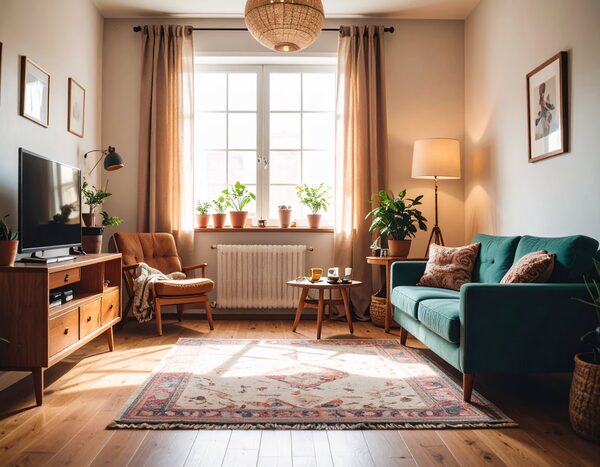
The figures differ by room, and the clearest statement of the split comes from fuel poverty guidance: for households not requiring an enhanced heating regime, 21 °C in the living room and 18 °C in other rooms29. Health guidance describes 18 to 21 °C for the rooms you spend most of your time in2, and the Met Office points to at least 18 °C in rooms regularly used such as a bedroom or living room21.
The practical reading is that the living room, where people sit still for long periods, gets the higher figure, and other rooms get the floor. Rooms that are not used at all still need enough heat to prevent problems, which is where the 5 °C figure for unoccupied rooms comes in7.
Older people living alone: below 18 °C is too low
Below 18 °C is judged too low for the health of vulnerable people, a group that includes those under five, over 60 and people in ill health19. The NHS recommends a minimum of 18 °C over the winter months for people over 65, those not very mobile or with a health condition30, and advises not below 16 °C for older people or those with impaired mobility6.
For someone living alone, the risk is compounded because there is no one else to notice a cold house or a deterioration. That is part of why the support schemes are targeted at this group, and why the temperature advice for them is stated as a minimum rather than a preference.
Cold homes and health risk, even when you feel fine
The evidence says yes. Cold homes can cause or worsen serious conditions including heart attacks, strokes, bronchitis and asthma4, and the same wording appears in the Institution of Gas Engineers and Managers' fuel poverty material5. Circulatory problems, diabetes, arthritis and mental health issues can be made worse by living in a cold home2.
Feeling fine is not a reliable guide, because the conditions on that list develop over time and because some people, particularly older adults, do not perceive cold as acutely as others. The temperature figures exist precisely because comfort and health risk do not always coincide.
Keeping rooms warm without turning the heating up
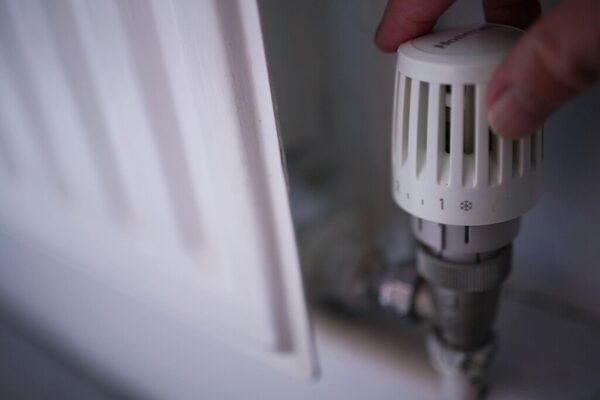
The measures that appear in official and independent advice are about keeping heat where it is wanted and managing moisture. Radiator valves allow individual rooms to be controlled14, and heating controls set to a schedule keep the occupied hours warm without running the system continuously28. Home Energy Scotland advises keeping your home heated to at least 15 °C, particularly during colder months, as a condensation prevention measure31, and the Centre for Sustainable Energy advises keeping rooms at least 5 °C to avoid pipes freezing or damp and mould developing7.
For renters, the scope for changes is narrower, and the advice reflects that: don't go below 18 °C if you have health concerns, are elderly or have small children in the house33. Where a rented home cannot be kept warm, the routes to action run through the landlord and, in some cases, the local authority.
Low all day or in bursts: what the guidance says
There is no single rule, and the guidance is about damp as much as comfort. One consumer source suggests that having your heating on a constant low heat may be better for damp, and for your air temperature, than frequently swinging between hot and cold32. That is a statement about moisture and building fabric rather than a universal prescription.
The alternative approach uses a set-back temperature rather than a full switch-off, holding a floor overnight or when out while the main schedule handles the hours when rooms are occupied3. Which suits a particular home depends on its insulation, its damp behaviour and how it is occupied, and the documents do not settle the question in favour of either.
Sources33 cited
- Keeping your home warm in winter, Met Office, 2026
- Cold homes and health, Centre for Sustainable Energy, 2026
- Thermostats and heating controls, Energy Saving Trust, 2026
- What is fuel poverty?, National Energy Action, 2026
- Join the conversation on fuel poverty, Institution of Gas Engineers and Managers, 2025
- Common heating mistakes and how to avoid them, Which?, 2026
- No cost and low cost energy saving, Low Carbon Hub, 2026
- The best way to run your central heating to save money, Ivie, 2026
- Spread the warmth, Electricity North West, 2026
- Tips to reduce your heating bills, Which?, 2026
- Energy saving tips, Scope, 2026
- Testing the air quality, temperature and humidity of your home, Centre for Sustainable Energy, 2026
- Energy efficiency, Northern Gas Networks, 2026
- Radiator valves, Smart Energy GB, 2026
- Benefits, Social Security Scotland, 2026
- Pension Age Winter Heating Payment, mygov.scot, 2026
- Warm Homes: Local Grant and Warm Homes: Social Housing Fund statistics methodology and background note, GOV.UK, 2026
- Cold homes and health, Plymouth Energy Community, 2026
- Buildings energy findings report, Centre for Research into Energy Demand Solutions, 2026
- ECO4 scheme, West Lindsey District Council, 2025
- Turning down thermostats, Smart Energy GB, 2026
- Maintaining the ideal home temperature, Smart Energy GB, 2026
- Energy savings tips, British Gas Energy Trust, 2026
- Christmas energy saving tips, Energy Saving Trust, 2026
- 10 top tips for homes to save on heating bills this Christmas, Oftec, 2024
- Energy saving tips for the home, Confused.com, 2026
- Your warm home prescription, Energy Systems Catapult, 2026
- Everything you need to know about heating controls, Plymouth Energy Community, 2026
- Fuel poverty, Energy Advice Scotland, 2026
- Cheap ways to stay warm this winter, Which?, 2026
- Make your home warmer, Home Energy Scotland, 2026
- How to stop condensation, Which?, 2026
- Energy saving advice for renters, Centre for Sustainable Energy, 2026
 Thermostat and Room TemperaturesWhat temperature should a thermostat be set to, and does it differ from room to room?
 Cold Homes and HealthCold homes cause real harm, especially to older people and anyone with a heart or lung condition.
 Floor InsulationHow much warmth escapes through the floor, and is it worth insulating?
 Heatwaves and HealthWhich homes get dangerously hot in a heatwave, and which rooms?
 Ventilation and TemperatureWhere can you put a home battery so it stays warm enough in winter and cool enough in summer?
 Flow TemperatureTurning down your boiler flow temperature can cut your gas bill, but how low can you go before the house feels cold?