
In this guide
Heat pumps are technically suitable for most UK homes if installed appropriately, according to parliamentary research1. The same briefing notes that 90% of UK homes have sufficient insulation and electrical capacity to operate a heat pump, yet heat pumps are currently installed in only 1% of UK homes1. The gap between what the housing stock can take and what has actually been fitted is the central fact about suitability in the UK.
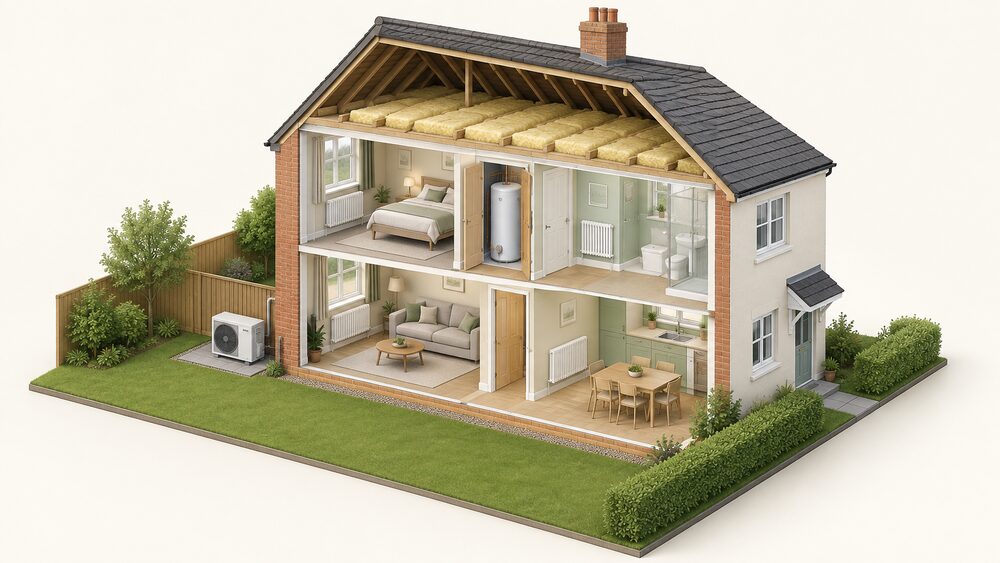
That does not mean every home is straightforward. Suitability turns on four practical questions: whether there is somewhere outside for a unit or a ground loop, whether there is room inside for a hot water cylinder, whether the existing emitters can deliver heat at the flow temperature the system runs at, and whether the property sits in a location where permitted development rights apply. Get those four right and the technology is unremarkable. Get one wrong and the cost of the installation rises, sometimes sharply.
Air source heat pumps are the most common type of domestic heat pump in the UK and are suitable for most types of home3. Ground source units are better suited to those with a large garden or outdoor space to run a loop of underground pipes or sink boreholes3. The rest of this page works through what each home type needs, and where the limits genuinely bite.
The short answer: most UK homes can take a heat pump, but the details decide the cost
The technical case is settled. Parliamentary research states that heat pumps are technically suitable for most UK homes if installed appropriately1. A separate committee finding puts the same point in numbers: 90% of UK homes have sufficient insulation and electrical capacity to operate a heat pump2. The government's own consumer campaign goes further, reporting that studies suggest 90% of UK homes already have enough insulation to run a heat pump7.
What varies is cost, and cost is driven by adaptation rather than by the unit. Heat pump installation costs are higher than gas boilers, in part due to the need for additional retrofitting1. Energy Saving Trust lists the factors that move the figure: the size of the property, whether it is a new build or an existing house, and how much work is needed to adapt the existing heating system3. A well-insulated semi with oversized radiators and a spare cupboard is a different job from a solid-walled terrace with a combi and no cylinder space.
The policy backdrop matters for timing. Approximately 10% of existing homes in the UK will need to be heated by a heat pump by 2030, compared with only approximately 1% today, according to the Climate Change Committee8. That is a target, not a rule, but it indicates the direction of travel for grants, standards and, eventually, the replacement market.
For a household, the practical reading is this: the question is rarely whether a heat pump can work, but what has to change for it to work well. Those changes are space, emitters, insulation and consent, and each is dealt with below.
Air source or ground source: which fits which home
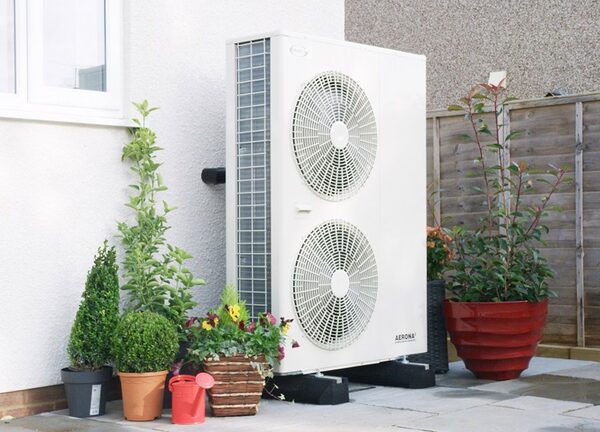
Air source heat pumps absorb heat from the outside or surrounding air and transfer it into usable heat in the home for space or water heating, or both9. Ground source heat pumps transfer energy from the natural heat stored in the earth to heat the home and domestic hot water9. Both are established technologies with the same end result; they differ in where the heat comes from and what that demands of the property.
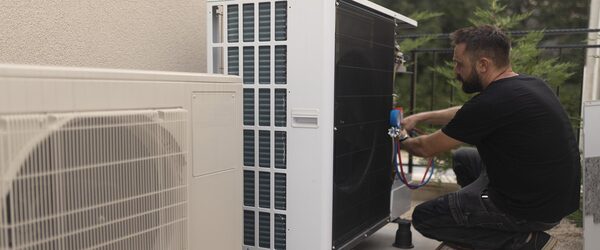
Air source is the default for most homes. It is the most common type of domestic heat pump in the UK and is suitable for most types of home3. It needs one outdoor unit, which can be wall-mounted or ground-standing, with space around it for a good flow of air4. That is achievable on a terrace, a semi, a bungalow or a flat with an accessible external wall.
Ground source suits properties with land. Energy Saving Trust describes ground source systems as better suited to those who have a large garden or outdoor space to run a loop of underground pipes or sink boreholes3. The guidance is explicit that a ground source installation needs outside space for trenches or boreholes, described as deep holes in the ground, and enough room inside for a heat unit10. For a rural off-gas property with a paddock or a large garden, that is often available. For a mid-terrace with a yard, it usually is not.
There is a third consideration that applies to both: building regulations. Installation of either a ground source or air source heat pump will have to comply with the Building Regulations11. That covers electrical work, structural fixing, and in the case of ground arrays, the flushing and pressure testing of the pipework. Ground arrays, including header pipes and manifolds, should be flushed as one system to remove all debris and purged to remove all air, and a pressure test in accordance with BS EN 805, section 11.3.3.4 should be conducted13. Commissioning information provided to the dwelling owner should include details of the fluids used and their commissioned concentrations13.
Awareness of the options is not evenly spread. People living in owner-occupied households were more likely than those in rented households to say they were aware of both technologies, with 78% of owner-occupiers aware of ground source14. That matters because rented households have less control over the fabric of the building and less ability to authorise an installation.
Insulation first: why well-insulated homes get the best results
Heat pumps are best suited to buildings with good insulation levels, and insulation may need to be added internally or externally if homes do not already have good levels15. The Northern Ireland guidance is blunter: in all cases, proper insulation is needed for the best performance16.
The reason is straightforward physics. A heat pump delivers heat at a lower flow temperature than a boiler, so the building loses heat at a rate the system has to keep pace with. The faster the building loses heat, the harder the system works and the lower its efficiency. Solid walls lose even more heat than cavity walls, which is why period properties with uninsulated solid walls are the classic difficult case17.
Where insulation is added, the options have different implications. External solid wall insulation needs a thickness of between 50 and 100mm17. Internal insulation and plasterboard laminates usually consist of plasterboard backed with insulating material typically to a total of up to 90mm17. Both help create a more even temperature in the home, help prevent condensation on the walls and ceilings, and can reduce the amount of heat building up inside during summer hot spells17.
The headline reassurance is that most homes do not need this work. The finding that 90% of UK homes have sufficient insulation and electrical capacity to operate a heat pump is the single most useful number for a household wondering whether it is in the difficult minority2. The government campaign repeats the same figure for insulation specifically7.
What insulation does for independence is reduce the amount of energy the household has to buy at all, whatever the source. A well-insulated home needs less delivered heat, which means a smaller heat pump, a lower running cost and less exposure to whatever the unit price of electricity happens to be.
Heating distribution: radiators, large radiators or underfloor heating
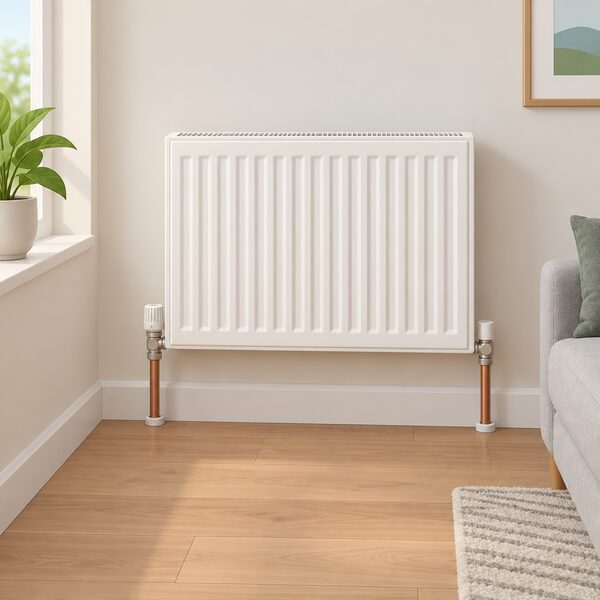
Heat pumps can work with radiators or underfloor heating, and some types can work without either19. That last clause matters: it means the presence of a wet radiator system is not a precondition, and it also means the absence of one is not a barrier.
For most retrofits, the existing radiators are the starting point. Whether they are adequate depends on the heat loss of the building and the flow temperature the system can run at, not on the age of the radiators. A heat loss calculation establishes what the building needs, and the emitter schedule follows from it. This is why a survey precedes any quotation, and why two installers can reach different conclusions about the same house.
Underfloor heating is often described as the ideal partner because it operates at lower flow temperatures over a larger area. It is not required. Where a floor is being replaced anyway, or where a new extension is being built, the marginal cost of adding it is lower than a retrofit into an existing finished floor.
The distribution system is also where the household's independence is most visibly at stake. A wet system filled with water and driven by a compressor and a pump is independent of the gas network entirely. What it depends on instead is electricity, and therefore on the grid and a supplier, unless the household also generates its own. That trade is the subject of Heat Pumps and Household Energy Independence.
For the detail of what emitters a heat pump needs and how they are sized, see Radiators, Underfloor Heating and Emitters for a Heat Pump.
Space and siting: what the outdoor unit and ground loop need
Space is the constraint that most often decides whether a home is straightforward or awkward, and it applies in two places: outside and inside.
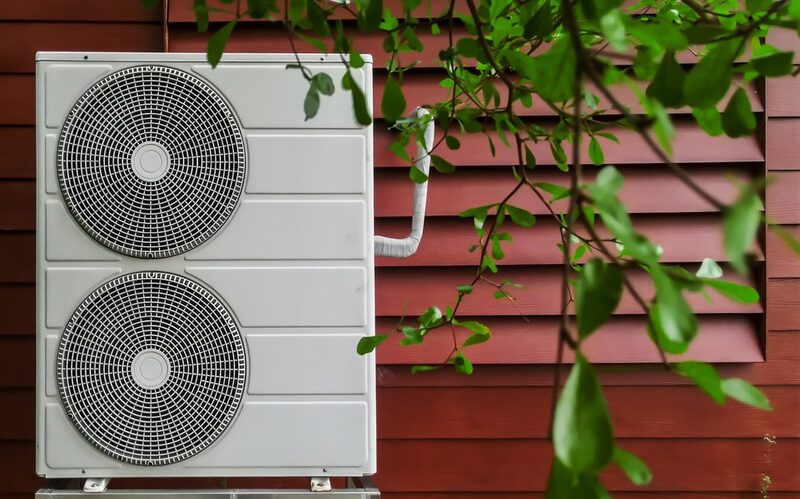
Outside, an air source unit needs somewhere it can fit to a wall or stand on the ground, with space around it to allow a good flow of air4. Under permitted development, the volume of the air source heat pump's outdoor compressor unit, including housing, must not exceed 1.5 cubic metres on a house or 0.6 cubic metres for a block of flats5. That is a generous envelope for a domestic unit, and it is the reason most terraces and semis can accommodate one on a rear wall or in a side return.
Inside, the requirement is a hot water cylinder. Unlike combi boilers, heat pumps do not provide hot water instantly, so a hot water cylinder is needed10. That is the single most common internal constraint in flats and small terraces, where the combi was chosen precisely because it removed the cylinder and freed the cupboard. The cylinder options and their sizing are covered in Hot Water Cylinders for Heat Pumps.
Ground source has a different space profile. It needs outside space for trenches or boreholes, described as deep holes in the ground, and enough room inside for a heat unit10. The internal unit is typically smaller than a cylinder plus an air source unit, but the external requirement is far larger. The design of those loops is covered in Ground Loops and Boreholes for Ground Source Heat Pumps.
Planning rules and noise limits: when you need permission and when you don't
Domestic heat pumps benefit from permitted development rights, which means that in most cases no planning permission is required to install them, subject to certain limitations and conditions20. That is the default position across England, and it is why most installations proceed without an application.
The exceptions are specific and worth knowing before a unit is ordered. Planning permission is required where the installation does not meet permitted development rules, where the property is a listed building, in a conservation area with restrictions, where the unit would be in a prominent position such as the front of the property, or where there would be an unacceptable impact on neighbours such as noise or visual impact20.
For listed buildings the position is firm. If the house or flat is a listed building, or within the garden or grounds of a listed building, planning permission is needed15. If the property is listed, both planning permission and listed building consent are normally required for an air source heat pump15. Richmond Council states that listed building consent is needed to install any type of heat pump in a listed property21. Cornwall Council confirms that an air source heat pump cannot be installed in a listed building or scheduled monument without planning permission22.
In a conservation area, the trigger is position rather than the technology. Planning permission is needed if the unit would be on a wall or roof which fronts a highway, or be nearer to any highway which adjoins the property than any part of the building15. If the property is in a listed building or a conservation area, the council should be contacted to check local requirements10.
Noise is the other condition. Noise levels for an air source heat pump on its own must stay at or below 42 decibels, measured a metre from any habitable room5. In the UK, the legal noise limit for heat pumps is 42 decibels10. If that level is exceeded, planning permission approval is needed5. Where a unit exceeds the MCS standards and permission is needed, Central Bedfordshire Council requires noise not to exceed 37 dB LAeq at any time, as measured on the boundary of the site with any neighbouring residential property23. The MCS 020 assessment produces a pass or fail: where the final result is equal to or lower than 42.0 dB(A), the air source heat pump will comply with the permitted development noise limit for that assessment position and may be permitted development24.
The four nations differ. Wales has its own permitted development regime for heat pumps, and the Welsh Government has published a phase 1 report on air source heat pump noise and permitted development rights25. Scotland and Northern Ireland have separate systems, and the devolved guidance should be checked for the property's location. The dedicated pages are Heat Pump Planning Permission in England, Heat Pump Planning Permission in Scotland, Heat Pump Planning Permission in Wales and Heat Pump Planning Permission in Northern Ireland.
Costs and grants: from around £12,000 for air source to £29,000 or more for ground source
Installation costs are higher than for gas boilers, in part due to the need for additional retrofitting1. Published figures vary widely by source and by property. The Energy Saving Trust puts ground source installation at £24,000 to £49,000 depending on the size of the property2, and at £14,000 to £19,000 for buying and installing in a separate estimate3. A UK installation typically costs between £18,000 and £45,000 before the Government grant4, while installations in England and Wales receiving a Boiler Upgrade Scheme grant ranged from around £18,672 to £38,162, excluding the grant payment5. Air source heat pumps can cost more than £10,000 to buy and install6.
For air source, independent guidance gives around £11,000 to install in one place and around £12,000 in another, with a separate range of £7,000 to £13,000 and a typical cost of around £14,000 according to Energy Saving Trust estimates3. For ground source, distributor guidance gives an average of £33,080 in one place and a range of £15,000 to over £30,000 in another3. These are not reconciled, and the spread reflects differences in property, specification and what is included.
What is consistent is that the grant reduces the household's share. The Boiler Upgrade Scheme grant level for air source heat pumps and ground source heat pumps increased to £7,500 from 23 October 20236. Ofgem's installer guidance from 21 July 2026 lists a £7,500 grant value for ground source heat pumps, with a six-month voucher validity period9. The same guidance lists a £9,000 grant value for a ground source heat pump in an off-gas grid property replacing an oil or liquefied petroleum gas heating system, also from 21 July 20269. The two figures appear in the same document and are not reconciled here; the £9,000 applies specifically to off-gas grid properties replacing oil or LPG.
| Measure | Grant value | Effective from | Source |
|---|---|---|---|
| Air source heat pump | £7,500 | 23 October 2023 | 6 |
| Ground source heat pump | £7,500 | 23 October 2023 | 6 |
| Ground source heat pump | £7,500 | 21 July 2026 | 9 |
| Ground source, off-gas grid replacing oil or LPG | £9,000 | 21 July 2026 | 9 |
VAT treatment is a live issue. The reduced rate position and the zero rate period are set out in HMRC guidance, and the dates on which rates change should be confirmed with an installer or supplier before a contract is signed.
For a household, the grant is the difference between a marginal and a viable proposition in many cases, and it is also the reason timing matters. The scheme rules, eligibility and the full list of funding across the four nations are set out in Heat Pump Grants and Funding Across the UK, with the cost breakdown in How Much Does a Heat Pump Cost in the UK?.
Running costs and savings: what you replace matters more than what you install
Running cost is where the household's energy independence is actually decided, and it depends far more on what the heat pump replaces than on which model is fitted.
The government provides a service that compares the cost and carbon emission savings available and what is needed to install a heat pump26. That is the appropriate starting point for any household weighing the change, because it accounts for the fuel being displaced rather than assuming a single national comparison.
The comparison that matters most is against mains gas, which is the cheapest commonly available heating fuel in the UK and therefore the hardest to beat on running cost alone. Against oil or liquefied petroleum gas, the position is different, because those fuels are bought in bulk at prices the household does not control and delivered to properties the gas network does not reach. Against electric resistive heating, a heat pump is straightforwardly more efficient, because it moves heat rather than generating it.
The published running cost figures for ground source systems vary widely. One source gives annual running costs of £1,050 to £1,650, another gives £540 to £9003. What drives the spread is the efficiency of the installation, the tariff the household is on, and the heat loss of the building.
Efficiency itself is reported differently by different sources. Air source heat pump coefficient of performance figures of 4.3 and 3.9 appear in the same independent guidance3. The gap between them is the gap between a well-designed installation and an average one, and it is the reason sizing and emitter design matter more than the badge on the unit.
For a household, the honest position is that running costs are not guaranteed to fall. What a heat pump does is change what the household depends on: from a delivered fuel with a volatile wholesale price to electricity, which can be bought on a tariff, generated on the roof, or stored in a battery. That shift is the substance of energy independence, and it is covered in Heat Pump Running Costs.
What size heat pump do I need for my house?

Sizing follows the building, not the floor area alone. The heat pump must be properly sized for the building's heating needs: an undersized unit may struggle to meet demand, while an oversized unit may cycle on and off often and lessen efficiency16. Both failure modes are common, and both are avoidable with a proper heat loss calculation.
The scheme rules give one concrete benchmark. Under the Warm Homes: Local Grant, the heat pump must be sized to provide a minimum of 55% of the calculated heat load for retrofit and packaged hybrids27. That is a grant condition rather than a design rule for every installation, but it shows the principle: sizing is expressed as a proportion of a calculated load, not as a rule of thumb.
The calculation itself is the foundation of the whole design. Without it, the emitter schedule, the flow temperature and the cylinder size are all guesses. The process is set out in Heat Pump Sizing and Heat Loss Calculations.
Where a heat pump falls short: homes and situations that are a poor fit
The limitations are real and worth stating plainly, because they are not solved by buying a larger unit.
- No land for a ground loop. Ground source needs outside space for trenches or boreholes and room inside for a heat unit10. A mid-terrace with a paved yard is a poor candidate.
- No space for a cylinder. Heat pumps do not provide hot water instantly, so a hot water cylinder is needed10. A flat that removed its cylinder to gain a cupboard has to find that space again.
- Listed status. Planning permission and listed building consent are normally required for an air source heat pump in a listed building, and listed building consent applies to any type of heat pump15.
- Conservation area frontage. A unit on a wall or roof fronting a highway, or nearer to a highway than any part of the building, needs permission15.
- Noise-sensitive boundaries. Where a unit cannot meet the 42 decibel limit, planning permission approval is needed, and a local authority may apply a 37 dB LAeq boundary condition5.
- Non-domestic buildings. Permitted development rights do not extend to non-domestic buildings, and planning permission may be required before installation20.
- Poor insulation with no scope to improve it. Heat pumps are best suited to buildings with good insulation levels, and insulation may need to be added internally or externally where levels are not good15.
The counterweight is that most homes are not in these categories. Air source heat pumps are suitable for most types of home, and 90% of UK homes have sufficient insulation and electrical capacity to operate one1. The difficult cases are a minority, and they are identifiable before any money is committed.
Getting quotes and checking suitability
Energy Saving Trust recommends getting quotes from at least three different installers to make sure of the best value for money4. Because cost depends on the size of the property, whether it is a new build or an existing house, and how much work is needed to adapt the existing heating system, quotes for the same house can differ substantially3.
The government provides a service that compares the cost and carbon emission savings available and what is needed to install a heat pump26. That is a useful first check before any installer visits, because it establishes the shape of the job.
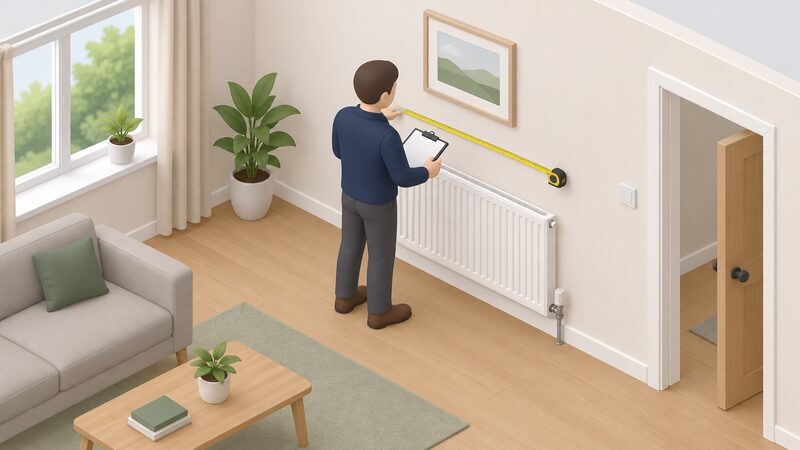
The sequence that works is: establish the heat loss, confirm the space for the unit and the cylinder, check the planning position for the specific address, then obtain at least three quotes against the same specification. The full process is set out in Heat Pump Installation: The Process from Survey to Handover, and the quote comparison in How many heat pump installer quotes should I get?.
Sources27 cited
- Heat pumps and the UK's net zero target, UK Parliament POST, 2026
- Decarbonising heat in homes, Environmental Audit Committee, 2025
- In-depth guide to heat pumps, Energy Saving Trust, 2026
- Air source heat pumps, Energy Saving Trust, 2026
- Planning permission: air source heat pump, Planning Portal, 2026
- Boiler Upgrade Scheme quarterly report, issue 6, Ofgem, 2023
- Heat pump campaign, UK Government, 2026
- UK off track for net zero, say country's climate advisors, Climate Change Committee, 2024
- Boiler Upgrade Scheme guidance for installers v5.1, Ofgem, 2026
- Air and ground source heat pumps, Croydon Council, 2026
- Heat pumps: building regulations, Planning Portal, 2026
- Building regulations: renewables guidance, Bedford Borough Council, 2026
- Approved Document L volume 1, consultation version, Welsh Government, 2025
- DESNZ public attitudes tracker: heat and energy use in the home, summer 2025, Department for Energy Security and Net Zero, 2025
- Heat pumps, New Forest District Council, 2026
- Heat pumps, nidirect, 2025
- Solid wall insulation, Planning Portal, 2026
- Permitted development rights for householders: technical guidance, UK Government, 2026
- Heating your home, Energy Saving Trust, 2026
- Air source heat pumps fact sheet, Pendle Borough Council, 2026
- Planning guidance: heat pumps, London Borough of Richmond upon Thames, 2026
- Air source heat pumps, Cornwall Council, 2026
- Air source heat pumps: householder planning advice, Central Bedfordshire Council, 2026
- ASHPs: noise and permitted development rights in Wales, phase 1 report, Welsh Government, 2024
- Planning permission for heat pumps, Welsh Government, 2026
- Check if a heat pump could be suitable for you, UK Government, 2026
- Warm Homes: Local Grant policy guidance, UK Government, 2026
 The Full Heat Pumps GuideWill a heat pump keep my house warm in winter, and what does one cost to buy and run?
 How They Perform in UK HomesHow well do heat pumps really work in UK homes, and why do some run far better than others?
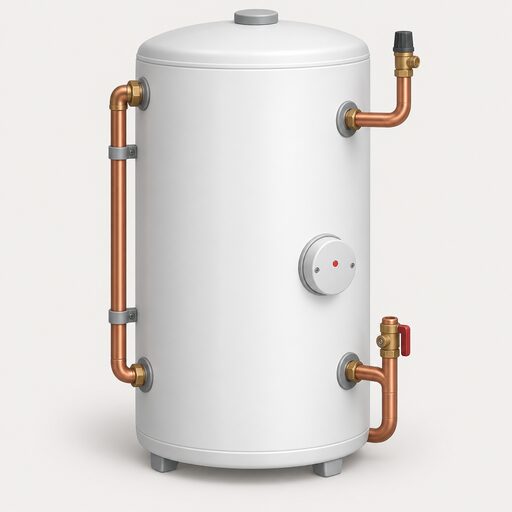 Air-to-Water Wet SystemsAir-to-water heat pumps feed radiators, underfloor heating and a hot water cylinder, and are the most common domestic heat pump in the UK.
 Policy, Targets and Coming RulesHeat pumps are central to the government's plans for greener home heating.
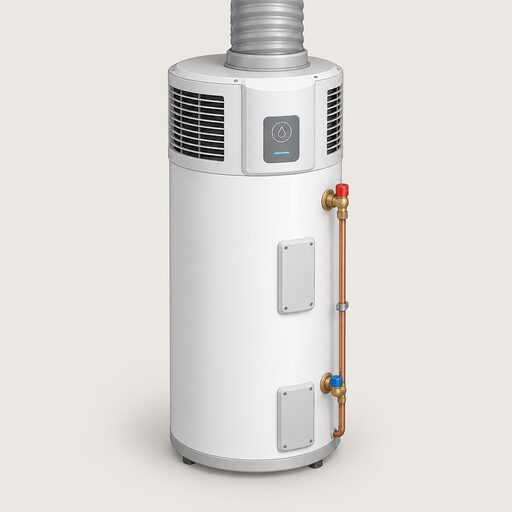 Hot Water Heat PumpsA hot water heat pump heats only the water in your cylinder, using air instead of a boiler flame.
 Where the Outdoor Unit Can GoWhere can you put a heat pump outside your home?