

In this answer
Short answer
The first step for any household planning solar panels, a heat pump, external insulation or new windows is to establish whether the property sits in a conservation area. The Planning Portal is direct on the method: "You can check with your Local Planning Authority to see if your proposed work is in a conservation area"1. That single check determines whether a project proceeds under permitted development or needs a planning application, and it costs nothing to ask.
A conservation area is a designated area, listed alongside other designations in the Planning Portal's guidance on permitted development rights2. In Scotland the legal definition is "an area of special architectural or historic interest [the character or appearance of which it is desirable to preserve or enhance] designated under section 61 of the Planning (Listed Buildings and Conservation Areas) (Scotland) Act 1997"3. The designation does not ban energy work. It removes the automatic right to do it without consent.
Checking with your Local Planning Authority
The Local Planning Authority is the body that holds the designation records, and it is the body the Planning Portal names for this check1. The same instruction recurs across project types. For a log burner or flue, contact the local planning authority if the property is in a conservation area9, and it is advisable to check before a flue is fitted where the building is listed or in a designated area10. For boilers and heating, the advice is to check with the local planning authority if the building is listed11, and Welsh Government guidance repeats it12.
The check is not a formality. Redbridge Council states that permitted development rights can be affected if a property is in a conservation area or is a statutory listed building13. The Planning Portal's own guidance on permitted development rights lists a conservation area among the designated areas that change what a household may do without an application2.
What the check establishes is narrow but decisive: whether the property is inside the designation. It does not decide the application, and it does not confirm that permission will be granted. For a household pursuing energy independence through rooftop generation or a heat pump, this is the gate that determines whether the project runs on a standard installation timetable or on a planning timetable.
What a conservation area means for proposed work
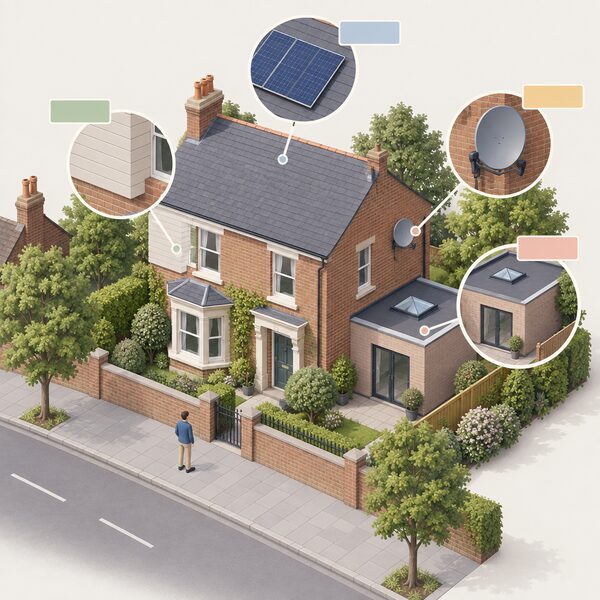
Inside a conservation area, the default position reverses. West Northamptonshire Council states that "in a conservation area, planning permission is required for work that would ordinarily constitute permitted development"5. The list of works caught by that reversal is long: exterior cladding, side extensions, rear extensions of more than one storey, roof extensions, chimney flue and soil vent pipe works, aerials and satellite dishes, solar panels, air source heat pumps, micro wind turbines, works to trees, and demolition of enclosure walls one metre high next to a highway or two metres elsewhere5.
The pattern holds across the nations. In Wales, planning permission is required for external wall insulation in a Conservation Area, National Park, Area of Outstanding Natural Beauty or World Heritage Site14, and information on removed permitted development rights sits on the planning register held by the Local Planning Authority15. Welsh guidance on solar electricity names conservation area consent where development is in a conservation area17. The Planning Portal's Wales pages state that in a Conservation Area, National Park or Area of Outstanding Natural Beauty, a householder will need to apply for certain work that would not need an application elsewhere18.
Scotland's position is set out in Circular 1/2024 on householder permitted development rights, which excludes Class 3B work where it would be within a conservation area or within the curtilage of a listed building19.
South Oxfordshire District Council summarises the practical effect: properties in a Conservation Area or a National Landscape are not automatically covered, and a householder may have to apply for planning permission to make changes21.
"In a conservation area, planning permission is required for work that would ordinarily constitute permitted development."
Where to find your Local Planning Authority
The Local Planning Authority is the planning department of your local council, and it is reached through the council rather than a national body. GOV.UK's guidance on when permission is not needed directs householders to "check with your LPA through your local council" for projects that will have no impact on neighbours or the environment22.
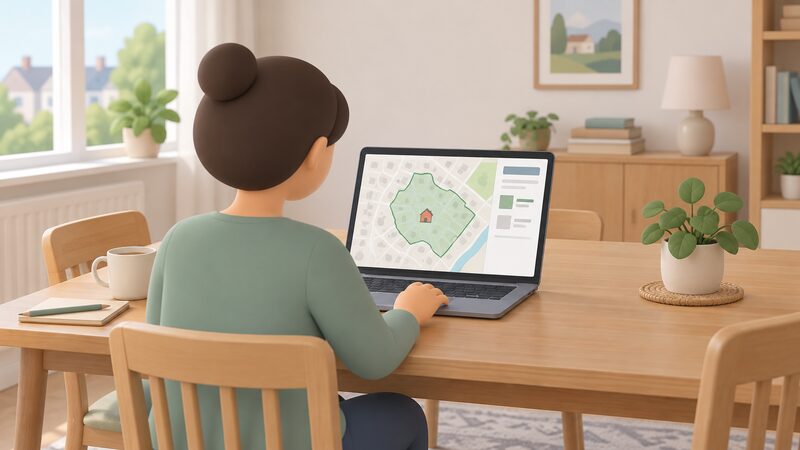
Some councils publish an online checker. Buckinghamshire Council's free service shows whether a property has any planning restrictions and whether changes you want to make to a property in the future may need planning permission4. Where a checker does not exist, the planning register is the fallback: information on removed permitted development rights is available on the planning register held by the Local Planning Authority14. That register matters because a conservation area designation is not the only restriction. Wandsworth Council notes that Article 4 Directions are in place for specific conservation areas and control some building works21, and Welsh guidance confirms a householder can check with the Local Planning Authority if unsure whether an Article 4 direction exists14.
For heritage-specific queries, some councils run a dedicated route. Brighton and Hove asks householders to email its conservation address for advice on whether Listed Building Consent is required23.
Does a conservation area check confirm whether I need planning permission?
No. The check tells you whether the property is designated. It does not tell you whether your specific proposal will be approved, and it does not replace an application. The Planning Portal separates the two steps clearly, advising a check on whether an application is required even where the proposal does not match the listed examples1.
Where the answer is that permission is needed, the route depends on the work. Air conditioning in a Conservation Area requires permission, and listed buildings require listed building consent24. External insulation on a Conservation Area or other protected area requires an application before changes to the outside of the house24. In Wales, a building in a designated area such as a conservation area, national park, area of outstanding natural beauty or the Broads requires planning permission12. Roof work follows the same logic: information on removed permitted development rights is available on the planning register15.
Some installations run through prior approval rather than full permission. For mounting solar equipment in a conservation area, a householder must apply to the local authority for prior approval, submitting a form to the Local Planning Authority that ensures the limits set out in legislation are met25. York Council states that planning permission would always be required if an office building is located within a conservation area26.
There is also a wildlife dimension. Wiltshire Council notes that where a project could affect protected habitats, a householder will need to check whether approval is needed before starting work28. Cornwall Council's Wildlife Assessment Check shows whether there are any protected wildlife species in the location of a proposal, and it is a free online tool7.
What information should I give when I ask my Local Planning Authority?
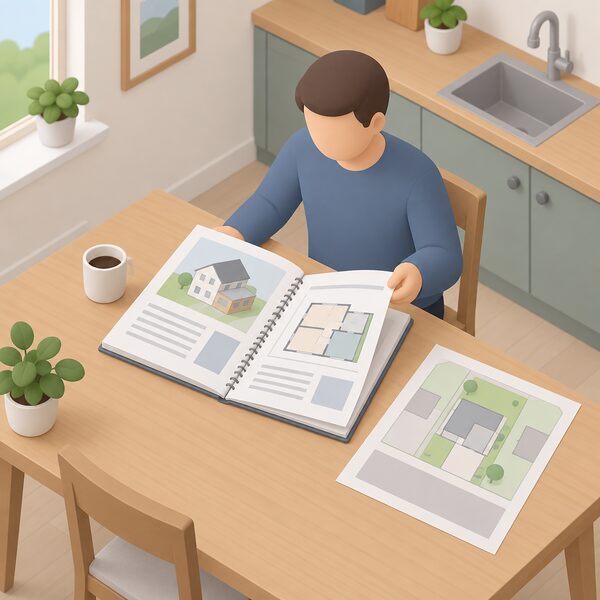
The enquiry should carry enough detail for the authority to judge the proposal, not just the address. For a householder planning application within a conservation area, a design and access statement is required6. The same requirement applies to solar installations on a site within a conservation area, and for commercial premises a listed building consent form is needed if the installation is on a listed building26.
For prior approval applications, the Planning Portal sets the standard: "The information provided should include all the details necessary for the Local Authority to determine if the proposal complies with permitted development legislation, and if its prior approval will be required and/or should be granted"25.
A practical enquiry therefore covers the address and designation status, the exact work proposed, the materials and dimensions, and any heritage or wildlife sensitivity on the site. Where trees are involved, the Local Authority will reply by either issuing a Tree Preservation Order or allowing the work to go ahead1.
What to do once you have checked
The result of the check sets the route. If the property is outside a conservation area and no Article 4 Direction applies, the work may fall under permitted development. If it is inside, the householder is in application territory, and the Energy Saving Trust's advice is to seek professional advice: "It's particularly important to seek advice if you have a listed building or live in a conservation area"29.
Two funding consequences follow from designation. The Welsh Government's Green Homes Wales loan standard terms exclude properties that are listed or are in a Conservation area that require additional permissions for works to be carried out30. The Retrofit Coordinator Grant terms carry the same exclusion8. A household in a conservation area may therefore find some publicly backed retrofit funding closed to it, even where the work itself would be approved.
For the household's energy independence, the check is the pivot. A conservation area does not prevent solar panels, heat pumps or insulation; it changes the process, adds a design and access statement, and in some cases adds a prior approval step. The dependence that remains is procedural rather than technical: the household still relies on the grid and a supplier for its everyday energy, and on the Local Planning Authority for consent to generate or insulate on its own terms. Bristol City Council's Clifton Conservation Area guidance illustrates how concentrated the heritage constraint can be, noting that approximately 25% (1307) of the city's listed assets lie within that one conservation area31.
Sources31 cited
- Conservation areas, Planning Portal, 2026-09-17
- Permitted development rights, Planning Portal, 2026-09-17
- Circular 1/2024: householder permitted development rights, Scottish Government, 2024-05-28
- Find out if you need planning permission, Buckinghamshire Council, 2026-09-17
- Planning and listed building consent requirements, West Northamptonshire Council, 2023-12-14
- Householder planning consent, Planning Portal, 2026-09-17
- Permitted development rights, Cornwall Council, 2026-09-17
- Retrofit Coordinator Grant terms and conditions, Development Bank of Wales, 2026
- What are the rules around fitting a log burner, Planning Portal, 2026-09-17
- Flue, chimney or soil and vent pipe: planning permission, Planning Portal, 2026-09-17
- Boilers and heating, Planning Portal, 2026-09-17
- Planning permission: boilers and heating, Welsh Government, 2026-09-17
- Permitted development, Redbridge Council, 2026-09-17
- Planning permission: external walls, Welsh Government, 2026-09-17
- Planning permission: roof, Welsh Government, 2026-09-17
- Planning permission: solar panels, Welsh Government, 2026-09-17
- Generating your own energy: solar electricity, Welsh Government, 2018-09
- Permitted development rights (Wales), Planning Portal, 2026
- Circular 1/2024: householder permitted development rights (PDF), Scottish Government, 2024-05
- Do you need planning permission for retrofitting, South Oxfordshire District Council, 2025-08-15
- What is permitted development, Wandsworth Council, 2026-09-17
- When you don't need it, GOV.UK, 2026-09-17
- Installing solar panels at your home, Brighton and Hove City Council, 2026-09-17
- Do I need planning permission to add air conditioning to my home, Planning Portal, 2026
- Prior approval, Planning Portal, 2026-09-17
- Solar panels, York Council, 2026-09-17
- Solar panels guidance, York Council, 2026-09-17
- Common queries about planning permission, Wiltshire Council, 2026-09-17
- Reducing home heat loss, Energy Saving Trust, 2026-05-20
- Green Homes Wales loan standard terms and conditions, Development Bank of Wales, 2026-09-17
- Clifton local listed building consent order guidance, Bristol City Council, 2025-02
 Listed Buildings and AreasYour home is listed or sits in a conservation area, so do you need permission before adding solar panels, insulation or a heat pump?
 Planning for InsulationDo you need planning permission to add insulation, cladding or new windows?
 Home Energy Planning WalesSolar panels and heat pumps often need no planning permission in Wales, but the rules differ from England.
 Building Regulations EnglandAdding a heat pump, solar panels or an extension usually needs building regulations approval, and it is separate from planning permission.
 Permitted Development by HomeCan you put up solar panels or a heat pump without asking the council?
 Permitted Development RightsDo you need planning permission for solar panels or a heat pump?