

In this answer
Short answer
Yes, an air source heat pump can be installed in a conservation area in Scotland, but the planning position is tighter there than on an ordinary house. In general, most heat pump installations are a permitted development, so planning permission is not needed1. Conservation areas are one of the stated exceptions, alongside listed buildings, and the advice is to check with the local planning department before committing1.
What changes inside a conservation area is siting rather than the principle. On land within a conservation area or World Heritage Site, the air source heat pump must not be installed on a wall or roof which fronts a highway, and must not sit nearer to any highway which bounds the property than any part of the building2. Where a proposal breaks that rule, planning permission is needed3.
The wider context is that Scotland is trying to make this easier, not harder. The Heat Pump Sector Deal Expert Advisory Group recommended that the Scottish Government issue guidance to local authorities so the planning system plays a fully strategic and proactive role in encouraging and supporting heat pump deployment4. For a household, the practical sequence is: check the designation, check the siting, then check whether a building warrant is also required.
What a conservation area is and why it restricts heat pumps
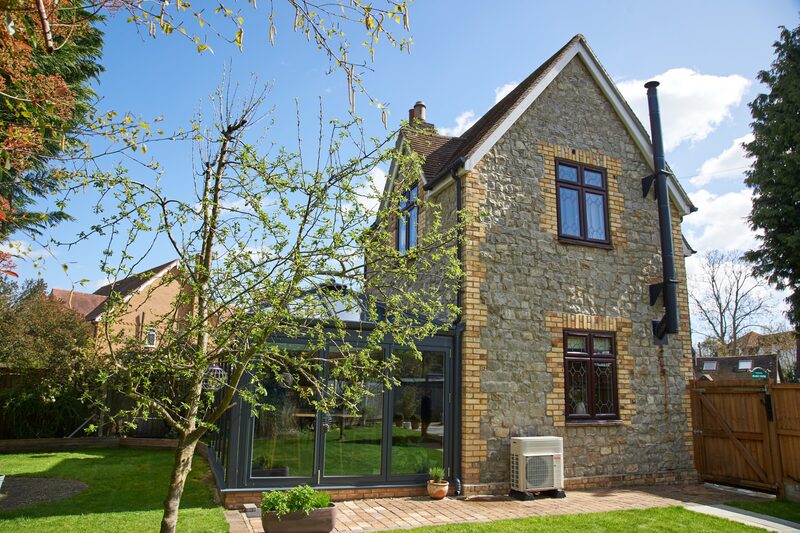
A conservation area is a designation that protects the character and appearance of a place, and it interacts with heat pumps through the permitted development rules rather than through a blanket ban. The restriction that bites is about visibility from the public road. Within a conservation area an air source heat pump cannot be installed on a wall or a roof which fronts a highway, or be installed so that it is nearer to any highway which bounds the curtilage than the part of the dwellinghouse which is nearest to that highway, meaning the pavement or road7.
The same rule appears in the England and Wales permitted development legislation, which states that in the case of land within a conservation area or which is a World Heritage Site the air source heat pump would not be installed on a wall or roof fronting a highway, or nearer to any highway bounding the curtilage than the nearest part of the building8. Local authority guidance repeats it in plainer terms: in a conservation area, no units can be nearer to any highway than any part of the building9, and installations are not permitted within a conservation area, on a listed building or on a scheduled monument where the unit would go on a wall fronting a highway10.
The logic is that a heat pump on a street-facing wall or roof is a visible change to the street scene, which is exactly what the designation exists to manage. A unit tucked into a rear garden or a side return, away from the road and no closer to it than the house itself, does not raise the same question. That is why the answer for a Scottish conservation area turns on where the unit goes, not on whether heat pumps are welcome.
Permitted development rights and when they do not apply
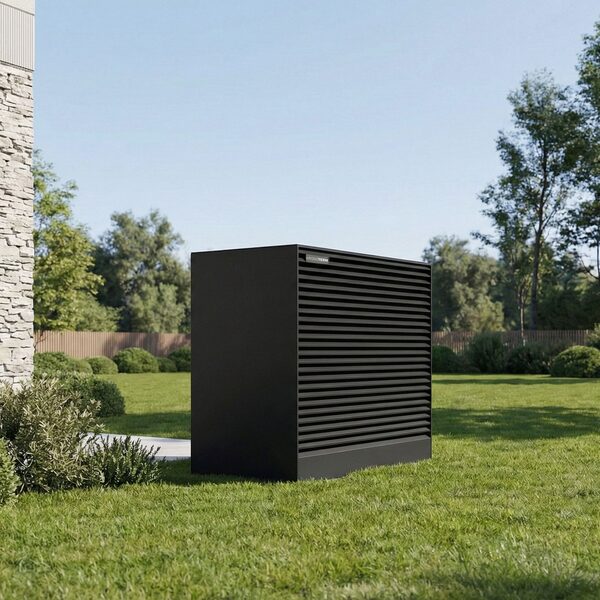
Permitted development rights are the general permissions that let certain work go ahead without a planning application. For heat pumps they exist, but they are conditional, and the conditions are what a conservation area household needs to read closely.
In Scotland, domestic air source heat pumps under the existing rights are subject to prior notification to the planning authority on siting and design11. That means the siting is put to the authority even where a full application is not needed. The rights themselves were introduced by amending the Town and Country Planning (General Permitted Development) (Scotland) Order 1992, through secondary legislation approved by negative parliamentary procedure12.
The conditions attached to the air source class include a use restriction: the air source heat pump must be used only for the purpose of providing domestic heating or hot water13. Ground source and water source heat pumps have their own classes in Scotland, covering the installation, alteration or replacement of a ground source heat pump and any associated pipes or apparatus within the curtilage of a dwellinghouse or building containing a flat14, and the equivalent for a water source heat pump14.
Where the rights do not apply at all is the important limit. Permitted development rights do not apply for installations within the curtilage of a listed building or within a site designated as a scheduled monument2. They also do not apply to commercial facilities9. And a proposal that would result in more than one air source heat pump being attached to a dwelling, or more than two on a detached dwellinghouse, would still need a planning application15.
How to apply for planning permission from your local authority
The application goes to the local planning authority, which is the council for the area. Guidance for listed buildings and conservation areas is to contact the council to check on local requirements16. That check is worth doing before an installer is booked, because the answer determines whether the job is a notification or a full application.
The Scottish Government has published guidance on permitted development rights, which sets out the classes and conditions that apply17. Where a full application is needed, it is made to the council as planning authority, and the council's own guidance on heat pumps is the starting point for what it expects to see17.
A planning application is a public process. Representations can be made about it, and the planning authority weighs them alongside the development plan and its own policies. The decision rests with the authority, not with neighbours, but objections are part of what the authority considers.
The direction of policy is toward fewer obstacles rather than more. The Heat Pump Sector Deal Expert Advisory Group recommended that the Scottish Government issue guidance to local authorities to ensure that the planning system plays a fully strategic and proactive role in encouraging and supporting heat pump deployment4. That recommendation is advisory, and it does not change what a particular council decides on a particular application.

Building warrants: when certain types of work also need one
Planning permission and a building warrant are separate approvals, and a heat pump can raise both. In Scotland you may need a building warrant for certain types of work18, and proposed works may require a building warrant before work can start19. The trigger is often the electrical and fixed-services side of the job rather than the heat pump itself: in Scotland, a home rewire needs a building warrant20, and certain work requires you to obtain a building warrant when routing electricity to a shed21.
The building standards side also has a consequential improvement expectation. Where work to an existing building subject to a building warrant includes new fixed building services, or alters or extends the capacity of existing services, the opportunity should be taken to review and improve the performance of fixed building systems, with guidance in annex 6.D22. A heat pump installation that adds fixed building services can fall within that description, which is why the warrant question is asked early.
The New Build Heat Standard sits alongside this for new buildings: new buildings applying for a building warrant in Scotland, which are not served by a heat network, must meet their space heating and hot water requirements from clean heating systems23. That standard applies to new build, not to a retrofit in a conservation area, but it shows how the warrant and the heating standard are linked in the Scottish system.
Grants and financial support available in Scotland
The main support route is the Home Energy Scotland Grant and Loan Scheme, which offers grants to homeowners to install heat pumps5. For clean heating systems such as heat pumps, grant funding of up to £7,500 is available5. That figure is the published grant amount, and eligibility and any loan element are set by the scheme.
There is also support aimed at heat networks rather than individual heat pumps. In Scotland, grant and loan funding is available for costs associated with connecting to a heat network24. A heat network is a shared system rather than a unit on the wall, so it is a different route to low-carbon heat.
Separately, the Scottish Emergency Heating Oil Scheme provided £4.6 million of support in Scotland, announced on 16 March 202625, with applications made by visiting homeheatingadvice.scot, calling 0800 048 7413, or sending a form by post25. That scheme addresses heating oil costs rather than heat pump installation, and it is included here because oil-heated homes in rural conservation areas are among those considering a switch.
The wider programme context is the Heat in Buildings Programme, which is the Scottish Government's framework for improving energy efficiency and changing how buildings are heated26. The pace expected is set out by the Climate Change Committee: annual heat pump installations in existing homes will need to accelerate rapidly, reaching nearly 35,000 by 20306. That is a required rate, not a current count.

Where a conservation area installation falls short

The honest limits are worth stating plainly. A conservation area does not ban heat pumps, but it can remove the easiest siting option. If the only place a unit can go is a street-facing wall or roof, or a position nearer to the road than the house, permitted development is not available and a full application is needed2. That adds time and uncertainty to a project.
Listed buildings are a harder case than conservation areas. Permitted development rights do not apply within the curtilage of a listed building or a scheduled monument2, and planning permission and listed building consent are required for listed buildings16. A ground source heat pump within the curtilage of a house or block of flats does not require planning permission, but listed building consent may be required if the property is listed3.
Multiple units also change the position. More than one air source heat pump attached to a dwelling, or more than two on a detached dwellinghouse, would still need a planning application15. And permitted development rights regarding heat pumps do not apply to commercial facilities9, so a mixed-use or business property is a different question again.
On independence, the picture is mixed and worth being exact about. A heat pump moves a household's space heating and hot water off gas, oil or LPG and onto electricity, which reduces direct dependence on a fuel supplier and on imported fossil fuel for that part of the home's energy. What remains is dependence on the electricity grid and on an electricity supplier, and on the manufacturer for parts, controls and any app the system uses. The planning system adds a further dependency of a different kind: the household needs the local authority's consent, and in a conservation area that consent turns on siting.
For the wider rules across the rest of the UK, see heat pump planning permission in Scotland and the full UK guide to heat pumps. Households weighing the switch against a boiler can compare heat pump running costs and heat pump grants and funding across the UK.
Sources26 cited
- In-depth guide to heat pumps, Energy Saving Trust, 2026-07-16
- Planning permission: air source heat pump, Planning Portal, 2026-09-17
- Heat pumps, New Forest District Council, 2026-09-17
- Heat Pump Sector Deal Expert Advisory Group interim report, Scottish Government, 2021-06-14
- Energy saving home improvements, Scottish Government, 2026-09-17
- Scotland's carbon budgets, Climate Change Committee, 2030
- Planning permission for heat pumps, Welsh Government, 2026-09-17
- Class G: installation or alteration of air source heat pumps on domestic premises, legislation.gov.uk, 2026-09-17
- Planning guidance: heat pumps, Richmond Council, 2026-04-22
- Changes to permitted development rights: summary of responses, Welsh Government, 2025-12
- Permitted development rights: impact assessments, Scottish Government, 2026-09-17
- The Town and Country Planning (General Permitted Development) (Scotland) Order 1992 amendment, legislation.gov.uk, 2016
- The Town and Country Planning (General Permitted Development) (Scotland) Order 1992, article 3, legislation.gov.uk, 2016
- The Town and Country Planning (General Permitted Development) (Scotland) Order 1992, legislation.gov.uk, 2026-09-17
- Permitted development rights: support for provision of new homes consultation, Scottish Government, 2025-09
- Air and ground source heat pumps, Croydon Council, 2026-09-17
- Heat pumps, City of Edinburgh Council, 2026-09-17
- How to work with your tradesperson, NICEIC, 2026-09-17
- Circular 1/2024: householder permitted development rights, Scottish Government, 2024-05
- Rewiring your house: an essential guide for homeowners, NICEIC, 2026-09-17
- Wiring a shed: a guide for homeowners, NICEIC, 2026-09-17
- Building standards technical handbook 2022: non-domestic, 6.3 heating system, Scottish Government, 2022-06-01
- New Build Heat Standard consultation: part II, Scottish Government, 2022-07
- What is district heating, Energy Saving Trust, 2026-02-19
- Fund opens for Scots to claim heating oil support, Advice Direct Scotland, 2026-04-01
- The Heat in Buildings Programme, Scottish Government, 2026-09-17
 Planning Permission ScotlandHow Scottish permitted development rules treat external air conditioning and air-to-air heat pump units, where they differ from England, and the position for conservation areas, listed buildings and flats.
 Planning Permission in ScotlandDo you need planning permission for a heat pump in Scotland?
 Planning Permission in EnglandDo you need planning permission for an air source heat pump?
 Home Energy Planning ScotlandDo you need planning permission for solar panels or a heat pump in Scotland?
 Planning Permission EnglandExplains when an external air conditioning or air-to-air heat pump unit in England needs planning permission, and how permitted development applies.
 Listed Buildings and AreasYour home is listed or sits in a conservation area, so do you need permission before adding solar panels, insulation or a heat pump?