

In this answer
Short answer
ECO4 can fund an air source heat pump, but it is not a standalone heat pump grant. The scheme is a supplier obligation that pays for energy efficiency measures such as heating improvements and insulation, delivered to low income and vulnerable households, and the amount of funding a property attracts depends on the improvement made to its original Energy Performance Certificate1. A household qualifies either through receipt of a means-tested benefit or through one of the ECO Flex routes, and the property must need heating or insulation measures that deliver a significant energy efficiency improvement1.
The ordering matters as much as the eligibility. ECO4 runs on a fabric-first approach, meaning insulation is installed before renewable heating is considered3. Independent guidance describes the same principle: the focus is on improving the building itself before installing new heating systems, for homes with an EPC of D or below4. That is why a heat pump application often begins with loft, cavity or solid wall insulation rather than with the heat pump.
What ECO4 pays for: heat pumps, solar and insulation
ECO funding pays for energy efficiency measures such as heating improvements and insulation to be installed7. Council scheme pages describe the same scope in more detail: insulation, boilers and central heating, and solar and renewable energy technologies5. Low carbon heating is named explicitly, with heat pumps, energy-efficient boilers, heating controls and electric storage heaters among the measures8. Independent guidance summarises it as insulation, heating and even solar panels9.
Solar PV has a specific condition attached. It entered the scheme at the fourth iteration, but only if it was installed alongside an electric heating system10. ECO4 Flex lists solar photovoltaic panels among the measures that can be installed, alongside solid wall insulation, cavity wall insulation, room in roof insulation, loft insulation, flat roof insulation, electric storage heater upgrades, first time central heating to air source heat pump, and boiler upgrades from oil, LPG and solid fuel to air source heat pump3. The measures table carries a further rule: for heating measures in particular, including heating controls and solar PV, the ECO4 Delivery Guidance contains additional eligibility rules not covered by the table itself11.
For a household, the practical reading is that a heat pump is fundable, but it sits inside a package. The scheme is aimed at low-income and poorly-insulated homes, and it offers free renewable energy installations such as heat pumps and solar PV to those homes12. Homes with an EPC of D or below could receive heavily discounted or free home insulation, green heating systems or an upgraded boiler4. The independence gain is real but partial: the household ends up with a low carbon heating system it did not buy, while remaining connected to the electricity grid and to a supplier for the power that runs it.
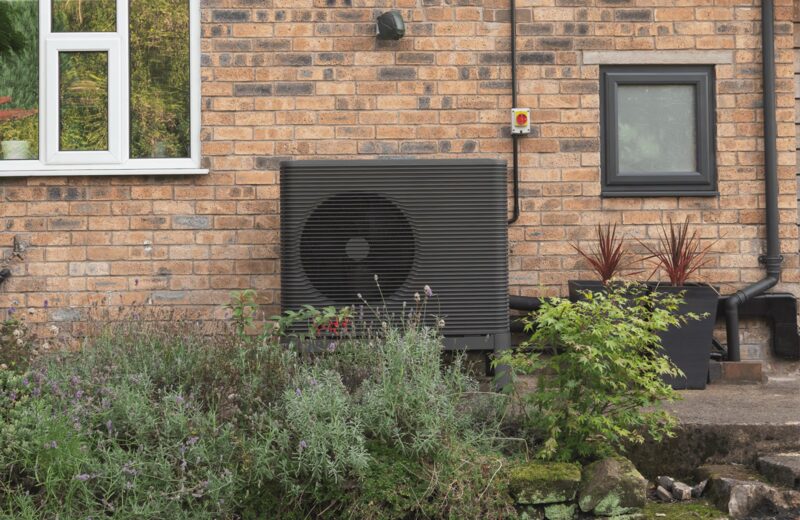
Eligibility: low-income households and qualifying benefits

The scheme's stated purpose is to reduce heating costs for low income and vulnerable households by funding energy efficiency, insulation and heating measures3. ECO4 Flex extends that to owner-occupiers and private tenants that a participating local authority considers to be living in fuel poverty or on a low income and vulnerable to the effects of living in a cold home8. The focus is on the least energy efficient homes13.
The benefit list is the first thing most households check. Means-tested benefits named in official guidance include Child Benefit subject to income thresholds, Pension Credit Guaranteed Credit or Savings Credit, income-related Employment and Support Allowance, income-based Jobseeker's Allowance, Income Support, Tax Credits, Universal Credit and Housing Benefit2. The Help to Heat Group benefit list covers income-based Jobseeker's Allowance, income-related Employment and Support Allowance, Income Support, Pension Credit Guaranteed Credit, Universal Credit, Housing Benefit, Pension Credit Savings Credit, and Child Benefit subject to income caps and composition14. Independent guidance gives the same set, including Pension Credit Savings Credit15.
Two conditions sit alongside the benefit test. The property must have an energy performance certificate rating of D, E, F or G5, and independent guidance adds that the household must live in a home with an EPC rating of D or lower, have the landlord's permission if renting, and receive one or more of the qualifying benefits16. The amount of ECO funding the property attracts then depends on the improvement made to the original EPC, so a worse starting point can support a larger package2.
The five eligibility routes: Help to Heat, LA Flex, Supplier Flex, Social Housing and In-fill
ECO4 has five named routes: Help to Heat Group, Social Housing, LA Flex, In-Fill and Supplier Flex1. The same five appear in earlier scheme documentation17. They exist because a single benefit test would miss households that are fuel poor but not on the listed benefits.
LA Flex is the route most often used by owner-occupiers who fall outside the benefit list. It allows a participating local authority to refer owner-occupiers and private tenants it considers to be living in fuel poverty or on a low income and vulnerable to the effects of living in a cold home8. Uptake is measurable: one council reports 2,583 households supported to make their homes warmer under LA Flexible Eligibility18. Private rented housing can also be treated through LA Flex6.
The application method differs by area, which is the main practical friction. Some councils direct households to a combined authority retrofit portal8. Others ask households wishing to apply for ECO4 Flex funding to contact one of the council's approved ECO4 Flex providers or agents3. Measures delivered to premises occupied by a Help to Heat Group member, or identified through the LA Flex route, must be delivered to eligible domestic premises, including mobile homes and in-fill14.
In-fill matters for terraces and blocks. It allows measures to be delivered to a property that would not otherwise qualify, where the work forms part of a wider project. Supplier Flex is the route operated by the obligated suppliers themselves rather than by a local authority. Social Housing has its own path, and the Warm Homes: Local Grant recognises the overlap: homes qualifying under ECO4 Flex Route 2 are also eligible under that scheme's route D19.
Property suitability: why building fabric decides whether you qualify
Building fabric is the gate. ECO4 takes a fabric-first approach, meaning insulation will need to be installed before considering the installation of renewable heating20. Independent guidance states the same: the latest ECO4 scheme is centred on a fabric-first approach, with the focus on improving the building itself before installing new heating systems, for all homes that have an EPC of D or below4. The measures funded under the Home Heating Cost Reduction Obligation are insulation and heating qualifying actions6.
There is a safety and quality dimension too. Where the only or first measure is completed on or after the Order coming into force, building fabric repair must be recommended in a report by a chartered surveyor pursuant to an assessment of the condition of the insulation and related building fabric15. That provision exists because insulation installed onto a defective wall can cause damage, and the guarantee position is limited: the cost of damage from faulty ECO4 and GBIS solid wall insulations can exceed the £20,000 limit covered by a valid guarantee21.
For a heat pump specifically, the suitability question splits by technology. Ground source systems need space and access: a household needs to check whether there is enough outdoor space to support the underground pipes and pump, and access for digging machinery, and should seek advice on whether the property is suitable22. Air source systems depend on the EPC and the insulation already in place, because the running cost outcome depends on them.
"If your home is not well-insulated, installing a heat pump may increase your energy bills instead. This is because electricity is more expensive than gas."
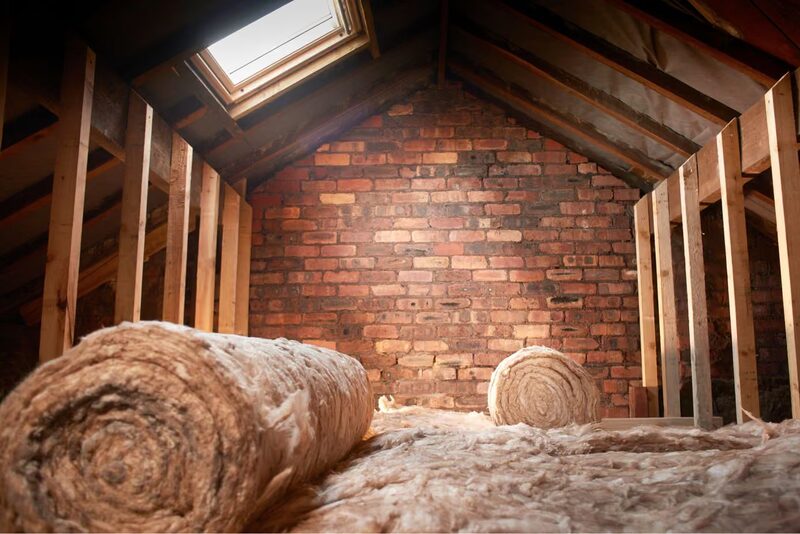
Independent guidance is that topping up wall, floor and loft insulation before installing a heat pump will help reduce its running costs23. That is the case for the fabric-first ordering, and it is also the honest limit of what ECO4 delivers: a heat pump in a leaky home can cost more to run than the boiler it replaced.
How much of the cost ECO4 can cover

ECO4 does not publish a per-household grant figure, because the funding a property attracts is calculated from the improvement to its original EPC rather than set as a flat sum2. What the scheme does publish are the caps that shape how much can be delivered.
Boiler grants are capped at 5,000 across ECO44. Peak load shifting measures are capped at 12.5% of a supplier's total Home Heating Cost Reduction Obligation14. Under the supplier administration guidance, a supplier may deliver up to 75% of their Great British Insulation Scheme total home heating cost reduction obligation through delivery of ECO4 projects, against an ECO4 EFG minimum requirement total target of £77,950,000 across all phases6.
| Limit | Figure | Source |
|---|---|---|
| Boiler grants under ECO4 | capped at 5,000 | 4 |
| PPS measures | 12.5% of a supplier's HHCRO | 14 |
| GBIS obligation deliverable through ECO4 | up to 75% | 6 |
| ECO4 EFG minimum requirement | £77,950,000 all phases | 6 |
| Solid wall insulation guarantee cover | £20,000 limit | 21 |
For the household, the practical answer is that ECO4 can cover the full cost of a heat pump where the property qualifies and the package is scored to support it, and that the package is assembled by the supplier and installer rather than chosen by the household. Prices are installer-quoted, and no published per-home figure exists. The scheme encourages homeowners to replace existing boilers with greener alternatives such as heat pumps4, and independent reporting describes the ECO scheme as having provided full heat pump funding for lower-income households24. Maker guidance describes fully funded clean energy upgrades including insulation, solar panels and a heat pump for low-income households25, and lists insulation, upgraded heating systems, solar PV and smart heating controls among the measures installed under ECO426. Those are the installing company's own descriptions of what it delivers, not scheme rules.
The independence this buys is worth stating plainly. A funded heat pump removes the gas boiler and the gas connection from the household's heating, which reduces exposure to gas prices and to imports. It does not remove dependence on the electricity grid, on a supplier, or on the installer and manufacturer for servicing and parts. The household's exposure shifts rather than disappears.
Sources26 cited
- ECO4 and GBIS eligibility and pre-installation declaration, Ofgem, 2025-12-03
- Energy Company Obligation (ECO4) scheme, Derbyshire County Council, 2026-09-17
- ECO flexibility funding, Ceredigion County Council, 2026-09-17
- ECO4, Elmhurst Energy, 2026-09-20
- ECO4 scheme, West Lindsey District Council, 2025-07
- ECO4 guidance: supplier administration, Ofgem, 2026-07-06
- Home energy efficiency, Bridgend County Borough Council, 2026-09-17
- Energy saving grants and funding, Tameside Council, 2026-09-17
- Energy saving at home, Centre for Alternative Technology, 2025-06-27
- POST note: home energy efficiency, Parliamentary Office of Science and Technology, 2026-06-25
- ECO4 measures table v4.0, Ofgem, 2025-07-29
- Consumer grants and incentives: ECO4, MCS Certified, 2026-09-07
- Statement of intent for ECO4 and the Great British Insulation Scheme, Birmingham City Council, 2024-08-26
- ECO4 delivery guidance version 4.0, Ofgem, 2026-03-26
- Financial support for home energy, Energy Saving Trust, 2026-09-14
- How to make a Victorian house more energy efficient, Uswitch, 2025-09-25
- ECO4 eligibility requirements form, Ofgem, 2022-10
- Winter wellbeing, Cornwall Council, 2026-06-30
- Warm Homes: Local Grant 2025 to 2028, Birmingham City Council, 2026-09-20
- ECO4 and ECO Flexible Eligibility, Breckland Council, 2026-09-17
- Energy market consumer protection, Hansard, 2026-06-17
- Ground source heat pumps, Electricity North West, 2026-09-19
- Air and ground source heat pumps, Croydon Council, 2026-09-17
- Heatwaves, air con and other things, BESA, 2026-07-03
- Heat pump grants, Aira, 2026-09-17
- Shared solar flats, Midsummer Wholesale, 2026-09-19
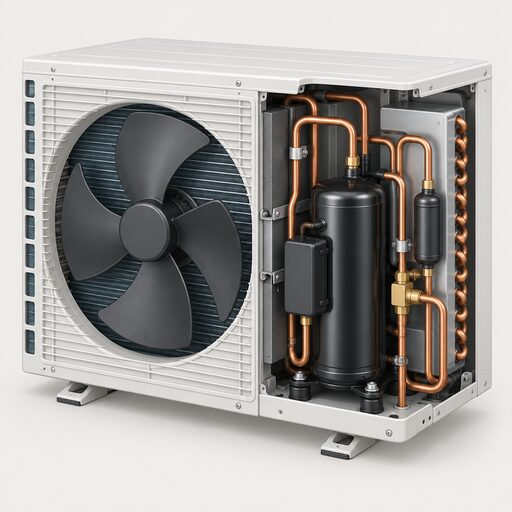 Air Source Heat PumpsHow an air source heat pump takes heat from outdoor air, the difference between air-to-air and air-to-water systems, typical efficiency, the £7,500 Boiler Upgrade Scheme grant, noise and planning limits, and what ownership means for a household's energy independence.
 The Full Heat Pumps GuideWill a heat pump keep my house warm in winter, and what does one cost to buy and run?
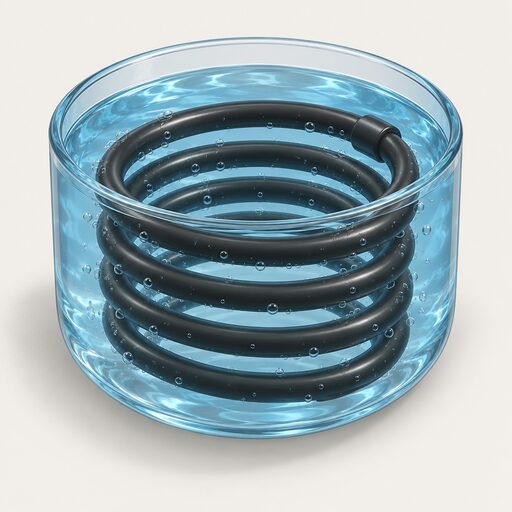 Water Source Heat PumpsYour home sits near a river, lake or the sea.
 Planning Permission in EnglandDo you need planning permission for an air source heat pump?
 Insulation a Heat Pump NeedsWill a heat pump still work if your home is not well insulated, and would you need to add loft, wall or floor insulation first?
 Using a Heat Pump for CoolingCan a heat pump cool your home in summer as well as heat it in winter?