

In this guide
A heat pump grant in the UK means, for most households, the Boiler Upgrade Scheme: £7,500 off the cost and installation of an air-to-water, ground source or water source heat pump, and £9,000 where an air-to-water or ground source heat pump replaces oil or liquefied petroleum gas heating in an off-gas grid property1. Air-to-air heat pumps attract £2,5002. The scheme is administered by Ofgem, runs in England and Wales, opened on 23 May 2022 and closes on 30 December 20293.
The money does not pass through the household. The Boiler Upgrade Scheme is installer-led: an MCS certified installer applies to Ofgem for a voucher on the property owner's behalf, discounts the grant from the invoice, and redeems the voucher after the installation is commissioned3. The grant is applied upfront as a discount to the cost of the installation, and the property owner does not receive the grant directly5.
Scotland runs its own routes through Home Energy Scotland and Warmer Homes Scotland, and England has separate funding for lower-income households and social housing through the Warm Homes: Local Grant and the Warm Homes: Social Housing Fund6. Northern Ireland has no equivalent scheme in this set of funding routes. What follows sets out what each pays, who qualifies, and the rules that stop the same measure being funded twice.
What the Boiler Upgrade Scheme pays: £7,500 for a heat pump, £9,000 off gas grid
The Boiler Upgrade Scheme provides upfront capital grants to help reduce the cost of installing heat pumps and biomass boilers in homes and non-domestic buildings1. The headline rate is £7,500 off the cost and installation of air-to-water heat pumps, ground source heat pumps and water source heat pumps1. The same £7,500 applies to an air source heat pump and to a ground source heat pump under the eligibility rules published for applicants3.
The higher rate applies off the gas grid. From 21 July 2026 the grant value is £9,000 for air-to-water or ground source heat pumps in off-gas grid properties replacing a heating system fuelled by oil or liquefied petroleum gas2. That is a £1,500 difference on the standard rate, and it exists because the alternative fuels being displaced, oil and LPG, are the most expensive and most carbon-intensive ways to heat a home.
Air-to-air heat pumps sit at a lower rate: £2,500 from 21 July 20262. The scheme's technology table lists air-to-air heat pumps alongside air-to-water and ground source units, each with its own grant value and voucher validity period2.
| Technology | Grant value | Voucher validity |
|---|---|---|
| Air-to-water heat pump | £7,500 | 3 months |
| Air-to-water heat pump, off-gas grid, replacing oil or LPG | £9,000 | 3 months |
| Ground source heat pump | £7,500 | 6 months |
| Ground source heat pump, off-gas grid, replacing oil or LPG | £9,000 | 3 months |
| Air-to-air heat pump | £2,500 | 3 months |
| Biomass boiler | 3 months voucher validity | 3 months |
The scheme's reach is significant but not dominant. In the year ending June 2024, 45% of Government-supported heat pump installations were funded via the Boiler Upgrade Scheme10. In the year ending June 2025 that share had risen to 60% of Government-supported installations11. The remainder comes through other Government-supported schemes and through installations the statistics do not cover, including new-builds and devolved administration schemes in Scotland and Northern Ireland10.
For a household, the grant changes the arithmetic of switching but not the dependence. A heat pump still runs on electricity from the grid and a supplier, and the grant does not alter that. What it does is reduce the upfront capital barrier that has historically sat between a household and a decision to move off gas, oil or direct electric heating.
Who qualifies for a Boiler Upgrade Scheme grant

Eligibility rests on the property, the technology and the installer. The property must have a valid energy performance certificate3. The chosen installer must be certified by the Microgeneration Certification Scheme, a nationally recognised certification body3. The scheme is open to domestic and small non-domestic properties8.
The technology must be one the scheme covers. Air-source, ground-source and water-source heat pumps are eligible12. Air-to-water heat pumps are named in the installer-facing eligibility rules4. Air-to-air heat pumps are included in the technology table with their own grant value2.
Some properties are excluded outright. A household cannot get a grant for most new build properties, social housing, or a property that has already been given government funding or support for a heat pump or biomass boiler14. That last exclusion is the one that catches households who have already taken a grant on the same property.
Self-build properties are a narrow exception. New-build properties are generally not eligible, except for certain self-build properties that meet specific criteria5. Heat pumps may be eligible for BUS funding where all other scheme rules are met15. Self-build properties are only eligible for BUS funding for heat pumps2. The scheme's own statistics record 1,090 grants paid for heating systems in eligible self-build properties where no heating system was replaced17.
The EPC requirement is not waived for exempt properties. Ofgem's guidance is explicit: exempt properties will still require a valid EPC to be submitted at voucher application stage16. A household that believes it is exempt from the EPC requirement still has to produce one for the application to proceed.
How the installer-led application works, from voucher to upfront discount
The Boiler Upgrade Scheme is installer-led. Installers who are MCS certified can apply for and redeem Boiler Upgrade Scheme vouchers on behalf of property owners4. The application is installer-led, with the installer applying for the grant on the property owner's behalf3. It is an installer-led two stage application process, which means the property owner's chosen installer will apply for and redeem the voucher16.
The process runs in order:
- The installer submits a voucher application to Ofgem, the scheme administrator3.
- Ofgem issues a voucher18.
- The installer submits a voucher redemption application18.
- The installer receives the grant payment18.
The grant is applied upfront as a discount to the cost of the installation. The property owner does not receive the grant directly; it is paid to the installer5. That structure matters because it means the household never handles the money, and the discount appears on the invoice rather than as a payment into a bank account.
The installer must submit specific details of the quote agreed with the property owner as part of the voucher application: the total quote amount including any VAT before the grant is deducted, the total cost of the heat pump unit or biomass boiler unit without the grant deducted, the quote reference number, and the date on the quote12. The commissioning deadline is separate from the voucher window: the installation must be commissioned no more than 120 days prior to the voucher application being properly made4.
The application model is not new. The Green Homes Grant Voucher Scheme worked the same way: homeowners were expected to identify a certified installer and apply for vouchers with the installer receiving the grant funding once they had fitted the measure19. That scheme's history is a reminder that installer-led delivery depends on installers being willing and able to carry the administrative load.
Which heat pumps and other systems the scheme covers, and which it does not
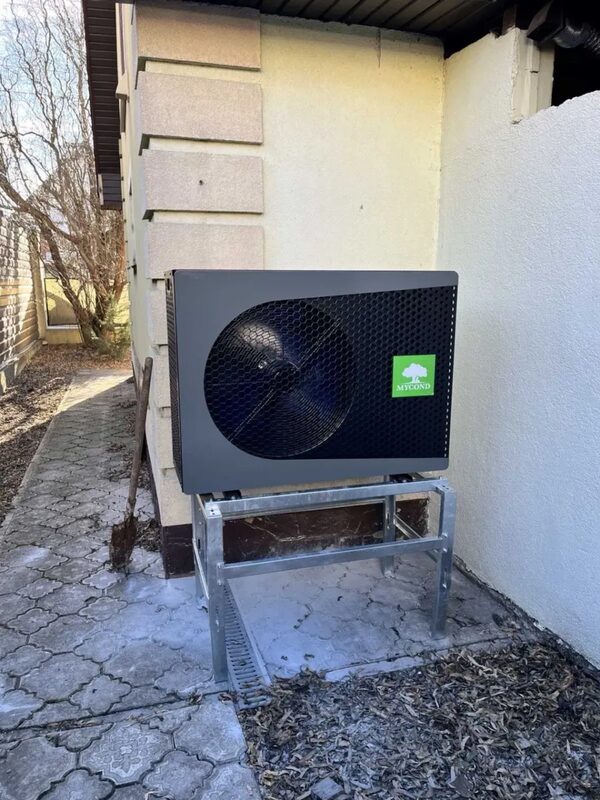
The scheme covers air-to-water heat pumps, ground source heat pumps and water source heat pumps at £7,500, with £9,000 off the gas grid, and air-to-air heat pumps at £2,5001. Biomass boilers are covered in limited circumstances, with a 3-month voucher validity2. Air-source, ground-source and water-source heat pumps are eligible for the scheme12.
The scheme does not cover most new build properties, social housing, or a property that has already been given government funding or support for a heat pump or biomass boiler14. Self-build properties are only eligible for BUS funding for heat pumps2.
The scheme's predecessor, the Clean Heat Grant, was designed to offer upfront capital grants to enable the installation of heat pumps and, in limited circumstances, biomass boilers for households and small non-domestic buildings20. The Boiler Upgrade Scheme inherited that shape.
The scheme's statistics show what has actually been replaced. Since launch, grants have covered gas, oil, direct electric, LPG, coal and other heating systems, plus 1,090 grants for eligible self-build properties where no heating system was replaced17. That range matters for households on direct electric heating, who are often the hardest to reach with fabric-first advice because their homes may already be reasonably insulated.
For a household, the technology list determines which funding route is open. An air-to-air heat pump gets £2,500 rather than £7,500, and a hybrid system is not on the main list at all. The choice of technology therefore has a direct funding consequence, not just a performance one.
Warm Homes: Local Grant: up to £30,000 for lower-income households in England
The Warm Homes: Local Grant is a separate scheme for England, administered by local authorities22. It provides grants to low-income households living in privately owned properties22. Eligible applicants receive upgrades such as insulation, energy-efficient heating systems, and renewable energy installations8.
The eligibility threshold is a combined income of less than £36,0008. The scheme applies to England23. The two are not reconciled, and households near the boundary should expect the administering local authority to apply the fuller test.
There is a separate rate for landlords. For a private landlord's second and subsequent properties in England, the grant is 50% of the cost up to £7,500 for energy performance improvements22. That is a co-funded rate rather than a full grant, and it reflects the principle that a landlord with multiple properties is not in the same position as an owner-occupier on a low income.
The scheme's purpose is broader than heat pumps. It funds insulation, energy-efficient heating systems and renewable energy installations, so a household may receive fabric measures and a heating upgrade in the same project8. That matters because a heat pump performs best in a home that has already had its heat loss reduced, and the funding structure allows both to be addressed together.
For a household's energy independence, the Warm Homes: Local Grant is the route that most directly addresses the combination of poor fabric and high bills. It does not remove dependence on electricity, but it reduces the amount of energy a home needs in the first place, which is the more durable form of independence.
Warmer Homes Scotland: funding north of the border
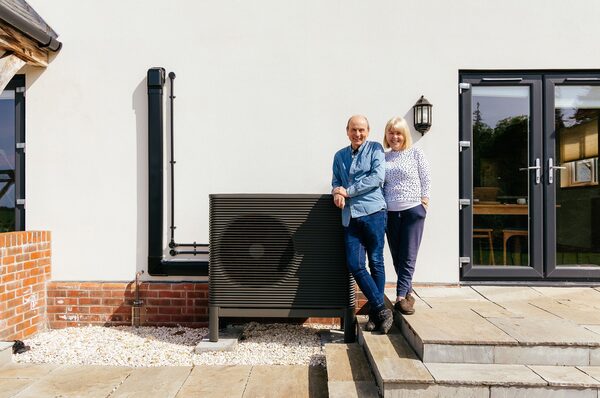
Scotland's funding routes sit outside the Boiler Upgrade Scheme, which covers England and Wales3. Warmer Homes Scotland is funded by the Scottish Government and offers funding and support to eligible households struggling to stay warm and keep on top of energy bills6. The Home Energy Scotland Scheme offers grants to homeowners to install heat pumps7.
The Scottish Government's wider programme is the Heat in Buildings Programme, which sets the strategic direction for Scotland's heat decarbonisation7. The Scottish Government is committed to prohibiting the use of polluting heating systems across all homes and business premises by the end of 2045, with the target to be met by the end of 2045 as far as reasonably practicable7.
One source gives more than £156 million invested since launch, another gives more than £150 million6. The documents also disagree on the number of households helped, with one figure of 35,193 and another of 4,9236. The two sets of figures are not reconciled, and the difference is large enough that neither should be treated as settled.
For a Scottish household, the practical position is that the funding route is different from England and Wales, the administering body is different, and the eligibility criteria are set by the Scottish Government rather than by Ofgem. A household in Scotland cannot use a Boiler Upgrade Scheme voucher, and a household in England or Wales cannot use Warmer Homes Scotland.
The Scottish target date of 2045 is later than the 2035 phase-out date that applies in the rest of the UK for new gas boiler installations. That difference in timing is one of the clearest ways the four nations diverge on heat.
Warm Homes: Social Housing Fund: who applies and what it funds
The Warm Homes: Social Housing Fund provides funding to local authorities, registered providers of social housing, and registered charities that own social housing9. It provides funding for energy performance improvements and low carbon heating improvements to social homes9. The scheme provides funding to local authorities, combined authorities, registered providers of social housing, and registered charities that own social housing in England24.
The scheme funds installing energy efficiency upgrades and low-carbon heating measures in English social housing25. Draft guidance for the scheme was published on 13 May 2024, and the delivery window opened in April 202525. The government started accepting funding applications for Wave 3 of the scheme from local authorities, combined authorities, registered providers of social housing and registered charities that own social housing either directly, or as part of a consortium26.
There is a specific incentive for homes on the gas grid. Up to 10% of homes in an application can gain access to a £20,000 grant fund per home to install low carbon heating measures27. Participating applicants will have access to a £20,000 per home grant offer, available for up to 10% of the homes included in the application27. This grant requires no co-funding and sits outside of the wider co-funding structure of the application27.
The applicant is the landlord, not the tenant. A social housing tenant does not apply for this funding; the local authority, housing provider or charity that owns the home does. That is a different model from the Boiler Upgrade Scheme, where the property owner is the beneficiary even though the installer applies.
Combining grants, and the rules that stop double funding

The rules against double funding are consistent across the schemes. Funding from BUS and ECO cannot be blended for the same measure or be included within an ECO4 project19. Funding cannot be blended within the ECO4 package of measures19. ECO and Warm Home Discount funding cannot be combined for any measures19. Funding from multiple government schemes cannot be used to fund the same individual measure twice27.
The principle is that each measure receives public money once. A household can receive different measures from different schemes, but not the same measure twice. That is why a property that has already been given government funding or support for a heat pump or biomass boiler is excluded from the Boiler Upgrade Scheme14.
The statistics themselves carry a double-counting caveat. A small number of heat pumps qualified for dual-registration between the RHI scheme and other schemes, so the total number of Government-supported heat pump installations will be slightly lower than as presented in the tables due to double counting between RHI and other schemes11. That is a measurement issue rather than a funding rule, but it shows how common dual registration has been.
For a household planning a whole-house retrofit, the practical consequence is sequencing. A household that takes ECO4 funding for insulation can still take a Boiler Upgrade Scheme grant for a heat pump, because those are different measures. A household that takes ECO4 funding for a heat pump cannot then take a Boiler Upgrade Scheme grant for the same heat pump.
Scheme budgets, caps and how long the funding runs
The Boiler Upgrade Scheme opened on 23 May 2022 and closes on 30 December 20293. It provides upfront capital grants towards the cost of installing approved heat pumps28. The scheme launched on 23 May 2022 to support the decarbonisation of heat in buildings28.
One source gives £295 million for 2025/26, with 2024/25 funding increased by £30 million, while another gives £450 million18. The two figures are not reconciled, and the difference is substantial enough that neither should be relied on as the definitive budget.
The scheme's reporting runs quarterly. The most recent quarterly report covers the period from 1 May 2026 to 31 July 202618. The scheme's annual report covers April 2025 to March 202628. The scheme's statistics are published by Ofgem29.
The scheme's share of Government-supported installations has grown. In the year ending June 2024, 45% of Government-supported heat pump installations were funded via the Boiler Upgrade Scheme10. In the year ending June 2025, 60% of Government-supported installations came through the scheme11. That growth reflects both the scheme's expansion and the closure of the Renewable Heat Incentive, which covered ground and air source heat pumps and biomass boilers GB-wide30.
For a household, the closing date of 30 December 2029 is the operative deadline. The scheme has run for seven years by the time it closes, and the funding is not guaranteed to be available throughout: unspent budget is not carried over to the next scheme year18. A household planning a heat pump installation in the final year of the scheme should expect the budget position to be tighter than in the early years.
Sources30 cited
- Boiler Upgrade Scheme, Ofgem, 2026-09-17
- Boiler Upgrade Scheme guidance for installers v5.1, Ofgem, 2026-07-02
- Boiler Upgrade Scheme, UK Government, 2026-09-18
- Boiler Upgrade Scheme: installers, Ofgem, 2026-09-17
- Boiler Upgrade Scheme guidance for property owners V5, Ofgem, 2026-04-28
- Home energy efficiency, Argyll and Bute Council, 2026-09-17
- The Heat in Buildings Programme, Scottish Government, 2026-09-17
- Home and business grants, schemes and advice, East Hertfordshire District Council, 2026-09-17
- Warm Homes: Social Housing Fund, Greater Manchester Combined Authority, 2026-09-17
- Heat pump deployment quarterly statistics United Kingdom June 2024, UK Government, 2024-09-26
- Heat pump deployment quarterly statistics United Kingdom 2025 Q2, UK Government, 2025-09-04
- Boiler Upgrade Scheme installer guidance, Ofgem, 2022-07-21
- Boiler Upgrade Scheme guidance for installers v2.1, Ofgem, 2023-05-18
- Check if you're eligible for the Boiler Upgrade Scheme, UK Government, 2026-09-17
- Boiler Upgrade Scheme guidance for property owners v5.1, Ofgem, 2026-07
- BUS property owner guidance V2.3, Ofgem, 2023-09-25
- Boiler Upgrade Scheme quarterly report issue 3, Ofgem, 2023-02-28
- Boiler Upgrade Scheme quarterly report issue 17, Ofgem, 2026-08-31
- ECO4 delivery guidance v3.2, Ofgem, 2025-12-08
- Energy terms explained, Ofgem, 2026
- Making alterations to a listed building, Bristol City Council, 2026-09-17
- Warm Homes: Local Grant, Greater Manchester Combined Authority, 2026-09-17
- Warm Homes: Local Grant statistics May 2026, UK Government, 2026-05-28
- Heat pump deployment tables Q2 2026, UK Government, 2026-09-10
- Warm Homes: Social Housing Fund statistics August 2026, UK Government, 2026-08
- Research briefing CBP-9585, House of Commons Library, 2026-05-13
- WHSHF Wave 3 scheme guidance May 26 addendum, UK Government, 2026-06
- Boiler Upgrade Scheme annual report April 2025 to March 2026, Ofgem, 2026-07-31
- Boiler Upgrade Scheme statistics July 2026, UK Government, 2026-08-27
- Homes and energy, Manchester City Council, 2026-09-20
 The Full Heat Pumps GuideWill a heat pump keep my house warm in winter, and what does one cost to buy and run?
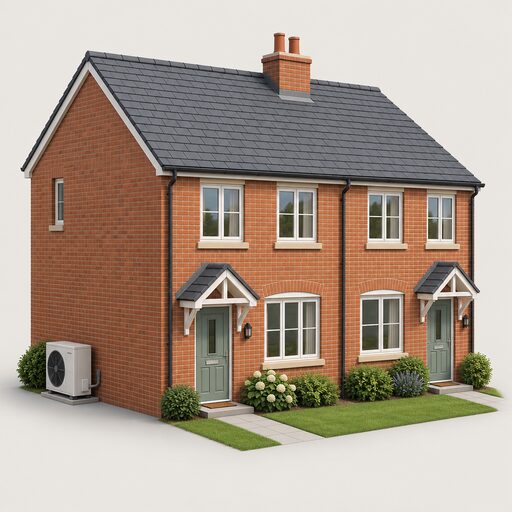 Which Homes Suit a Heat PumpMost UK homes can have a heat pump fitted, so the real question is whether yours makes it easy or expensive.
 How Much Does a Heat Pump CostA heat pump usually costs around eleven thousand pounds installed, though quotes vary a lot depending on your home.
 Ground Source Heat Pump CostWhat a ground source heat pump costs in the UK, splitting groundworks and drilling from the heat pump and internal works, and how the £7,500 Boiler Upgrade Scheme grant and the £9,000 off-gas-grid uplift change the figure.
 Planning Permission in NIDo you need planning permission for a heat pump in Northern Ireland?
 The Full Grants and Schemes GuideWhich grants can you actually get right now, and how do you apply for them?