In this guide
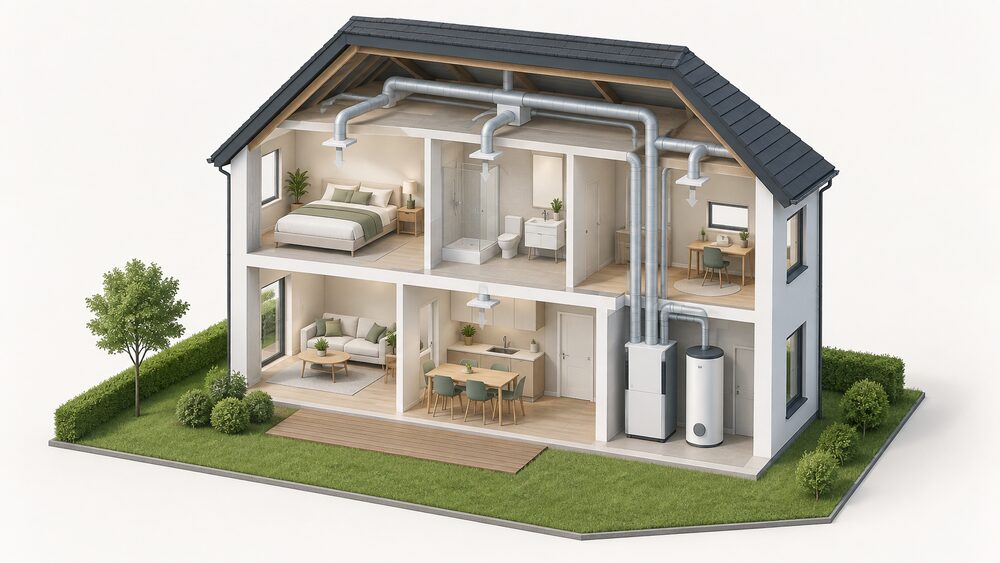
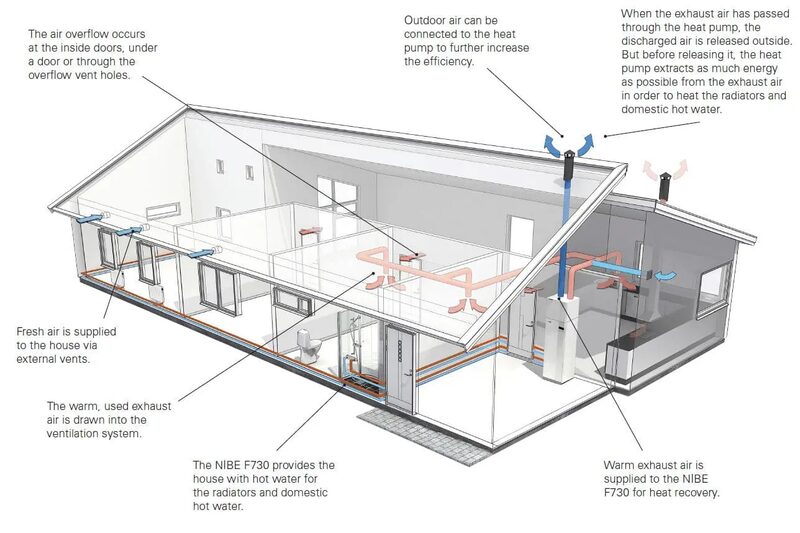
An exhaust air heat pump, sometimes shortened to EAHP, takes the warm, stale air that a mechanical ventilation system is already extracting from a home and uses it as the heat source for a heat pump. It transfers heat from a ventilation system to warm air that heats the home, and it can also heat water stored in a hot water cylinder for taps, showers and baths1. Because it draws on air the building is throwing away anyway, it is always combined with a mechanical ventilation system, and it boosts the heat that a mechanical ventilation with heat recovery (MVHR) unit extracts from that air1.
Building regulations treat ventilation exhaust air as one of the recognised heat sources for a heat pump, alongside ambient air, water and ground2. The European Heat Pump Association describes air source heat pumps as using the energy in outside air or air from a ventilation system3. In UK industry statistics, exhaust air machines that heat water are counted within air-to-water heat pumps rather than as a separate category4.
The headline limit follows directly from the heat source. A home only extracts a certain volume of air per hour, so the heat available is capped by the ventilation rate rather than by the weather. In some cases an exhaust air heat pump can deliver all of a home's heating needs, and an experienced installer is expected to advise whether the unit on its own will be enough to heat an entire home1. That is why these units are usually designed for airtight, smaller properties with low heating needs, and why retrofitting them into older houses may not be appropriate1.
How the technology works
A conventional air source unit sits outdoors and takes heat from ambient air, so its performance falls as the outside temperature falls. An exhaust air unit takes its heat from air that has already been warmed by the household, so its source is far more stable. In the government's Home Energy Model methodology, the source temperature for an exhaust air heat pump is taken to be the average internal air temperature from the previous timestep, weighted by zone volume8. In plain terms, the machine is harvesting the heat a home has already paid for, immediately before it leaves the building.
The recovered heat goes one of two ways. Some units deliver warm air back into the dwelling, which removes the need to install a wet central heating system using radiators or underfloor heating1. Others transfer the heat to water, either for a cylinder or for a wet circuit, which is why the technology is counted under air-to-water in trade statistics4. Heat pumps in general are capable of providing heating, cooling and hot water9, and some ducted systems, also known as exhaust air heat pumps, can also supply hot water10.
Because the fan and the ventilation are doing double duty, the unit delivers more heat into a home than an MVHR system on its own, which helps reduce heating running costs1. The efficiency of an exhaust air heat pump is affected by the outside temperature, the heating needs of the home including room heating and hot water, and how airtight the building is1.
Ventilation, heating and hot water from one appliance
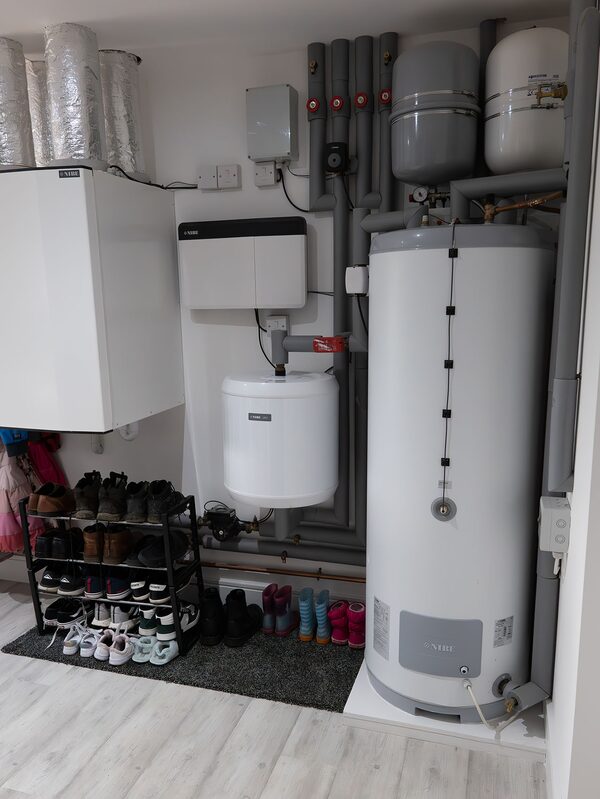
The commercial argument for these units is consolidation: exhaust air heat pumps combine ventilation, heating and hot water in a single unit1. A new home built to a high airtightness standard needs mechanical ventilation in any case. Putting the heat pump inside that same appliance means one set of ducts, one commissioning visit and one maintenance regime rather than a ventilation system and a separate heating system side by side.
For hot water, the unit heats water stored in a hot water cylinder for hot taps, showers and baths1, and as with all heat pumps, space is needed for that cylinder, ideally inside the house11. Heat pump output is generally at a lower temperature than a traditional heating system, which is why heat pump systems suit underfloor heating12, and it is also why cylinder sizing and recovery time matter more than they do with a boiler. Further detail sits on the pages for hot water cylinders for heat pumps and radiators, underfloor heating and emitters.
Control follows the usual heat pump pattern: weather compensation or internal temperature control such as a room thermostat, with a timer or programmer for space heating12. The trade-off of a single appliance is a single point of failure. Ventilation, heating and hot water all stop when the unit stops, which is a different risk profile from a home where a boiler failure leaves the extract fans running.
Where an exhaust air heat pump fits, and where it does not
Heat pumps are technically suitable for most UK homes if installed appropriately13, and they are best suited to buildings with good insulation levels, with insulation added internally or externally where homes do not already have it14. The exhaust air variant narrows that further. These units, and MVHR systems, are usually designed for airtight, smaller properties with low heating needs, and retrofitting into older houses may not be appropriate1.
The general suitability checklist used in consumer assessments points the same way: a home built since the 1990s, or older but with loft and wall insulation installed more recently and an EPC rating of A, B or C, with suitable indoor space near the heat pump and emitters suited to low flow temperature heating15. A leaky house fails on two counts at once. It loses more heat than the extract air stream can replace, and the ventilation system cannot control airflow properly when air is entering through gaps rather than through ducts.
Where the ventilation rate cannot carry the load, the options are to reduce the load through fabric work, or to accept a supplementary heat source. Building regulations require that heat pump systems have been sized appropriately, that the system has adequate controls, and that the person carrying out the work is suitably competent16. Sizing heat pump systems correctly is described as vital to reduce the risk of inefficiency and high operating costs17. On an exhaust air unit, sizing is as much a ventilation calculation as a heat loss calculation. See heat pump sizing and heat loss calculations and which homes suit a heat pump.
New build versus retrofit
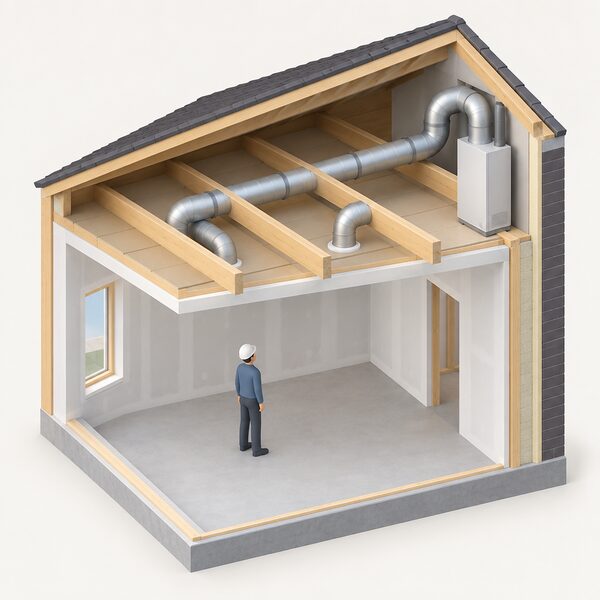
In a new build, the case is strongest. Combining heating and air handling into one unit saves on upfront and installation costs compared with a separate MVHR and heating system1. The unit also removes the need to install a wet central heating system, and removes the need to install a gas connection to a new-build property1. For a household, that second point is significant: no gas connection means no standing charge on a second fuel and no exposure to gas prices at all.
Airtightness is the governing design decision. The design for a new home should be as airtight as possible, because the more airtight the building is, the better the MVHR works1. Ducting needs to be installed above the ceiling unless exposed ductwork is acceptable, metal web floor joist systems make this easier in multi-storey homes, and the unit itself should ideally sit close to an exterior wall1.
Retrofit is harder on every count. The cost of a heat pump installation depends on the size of the property, whether the home is a new build or an existing house, and how much work is needed to adapt the existing heating system11. In an existing house, retrofitting ductwork through finished ceilings and achieving the airtightness the system assumes is usually the obstacle rather than the heat pump itself.
Efficiency: what the seasonal performance factor tells you
The designed seasonal performance factor (SPF) of an exhaust air heat pump indicates its running costs1. SPF, or the closely related seasonal coefficient of performance, shows efficiency averaged across the whole year11. An SPF of 4.0 means that for every 1 kWh of electricity consumed, the heat pump delivers 4 kWh of heat18.
| Efficiency figure | Value | Source type |
|---|---|---|
| Typical heat pump SPF | 3.16 | Independent guidance, 2026 |
| Good installation, well managed | significantly higher than 3.1, sometimes more than 46 | Independent guidance, 2026 |
| Minimum SPF under the former Domestic RHI | 2.519 | Official scheme rules |
| Running cost at SPF 3.5 | about 6.5p per kWh of delivered heat20 | Independent, July 2024 |
| Running cost at SPF 4 | about 5.5p per kWh of heat20 | Independent, July 2024 |
Those running cost figures date from July 2024 and move with electricity prices, so they show the shape of the relationship rather than a current bill. The gap between 3.1 and 4 is roughly a fifth off the cost of every unit of heat, which is why installation quality and control settings matter more than headline product ratings. Installers must calculate the SPF based on the system design for the home11, and that calculation should be shared before work starts.
Exhaust air units have an unusual efficiency profile. Their source air is at internal temperature, so they avoid the cold-weather derating that affects outdoor units, where an air source heat pump will be less efficient in the winter when the air temperature is colder21. What they cannot avoid is the cap on volume. More detail sits on heat pump efficiency: COP, SCOP and SPF explained and heat pump running costs.
Costs, grants and the gap in the Boiler Upgrade Scheme

The Boiler Upgrade Scheme provides upfront capital grants towards the cost of installing approved heat pumps and, in limited circumstances, biomass boilers. It offers £7,500 off the cost and installation of an air source heat pump22, and £9,000 off the cost and installation of air-to-water or ground source heat pumps in eligible off-gas grid properties, available until 31 March 202723. Air-to-air heat pumps attract £2,50024, under an approved category covering an air-to-air heat pump in an off-gas grid property that is replacing a liquefied petroleum gas heating system.
For exhaust air machines, the split matters. Exhaust air-to-water heat pumps are eligible for the £7,500 BUS grant, while exhaust air-to-air heat pumps are not eligible for support under the scheme at this time5. Only residential properties are eligible for air-to-air heat pumps under the scheme5. A 2025 government consultation considered proposals to allow the installation of exhaust air heat pumps25, and current installer guidance lists air-to-water heat pumps, air-to-air heat pumps, ground source heat pumps including water source and shared ground loops, and biomass boilers as eligible technologies26. Heat pumps in self-build properties may be eligible for BUS funding where all other scheme rules are met27.
The Boiler Upgrade Scheme covers England and Wales. Scotland and Northern Ireland run their own arrangements, set out on heat pump grants and funding across the UK. Published install prices for exhaust air units are not available here; costs are installer-quoted and depend on property size, new build or existing house, and the work needed to adapt the existing heating system11.
Noise, space and living with the unit
The heat source is indoors, so unlike most air source arrangements there is no outdoor fan box to site. Most air-to-air types need an area outside for a unit on a wall or on the ground, with space around it for airflow10, and the same applies to conventional air source installations28. Where an outdoor unit is present, permitted development in England limits the outdoor compressor unit, including any housing, to 1.5 cubic metres on a house and 0.6 cubic metres for a block of flats29. Noise rules also apply: an air source heat pump cannot exceed 42dB at a distance of 1 metre from the centre of a neighbour's habitable room window, known as the assessment point31, and in Wales two units operating together must not exceed the 40dB limit32. Local authority guidance notes that external fan units can generate a considerable level of noise21, though a government study found noise emissions were a concern for a minority of consumers in the study33. See MCS 020: the heat pump noise assessment and how noisy is a heat pump.
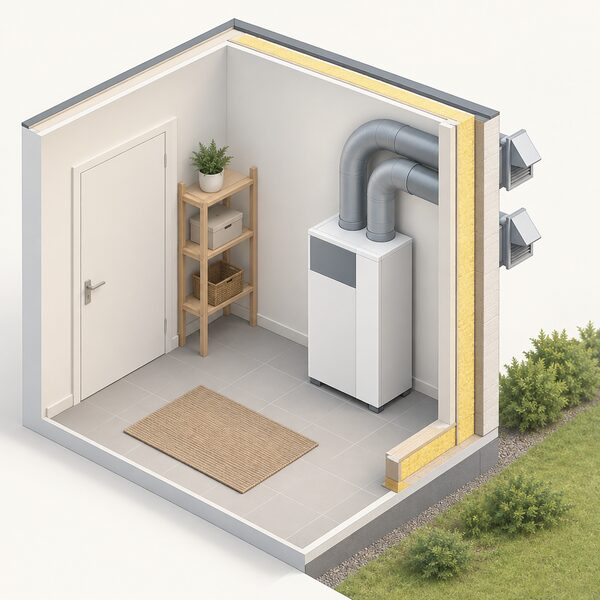
Indoors, space is needed for the unit itself where all the ducts flow to and from, ideally close to an exterior wall1, plus ducting above the ceiling and a hot water cylinder1. For comparison, air source heat pumps generally need less outdoor space than two wheelie bins stood side by side, around 1.5 metres wide34. An exhaust air unit trades that outdoor footprint for a cupboard-sized indoor one, and puts a compressor inside the living envelope, which is a consideration for where it is sited relative to bedrooms.
Maintenance, repairs and replacement
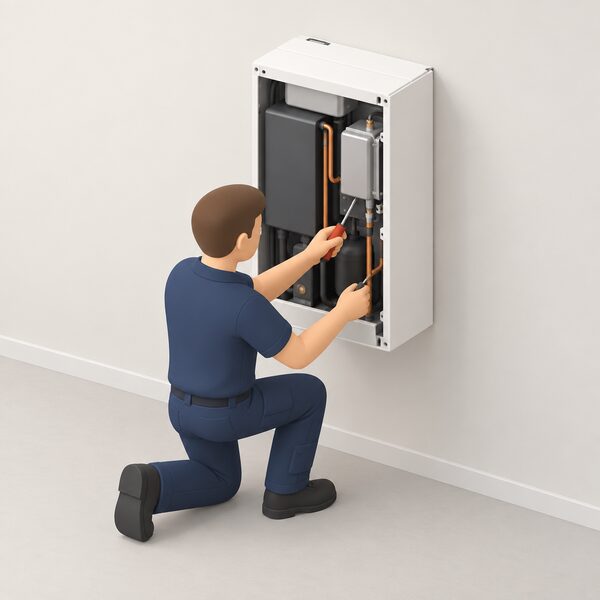
Heat pump systems require very little maintenance but should still be checked periodically by a registered heat pump installer12, and servicing should follow the manufacturer's advice, usually once a year6. An annual service is the common recommendation34. A well-maintained heat pump should last 20 years or longer7, and most systems come with a two to three-year warranty7, well short of that life.
Manufacturer guidance on exhaust air units sets out a clear replacement logic. Replacing the compressor is normally done after about half the service life, about 8 to 12 years. Repair is described as profitable even if the heat pump is at least 16 years old, after which a household usually replaces the unit if it suffers an expensive repair35. The same guidance identifies loss of hot water when winter turns into spring as a symptom of a unit reaching the end of its useful life35.
"After that, you usually replace it if you suffer an expensive repair."
That is a maker's view of its own products and should be read as such. The practical point for a household is that the appliance carries ventilation as well as heating, so a failure is not simply a cold house. See heat pump servicing and maintenance and heat pump faults and troubleshooting.
Track record and availability in the UK
Exhaust air units are a small part of a market dominated by conventional air source machines. UK government-supported installations reached 10,852 air source heat pumps in the second quarter of 2025, of which 8,897 were in England, against 104 ground and water source installations in the same quarter36. Deployment statistics cover MCS certified retrofit installations in existing properties up to 45kW thermal output, so new-build units, where exhaust air machines are most at home, largely sit outside the count. A record 125,000 heat pumps were sold in 2025, a 27% increase over 2024, with approximately 45,000 manufactured in the UK24.
Boiler Upgrade Scheme statistics to July 2026 record zero vouchers issued for air-to-air heat pumps out of 119,418 vouchers in total37, which reflects how recently that category was added rather than a verdict on the technology. The absence of a distinct exhaust air line in published statistics is itself informative: these units are counted inside air-to-water totals in trade data4.
What it means for household energy independence
An exhaust air heat pump removes gas from a home entirely where it replaces a boiler, and in a new build it removes the need to install a gas connection at all1. That ends one supplier relationship and one fuel price exposure. It does not end dependence on the grid. Every unit of heat still comes from electricity, at an effective cost of roughly 5.5p to 6.5p per kWh of heat at an SPF of 4 or 3.5 respectively on the July 2024 figures20, and the ratio between electricity price and heat delivered is the whole economics of the machine.
Three dependencies remain. The first is the electricity supply, discussed on heat pumps and household energy independence. The second is the appliance itself: one box provides ventilation, heating and hot water, so a fault removes all three, and the warranty typically runs two to three years against a 20-year expected life7. The third is the building. An exhaust air unit only works where the fabric is tight enough for the ventilation system to be the dominant air path1, which means the insulation and airtightness are part of the heating system rather than an optional improvement alongside it.
Sources37 cited
- Exhaust air heat pumps, Energy Saving Trust, 5 June 2025
- Approved Document L, Volume 1: Dwellings (2021 edition incorporating 2023 amendments), GOV.UK
- About heat pumps, European Heat Pump Association, 24 April 2026
- From Carbon to Competitiveness, Heat Pump Association UK, January 2026
- Boiler Upgrade Scheme guidance for installers, version 5, Ofgem, 28 April 2026
- Heat pump questions answered, Energy Saving Trust, 27 May 2026
- Heat pumps, Home Energy Scotland, 20 September 2026
- Home Energy Model: heat pump methodology, GOV.UK, January 2026
- Heat pumps campaign, CIBSE
- Air-to-air heat pumps, Energy Saving Trust, 11 September 2026
- In-depth guide to heat pumps, Energy Saving Trust, 16 July 2026
- Your home: guide to heat pumps, OFTEC
- Domestic heat pumps research briefing, POST, UK Parliament
- Heat pumps, New Forest District Council
- Why I'm not getting a heat pump, Which?, 12 February 2026
- Approved Document L, Volume 1: Dwellings, GOV.UK, 2026
- Future Homes and Buildings Standards consultation response, GOV.UK, March 2026
- Heat pump transition report, GOV.UK, May 2026
- Eligible heating systems, Domestic RHI, Ofgem
- Heat pumps information service, Centre for Alternative Technology, July 2024
- Air source heat pumps fact sheet, Pendle Borough Council
- Boiler Upgrade Scheme, Find a grant, GOV.UK, 18 September 2026
- Boiler Upgrade Scheme, Ofgem
- Carbon Budget and Growth Delivery Plan: heat and buildings factsheet, GOV.UK, 23 June 2026
- Boiler Upgrade Scheme and certification requirements consultation, GOV.UK, 30 April 2025
- Boiler Upgrade Scheme guidance for installers, version 5.1, Ofgem, 2 July 2026
- Boiler Upgrade Scheme guidance for property owners, version 5, Ofgem, April 2026
- Air source heat pumps, Energy Saving Trust, 16 July 2026
- Planning permission for an air source heat pump, Planning Portal
- Class G: installation of air source heat pumps on domestic premises, legislation.gov.uk, 29 May 2025
- Permitted development for retrofit and energy efficiency, Cotswold District Council
- Changes to permitted development rights: summary of responses, Welsh Government, December 2025
- Air source heat pump noise emissions, planning guidance and regulations, GOV.UK, 30 November 2023
- Is now a good time to get a heat pump?, Energy Saving Trust, 12 December 2025
- When is it time to change to a new exhaust air heat pump, NIBE
- Heat pump deployment quarterly statistics, UK 2025 Q2, GOV.UK, 2025
- Boiler Upgrade Scheme statistics, July 2026, GOV.UK, 27 August 2026
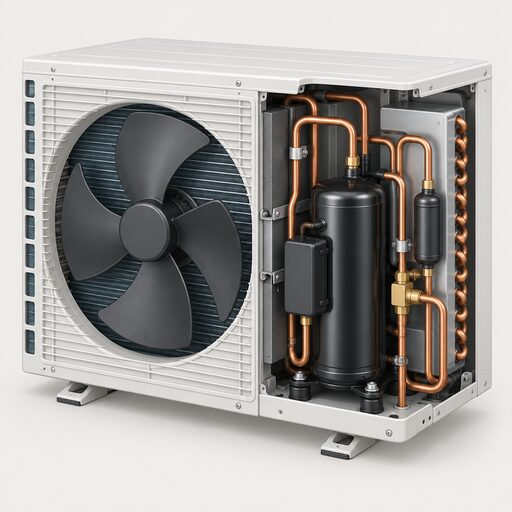 Air Source Heat PumpsHow an air source heat pump takes heat from outdoor air, the difference between air-to-air and air-to-water systems, typical efficiency, the £7,500 Boiler Upgrade Scheme grant, noise and planning limits, and what ownership means for a household's energy independence.
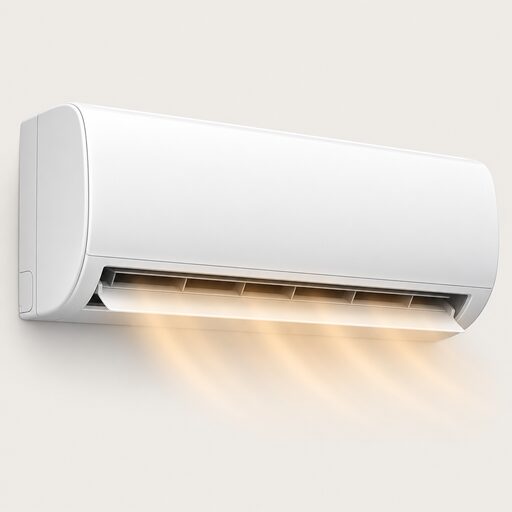 Air-to-Air Heating and CoolingAir-to-air heat pumps deliver warm air through indoor fan units rather than hot water to radiators.
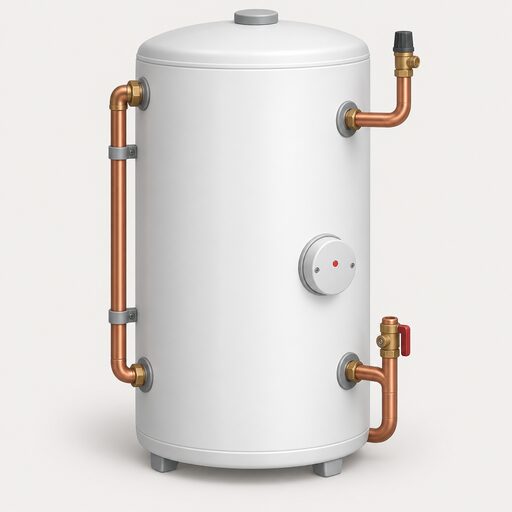 Air-to-Water Wet SystemsAir-to-water heat pumps feed radiators, underfloor heating and a hot water cylinder, and are the most common domestic heat pump in the UK.
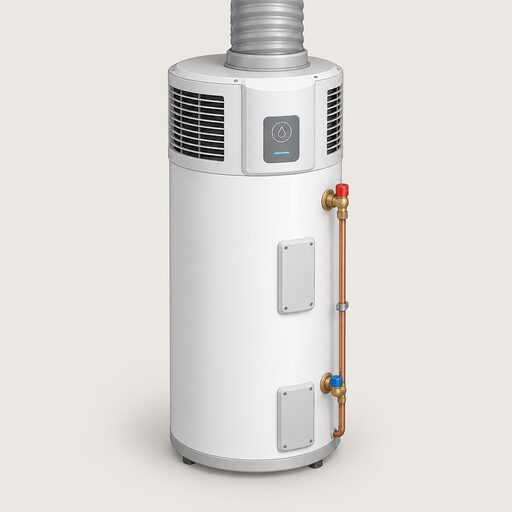 Hot Water Heat PumpsA hot water heat pump heats only the water in your cylinder, using air instead of a boiler flame.
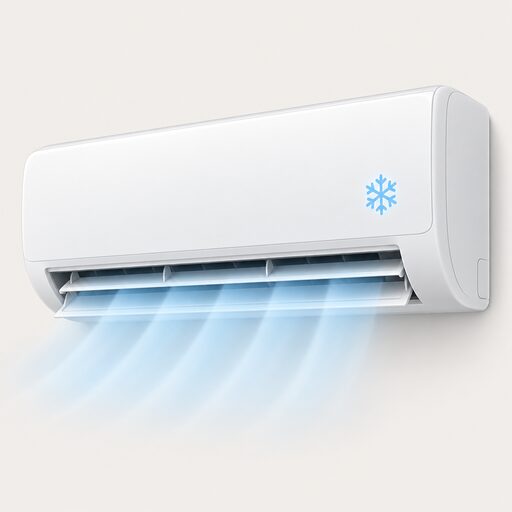 Using a Heat Pump for CoolingCan a heat pump cool your home in summer as well as heat it in winter?
 How They Perform in UK HomesHow well do heat pumps really work in UK homes, and why do some run far better than others?