
In this guide
The Electrification of Heat Demonstration Project was a government-funded trial that installed 742 heat pumps in homes across three areas of Great Britain between July 2020 and October 2021, against a target of up to 7501. It was the largest project of its kind in the UK, and its central question was whether a mass rollout of heat pumps into British homes is technically and practically feasible1.
The headline answer was yes. The project found that heat pumps can be successfully installed in all the types of property which were tested, that they can operate with good efficiencies, and that they provide positive consumer heating experiences4. It also found no property type or architectural era that is unsuitable for a heat pump5. Where homes proved harder, the obstacles were specific and identifiable: space for an outdoor unit, the size of heat pump needed, microbore pipework, and the design challenge of older, leakier buildings.
For a household, the significance is less about any single installation than about what the trial measured at scale. It monitored real systems in real homes, including homes with Energy Performance Certificate ratings from A down to G, and it published the performance data and reports openly4. That evidence base is what now sits behind claims about cold-weather performance, running efficiency and suitability across house types.
What the project was, and who ran it
The Electrification of Heat Demonstration Project was commissioned by government in 2020 and funded by what was then the Department for Business, Energy and Industrial Strategy, now reported under the Department for Energy Security and Net Zero1. It formed part of the government's Energy Innovation Programme1.
Day-to-day management sat with a consortium led by Energy Systems Catapult, in partnership with Delta-EE and Oxford Computer Consultants1. Energy Systems Catapult is an independent research and technology organisation whose stated mission is to accelerate Net Zero energy innovation, and it led the project with support from LCP Delta and Oxford Computer Consultants4. A separate evaluation report was produced by the project's Evaluation Contractor, ICF2.
Delivery on the ground was split between three contractors, each responsible for one region. Warmworks led in the South East of Scotland, working with Energy Saving Trust and Changeworks; E.ON led in the Newcastle area, working with Newcastle City Council and Your Homes Newcastle; and OVO Energy led in the South East of England, working with Kaluza, RetrofitWorks, Parity Projects and SunAmp1. Energy retailers including OVO Energy and E.ON were described as driving the project on the ground9.
The project did not end with installation. It moved into a monitoring and optimisation phase, in which the delivery contractors collected user feedback and detailed performance data on the installed heat pumps and looked to ensure they were performing optimally1. That monitoring is the reason the trial produced performance findings rather than just an installation count.
Purpose: testing whether a mass rollout is feasible
The project's stated aim was to better understand the feasibility of a large-scale rollout of heat pumps across the UK, and to understand how that rollout could be sped up1. Its scope was deliberately broad: it sought to understand the technical and practical feasibility, and the constraints, of a mass rollout of heat pumps into British homes4. An earlier description of the project put the same point as understanding and overcoming barriers to the large-scale roll-out of low carbon heating11.
That framing matters, because it explains why the trial recruited across such a wide range of housing rather than concentrating on the easiest properties. Homes were installed across a broadly representative spectrum of housing types, socio-economic groups, and on and off-gas grid locations1. The point was not to demonstrate a best case but to find where the friction sits.
The findings that emerged were twofold. First, that heat pumps can be successfully installed in all the property types tested, and can operate with good efficiencies and provide positive consumer heating experiences4. Second, that a mass rollout is feasible but innovation is needed, which is how Energy Systems Catapult summarised the outcome12. The constraints the project identified were practical rather than fundamental: the availability of suitably sized products, the space an outdoor unit needs, and the pipework and fabric of particular building types.
For a household, this is the useful distinction. The trial did not conclude that every home is straightforward. It concluded that no category of home is ruled out, and that the difficulties encountered were specific enough to be designed around.
Where it ran, and who delivered it
Three regions took part, each with a delivery contractor and local partners. The original plan was for 250 homes in each region11.
| Region | Delivery contractor | Partners |
|---|---|---|
| South East of Scotland | Warmworks | Energy Saving Trust, Changeworks1 |
| Newcastle area | E.ON | Newcastle City Council, Your Homes Newcastle7 |
| South East of England (excluding London) | OVO Energy | Kaluza, RetrofitWorks, Parity Projects, SunAmp4 |
The regional split was not incidental. It gave the trial a Scottish sample, a northern English urban sample and a southern English sample, with different housing stocks, different grid and gas infrastructure, and different devolved policy contexts. Scotland's building stock includes a large share of pre-1919 tenements and stone-built properties, and the Scottish Government has consulted on reforming Energy Performance Certificates, which record dwelling type, floor area, construction type, insulation, heating, ventilation and lighting13. Wales, by contrast, ran its own Optimised Retrofit Programme, a separate official case study which reported heat pump installation times of between a few days and 10 days excluding weekends14. Northern Ireland did not host a delivery region in this project.
The practical consequence is that the trial's findings are strongest for Great Britain and for the three named areas. A household elsewhere in the UK can read the results as evidence about house types and technologies, but not as a statement about its own regional grant schemes or building regulations, which differ between England, Scotland, Wales and Northern Ireland.
Scale and recruitment: 8,807 expressions of interest, 742 installations
Recruitment was the first surprise. The project generated 8,807 expressions of interest from households across the three regions, and was described as heavily oversubscribed1. About 40%, or 3,205 people, of those who expressed an interest were recruited to the project2. Participant recruitment was completed in summer 20212.
The motivations participants gave were recorded. The most common was interest in new technology, cited by 63%, followed by free heat pump installation at 53%, and sustainability and low carbon heating at 78%2. Those figures overlap because participants could cite more than one reason.
Installations ran from July 2020 to October 2021, and 742 heat pumps were installed across the three regions in a wide range of house types1. The trial dataset covers those 742 installations, delivered through three contracted partners between 2020 and 202315.
For context on scale, government statistics record 5,472 government-supported heat pump installations in the UK in the third quarter of 2022, and 6,143 in the fourth quarter of 202216. The demonstration project was therefore a research exercise rather than a meaningful share of national deployment, and it was never intended to be one. Its value lies in the depth of monitoring per home, not the number of homes.
The homes: types, ages and EPC ratings
The housing mix was deliberately wide. Heat pumps were installed in homes with Energy Performance Certificate ratings from A down to G6. At least 53% of homes involved had an energy efficiency rating of C or D before the heat pump installation, and the majority of homes where a heat pump was installed had a rating of C or D6.
The property type split across installed homes was 41% detached, 43% semi-detached, 11% mid-terrace and 6% flats6. By age, 68% of the homes were pre-19806. The project also installed into specific types including flats, semi-detached homes, mid-terraced houses and early 20th century detached homes10. One account of the installations described the range as Victorian mid-terraces, pre-WWII semis and a 1960s block of flats9.
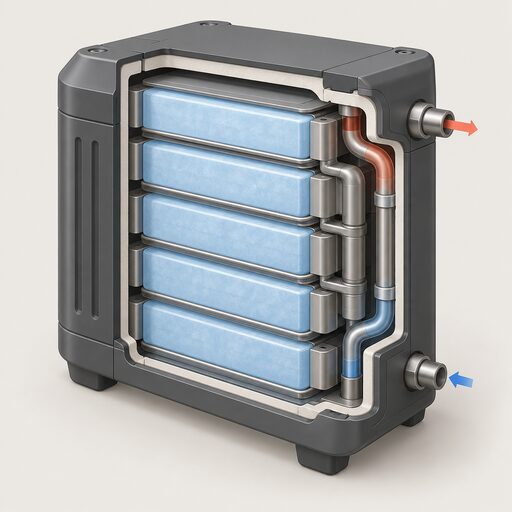
Two practical constraints surfaced in the surveys. A small number of properties, 27 homes, required measures to keep heat pumps within noise limits7. And 33 flats had a heat battery installed instead of a hot water cylinder, because there was not enough space for a cylinder7. Both are examples of the trial adapting the system to the building rather than rejecting the building.

Heat pump types installed
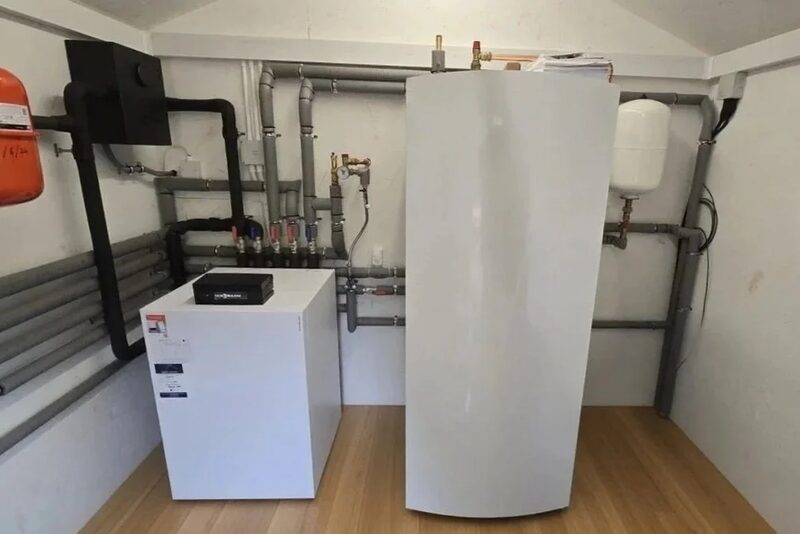
Three main types of heat pump were installed, alongside hybrid systems and newer technologies10. The project installed low-temperature and high-temperature air source heat pumps, ground source heat pumps, hybrid heat pumps incorporated with a gas boiler, and heat batteries3. The share of each technology across the installations is set out below.
| Technology | Share of installations |
|---|---|
| Low temperature air source heat pump | 41%7 |
| High temperature air source heat pump | 33%7 |
| Hybrid heat pump with a gas boiler | 20%6 |
| Ground source heat pump (shared and individual) | 5%6 |
| Heat batteries | Installed in 33 flats lacking space for a cylinder7 |
The ground source figure breaks down further in the survey and install report: 1% were individual ground source heat pumps and 4% were shared ground source heat pumps7. Shared ground loops are relevant to flats and terraces where a borehole per dwelling is not practical, and the site covers them separately in shared ground loop networks.
The technology mix is the part of the trial most directly useful to a household choosing a system. High temperature units made up a third of installations, which speaks to the number of homes where the existing radiators and pipework were retained rather than replaced. Hybrid systems, where a heat pump works alongside a gas boiler, accounted for a fifth. The site explains how those differ in hybrid heat pumps and high-temperature heat pumps.
Performance findings: efficiency, cold weather and consumer experience
The performance results are the core of the project's value. The project showed that heat pumps can operate with good efficiencies and provide positive consumer heating experiences4. It found that heat pumps can operate efficiently at moderate and high flow temperatures, which matters because high flow temperatures are what existing radiators in older homes typically need17.
On cold weather, the monitored data was specific. Even on the coldest days, only a marginal decline in system performance was observed6. Government guidance drawing on the project states that heat pumps can operate efficiently at moderate and high flow temperatures, and that research shows heat pumps are more than twice as efficient as fossil fuel heating in cold temperatures17. Wider field data research from the UK, Germany, Switzerland, Canada, the USA and China found heat pumps continuing to perform efficiently and effectively at temperatures far below freezing18.
Consumer experience was measured too. Heat pumps were recommended by 85% of consumers in the project4. Case studies reflecting the first-hand experiences of seven households taking part were published alongside the data12.
The efficiency findings should be read with the project's own framing. The trial has been described as helping to demonstrate the excellent and improving efficiency of heat pumps19. That is a statement about a monitored demonstration, not a guarantee for any individual home, where performance depends on the fabric, the emitters, the flow temperature and how the system is controlled. The site sets out how efficiency is measured in COP, SCOP and SPF and what cold weather does to it in heat pumps in cold weather.
Cost and installation time
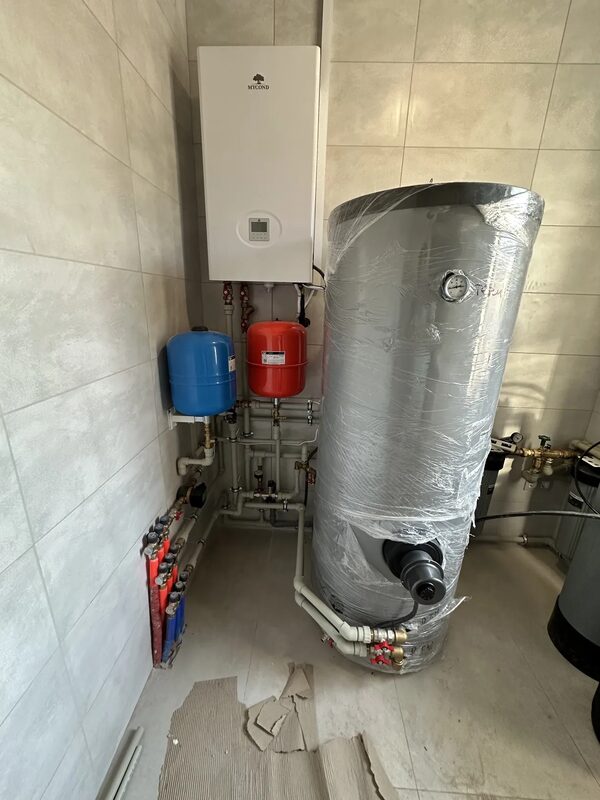
The average total cost per property was about £14,800, including the heat pump unit, additional measures and installation7. That figure covers hot water tanks, radiator upgrades and labour9. It is a demonstration-project average, not a retail quotation, and it includes energy efficiency work carried out in some homes alongside the heat pump.
Energy efficiency upgrades were needed in 15% of properties, in the majority of cases loft insulation, with a few properties needing more7. Cost was a barrier in a minority of cases: for 4% of properties assessed, the cost of installation or additional measures such as insulation meant that effective installation could not proceed12.
Installation time averaged 2 to 4 days, by a team of two installers and one electrician, excluding energy efficiency measures7. The Welsh Optimised Retrofit Programme case study reported that a heat pump could take between a few days and 10 days excluding weekends14. The difference reflects the scope of work: a like-for-like swap is quicker than a job that also involves radiators, pipework or fabric measures.
Where heat pumps proved harder
The project was candid about where difficulties lay, and the pattern is consistent across its reports.
- Older homes. The project found a greater challenge in designing heat pump systems for older homes built before 1945, but 163 heat pumps were successfully installed in those older pre-1945 properties10. Pre-1919 homes faced challenges owing to building fabric efficiency and the heating capacity required6.
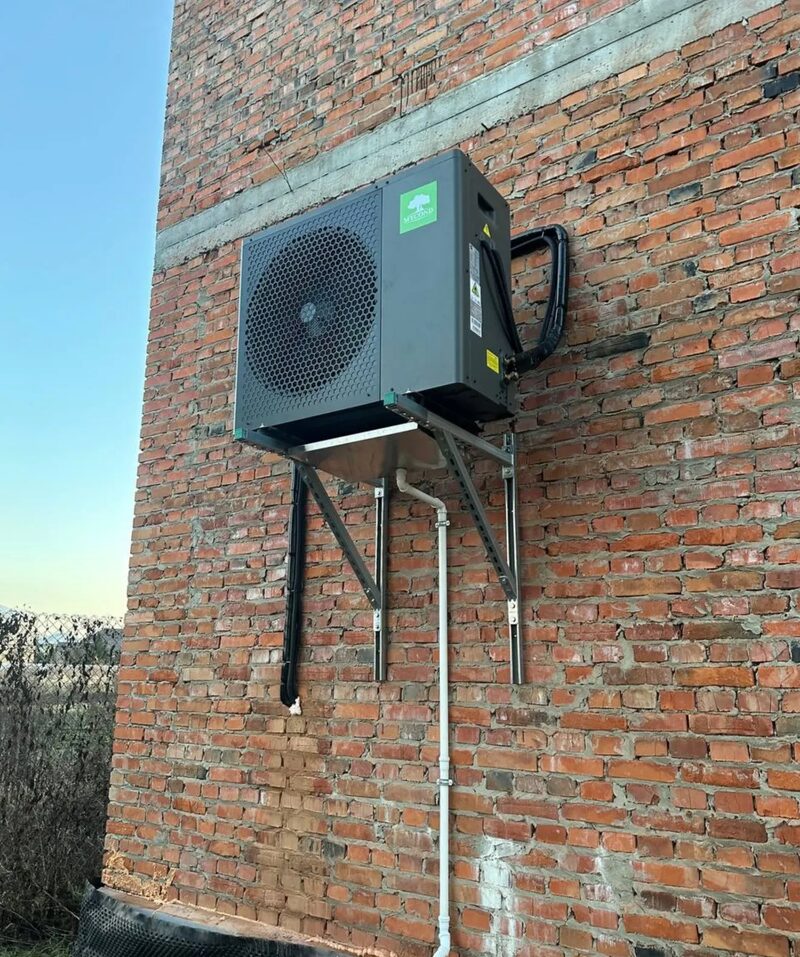
- Mid-terrace homes. These were impacted by space constraints6, which is consistent with the 8% of cases where a lack of external space for an outdoor unit was cited as a reason a heat pump was not recommended12.
- Post-2001 homes. These needed solutions that worked with microbore pipework6, the narrow-bore pipework common in newer installations, which restricts flow and can require alteration.
- Capacity limits. For 7% of properties, a heat pump larger than the products available for the trial was needed to meet the property's needs, and 4% could not meet comfort requirements7.
- Overall feasibility. Only 12% of properties surveyed were considered unfeasible based on technical constraints7.
The important qualification is that these are design problems, not disqualifications. The project's own conclusion was that there is no property type or architectural era that is unsuitable for a heat pump5, and that heat pumps can be successfully installed in all the types of property which were tested4. The site covers the specific cases in heat pumps in Victorian houses and which homes suit a heat pump.
What it means for household energy independence
The project's evidence bears directly on what a household gains and what it does not. A heat pump replaces a gas, oil or LPG boiler with a system run on electricity, which removes the direct dependence on a piped or delivered fossil fuel for space heating and hot water. The trial demonstrated that this substitution works across a wide range of British housing, including homes on and off the gas grid1.
What remains is dependence on electricity. A heat pump household still draws from the grid and still buys from a supplier, so the fuel source changes rather than disappears. The trial's cold-weather findings matter here: a system that holds its performance on the coldest days, with only a marginal decline observed, is one that does not need a fossil fuel backup for those days, which is the point at which a hybrid system's gas boiler would otherwise take over6. The site examines the wider picture in heat pumps and household energy independence.
There is also a data and control dimension. The project's monitoring depended on detailed performance data collected from installed systems, and Energy Systems Catapult has argued that Energy Performance Certificates should integrate real-world data on fabric performance and low-carbon technologies, using smart meter enabled thermal efficiency ratings and monitoring of low-carbon technologies4. That is a direction of travel towards more measurement of installed systems, not less.
The honest summary is that the trial supports the case that a household can move its heating off fossil fuel without moving off the grid. It does not support a claim of self-sufficiency, and it does not remove the need for a competent design, a correctly sized unit and a system set up for the building it serves.
Reports, datasets and what came next

The project's outputs are public. Energy Systems Catapult has made the Electrification of Heat Demonstration Project datasets available to access, alongside published reports including the Summary Report, the Insights from Heat Pump Performance Data Report, the Heat Pump Performance Data Analysis Report and the Optimisation Report4. The trial dataset covers the 742 installations delivered through three contracted partners between 2020 and 202315.
The project moved into a monitoring and optimisation phase, in which delivery contractors collected detailed performance data on the installed heat pumps3. That phase is where the performance findings above were generated.
The work sits within a wider government programme of heat pump innovation. Heat Pump Ready, established in 2021, aims to reduce the lifetime costs of domestic heat pumps, and an extension of £30 million of funding was announced to help bring down costs and installation time16. The site covers that programme separately in the Heat Pump Ready Programme.
For a household, the practical route into this evidence is the published reports and datasets, and the case studies of participating households4. The site's wider guide to how real installations perform is at how heat pumps actually perform in UK homes, and the starting point for the technology itself is heat pumps.
Sources19 cited
- Electrification of Heat Demonstration Project, Energy Saving Trust, 2024
- Electrification of Heat: Participant Recruitment Report, Energy Systems Catapult, 2022
- Electrification of Heat trial finds heat pumps suitable for all housing types, Energy Systems Catapult, 2021
- Electrification of Heat: Summary Reports and Datasets, Energy Systems Catapult, 2024
- Electrification of Heat: Case Studies on Heat Pump Experiences, Energy Systems Catapult, 2021
- Heat pumps recommended by 85% of consumers, Energy Systems Catapult, 2024
- Electrification of Heat: Home Surveys and Install Report, Energy Systems Catapult, 2022
- Warm Home Prescription, Energy Systems Catapult, 2025
- Electrification of Heat Demonstration Project, LCP, 2024
- From flats to terraced houses, heat pumps are suitable for all property types, Energy Saving Trust, 2024
- Electrification of Heat: Places and Partners, Energy Systems Catapult, 2020
- Mass rollout of heat pumps feasible but innovation needed, Energy Systems Catapult, 2022
- Domestic EPC reform consultation, Scottish Government, 2021
- Optimised Retrofit Programme: Active Building Centre resident engagement, Welsh Government, 2024
- Call for evidence: heat pump transition, UK Government, 2020
- Information about the Heat Pump Ready Programme, GOV.UK, 2026
- Heat pumps explained: experts answer your questions, GOV.UK, 2024
- Heat pumps in cold weather, Development Bank of Wales, 2024
- Insulation and heat pumps: the perfect pairing, MIMA, 2026
 Demonstration and Test HomesBefore new heating systems reach your home, they get tested in real houses with real people living in them.
 Heat Battery Trials and ResultsDo heat batteries actually work in real UK homes, and what did the trials find?
 Public Attitudes to Home EnergyWhat do people in the UK really think about heat pumps, solar panels and smart meters?
 The Full Heat Pumps GuideWill a heat pump keep my house warm in winter, and what does one cost to buy and run?
 Which Homes Suit a Heat PumpMost UK homes can have a heat pump fitted, so the real question is whether yours makes it easy or expensive.
 UK Cooling DemandPublished data on air conditioning ownership and home overheating, with projections for summer temperatures in each UK nation, and what rising cooling demand means for summer electricity use.