
In this comparison
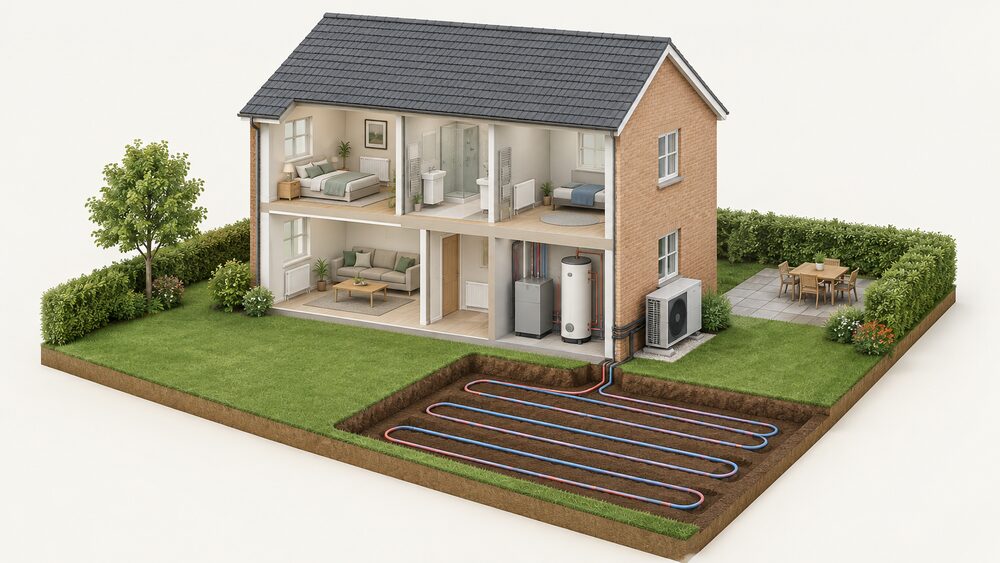
Both types of heat pump do the same job: they move existing heat into your home rather than burning fuel to create it. The difference is where the heat comes from. An air source heat pump takes it from the air outside your house1; a ground source heat pump takes it from the natural heat stored in the earth, and uses it to heat the home and domestic hot water1. Both then distribute that warmth around the house, usually through your hot water system and radiators or underfloor pipes2.
The practical trade-off is simple. Ground source is typically more expensive and needs more space, because pipes must be buried in the ground, with independent installer guidance describing these models as "more expensive due to the landscaping involved"2. Air source is easier and cheaper to install precisely because it does not use buried pipes3. Which one suits your home comes down to the size of your plot, your budget, how much disruption you can accept, and the grants and VAT relief available at the time you buy. This page compares the two side by side on every one of those points.
How each type gets its heat
An air source heat pump sits outside the house, usually against a wall, and extracts heat from the outdoor air. A ground source heat pump works from a collector buried in your land: pipes laid in trenches or dropped into boreholes, which absorb the relatively stable warmth held in the earth and, in some systems, in a body of water8. Official Scottish guidance describes both ground and water source systems as machines that "upgrade low temperature heat from the ground or from a body of water"9.
Inside the house, the two converge. The heat that has been extracted and concentrated is usually distributed around your home via your hot water system, just like an air-to-water model2. That means both types connect to radiators, underfloor heating and a hot water cylinder, and both heat the home and the domestic hot water1. Ground and water source systems are used for space heating, domestic hot water or space cooling, and are suitable for both new build and existing buildings9.
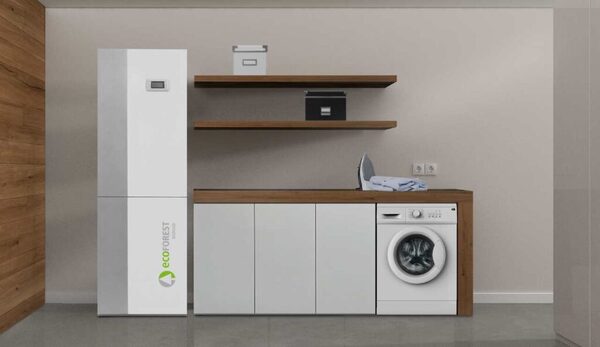
One structural difference matters when you walk around a property. The heat pump unit associated with a ground or water source collector loop is generally designed for indoor use9, so the machinery lives in a plant room, cupboard or garage. An air source unit lives outdoors, where it can reach the air, and that single fact drives most of the differences that follow: the noise, the siting rules, the planning conditions and the installation cost.

Cost: why ground source costs more
No published price list exists for either type. Both are installer-quoted, and the figures vary with the size of your home, the ground conditions and the amount of groundwork involved, so treat any headline price you see elsewhere with caution. What the official and independent guidance does establish is the relationship between the two costs.
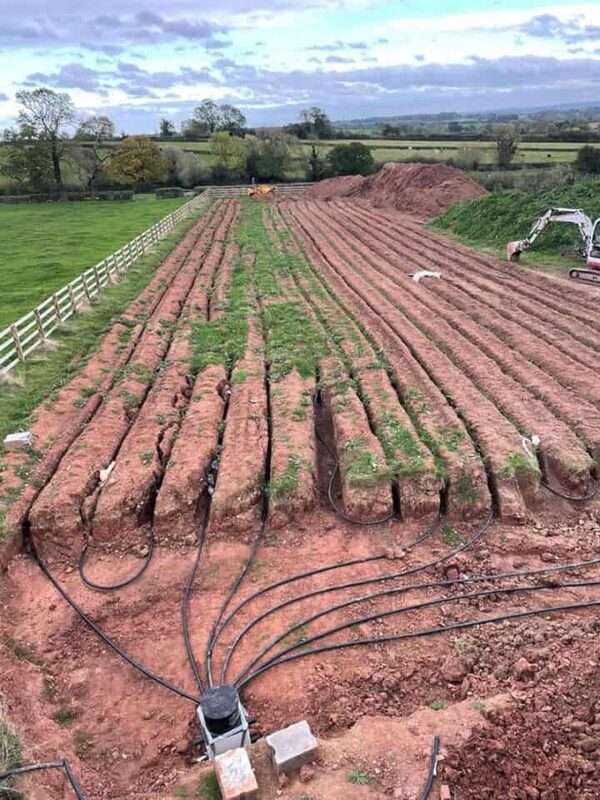
Ground source heat pumps are typically more expensive than air source, and the reason is the ground itself. Excavation is needed for installing the ground loop system10, and an air source heat pump is easier and cheaper to install than a ground source heat pump because it does not use buried pipes3. Independent installer guidance makes the same point from the other direction: ground source models are "more expensive due to the landscaping involved"2. Whether that landscaping means shallow trenches across a garden or boreholes drilled deep into the ground is the single biggest driver of the price difference between two quotes.
That extra upfront cost buys something in return. The same independent guidance notes that ground source models "can be more reliable due to the relative warmth and stability of underground temperatures"2. Northern Ireland's official consumer guidance also frames the trade-off in these terms: excavation is needed for the ground loop system, but the system "offers long-term energy savings and less maintenance"10.
For detailed cost pages, see how much a heat pump costs and ground source heat pump cost.
Efficiency: ground source usually wins
Air source and ground source heat pumps are, together, leading the way with electric heating because of their high efficiency levels11. Both deliver more heat than the electricity they consume. Between the two, ground source usually has the edge, and the reason is the stability of the heat source.
The ground stays at a relatively steady temperature through the year, while the air outside swings from summer heat to winter cold. Because a ground source system draws on that stable store, it "can be more reliable due to the relative warmth and stability of underground temperatures"2. Air source units, by contrast, work hardest exactly when the air is coldest, which is when a home needs heat most.
Air source is catching up, in the sense that it is the technology most households actually meet. Awareness of air source heat pumps stood at 78% in Summer 202612, while knowledge of ground source heat pumps fell from 24% in Spring 2025 to 21% in Summer 202513. The market, the installer base and the product ranges have grown fastest around air source, which means more competition and more choice at the point of purchase.
For the measures used to compare efficiency in detail, see heat pump efficiency: COP, SCOP and SPF, and for the cold-weather question specifically, whether ground source heat pumps are better in cold weather.
Noise: the fan and compressor versus a buried collector
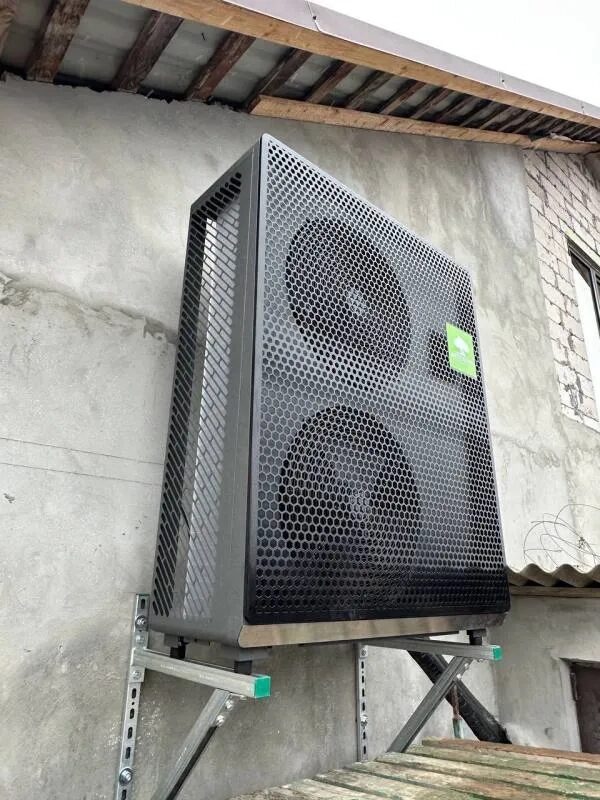
Noise is where the two types differ most sharply in daily life. In an air source heat pump, "the fan and the compressor are the main sound sources"4. The unit sits outdoors, next to the house, and runs whenever heat is called for. Ground source systems avoid most of this, because the collector is silent underground and the machinery is generally indoors9.
This difference is not just technical. It shows up in how people feel about the technology. Government tracking of public attitudes found that reluctance to have a heat pump installed remained above the Winter 2021 baseline for both types: 47% for air source, up from 35%, and 53% for ground source12. Noise is one of the visible, everyday aspects of an air source installation, and it is the reason the planning rules for air source units include noise conditions while ground source systems are largely exempt from them.
For an air source installation, noise is assessed as part of the process, and siting matters: the unit needs to be positioned where its sound will not trouble neighbours or your own windows. See how noisy is a heat pump? and the MCS 020 noise assessment for what that involves in practice.
Space and siting: why ground loops need larger plots
Ground source needs land. To install one, "you will need outside space for trenches or boreholes (deep holes in the ground). You will also need enough room inside" for the heat unit14. That is the decisive constraint for most suburban and urban homes: a small back garden may not have room for the trenches, and boreholes, while compact at the surface, add drilling cost to the bill.
Air source needs almost no land at all. The unit bolts to a wall or stands on a small pad, and the only siting questions are practical ones: clearance around the unit, distance from boundaries, and the planning conditions that apply to where it can go. See where a heat pump outdoor unit can go for the detail.
The indoor requirement is common to both. Every heat pump installation needs a place inside for the unit, the hot water cylinder and the associated pipework, and a ground source system's indoor unit is generally designed for indoor use rather than outdoor9. If your home has no plant space, no cupboard for a cylinder and no garden, neither type is straightforward, and the choice becomes about which constraint you can live with: outdoor noise and siting rules with air source, or land and excavation with ground source.
For how the buried collectors actually work, see ground loops and boreholes.
Which type suits which home
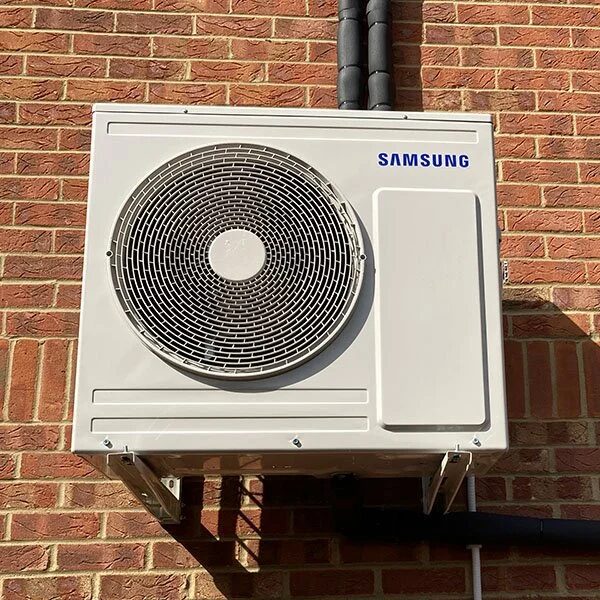
Put the two side by side and the pattern is clear. Ground source suits homes with the land to bury a collector and the budget to pay for the excavation, and it rewards that investment with long-term energy savings and less maintenance10. Air source suits homes where the outdoor unit can sit against a wall: it is cheaper and easier to install3, it can give both heating and cooling10, and it is the option most installers quote for most often.
The two also differ in what they ask of you as an owner. A ground source system's collector is buried and invisible once installed; an air source unit is visible, audible and subject to siting rules for its whole life. Neither needs a chimney, a fuel delivery or a gas connection, which is the point both share: they replace a dependence on a fuel supply with a dependence on electricity.
Attitudes data shows who is actually making this choice. The share of people in owner-occupied homes who said they were likely to install a heat pump, or had already done so, rose from 19% in Winter 2021 to 25% for air source by Summer 202612. Awareness of both types is higher among owner-occupiers than renters: 78% of people in owner-occupied households were aware of ground source heat pumps in Summer 2025, against 58% in rented households13. For renters the decision is rarely theirs at all: 54% said the decision to install a heat pump was not theirs, compared with under one in ten people in owner-occupier households12.
For a wider view of which homes suit a heat pump at all, see which homes suit a heat pump.
Other heat sources: water source and shared ground arrays
The choice is not strictly two-way. Water source heat pumps take the same principle and apply it to a body of water: a river, lake, large pond or groundwater, where one exists within reach of the property. Official guidance treats ground and water source systems as a family, used for space heating, domestic hot water or space cooling, in new build or existing buildings9, and planning guidance notes that "air and water source pumps offer additional options based on your property's needs"15.
Water source systems share the ground source advantages: the collector is out of sight, the unit is generally indoors9, and the heat source is more stable than air. They also share the need for a suitable site, which in this case means access to water rather than open land.
There is also a middle route for homes without their own plot: shared ground loops, where several properties draw from a common buried array. This is covered in detail on shared ground loop and networked ground source heat pumps, and it is the route by which ground source efficiency reaches flats and terraced homes that could never bury their own collector. For the full picture of the water-based option, see water source heat pumps for homes.
Grants: what the Boiler Upgrade Scheme pays
The Boiler Upgrade Scheme is the main grant in England and Wales, and it pays towards both types. The scheme funds air or ground source heat pumps, or a biomass boiler, for households that meet the eligibility criteria16.
The grant levels have changed over time, and the dates matter:
| Date | Air source | Ground source | Notes |
|---|---|---|---|
| From 23 October 2023 | £7,500 | £7,500 | Increased from £5,000 for both types5 |
| From 21 July 2026 | £7,500, or £9,000 off-gas-grid | £9,000 applies where an oil or LPG system is being replaced6 |
Once a voucher is issued, it is not open-ended: vouchers for ground source heat pumps are valid for 6 months6. For the full picture across all four nations, see heat pump grants and funding across the UK.
VAT relief, and the date that changes the sums
VAT is currently the quiet half of the financial case. Installations of energy-saving materials, including air source heat pumps, ground source heat pumps and water source heat pumps, are subject to VAT relief at 0% until 31 March 20277. The zero rate on air source heat pumps has applied UK wide since 1 May 2023, having first applied in Great Britain from 1 April 202217. Before that, installations were reduced-rated subject to eligibility conditions17.
For ground source, the relief reaches further than the equipment. From 1 February 2024, certain preparatory work necessary for the installation of ground and water source heat pumps was brought into the relief1, and a zero rate applies to the groundworks necessary for the installation of ground and water source heat pumps19. The government consulted on this extension and confirmed that "the government will add a discrete list of groundworks necessary for the installation of ground-source and water-source heat pumps" to the relief, even when the groundworks are co-contracted to specialist suppliers20. This matters for the comparison because groundworks are exactly the cost that makes ground source more expensive: the VAT relief on them narrows the gap between the two quotes.
Both types also appear on the official list of energy-saving products that qualify for the lower rate of VAT once the zero-rate period ends21.
Planning permission: air source has conditions, ground source barely does
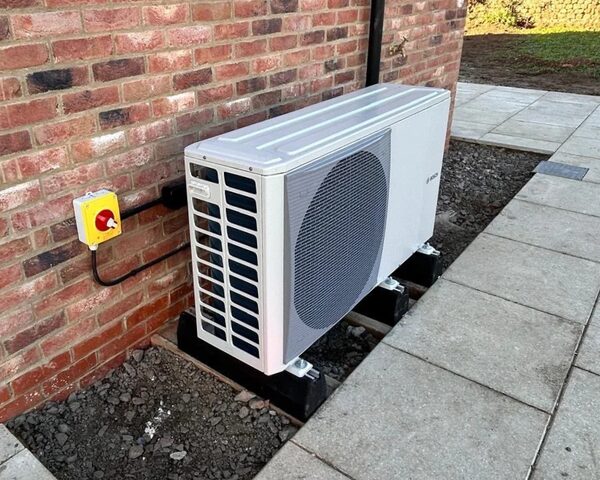
This is one of the clearest differences in practice. In England, the installation of an air source heat pump on domestic premises has been permitted development since 1 December 2011, meaning no planning application is needed, provided all the limits and conditions are met22. Ground source heat pumps have it easier still: installation on domestic premises is "usually considered to be permitted development, not needing an application for planning permission"23, and they "do not usually require planning permission as long as permitted development criteria are met"24.
The air source conditions are where the work is. Air source heat pumps do not normally require planning permission, except where listed exceptions apply, and the exceptions include:
- Listed buildings. If you live in a listed building, you will need both planning permission and listed building consent25, and you cannot install an air source heat pump in a listed building or scheduled monument without planning permission26.
- Roof siting. Planning permission is needed if the unit is on a pitched roof or less than 1m from the edge of a flat roof25, and air source heat pumps installed on a pitched roof require planning permission3.
- Existing units. One existing air source heat pump on a non-detached dwelling or block of flats, or two on a detached house, means a further unit needs planning permission25.
- Flats and shared buildings. Permitted development rules for air source heat pumps are more restricted for flats and shared buildings, and planning permission is more likely to be required28.
- Non-domestic buildings. Permitted development rights for small-scale renewables do not extend to non-domestic buildings such as offices, schools and industrial premises3.
Ground source is not entirely exempt from paperwork: installation within the curtilage of a house or block of flats does not require planning permission, but listed building consent may be required if the property is listed25. And whichever type you choose, "installation of either a ground source or air source heat pump will have to comply with the Building Regulations"27. For nation-by-nation detail, see heat pump planning permission in England and the equivalent pages for Scotland, Wales and Northern Ireland.
Suitability limits: insulation comes first
Neither type escapes the physics of heat loss. Heat pumps are best suited to buildings with good insulation levels, and homes that do not already have good levels may need insulation added internally or externally25. Air source heat pumps work most efficiently in buildings that are well insulated and draught proofed, and that have either underfloor or warm air heating.
This applies equally to both types, and it is the one part of the project where the air-versus-ground choice is irrelevant. A ground source system in a draughty house will still struggle to hold temperature; an air source system in a well-insulated one will still perform. The insulation work comes first, the heat pump second, and the sizing of the unit follows from the heat loss calculation rather than from the type. See heat pump sizing and heat loss calculations and whether you can fit a heat pump without insulating first.
What each choice means for independence
Both types cut the same dependence: no gas supply, no oil or LPG deliveries, no boiler flue, and no exposure to the fuel markets that sit behind them. What remains is a dependence on electricity, on the grid that delivers it, and on the electricity tariff you pay. That is the honest ledger for any heat pump household, and it is set out fully on heat pumps and household energy independence.
The type choice changes the shape of that independence rather than its extent. Ground source, with its stable buried collector and indoor machinery, is the more self-contained system: quieter, less maintenance, less exposed to outdoor conditions2. Air source is the more adaptable one: cheaper to install, able to cool as well as heat10, and available to homes with nothing but a wall to put it on. Whichever you choose, the heat itself comes from your own air or your own land, and the only fuel you buy is electricity.
For the wider picture, start at heat pumps: the full UK guide, or go deeper on air source heat pumps explained and ground source heat pumps explained.
Sources28 sources
- VAT Energy Saving Materials: ground source heat pumps, HMRC, 2026-09-17
- How heat pumps work: a guide for homeowners, NICEIC, 2025-09-17
- Fact sheet 5: air source heat pumps, Pendle Borough Council, 2026-09-17
- ASHP noise and permitted development rights in Wales: phase 1 report, Welsh Government, 2023-12-13
- Boiler Upgrade Scheme: changes to grant levels, DESNZ, 2023-10-23
- Boiler Upgrade Scheme guidance for installers v5.1, Ofgem, 2026-07-21
- VAT rates on different goods and services, HMRC, 2026-07-10
- Household retrofit guidance: air and ground source heat pumps, Croydon Council, 2026-09-17
- Low carbon equipment and building regulations: ground source and water source heat pumps, Scottish Government, 2010-03
- Heat pumps, nidirect, 2025-02-24
- Retrofit, Act on Energy, 2026
- DESNZ Public Attitudes Tracker: heat and energy use in the home, Summer 2026, DESNZ, 2026
- DESNZ Public Attitudes Tracker: heat and energy use in the home, Summer 2025, DESNZ, 2025
- Sustainable home energy solutions, Planning Portal blog, 2024-09-02
- Homes and businesses: grants for a new boiler, Wrexham Council, 2025-11-14
- Boiler Upgrade Scheme guidance for installers V5, Ofgem, 2026-04-28
- VAT Energy Saving Materials: water source heat pumps, HMRC, 2026-09-17
- VAT on energy saving materials and heating equipment: Notice 708/6, HMRC, 2014-07-17
- VAT energy saving materials relief consultation, HMRC and HM Treasury, 2023-12
- VAT energy saving materials relief consultation: summary of responses, HMRC and HM Treasury, 2023-12-11
- Energy saving products: tax on shopping, HMRC, 2026-09-17
- Heat pumps: permitted development, Planning Portal, 2026-09-17
- Heat pumps, New Forest District Council, 2026-09-17
- Air source heat pumps: planning advice, Cornwall Council, 2026-09-17
- Air source heat pumps: common planning projects, Westmorland and Furness Council, 2026-09-17
- Air source heat pumps and climate change planning, London Borough of Hammersmith and Fulham, 2026-09-17
- Heat pumps: building regulations, Planning Portal, 2026-09-17
- Planning permission: air source heat pump, Planning Portal, 2026-09-17