
In this comparison
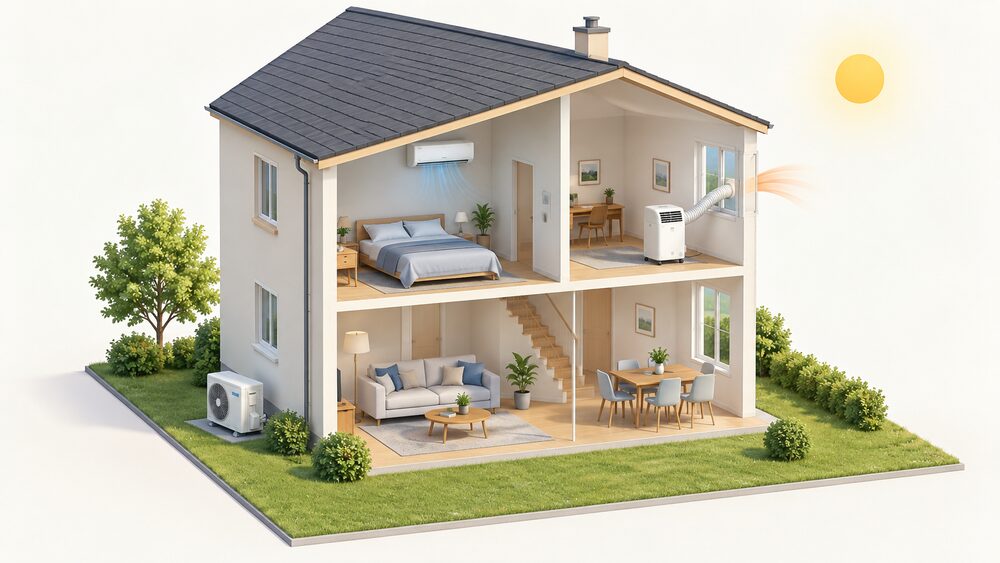
The two technologies are the same physics at different scales. An air conditioner uses an air-to-air heat pump circuit, with two heat exchangers and a refrigerant liquid1. An air-to-air heat pump takes warmth from the air outdoors, puts it through a refrigerant, and uses that to warm the air inside the home, and it can be configured for cooling as well as heating2. The difference is that one is built into the fabric of the house and the other is a box on castors.
That difference shows up in running costs. Independent guidance states that portable units use 30 to 50 per cent more electricity than fixed systems4. Air-to-air heat pumps are described as having lower running costs than other types of electric heating and plug-in air conditioning5. For a household weighing up a heatwave purchase, the fixed system costs more upfront and less to run; the portable unit costs less upfront and more to run.
The choice is not only about money. An air-to-air heat pump is a heating system that also cools, and it can attract a £2,500 grant under the Boiler Upgrade Scheme for residential properties6. A portable air conditioner is a cooling appliance that does nothing for a home's heating independence, and it leaves the household dependent on the same electricity supply either way.
Air-to-air heat pump vs portable air conditioner: the short answer
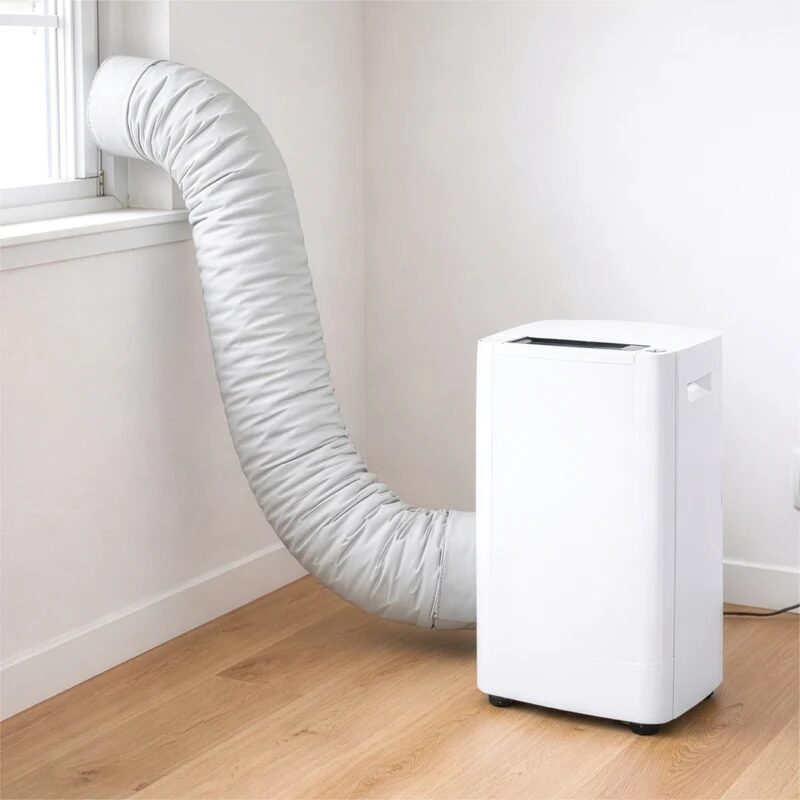
An air-to-air heat pump is a fixed, reverse-cycle system that moves heat between the outside air and the inside of a home through fan coil units or blowers, and it can both heat and cool depending on what is needed11. A portable air conditioner is a single appliance, usually on castors, that cools one room and exhausts warm air through a duct. Both rely on the same refrigerant cycle; the fixed system simply does it better and for longer.
The practical distinction is what each does for a household's energy position. An air-to-air heat pump replaces part of the heating load, running on electricity rather than gas, oil or LPG, and it can be configured for cooling as well3. A portable air conditioner adds a cooling load to the electricity bill without displacing anything. It is a summer appliance, not a heating strategy.
There is a naming problem in the UK. Air-to-air heat pumps are often mislabelled as air conditioning, and they are sometimes referred to as air conditioning in official documents12. That matters when a household is searching for grants or installers, because the technology that qualifies for support is the same technology that many people think of as a cooling-only product.
For a smaller property, the fixed system is the more complete answer. Independent guidance suggests that households in smaller properties, such as a flat or park home, may be better suited to an air-to-air heat pump14. It also notes that air-to-air systems are more often installed in smaller properties, such as flats and park homes, and that their outdoor units are typically smaller than those of air-to-water heat pumps9.

Heating: where the heat pump wins
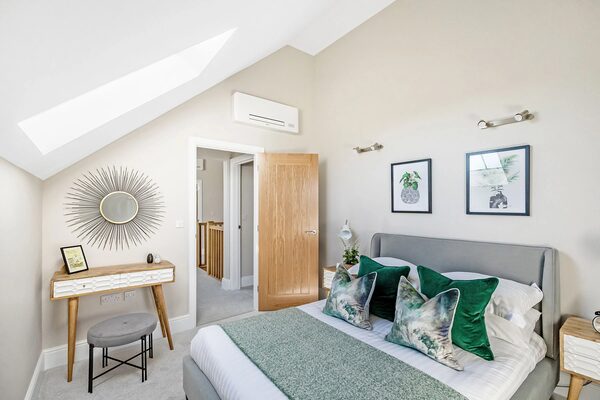
The case for the fixed system is strongest in winter. An air-to-air heat pump warms the air inside the building instead of heating water in radiators or underfloor heating pipes9. That removes the whole wet side of a heating system: no boiler, no cylinder, no radiator circuit. For a flat or a park home without central heating, that is a substantial simplification.
Independent assessments list the advantages plainly: very energy efficient, can provide cooling, and low upfront cost in smaller homes12. The same assessment lists high cost in larger homes as the drawback, which is the mirror image of the benefit12. The technology scales down well and scales up badly, because each additional zone needs its own indoor unit and pipework.
Air-to-air heat pumps also suit housing types that other heat pumps cannot serve. Independent guidance notes that there are housing types for which air-to-water, ground-to-water and water-to-water heat pumps are not suitable, and that air-to-air can fill that gap13. Flats without a cylinder cupboard, park homes without a wet circuit, and homes currently without, or poorly suited for, traditional central heating are the cases named15.
The limit is hot water. Air-to-air heat pumps deliver heat through a fan or warm-air circulation system, but they do not produce hot water, so a separate system is needed for water heating8. They also cannot generally heat larger homes11. A household that installs one still needs a cylinder, an immersion, a combi or a point-of-use water heater for showers and taps, and that residual system is where much of the remaining dependence sits.
"Air-to-air heat pumps deliver heat through a fan or warm-air circulation system, but these do not produce hot water"
Cooling: where the portable air conditioner fights back
Portable air conditioners win on one thing only: they can be bought, carried home and switched on the same day, with no installer, no outdoor unit and no permission. For a household in a heatwave, that immediacy is the whole proposition. Everything else favours the fixed system.
The efficiency gap is the decisive figure. Portable units use 30 to 50 per cent more electricity than fixed systems4. The reason is structural: a portable unit sits inside the room it is cooling, so part of the heat it removes leaks back into the room, and its single exhaust duct pulls conditioned air out of the building as it expels warm air. A fixed split system puts the condenser outside, where the heat can go.
Air-to-air heat pumps are also described as having lower running costs than other types of electric heating and plug-in air conditioning5. That covers both directions of operation. The same system that heats in January cools in July, on the same electricity supply, with the same outdoor unit doing the work.
There is a comfort dimension that the figures do not capture. Air-to-air heat pumps are programmable, often come with a remote or a smart wi-fi option, and many offer dehumidification and air purification functions5. A portable unit typically cools one room and needs a window or wall opening for its duct, which is itself a hole in the building's thermal envelope.
Running costs and efficiency compared
The running cost picture depends heavily on what the alternative would have been. At current energy pricing, air-to-air heat pump costs are likely to be lower than using an oil boiler and similar to a gas boiler or an air-to-water heat pump on a standard electricity tariff2. That is a narrower advantage than heat pump marketing often implies, and it is worth stating plainly.
Against a portable air conditioner, the fixed system's advantage is clearer. The 30 to 50 per cent electricity penalty for portables applies directly to the cooling season4. Over a summer of regular use, that gap compounds, and no annual cash figure for either option is published.
The wider heat pump running cost debate is unsettled, and the published figures point in different directions. One independent source reports that a household could save more than 50 per cent on running costs with a heat pump compared to a gas boiler, subject to high quality installation, high efficiency and a heat pump tariff16. Another states that heat pumps are no cheaper to run than gas or liquid fuel boilers and are best suited to homes that already have plenty of or low-cost electricity17. A third, from 2022, found that air-to-water heat pumps typically cost 30 to 50 per cent more to run than gas boilers18. These figures are not reconcilable without knowing the tariff, the installation quality and the date, and the divergence should be read as genuine.
For air-to-air specifically, one official assessment put levelised costs at around £40 to £50 per MWh for non-domestic buildings, similar to gas boilers19. That is a 2021 figure for non-domestic buildings and should be treated as indicative only for a household.
| Air-to-air heat pump | Portable air conditioner | |
|---|---|---|
| Electricity use for cooling | Baseline fixed system4 | 30 to 50 per cent more4 |
| Running cost vs oil boiler | Likely lower2 | Not stated |
| Running cost vs gas boiler | Similar, on a standard tariff2 | Not stated |
| Upfront cost | Lower than other heat pump types20 | Lower than a fixed system |
| Grant | £2,500, residential only6 | None |
Installation and portability
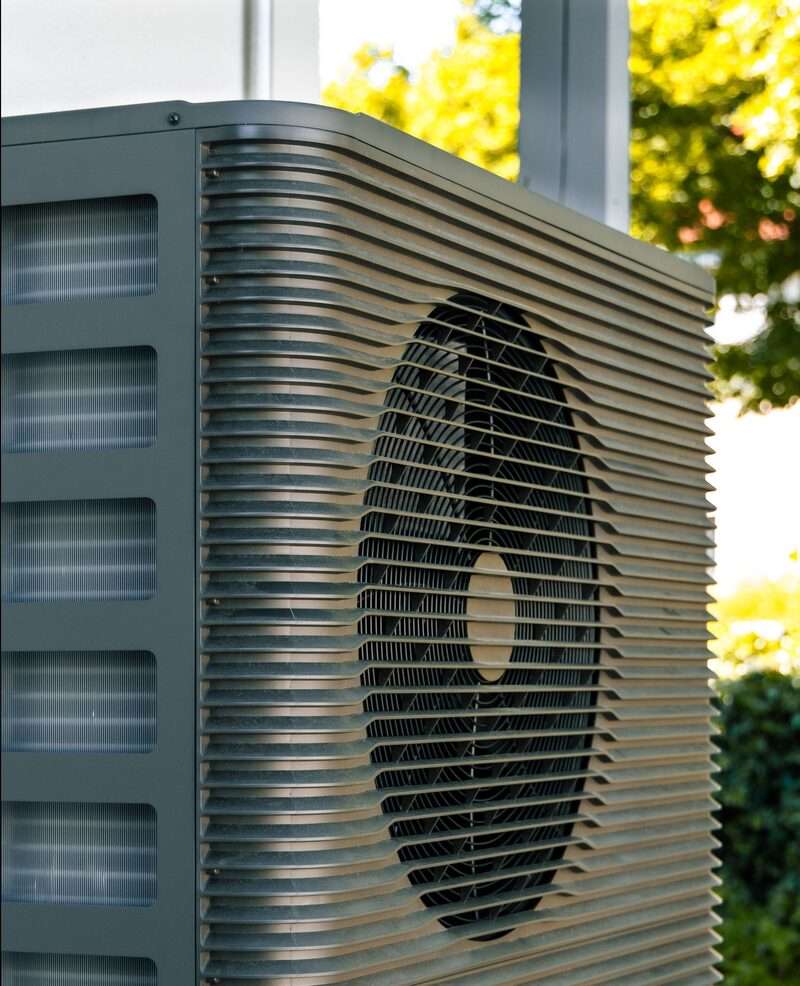
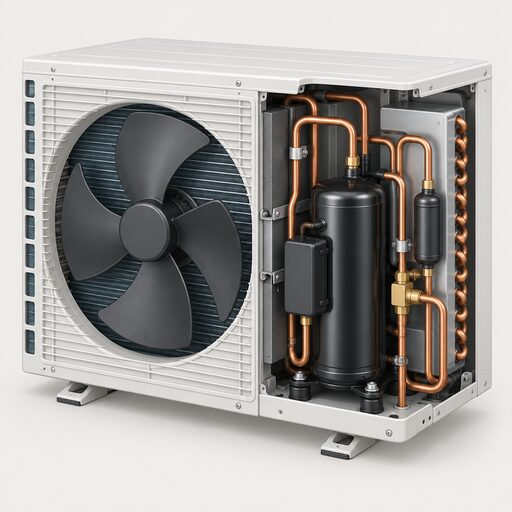
A fixed air-to-air heat pump is a permanent installation. It usually has one unit outside and at least one unit inside, connected by pipes carrying a refrigerant9. The outdoor unit is usually placed on a wall or the ground outside the property, and it needs space around it for air flow3. The refrigerant pipes between the two are typically 6 to 12mm in diameter21.
One outdoor unit can connect to more than one indoor unit, but that needs more pipework installed9. In a mini-split arrangement, one main outdoor unit can be connected to up to five indoor units5. That is how a flat with several rooms would be served, and it is also why the cost rises with the number of rooms.
There are hard limits on where indoor units can go. They cannot be installed in kitchens or bathrooms without ducting, and they are generally not suitable for bathrooms or wet rooms because of high humidity and the potential for water exposure22. For flats, most systems require outdoor space for the external unit, and external units cannot be mounted on walls at height or hung from windows, so systems are often only practical for flats with roof access, balconies or ground-floor outdoor space21.
A minority of units avoid the outdoor box altogether. Some wall-mounted monobloc units need no outdoor unit, just a couple of holes drilled through an external wall5. That is the exception rather than the rule, and it does not remove the need for a fixed position.
Which suits which home
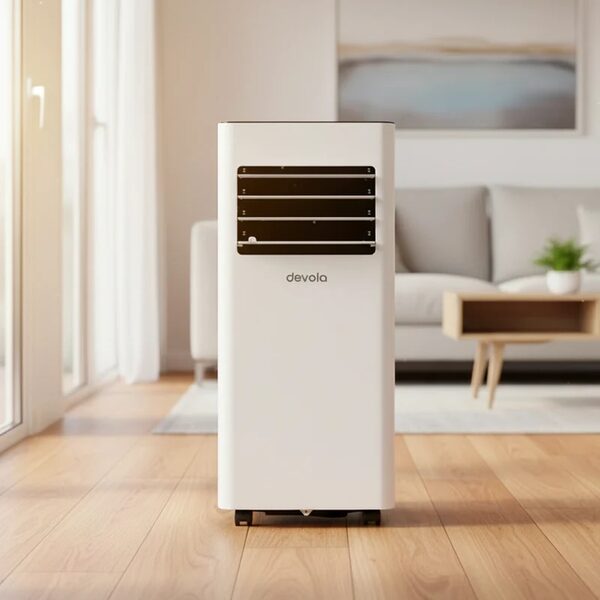
The fixed system suits smaller properties, flats, and homes currently without, or poorly suited for, traditional central heating15. It is especially cost-effective for a smaller house or flat with relatively few rooms, particularly homes that overheat in warm weather5. Park homes are a named case: an air-to-air heat pump is described as ideal for park homes because it provides both heating in winter and cooling in summer23.
The portable unit suits the opposite situation: a household that cannot install anything, whether because of tenure, listed status, leasehold rules or a landlord's refusal. It is a stopgap that works in a single room and can be moved, stored or sold. It does not change the home's energy position, and it does not reduce dependence on the grid or on a supplier.
For households in rented or leasehold property, the constraints are usually the deciding factor rather than the technology. Energy independence when you rent or live in a flat sets out what tenants and leaseholders can and cannot change, and leasehold consent for energy work covers the freeholder and management company side. For park home residents, park homes and static caravans covers the site rules that apply.
On grants, the position is specific. Air-to-air heat pumps are eligible for the Boiler Upgrade Scheme at £2,500, for residential properties only, against £7,500 for air-to-water and ground source heat pumps6. Only residential properties are eligible for air-to-air heat pumps under the scheme7. They are not eligible for the Warm Homes: Local Grant until they can be certified by MCS, expected in 202624, and not for the Warm Homes: Social Housing Fund until MCS tools and standards are updated25. Applications go through an MCS-certified installer, who typically handles the process on the householder's behalf26.
The grant level itself has been contested. One independent source argued that the grant level for air-to-air heat pumps should be lower than for other types of heat pumps, which are more expensive to install13. Another found that, after Boiler Upgrade Scheme grants are accounted for, air-to-air systems with hot water provision are comparable in cost to, or more expensive than, most air-to-water systems with hot water21. The £2,500 headline is therefore not a straightforward saving against the £7,500 alternative once the missing hot water system is priced in.
Sources26 cited
- Cooling down a room: what is the best way, Netatmo, 2026-09-20
- Air-to-air heat pumps: common questions, Nesta, 2026-06-24
- Air-to-air heat pumps, Energy Saving Trust, 2026-09-11
- How to keep your home cool in hot weather, Centre for Sustainable Energy, 2026-07
- How a heat pump can cool your home, Which?, 2026-07-17
- Boiler Upgrade Scheme guidance for installers v5.1, Ofgem, 2026-07-02
- Boiler Upgrade Scheme guidance for installers V5, Ofgem, 2026-04-28
- An introduction to heat pumps, Which?, 2025-09-22
- In-depth guide to heat pumps, Energy Saving Trust, 2026-07-16
- Planning guidance: heat pumps, London Borough of Richmond upon Thames, 2026-04-22
- Heating your home with renewable energy, Which?, 2025-09-22
- Domestic heating technology options: air-to-air heat pumps, Nesta, 2025-02-03
- Low carbon heating in buildings, Energy Saving Trust, 2025-07-03
- The best heating for your home, Which?, 2025-09-22
- Air-to-air heat pumps, Nesta, 2026-09-17
- Heat pumps vs boilers, Which?, 2025-09-22
- Future liquid fuels, UKIFDA, 2026-01-27
- Reduce the cost of heat pumps, Nesta, 2022-03-02
- Heat buildings strategy: business regulatory impact assessment, Scottish Government, 2021-11
- Response to Scotland's draft climate change plan 2026-2040, Energy Saving Trust, 2026-01
- Air-to-air heat pumps: a low carbon solution for UK homes, Nesta, 2026-02-17
- Air-to-air heat pumps added to Boiler Upgrade Scheme, HHIC, 2026-01-20
- Park homes advice, Centre for Sustainable Energy, 2026-07
- Warm Homes: Local Grant policy guidance, Department for Energy Security and Net Zero, 2026-07
- Warm Homes: Social Housing Fund wave 3 scheme guidance addendum, Department for Energy Security and Net Zero, 2026-06
- Five ways to make air-to-air heat pumps take off, Nesta, 2025-12-02
 Using a Heat Pump for CoolingCan a heat pump cool your home in summer as well as heat it in winter?
 Air-to-Air Heating and CoolingAir-to-air heat pumps deliver warm air through indoor fan units rather than hot water to radiators.
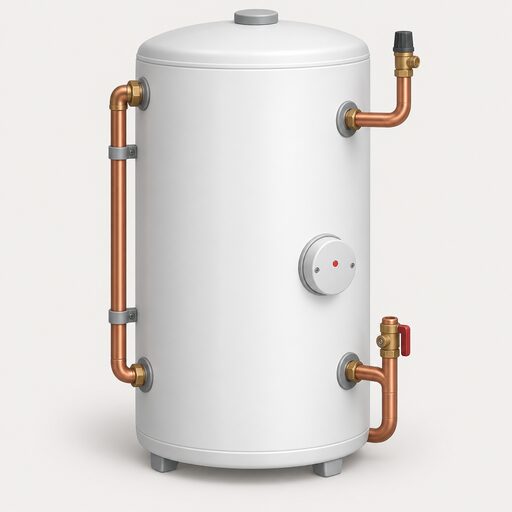 Air-to-Water Wet SystemsAir-to-water heat pumps feed radiators, underfloor heating and a hot water cylinder, and are the most common domestic heat pump in the UK.
 Air Source Heat PumpsHow an air source heat pump takes heat from outdoor air, the difference between air-to-air and air-to-water systems, typical efficiency, the £7,500 Boiler Upgrade Scheme grant, noise and planning limits, and what ownership means for a household's energy independence.
 Passive Cooling at HomeKeeping a home cool without air conditioning comes down to blocking heat before it gets in, then letting trapped heat out.
 Cooling and Heat PumpsCan an air conditioner heat your home as well as cool it?