

In this comparison
The choice between a whole-home generator and portable backup is a choice about scale, not about brand. A permanently installed standby generator is wired into the property and sized to carry the circuits it is meant to protect. A portable generator is a movable appliance: it is wheeled out when the power fails, fuelled, started, and run through its own outlets or through a transfer switch that isolates chosen circuits from the network.
The price gap is wide and it starts low. Prices for portable generators start at around £160 but can go up to £2,000 or more1. Hiring covers a short outage instead: a 1.6kVA portable generator costs around £76 for a day, or £110 for a week1. Whole-home standby equipment is a different purchase, because the unit is only part of it. Installation, a transfer arrangement, a fuel supply and an outdoor position all sit alongside the generator itself.
What the two approaches share is a limit. Neither removes the household's dependence on the grid for the ordinary year, and neither removes dependence on a fuel supply, a manufacturer or an installer. What they change is how much of the home keeps running, and for how long, when the network fails.
What each option offers a UK household
A portable generator offers electricity where and when it is needed, without fixed wiring. That is its whole proposition: a unit that can be stored, moved and used for a fridge, a freezer, a boiler pump, a phone charger or a few lights. It can also be hired rather than bought, which suits a household that wants cover for a rare event rather than a permanent installation. The trade is that someone has to be at home to start it, fuel has to be stored, and the unit has to be run outdoors because of exhaust gases.
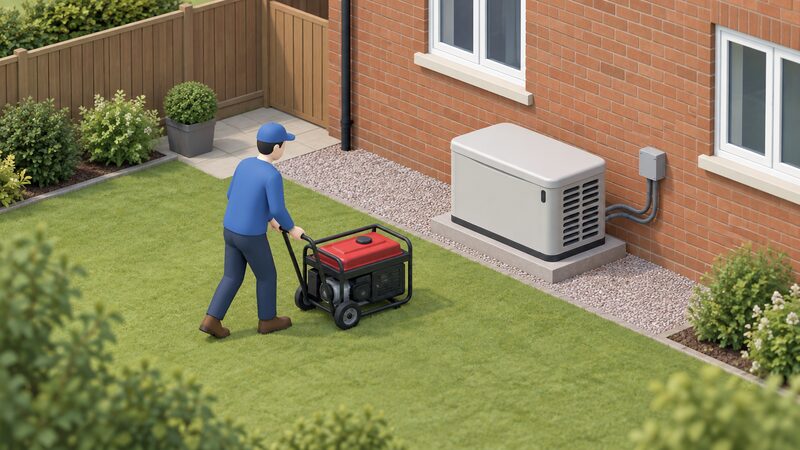
A whole-home standby generator offers automatic cover. It sits outside, starts when the supply fails, and feeds the circuits it has been wired to. The cost of that convenience is that the property needs a permanent installation, a fuel supply that is maintained, and a connection arrangement that keeps the generator from feeding back into the network.
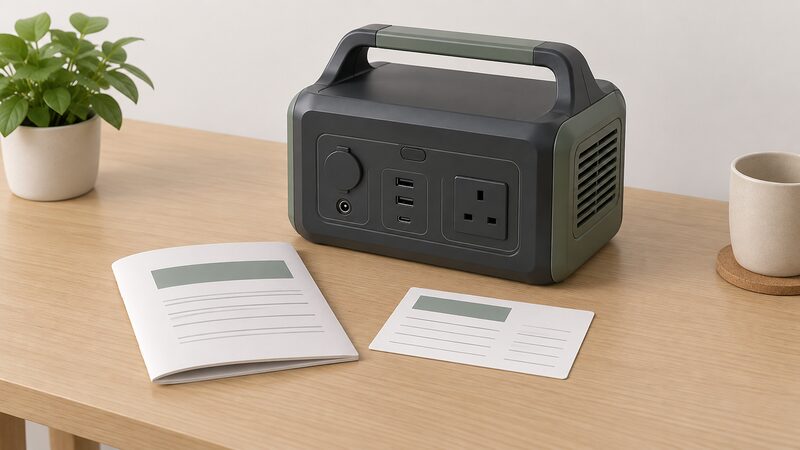
There is a third route that sits between them, and it is worth naming because it changes the comparison. A portable power station stores electricity in a battery rather than making it from fuel. Jackery lists its HomePower 3600 Plus at 3584Wh and its HomePower 3000 at 3072Wh, both with 3600W output and a 10+ years lifespan on the 200W × 2 panels bundle4. These run silently, produce no exhaust, and can be charged from the mains or from solar panels. Their limit is capacity: runtime is set by the size of the battery and the load drawn from it.
For a household thinking about independence, the distinction matters. A fuel generator depends on a supply chain that continues through the outage. A battery depends on having been charged beforehand, from the grid or from solar. Neither is self-sufficient on its own.
Specifications and connection rules
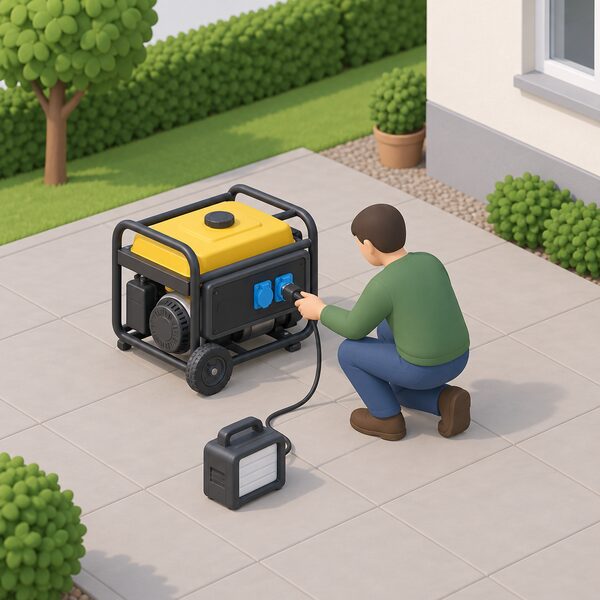
The technical dividing line between the two approaches is not the generator itself but the connection. A portable generator used through its own sockets needs no connection to the house wiring at all. A generator connected to the fixed wiring of a property needs a transfer arrangement so that it cannot energise the network while the network is live.
Network operators publish the thresholds that apply. Generating units of 50kW or less, including solar PV inverters, AC coupled batteries, wind turbines, hydro turbines and CHP units, generally face no network capacity constraints or reinforcement costs in most areas2. That covers essentially every domestic installation, so the constraint on a home generator is not usually network capacity but the wiring and notification rules.
Metering sets another threshold. Where a property has whole current metering, the point at which that is exceeded is 13.8kW / 60 amps per phase, and the assessment includes an electric vehicle charge point where one is fitted3. A household adding both a generator connection and an EV charger is therefore working close to a boundary that the network operator will want to see calculated.
For vehicle-to-grid chargepoints installed under an install and notify policy, Electricity North West sets a total installed property generating capacity, including any PV, storage and V2G storage, of 3.68kW (16A) per phase or less, excluding any export limiting device per phase5. That is a specific scheme rule rather than a general one, but it shows how a network operator can cap combined generation at a property.
| Portable generator | Whole-home standby generator | |
|---|---|---|
| Position | Stored, moved to where it is needed | Fixed outdoors, permanently installed |
| Connection | Own sockets, or a transfer switch for chosen circuits | Wired into the property's circuits |
| Start | Manual | Automatic on supply failure |
| Fuel | Petrol, diesel or LPG, stored at home | Stored fuel supply, maintained |
| Network threshold | Units of 50kW or less generally face no capacity constraints or reinforcement costs in most areas2 | Same threshold applies to the installation2 |
| Metering boundary | Whole current metering exceeded above 13.8kW / 60 amps per phase3 | Same boundary applies3 |
What the warranty covers, and what it does not
Warranty terms for generators and backup equipment come from the maker or supplier of the specific unit, and they differ by product. What the available figures show is that makers describe lifespan rather than guarantee. Jackery lists a 10+ years lifespan on both the HomePower 3000 and the HomePower 3600 Plus bundles4. That is a statement about expected service life, not a promise to repair or replace within that period.
The distinction matters more than it first appears, because a warranty is only as good as the company standing behind it. A household buying backup equipment is buying a relationship with a manufacturer that has to exist when a claim is made. Where a maker has stopped trading, the warranty is not something a buyer can rely on, whatever the original term said.
That is not a hypothetical. GivEnergy Ltd is described as the largest domestic battery manufacturer to stop trading to date6. Its app and portal are managed by GivEnergy Software Ltd, which is not in administration6. For households holding a GivEnergy battery warranty, the route to a claim is to consult the energy company, installer or wholesaler in the first instance, and purchases made by credit card may be claimable through the card provider6.
The wider lesson for anyone comparing backup equipment is to check the maker's status as carefully as the specification. Several energy suppliers and services listed by the Energy Ombudsman remain active, including Energy Swap7, Direct Energy Utilities8, Go Compare Energy Ltd9, Flexivolt10, Energy Optimise Service11 and Your Energy Matters12. Others in the solar installation market are smaller operations: Evergen is described as a family-owned business started by a tech entrepreneur that has been installing solar panels for homes5.
What it costs
Cost is where the two approaches diverge most sharply, and where the published figures are least complete. Portable generators have a clear market range: prices start at around £160 but can go up to £2,000 or more1. Hiring is priced separately, at around £76 for a day or £110 for a week for a 1.6kVA unit1. Those are the figures a household can plan against.
Whole-home standby generator costs are not published in the same way. The unit, the installation, the transfer arrangement and the fuel supply are separate items, and the total is quoted by installers rather than listed. Prices for this kind of work are installer-quoted, and no published range applies across the market.
Running costs sit on top of purchase. A 2kW portable heater at full output uses 34p of electricity every 30 minutes13, which illustrates how quickly a high-draw appliance consumes energy, whether from a generator's fuel or from a battery's stored capacity. For comparison, the priciest portable electric heaters cost around £150 or more14, and a whole-home energy monitor that hooks directly to the home power supply typically costs more than £60 and requires a wi-fi connection and a smartphone to operate15.
Support for installation costs exists but is targeted. The Warm Homes Plan includes fully funded installations of solar panels and a battery for low-income households, to the full average cost, which is currently between £9,000 and £12,00016. That is a grant for solar and storage rather than for a generator, and it is means-tested.
| Item | Published figure | Source |
|---|---|---|
| Portable generator purchase | Around £160 to £2,000 or more | 1 |
| 1.6kVA portable generator hire | Around £76 a day, £110 a week | 1 |
| Whole-home standby generator | Installer-quoted, no published range | |
| Warm Homes Plan solar and battery grant | £9,000 to £12,000 full average cost | 16 |
| Whole-home energy monitor | More than £60 | 15 |
The company's status, and why it decides the purchase
For backup equipment, the maker's status is part of the specification. A generator or battery is bought for an event that may be years away, and the warranty, the app and the spare parts all depend on the company still operating when that event arrives.
The clearest case in the UK domestic battery market is GivEnergy. GivEnergy Ltd is described as the largest domestic battery manufacturer to stop trading to date6. The company's app and portal continue to be managed by GivEnergy Software Ltd, which is not in administration6. For a household with a GivEnergy battery, the practical position is that warranty claims go first to the energy company, installer or wholesaler that supplied the unit, with credit card purchases potentially claimable through the card provider6.
That pattern is worth understanding before any purchase. A warranty term of ten years is a statement about a product's expected life; it is not a guarantee that a company will be there to honour it. The same logic applies to a standby generator installation, where the installer's continued trading matters as much as the manufacturer's.
Among the companies listed by the Energy Ombudsman, Energy Swap7, Direct Energy Utilities8, Go Compare Energy Ltd9, Flexivolt10, Energy Optimise Service11 and Your Energy Matters12 are all recorded as active. In the installation market, Evergen is a family-owned business started by a tech entrepreneur that has been installing solar panels for homes5. None of this is a recommendation; it is the status information a buyer would need to check before relying on a long warranty.
What it means for energy independence
Backup power and energy independence are related but not the same thing. A generator, whether portable or permanently installed, addresses outages. It does not change how the household is supplied for the rest of the year, and it introduces a new dependency on fuel.
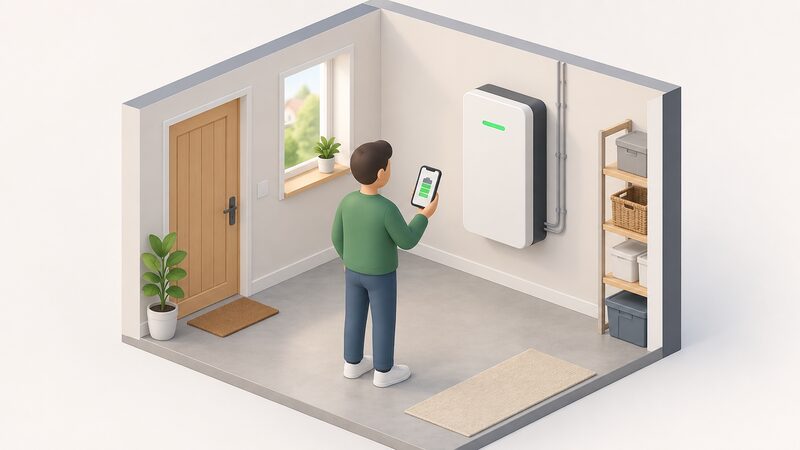
The independence that can be measured is self-sufficiency, defined as the percentage of electricity consumed in the property over a year which is met by either behind-the-meter solar or electrical energy storage17. A generator does not contribute to that figure, because it does not generate electricity in ordinary operation. A home battery does, and combining solar panels with a home battery lets a household store free, renewable electricity to power a heat pump, making it less reliant on grid electricity18.
The wider case for homegrown generation is made in policy terms too. More homegrown energy means greater energy independence19. Small-scale heat or power generation units have the potential to reduce energy bills, reduce environmental impact, and possibly allow electricity to be sold back to the grid, while helping reduce dependence on large generating plants located far from where people live20. Domestic distributed generation connects solar panels or wind turbines to the main wiring in the house through a device called an inverter21.
For a household weighing the two options, the honest position is that a portable generator gives outage cover with the least installation and the most dependence on fuel handling. A whole-home standby generator gives automatic cover with the most installation and a permanent fuel dependency. A home battery gives silent cover and contributes to measured self-sufficiency, but its runtime is finite and its warranty depends on a manufacturer that may not survive. None of the three removes the grid from the picture.

Sources21 cited
- How to buy the best generator, Which?, 2026-01-20
- Generation connections, SSEN, 2026-09-19
- Electric vehicles and connections, Electricity North West, 2026-09-19
- Solar panels and solar generators, Jackery, 2026-09-19
- How to decide if solar panels are right for your home, Ivie, 2026-09-20
- GivEnergy FAQs, Energy Suppliers Association, 2026-04-17
- Energy Swap, Energy Ombudsman, 2026-09-19
- Direct Energy Utilities, Energy Ombudsman, 2026-09-19
- Go Compare Energy Ltd, Energy Ombudsman, 2026-09-19
- Flexivolt, Energy Ombudsman, 2026-09-19
- Energy Optimise Service, Energy Ombudsman, 2026-09-19
- Your Energy Matters, Energy Ombudsman, 2026-09-19
- Cheap electric heaters, Which?, 2025-12-22
- Are energy monitors the best way to measure your power usage, Which?, 2026-03-31
- Insulating render and plaster, UK Green Building Council, 2024-04-25
- NAPIT welcomes the Warm Homes Plan, NAPIT, 2026-01-21
- MCS 032 2025, MCS Certified, 2025-01-01
- How to ensure a heat pump runs efficiently, Energy Saving Trust, 2026-05-19
- Solar Energy Scotland manifesto, Solar Energy UK, 2026-09-17
- The RECC scheme, Renewable Energy Consumer Code, 2026-09-17
- What is domestic distributed generation, UK Power Networks, 2026-09-17
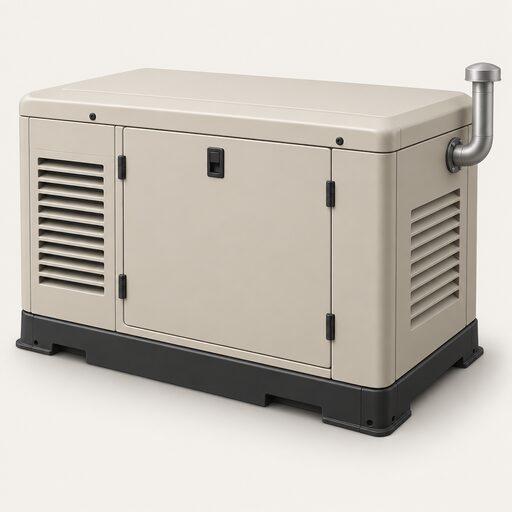 Standby Generators for HomesA standby generator starts itself when the power cuts out, so your home keeps running even when you are out.
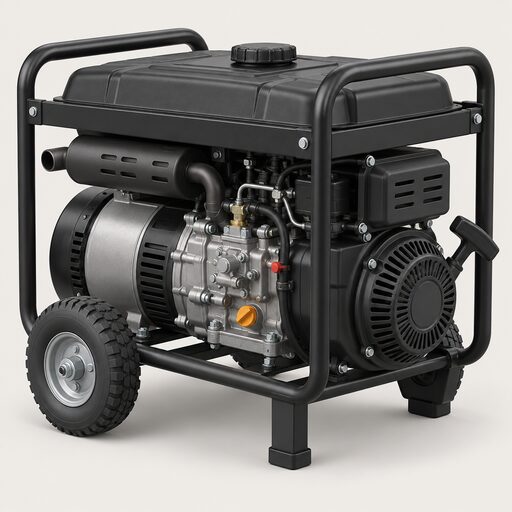 Portable Generators for HomesWhat can a portable generator actually run in a power cut, and for how long?
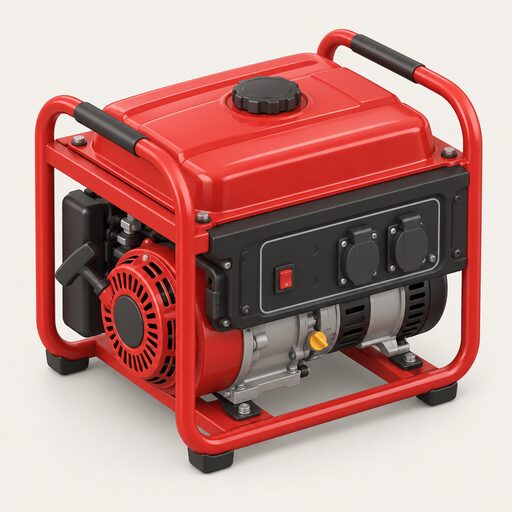 The Full Backup Power GuideHow long do UK power cuts usually last, and what can keep your fridge, heating or phone going until the power comes back?
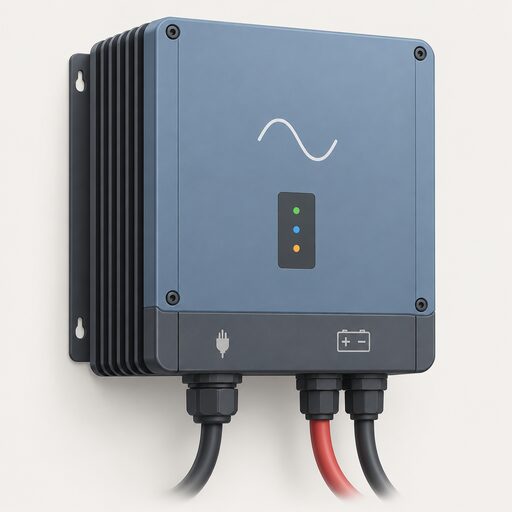 Inverters and Inverter-ChargersIf the power goes off, what actually keeps your fridge and boiler running?
 Maintaining Backup PowerWill your generator actually start when the power goes off?
 Home UPS SystemsA home UPS keeps your broadband, computer or boiler running through short power cuts and flickers, switching over instantly rather than after a second or two.