
In this guide
Energy independence during a power cut is not one thing. It is a spectrum, and where a household sits on it depends on what equipment it owns and how that equipment is wired. At one end, a home with no backup loses everything the moment the network disconnects it. At the other, a home with islanding capability can run independently of the grid entirely, and the Committee on Climate Change describes exactly that: when a building or home has the functionality to operate independently from the grid, known as islanding, vehicle-to-X technology can enable the vehicle to act as a backup power source in a power cut1.
The scale of the risk is defined by the network operators themselves. Emergency power cuts mean switching power off to at least 5% of UK households at once, with different block letters timetabled to be without power for typically around three hours once or twice a day2. In Northern Ireland, planned emergency power cuts mean switching power off to at least 5% of NI households at once3. Power could be switched off or reconnected around 30 minutes before or after a published rota time depending on national electricity use4.
What follows is an assessment of how far backup equipment genuinely reduces that dependence, what it costs, and what dependence remains even after the money is spent. The honest answer is that most domestic batteries do not provide power in a cut at all unless additional equipment and configuration is included, and that the largest single source of household flexibility, the electric car, is only useful if it is plugged in when the grid needs it5.
What energy independence means during a power cut
The word independence is used loosely in domestic energy, so it is worth separating the two things it usually means. The first is self-sufficiency: the percentage of electricity consumed in the property over a year which is met by either behind the meter solar or electrical energy storage, as defined in the MCS standards for grid electricity independence9. The second is resilience: the ability to keep selected circuits live while the network is down. A home can score well on the first and badly on the second, because a solar and battery system that offsets most of its annual consumption will still go dark in a cut unless it has been configured to island.
That distinction matters because the emergency arrangements are not optional. Households and businesses can't opt out or be specially treated for emergency planned power cuts2. The rota is imposed on areas, not chosen by individuals, and the timing can move. Network operators warn that power could be switched off or reconnected around 30 minutes before or after a published rota time depending on national electricity use4. During a rota disconnection, your own generation will not be able to export electricity to the wider electricity network at the times when you have an emergency power cut as part of the rota5. That export restriction is a safety rule, not a punishment: the network has to be certain that no domestic generator is energising a line that engineers believe is dead.
So independence during a cut has a precise meaning. It is the ability to run a defined set of loads, on your own supply, without exporting to the network, for the duration of the disconnection. Everything else, including the annual self-sufficiency percentage, is a different measurement of a different thing. A household that wants both needs equipment specified for both, and the specification conversation happens before purchase, not after.
Battery storage as backup: what a home battery will and will not do
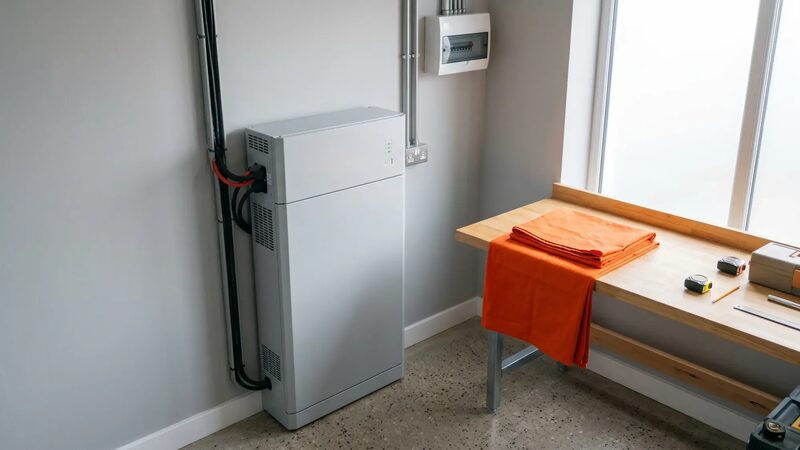
The single most important fact about domestic battery storage is also the least widely understood. A battery storage system does not normally provide power in a power cut unless additional equipment and configuration is included5. A battery that has been installed purely to store solar generation and shift it to the evening will, in almost every standard installation, shut down with the grid. It does this because the inverter needs a grid reference to synchronise to, and because continuing to energise the house wiring during a network outage would put engineers at risk.
Where a battery can provide backup, the capability is conditional. In some cases these storage devices can provide back-up supplies for use in a power cut, but this is not always possible11. The condition is not the battery model but the installation: a battery storage system does not normally provide power in a power cut unless additional equipment and configuration is included12, and some, but not all, battery storage systems can be set up to provide electricity to your home during a power cut, and must be specifically set up to do so13. The more expensive battery systems can also provide electricity during a power cut14. The difference lies in the additional equipment, the protected circuits and the commissioning, not in the battery itself.
What a correctly configured battery does for independence is substantial but bounded. It reduces the amount which needs to be paid in bills, because less electricity is drawn from the grid15. It can carry a defined set of essential loads through a three-hour rota disconnection, and it can do so silently, with no fuel, no exhaust and no manual starting. What it cannot do is run the whole house indefinitely. The protected loads are chosen in advance, and the duration depends on the capacity installed and the load connected.
The wider system benefit is real and is the reason these devices attract support. The combined potential of millions of homes with batteries to help balance supply and demand across the country, releasing stored power onto the grid when needed, is a significant national resource15. That is a system-level argument, though, and it is not the same as a household-level guarantee of backup. A home that wants both should specify both, and should expect the backup function to be the more expensive of the two to engineer.
Vehicle-to-grid: your electric car as a household backup
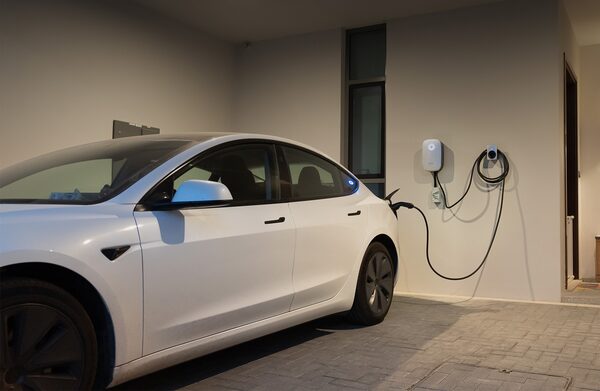
An electric car is the largest battery most households will ever own, and the technology to use it as a grid asset already exists. Vehicle-to-grid technology allows an electric vehicle charger to not only charge a vehicle, but also take energy from the vehicle16. Energy Networks Association puts it in system terms: V2G is a technology that allows electric vehicles to not only draw power from the grid to charge their batteries but also to send electricity back to the grid when needed, generating cash for the EV owner17. This also helps reduce peak demand on the electricity network11.
There is an important distinction between exporting to the grid and powering the house. Vehicle-to-home utilises the energy to power a home rather than being delivered back to the grid17. For a household concerned with independence during a cut, V2H is the relevant function, and it only delivers resilience where islanding is possible. The Committee on Climate Change is explicit that when a building or home also has the functionality to operate independently from the grid, known as islanding, V2X can enable the vehicle to act as a backup power source in a power cut1. Without islanding, the car is a grid asset but not a household one.
The direction of travel is clear. Toyota's expansion of its UK charging ecosystem is described as allowing EVs to not only draw energy from the grid but also return it when needed18. Having electric vehicles as battery storage will allow us to better manage the UK's energy16. The national potential is large: if 50% of the UK's EVs were V2G enabled, they could provide around 16GW of daily flexible capacity to the grid, and 22 TWh of flexible EV discharging capacity per year19.
For an individual household, the practical question is whether the car is at home and plugged in when the need arises. That is a habit question as much as a hardware one, and it is the subject of the trial evidence below.
Project Sciurus: what the UK's largest domestic V2G trial found
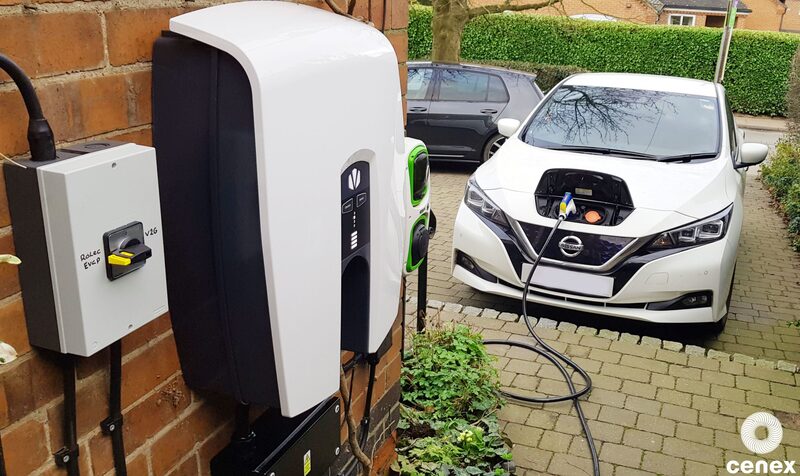
Project Sciurus is the reference point for domestic V2G in the UK, and its numbers are worth reading carefully because they show both what worked and what did not. The project started in April 2018 with OVO Energy, Cenex, Nissan and Indra7. It was part of the Vehicle-to-Grid competition, funded by the Department for Business, Energy and Industrial Strategy and the Office for Zero Emission Vehicles, in partnership with Innovate UK, part of UK Research and Innovation12.
The original ambition was to develop, build and install 1,000 domestic Vehicle-to-Grid units7. What was actually delivered was 320 V2G units installed in real homes across the UK6. That gap between target and delivery is the most instructive figure in the trial, and it reflects the difficulty of retrofitting bidirectional charging into ordinary houses rather than any failure of the concept. The energy result was substantial: more than 750MWh of energy offset through V2G7.
The finding on household experience is more encouraging than the installation numbers. Use of the V2G technology during the trial alleviated most of the participants concerns6. In other words, the reservations people had before living with the technology largely did not survive contact with it.
"Use of the V2G technology during the trial alleviated most of the participants concerns"
The trial also produced the value figures that later modelling builds on. The V2G units were able to create between £230 and £300 of value per year through the spot electricity market via the Kaluza platform6. That is the measured outcome from real homes, and it is the figure to hold against the more optimistic modelled numbers that follow.
V2G savings: £120 to £725 a year depending on how you use it
The range of published V2G revenue figures is wide, and the reason is that they model different services, different tariffs and different assumptions about how often the car is plugged in. None of them is wrong; they answer different questions.
Cenex modelling of Sciurus trial data put V2G at around £410 per year when compared with unmanaged charging12. A separate Cenex figure gives average UK revenue generation from V2G estimated to be £150 to £200 per year, alongside an annual depreciation saving of £230 from reduced battery wear20. The Vehicle to Grid Britain work gives £414 in annual revenue from grid services in a high plug-in rate scenario, almost all of which comes from firm frequency response21. Its stacked case for customers with solar and high plug-in rates in a constrained area gives £278 net annual revenue per battery electric vehicle21.
The highest figure in the evidence comes from the Sciurus trial reporting: including Dynamic Containment, revenue rises to £725, an increase of £64/kW7. The same source gives a much lower simulated figure of £173 under post-TCR revised tariffs, and £340 per year from V2G using tariff optimisation7. What can be said is that the spread runs from a few hundred pounds to £725 depending on which services are stacked and which tariff regime applies.
At system level the sums are larger. V2G operation could generate a net saving of between £40M and £90M per annum in Great Britain, depending on limits to V2G energy throughput21. Research has shown V2G has the potential to save £3.5bn per year in areas such as grid infrastructure reinforcement, storage and generation19. For commercial fleet operators, there could be further savings of between £200 and £700 on demand TNUoS charges21.
| Scenario | Annual value | Source basis |
|---|---|---|
| Average UK revenue from V2G | £150 to £200 per year | Cenex20 |
| Optimised V2G, post-TCR tariffs | £173 | Sciurus reporting7 |
| Net revenue per BEV, stacked case, high plug-in, solar, constrained area | £278 | Cenex21 |
| Tariff optimisation | £340 per year | Sciurus reporting7 |
| V2G compared with unmanaged charging | around £410 per year | Cenex modelling of Sciurus data12 |
| Grid services revenue, high plug-in rate | £414 | Cenex21 |
| Including Dynamic Containment | £725 | Sciurus reporting7 |
Virtual power plants: how enrolled home batteries support the grid
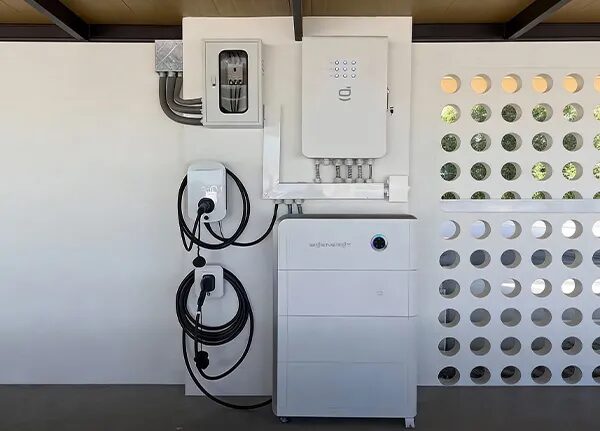
A virtual power plant aggregates domestic batteries and treats them as a single dispatchable resource. Tesla describes the function plainly: its Virtual Power Plants connect Powerwalls worldwide to provide sustainable power to communities, support electric grids when demand is high, and help households earn money for excess energy from their batteries8. The scale is no longer experimental. Tesla reports 230,152 total homes participating and 2.4 GW of total capacity across 104 programmes supported8.
The mechanism is automatic. When a grid operator declares an emergency, Tesla automatically prepares enrolled Powerwall units to send energy to the grid8. These actions are updated every few seconds8. For a household, the appeal is that the battery earns when the grid is stressed without the owner doing anything at the moment of dispatch.
The terms vary by programme and by country. Programme details, including eligibility, vary by programme8. In performance-based models, payouts are determined by the actual level of support provided; in fixed-fee models, the data confirms ongoing eligibility8. In retail-integrated VPPs, households also benefit from dynamic tariffs that optimise when devices charge or discharge8. Customers earn payments for participation and daily savings on electricity bills8.
The independence question is the one to press on. Tesla states that homeowners keep control of their backup reserves, are paid for each kilowatt-hour supplied and can opt out at any time8. That is a maker's term for its own scheme, and it is the term that matters most to a household weighing resilience against revenue: a battery committed to grid service is a battery that may not be full when the power goes off. The platform is already being used to manage Powerwall networks in California, Texas, Massachusetts, Australia and the U.K.8.
Smart local energy systems: the local alternative
Not all flexibility runs through a national platform. A smart energy system uses digital technology to actively monitor what electricity the country needs, when it needs it, so that suppliers can generate enough to meet demand14. At a local scale, the same logic applies to a town, a housing estate or a community energy scheme, and the benefits are both system-wide and local.
The system benefit is demand shifting. Smart meters and smart tariffs allow households to shift energy usage away from traditional peak times, which are currently reliant on fossil fuel energy, and make more use of renewables14. Official guidance is explicit that this flexible form of charging can reduce or defer costly investment in additional electricity generation capacity and network reinforcement, and the same logic applies to smart meter rollout, smart secure energy systems, smart heat pumps, energy smart appliances and smart electric vehicle charge points22. New models support local generation with reduced energy losses13.
Who can take part is defined. Smart local energy systems can be delivered by community energy organisations, social enterprises, public sector bodies, and SMEs developing innovative local projects23. In Wales, £129 million has been made available to support communities transitioning to renewable energy24. Local authorities also run advice services: LEAP is a free energy and money saving advice service25, and some councils install free simple home energy measures such as LED lighting and draught proofing26.
The independence value of a local system is different in kind from a battery in a garage. It does not keep the lights on during a rota disconnection. What it does is reduce the household's exposure to peak prices and to the fossil generation that sets them, and it builds a local institution with an interest in the area's resilience. For a household that cannot afford a battery, a smart tariff and a local scheme may be the only route to any meaningful flexibility at all.
Costs and trade-offs: upfront spend versus running costs

The economics of backup are unusual because the household is buying two different products at once: a resilience asset that may never be used, and a flexibility asset that earns or saves money continuously. The two have different payback periods and different justifications.
On the funding side, the options are limited and specific. Property Linked Finance refers to long-term finance linked to the property, rather than the property owner, and can fund up to 100% of the upfront costs of projects that would reduce energy costs over the term of the contract27. Energy supplier schemes and grants can cover energy costs, paying off energy debt, and making energy-saving improvements to your home28. The £150 of costs taken off energy bills in the Budget last year is a bill reduction rather than a capital grant29. The original Energy Bills Discount proposal was an up-front discount on bills worth £200, repayable through bills in later years30.
For electric vehicle chargepoints, the grant route is procedural rather than automatic. Applicants contact an OZEV-authorised installer to get a quote, then select the start new application button, create an account and apply using the form provided to submit details of the property and vehicle to OZEV31.
The running-cost side is where the flexibility asset earns. The Smart Export Guarantee pays households installing renewable power technologies for each unit of electricity they supply to the grid, and it supports solar photovoltaics, wind, micro-combined heat and power, hydropower and anaerobic digestion, up to 5 megawatts in capacity or up to 50 kW for micro-CHP, with installations located in Great Britain32. That is the baseline export income. V2G and VPP participation sit on top of it, and the figures in the table above show how much they can add.
The trade-off to state plainly is that resilience and revenue compete for the same kilowatt-hours. A battery held at full charge for a possible outage is a battery not earning. A battery committed to grid service is a battery that may be part-discharged when the network fails. Neither choice is wrong, but a household cannot have both at the same moment, and the scheme terms determine which one it has chosen.
What owning backup-capable kit means for your independence
The honest summary is that backup equipment moves a household along the independence spectrum without taking it off the grid. A battery with islanding capability can carry essential loads through a rota disconnection of around three hours2. A V2G-capable car with islanding can do the same and earn money when the grid is stressed1. A virtual power plant can turn a battery into an income stream and a system asset8. None of these makes a home self-sufficient in the sense defined by the MCS standard, which measures the percentage of annual consumption met by behind the meter solar or storage9.
The dependence that remains is specific and worth naming. The household still depends on the network to reconnect and to take exported power; during a rota disconnection, your own generation will not be able to export electricity to the wider electricity network5. It still depends on a supplier for the tariff that makes the flexibility worthwhile, and on a manufacturer for the app, the firmware and the warranty that make the hardware work. It still depends on gas or electricity for heat in most homes. And it depends on the plug-in habit of the driver, because a car that is not connected provides nothing.
What changes is the consequence of an outage. A household with a configured battery and protected circuits experiences a rota disconnection as an inconvenience rather than a loss of heat, light and refrigeration. That is a real and measurable improvement in resilience, and it is the thing worth paying for. The revenue from flexibility schemes is a separate benefit, welcome but variable, and the published figures range from £150 to £725 a year depending on the services stacked and the tariff regime20.
For households that cannot fund a battery, the practical steps are the ones that cost nothing: joining the Priority Services Register where eligible, understanding the rota arrangements, and taking up local advice services. The backup power pillar sets out the full range of options, and the pages on rota power cuts and island mode and black start explain the mechanics in more detail.
Sources32 cited
- Well-adapted energy system monitoring framework, Climate Change Committee, 2026-09-19
- Emergency power cuts, Electricity North West, 2026-09-19
- Emergency power cuts, NIE Networks, 2026-09-19
- Care and assisted living providers, Energy Networks Association, 2026-09-17
- Solar power facts, Energy Saving Trust, 2026-08-13
- Project Sciurus case study, Cenex, 2022-12-15
- Project Sciurus trial insights report, Cenex, 2021-05
- Tesla Virtual Power Plant, Tesla, 2026-09-17
- MCS 032 grid electricity independence standard, MCS Certified, 2025-01-01
- Plan for a power cut, Ofgem, 2026
- Storage, Electricity North West, 2026-09-19
- Commercial viability of V2G, Cenex, 2021-01
- Infographic guide to a smart, more efficient and innovative market, Ofgem, 2015-03-30
- A smarter future: the smart energy system revolution, Smart Energy GB, 2026-04-24
- Batteries in the home, Solar Energy UK, 2026-09-17
- Vehicle-to-grid best practice guide, Energy Saving Trust, 2026-05-05
- Low carbon technologies strategy, Energy Networks Association, 2026-09-17
- Toyota to expand EV charging ecosystem across the UK, Society of Motor Manufacturers and Traders, 2025-12-04
- UK electric vehicle to grid charging case study, Ofgem, 2030
- More than money: finding the true power of V2G, Cenex, 2026-09-17
- V2GB: Vehicle to Grid Britain, Cenex, 2026-09-17
- Smart means more efficient and innovative market, UK Parliament, 2022-07
- £129 million support for Welsh communities transitioning to renewable energy, Welsh Government, 2025-09-17
- Energy efficiency advice, Torridge District Council, 2026-09-17
- Energy saving grants and funding, Tameside Council, 2026-09-17
- Carbon Budget and Growth Delivery Plan: heat and buildings investor factsheet, Department for Energy Security and Net Zero, 2026-06-23
- Get help with your energy bills, Ofgem, 2026-09-17
- Households can save as plug-in solar panels come to market, Department for Energy Security and Net Zero, 2026-08-26
- Energy Bills Discount research briefing, House of Commons Library, 2026-09-20
- Electric vehicle chargepoint and infrastructure grants for landlords, GOV.UK, 2026-09-18
- Smart Export Guarantee research briefing, House of Commons Library, 2026-05-13
- Heat Pump Ready Programme stream 1 phase 1 projects, Department for Energy Security and Net Zero, 2026-05-28
 Leaving the Electricity GridCan you really cut your home off the grid completely, and what does it cost to have your electricity supply removed for good?
 Backup Power and EPSWill your lights stay on when the power goes out?
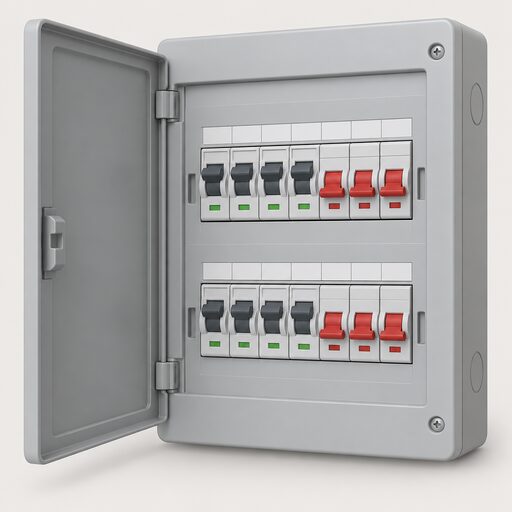 Essential Loads and CircuitsWhich plugs and lights should stay on when the power goes off, and which can safely go without?
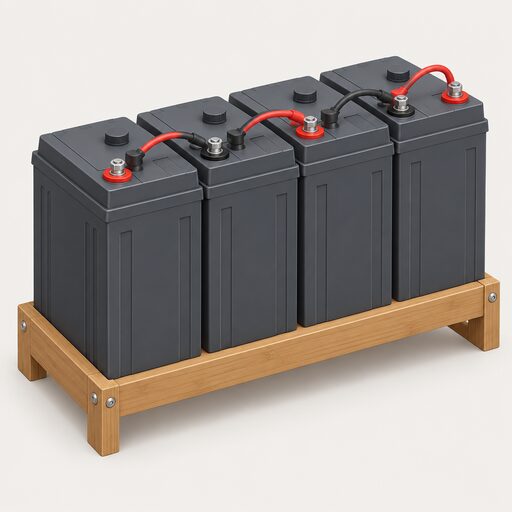 Off-Grid Battery SystemsHow many days of power do you need when there is no sun?
 Off-Grid System CostWhat does going off grid really cost, and what makes up most of that figure?
 Charging and Energy IndependenceCharging an electric car at home can cut your fuel costs, but how much does it really free you from the grid?