
In this guide
The Demand Flexibility Service is the national scheme that pays households and businesses for moving electricity use away from peak times. It was launched in winter 2022/23 and was designed to manage winter pressures by reducing demand during evening peaks and cutting reliance on more expensive generation1. It is voluntary, open to any household or business with a smart meter, and delivered through energy suppliers and registered third-party apps2.
The scale is real. In its first winter the service incentivised 1.6 million households and businesses, saving over 3.3GWh of electricity4. Between December 2024 and March 2025 it delivered 3.9GWh of flexibility across 44 events4. Independent guidance puts cumulative participation at over 2.6 million homes and businesses and cumulative savings at an estimated 7,000MWh at peak times, enough to power the lighting in 54,000 homes for a year2.
What this buys a household is modest and conditional: a reward for shifting an hour of use, not independence from the grid. The service depends on a supplier, a smart meter and a communications network, and it does not run in Northern Ireland2. What it does change is the household's relationship with the system: demand becomes something the grid pays for rather than simply absorbs.
What the Demand Flexibility Service is and why the grid needs it
The service exists because the evening peak is expensive. NESO, the national energy system operator, states that the scheme was designed to help manage potential winter pressures by reducing demand during evening peak periods and reducing reliance on more expensive electricity generation1. Energy Saving Trust puts the same point in physical terms: the service reduces the need to turn on fossil fuel power plants by lowering energy use at peak times2.
That is the whole logic. A megawatt not consumed at 6pm is a megawatt that does not have to be generated by the plant that would otherwise be called on to meet the last slice of demand. The service is one part of a wider field. Parliamentary research describes demand side response as covering a range of services that vary the demand of both domestic and commercial consumers to help balance the power grid5. Households are a relatively new participant in that field, and the reason they can participate at all is measurement: the rollout of smart meters is described as an important component to demand side response services because they measure electricity use in real time5.
The service was designed to be accessible to any household or business with a smart meter, and its stated purpose is to make it easier for homes and businesses to take part in the electricity market and be rewarded for shifting when they use electricity1. That framing matters for how the scheme is judged. It is not a subsidy for using less energy overall; it is a payment for using energy at a different time.
For a household's energy independence, the distinction is sharp. The service does not reduce total dependence on the grid, and it does not reduce dependence on a supplier. It converts one thing the household already controls, the timing of appliance use, into a small revenue stream, and it does so only while the grid values that timing. The independence it offers is temporal, not structural.
How the service works: events, notice and the hour you shift
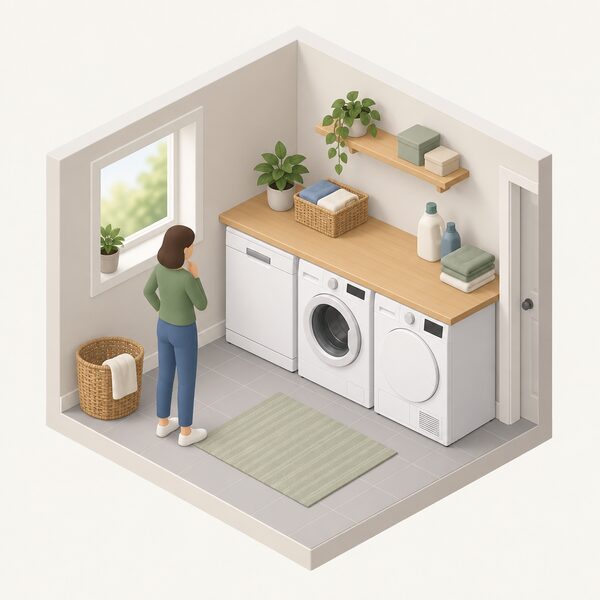
The service runs through events. Energy Saving Trust describes the mechanism plainly: the service uses several energy saving events throughout the year, and each event usually lasts for around an hour in the evenings when demand for electricity is at its peak2. Participants receive a notification telling them the date and time of each event, which might be on the same day or the day before2.
That notice period is the practical constraint. A household cannot plan a week ahead around an event, because it will not know when one is coming. What it can do is keep a small set of deferrable loads ready: the dishwasher, the washing machine, the tumble dryer. FlexAssure, which sets standards for home flexibility, describes the behaviour in exactly those terms, running appliances at times when demand on the grid is lower6.
The fourth iteration of the service widened what counts as a useful response. It now rewards customers for both reducing electricity use (demand turn-down) and increasing electricity use (demand turn-up)3. Turn-up matters when there is surplus generation, particularly wind, and the system would rather see it consumed than curtailed. For a household with an electric vehicle or a heat pump, that opens a second kind of event: one where using more, at the right moment, is the service being provided.
The service is also being delivered across 12 regions, to help ensure flexibility is used where it is most needed on the network3. NESO publishes a map of those 12 zones1. The regional structure is the beginning of a shift from a national product to a locational one, and it is the part of the design most likely to change what households are paid.
Rewards: how payments are calculated and what households earn
Rewards vary depending on the supplier, but the more electricity you save during each event the greater your rewards will be2. Payment takes the form of pounds or points that can be used towards paying for energy bills2. FlexAssure gives a worked example of a monthly reward of £8.406.
The variation between suppliers is the single most important thing to understand about earnings. There is no national tariff for flexibility. Two households with identical consumption and identical event participation can be paid differently because their suppliers have designed different reward structures. The service sets the framework and the measurement; the supplier sets the price.
"Rewards vary depending on your supplier, but the more electricity you save during each event the greater your rewards will be."
For businesses the numbers are larger. NESO has reported some companies earning up to £8,000 so far1. That figure reflects commercial loads, which can be large and switched in blocks, and it should not be read across to a domestic household. The domestic reward is a small credit against a bill, not an income.
The direction of travel is toward locational pricing. Energy UK states that in future versions, payments may vary depending on where flexibility provides the greatest benefit3. If that develops, two identical households in different parts of the country could be paid differently for the same reduction, because the constraint they relieve is different. That is a meaningful change for how a household should think about the value of its flexibility, and it is not yet the basis on which the service pays.
How to join: suppliers, aggregators and the one-provider rule
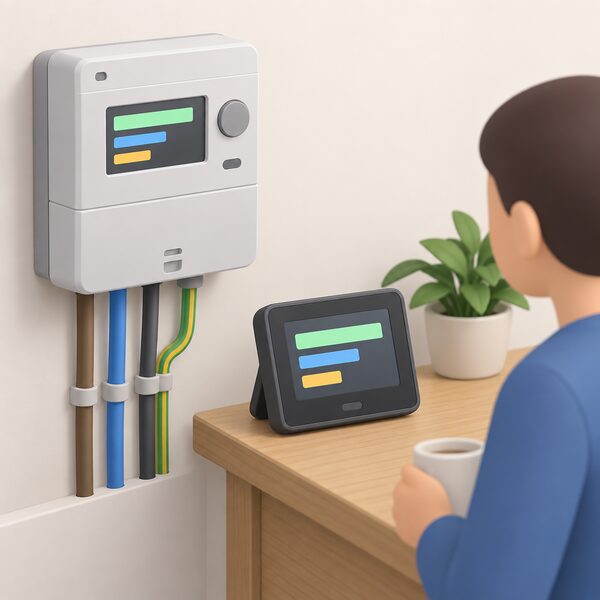
Joining requires three things. Energy Saving Trust lists them: live or have a business in England, Scotland, or Wales; get your energy from a supplier that is registered to take part in the service; and have a working smart meter so your energy supplier can accurately and quickly measure your energy use2. A fourth route exists alongside the supplier route: you can also take part using registered third-party apps that connect to your smart meter2.
The rule that catches people out is exclusivity. You can only take part with one registered provider2. Smart Energy GB repeats it: you can only register with one provider at a time7. A household cannot sign up with its supplier and a separate app and be paid twice for the same reduction.
Checking who is registered is straightforward. NESO has created two tables that list all the registered providers1. Those tables are the authoritative list, and they cover both suppliers and the third-party apps that connect to a smart meter. Organisations that want to become providers themselves go through a separate process, beginning with an introductory call with the NESO Demand Flexibility Service team1.
The service is open to anyone who wants to reduce their energy consumption, and this includes households and businesses7. A version is also being offered to small businesses, working in the same way as the version offered to homes, requiring a smart meter7. The eligibility threshold was reduced to 0.1MW from 9 April 2026, which widens the pool of participants whose response can be counted1.
What the service has achieved so far: participation and MWh saved
The record is short but measurable, and the figures come from two different kinds of source that should be read together.
The statutory security of supply report gives the official statistics. The service incentivised 1.6 million households and businesses in winter 2022/23, saving over 3.3GWh of electricity4. In the period from December 2024 to March 2025 it delivered 3.9GWh of flexibility, across 44 events4. NESO's own overview report covers the winter period from 27 November 2024 to 28 March 20251.
Independent guidance gives the cumulative picture and a different framing of the first winter. Over 2.6 million homes and businesses have taken part in previous years, and the service has saved an estimated 7,000MWh of electricity at peak times, enough to power the lighting in 54,000 homes for a year2. Smart Energy GB records that during the winter of 2022 and 2023 the initiative saved enough electricity to power over 10 million homes for an hour7.
| Period | Participation | Electricity saved | Source |
|---|---|---|---|
| Winter 2022/23 | 1.6 million households and businesses | over 3.3GWh | 4 |
| Winter 2022 and 2023 | not stated | enough to power over 10 million homes for an hour | 7 |
| December 2024 to March 2025 | not stated | 3.9GWh across 44 events | 4 |
| Cumulative to date | over 2.6 million homes and businesses | an estimated 7,000MWh at peak times | 2 |
The figures do not reconcile into a single series, and they are not meant to. The 3.3GWh and 3.9GWh are winter totals from official statistics; the 7,000MWh is a cumulative estimate from independent guidance; the 10 million homes comparison is a different unit of account entirely. What they establish together is that the service has moved from a trial-scale intervention to a recurring one with millions of participants, and that the annual energy shifted remains small in absolute terms against national demand.
For context on what a household's share looks like, official guidance uses 2,700kWh as the medium annual electricity consumption figure for bill values8. A household consuming at that level is being asked to move a fraction of an hour's use, a few times a winter.
How the service is changing: zonal procurement, bi-directional flexibility and constraint management
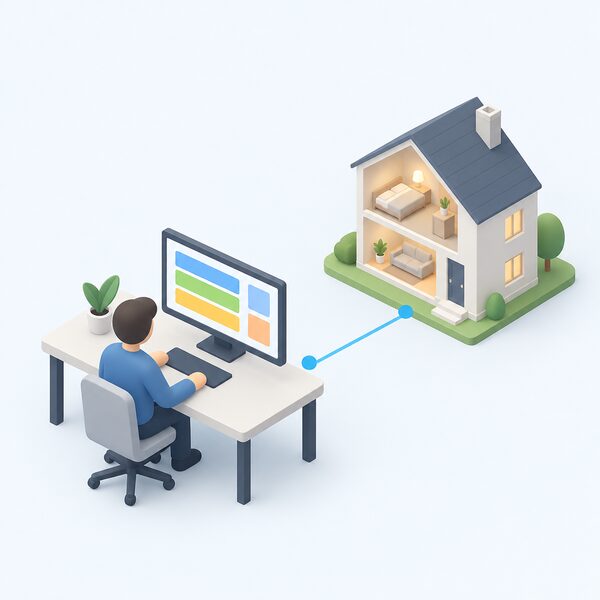
The service is being rebuilt around location and direction. From 9 April 2026 NESO introduced zonal procurement, a reduced eligibility threshold of 0.1MW, bi-directional flexibility, and a Primacy and Self-Nominated Baseline option1. From 7 October 2026 it will launch the capability to procure constraint management actions, and participants will be able to take part in both margin and system tagged actions1.
Each of those changes does something specific. Zonal procurement means the service buys flexibility where the network needs it, not simply where it is offered. Bi-directional flexibility means turn-up is paid alongside turn-down3. Constraint management is a different product from peak shaving: it addresses local network limits rather than national generation margin, which is the territory of the distribution network operators and their flexibility tenders.
That local layer is where the wider policy is heading. The energy digitalisation framework sets out a vision for a coordinated and connected energy system, delivering a commitment set out in the clean flexibility roadmap9. The Clean Flexibility Roadmap update states that the next generation of energy procurement frameworks will ensure it includes a range of clear routes for public bodies to access flexibility-enabled supply arrangements, including flexible tariffs and aggregator-led service models, for schools, hospitals and government buildings10. Public sector buildings are being brought into the same market as households.
The Climate Change Committee's adaptation monitoring work lists governance priorities including clarity on the future of the gas grid and more structured management of interdependencies11. Planning guidance for London already frames the hierarchy as be lean: use less energy and manage demand during operation through fabric and servicing improvements and the incorporation of flexibility measures12.
For a household, the direction is clear even if the detail is not settled. Flexibility is moving from a single national scheme to a layered market: national margin services, regional zones, and local constraint management procured by distribution operators. A household's ability to participate in the local layers will depend on whether an aggregator is active in its area.
Why a smart meter is the foundation of demand flexibility
Nothing in the service works without half-hourly measurement. Smart Energy GB sets out the requirement: to accurately measure energy usage in the home during a Demand Flexibility Service event, and to create a baseline measure, a smart meter capable of sending half-hourly readings is required, plus a baseline measure of the last 60 days of electricity usage and marketing consent7.
The meter is also the household's general-purpose energy instrument. Smart meters enable accurate billing by automatically recording energy use in half-hour periods, enabling energy suppliers to bill on actual rather than estimated usage13. Readings are sent automatically via the DCC's secure network to the energy supplier14. Ofgem lists the practical benefits: bills based on accurate meter readings and not estimates, no need to submit meter readings yourself, access to more flexible tariffs including dual-rate tariffs, and the ability to add credit automatically or without visiting a shop in prepayment mode15. The meter's in-home display shows how much energy is being used during the day17. Installation is free: contact your supplier to get a smart meter for free15.
Two limits are worth stating. First, the meter does not give the household control over price: except by switching, you don't control the tariff your energy supplier sets, but you can change how much energy you use14. Second, smart functionality can be lost in a supplier change. Ofgem states that your meter may not work in smart mode when you move to the new supplier, and you may need to take meter readings manually and submit them to your new supplier instead, though it may work in smart mode again if you change tariffs or suppliers18. A household whose meter has dropped out of smart mode cannot provide the half-hourly data the service needs.
For households with generation, one reassurance: your generation payments will not be affected19.
Where the service falls short: limits and caveats for households
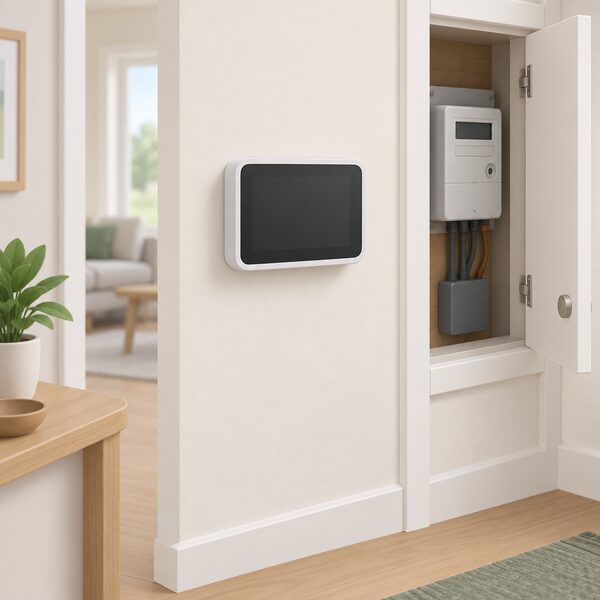
The service is a small, conditional payment built on infrastructure the household does not own. Several limits follow from that.
- It does not run in Northern Ireland. The Demand Flexibility Service doesn't run in Northern Ireland, and participation requires living or having a business in England, Scotland, or Wales2. Northern Ireland sits in a separate electricity market, and its gas network does not reach all areas either: not all areas of Northern Ireland are connected to the gas network, with urban and suburban areas well served and many rural and western parts having limited or no access20.
- It depends on a supplier staying in the market. Participation runs through a registered supplier or app, and the household's reward depends on that intermediary. Ofgem publishes what happens if an energy supplier goes out of business, which is the relevant contingency for anyone whose flexibility payments run through a supplier18.
- It depends on the meter continuing to work in smart mode. A meter that stops sending readings removes the household from the service until it is restored15.
- The reward is not a substitute for efficiency. The service pays for timing, not for using less. A household that reduces consumption overall still benefits, but through the bill rather than through the event payment.
- The value may become locational. Energy UK states that in future versions, payments may vary depending on where flexibility provides the greatest benefit3. Households in areas the network values less may earn less for the same response.
- The absolute energy shifted is small. The winter totals of 3.3GWh and 3.9GWh are meaningful system contributions but a tiny fraction of national demand4.
The honest summary for a household's energy independence is this. Demand flexibility gives a home a way to be paid for something it already does, and it makes the timing of consumption visible to the system. It does not reduce dependence on the grid, on a supplier, or on a working meter and communications network. It is a revenue stream attached to dependence, not an escape from it. Households that want to reduce what they draw in the first place are looking at a different set of measures, and the UK energy supply picture sets out where that power comes from and what a home can realistically control.
Sources20 cited
- Demand Flexibility Service, NESO, 2026-09-17
- Demand Flexibility Service, Energy Saving Trust, 2026-05-21
- Energy UK explains how consumer-led flexibility works in power markets, Energy UK, 2026-04-14
- Statutory security of supply report 2025, GOV.UK, 2025-12-17
- Demand side response, UK Parliament POST, 2026-06-07
- What is flexibility, FlexAssure, 2026-09-19
- Understanding the Demand Flexibility Service scheme, Smart Energy GB, 2026-03-16
- Summary of changes to energy price cap, 1 October to 31 December 2025, Ofgem, 2025-08-27
- Energy digitalisation framework, GOV.UK, 2026-03-23
- Clean Flexibility Roadmap: July 2026 update, GOV.UK, 2026-09-17
- Well-adapted energy system, Climate Change Committee, 2026-09-19
- Energy assessment guidance, Greater London Authority, 2022-06
- Smart meters: your rights and expectations, GOV.UK, 2025-08-08
- How do smart meters reduce my bills?, Smart DCC, 2026
- Getting a smart meter, Ofgem, 2026
- Get help with your smart meter, Ofgem, 2026-09-17
- Get help with your smart meter, Ofgem, 2026
- What happens if your energy supplier goes out of business, Ofgem, 2026
- Feed-in Tariffs: generators, Ofgem, 2026-09-17
- Continuous Household Survey: heat and insulation 2024/25, Northern Ireland Statistics and Research Agency, 2025-11-11
 Flexibility Payments for HomesCan you really get paid for using less electricity at peak times, and how much would a household actually earn?
 Batteries and Smart TariffsA home battery can earn its keep if your electricity prices change through the day.
 The Full Smart Meters GuideDo smart meters really save you money, and how do you use one to cut your bills?
 Meters and Time-of-Use TariffsDo you need a smart meter for a time-of-use tariff, and does it have to send readings every half an hour?
 Smart Charging RewardsCovers the schemes that pay or reward households for shifting car charging, including the Demand Flexibility Service, app-based reward programmes and supplier incentives.
 Heat Pump Electricity TariffsA heat pump tariff gives you cheaper electricity for part of the day, so running your heating costs less than on a standard rate.