
In this answer
Short answer
Power Payback is Utilita's version of the Demand Flexibility Service, a national scheme that pays households for cutting electricity use during set periods. It is aimed at the supplier's smart prepayment customers, who are invited by email, sign up once, and then opt in by text each time an event is announced. If the household reduces its electricity usage during the event, Utilita credits the meter. The more usage is reduced, the more is credited1.
The wider scheme exists because lowering energy use at peak times reduces the need to turn on fossil fuel power plants2. National Grid ESO, now NESO, describes the purpose as making it easier for homes and businesses to take part in the electricity market and be rewarded for shifting when they use electricity3. Smart Energy GB puts it more simply: consumers who move their electricity use will be rewarded with a payment or credit from their energy supplier4.
For a household, the appeal is narrow and concrete. Power Payback pays in meter credit, not cash, and only for electricity shifted out of a named window. It does not change the standing charge, the unit rate, or the supply relationship. What it does is turn a smart prepayment meter into a small earning asset for perhaps an hour at a time, a few times a season. Whether that is worth the attention it demands is the question this page sets out to answer.
Power Payback: Utilita's Demand Flexibility Service that pays you to cut back
Power Payback is a Demand Flexibility Service offering, run by the supplier Utilita for its smart prepayment customers6. The Demand Flexibility Service itself is the national framework underneath it. Energy Saving Trust describes it as offering rewards for customers who use less electricity during certain periods, available to households with a smart meter2. NESO frames the same scheme as a way to make it easier for homes and businesses to take part in the electricity market and be rewarded for shifting when they use electricity3.
The mechanism is demand turn-down: the household is asked to use less at a moment when the grid is tight. Energy Saving Trust states that the service reduces the need to turn on fossil fuel power plants by lowering energy use at these peak times2. That is the system-level case for paying households at all.
The scheme has widened since its early iterations. Energy UK notes that the service will now reward customers for both reducing electricity use (demand turn-down) and increasing electricity use (demand turn-up)7. Power Payback, as offered to Utilita's prepayment customers, sits on the turn-down side: the household is paid for using less, not more.
Rewards across the service vary by supplier. Energy Saving Trust says rewards vary depending on your supplier, but the more electricity you save during each event the greater your rewards will be2. Smart Energy GB describes the reward as pounds or points that you can use towards paying for your energy bills2. For Power Payback specifically, the payment is credited to the customer's meter for reducing electricity usage during events1.
How it works: SMS opt-in, events, and how your reward is calculated
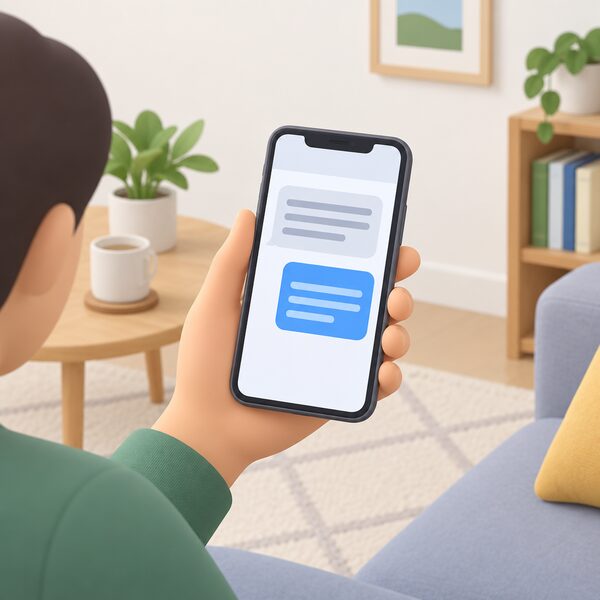
Sign-up happens once, by entering details into a form. After that, each event is opted into individually. The scheme's own wording is that you sign up to the service by entering your details into our form, and we'll send you an individual opt-in SMS when you can reduce your usage1.
The opt-in message names the day, the window and the rate. It reads: Utilita Power Payback! Reduce your electricity usage [DAY] between [TIME_1] and [TIME_2] and we'll pay you up to £[AMOUNT] per kWh. Normally put the washing on at this time? Try saving this job for later! Reply 'Y' to opt-in or 'N' to opt-out!1. The amount and the times are filled in for each event, so the rate on offer is visible before the household decides.
Once opted in, a reminder follows. One hour before the event starts, participants receive a reminder SMS specifying the timeframe for reducing electricity usage5. That reminder text reads: Thank you for opting-in! Don't forget your Power Payback event, reduce your electricity usage and earn £[AMOUNT] per kWh. The event will run between [TIME_1] and [TIME_2] today1.
Events are not limited to one a day. This might happen multiple times in a day, and customers can opt in to multiple sessions in the same day1. Each is accepted or declined on its own.
The reward is calculated from what the meter records inside the window. If you successfully reduce your electricity usage, we'll credit your meter. The more you reduce your usage, the more you'll earn1. That calculation depends on half-hourly readings, which is why participation requires agreeing to half-hourly data collection5.
"If you successfully reduce your electricity usage, we'll credit your meter. The more you reduce your usage, the more you'll earn."
Who is eligible: smart prepayment customers of Utilita
Eligibility is set by the supplier, and it is narrow. Power Payback is offered to smart prepayment customers of Utilita, who are invited by email1. The service was available to Utilita prepayment customers with SMETS1 electricity smart meters in 2022/235. That is the meter generation the scheme was first built around.
The requirement is not just a smart meter but a smart prepayment meter, and the two are not the same thing. Smart Energy GB notes that it has a particular duty to make sure low-income, vulnerable and prepay customers benefit from smart meters8. The Demand Flexibility Service as a whole is available to households with a smart meter2, but each supplier decides which of its own customers it invites.
For a household on a traditional prepayment meter, the route in is a meter change. Smart DCC states that switching from an existing gas or electricity prepay meter to a smart credit meter is straightforward for customers who want to do so9. That is a change of meter type, not just a change of tariff, and it moves the household off prepayment rather than onto a smarter version of it.
Participation also carries a data condition. Taking part means agreeing to half-hourly data collection5. Without that granularity the supplier cannot see what was used inside the event window, so the reduction cannot be measured and no credit can be calculated. A household unwilling to share half-hourly data cannot take part, whatever meter it has.
What you earn and when the credit reaches your meter
The reward is meter credit, applied to the electricity meter. Within 72 hours, earned credits are directly applied to the customer's electricity meter5. That is the scheme's stated timescale, and it is slower than an ordinary top-up: once you have topped up, the credit should appear on your meter within 1 hour10. A Power Payback credit is a scheme payment, not a top-up, and it arrives on the scheme's clock.
The credit lands on the electricity meter first. Customers can transfer this credit to their gas meter if desired using the My Utilita app5. That transfer is a separate step taken in the app, not something that happens automatically, and it is the only route given for moving the value between fuels.
The rate itself is not published as a standing figure. The opt-in text quotes a rate per kWh for that event, expressed as up to a stated amount1. Because the rate is set per event and the credit depends on how much usage was actually shifted, the amount earned varies from household to household and from event to event. Energy Saving Trust's general statement on the service applies: rewards vary depending on your supplier, but the more electricity you save during each event the greater your rewards will be2.
For comparison, other reward mechanisms in the market work differently. ScottishPower's Power Saver credits the bill or meter for energy used during chosen slots, with electricity used charged at the normal unit rate and the credit applied later11. E.ON Next's PowerUp pays bill credit for every kWh of electricity used above the target during two-hour events, usually communicated the day before by email13. Power Payback is a turn-down scheme: it pays for using less, not for shifting load into a chosen window.
Is it worth it? What a household should weigh
The case for taking part rests on effort against reward. The household gives up an hour of normal use, or moves it, and receives meter credit within 72 hours5. The rate is quoted per event and expressed as up to a stated amount per kWh1, so the value depends on what the household would have been using in that window anyway. A household that can genuinely defer a wash, a charge or a heating boost loses little; one that cannot simply declines the text.
The wider evidence on demand-side response is positive but general. Parliament's research service states that demand side response could make household energy bills cheaper14. That is a system-level finding, not a promise about any one household's bill, and it does not quantify what Power Payback pays.
For context on how long energy measures take to repay, official guidance on economic feasibility tests uses a benchmark of a payback of the initial cost within 15 years through energy savings15. That is a test for physical measures such as insulation, not for a flexibility scheme, and the two are not comparable in scale. A Power Payback credit arrives within days; a fabric measure repays over years. Independent guidance puts plug-in solar at a payback period of five to ten years16, and domestic PV at a financial payback of between 10 and 15 years17. Those are capital measures with capital costs. Power Payback has no capital cost at all, which is the main thing in its favour.
What a household should weigh is therefore not payback in years but attention. The scheme pays for behaviour, not equipment, and it pays only when an event is called and only for the reduction achieved. It does nothing for the standing charge, the unit rate or the source of supply. For a household already on a smart prepayment meter with Utilita, the barrier to entry is a form and a text reply. For anyone else, the barrier is a meter change and a supplier relationship.

Where Power Payback sits among flexibility payments
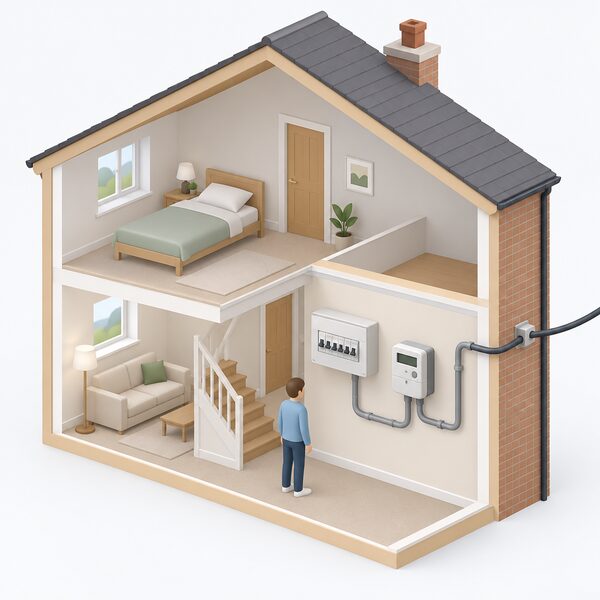
Power Payback is one of several ways a household can be paid for shifting when it uses electricity, and it is among the narrower ones. The Demand Flexibility Service rewards customers for both reducing electricity use and increasing it, under its fourth iteration7. Power Payback, as offered to Utilita's prepayment customers, is the turn-down half of that.
Other suppliers run their own versions. ScottishPower's Power Saver and Power Saver 2 credit the bill or meter for energy used during chosen slots11. E.ON Next's PowerUp pays for use above a target during two-hour events13. Power NI's Keypad Reward takes a different approach again, giving free electricity from £1 to £4 for top-ups between £50 and £175 made online or via the app18. These are not interchangeable: some pay for using less, some for using more at a set time, and some for topping up.
For a household trying to judge Power Payback against the alternatives, the useful comparison is with the general flexibility market rather than with a single rival scheme. The flexibility payments for households page sets out how these schemes differ, and the Demand Flexibility Service worth it page looks at the national scheme on its own terms. Households weighing whether to move load at all may find the shifting electricity use to cheap rates page more relevant, since a time-of-use tariff pays for the same behaviour through the unit rate rather than through a separate credit.
The dependence that remains is worth stating plainly. Power Payback does not make a household independent of the grid, of Utilita, or of the event being called. It pays a small amount, on the supplier's schedule, for behaviour the supplier measures through the meter. The household still buys all its electricity from the grid at the supplier's rates, and the credit is only as reliable as the scheme's continuation. What it does offer is a modest, low-effort return for load that can genuinely be moved, and a reason to look at when electricity is used rather than only how much.
Sources18 cited
- Signing up to Power Payback and opting in to events, Nesta, 2024
- Demand Flexibility Service, Energy Saving Trust, 2026
- Demand Flexibility Service (DFS), NESO, 2026
- Energy flexibility, Smart Energy GB, 2026
- Smart prepayment customers' experience of the Demand Flexibility Service: introduction, Nesta, 2024
- Smart prepayment customers' experience of the Demand Flexibility Service, Nesta, 2024
- Energy UK explains how consumer-led flexibility works in power markets, Energy UK, 2026
- About the rollout, Smart Energy GB, 2026
- How to get a smart meter, Smart DCC, 2026
- Prepayment meters, Centre for Sustainable Energy, 2025
- Power Saver, ScottishPower, 2026
- Avoid surprise bills, ScottishPower, 2026
- Free electricity: here's how to opt in, Which?, 2026
- Demand side response and household energy bills, UK Parliament POST, 2026
- Approved Document L Volume 1 consultation, Welsh Government, 2025
- Plug-in solar, Centre for Sustainable Energy, 2026
- Solar photovoltaic, CAT, 2026
- How can I save money on my electricity?, Power NI, 2026
 Demand Flexibility and the GridGetting paid to shift your electricity use away from peak times is now a real option for households with a smart meter.
 Smart Charging RewardsCovers the schemes that pay or reward households for shifting car charging, including the Demand Flexibility Service, app-based reward programmes and supplier incentives.
 Flexibility Payments for HomesCan you really get paid for using less electricity at peak times, and how much would a household actually earn?
 Payback and SavingsHow long until a home battery pays for itself, and why do quoted payback times vary so much?
 Payback Periods ComparedHow long does it take for a home energy upgrade to pay for itself?
 Supplier-Controlled ChargingSmart charging tariffs let your energy supplier decide when your car charges, usually overnight when electricity is cheaper.