
In this answer
Short answer
A home battery can save money on an Economy 7 tariff, but only by doing one specific job: buying electricity in the seven cheap night hours and using it during the expensive ones. Economy 7 is a time-of-use tariff that charges two different prices for the electricity you use, with a cheaper rate for energy used during the night1. A battery charged in that window and discharged during the day turns the tariff's structure into a household's advantage, without any solar panels being involved.
The arithmetic is simple in shape and unforgiving in detail. The saving is the gap between the night rate and the day rate, multiplied by the units shifted, minus the energy lost in charging and discharging. Batteries are not 100% efficient, so you will not get all of the energy out that you put in2. Published guidance puts domestic battery storage payback in the region of 8 to 12 years, which is similar to the reported lifespan of the equipment3.
What follows is how the tariff works, where the savings actually come from, how to size a battery against a real household's day and night split, what the payback looks like, how to run the system well, and where the approach falls short.
How Economy 7 works, and why a battery pairs with it
Economy 7 is a legacy two-rate structure rather than a modern smart product. It charges a cheaper rate for electricity for seven hours a day, usually at night5, and the cheaper rate applies to energy used during the night7. The tariff is mainly intended for homes that run on an electric heating system and use storage heaters1, and people with Economy 7 typically use those hours to charge their electric storage heaters with heat8.
That history matters, because it explains both the opportunity and the competition. The cheap window exists to serve a heating load, and a storage heater is a crude battery: it takes electricity overnight and releases heat the following day. A home battery does the same thing for everything else in the house, which is why the two fit together naturally but also compete for the same seven hours.
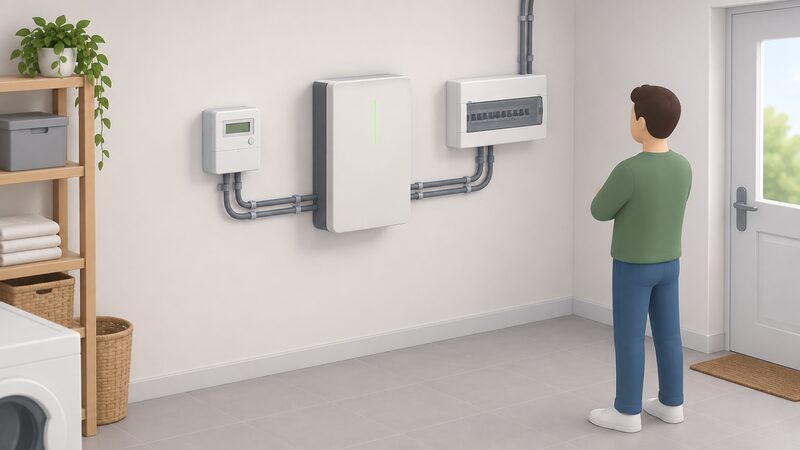
The pairing works because a battery can be charged with cheap electricity from a supplier, typically on certain tariffs at night or in the middle of the day6. You can store cheap electricity when prices are low and use it later, even during peak times, which can significantly increase your savings8. With a battery and no solar panels, charging stops when the battery is full and the battery discharges when the next cheap tariff period ends, automatically9.
There is a wider argument too. The combined potential of millions of homes with batteries to help balance supply and demand across the country, releasing stored power onto the grid when needed, is a system-level benefit that sits behind the household one10. For the individual home, though, the case rests on the price gap and the load profile, not on the grid.
Charging cheap at night, running the house by day: where the savings come from
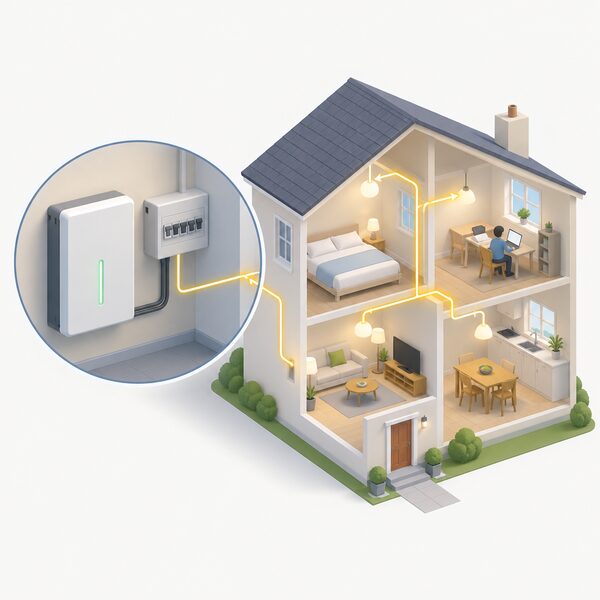
The saving is a transfer, not a generation. Nothing new is produced; units that would have been bought at the day rate are bought at the night rate instead, and the battery holds them until they are needed. Homeowners can store power during the day, when electricity tends to be cheap, and sell it during the evening, when electricity is more expensive11, and the same logic runs in reverse overnight on Economy 7.
Three things determine how much of that transfer actually happens.
- The price gap. The wider the difference between the two rates, the more each shifted unit is worth. Economy 7 has a cheap and a more expensive rate, so it is important to make sure the on-peak and off-peak hours are right for the household12.
- The volume shifted. A battery only saves on the units it actually carries. Loads left running in the day, outside the battery's reach, are still bought at the peak rate.
- The losses. Charging and discharging is less efficient, so could affect your feed-in tariff if you have one13, and the same inefficiency applies to every unit cycled for tariff reasons.
Where solar is also present, the battery does a second job. A home battery captures surplus solar energy for later use, including overnight EV charging, whereas without it unused solar electricity is wasted or exported to the grid, often at a relatively low rate14. That is a different revenue stream from tariff arbitrage, and it stacks on top of it rather than replacing it.
For a household with an electric vehicle, the case strengthens further. Charging at home or at work overnight, when electricity is cheap, reduces overall fuel costs by more than 70%15. A battery does not create that saving, but it can move the cheap window's power to where the car is not.
Sizing the battery against your overnight and daytime usage
Sizing starts with the household's own meter readings, not with a rule of thumb. If you are on Economy 7, a comparison will be more accurate if you separate out day and night usage16. That split is also the sizing input: the battery needs to carry the daytime load that the overnight charge is meant to cover.
The benchmark used in published guidance is that domestic battery systems can store as much electricity as a household typically uses in a day, enabling a PV system to provide up to 70% of a household's annual electricity demand17. That is a solar figure, but the capacity benchmark, one day of typical use, transfers directly to a tariff-only setup.
Two thresholds recur in the Economy 7 literature, and they disagree. As a general rule of thumb, a household would need to use more than 35% of its electricity at night to make Economy 7 cost-effective4.
Sizing also has to account for what the battery is for. A system sized to cover the whole day's ordinary consumption is doing something different from one sized to cover a few essential circuits, and the two produce very different payback figures. The relevant capacity questions are set out in more detail in what size home battery do you need and battery capacity and usable capacity.
Tariff prices, cycle losses and what the payback looks like
Published figures for Economy 7 rates are scarce and regional. One worked example assumes Economy 7 tariffs at 34.38p for on-peak and 15.43p for off-peak, with a 58:42 split18. That is an assumption used in modelling, not a quoted market price, and it should be read as such. Prices are supplier and region specific, and the only figure that matters for a particular household is the one on its own statement.
Against that gap, the losses bite. Batteries are not 100% efficient, so you will not get all of the energy out that you put in2. Every unit cycled for tariff reasons therefore costs more than the night rate alone, and the effective saving per unit is the price gap minus the loss.
The payback figure reported for domestic battery storage is 8 to 12 years, which is similar to the reported lifespan of the equipment3. That is a general figure for battery storage, not one derived from Economy 7, and it depends on the price gap, the household's load profile and the size of the system. The same source is blunt about the cost position: domestic battery systems may save on imported electricity costs, but they are currently very expensive17.
| Item | Figure | Basis |
|---|---|---|
| Assumed on-peak rate | 34.38p | Modelled assumption18 |
| Assumed off-peak rate | 15.43p | Modelled assumption18 |
| Assumed on/off peak split | 58:42 | Modelled assumption18 |
| Reported payback | 8 to 12 years | Domestic battery storage3 |
| Efficiency | Not 100% | Batteries generally2 |
The wider tariff landscape matters here. Solar and battery tariffs offer different rates at different times of day, both for buying electricity and for selling it back to the grid19, and one example, Intelligent Octopus Flux, is a two-rate tariff with matching import and export prices and automated battery management, charging when power is cheapest and exporting between 4pm and 7pm20. Those products are the direction of travel, and they change the payback arithmetic in ways Economy 7 alone does not.
Getting the most from the battery: timers, smart charging and tariff switching
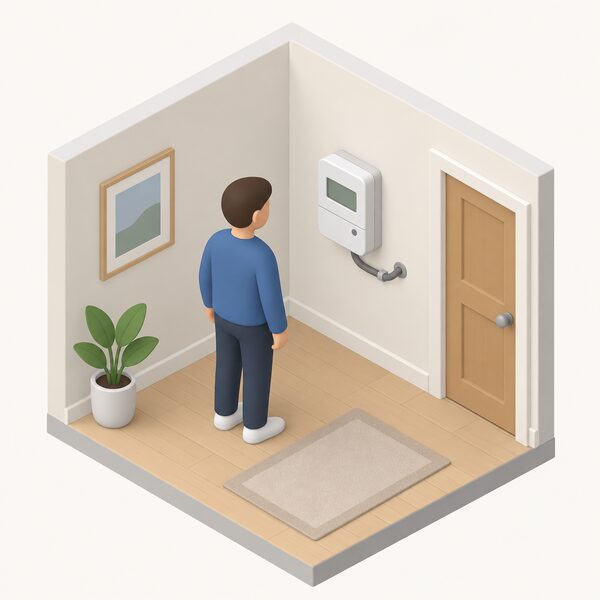
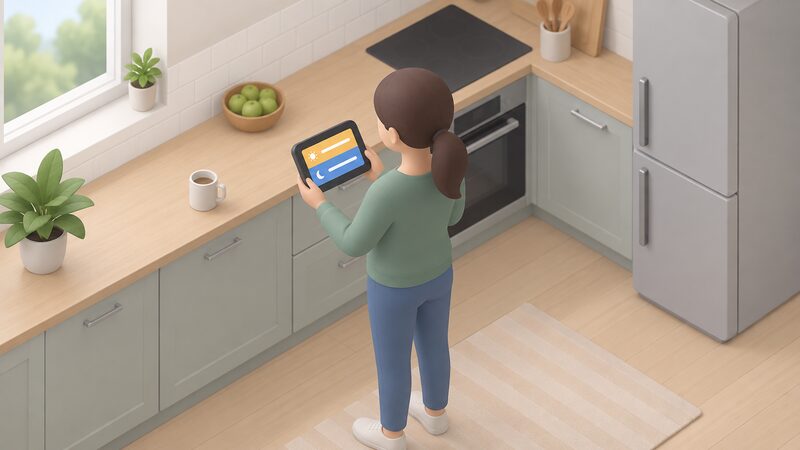
A battery on Economy 7 will run on a timer, but it runs better on a smart tariff. The core operating pattern is to set the battery to charge up when electricity is cheap, and to discharge when electricity is expensive19. The same instruction appears in heating guidance: charge up your battery during off-peak hours, at the lowest rate, and use the energy during the peak-rate period to minimise your electricity bill21.
To maximise savings, switching to a time-of-use tariff lets you charge the battery during off-peak times when electricity is cheap6. That is not a contradiction of Economy 7, which is itself a time-of-use tariff, but a widening of the options. Smart meters enable time-of-use tariffs, where electricity may be cheaper at certain times of day22, and they are compatible with Economy 7 tariffs and fixed rate tariffs while also enabling newer time-of-use tariffs, so switching does not require a meter change1.
The value of a smart tariff depends on what is in the house. An EV charger, heat pump or home battery makes smart tariffs much more valuable8, and to benefit properly from smart appliances, electric vehicles and home batteries a household needs to be on a smart tariff23. A battery without a smart tariff is a timer; a battery with one is a system that responds to prices.
"setting the battery to charge up when electricity is cheap, and to discharge when electricity is expensive"
Two operational points are worth stating plainly. The system should never let the battery discharge to zero, as this can significantly reduce the life of the battery9. And not all batteries can deliver electricity during a power cut3, so a household expecting backup should check that specifically rather than assuming it. The tariff-stacking options are covered further in stacking a home battery with smart and time-of-use tariffs.
Where a battery on Economy 7 falls short
The limits are real and should be stated as firmly as the benefits.
- Cost. Domestic battery systems may save on imported electricity costs, but they are currently very expensive and do not make financial sense for every household17.
- Efficiency. Batteries are not 100% efficient, so you will not get all of the energy out that you put in2.
- Scale. Compared with pumped storage, the electricity batteries can deliver is much more limited10.
- Backup. Not all batteries can deliver electricity during a power cut3.
- Scope. It is not possible to get an Economy 7 meter for your gas supply5, so the tariff only ever touches the electricity side of a dual-fuel home.
There is also a fairness point that bears on any claim about average household consumption. Some households in deprived areas with low electricity consumption may be rationing their energy use to manage limited budgets, potentially compromising their comfort and health24. Averages that treat low consumption as efficiency can mislead when they are used to size a battery or judge a tariff.
For households with existing Economy 7 heating, the picture is specific. Economy 7 is described as an ideal option for customers who have electric storage heaters, as they can be heated overnight and used to give off heat the following day5. An immersion heater on Economy 7 might need to be kept on overnight25. In Northern Ireland, properties with Economy 7 at the time of application under the Sustainable Energy Programme will be provided with replacement electric high heat retention storage heaters26. A battery does not displace any of that; it adds a second claimant on the same cheap window.
The dependence that remains is worth naming. A battery on Economy 7 still depends on the grid, on a supplier offering the tariff, and on the price gap holding. It reduces exposure to peak prices; it does not remove the connection. The wider context is set out in home batteries and household energy independence.
Sources26 cited
- What is Economy 7?, Smart Energy GB, 2026-04-07
- Storage, Electricity North West, 2026-09-19
- Battery storage, Centre for Sustainable Energy, 2025-10
- Economy 7 guide, Uswitch, 2026-09-08
- What is Economy 7?, Energy Helpline, 2026-09-20
- Battery storage, Home Energy Scotland, 2026-09-20
- Energy: your questions answered, Confused.com, 2026-07-03
- Should I switch to a time of use tariff?, Energy Saving Trust, 2026-01-23
- Battery storage, Energy Saving Trust, 2026-08-19
- How does storage help us balance the grid?, NESO, 2026-09-17
- Batteries in the home, Solar Energy UK, 2026-09-17
- Reading your gas or electricity meter, Centre for Sustainable Energy, 2026-08
- Solar panel battery storage, Which?, 2026-05-14
- Can solar panels charge electric cars?, The CPA, 2026-04-15
- EV basics, Zapmap, 2024-05-14
- Dealing with your energy supplier, Centre for Sustainable Energy, 2026-01
- Making the most of your solar PV panels, Centre for Sustainable Energy, 2026-08
- Electric heating, Centre for Sustainable Energy, 2026-06
- Tariffs for renewable technology, Energy Saving Trust, 2026-08-12
- Smart Export Guarantee rates, Which?, 2026-04-24
- The best heating for your home, Which?, 2025-09-22
- Energy flexibility, Smart Energy GB, 2026-08-19
- Smart homes and lower carbon footprint, Energy Saving Trust, 2026-01-21
- Understanding GB energy consumption patterns, Nesta, 2025-08-06
- Top energy savings tips, National Energy Action, 2026-07-13
- Northern Ireland Sustainable Energy Programme, Energy Saving Trust, 2026-09-07
 Economy 7 TariffsEconomy 7 gives you seven hours of cheaper electricity at night, but the exact hours depend on where you live and who supplies you.
 Time-of-Use Tariffs ExplainedCan you pay less for electricity by using it at different times of day?
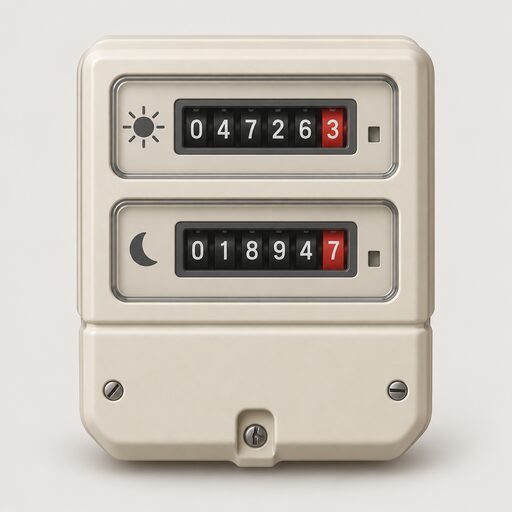 Economy 7 and Restricted MetersEconomy 7 and Economy 10 meters give you cheaper electricity for a set number of hours overnight and charge you more the rest of the day.
 Batteries and Smart TariffsA home battery can earn its keep if your electricity prices change through the day.
 Solar and Battery Import TariffsWhat does a special import tariff actually get you when you have solar panels or a home battery?
 Meters and Time-of-Use TariffsDo you need a smart meter for a time-of-use tariff, and does it have to send readings every half an hour?