
In this answer
Short answer
Yes, Economy 7 suits storage heaters, and the two were designed around each other. Storage heaters work by using cheaper, off-peak night-time electricity to create and store heat, which can be used the following day1. Economy 7 is the tariff that makes that possible: night-time electricity is much cheaper, typically about half the price, while day-time electricity is more expensive2.
The arrangement is not a happy accident. Storage heaters are an artefact of the 1970s overnight capacity excess on the grid, which spawned Economy 7 and a push to find appliances that could absorb surplus night generation3. Economy 7 meters and tariffs are still described as designed to work with storage heating4. Night storage heaters should always be used on an Economy 7 tariff to take advantage of cheaper overnight electricity5.
The fit is real but conditional. Heat output usually declines in the evening, just when many households need it most6, and homes can be very warm in the morning and struggle to stay warm later7. Whether Economy 7 works for a particular home depends on the controls, the model and how the household uses heat through the day.
Why Economy 7 and storage heaters go together
The pairing rests on a simple mismatch in the grid: electricity is cheaper to generate at night, and storage heaters are one of the few domestic appliances that can absorb that cheap power and hold it as heat. Storage heaters use cheap off-peak electricity available with an Economy 7 tariff to heat high thermal capacity bricks, releasing heat the following day8. They store heat generated by cheaper night-time electricity and release it during the day2.
Economy 7 is not the only compatible meter. Storage heaters use Economy 7 or Economy 10 tariffs for cheaper energy at night9, and Total Heat with Total Control, Economy 7 and Comfort Plus are all meters and tariffs designed to work with storage heating4. The Building Research Establishment's SAP specification lists electric storage heaters as running on 7, 10 or 24 hour supplies10.
The tariff is not optional in practice. Night storage heaters should always be used on an Economy 7 tariff to take advantage of cheaper overnight electricity5. Running a storage heater on a flat-rate tariff removes the price advantage that justifies the technology, because the heater's whole economics depend on buying at night and consuming by day.
There is a counter-example worth knowing. Dynamic storage heaters, which respond to price signals rather than a fixed overnight window, do not work with Economy 7, and their running costs are still higher than night storage heaters for that reason5. For a household already on Economy 7, the conventional night storage heater remains the better-matched appliance.
For a household's energy independence, the arrangement is partial. The home still depends on the grid and on a supplier, and on gas for nothing at all if storage heaters are the only heat source. What it gains is timing: the ability to buy electricity when it is cheap and hold the benefit in bricks rather than in a battery. That is a form of sovereignty over when energy is bought, not over where it comes from. Households weighing that trade-off against other tariff shapes can compare it in Economy 7 tariffs and time-of-use tariffs.
How storage heaters charge overnight and release heat through the day
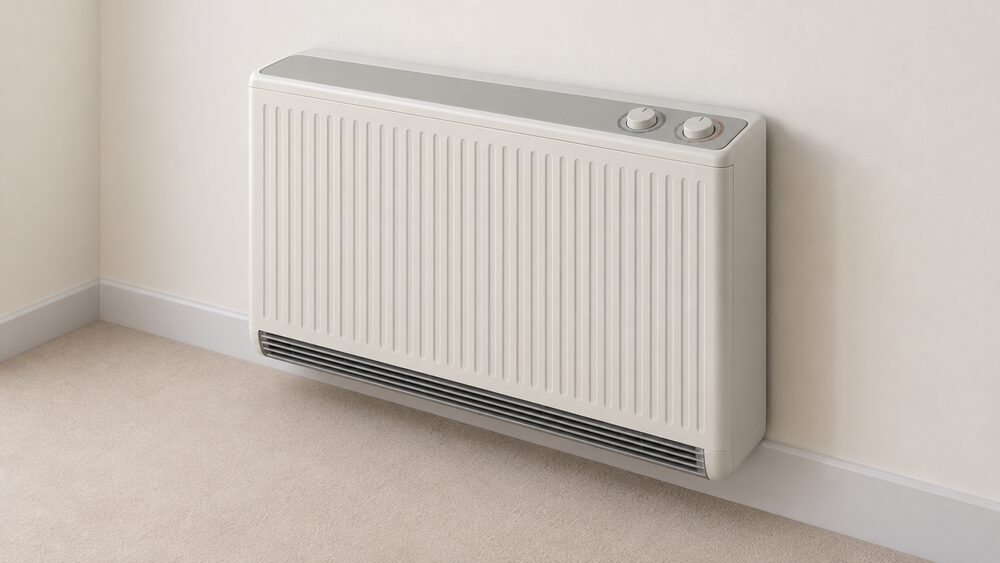
A storage heater has two phases: a charging phase and a heating phase11. During the charging phase it draws electricity at the night rate and heats a core of high thermal capacity bricks. During the heating phase it releases that stored heat gradually into the room, with no further electricity drawn for the heat itself.
The charging window is set by the tariff. Storage heaters charge during off-peak hours when electricity is cheaper, usually overnight11. They heat up during the night-rate hours and gradually release stored heat during daytime hours12. Night storage heaters are set to charge up at night13.
What the household experiences is a slow release rather than instant heat. Storage heaters work by charging up when electricity is cheaper, then releasing heat gradually through the next day14. The bricks are heavy and the casing is insulated, so the heat emerges over hours rather than on demand.
That slow release is the source of both the technology's strength and its weakness. It is efficient at converting night electricity into daytime warmth, and it needs no boiler, no flue and no gas connection. It is poor at responding to a change of plan: a household that comes home late to a warm house, or stays in on a cold afternoon, cannot ask the heater for more than the bricks hold.
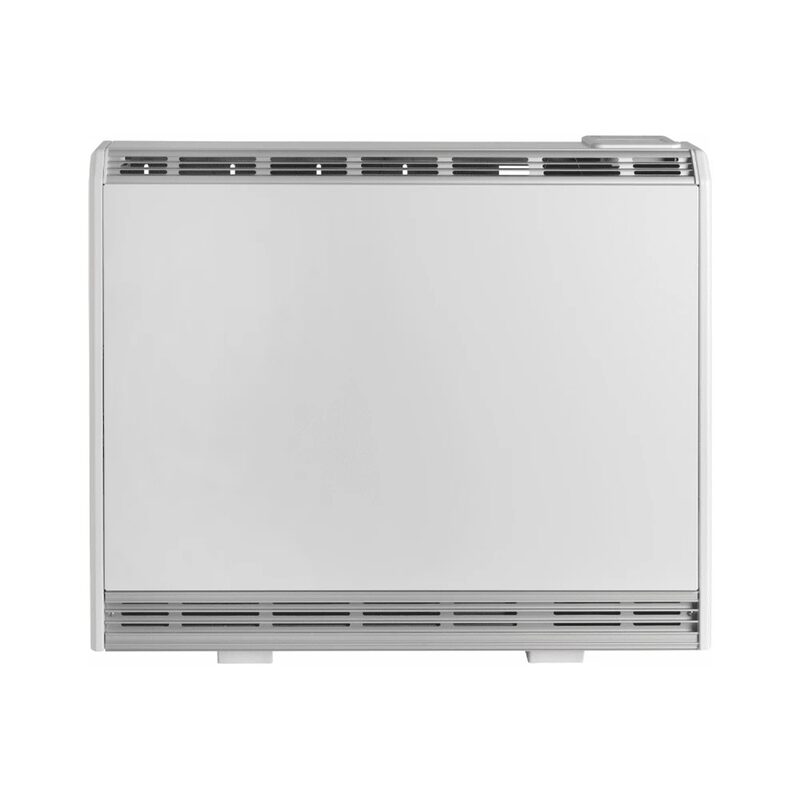
Input and output controls: setting the charge to match the weather
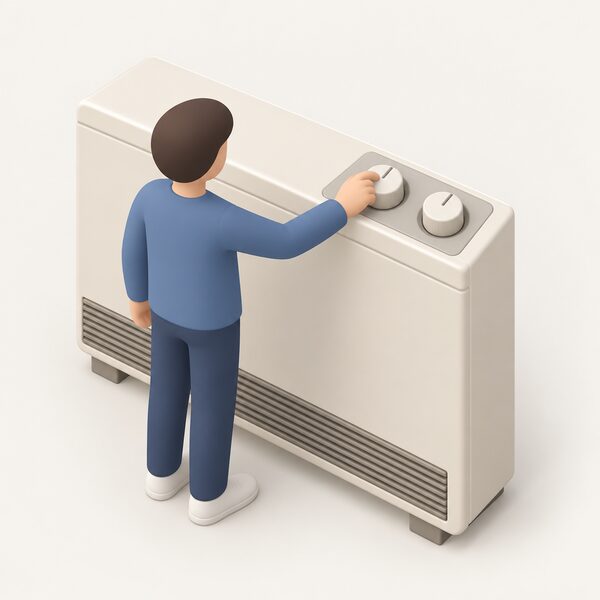
Older storage heaters use input and output dials to control heat14. The input dial, sometimes known as charge, controls how much heat the heater stores as it charges overnight11. The output dial controls how quickly that heat is released.
The input setting is the one that matters most, and it is a weather-matching exercise. The input or charge control regulates the amount of heat that is stored up during the night, and is set higher in cold weather and turned down or off in warmer weather9. A higher input means hotter bricks and more heat for the next day11.
The output setting governs release. It is set to low unless extra heat is needed, and to its lowest setting or the frost control symbol overnight9. Leaving the output high during the day dumps stored heat into the room early, which is the usual reason a heater feels cold by evening.
Modern heaters take the judgement out of it. They generally come with improved heating controls, including an automatic charge control, thermostat and programmer14. The automatic charge control works out how much electricity it needs to store to meet the programme and only uses the amount of electrical charge it needs14. Sensors and smart controls store just the right amount of heat11.
Official guidance points the same way. Approved Document L states that automatic control of input charge should be provided15, and the Welsh Government's consultation version of the same document repeats that automatic control of input charge should be provided16. The direction of travel is away from manual dials and towards controls that decide the charge themselves.
Why the boost setting costs more: avoiding expensive daytime electricity
Most storage heaters carry a boost or top-up setting, and it is the one control that undoes the tariff logic. On older night storage heaters the boost does not use cheap-rate stored heat, it uses expensive daytime electricity2. It should only be used if the stored heat has run out2.
The advice from suppliers and advisers is consistent. To avoid using expensive daytime electricity, avoid using the boost setting where possible12. Daytime boost should be avoided because it uses expensive peak electricity17.
The reason is structural rather than a matter of discipline. Economy 7 makes night electricity much cheaper, typically about half the price, but day-time electricity is more expensive2. Every unit drawn through the boost is bought at the day rate, which is the rate the household is paying precisely because it chose Economy 7. A heater that leans on boost has the worst of both: the standing arrangement of a night tariff and the running cost of daytime power.
The cost difference between models shows how much the design matters. For an average flat or small home, an integrated night storage heater on Economy 7 has an annual space heating cost of £711, while a high heat retention night storage heater on Economy 7 costs £6765. High heat retention storage heaters are up to 27% cheaper to run than standard storage heaters2, and upgrading to a modern storage heater can help reduce energy bills by about 10%2.
| Heater type | Tariff | Annual space heating cost | Source |
|---|---|---|---|
| Night storage heater (integrated) | Economy 7 | £711 | 5 |
| Night storage heater (high heat retention) | Economy 7 | £676 | 5 |
Both figures are for an average flat or small home and are given as annual space heating costs, not whole-bill totals5.
Where a storage heater falls short
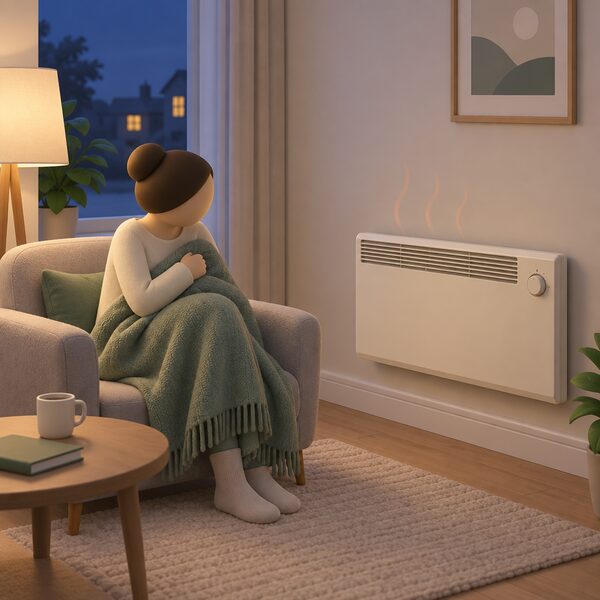
The evening shortfall is the technology's defining limitation, and it is documented across independent guidance. Night storage heaters' heat output usually declines in the evening, just when many homeowners need it most6. The same limitation is described for electric night storage heaters: they can work quite well if the household plans to be home during the day, but their heat output usually declines in the evening15. Storage heaters can often leave a home very warm in the morning and struggle to stay warm in the evening7.
This is not a fault that maintenance fixes. It follows from the physics of storing heat in bricks and releasing it over a fixed period. The practical consequences are that a household out at work all day may return to a heater that has already spent much of its charge, and that a cold snap arriving in the afternoon cannot be met from stored heat alone.
The verdict on running costs is conditional in the same way. Night storage heaters are a cheap form of electric heating if the household understands the controls, updates settings regularly and is on the Economy 7 tariff13. Remove any of those three and the economics weaken.
For a household's independence, the limits are worth stating plainly. A storage heater removes the gas connection and the boiler, but it deepens dependence on electricity and on a supplier, and it depends on the night window the tariff provides. It stores heat, not power: there is no export, no backup during a power cut, and no way to shift the stored heat to a different time of day once the bricks have given it up. Households wanting to store electricity rather than heat are looking at a different technology, and the options are set out in exporting from a home battery.
Safety and placement: what to keep clear of the heater
Economy 7 storage heaters are safe when used correctly18. The safety record rests on installation and placement rather than on any special precaution during charging, and leaving a storage heater to charge overnight is the intended mode of operation.
Placement rules are the main practical constraint. Storage heaters should never be covered with clothes or curtains, and furniture should not be placed directly against them, as this can create a fire risk18. General heater guidance is to keep at least one metre of clearance from combustible materials such as paper, furniture or curtains, and never to use a heater to dry clothes19. A heater should sit on a level surface, well away from anything or anyone that could knock it over20.
The clearance requirement interacts with how storage heaters are used. Because the casing stays warm for hours after charging, and because the output vent releases hot air, a heater boxed in by furniture or a drawn curtain cannot shed heat safely or effectively. The same clearance that protects against fire also lets the heater do its job.
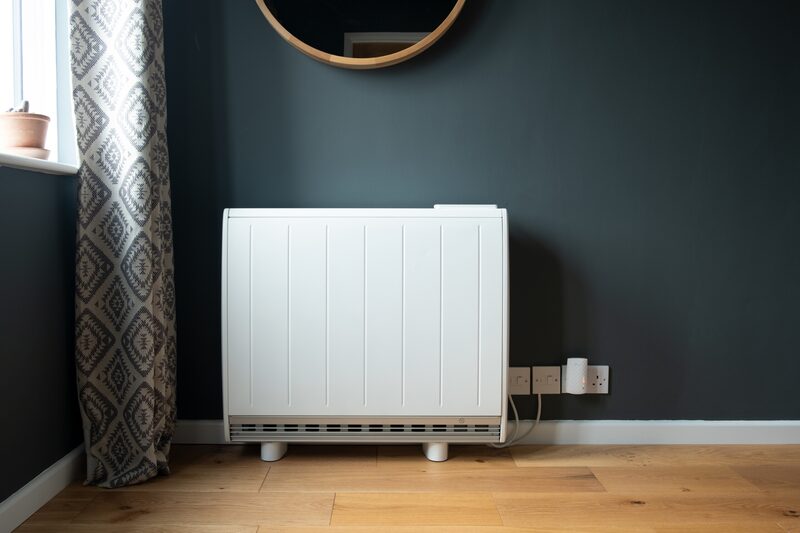
Modern storage heaters on Economy 7: Quantum and Thermino charging
Modern high heat retention models are the current answer to the evening shortfall, and they are designed for the same tariff. Dimplex states that Quantum high heat retention storage heaters are designed to work effectively with Economy 7 tariffs21. The maker describes the Quantum as a modern high heat retention storage heater using intelligent and adaptive controls21.
Replacement is part of the pitch. Modern storage heaters like Dimplex Quantum are designed to match the footprint of older models, making replacement straightforward21. That matters for households with an existing installation, because the wiring, the off-peak supply and the physical space are already in place.
Heat batteries are the other strand. Energy storage systems include battery storage, thermal storage and heat batteries22, and some heaters use electricity at a cheaper rate to store heat for later use23. In a Shropshire case study, Thermino units and Glen Dimplex Quantum storage heaters were wired to an Economy 7 timer to allow them to be charged on a cheaper off-peak rate24. The combination of a heat battery for hot water and high heat retention heaters for space heating runs on the same night window.
| Product | Type | Tariff compatibility | Source |
|---|---|---|---|
| Dimplex Quantum | High heat retention storage heater | Designed to work effectively with Economy 7 | 21 |
| Thermino (with Glen Dimplex Quantum) | Heat battery and storage heaters | Wired to an Economy 7 timer for off-peak charging | 24 |
| Electric Storage Heaters range | Storage heaters | Perfect for night time energy tariffs like Economy 7 | 25 |
High heat retention storage heaters retain more heat than other storage heaters14, which is what allows them to hold charge into the evening. The technology is recognised in policy as well: electric storage heaters on an off-peak or Economy 7 tariff qualify as efficient heating in the Northern Ireland Decent Homes Standard consultation26. In Northern Ireland, the Sustainable Energy Programme provides that properties with Economy 7 at the time of application will be provided with replacement electric high heat retention storage heaters27.
Is Economy 7 worth it without storage heaters?
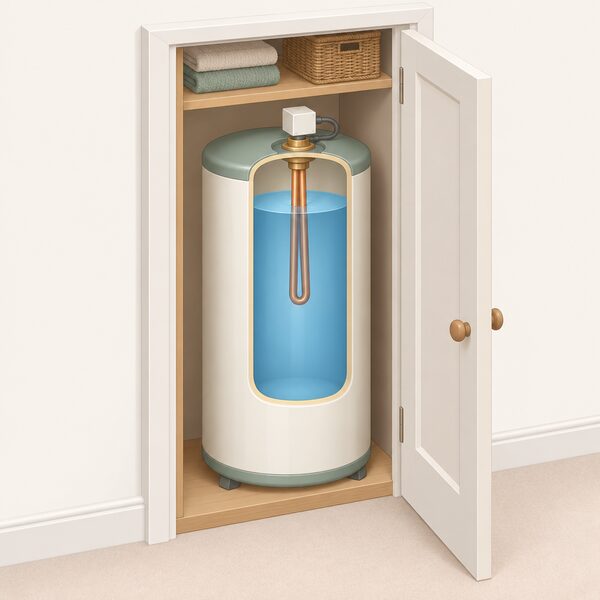
Economy 7 can work well for households with storage heaters, immersion heaters or electric vehicles, where significant usage can be moved into the night17. The tariff is described as an ideal option for customers who have electric storage heaters, as they can be heated overnight and used to give off heat the following day28.
Without a large overnight load, the case is weaker. Economy 7 makes night electricity much cheaper, typically about half the price, but day-time electricity is more expensive2, so a household that uses most of its power in the evening and daytime pays the higher rate on nearly everything. The immersion heater is the common second load: on Economy 7 a household might need to keep it on overnight29.
The decision turns on how much consumption can genuinely be shifted, not on the tariff's headline night rate. Households without storage heaters but with an electric vehicle or a large hot water cylinder have a different calculation from those with neither, and the wider comparison is set out in Economy 7 tariffs and shifting electricity use to cheap rates.
Sources29 cited
- What is Economy 7, Smart Energy GB, 2026-04-07
- Night storage heaters, Centre for Sustainable Energy, 2025-10
- Storage heaters comparison, Herschel Infrared, 2022-05-19
- How to save energy when you've got electric storage heaters, Home Energy Scotland, 2025-01
- Electric heating, Centre for Sustainable Energy, 2026-06
- Off-gas grid heating options, OFTEC, 2026-09-17
- Electric heaters vs storage heaters, Energy Helpline, 2026-09-20
- Heating fuel, Uswitch, 2026-01-27
- Getting the most from Economy 7, National Energy Action, 2026-09-10
- SAP 10.3 full specification, BRE Group, 2026-01-13
- A guide to using electric storage heater controls, Energy Saving Trust, 2026-05-21
- How to use Economy 7 storage heaters efficiently, Power NI, 2026-09-20
- Energy saving myths, Centre for Sustainable Energy, 2026-07
- Electric storage heaters, Energy Saving Trust, 2026-05-20
- Approved Document L, Volume 1, HM Government, 2026-09-17
- Approved Document L, Volume 1, consultation version, Welsh Government, 2025-08
- What is the right Economy 7 tariff, Fuse Energy, 2026-04-09
- Are Economy 7 storage heaters safe, Power NI, 2026-09-20
- Saving money safely, Electrical Safety First, 2026-09-19
- Potential risk to households this winter, Electrical Safety First, 2026-09-19
- Storage heaters, Dimplex, 2026-09-17
- Storing energy, Energy Saving Trust, 2026-07-15
- Renewable heat right for your home, Energy Saving Trust, 2026-05-19
- Thermino and upgraded storage heaters for Shropshire residents, Sunamp, 2025-02-03
- Storage heaters, Surya Heating, 2026-09-20
- Current Decent Homes Standard summary table, Northern Ireland Department for Communities, 2025-08-05
- Northern Ireland Sustainable Energy Programme, Energy Saving Trust, 2026-09-07
- What is Economy 7, Energy Helpline, 2026-09-20
- Top energy savings tips, National Energy Action, 2026-07-13
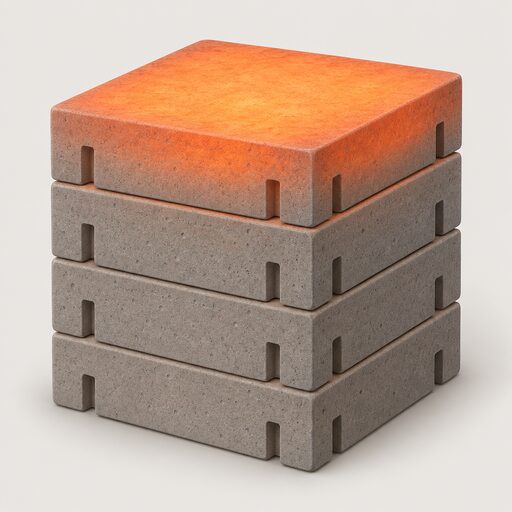 Storage Heaters GuideHow night storage heaters charge on off-peak electricity and release heat through the day, and how high heat retention models with fans and controls differ from older bricks.
 Economy 7 TariffsEconomy 7 gives you seven hours of cheaper electricity at night, but the exact hours depend on where you live and who supplies you.
 Heating Schedules and SetbackIs it cheaper to leave the heating on low all day, or set it to come on only when you need it?
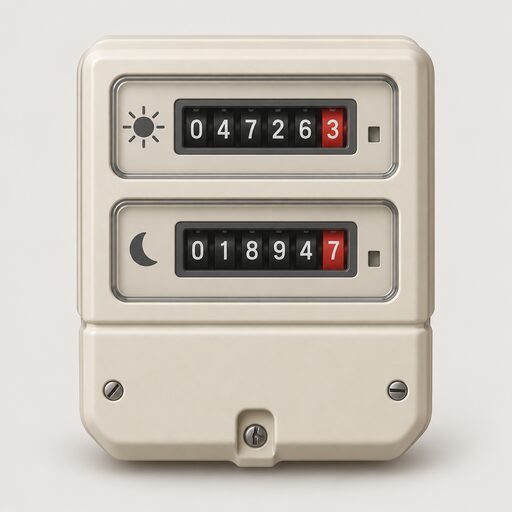 Economy 7 and Restricted MetersEconomy 7 and Economy 10 meters give you cheaper electricity for a set number of hours overnight and charge you more the rest of the day.
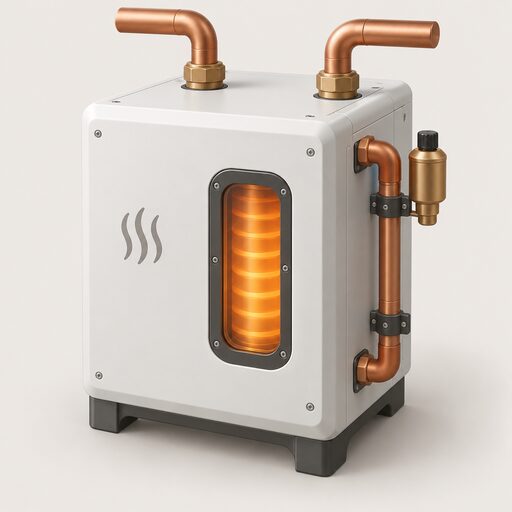 Heat Batteries and Zero EmissionA heat battery stores cheap overnight electricity as heat, then releases it to warm your home or your hot water.
 Controls and Time-of-Use TariffsCheaper electricity at night only saves money if your heating actually uses it then.