
In this guide
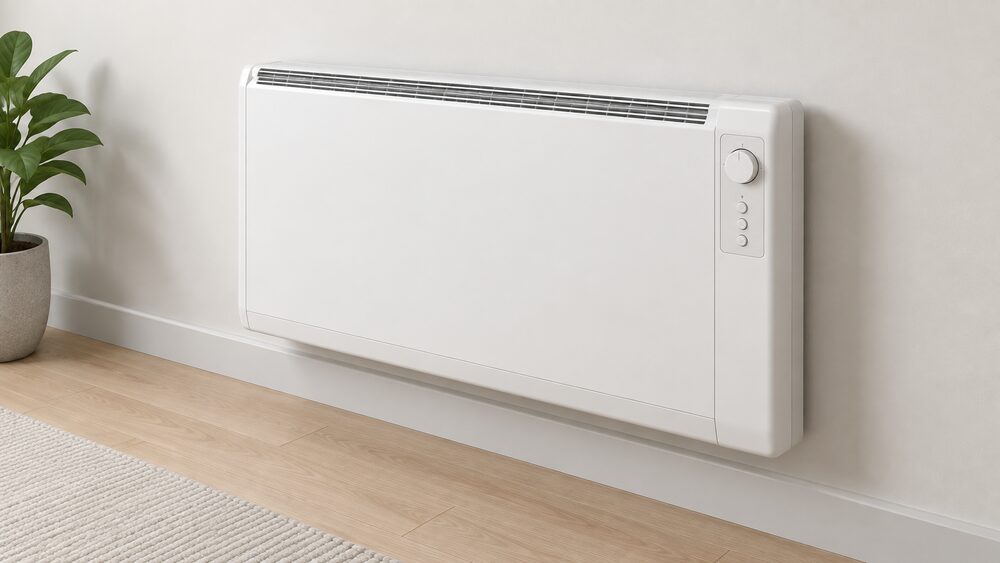
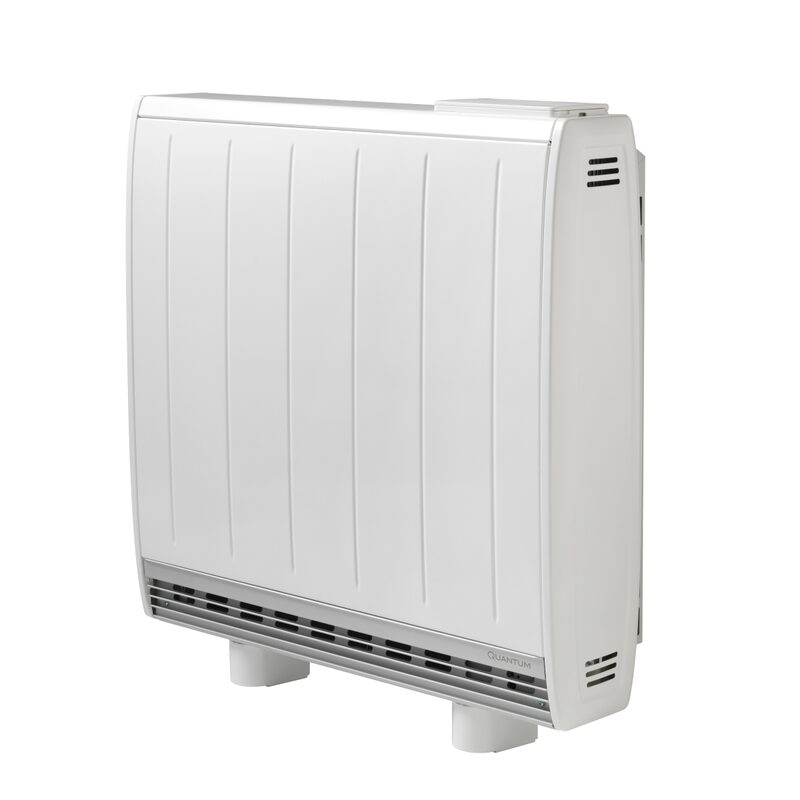
The Dimplex Quantum is a high heat retention (HHR) storage heater: a highly insulated core that stores off-peak electricity overnight and releases it through the following day1. It is the best-known line in the category, and the reason households search for it by name is the running cost claim attached to it. Dimplex states that HHR storage heaters such as the Quantum are up to 27% cheaper to run than traditional storage heating systems, and independent guidance from the Centre for Sustainable Energy puts the figure at around 27% lower than standard night storage heaters1.
That saving comes from the insulation and the controls, not from a different fuel. The Quantum still runs on electricity, still charges on an off-peak window, and still depends on a tariff that offers one. What it changes is how much of the stored heat survives to the evening and how precisely the release is managed. Dimplex describes it as the most advanced HHR storage heater on the market and the most economical electric heating on the market today, which is the maker's own commercial position rather than an independent finding4.
What a Quantum is, and what it stores
A conventional storage heater takes in electricity overnight and loses much of that heat before the household is home. The Quantum's answer is a highly insulated core that retains the energy stored overnight from off-peak electricity, wrapped in additional layers of insulation that hold heat longer than a conventional storage heater1. Dimplex describes the Quantum as a stylish, modern HHR storage heater that uses that core to retain the energy stored overnight2.
The control side matters as much as the insulation. The Quantum RF uses what Dimplex calls a dynamic automatic charge and control algorithm, which decides how much to charge based on what the heater expects to need7. The Quantum also uses a dual power supply, so heat is always available even during times of unexpected demand, with off-peak energy as the main source4. That second supply is the boost function, and it is the point at which the running cost advantage can be given away.
The Quantum is designed to work effectively with Economy 7 tariffs, and Dimplex states that HHR storage heaters are designed to match the footprint of older models, making replacement straightforward1. That matters for a household replacing an old unit: the pipework, wiring and wall position often need no change. Dimplex also makes a Quantum electric cylinder using off-peak electricity for hot water, so the same charging window can serve both heat and hot water8. For the wider category, see storage heaters and Economy 7 and time-of-use tariffs.
Running costs: up to 27% cheaper than a standard storage heater
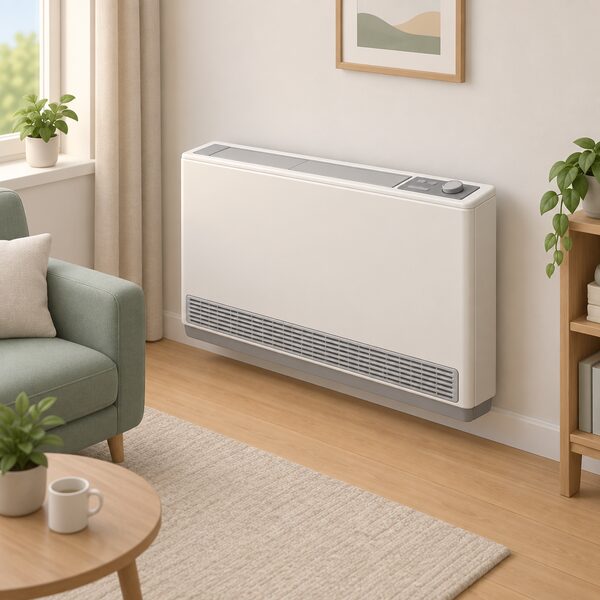
The 27% figure appears in several places and from more than one voice. Dimplex states that HHR storage heaters like the Quantum are up to 27% cheaper to run compared to traditional storage heating systems, and repeats the claim on its Quantum pages1. The Centre for Sustainable Energy, an independent advice body, states that the running costs of Quantum heaters are around 27% lower than standard night storage heaters3. A separate independent guide puts HHR storage heaters at up to 27% cheaper to run than standard storage heaters9. The maker's brochure attributes the figure to a study by Dr John Councell titled "Running Cost of Conventional Electric Space Heating Systems"2.
The one absolute figure published alongside the Quantum is around £745 a year, given for a 2-bed 1960s house built to the typical regulations of the time5. That is an illustration for a defined house type, not a quote. For scale, independent guidance puts direct electric heating in a typical three-bed semi-detached house at £2,700 a year for space heating alone, and an EPC D home of 90 square metres at £1,995 in energy bills, an additional £421 above a better-rated home10. Those are different house types and different heating systems, so they frame the range rather than compare like with like.
Dimplex also claims that replacing convector heaters with a Quantum could save up to 46%, and one customer case study describes a cut in heating bills of over 50%7. Those are maker figures and a single household's experience, and they sit well above the 27% claim. The honest reading is that the 27% figure is the one with independent corroboration, and the larger numbers depend on what was replaced.
Controls and timer modes: what you can set and when it heats
The Quantum has four timer modes that decide when the heater will be active: User timer, Out all day, Home All Day and Away3. User timer mode lets the household select four periods, and the Quantum supports four time and temperature settings for each day of the week3. The factory examples are worth knowing because they show how the modes differ in intent.
| Mode | Factory default periods |
|---|---|
| User timer | 06.30 to 09.30, 11.00 to 13.00, 15.00 to 17.00, 18.00 to 22.003 |
| Out all day | 06.00 to 08.30 and 17.00 to 22.003 |
| Home all day | 08.00 to 21.003 |
| Away | Not published |
The recommended room temperature range is 18 to 21 degrees C, which matches general independent advice for digital electric storage heaters3. Frost Protect mode holds a room at 7 degrees C3. The Quantum adjusts its settings automatically to maintain the required temperature to within plus or minus 0.3 degrees C4. Dimplex describes the Quantum as having three customisable heating timers in its brochure, while the independent guide describes four timer modes; the two documents count the modes differently, and the four-mode list is the one set out in detail3.
Two locks are available locally. The child lock is turned on by pressing and holding both the back button and the dial for five seconds, and a four-digit PIN code lock is set through the settings menu3. Both work at the heater, with no app involved. Dimplex's wider storage heater range uses digitally controlled electronic thermostats and a 7-day programmable user timer, so the control approach is consistent across the line1. For the general principles, see heating controls and thermostats.
Boost: why it uses the expensive rate and what it costs
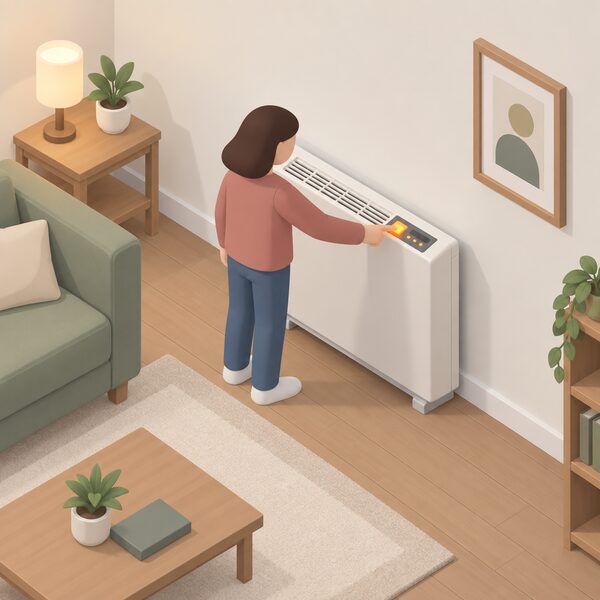
The Quantum's dual power supply means heat is always available, even during times of unexpected demand, with off-peak energy as the main source4. That second supply is drawn at the standard rate, which is the expensive one. Boost is therefore a convenience function with a cost attached, and it is the mechanism by which a well-managed Quantum can still produce a bill that looks nothing like the 27% claim.
The scale of the penalty depends on the tariff. Independent analysis of the Octopus Cosy tariff found peak electricity 60% more expensive from 4pm to 7pm13. Suppliers that show no visible standing charge instead charge a higher rate on the first few units of energy used to cover that cost, which changes the arithmetic of any top-up14. Where a household's payments rise, the usual cause is using more energy than the supplier expected while the price of energy and the daily fee stay the same15.
The practical point is that boost is not a fault and not a failure of the heater. It is the design working as intended, and the household controls how often it is called on. A Quantum that is correctly sized and correctly charged should rarely need it. One that is undersized for the room, or set to a temperature the stored heat cannot hold, will lean on it every evening. Wider context on how electric heating costs behave is at electric heating running costs.
Smart control with a Dimplex Hub: what you need
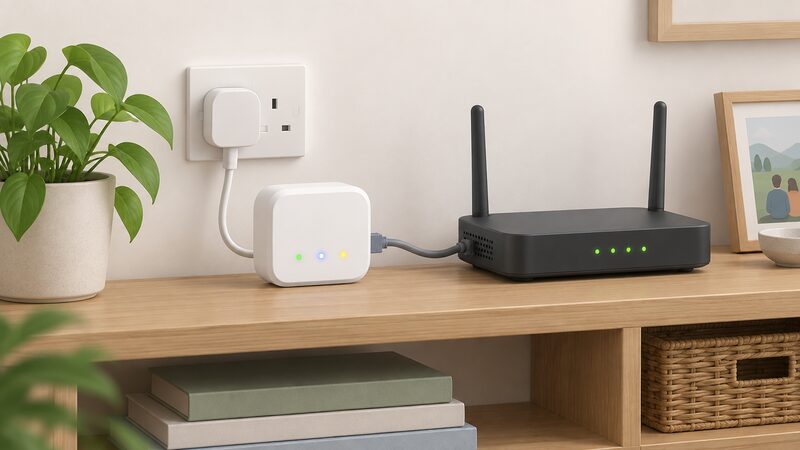
Remote control is not built into the heater. Dimplex states that the Quantum requires a Dimplex Hub, sold separately, and the Dimplex Control app1. The independent guide sets out the same chain: compatible heaters, a smartphone, home Wi-Fi and a Dimplex Hub3. The hub connects via Ethernet or Wi-Fi and allows control and monitoring of heating and hot water through Dimplex Control16.
The hub is the bridge. Dimplex describes it as a device that connects Quantum heaters to the internet and acts as the bridge between RF Dimplex products and the Dimplex Control Cloud server2. The Quantum RF has an integrated radio frequency module and can be remotely controlled using the Dimplex Control smartphone app when bought with the hub4. Some products also require additional hardware, the RFM, for RF communication with the hub17. Dimplex Control works with the whole heating solution of Quantum, Q-Rad and Edel, and supported electric space heaters can be operated individually or by zone, with energy usage tracked per heater4.
This is the clearest dependence the product creates. Local control at the heater and the timer modes continue without any internet connection, but scheduling from away, energy monitoring and remote diagnostics depend on home broadband, Dimplex's cloud server and a manufacturer's app. Dimplex Control also notes that users can take advantage of the British Gas Quantum Tariff with Dimplex Control, which ties the control system to a specific supplier's tariff18. For a household weighing independence, that is a supplier relationship layered on top of the grid connection. More on the trade-offs is at home heating and energy independence.
Sizing and placement: clearance, adjacent heaters and charging
Published dimensions cover the two ends of the RF range. The QM070RF is 730 mm high and 703 mm wide and needs 6 energy packs; the QM150RF is 730 mm high and 1069 mm wide and needs 12 energy packs2. The height is common across both, so the difference between a small and a large Quantum is width and stored capacity rather than footprint depth. Dimplex states that HHR storage heaters are designed to match the footprint of older models, making replacement straightforward1.
That replacement compatibility is the practical sizing story. A household swapping an old storage heater for a Quantum of similar output can often reuse the position, the wiring and the wall fixings. Where the old heater was undersized, moving up the range means a wider unit and more energy packs, which is a decision for the installer rather than a catalogue choice.
Dimplex's installed heating systems are designed for individual rooms or entire homes, so a Quantum installation can be a single-room replacement or a whole-house scheme19. The Quantum is Lot 20 compliant for increased energy efficiency, which is the regulatory baseline for the product category2. Dimplex also publishes guidance on calculating a room's heating requirements when choosing electric heating, which is the step that determines which size is right2.
Placement matters for a different reason. The Quantum releases heat from its insulated core over a long period, so it needs the room to be able to use that heat. A heater boxed in behind furniture, or in a room that is empty all day, will release heat nobody benefits from. The timer modes exist to align release with occupancy, and the sizing decision and the timer decision are really the same decision made twice. For the underlying principles, see boiler sizing and radiators and heat emitters.
Warranty: two years as standard, up to ten with registration

Dimplex states that all its products come with a two-year standard guarantee, and that registering within 28 days of purchase or installation unlocks an extended guarantee on select ranges6. The Quantum is listed with a free 10-year guarantee with additional online registration4. The guarantee is given in respect of products purchased and used within the United Kingdom only21.
There is a discrepancy worth flagging. Dimplex's guarantee terms and conditions state that the guarantee starts from the date of original purchase for a period of twelve months unless otherwise stated, which is shorter than the two years quoted on the product pages21. The product pages are the more specific and more recent statement, and the terms document itself allows for other periods where stated. A household relying on the longer term should keep the registration confirmation.
Registration is the condition that matters. The 28-day window is the deadline, and it applies to the extended guarantee rather than the standard two years. The Quantum's 10-year term is described as requiring additional online registration, so an unregistered heater falls back to the standard period4. For the general mechanics of guarantee registration across heating products, see boiler warranties.
Dimplex as a company and where to buy in the UK
The Quantum is designed, developed and manufactured in the UK by Dimplex4. The UK division of GDHV trades through Dimplex, registered in England and Wales under company number 01313016, alongside Ability Projects Ltd21. Glen Dimplex UK Limited is registered in England under company number 1313016, with registered offices at Dimplex UK, Millbrook House, Grange Drive, Hedge End, Southampton, Hampshire, SO30 2DF2. The company has been in the storage heater market since producing the first marketed domestic storage heater in 1961.
Dimplex sells through trade channels rather than direct to households. A trade price list for Dimplex and Xpelair takes effect on 1 October 2026, replacing the previous list effective from 1 October 2025, which indicates how stock and pricing move through wholesalers and installers2. No published retail price for the Quantum appears in the manufacturer's own material, and prices are quoted by the retailer or installer. Where distributor listings exist for the same model at different figures, those are the distributor's prices and not a manufacturer's list price.
The wider Dimplex electric heating range includes the Q-Rad electric radiator, panel heaters, the EvoRad oil-free radiator and the ML2T convector heater, all sharing the two-year standard guarantee and the 28-day registration route6. The Q-Rad uses three customisable heating timers, each with four time and temperature settings for each day of the week, and can be combined with the Edel hot water heat pump for a full smart electric heating and hot water system22. Dimplex also makes water heaters, which comply with the appropriate regulations and are supplied with all necessary safety kits8. For the broader brand picture, see Dimplex storage heaters and direct acting electric heating vs storage heaters.
Sources22 cited
- Storage heaters, Dimplex, 2026
- Quantum brochure, Dimplex, July 2025
- Dimplex Quantum night storage heaters, Centre for Sustainable Energy, June 2026
- Quantum, Dimplex, 2026
- Storage heaters, EDF Energy, 2026
- ML2T 2kW convector heater, Dimplex, 2026
- Quantum RF HHR storage heater, Dimplex, 2026
- Water cylinders, Dimplex, 2026
- Night storage heaters, Centre for Sustainable Energy, October 2025
- Watt a Save 2026, Home Builders Federation, February 2026
- Electric wallpaper explained, Energy Saving Trust, March 2026
- A guide to using electric storage heater controls, Energy Saving Trust, May 2026
- Exploring the costs to consumers of Scottish clean heating requirements, Nesta, August 2024
- Standing charges, National Energy Action, April 2026
- Your gas or electricity supplier has put up its prices, Citizens Advice, September 2026
- Dimplex Hub, Dimplex, 2026
- Dimplex Control, Dimplex, 2026
- Smart controls, Dimplex, 2026
- Installed heating, Dimplex, 2026
- Panel heaters, Dimplex, 2026
- Guarantee terms and conditions, Dimplex, 2026
- Q-Rad, Dimplex, 2026
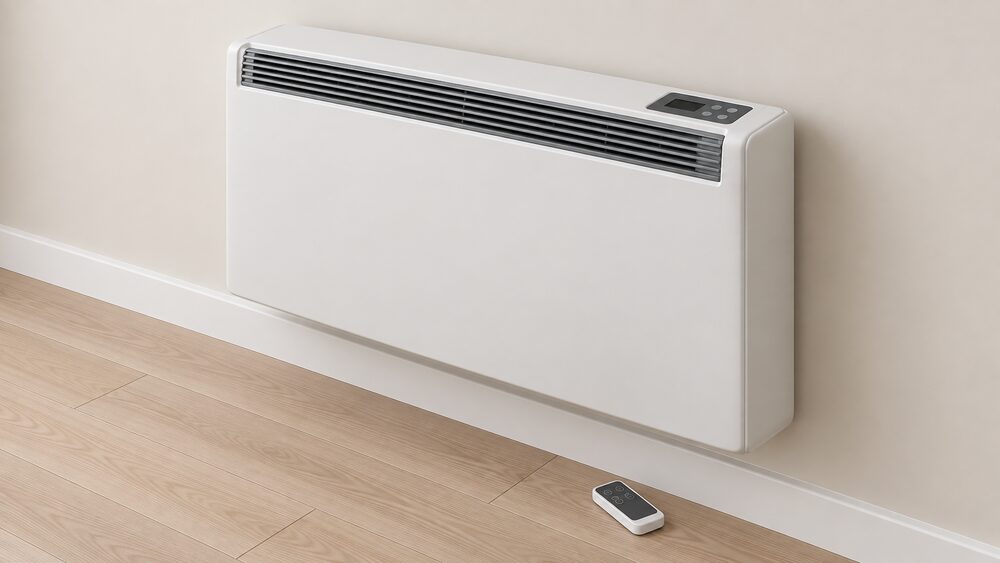 Dimplex storage heaters and electric heatingDimplex is the dominant UK storage heater brand.
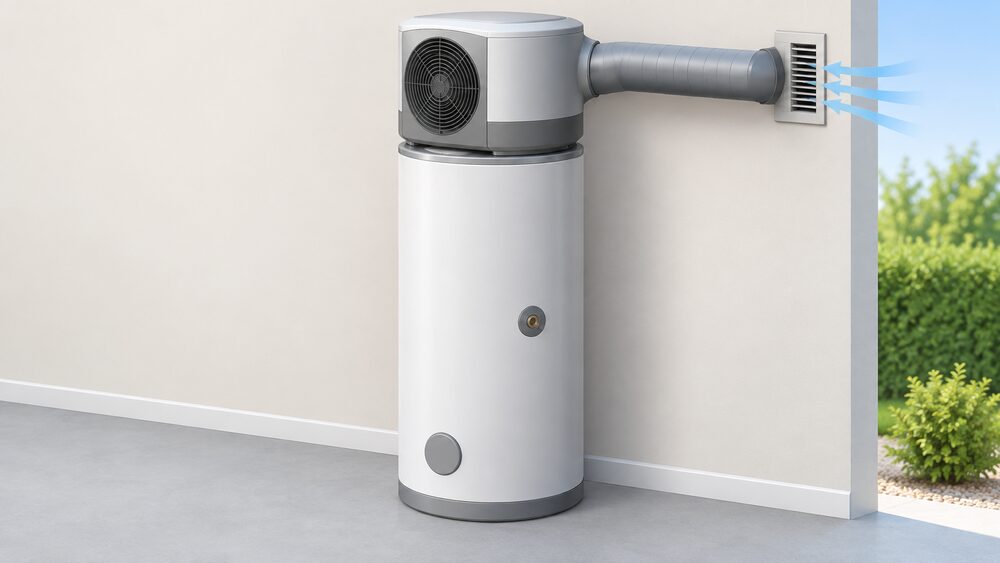 Dimplex heat pumps and hot waterDimplex heat pumps are mainly for hot water, not for heating your whole house.
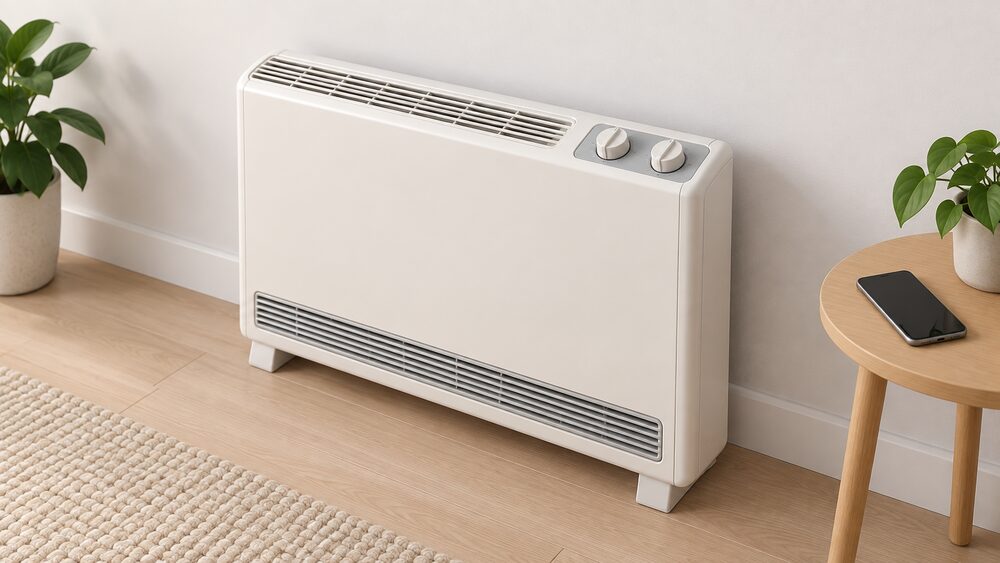 Dimplex Control, Alta Thermostats and Storage Heater ControlsHow the Dimplex Control app, Hub and Alta thermostats work with Dimplex storage heaters, panel heaters and hot water, what the app needs to run, and the guarantee terms and deadlines behind it.
 Dimplex electric heating and heat pumpsDimplex makes both storage heaters and heat pumps, so which one suits your home?