
In this guide
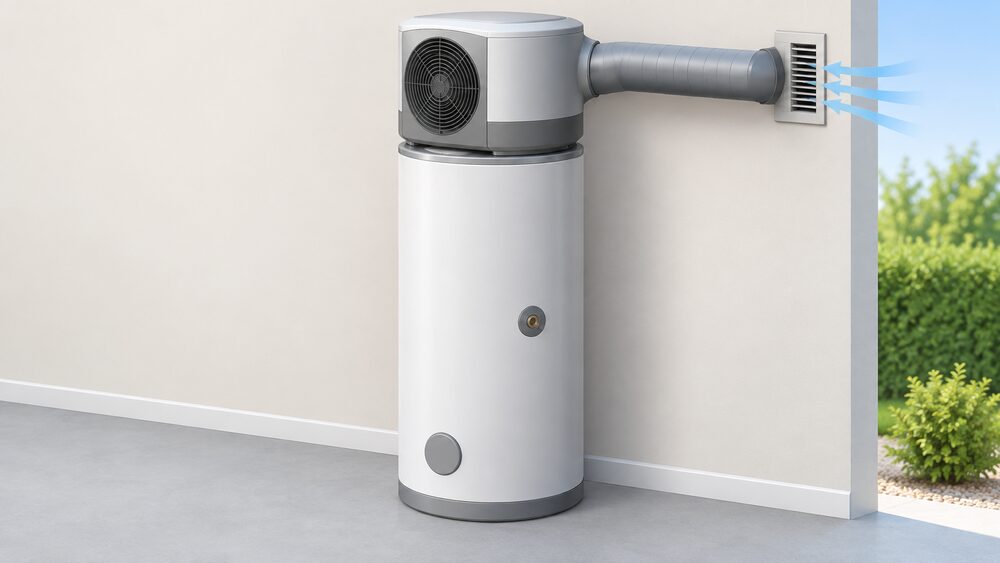
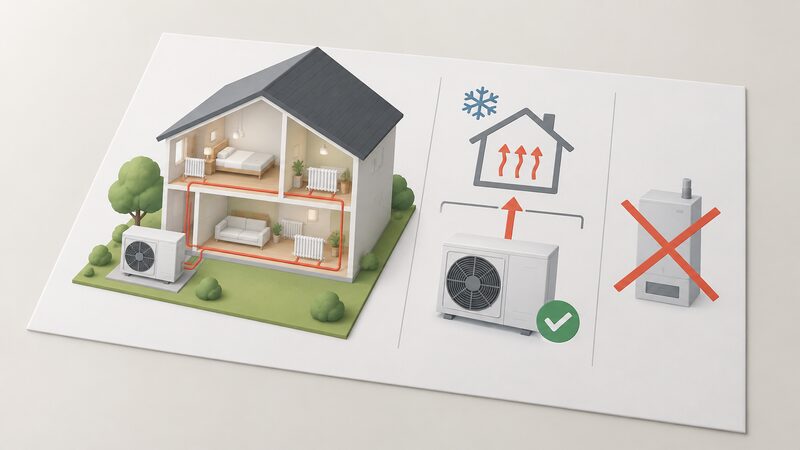
Dimplex is a long-established name in UK electric heating, and its heat pump line is narrower and more specific than the boiler-style ranges sold by the big heating brands. The published product family centres on hot water heat pumps: an air source unit mounted on top of a water cylinder, using a ducted system to draw external air across the evaporator1. That is a different proposition from an air-to-water heat pump sized to run a whole house's radiators. It heats water, not rooms.
The technology is the same principle as any other air source machine. Air source heat pumps use the air as a source of heat, absorbing warmth from outside air to provide heating2. Official statistics describe them as extracting heat from the outside air to heat a home and water4, and independent guidance puts it plainly: air source heat pumps heat homes by taking warmth from the outside air and using it for heating and hot water5. Dimplex applies that principle to a cylinder rather than to a wet central heating circuit.
For a household weighing energy independence, the appeal is specific. A hot water heat pump replaces a gas or electric cylinder and takes the hot water load off the gas grid or off a resistive immersion element, while leaving the space heating arrangement untouched. The dependence that remains is on electricity, on the unit's own controls, and on the manufacturer for parts and support. This page sets out what the range covers, how the technology performs, where it fits, and what the published terms actually say.
Dimplex heat pumps: what the range covers
The published Dimplex heat pump range is built around domestic hot water rather than whole-house space heating. The hot water heat pump is described as utilising air source heat pump technology to provide hot water to residential dwellings, and it is configured as a ducted system supplying external air to an air source heat pump mounted on top of a water cylinder1. The unit is RF enabled and positioned as a low carbon, energy efficient solution1.
That places Dimplex in a different part of the market from the air-to-water heat pumps that replace a gas boiler. The wider heat pump category is broad: types include open and closed source heat pumps underground, air source and water source8, and the official deployment statistics count all types including air source and ground source9. Other technologies in the same family include exhaust air, solar assisted and gas absorption heat pumps10. Dimplex's published line sits in the air source hot water corner of that map.
The brand's wider installed heating catalogue includes panel heaters, which carry a 2 year guarantee with the option to extend on selected models when the product is registered7. That guarantee structure is the clearest published warranty information for the brand, and it is worth reading as a signal of how Dimplex handles registration generally rather than as a term that transfers automatically to the heat pump range.
Dimplex also runs hands-on face-to-face training on its products, including heat pump principles and servicing, and a course covering the Edel hot water heat pump1. The Edel unit is listed on the Government-backed Energy Technology List1. For a household, the ETL listing matters because it is an official recognition route rather than a marketing claim.
Air source hot water heat pumps: how the technology works
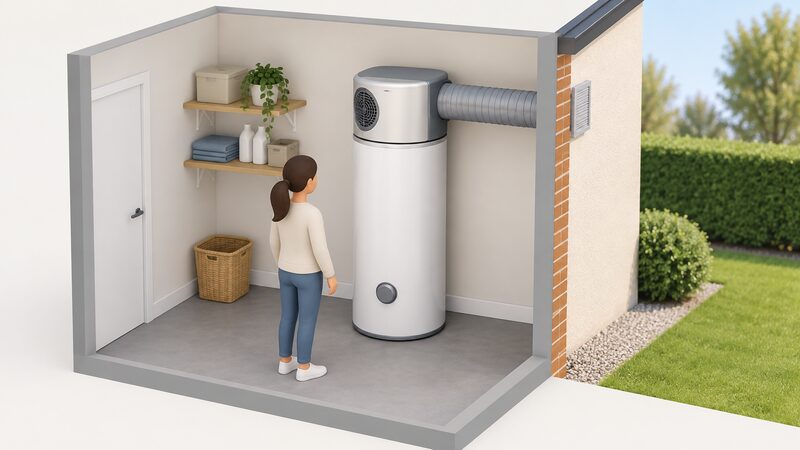
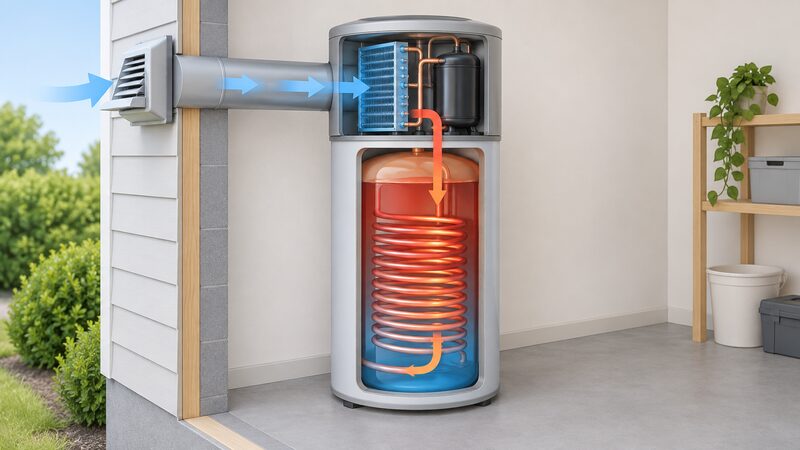
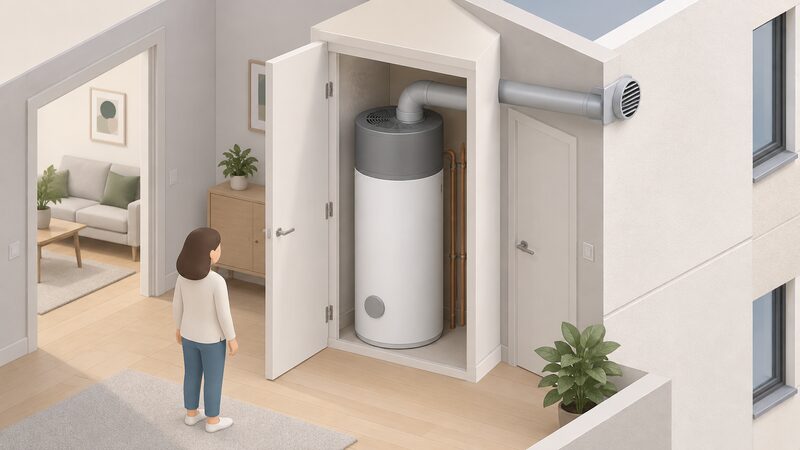
A hot water heat pump does not heat a house. It heats a cylinder of water, and it does so by moving heat rather than by burning fuel or passing current through a resistive element. Dimplex describes the arrangement as a ducted system that supplies external air to an air source heat pump mounted on top of a water cylinder1. The duct matters: it lets the unit draw outside air from a wall terminal rather than cooling the room it stands in.
The underlying physics is standard. Air source heat pumps use the air as a source of heat2, and they operate by absorbing heat from outside air to provide heating3. Independent guidance describes air source heat pumps as using the energy in outside air, or air from a ventilation system, for heating, cooling and heating water11. The refrigerant cycle concentrates that low-grade warmth and delivers it at a temperature useful for domestic hot water.
The practical consequence for a household is that the unit runs on electricity and produces more heat than the electricity it consumes. Official guidance states that heat pumps can usually deliver three units of heat for every unit of electricity used12. That ratio is the whole case for the technology, and it is also the limit: the unit still needs a electricity supply, a location for the duct terminal, and a cylinder with the right connections.
Water source and ground source machines work on the same principle with a different heat source. Water source heat pumps come in closed loop systems, which rely on a submerged pipe network, and open loop systems13. Ground and water source units can also be used to augment existing heating systems in the same way as solar panels14. Those are separate product categories from the Dimplex hot water range, and they suit different sites.
Efficiency: COP of around 3.5 at 35°C water temperature
No Dimplex-specific coefficient of performance is published in the material available for this range. What exists is the general performance envelope for heat pumps, and it is consistent across official, independent and trade sources. Official guidance describes heat pumps as typically having a coefficient of performance of 3 to 46. Independent guidance for well-insulated homes puts it at 3 to 4 units of heat per unit of electricity15. A typical ground source heat pump is given as 3.5 to 4.5 units of heat for each unit of electricity it uses16.
The spread between those figures is not a disagreement about the technology. It reflects the heat source, the flow temperature the unit is asked to deliver, and how well the building retains heat. A hot water heat pump delivering water at a lower temperature will run at a better ratio than one pushed to a higher setpoint. That is why the cylinder setpoint and the unit's sizing matter more than the badge on the casing.
Insulation is the other variable. Heat pumps are best suited to buildings with good insulation levels, and insulation may need to be added internally or externally where homes do not already have good levels17. Independent analysis of the Warm Homes Plan makes the same point from the fabric side: insulation determines how much of the delivered heat stays in the building15. For a hot water heat pump the effect is smaller than for space heating, because the cylinder is insulated and the draw-off is intermittent, but the general principle holds.
For a household, the honest reading is that a COP of around 3.5 is a reasonable planning assumption for a well-designed installation, and that the figure is a ratio rather than a guarantee. It says nothing about the price of the electricity going in. The efficiency of the machine and the cost of running it are separate questions, and the second depends on the tariff.
Monobloc, split and hot water cylinders: which system fits which home
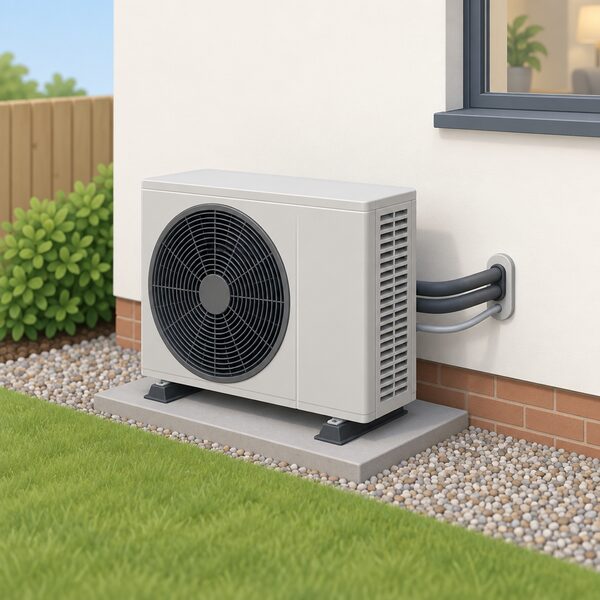
The system type question splits into two: how the outdoor unit connects to the indoor side, and whether the cylinder is part of the package. On the first, the market has moved decisively toward monobloc designs. In new homes, all heat pump installations from 2025 are monoblocs18. A monobloc keeps the refrigerant circuit entirely within the outdoor unit and connects to the indoor side with water pipework, which simplifies installation and avoids refrigerant handling inside the building.
Split systems keep part of the refrigerant circuit indoors. The distinction matters for installation complexity, for where the unit can sit, and for who can work on it. The monobloc and split heat pumps comparison sets out the trade-offs in full.
On the second question, Dimplex's hot water heat pump is a cylinder-plus-unit package rather than a separate outdoor box. The air source unit sits on top of the water cylinder and is fed by a duct1. That makes it a different installation shape from a wall-mounted outdoor unit, and it means the cylinder is not an optional extra: it is the product.
For households replacing a combi boiler, the cylinder question is unavoidable. Independent guidance states that if you are replacing a combi boiler with a heat pump, you will probably need to install a hot-water tank or cylinder19. A hot water heat pump sidesteps the space heating conversion entirely, because it provides domestic hot water as a standalone system, independent of the space-heating upgrade, allowing hot water to be decarbonised without changing existing radiators, pipework or heating systems1. The wider hot water cylinders for heat pumps material covers sizing and coil specification.
| System shape | Where the unit sits | Typical application |
|---|---|---|
| Monobloc air-to-water | Outdoor wall or ground | Whole-house space heating and hot water18 |
| Split air-to-water | Part indoors, part outdoors | Whole-house, where siting demands it |
| Hot water heat pump | On top of the cylinder, ducted to outside air | Domestic hot water only1 |
Where they fit: new builds, apartments and cylinder upgrades
The apartment case is the strongest one for this product type, and Dimplex states it directly. Hot water heat pumps are well suited to apartment buildings because they deliver highly efficient domestic hot water with low electrical demand and minimal carbon impact, improving SAP performance and supporting compliance with building regulations1. SAP performance matters to developers and to anyone buying a new-build flat, because it feeds the energy rating.
Independent guidance supports the broader point that flats are not excluded from heat pumps. It is a common misconception that heat pumps cannot be installed in flats, and some flats are suitable for a hydronic heat pump in certain configurations19. Official guidance lists residential homes, apartments and small commercial buildings as suitable for air source heat pumps12. Where an outdoor unit is needed, it can be installed on balconies or flat roofs, or mounted on an external wall19.
For new builds, the compliance driver is real. Approved Document L Volume 1 states that a primary heating system containing heat pumps should be selected to meet the full space heating requirement at the design condition chosen for heat loss calculations, and it should not be assumed that any heat will be supplied by additional secondary heaters20. That rule applies to heat pump only systems and hybrid systems, and it pushes designers toward proper sizing rather than a top-up approach.
For a cylinder upgrade in an existing home, the Dimplex proposition is narrower and cleaner: replace the cylinder, keep the radiators. The unit can replace traditional electric or gas hot water cylinders with minimal disruption1. That suits a household that is not ready for a full heating conversion, or one where the space heating is already low carbon.
Running on off-peak electricity: the Quantum hot water cylinder
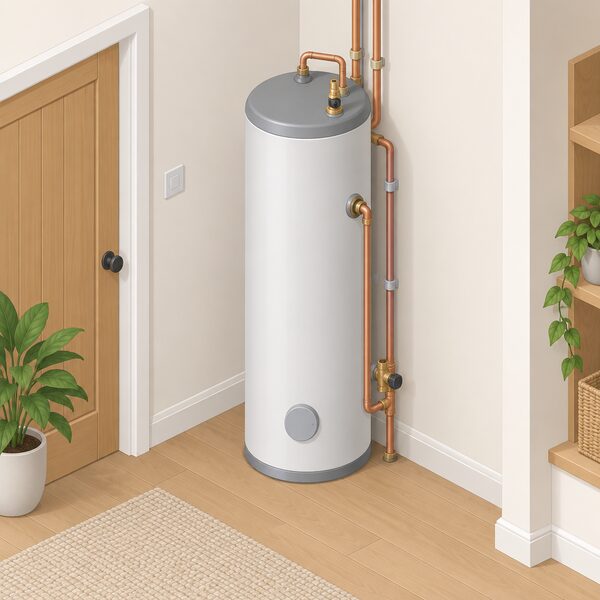
Dimplex's control ecosystem ties the hot water side to the Quantum cylinder. The Dimplex Hub can show how much hot water is available at the set temperature, and that function requires a compatible Dimplex Quantum Water Cylinder QWCd18. The same hub monitors energy usage by heater, zone or site with an hourly, 7 day, 28 day and annual view18. That is monitoring rather than control of the heat pump cycle itself, but it gives a household visibility of what the cylinder is doing and when.
Off-peak operation is where a cylinder-based hot water system has an advantage over an on-demand one. A cylinder can be heated when electricity is cheap and the stored water used later, which is the logic behind storage heating generally. The published material does not give a Dimplex-specific off-peak saving figure for the hot water heat pump, and no running cost percentage is stated for this product.
There is a related claim in the wider Dimplex material about the Quantum storage heater range and off-peak running costs, but the two figures published for that product conflict: up to 27% compared with a traditional storage heater system, and up to 47% compared with an electric convector or radiator system. Those figures are not ruled on and they apply to storage heaters, not to the hot water heat pump. They should not be read across to this product.
What the general heat pump material does support is the direction of travel. A heat pump delivering three units of heat per unit of electricity12 will beat a resistive immersion element, which delivers at most one. Whether that translates into a lower bill depends on the tariff the electricity is bought on, and on when the cylinder is charged. The time-of-use tariff savings material covers how that arithmetic works.
Compliance with Part L and EcoDesign
Building Regulations Part L is the framework that governs how heating and hot water systems are specified in new and renovated homes, and it has been tightened in recent years. The industry guide to low-temperature hydronic heating systems was developed in response to changes to Building Regulations Part L, and is described as Part L compliant21. That guide exists because low flow temperatures change how systems must be designed, from emitter sizing to pipework.
The sizing rule is the one that bites hardest. Approved Document L Volume 1 states that a primary heating system containing heat pumps should be selected to meet the full space heating requirement at the design condition chosen for heat loss calculations, and it should not be assumed that any heat will be supplied by additional secondary heaters20. In practice that means the heat pump must be sized for the worst design day, not for an average one, and that a supplementary heater cannot be used to make the numbers work on paper.
For a hot water heat pump, the Part L interaction is different. The unit serves domestic hot water, so it contributes to the building's hot water energy demand rather than to the space heating calculation. Dimplex states that the apartment application improves SAP performance and supports compliance with building regulations1. SAP is the Standard Assessment Procedure used to rate dwellings, and a more efficient hot water source improves the rating.
The regulatory position differs across the UK. Building regulations are devolved, and the Welsh Approved Document L Volume 1 published in 2026 sets out the Welsh position20. Scotland and Northern Ireland have their own building standards and guidance. A household in Wales, Scotland or Northern Ireland should check the devolved rules rather than assuming the English document applies.
Warranty: two years standard, extended on registration
The published guarantee information for Dimplex covers the panel heater range: a 2 year guarantee, with the option to extend on selected Dimplex panel heaters when the product is registered7. That is the clearest warranty statement in the material available, and it establishes the brand's pattern of a standard term plus a registration-linked extension on selected models.
No equivalent published term is given for the hot water heat pump range in the material available. That is a gap a buyer should close before committing, because the guarantee length, what it covers, and whether registration is required are all terms that vary by product. The written term that applies to the exact unit being fitted is the one that matters, and it should come from the supplier or installer in writing.
Registration is the mechanism that unlocks the longer term on the models where an extension exists7. That means the guarantee is not purely a function of the purchase: it depends on an action being taken after installation, and on the model being one of the selected ones. A household that does not register may hold only the standard term.
The wider question of how servicing interacts with a guarantee is covered in the heat pump servicing and warranty material. For any heat pump, the manufacturer's terms typically assume the unit is commissioned and maintained to specification, and a cylinder-based hot water unit is no different.
Design support and what owning one means for energy independence
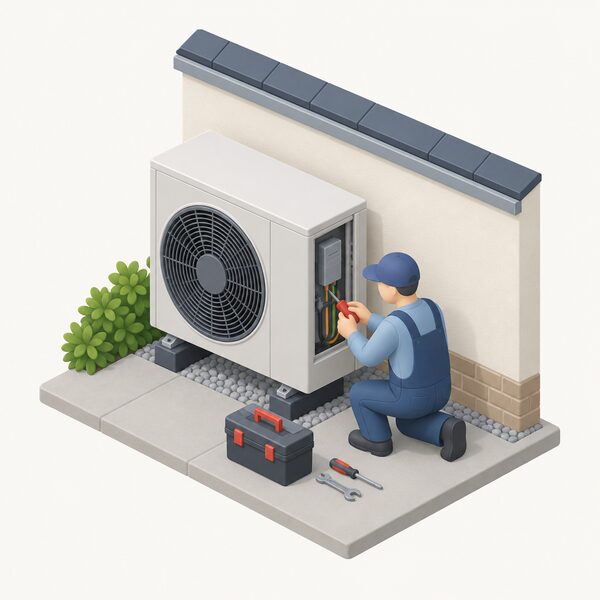
Dimplex supports the trade side with hands-on face-to-face training on its products, including heat pump principles and servicing, and a course covering the Edel hot water heat pump1. That matters to a household indirectly: the quality of the installation and the competence of the person servicing the unit shape how well it performs over its life. Wider support for installers and manufacturers to expand supply chains is also available across the UK22.
On heat loss calculation, no Dimplex service is documented. What the brand publishes is monitoring: the Dimplex Hub reports energy usage by heater, zone or site with hourly, 7 day, 28 day and annual views, and shows how much hot water is available at the set temperature when paired with a compatible Quantum cylinder18. Heat loss sizing itself sits with the installer, and the heat loss calculations material explains what that involves.
Planning is usually straightforward. Domestic heat pumps benefit from permitted development rights, which means that in most cases planning permission is not required, subject to certain limitations and conditions23. There are three types of domestic heat pump where permitted development rights apply: air source, ground source and water source23. In England, detached houses can install up to two heat pumps, while a non-detached house or a block of flats can install only one unit24. The English rules doubled the number permitted per detached dwellinghouse from 1 to 225. Scotland has its own permitted development framework, including work on rights to support the provision of new homes and domestic air source heat pumps26, and Wales and Northern Ireland have separate arrangements12.
For energy independence, the position is clear. A Dimplex hot water heat pump moves the hot water load off gas or off a resistive element and onto a heat pump cycle running on electricity, which can be bought on an off-peak tariff and, in principle, generated at home. It does not remove the household from the electricity grid or from a supplier, and it does not heat the house. The unit's controls and monitoring depend on the manufacturer's hub and, for the hot water visibility function, on a compatible Quantum cylinder18. Parts, servicing and any guarantee extension depend on Dimplex and its installer network. What it does offer is a way to decarbonise hot water without touching the radiators, which for a flat or a home not ready for a full heating conversion is a meaningful step rather than a complete one.
Sources26 cited
- Dimplex hot water heat pumps, Dimplex, 2026-09-17
- VAT energy saving materials: ground source heat pumps, GOV.UK, 2026-09-17
- Air source heat pumps, London Borough of Hammersmith and Fulham, 2026-09-17
- Public attitudes tracker: heat and energy use in the home, GOV.UK, 2025-10-28
- Air source heat pumps, Energy Saving Trust, 2026-07-16
- Edinburgh local heat and energy efficiency strategy, City of Edinburgh Council, 2023-12
- Dimplex panel heaters, Dimplex, 2026-09-17
- Heat pumps, REA, 2026-09-17
- Heat pump deployment statistics, GOV.UK, 2024-09-26
- MCS data dashboard glossary, MCS Certified, 2026-07-23
- About heat pumps, EHPA, 2026-04-24
- Heat pumps, nidirect, 2025-02-24
- Ground and water source heat pumps, MCS Certified, 2026-06-09
- VAT energy saving materials: water source heat pumps, GOV.UK, 2026-09-17
- The role of insulation in the Warm Homes Plan, NIA, 2026-03-02
- Ground source heat pump costs and savings, Which?, 2026-05-08
- Heat pumps, New Forest District Council, 2026-09-17
- Dimplex Hub, Dimplex, 2026-09-17
- What it's really like to have a heat pump, Which?, 2025-09-22
- Building Regulations Approved Document L Volume 1, Welsh Government, 2026-04
- An introduction to low-temperature hydronic heating systems, CIPHE, 2026-09-17
- Heat pumps and the energy system, UK Parliament POST, 2026-09-19
- Planning permission for heat pumps, Welsh Government, 2026-09-17
- Planning guidance for heat pumps, Richmond Council, 2026-04-22
- Rooftop solar for new builds, GOV.UK, 2025-06-06
- Permitted development rights to support provision of new homes, Scottish Government, 2026-03-10
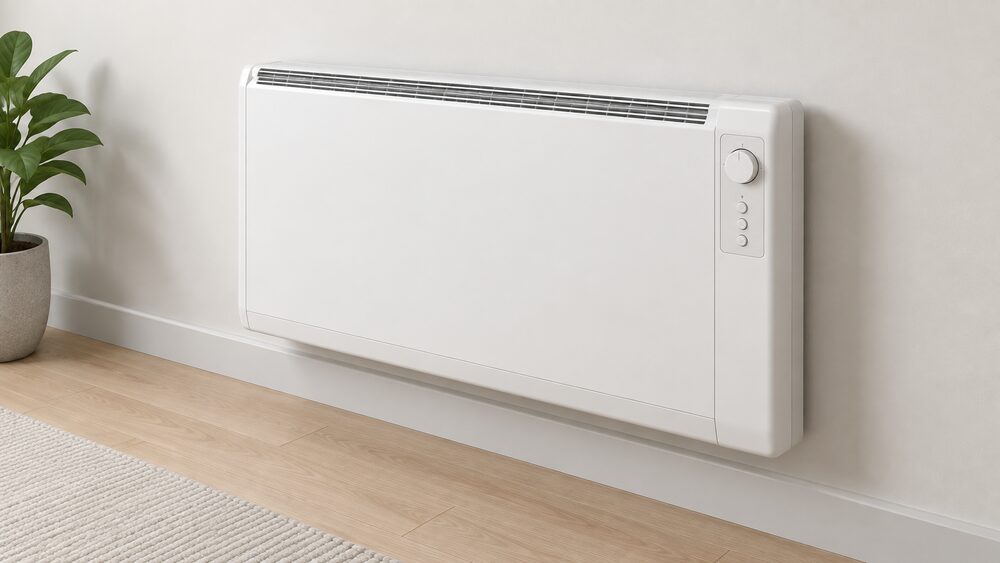 Dimplex Quantum storage heaterThe Dimplex Quantum is a high heat retention storage heater that charges overnight on off-peak electricity, with a claimed 27% running cost advantage over standard storage heaters, four timer modes, a PIN lock and a two-year guarantee that can extend to ten years on registration.
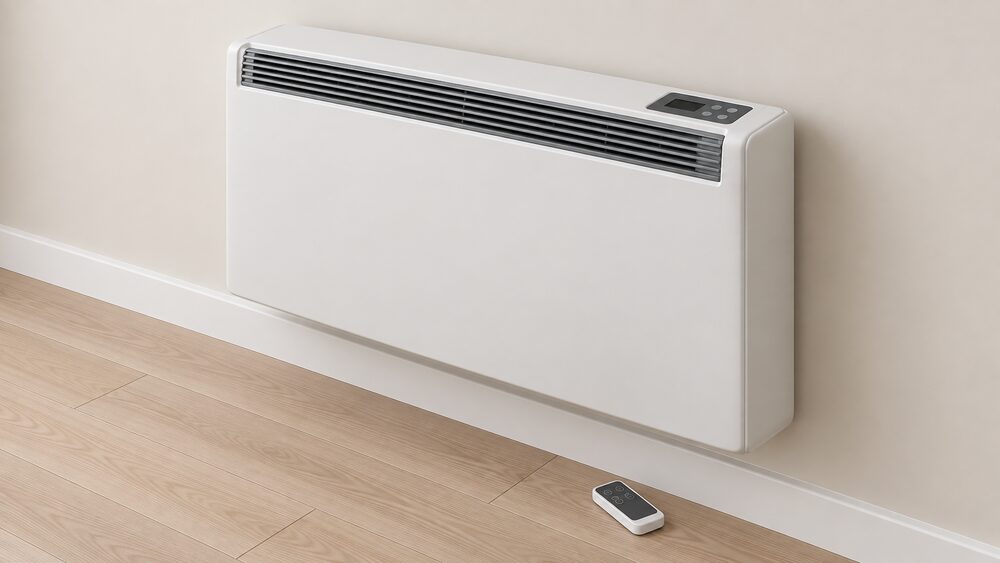 Dimplex storage heaters and electric heatingDimplex is the dominant UK storage heater brand.
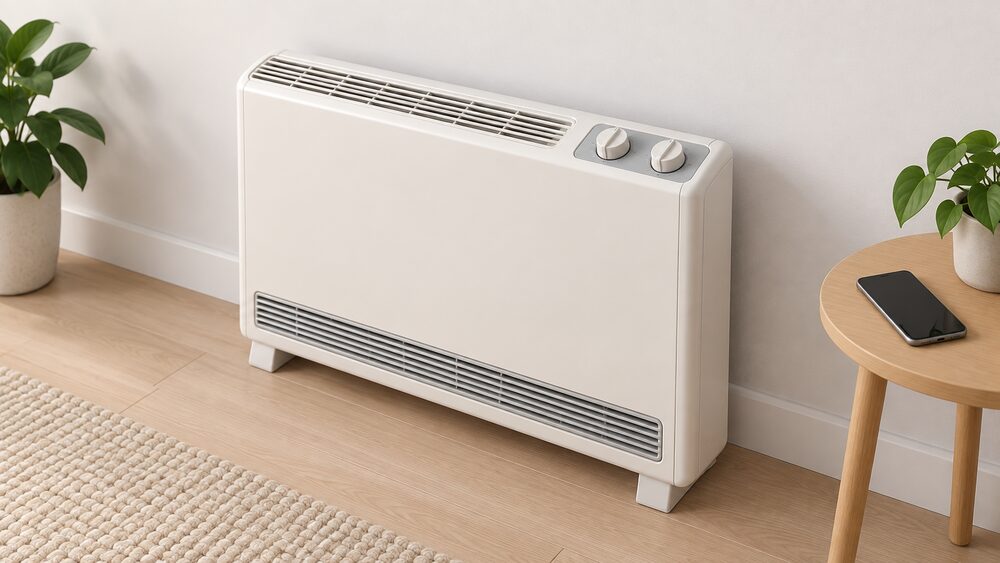 Dimplex Control, Alta Thermostats and Storage Heater ControlsHow the Dimplex Control app, Hub and Alta thermostats work with Dimplex storage heaters, panel heaters and hot water, what the app needs to run, and the guarantee terms and deadlines behind it.
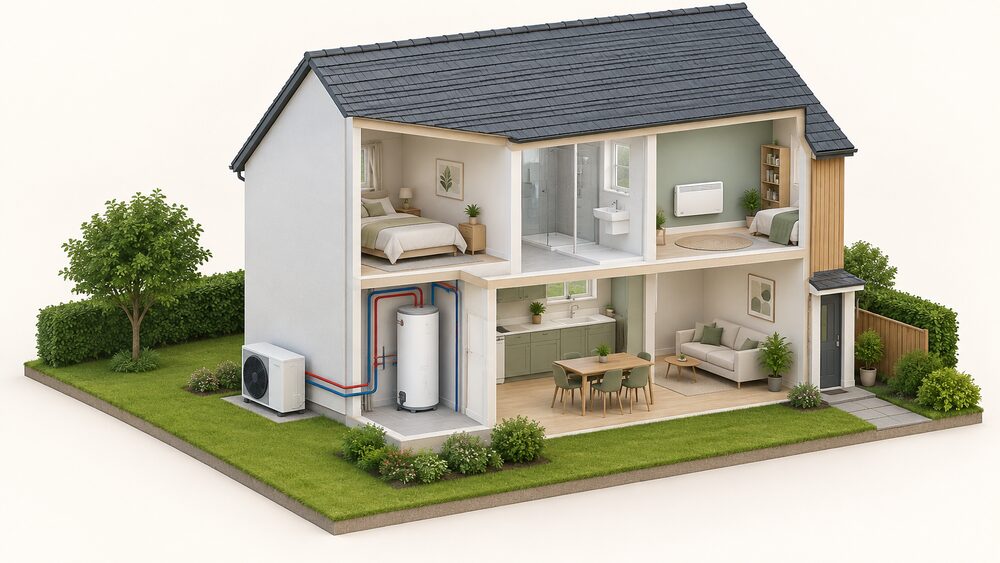 Dimplex electric heating and heat pumpsDimplex makes both storage heaters and heat pumps, so which one suits your home?