In this guide
Dimplex Control is the manufacturer's own smart control layer for Dimplex electric heating and hot water. It is an app, plus a separate Hub that connects supported products to the internet, plus radio frequency modules in some heaters. The app handles zoning, schedules, manual override and energy tracking; the Hub is what makes any of that work away from the house. For most Dimplex heaters, app control is not built in: it is bought as an extra.
The practical position for a household is that Dimplex Control adds convenience and visibility to electric heating that already runs on off-peak electricity, but it also adds a broadband connection, a manufacturer's cloud account and a Hub to the chain. Local controls on the heater continue to work without any of it. The app is available from Google Play and the Apple App Store1.
Dimplex also sells a second, lighter app route. CapaConnect controls Dimplex Wi-Fi enabled space heaters from a single app, and where a heater connects over Wi-Fi there is no need for any additional hardware2. That is a different architecture from Dimplex Control, and the two should not be confused when checking whether a particular heater needs a Hub.
The Dimplex Control app: zones, schedules and energy tracking
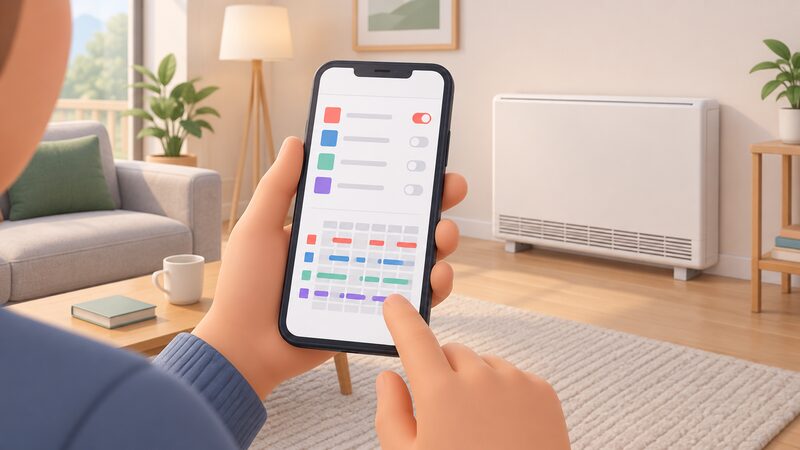
The app is described by Dimplex as being for remote heating management and energy usage monitoring, and its functions are listed as control, user access sharing, scheduling, energy usage monitoring, quick manual override, and site and zone management1. In practice that means a household can group heaters into zones, run them individually or together, and see what each is using.
Energy tracking is the part with the most detail behind it. Supported products can be operated individually or by zone, and the energy usage of each can be tracked7. The Hub gives that monitoring a time dimension: energy usage can be viewed by heater, zone or site on an hourly, 7 day, 28 day and annual basis4. For a household on an off-peak tariff, that is the difference between knowing the storage heaters ran and knowing which one ran and when.
Schedules are managed at appliance level. They can be viewed and modified at appliance view from the settings menu, and copied to other days through the User timer edit screen1. That copy function matters on a system with several heaters, because a pattern built once can be repeated rather than re-entered on each appliance.
Remote access is genuinely remote: Dimplex states that heating can be monitored and controlled from anywhere in the world using the app and a mobile data connection1. The app also supports fault spotting and management of multiple sites from one app1. It is built on the Microsoft Azure Cloud platform1.
The Dimplex Control Hub: what it supports and what it needs
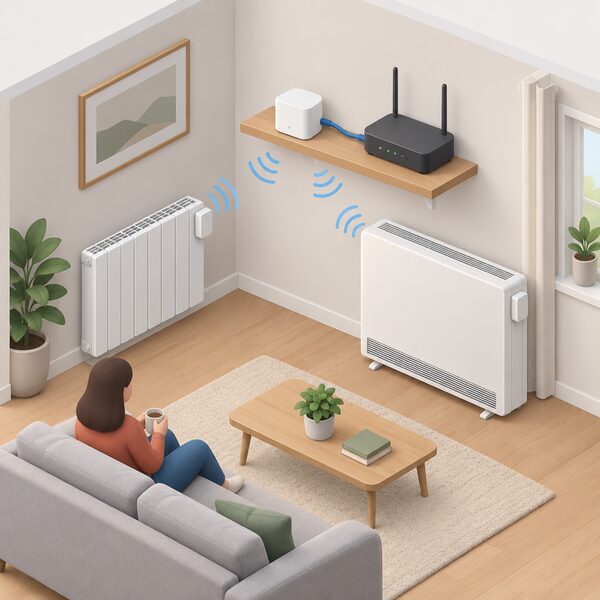
The Hub is the bridge. Dimplex states plainly that purchase of a Dimplex Hub is required to connect to the internet and communicate with supported Dimplex products1. It connects by Ethernet or Wi-Fi4, and it acts as the link between RF Dimplex products and the Dimplex Control Cloud server1.
What it can control is broad within the electric range: supported electric radiators, panel heaters, high heat retention storage heaters, hot water cylinders and hot water heat pumps, individually or by zone, with energy usage tracking and remote diagnostics1. Dimplex describes the scope as controlling and monitoring heating and hot water1.
The catch is that the Hub is not the only extra. Several products need a radio frequency module as well.
| Product | What app control needs |
|---|---|
| Q-Rad electric radiator | Integrated RF module; bought with the Hub11 |
| PLXE panel heater | An RF module for each heater plus the Hub13 |
| BPH bathroom panel heater | Hub and RFM module, both sold separately14 |
| Quantum storage heater | Built-in RF module as standard, plus the Hub and app15 |
Setting up the app: GDID codes, QR scanning and adding products
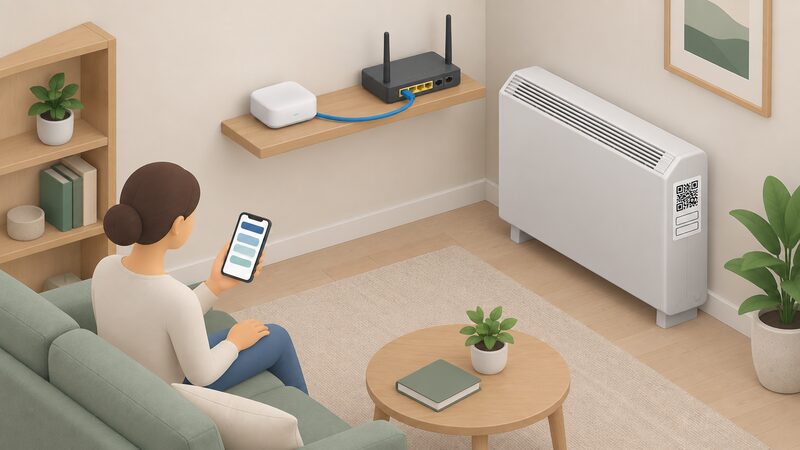
Set-up runs through the app itself. An account is created, and a product is added using its GDID code, either by scanning the QR code or by entering the code manually1. Dimplex describes easy set-up with a step-by-step wizard, connecting the product to a Hub and gaining control through the app1. The Hub page repeats that the app features a step-by-step setup wizard so the system can be used quickly without leaving the app4.
There are two conditions worth knowing before starting. Dimplex Control requires the creation of a Dimplex Control account and is subject to agreement of the GDHV Internet of Things Terms and Conditions, Privacy Policy and Cookie Policy4. And initial set-up, updates and all usage require a broadband internet connection for both the system and the app, with internet service provider and mobile carrier fees applying1.
Replacing a controller is a specific process rather than a swap:
- Remove the old product from the site, zone and account3.
- Add the heater with the new controller as a new product3.
- Scan the QR code supplied with the replacement controller3.
Dimplex Alta thermostats: models, prices and UK stock
The Alta range sits in Dimplex's panel heater line rather than in the smart control range, and the published technical detail is thin. The Alta Wi-Fi panel heater is described as digitally controlled with an electronic thermostat accurate to plus or minus 0.2 degrees C16. That is the accuracy figure Dimplex publishes for the model.
On price, the position is that Dimplex does not publish a list price for the Alta in the material available, and distributor listings for the Alta DTD4R10 disagree with each other: one shows £204.23 against a regular price of £291.75, another shows £170.19 against a regular price of £243.136. Prices for Dimplex heating are otherwise installer or retailer quoted.
Stock and availability are not stated in the published material for the Alta. Dimplex does note elsewhere in its range that some products may only be available in specific regions, so local availability is worth confirming with a retailer before ordering15. A trade price list for Dimplex and Xpelair takes effect on 1 October 2026, replacing the list effective from 1 October 2025, which is the document a trade buyer would work from6.
For wider context on how electric panel heaters are controlled and zoned, see electric heating controls.
Storage heater controls: from input and output dials to digital timers and app control
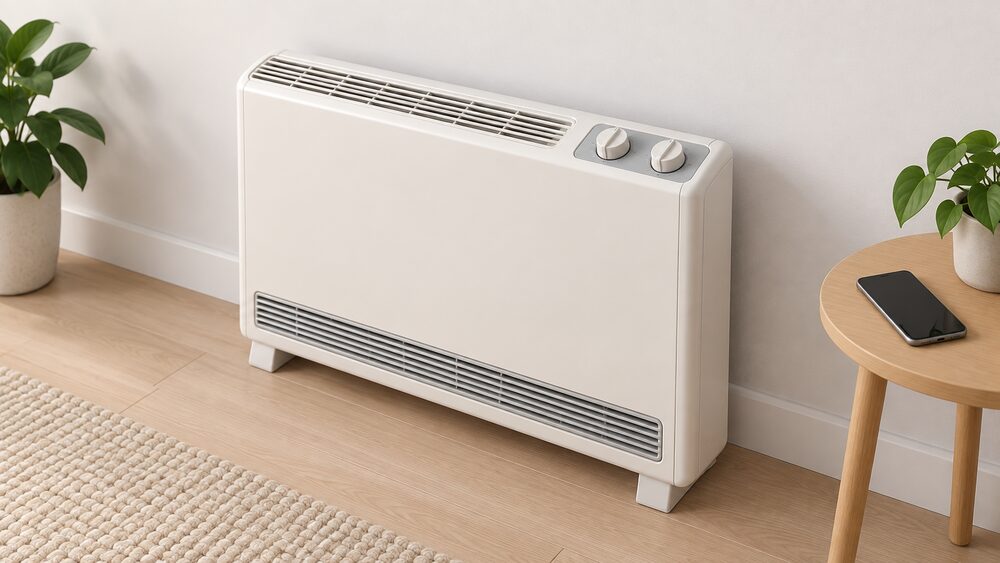
Storage heaters work by storing thermal energy generated during off-peak hours from low-cost electricity and releasing the heat gradually through the day17. The controls that govern that cycle have changed substantially. Older heaters have manual controls; more modern storage heaters use digital controls18.
The traditional arrangement is two dials. Most storage heaters have two controls labelled input and output, sometimes called boost19. Input controls how much heat is stored overnight, and output controls how quickly heat is released during the day19. Automatic charge control does the same job electronically, regulating how much energy is used by storing more or less heat at night18.
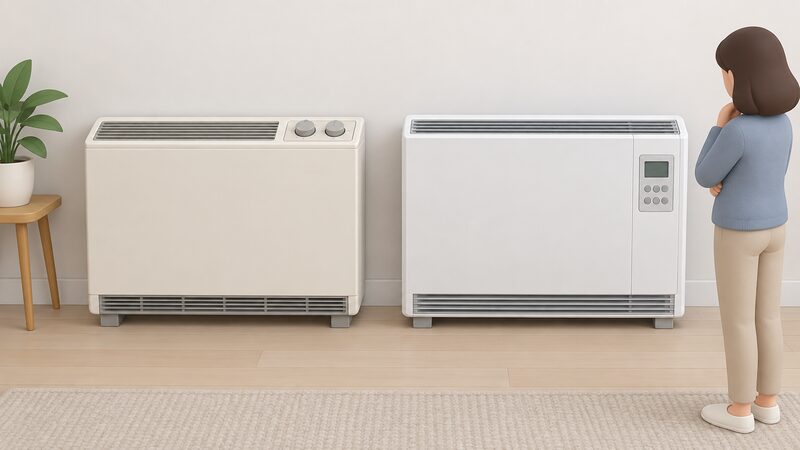
Dimplex's current storage heaters have digitally controlled electronic thermostats and a 7 day programmable user timer15. The XLE Slimline adds dynamic storage calculation, adjusting the amount of energy stored to meet the user's requirements without wastage5. The Quantum has thermostats and a digital programmer, which independent guidance describes as making them much more responsive to needs20.
App control is the newest layer. Quantum can be controlled remotely using the Dimplex Control smartphone app when purchased together with the Hub, and it has a built-in RF module as standard1. Independent guidance notes that depending on the model, a storage heater might be controllable with an app18, and that many modern storage heaters feature a thermostat and timer through a programmer or mobile app21. Modern units also commonly offer remote Wi-Fi controls, programmable timers, fans to help distribute heat and open window detectors22.
What app control means for storage heating on Economy 7

Storage heating depends on a tariff as much as on a control. Economy 7, Total Heat with Total Control and Comfort Plus are meters and tariffs designed to work with storage heating23. Dimplex notes that users can take advantage of Economy 7 tariffs and remote control with the Dimplex Control app7.
The gain from app control on an off-peak tariff is precision. A storage heater charges overnight and releases through the day, so the decisions that matter are how much is stored and when it is let out. A digital programmer or app schedule lets those decisions be changed without touching the heater, and energy tracking shows what each heater actually drew. That is a real improvement over a single input dial set in October and left alone.
The dependence is equally real. App control requires the Hub, a broadband connection, a Dimplex Control account and the manufacturer's cloud service, and Dimplex states that all usage requires a broadband internet connection1. If the broadband fails, the heater's own controls still work, but scheduling from elsewhere and energy monitoring do not. There is also a wider metering question: the radio teleswitch service that switches many off-peak tariffs is being withdrawn, which affects how some storage heating tariffs are timed24. Households in Scotland have separate guidance on running storage heaters economically22.
For the underlying control mechanics, see storage heater controls and using heating controls with time-of-use tariffs.
Dimplex guarantee and registration: terms, deadlines and claims
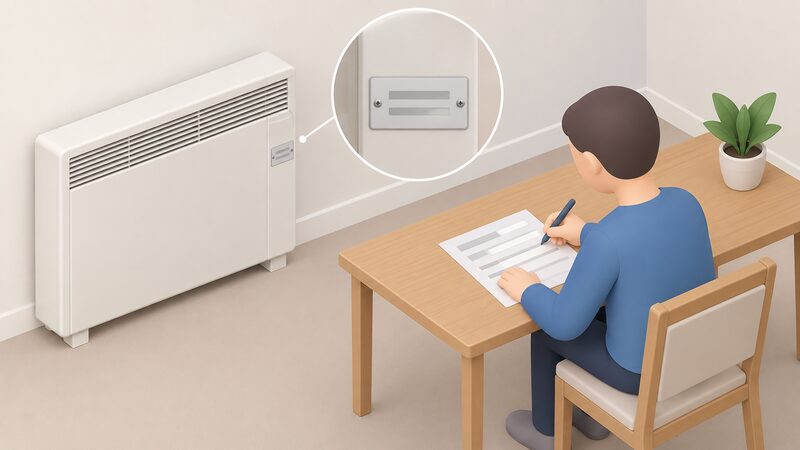
The guarantee has two layers. All Dimplex products come with a two-year standard guarantee, and registering within 28 days of purchase or installation brings an extended guarantee on select ranges5. The guarantee terms document states that to activate the free extended guarantee the product must be registered within 28 days of the date of purchase6. The base term in the terms document is twelve months unless otherwise stated, so the two-year figure is the product-page position and the twelve-month figure is the general terms position; the documents differ, and the longer figure is the one Dimplex publishes against products.
Several conditions narrow the cover:
- The guarantee is given only for products purchased and used within the United Kingdom6.
- It is void if the product is resold6.
- It does not apply to graded sales, meaning products bought as seconds or refurbished goods6.
- Optional extras supplied by GDHV, such as wall brackets, carry twelve months against manufacturing faults6.
- Gas products must be installed by a qualified Gas Safe engineer6.
Claims run through 0344 879 35886. The Glen Dimplex helpline is open Monday to Friday, 9.30am to 12.30pm and 13.15pm to 16.00pm, and Dimplex engineers work Monday to Friday, 9.00am to 5.00pm6. The same number is used for the dehumidifier safety notice, where a replacement can be arranged26.
Replacement terms are worth reading before relying on the guarantee. A replacement is an identical model or the nearest equivalent, the original guarantee continues to apply to the replacement, and the new product does not come with a new guarantee; disconnection and reinstallation costs are not borne by GDHV unless agreed in writing6. The guarantee does not diminish statutory consumer rights, and the consumer contract is held with the retailer6.
Where Dimplex control falls short
The limits are structural rather than faults. Dimplex Control is a cloud service: it runs on the Microsoft Azure platform, requires an account, and requires a broadband connection for set-up, updates and all usage1. A household that wants heating control to keep working through an internet outage keeps the heater's own controls, not the app.
The hardware requirement is the second limit. The Hub is sold separately and is required in all cases to connect to the internet and communicate with supported products1. On several models an RF module is needed as well, per heater13. That is a cost and a commissioning step that a buyer comparing Dimplex with a Wi-Fi-native product should count.
The third is that app control does not change the fuel. Dimplex storage heaters draw off-peak electricity15, and the household remains on the electricity grid and on a supplier. Independent guidance notes that solar panel electricity could be used to charge storage heaters during the day so there is warmth in the evening27, and that solar panels can be paired with a battery to store excess generation28, with a battery also used to charge an on-site storage system29. Electric thermal store boilers can also be powered using solar panels30. None of that removes the grid connection; it changes what is drawn from it.
For the wider picture, see heating controls and energy independence and smart heating control security and data.
Sources30 cited
- Dimplex Control, Dimplex
- Smart Controls, Dimplex
- CapaConnect, Dimplex
- Dimplex Hub, Dimplex
- XLE Slimline Storage Heater, Dimplex
- Guarantee Terms and Conditions, Dimplex
- Quantum Brochure, Dimplex, July 2025
- Residential Refurbishment, Dimplex
- Residential Housing, Dimplex
- Residential Apartments, Dimplex
- Q-Rad, Dimplex
- Q-Rad Electric Radiator, Dimplex
- PLXE Panel Heater, Dimplex
- Bathroom Panel Heater, Dimplex
- Storage Heaters, Dimplex
- Alta Wi-Fi Panel Heater 40cm, Dimplex
- Installed Heating, Dimplex
- A Guide to Using Electric Storage Heater Controls, Energy Saving Trust, 21 May 2026
- How to Use Economy 7 Storage Heaters Efficiently, Power NI, 20 September 2026
- Dimplex Quantum Night Storage Heaters, Centre for Sustainable Energy, June 2026
- Night Storage Heaters, Centre for Sustainable Energy, October 2025
- Electric Central Heating, Which?, 22 September 2025
- How to Save Energy When You've Got Electric Storage Heaters, Home Energy Scotland, January 2025
- Radio Teleswitch, Energy Networks Association, 17 September 2026
- Glen Dimplex Hot Water Cylinders, Electrical Safety First
- Product Safety Notice, Dimplex
- Storage Heaters, Which?, June 2026
- Solar Photovoltaic (PV), MCS Certified, 30 July 2026
- Solar Panels, East Herts Council, 17 September 2026
- Underfloor Heating, Centre for Sustainable Energy, November 2025
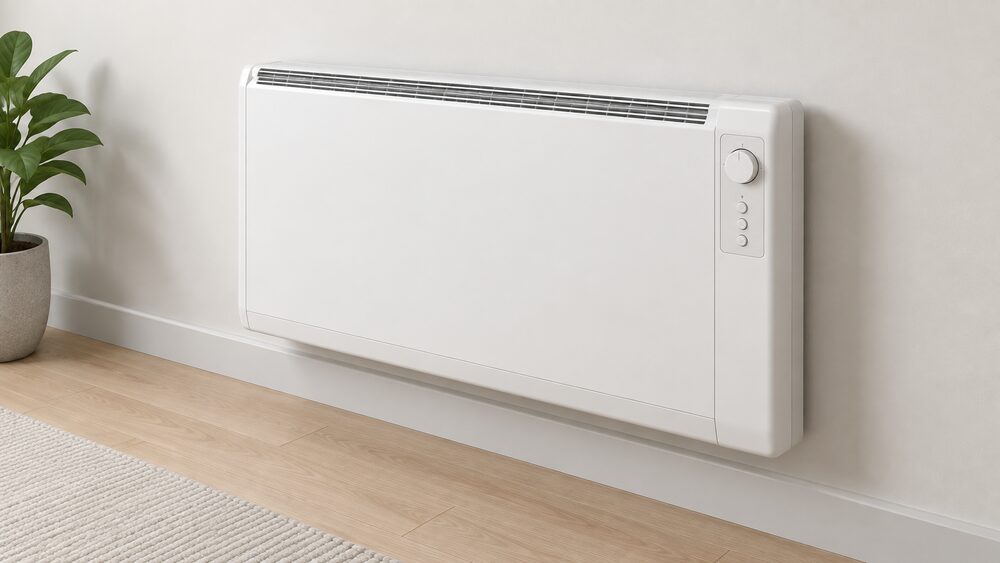 Dimplex Quantum storage heaterThe Dimplex Quantum is a high heat retention storage heater that charges overnight on off-peak electricity, with a claimed 27% running cost advantage over standard storage heaters, four timer modes, a PIN lock and a two-year guarantee that can extend to ten years on registration.
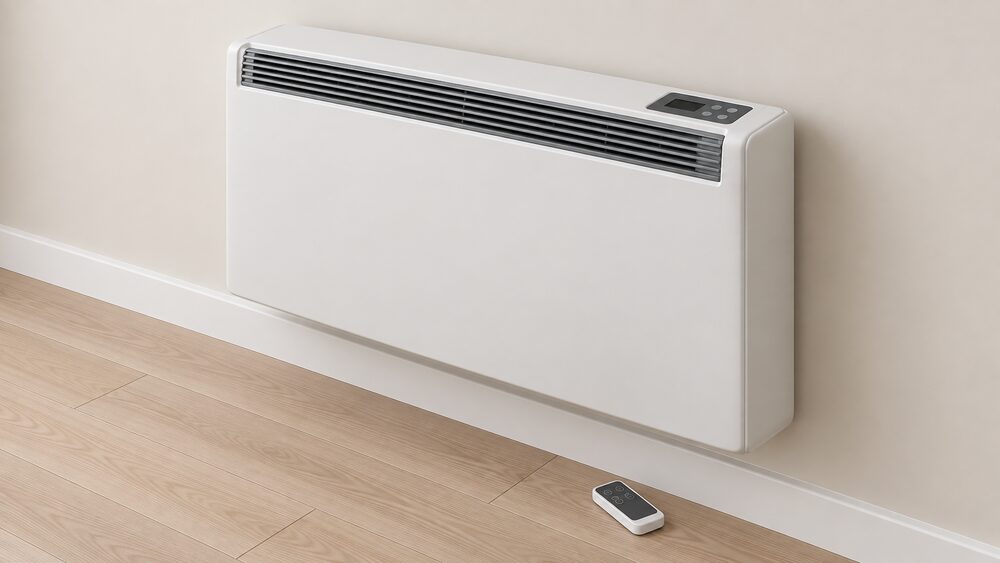 Dimplex storage heaters and electric heatingDimplex is the dominant UK storage heater brand.
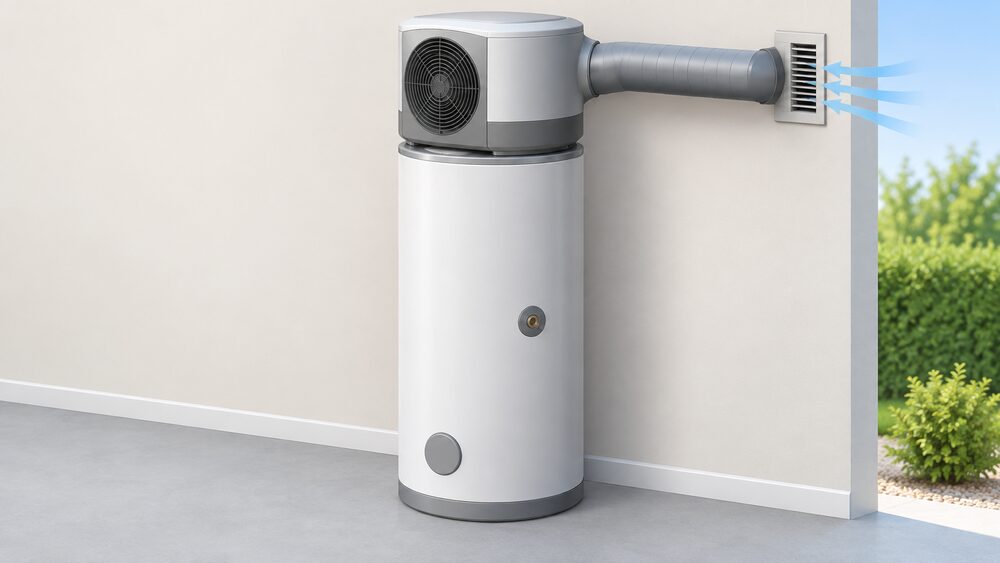 Dimplex heat pumps and hot waterDimplex heat pumps are mainly for hot water, not for heating your whole house.
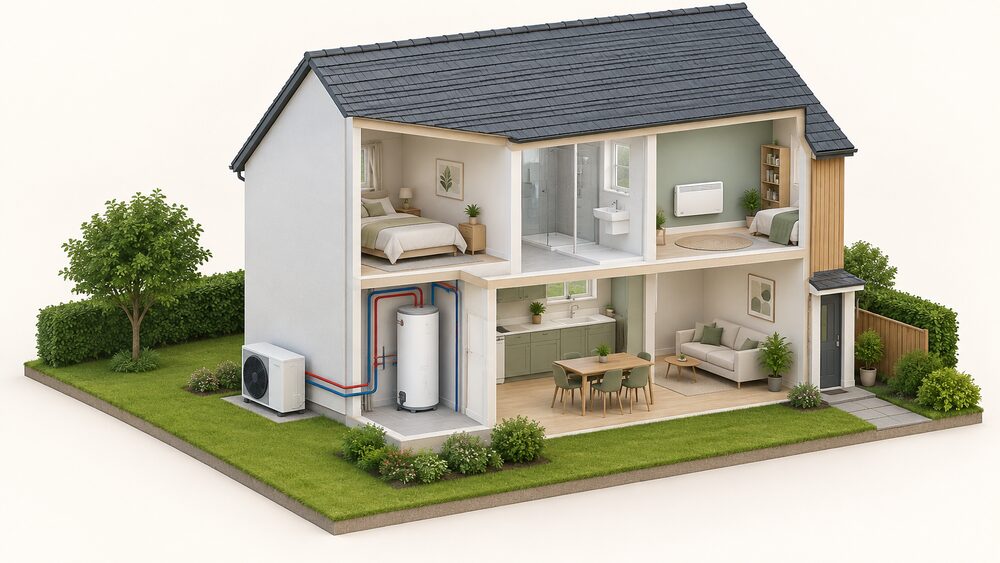 Dimplex electric heating and heat pumpsDimplex makes both storage heaters and heat pumps, so which one suits your home?