
In this answer
Short answer
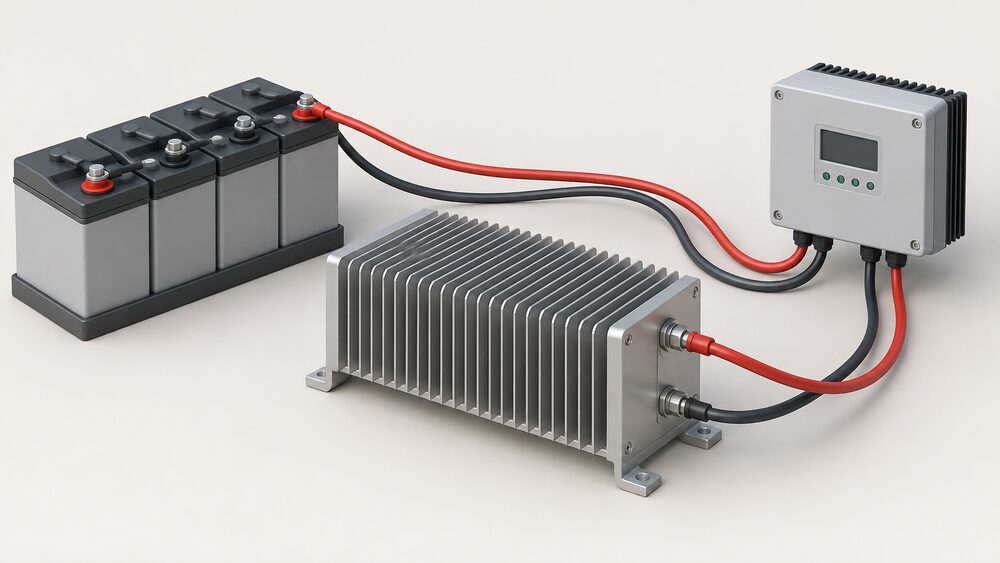
A dump load is the component that absorbs electricity a wind or hydro turbine has generated but cannot use or store. When the battery bank is full, the diversion controller switches the surplus into a resistive load, usually a heating element, so the turbine stays loaded and its rotor does not overspeed. Most small wind turbines generate direct current (DC) electricity and store it in a battery, and the dump load is part of that battery-based circuit1.
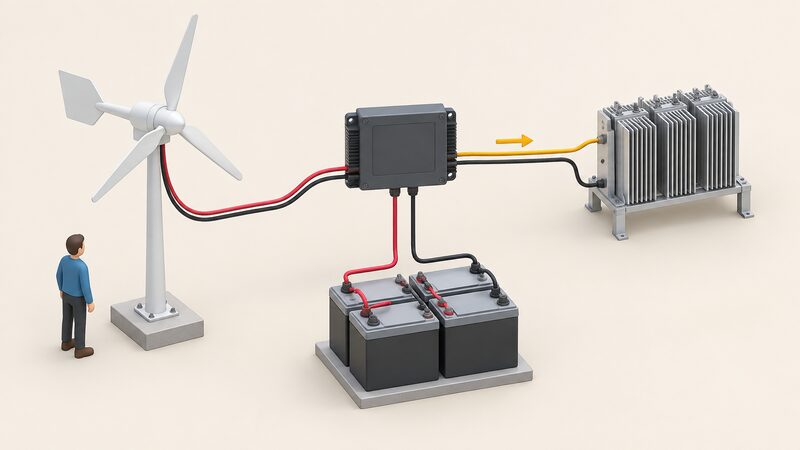
The principle matters because a wind turbine cannot simply be disconnected. With no load, the alternator has nothing to hold it back and the rotor accelerates. A dump load gives the controller somewhere to send power at the moment the battery reaches full charge. The same logic applies to micro hydro, where a ballast or dump load keeps the turbine governed when demand falls away.
Sizing is the practical question. Individual wind turbines vary in size and power output from a few hundred watts to two or three megawatts, and a typical domestic system for a home would be 2.5 to six kilowatts (kW), depending on the location and size of the house1. The dump load has to be able to absorb the machine's peak output, not its average, which is why dump loads are usually specified with headroom above the nominal turbine rating.
What a dump load is and why wind and hydro turbines need one
A dump load is a resistor bank, an immersion element or another resistive device wired into the turbine's control circuit. Its job is to take power that would otherwise have nowhere to go. In a battery-based system the controller watches battery voltage; once the battery is full, it diverts the incoming current into the dump load rather than letting the battery overcharge.
The alternative, disconnecting the turbine, is not available on most small machines. A permanent magnet alternator with no load has almost no braking force, so the rotor speeds up until something fails. The dump load provides the electrical braking that keeps the machine within its design limits. This is why the dump load is not an optional accessory on an off-grid wind system: it is part of the charge control architecture.
The same requirement appears in hydro. A run-of-river turbine with a fixed water supply cannot be throttled instantly, so surplus generation has to be burned off in a ballast load when the battery is full or demand drops. The dump load is therefore the safety valve of the whole system, and its failure is a system failure, not a minor fault.
For a household, the dump load is what makes an off-grid wind or hydro system self-contained. It removes the need to export, and it removes the need for the grid to absorb anything. The dependence that remains is on the battery bank and the controller: the household is independent of the grid but not of its own storage, and batteries need replacing. If your system is off-grid you will also need to replace the batteries2, and for battery storage systems, typical battery life is around six to ten years, depending on the type1.
How diversion controllers match surplus power to the load
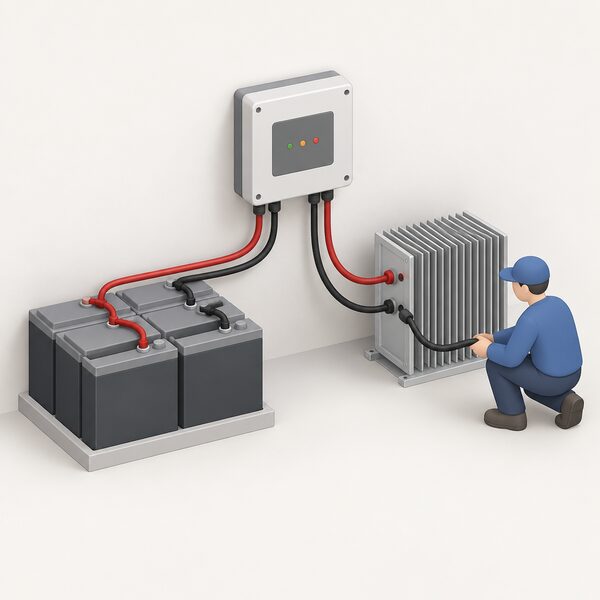
The diversion controller is the device that decides when to divert. It measures battery voltage and, at a set threshold, connects the dump load across the turbine output. Leading Edge dump loads are designed to be connected to Morningstar TriStar TS-45 or TS-60 diversion controllers to bleed off surplus power when batteries are fully charged5. The controller and the load are a matched pair: the controller sets the voltage at which diversion begins, and the load sets how much current can be absorbed.
Matching is not only about watts. The controller has a maximum current rating, and the dump load's resistance determines how much current flows at the battery voltage. A load with too little resistance draws too much current and can exceed the controller's rating; too much resistance and the surplus is not fully absorbed, so battery voltage keeps climbing. The controller's specification sheet gives the resistance and current range it expects.
Diversion is not confined to wind and hydro. A solar diverter switch can power the immersion heater in a hot water tank for free, storing hot water for you to use later6, and a PV diverter switch can power your hot water tank's immersion heater, storing hot water for later use7. The control principle is the same across technologies, which is why diverter products are often sold for solar and then applied to wind or hydro with a different controller.
Some controllers go further and manage several loads at once. One inverter product distributes consumption among devices in a desynchronised way, reducing the load on the electrical installation8, and a solar controller can divert excess solar power to the home's compatible third party heat pumps9. These are grid-connected products rather than off-grid dump load controllers, but they show the same idea: surplus electricity is steered to something useful rather than curtailed.
Sizing the dump load to your turbine's output
Sizing starts with the turbine's peak output, not its rated average. Small wind turbines for a single property may have an electricity generating capacity of 10kW10, while building integrated turbines mounted on gable walls, roof-tops or poles are rated at 1KW to 6KW depending on the model1. Bigger units used to power homes and businesses can generate between 0.6 and 50KW2. The dump load must be able to absorb the top of that range.
Output scales steeply with wind speed and rotor size, which is why a dump load sized on average output will be overwhelmed. When you double the diameter of a rotor, it makes the swept area four times as big11, and doubling the wind speed will yield eight times as much power11. A machine rated at 1 kW in a moderate wind can produce several times that in a gust, and the dump load has to take it.
The calculation method for turbine sizing is set out in the MCS planning standards, which specify rounding to two decimal places at step 3 and rounding to one decimal place at step 5 of the worked calculation12. Those steps govern how a system's expected output is derived for planning purposes, and the same output figure is what a dump load has to be matched against.
| Turbine class | Typical output | Dump load implication |
|---|---|---|
| Building integrated, 1KW to 6KW1 | 1 to 6 kW rated | Load rated above the top of the model range |
| Typical domestic system1 | 2.5 to six kW | Load sized for peak, not average |
| Single property machine10 | up to 10kW | Larger resistor bank and higher current controller |
| Larger units2 | 0.6 to 50KW | Multi-stage or proportional diversion |
In practice, dump loads are specified by the controller manufacturer for a given system voltage and current, and the element is chosen to suit. Where a household is replacing a turbine, the new system should have a kWp capacity that is at least that of the original installation13, which also means the dump load capacity should not be reduced.
Water heating, space heating and other common diversion uses
The most common domestic dump load is hot water. A solar diverter switch can power the immersion heater in a hot water tank for free, storing hot water for you to use later6, and the same arrangement works on a wind or hydro system with a suitable controller. The heat is stored in the cylinder and used later, which makes the cylinder itself part of the storage system alongside the battery.
Space heating is the next step up. Heat pumps take the gathered heat and apply it usually for space heating and hot water14, and a diverter can be configured to feed a heat pump or a resistive heater. The most common use for renewable heat is the supply of hot water or space heating15, so diversion to heat is a natural fit for a household that already has a cylinder or a heat pump.
Diversion is not limited to one technology. Smart diverters include other microgeneration systems such as ground and air source heat pumps12, and water turbines are treated as energy-saving materials in the relevant VAT rules16. That matters for cost: the VAT position on energy-saving materials and grant-funded heating supplies is set out in HMRC's guidance12, and a household installing diversion equipment alongside a qualifying microgeneration system should check how the supply is classified.
Other uses exist but are less common in a domestic setting. An anchor load, in heat network terms, is defined by a threshold of at least 500MWh of heat per year17, which is far beyond a single house and belongs to district heating rather than home diversion. For a household, the realistic options are the hot water cylinder, a resistive space heater, or a heat pump, with the cylinder the simplest and most widely used.
Wiring and safety: where the dump load sits in the system
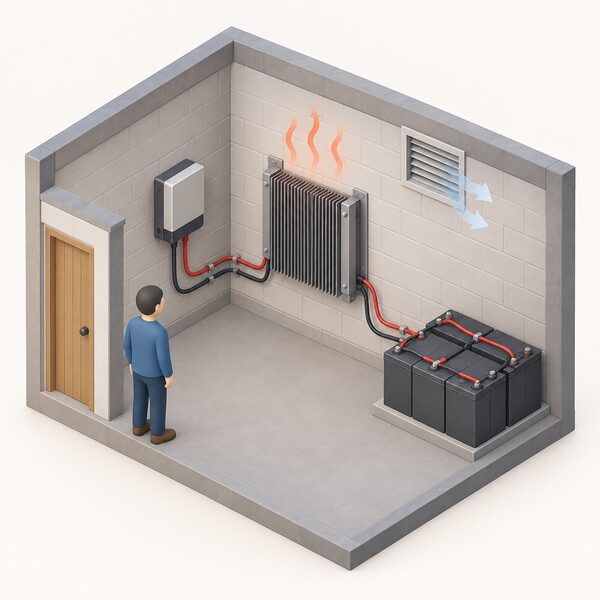
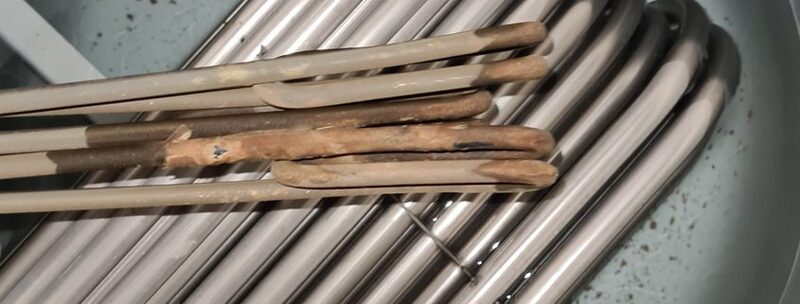
The dump load sits in the control circuit, between the controller and the battery bank, not at the turbine. That placement keeps the high-current switching gear in one accessible location and shortens the cable runs to the load. It also means the dump load is inside the building, where its heat output has to be managed.
Ventilation and clearance matter because the load dissipates real power as heat. A resistor bank rated at several kilowatts gets hot enough to require separation from combustible material, and an immersion element must be fitted with a working thermostat and safety cut-out. Insulation resistance testing of the installation uses a 500V DC test with a minimum of 1 megohm4, which is the standard check that the circuit is sound before it is energised.
Battery safety is the other half of the picture. Poor quality and substandard components, flawed design, physical abuse and improper charging or discharging can all cause thermal instability18. A dump load that fails to absorb surplus current leaves the battery being overcharged, which is exactly the improper charging condition that safety guidance warns about. The dump load is therefore a battery safety component as much as a turbine safety component.
The turbine's own siting affects the wiring. Systems work best in exposed, windy locations and are less suitable for built-up or sheltered areas19, and turbines should ideally be located on a hilltop or raised structure, away from obstructions like trees or other buildings20. Higher placements catch stronger, steadier winds20, so the cable run from turbine to controller can be long, and voltage drop over that run has to be allowed for in the system design.
Where a turbine is attached to the house, size, weight and force exerted on fixed points would be considerable21, and building regulations approval may be needed. There are two types of installation to consider: roof mounted and free-standing10, and pole-mounted machines stand on their own pole, usually placed in a clear, open area where there is plenty of wind20.
What happens when the battery is full and the load fails
When everything works, the sequence is undramatic. The battery reaches full charge, the controller connects the dump load, and surplus generation becomes heat. In a battery system with no solar panels, charging stops when the battery is full and the battery discharges when the next cheap tariff period ends, automatically22. The dump load is what makes that automatic stop safe on a wind or hydro machine, because the turbine still has a load to push against.
When the dump load fails, the controller has nothing to switch into. Battery voltage rises, the battery is overcharged, and the turbine may overspeed if the controller also disconnects. This is the failure mode that makes the dump load worth specifying properly and worth checking during maintenance. Battery storage systems for wind turbines have a typical battery life of around six to ten years, depending on the type1, so the dump load and the battery are usually replaced or reviewed on a similar cycle.
Failures are not always dramatic. In electric vehicle trials, cars needed battery replacements because a charging service glitch sent excessive status queries, draining 12-volt batteries beyond recovery23. The lesson for a home system is that control electronics and standby loads can quietly flatten a battery, and a dump load circuit that is not monitored can fail without the household noticing until the next full charge.
The dependence that remains in an off-grid wind or hydro system is therefore on the battery, the controller and the dump load, all of which are the household's own equipment. There is no supplier to call and no grid to absorb a fault. That is the trade: independence from the network, in exchange for responsibility for the components that keep the machine loaded. Pairing a turbine with a battery storage system to store excess electricity for when it is most needed20 is the standard arrangement, and the dump load is the part that protects it.
Sources23 cited
- Wind, nidirect, 2026-05-18
- Wind turbines, Uswitch, 2026-01-06
- Microgeneration energy guide, Uswitch, 2026-06-08
- Section 722 EV charging guide, Elec-Mate, 2026-07-02
- Off-grid wind turbines, Wind and Sun, 2026-09-20
- Solar panels, London Borough of Hammersmith and Fulham, 2026-09-17
- Solar panels, Home Energy Scotland, 2026-09-20
- Inverter Smart Adaptive, Rointe, 2025-09-23
- SolarEdge ONE Controller, SolarEdge, 2026-09-17
- Wind power, Electricity North West, 2026-09-19
- Wind power, Centre for Alternative Technology, 2025-06-27
- VAT energy-saving materials and grant-funded heating supplies, HM Revenue and Customs, 2026-09-17
- Approved Document L, Volume 1: Dwellings, HM Government, 2026
- Heat pumps, Renewable Energy Association, 2026-09-17
- Solar thermal article, Solar Heat Europe, 2026-09-17
- Energy-saving materials, legislation.gov.uk, 2026-09-17
- Heat networks delivery plan, Scottish Government, 2022-03
- Battery safety campaign, Electrical Safety First, 2026-09-17
- Wind turbines, Energy Saving Trust, 2026-05-20
- Small wind turbines, MCS Certified, 2026-08-18
- Building regulations, Planning Portal, 2026
- Battery storage, Energy Saving Trust, 2026-08-19
- Making home energy management work for consumers, Energy Systems Catapult, 2026-02-12
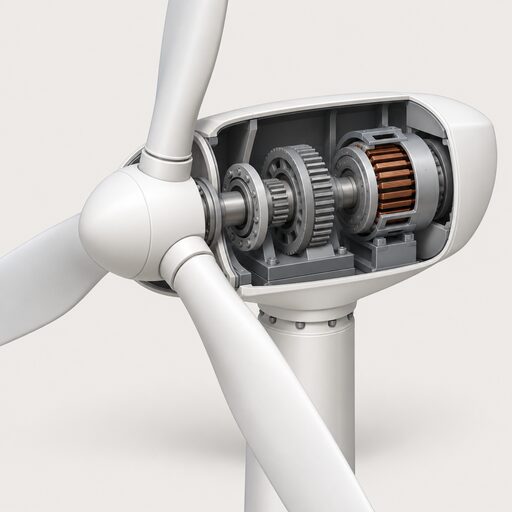 Domestic Wind TurbinesCan a wind turbine really power a home, and is your site windy enough?
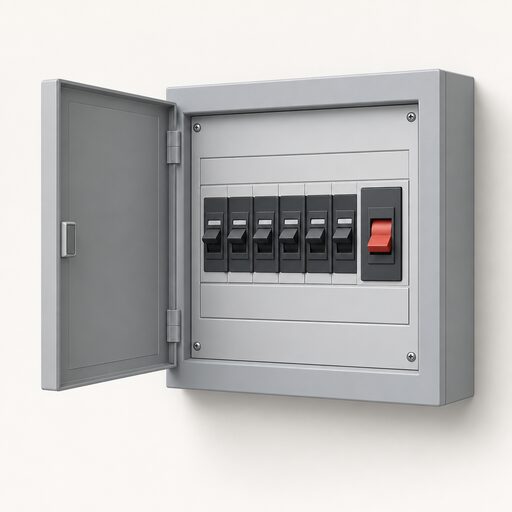 Load Management for ChargersWill a home charger trip the main fuse when the oven, shower and car all draw power at once?
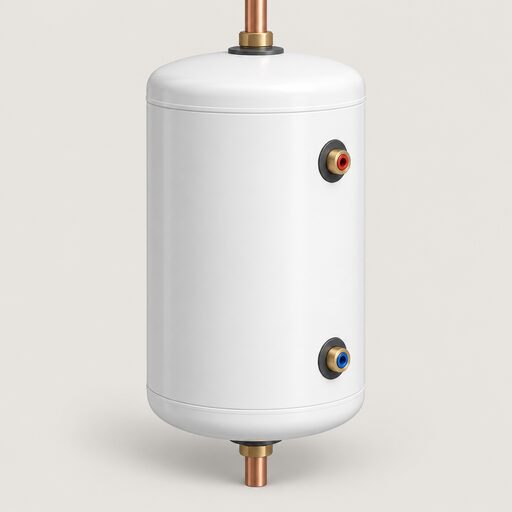 Buffer Tanks and VolumisersA buffer tank adds water volume to a heat pump system, but plenty of homes do not need one.
 Inverters and Inverter-ChargersIf the power goes off, what actually keeps your fridge and boiler running?
 Prepare Energy for StormsWhat to do before and during a storm or flood warning to protect meters, the consumer unit, heating equipment and fuel tanks.
 Hot Water Cylinder ControlsWhat temperature should a hot water cylinder thermostat be set to, and does it need its own timer apart from the heating?