
In this answer
Short answer
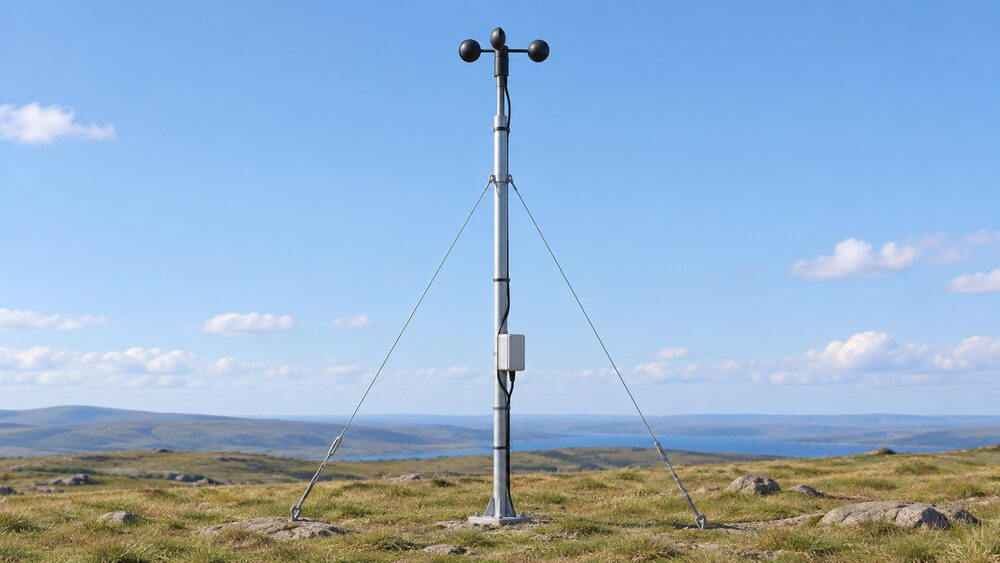
A domestic wind turbine is bought on the strength of one number: the average wind speed at the exact spot where the mast will stand. Get that number wrong and the machine is an expensive ornament. The Energy Saving Trust recommends installing an anemometer, or wind gauge, in the intended location for at least three months before considering a home wind turbine1. Its field trial work on small-scale wind describes anemometry installed at sites for a minimum period of three months to measure the actual local wind speed before a decision is taken1.
That three-month figure is a floor, not a target. Northern Ireland's official guidance is blunter: ideally, a professional assessment of the local wind speed should be carried out for a full year at the exact location where the turbine is planned, before proceeding2. The gap between three months and a year is the gap between a screening exercise and a bankable estimate, and it exists because wind is seasonal.
The threshold that decides whether any of this is worth doing is five metres per second. The Energy Saving Trust advises installing only in areas with at least 5 m/s of wind or more1, and the same figure appears in official guidance as the point at which a turbine should be considered2. Below it, output falls away and the payback case weakens sharply.
Why measuring wind first matters
Every energy technology is bought on a measurement, and wind is the least forgiving of them. The same logic runs through retrofit practice, where the fabric of a building is assessed before more invasive measures are considered5, and through scheme design, where inspection and verification are built into the process from the start6.
Wind differs from solar in one crucial respect. A solar panel's resource is broadly predictable from latitude and orientation; a turbine's resource depends on local terrain, obstructions and height in a way that no map resolves at garden scale. The Energy Saving Trust's field trial found that anemometry installed at sites for a minimum period of three months was needed to measure the actual local wind speed before deciding whether to proceed1. That word "actual" carries the weight: it is the measured speed at the site, not the modelled speed for the postcode.
The cost asymmetry explains the caution. Monitoring equipment is a small outlay against the price of a turbine, its mast, its installation and its maintenance. Guidance for small wind turbines puts it directly: it could be worth spending a few hundred pounds on wind monitoring equipment such as a mast and data logger before spending thousands of pounds on a turbine7. Maintenance alone runs at around £100 to £200 per year depending on system size4, and a machine that never repays its capital is a permanent cost.
For a household's energy independence, the measurement is the first act of sovereignty. It replaces a supplier's estimate or a website's average with a record of what the wind at your site actually did. What it cannot remove is the dependence that remains afterwards: the turbine still needs a grid connection or a battery bank, still needs servicing, and still produces nothing on a calm day.
The minimum: three months with an anemometer
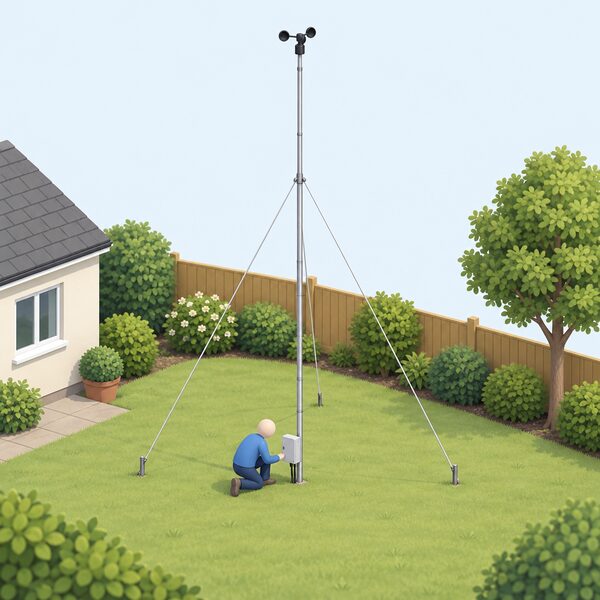
Three months is the figure the Energy Saving Trust puts on pre-installation monitoring, and it is the number most often quoted back to householders. The recommendation is to install an anemometer, or wind gauge, in the intended location for at least three months before considering a home wind turbine1. The field trial behind that advice used the same minimum period to measure actual local wind speed before a decision1.
Three months is enough to establish whether a site is in the right band. It will show whether average speeds sit near the 5 m/s threshold, whether there are obvious calm periods, and whether the site is exposed or sheltered. It is not enough to produce an annual energy prediction with confidence, because a quarter of a year samples only one season.
The regulatory framework around small wind has its own timescales, and they are worth knowing because they shape how a project runs. Under the Feed-in Tariff scheme, now closed to new applicants, preliminary accreditation for wind lasted one year, against six months for solar PV and two years for hydro8. Community energy installations applying for preliminary accreditation on or after 1 April 2015 had a validity period of 18 months9. Those windows existed because a wind project takes time to move from measurement to commissioning.
A three-month campaign also fits the practical rhythm of a domestic project. It can run over a spring or autumn quarter while planning questions are resolved, and it produces a data set that can be compared against the modelled figures before any capital is committed.
A full year at the exact location: the professional recommendation
The professional recommendation is a full year of measurement at the exact location where the turbine will stand. Northern Ireland's official guidance states it directly: ideally, a professional assessment of the local wind speed should be carried out for a full year at the exact location where the turbine is planned, before proceeding2. The phrase "exact location" is doing real work. A year of data from a nearby airfield, or from a mast at the other end of the field, is not the same measurement.
The reason is seasonal spread. Wind in the UK is not evenly distributed through the year, and a short campaign can land in an unrepresentative window. The grid operator recorded a period of 16 weeks with very little wind last summer10, which is long enough to swallow an entire summer monitoring campaign and leave a household with a data set that understates the annual resource. A full year spans the calm spells and the windy months alike.
The MCS 033 V1.0 standard offers a second prediction method for consumers happy to wait and pay the cost of a more accurate assessment: erect wind speed monitoring and data-logging equipment for at least six months, then use that data with the characteristics of the proposed turbine to predict annual energy generation3. Six months sits between the three-month minimum and the full-year ideal, and it is the point at which the standard treats monitoring as the more accurate of its two methods.
| Method | Monitoring period | Basis |
|---|---|---|
| Energy Saving Trust minimum | At least three months | Anemometer in the intended location1 |
| MCS 033 V1.0 second prediction method | At least six months | Monitoring and data logging, combined with turbine characteristics3 |
| Professional recommendation | A full year | Professional assessment at the exact location2 |
The wider context supports the caution. Onshore wind installations will need to double by 203011, and permitting a wind farm takes five to six years12. Domestic projects are not held to those timescales, but the same principle applies: the resource assessment is the long pole, and rushing it is what produces disappointing installations.
Anemometer placement and what to record
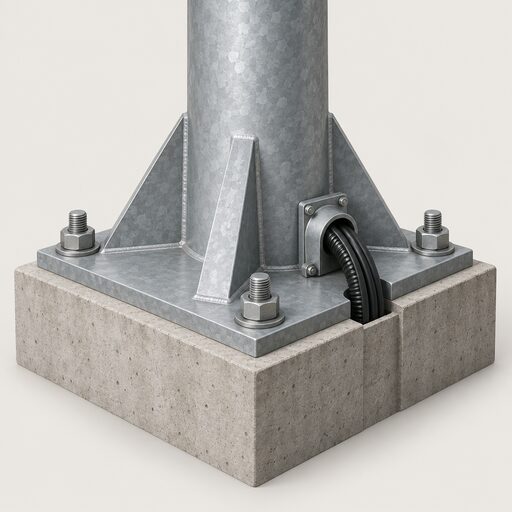
Placement decides whether the data means anything. Guidance for small wind turbines says they should ideally be located on a hilltop or raised structure, away from obstructions like trees or other buildings, and that higher placements catch stronger, steadier winds4. The anemometer should sit where the turbine's hub would sit, at the same height and in the same exposure, or the record describes a different site.
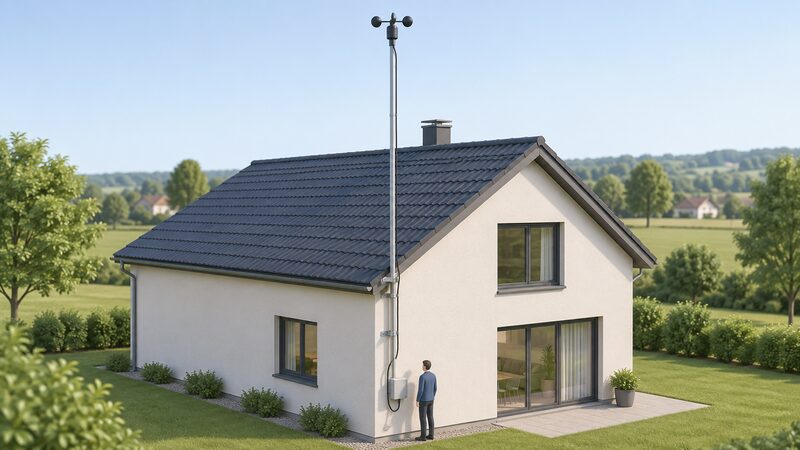
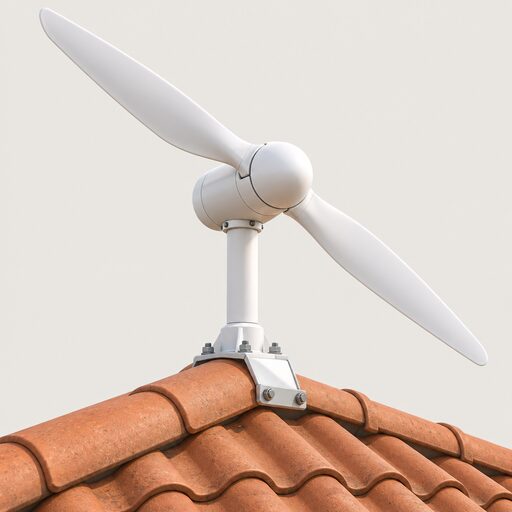
The siting principles are consistent across the guidance. Systems work best in exposed, windy locations and are less suitable for built-up or sheltered areas13, and a wind gauge fitted for a couple of months can check the wind speed near a property before committing14. Building-mounted turbines are a separate case: they can be installed on the roof of a home13, but studies show them to be far less effective owing to lower wind speeds1, and the structural loads are considerable, with size, weight and force exerted on fixed points all significant15.
What to record matters as much as where. A useful campaign logs wind speed continuously, at a fixed interval, over the whole monitoring period, so that averages, calm spells and gusts are all visible. The pattern is familiar from other monitoring regimes: voltage recording devices run for seven days to investigate a reported supply issue16, smart meter readings are taken over a seven-day period to check usage17, and heat transfer monitoring runs for approximately three weeks during the heating season18. Each period is set by what the measurement needs to capture. For wind, that is the seasonal cycle.
What your wind data tells you before you commit
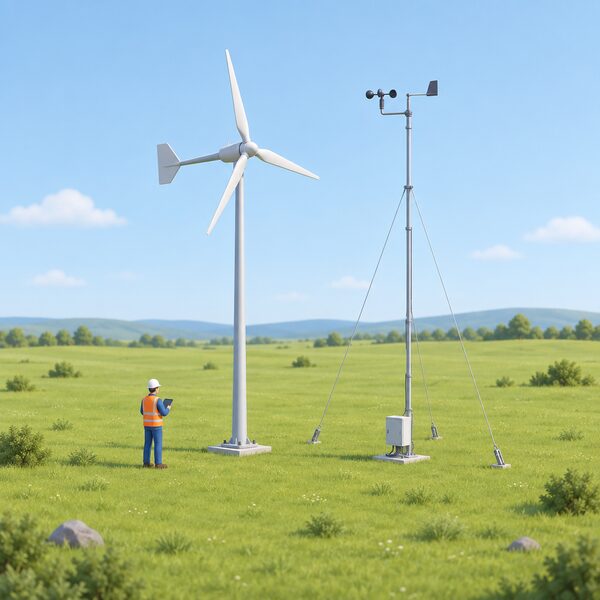
The data set answers three questions. First, is the site above the threshold? Five metres per second or more is the figure official guidance gives for considering a turbine2, and independent guidance repeats it: an average of more than 5 m/s is generally needed19, with an optimum around five metres per second14. Second, how variable is the site? A record showing long calm spells alongside strong periods describes a different proposition from a steady moderate site, even at the same average. Third, does the measured figure match the modelled one? If the map said 6 m/s and the mast recorded a lower figure, the map was describing terrain that is not yours.
The comparison against modelled data is worth making explicitly. The NOABL database behind one widely used map gives estimated wind speeds at heights of 10 metres or more, modelled for flat terrain and averaged over a kilometre square19. That is a coarse instrument. MCS 033 V1.0's first prediction method uses the proposed location to look up the mean wind speed using the Global Wind Atlas3, again a modelled figure rather than a measurement. Both are useful for screening; neither replaces a mast.
Once the data is in, the practical questions become planning and lifetime. In Scotland, a free-standing wind turbine within a dwelling curtilage under Class 6G must be carried out within three years from the date on which all approvals required under that paragraph have been given20, and the prior approval process runs to 28 days following the date the application was received by the planning authority20. Local authorities may charge a fee for pre-application advice21. A suggested simplified prior notification process of 8 weeks was put forward in a Scottish Government consultation22.
Lifetime expectations shape the payback calculation. Small wind turbines are described as lasting around 20 years7, over 20 years with regular upkeep4, and up to 22.5 years in official guidance, which notes they need service checks every few years to work efficiently2. Maintenance checks are generally needed every few years, typically costing between £100 and £200 depending on system size4, and turbines require regular servicing because they have moving parts14.
Northern Ireland guidance describes a professional assessment of local wind speed, run for a full year at the exact spot where the turbine would stand, as the ideal step before proceeding2. Independent guidance puts the same point in terms of cost: a few hundred pounds on wind monitoring equipment, such as a mast and data logger, sits against the thousands of pounds a turbine costs2. A full year matters because wind varies by season, and a single windy month says little about annual yield.
For energy independence, the measurement is what converts a hope into a plan. It tells a household what the turbine will actually deliver, and therefore how much of its electricity demand the machine can cover and how much reliance on the grid, a supplier or a battery bank remains. The turbine itself does not remove dependence on the network for backup, on a manufacturer for parts, or on a service engineer for maintenance. What the anemometry removes is the guesswork.
Sources22 cited
- Location, Location, Location: field trial small-scale wind report, Energy Saving Trust, 2009-07
- Wind, nidirect, 2026-05-18
- MCS publishes updates to small wind turbine standards, MCS Certified, 2024-12-06
- Small wind turbines, MCS Certified, 2026-08-18
- Why heritage retrofit design is essential, Retrofit Academy, 2026-08-07
- ECO4 Innovation Approved Innovation Measures v1.6, Ofgem, 2024-01
- Wind power, Centre for Alternative Technology, 2025-06-27
- Guidance for suppliers v14, Ofgem, 2021-08
- Frequently asked questions about connecting to the networks, Energy Networks Association, 2026-09-17
- How does storage help us balance the grid, NESO, 2026-09-17
- Cutting the bills: UK clean power, Ember, 2023-10-18
- Wind turbines, Home Energy Scotland, 2026-09-20
- Wind turbines, Energy Saving Trust, 2026-05-20
- Wind power, Electricity North West, 2026-09-19
- Wind turbines: building regulations, Planning Portal, 2026
- Managing voltage changes in your property, Electricity North West, 2026-09-19
- Customers' satisfaction with their supplier: supplier level findings Jan 2026, Ofgem, 2026-05
- Measuring the invisible: HTC and the future of retrofit, Stroma, 2026-09-20
- Domestic wind power, Centre for Alternative Technology, 2023-10-01
- Circular 1/2024: householder permitted development rights, Scottish Government, 2024-05-28
- Stand alone wind turbines, Planning Portal, 2026-09-17
- Scottish Government review of permitted development rights: phase 3 consultation analysis, Scottish Government, 2024-03-28
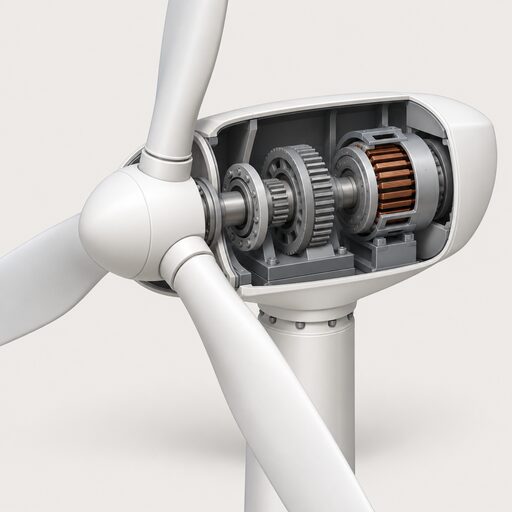 Domestic Wind TurbinesCan a wind turbine really power a home, and is your site windy enough?
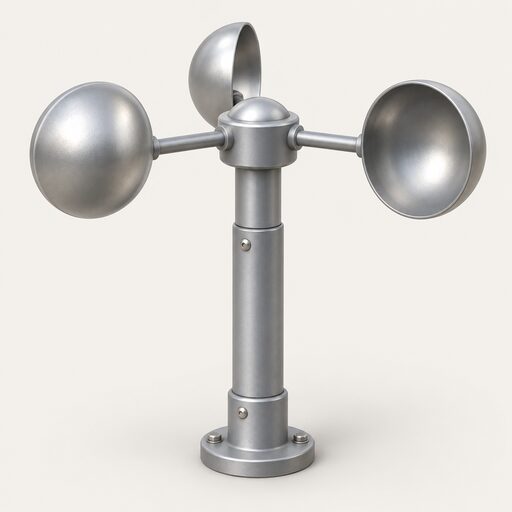 Turbine Siting and Wind SpeedIs my garden windy enough for a home wind turbine?
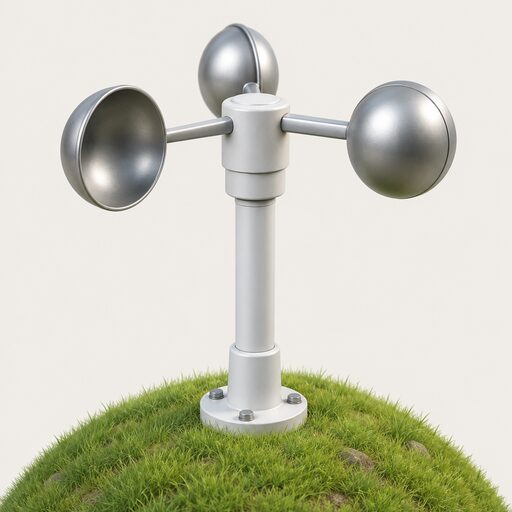 Wind Turbine Output and SizingHow much electricity a home wind turbine makes depends far more on your wind than on its size.
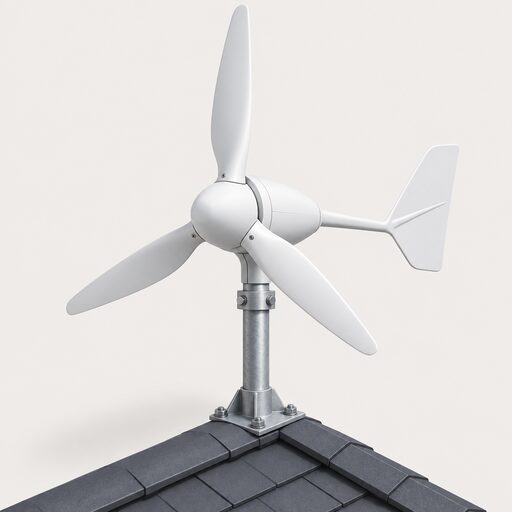 Domestic Wind Turbine CostA home wind turbine usually costs between nine thousand and nineteen thousand pounds, but the real price depends on its size and how it is mounted.
 Wind Turbine InstallationWill a wind turbine actually pay for itself in a normal British garden, and how much wind does your spot really need?
 Building-Mounted Wind TurbinesWill a wind turbine on your roof actually make enough electricity to be worth it?