
In this answer
Short answer
Sunamp's Thermino heat batteries are stated by the maker to have a lifespan of 50+ years, backed by testing to over 40,000 charge and discharge cycles. The same figure appears across Sunamp's product pages, its Thermino brochure and its press material: over 40,000 cycles, described as equivalent to over 50 years of normal use, with the phase change material tested to 40,000 cycles with minimal degradation1.
The warranty is shorter than the stated life, and narrower. Sunamp offers a 10-year warranty on the heating element, described on several product pages as market-leading4. One Thermino support page extends that to the heating element and storage core6. The gap between a 50-year stated life and a 10-year warranty is the single most important thing to understand before buying: the warranty covers a component, not the service life the marketing describes.
For a household, the lifespan question is really a question about independence. A heat battery stores heat rather than electricity, so it does not tie a home to a battery management cloud or a manufacturer's app in the way a lithium home battery can. What it does tie a home to is the electricity supply that charges it, and, for the warranty, the maker's continued existence and its registration process.
Lifespan: 50+ years, and the 40,000 cycles behind it
The 50-year figure is not a laboratory extrapolation invented for a brochure. Sunamp states that its own testing has confirmed performance to over 40,000 cycles, comparable to over 50 years of continuous use2. Its press material describes a proven lifecycle of over 40,000 cycles, equivalent to over 50 years of normal use3. Its FAQ page states that the phase change material has been tested to 40,000 cycles, or around 50 years of use, with minimal degradation4.
The equivalence rests on the duty cycle assumed, and the maker does not publish the charging pattern behind it. A household that charges the unit more often than the assumed pattern will reach 40,000 cycles sooner in calendar terms, and one that charges it less often will reach it later. The figure is a cycle count first and a year count second.
There is one weaker figure in the same document set. A maker product page also reports performance with no noticeable degradation to 10,000 cycles, the equivalent of over 13 years of daily use at two cycles per day2. That is a lower tested point than 40,000, and the two figures sit in the same document without reconciliation. The 40,000-cycle figure is the one repeated across the brochure, the press release and the FAQ, so it is the figure to treat as the maker's headline position, with the 10,000-cycle statement as an earlier or more conservative test result.
What this means in practice is that the degradation mechanism is different from a lithium battery. A phase change material does not lose capacity through the same electrochemical wear, and the Energy Saving Trust notes that heat batteries may have a longer lifespan than electrical batteries8. That is a general statement rather than a figure, and it is the only independent view on comparative life in the material available.
Warranty: 10 years on the heating element
The warranty term is consistent across Sunamp's own pages: a market-leading 10-year warranty on the heating element4. The Thermino xPlus installer page states the same term10. The Thermino 210 EPLUS and 300 EPLUS listings, sold through Trianco, both state a market-leading 10-year warranty on the heating element9.
One page goes further. Sunamp's Thermino support article states that the product comes with 10 year warranty on the heating element and storage core6. That is a broader scope than the product pages describe, and it is the only place the storage core is named as covered. Where two maker documents describe the same warranty differently, the household position is that the written warranty document issued with the unit governs, and the scope should be confirmed before purchase rather than assumed from a web page.
"the product comes with 10 year warranty on the heating element and storage core."
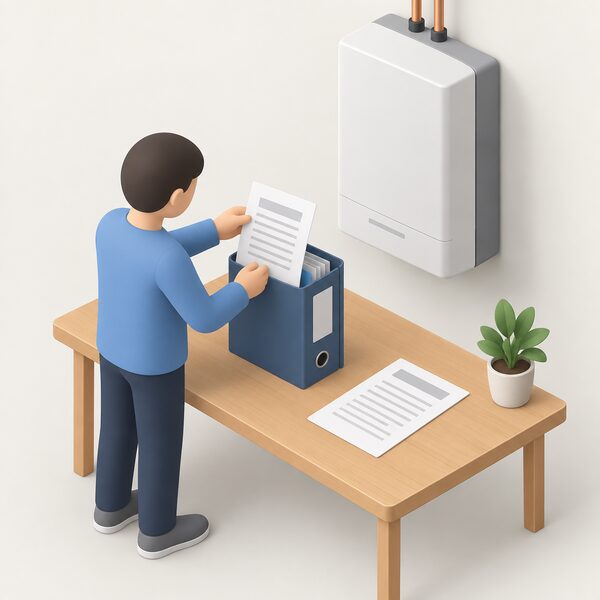
Registration is a separate step from the warranty term. Sunamp states that any of its hot water products can be registered by clicking the link on its FAQ page12. Registration is what puts the unit on the maker's record, and it is normally done at or shortly after installation.
What a Sunamp heat battery is, and how the phase change material stores heat
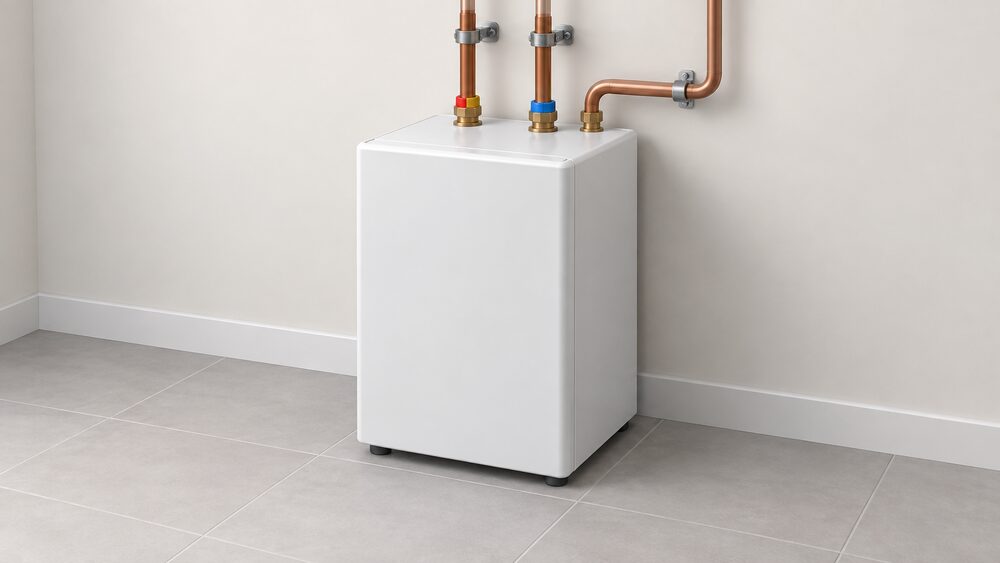
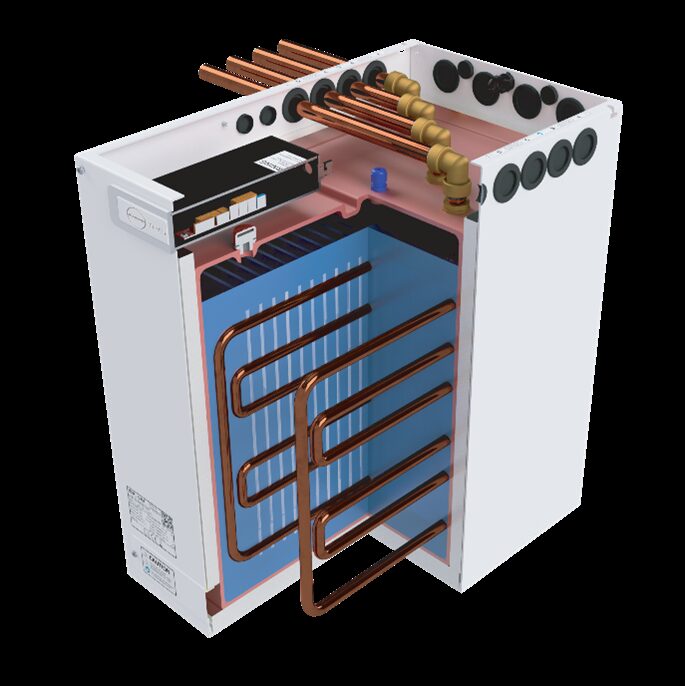
A Sunamp heat battery is a thermal store containing Plentigrade, the company's phase change material13. It stores heat, not electricity, which is the distinction that separates it from a lithium-ion home battery1. The material absorbs and releases thermal energy during a melting and freezing cycle, and the stored heat is drawn off to give hot water, heating or cooling on demand14.
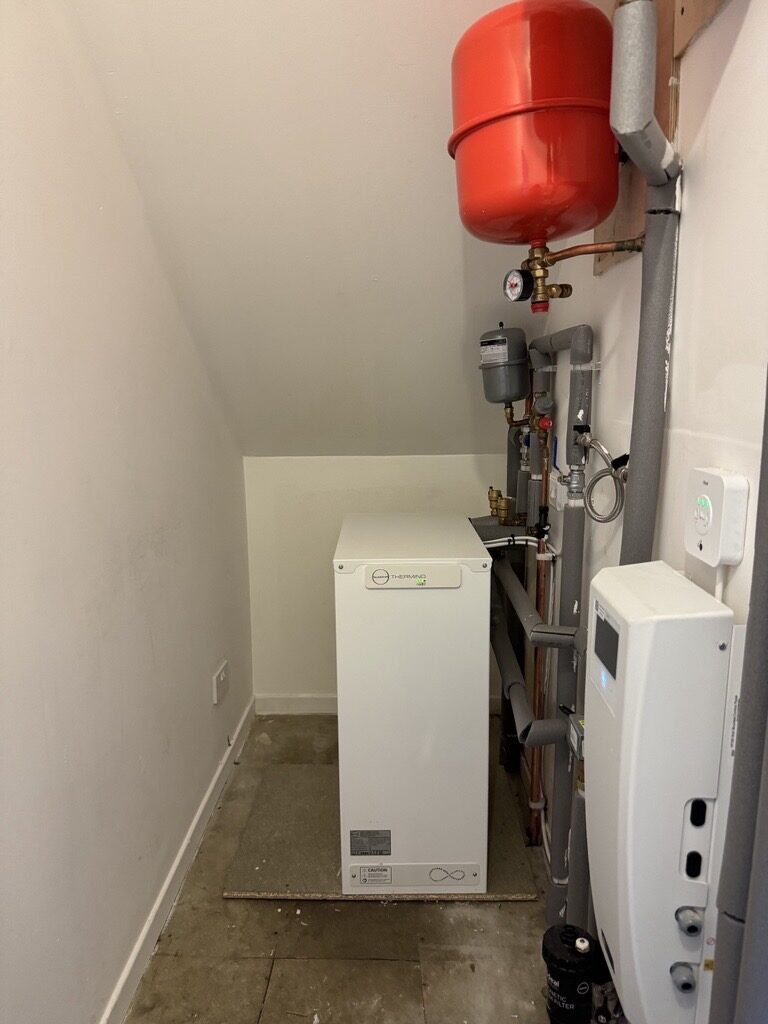
The units are described as super-compact heat batteries, and they deliver hot water at mains pressure on demand13. They work with heat pumps, wind and solar, grid and microgrid electricity, waste heat, combined heat and power and boilers, so the charging source is not fixed13. Sunamp states that over 25,000 heat batteries containing Plentigrade had been sold as of July 202316.
Because the storage medium is a phase change material rather than water, the unit holds very little water. Each battery holds less than 5 litres of water, or less than 15 litres within the heat exchanger5. That is what allows it to be sited where a cylinder would not go, and it is also why the unit can be connected in series and scaled across a development18.
Cost: £1,200 to £3,000 plus installation, and the VAT position
Sunamp gives a 12 kWh Thermino unit at around £3,400 (MRRP), with the installed price reaching up to about £4,700, and a cost per kWh of approximately £3901. Those are the maker's own figures and they are the only published prices for the product in the material available. For most installations the price is installer-quoted, and the figure a household sees will depend on the property, the pipework and whether a cylinder is being removed.
The VAT position is the part that catches people out. Heat batteries do not currently attract the reduced rate that applies to some energy-saving materials. The official guidance on VAT for energy-saving materials works through an example: an installer charges £5,385 excluding VAT, made up of £3,500 for materials and £1,885 for labour, and because materials are 65 per cent of the total, standard 20 per cent VAT applies to the materials and 5 per cent to the labour19. That example is drawn from solar panels and battery installation in Northern Ireland, where materials exceed 60 per cent of the total cost, and it illustrates the principle that the VAT treatment turns on the split between materials and labour rather than on the technology itself.
For a heat battery, the practical consequence is that no reduced rate is currently available, and a quote should be read with the VAT line visible. The comparison figures for electrical storage are higher and broader: solar battery costs are given as typically ranging from £2,000 to £12,500 depending on capacity, chemistry and lifespan, and a battery typically adds £2,500 to £5,000 to a solar installation20. Those are electrical batteries, not heat batteries, and they are included only to show the scale of the alternative.
Grants: why heat batteries are not yet eligible for the Warm Homes fund
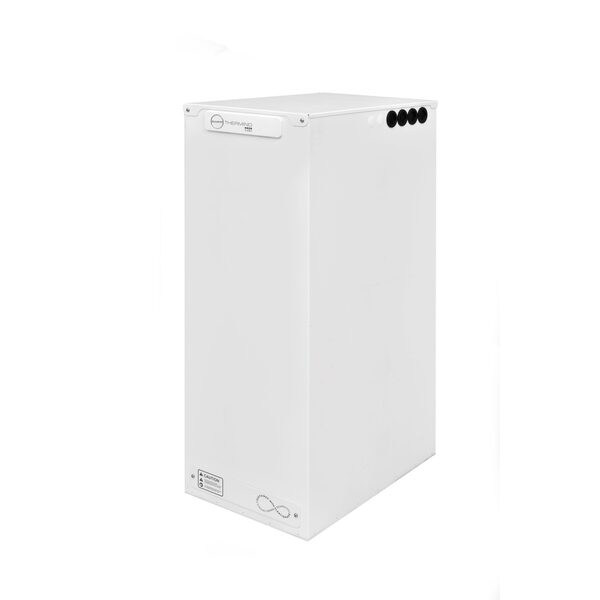
The grant position is the clearest limit on the technology. Sunamp states that its heat batteries are excluded from retrofit subsidies including ECO4 and the Warm Homes: Social Housing Fund7. The company attributes this to deployment being blocked by a lack of recognition in tools such as the Standard Assessment Procedure7.
Official scheme rules confirm the mechanism. The Warm Homes: Social Housing Fund wave 3 guidance states that phase change material heat batteries cannot currently be installed through the scheme until there is a formally approved convention or they are a formally recognized technology category in SAP22. The Warm Homes local grant policy guidance uses the same wording: they cannot currently be installed through the scheme until there is a formally approved convention or they are a formal recognition in SAP23.
The Boiler Upgrade Scheme is described differently by the maker. Sunamp's own grant guidance states that the Boiler Upgrade Scheme supports Sunamp heat battery as thermal storage24. That is the maker's description of the scheme's scope, and it is not the same as the scheme paying a grant for a heat battery as the primary measure. Households weighing the two should read the scheme rules rather than the maker's summary.
Do heat batteries last longer than lithium batteries?
The comparison is not like for like, and the difference in duty is the reason. A lithium home battery stores electricity and is cycled daily against a state of charge; a heat battery stores heat in a phase change material and is cycled against a hot water draw. The Energy Saving Trust states that heat batteries may have a longer lifespan than electrical batteries8. That is the independent position, and it is deliberately hedged.
Sunamp's own figures for the Thermino are 50+ years and over 40,000 charge and discharge cycles1. The company's testing statement puts performance at over 40,000 cycles, comparable to over 50 years of continuous use2. Against that, the warranty on the heating element is 10 years4. A household comparing the two technologies should compare the warranty terms and the replacement cost, not the marketing lifespan, because the warranty is what is enforceable.
The independence question is different for the two as well. A heat battery does not depend on a battery management cloud or an app to function, and it does not depend on a supplier's tariff to charge, though charging when electricity is cheaper is the point of it5. What remains is the grid connection and the electricity supply itself. A heat battery shifts when a home draws power; it does not remove the need to draw it.
What ownership means for household energy independence
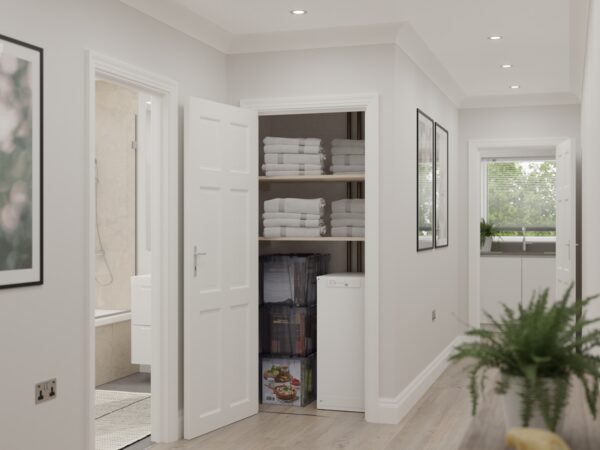
A Sunamp heat battery changes what a home needs from the grid rather than removing the connection. It stores heat generated when electricity is cheaper and releases it when it is needed, which is the mechanism that lets a household buy at off-peak rates and draw hot water at peak times5. Sunamp states that the effect is to lower energy use and carbon emissions and to make homes more energy efficient and sustainable13.
The independence it offers is real but bounded. It removes the hot water cylinder, which is what allows a heat pump to be installed where one would not normally fit, since hot water cylinders are not required17. It gives hot water at mains pressure on demand5. It can be charged from heat pumps, wind and solar, grid and microgrid electricity, waste heat, combined heat and power and boilers, so a household with solar can charge it from its own generation13. Sunamp describes domestic hot water being decarbonised in high-rise and low-rise housing with its heat batteries25.
What remains is the electricity supply, the grid connection, and the maker. The unit does not generate anything, and it does not store electricity. It also depends on Sunamp continuing to support the product for the warranty term, and on the registration process being completed. The company's own figures put over 25,000 units containing Plentigrade sold as of July 2023, which is a measure of installed base rather than of longevity16.
For a household weighing the purchase, the honest summary is that the stated life is long, the tested cycle count supports it, the warranty is a decade on one component, and the grant system does not yet recognise the technology. The independence gained is in when and how hot water is produced, not in whether the home is connected.
Sources25 cited
- Comparing home battery storage: electric batteries vs heat battery, Sunamp, 2025-11-13
- Thermino Brochure (English, low res), Sunamp, 2025-02
- Sunamp and Ripple Energy sign MoU, Sunamp, 2025-07-03
- Frequently asked questions, Sunamp
- Solutions: social housing, Sunamp, 2026-03-24
- Thermino frequently asked questions, Sunamp, 2026-08-17
- New research says PCM heat batteries could be key to renewables adoption, Sunamp, 2025-11-17
- Storing energy, Energy Saving Trust, 2026-07-15
- Thermino 300 Electric EPLUS, Trianco, 2026-09-20
- Thermino xPlus installer zone, Sunamp, 2026-03-24
- Thermino 210 Electric EPLUS, Trianco, 2026-09-20
- Frequently asked questions, Sunamp, 2023-05-04
- How thermal batteries work, Sunamp, 2026-09-17
- Thermino frequently asked questions, Sunamp, 2026-08-17
- How heat batteries work, Sunamp, 2024-07-28
- How we developed our Plentigrade phase change material, Sunamp, 2023-07-20
- Solutions: housing development, Sunamp, 2026-03-24
- Solutions: housing development, Sunamp, 2026-03-20
- VAT on energy-saving materials, HM Revenue & Customs, 2026-09-20
- Battery storage and solar panels, The CPA, 2026-01-06
- Solar panels, Uswitch, 2026-09-16
- Warm Homes: Social Housing Fund wave 3 scheme guidance addendum, Department for Energy Security and Net Zero, 2026-06
- Warm Homes local grant policy guidance, Department for Energy Security and Net Zero, 2026-07
- UK grants for homeowners for renewable upgrade, Sunamp
- Sunamp homepage, Sunamp, 2026-05-21
 Cycle Life and DegradationHow long will a home battery actually last, and what decides that?
 Home Battery WarrantiesHow long does a home battery warranty really last, and what does it actually promise?
 Solid-State BatteriesAre solid-state batteries on sale yet, and should you wait for one?
 Manufacturer WarrantiesHow long does a boiler, heat pump or solar panel warranty actually last, and what do you have to do to keep it valid?
 Solar InvertersWhat does the box on the wall next to your solar panels do, and how long will it last?
 Warranties and DegradationHow long do solar panels actually last, and what do the warranties really cover?