
In this answer
Short answer
An Economy 10 tariff gives a household 10 hours of cheaper electricity each day, usually split into three blocks rather than one long overnight window1. The off-peak price can fall by up to half the average rate, and one supplier guide puts off-peak rates at usually half the standard amount of normal energy plans1. The catch is symmetrical: outside those ten hours the rate is typically much higher than the average, and standing charges are often higher than on Economy 71.
The tariff is a restricted-meter product, not a mainstream one. It is not offered by many UK suppliers, and those that do offer it do not always advertise the fact1. Most comparison sites cannot search for it, and Uswitch states that it does not currently allow households to switch between Economy 10 plans1. Switching therefore means approaching suppliers directly and asking which of them support Economy 10 metering.
Economy 10 suits homes with electric heating and a hot water cylinder that can be heated in blocks, and it only works with electricity-heated homes, not those with a gas supply4. For a household weighing up energy independence, it is a way to buy a larger share of daily electricity at a discount, but it keeps the home tied to the grid, to a supplier that chooses to offer the tariff, and to a meter that has to be configured for it.
What an Economy 10 tariff is: 10 off-peak hours at a discounted rate
Economy 10 provides 10 hours of off-peak electricity at a discounted rate, usually split across different time periods5. Independent guidance describes it as offering much cheaper usage rates during 10 off-peak hours of the day, with the price of electricity falling by up to half of the average rate during those hours1. Which magazine describes it as 10 hours of cheaper electricity, usually in three time periods throughout the day4, and the National Energy Action leaflet sets out 10 set hours of cheaper off-peak electricity6.
The structure is what separates it from Economy 7. Economy 7 gives seven cheaper hours, usually at night, with the cheaper off-peak rate applying for 7 hours out of every 247. Economy 10 spreads its ten hours across the day as well as the night, which is why it is associated with homes that need heat and hot water outside the small hours.
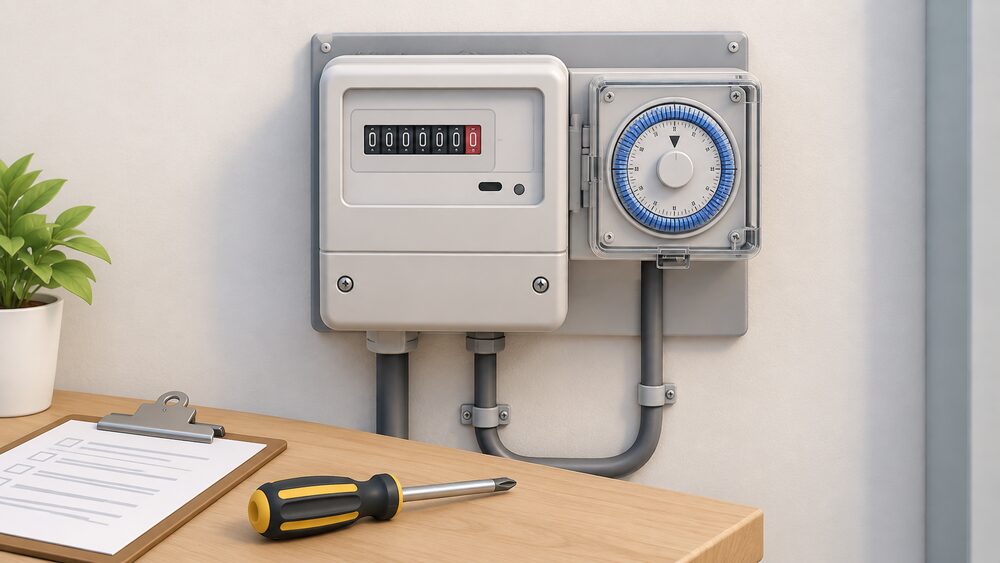
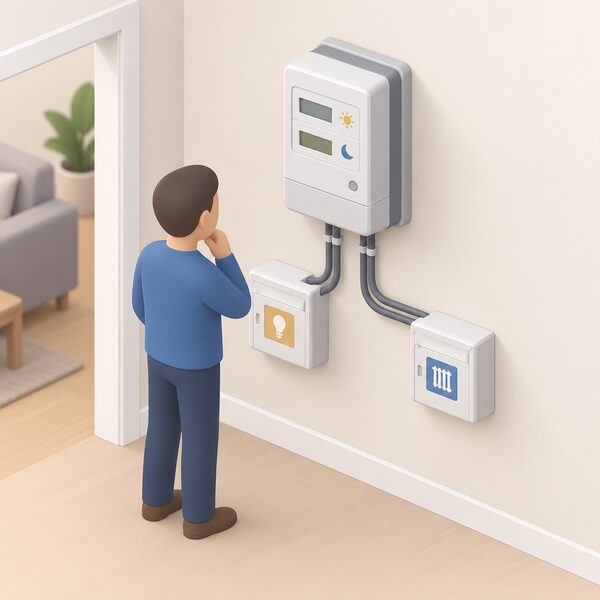
Both are older types of time-of-use tariff that offer cheaper overnight rates, typically used with electric storage heaters8. The meter is the reason the tariff exists: a restricted meter switches circuits on and off according to a schedule, so the cheap blocks are not simply a price signal a household can choose to follow, they are periods when particular circuits are live.
"Economy 10 tariff provides 10 set hours of cheaper off-peak electricity:"
When the off-peak hours fall, and why they vary by supplier
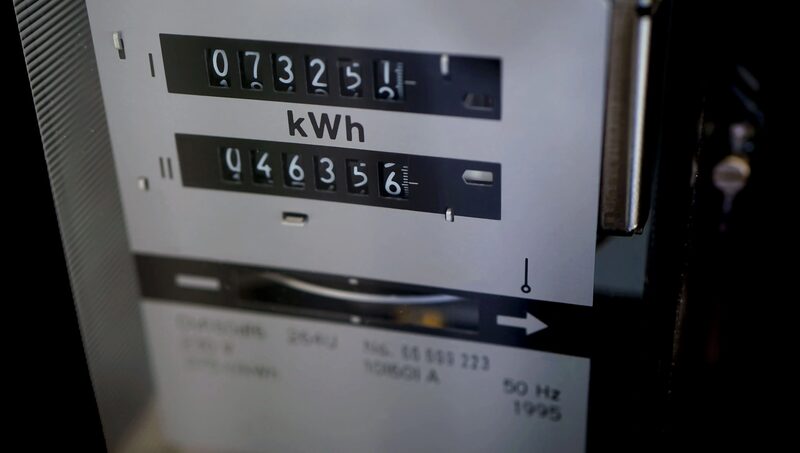
The common pattern is seven hours during the night and three hours during the day, most likely sometime in the afternoon or evening1. Uswitch describes three of the hours as falling in the afternoon and seven overnight3. National Energy Action's leaflet gives a slightly different arrangement: three hours in the afternoon, two hours in the evening and five hours through the night6. The two descriptions agree that the cheap time is split and that the daytime portion is real, but they do not agree on how the ten hours divide.
The times vary from supplier to supplier and from region to region3. Not all Economy 10 tariffs operate on the same off-peak hours, and some suppliers change their off-peak hours when the clocks go forward and back1. The off-peak times will vary by supplier, and not all suppliers will offer Economy 10 plans at all2.
For a household, this means the schedule on one plan cannot be assumed on another, and it cannot be assumed to stay fixed through the year. The practical consequence is that any plan to run appliances or charge a battery in the cheap window has to be built around the specific windows the supplier and meter provide, not around a general idea of "night rate".
The trade-off: cheaper off-peak rates against higher peak rates and standing charges
The discount is real but it is paid for elsewhere. While Economy 10 offers unit rates of up to half the price of peak rates, the standing charges are often higher3. Economy 10 tariffs may also come with higher standing charges or more expensive peak rates compared to Economy 7 or standard tariffs5. Outside the cheap hours, a household will typically be paying much more than the average rate1.
This is the standard shape of a multi-rate tariff. Ofgem describes a multi-rate tariff, for example Economy 7, as one where you pay one rate during a specified off-peak period and another, more expensive rate during peak hours11. The same logic applies to Economy 10, with three rates rather than two. The general principle behind standing charges is that a tariff with no standing charge may come with higher unit rates to cover the cost of the lower standing charge, and such tariffs should be considered carefully12.
The arithmetic of whether Economy 10 pays therefore depends on the share of a household's electricity that falls inside the ten cheap hours. A home with storage heaters and a cylinder that reheats on the restricted circuit can load most of its heating demand into those blocks. A home that cooks, washes and heats in the evening peak will pay the higher rate for most of its consumption.
| Feature | Economy 10 | Economy 7 |
|---|---|---|
| Cheap hours | 10 a day, usually three blocks1 | 7 hours, usually at night7 |
| Typical split | 7 overnight, 3 in the day1 | Overnight, around 12pm to 7am typical13 |
| Standing charge | Often higher3 | Lower than Economy 103 |
| Availability | Not offered by many suppliers1 | More widely used6 |
| Comparison sites | Most cannot search for it1 | Widely compared3 |
Which meter you need, and what happens if you switch back
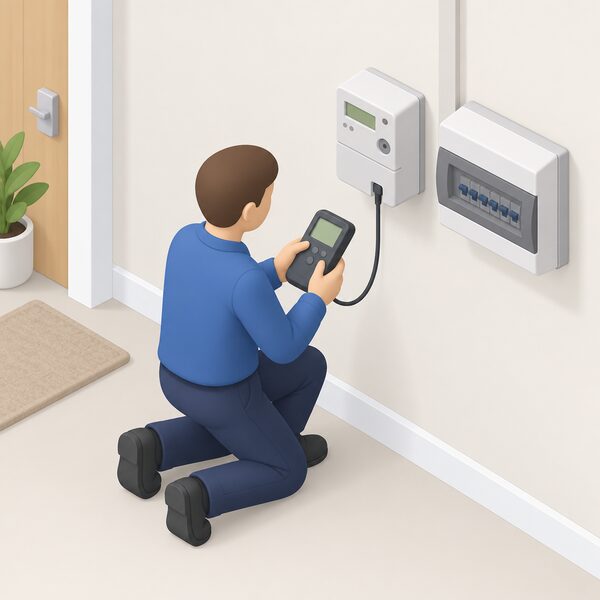
Economy 10 needs a meter that can switch circuits and record the separate rates. If a household is still on a standard meter and wishes to switch to an Economy 10 tariff, it will probably need a new meter installed2. The same applies to Economy 7: if you do not already have an Economy 7 meter, your chosen supplier will need to install a new one14.
Moving between Economy 10 plans is not free of engineering either. Switching from one Economy 10 plan to another may require the meter to be reprogrammed by an engineer3. And moving away from the tariff carries its own cost: if a household wants to switch back to a fixed tariff, it will need to pay to replace the meter with a regular one1. Similarly, switching away from Economy 10 to a standard tariff may require a fee to have a standard meter installed3.
The meter is therefore the lock-in. A household that takes on Economy 10 is committing not just to a tariff but to a metering arrangement, and reversing that decision has a cost that a standard credit tariff does not carry. That is worth weighing against the off-peak discount before the meter is changed.
Where Economy 10 is available, and why comparison sites do not show it
Economy 10 is not offered by many UK suppliers, and those who do offer it do not always advertise the fact1. It is not as widely used as Economy 7, and not all suppliers offer tariffs that support it6. Many suppliers do not support Economy 10, or may not offer tariffs to new customers15. There simply are not many Economy 10 suppliers available3.
The trend is against it. Time-of-use tariffs of this kind are becoming less common as the legacy meters that support them are being phased out16. That does not mean the tariff is disappearing immediately, but it does mean the pool of suppliers willing to take on a new Economy 10 customer is narrow and may narrow further.
Comparison sites compound the problem. Most energy comparison sites do not allow a search for Economy 101. Most price comparison sites, including Uswitch, do not compare Economy 10 deals3, and because of the complexity of the three different rates, many comparison sites cannot support comparisons for Economy 10 meters3. Uswitch states that it does not support Economy 10 switching and that households should go directly to suppliers to see which tariffs are available15.
For a household, this changes the switching process from a comparison exercise into a direct enquiry. The absence of the tariff from a comparison site is not evidence that it is unavailable or poor value; it reflects the difficulty of modelling three rates and a restricted meter in a standard comparison engine.
How to switch to an Economy 10 tariff
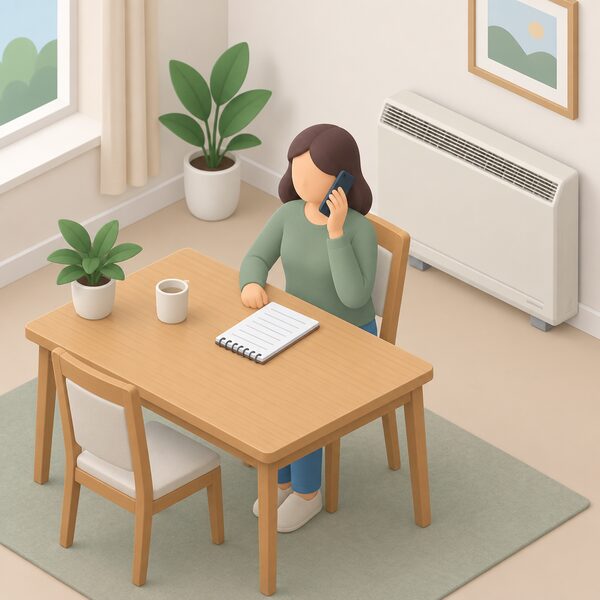
The route is direct, because the usual comparison route is closed. Uswitch does not currently allow households to switch between Economy 10 plans3, and its guidance is to go directly to suppliers to see which tariffs are available15.
- Establish what meter is installed and whether it is a restricted meter on Economy 10, Economy 7 or Total Heat Total Control9.
- Ask suppliers directly which of them support Economy 10 metering and will take a new customer on the tariff15.
- Confirm the off-peak windows the supplier and meter will provide, since these vary by supplier and region and can change with the clocks1.
- If the property is on a standard meter, expect a new meter to be needed before the tariff can start2.
- If the property is on an RTS meter, arrange the replacement meter so heating and hot water continue to switch as usual10.
- Check the standing charge and the peak rate, not just the off-peak rate, since the standing charge is often higher and the peak rate is typically much higher than average1.
Moving home complicates the picture. When you move, you are automatically switched to the new property's supplier, and it is likely your tariff will change17. If you move a fixed tariff to the new house, exit fees do not apply18. But Economy 10 only works with electricity-heated homes and not those with a gas supply4, so the tariff may not be available at the new address regardless of the supplier's willingness to offer it.
What Economy 10 means for a household's energy independence
Economy 10 buys a household a larger share of its daily electricity at a discount, and that is a genuine form of control over the bill. Ten hours a day at up to half the average rate is a meaningful hedge against peak prices, and it is available without any generation or storage equipment on site.
What it does not do is reduce dependence. The home remains connected to the grid and to a supplier, and it remains dependent on that supplier continuing to offer an Economy 10 tariff and on a meter that can deliver the cheap blocks. The tariff is not offered by many suppliers1, and the legacy meters that support it are being phased out16. A household that builds its heating and hot water routine around ten cheap hours is relying on an arrangement that fewer suppliers support each year.
The dependence on gas is the other side of it. Economy 10 only works with electricity-heated homes and not those with a gas supply4, so it is a tariff for homes that have already moved their heating to electricity. For those homes, the tariff is a way to buy that electricity more cheaply at the times the network is under least strain. For homes still on gas, the tariff is not available at all.
Sources18 cited
- What is Economy 10?, Energy Helpline, 2026
- Economy 10 guide, The Energy Shop, 2026
- Economy 10 guide, Uswitch, 2025
- Time-of-use tariffs explained, Which?, 2026
- Economy 10 tariff, Fuse Energy, 2026
- Getting the most from Economy 7, National Energy Action, 2026
- What is Economy 7?, Smart Energy GB, 2026
- The best heating for your home, Which?, 2025
- RTS meters, National Energy Action, 2026
- Important reminder for Economy 7 and 10 meters, Centre for Sustainable Energy, 2026
- Understand your electricity and gas bills, Ofgem, 2026
- Energy standing charges, Uswitch, 2026
- Storage heaters, Which?, 2026
- Gas meters and electricity meters: what you need to know, Which?, 2026
- Energy tariffs explained, Uswitch, 2026
- How to switch energy supplier, Which?, 2026
- Who supplies my electricity and gas?, Uswitch, 2026
- Moving house energy checklist, Energy Saving Trust, 2026
 Time-of-Use Tariffs ExplainedCan you pay less for electricity by using it at different times of day?
 Economy 7 TariffsEconomy 7 gives you seven hours of cheaper electricity at night, but the exact hours depend on where you live and who supplies you.
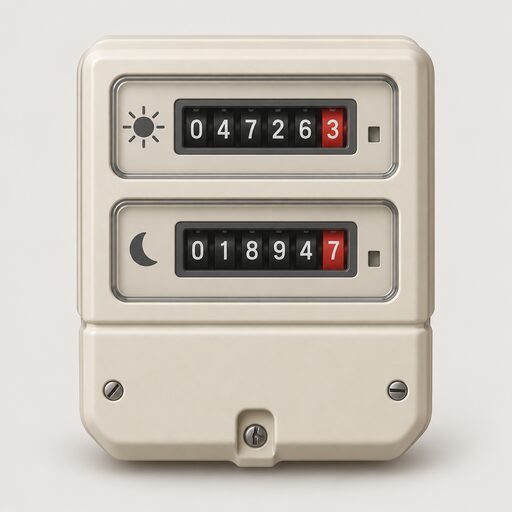 Economy 7 and Restricted MetersEconomy 7 and Economy 10 meters give you cheaper electricity for a set number of hours overnight and charge you more the rest of the day.
 Flexibility Payments for HomesCan you really get paid for using less electricity at peak times, and how much would a household actually earn?
 Free Electricity and RewardsCovers tariffs and offers that give free or half-price electricity in set windows, including recurring weekly free hours, weekend offers and savings challenges.
 EV Charging Bolt-OnsCan you get cheap electricity for your car without changing the tariff for the rest of your home?